“The amount of violations of human rights in a country is always an inverse function of the amount of complaints about human rights violations heard from there. The greater the number of complaints being aired, the better protected are human rights in that country.” — Daniel Patrick Moynihan
The Case for Colonialism - Bruce Gilley
Just as Marx had failed to realize that the parliamentary reports into factory conditions that he devoured in order to stand up his criticism of capitalism were themselves the reason that capitalism would survive, critics of colonialism who spent many delightful hours parsing the lurid details of colonial crimes found in the public records, failed to understand that it was precisely the liberal civilization that so diligently investigated and corrected such crimes that was why it was of such benefit to the colonized. Post-colonial tyrants tended to just dump the bodies in the river and deny anything had happened. (p. 32)
- UN doesn’t recognize Hamas as a terrorist organization
- Amnesty International
- “no justification for attacking civilians”
- UN official who resigned refuses to answer if Hamas did genocide
- Palestine is a state based on 67 borders, according to 1967—voted by 100+ countries
- devex.com
- Attachment (file not included in this release)
https://ihl-databases.icrc.org/en/customary-ihl/v1
United Nations/Human Rights Orgs
- Supports wars and dictators
- Still hasn’t passed a single resolution to condemn Hamas (11/18/2023)
- They don’t report much as the 50+ Muslim dictatorships
- A lot of these organizations is run and controlled by many of the countries that are Anti-West
- twitter.com/HillelNeuer/status/1727452511408152934
- United Nations General Assembly Resolution 3379 - Wikipedia
- How its interesting that many Arab countries that cry for International Law, yet never originally sign because it could go against their own crimes
- Rome Statute - Wikipedia
Misgav 2026 report — structural map, attribution, and limits
Schwartz, Yakoby, and Fredman’s 168-page Misgav report maps 33 institutional chapters across the General Assembly, Secretariat, Palestine-specific bodies, human-rights mechanisms, technical agencies, and the ICC pathway. Its strongest, independently checkable contribution is the architecture: Agenda Item 7, the open-ended Commission of Inquiry, the Special Rapporteur mandate lasting until the end of the occupation, CEIRPP, the Division for Palestinian Rights, UNISPAL, the special information programme, and UNRWA. Its broader “ecosystem” and “circular validation” thesis is an advocacy interpretation, not a formal network or matched-comparator study. The report’s 187-resolution headline is a UN Watch classification reproduced by the authors, so organ, period, category, and recurring resolutions must remain explicit. Institutional asymmetry can lower confidence or justify closer auditing; it does not automatically falsify a particular finding. Full source and claim audit: The UN's Anti-Israel Ecosystem - Schwartz, Yakoby, and Fredman.
Evidence-based comparison — Israel/Palestine and the Rohingya
Defensible finding
The UN has not ignored the Rohingya: it created a fact-finding mission and the Independent Investigative Mechanism for Myanmar, maintains a Myanmar special rapporteur, adopts recurring resolutions, supports refugees through UNHCR, held a General Assembly high-level conference in 2025, and is the forum for The Gambia v. Myanmar at the ICJ. The more precise criticism is that Israel/Palestine has a uniquely permanent and specialized institutional architecture.
- Human Rights Council Agenda Item 7 permanently addresses Palestine and other occupied Arab territories; official Council records describe it as the only standing agenda item devoted to one country situation.
- The occupied-Palestinian-territory Special Rapporteur’s mandate continues “until the end of the occupation,” while the Myanmar country mandate is periodically renewed.
- Palestine also has the CEIRPP, the UN Secretariat’s Division for Palestinian Rights, a special information programme, and UNRWA.
- Myanmar/Rohingya has serious mechanisms—especially the IIMM—but not the same combination of permanent, Palestine-specific bodies and agenda structures.
Inference: institutional attention is partly path-dependent and political; its volume is not a neutral severity score. This supports consistent standards and criticism of Israel-exceptionalism. It does not disprove any particular allegation against Israel and should not be used as a tu quoque.
Full evidence, sources, counterarguments, and debate language: Rohingya Parallel - Selective Attention and the Nakba Analogy. Background on the comparator: Myanmar and Malaysia - Rohingya Persecution and Refugee Treatment.
How to use Amnesty, UN commissions, and resolution counts
Evidence rule
An NGO report or General Assembly resolution is neither worthless propaganda nor a judicial verdict. Test the source’s evidence, legal standard, selection rules, corrections, and response to counterevidence. Institutional bias or commissioner misconduct can reduce confidence; it does not automatically falsify every photograph, interview, incident finding, or legal conclusion.
Amnesty’s Gaza-genocide methodology
Amnesty’s December 2024 genocide report says it conducted 212 interviews between October 2023 and September 2024, examined fifteen strikes, analyzed statements and satellite imagery, and applied its own legal analysis. Amnesty report and supporting material.
The decisive methodological dispute is explicit. Amnesty described a reading of the ICJ’s “only reasonable inference” approach to state genocidal intent as overly cramped, reasoning that genocidal intent may coexist with military goals. That is not a hidden error; it is a proposed expansion or reinterpretation of how intent should be inferred in armed conflict.
Use this distinction:
| Question | Proper treatment |
|---|---|
| Did the documented acts or statements occur? | Audit each item against primary evidence. |
| Do the acts establish war crimes or crimes against humanity? | Apply the elements of those offenses separately. |
| Do they establish state genocidal intent? | Identify whether Amnesty is applying settled ICJ doctrine, interpreting ambiguity, or advocating a broader test. |
| Does disagreement with its legal test invalidate all field evidence? | No; legal inference and factual collection must be assessed separately. |
ICJ delay and advocacy for a broader interpretation
The connects this methodology dispute to actual state submissions. Read the before describing the proposed change. The scheduling request and its alleged strategic motives require a separate evidential assessment; see the .
Intent, quotation context, and alternative-inference audit
The published “Soypill debate notes” dossier identifies several places where the conclusion depends on an inferential bridge rather than an uncontested primary fact.
Official-statement context
- Netanyahu’s 7 October 2023 statement threatened places where Hamas was deployed and told Gaza residents to leave. That context does not make the rhetoric harmless, but it bears directly on whether the target of the threat was Hamas infrastructure or Palestinians as a group. Official statement.
- Gallant’s “human animals” phrase should be evaluated from the full statement, its object, his authority, subsequent orders, and conduct—not from a clipped phrase alone. Video.
- Herzog’s “entire nation” statement is adverse intent evidence, while his clarification that there were many innocent Palestinians is also evidence. Neither can simply be deleted. Clarification.
- The Amalek reference in Netanyahu’s speech resembles “remember what Amalek did” in Deuteronomy 25:17–19; the command to destroy Amalek is in 1 Samuel 15. Treat the claimed exterminatory meaning as an interpretation to be tested against Hebrew wording, audience, context, orders, and implementation—not as if the speaker recited 1 Samuel’s command verbatim.
Commission of Inquiry IVF-clinic example
The Commission characterized destruction of Gaza’s principal IVF facility as an act preventing births and treated genocidal intent as the only reasonable inference. Its reports are A/HRC/58/CRP.6 and A/HRC/60/CRP.3. A contemporaneous Reuters investigation and visible damage in the surrounding area supply an alternative-causation lead that should be checked against weapon effects, targeting data, and the adjacent structure.
Correct use
An omitted qualifier can materially weaken an intent inference; it does not erase other evidence. An imaginable alternative does not defeat the “only reasonable inference” test unless it is reasonably supported by the record. Audit the quotation, causal chain, source, and policy link separately.
ICJ orders and judicial disagreement
The 24 May 2024 Rafah provisional measure ordered Israel to immediately halt its offensive and any other action in Rafah “which may inflict” conditions capable of physically destroying the protected group. The appended declarations show the grammar was contested:
| Judge | Reading emphasized |
|---|---|
| Aurescu | The qualifying clause applies to both the military offensive and “any other action”; he noted the text was unclear. |
| Nolte | The measure limits the offensive insofar as it risks violating protected rights; he remained unconvinced at that stage that the operation as such was pursued with genocidal intent. |
| Tladi | The order did not permit continuation of the Rafah operation, while strictly lawful defensive actions against specific attacks remained possible. |
Source the operative language and all three summaries from the ICJ’s official summary, with Nolte and Aurescu available separately.
The 19 July 2024 advisory opinion concluded that Israel must end its unlawful presence “as rapidly as possible.” Judges Nolte and Cleveland emphasized that this need not occur in the same way or at the same time everywhere and that the advisory opinion excluded Israel’s post-7 October Gaza conduct from the temporal scope analyzed. Official summary · joint declaration.
Citation rule
Quote the Court’s operative words, identify whether a gloss is the majority’s, an official summary’s, or an individual judge’s, and do not turn provisional measures or an advisory opinion into a final merits judgment in a different case.
World Central Kitchen review: misconduct, war crime, and policy are separate findings
The Australian special adviser reviewing the 1 April 2024 IDF strikes found that WCK personnel were misidentified amid serious decision failures and breaches of rules of engagement and procedures. Israel dismissed two officers and reprimanded three. The adviser considered Israel’s targeting framework broadly comparable to Australia’s and left possible charges to further investigation; he did not convert his operational review into a finding that aid workers were deliberately targeted as state policy.
This supports a calibrated conclusion: a grave, foreseeable, and potentially unlawful operational failure is well supported; deliberate murder, individual criminal liability, and a state policy of attacking aid workers each require additional evidence. Disciplinary action is relevant evidence of response, not a substitute for independent accountability. Australian DFAT report page · full report.
October 7 report and Amnesty Israel
Amnesty published its dedicated report on Hamas and other Palestinian armed groups’ October 7 crimes on 11 December 2025, one year after its Israel-genocide report. It says the investigation began in the days after the attack and covers events through December 2025. The report finds murder, torture, sexual violence, hostage-taking, and other war crimes and crimes against humanity. Amnesty, Targeting Civilians, December 2025.
The publication sequence is materially asymmetric and fair to question. Reporting based on leaked internal emails also describes objections inside Amnesty that publication might divert attention from Gaza or be used to justify Israeli conduct. Amnesty said findings would not be changed for political context. Treat this as a documented internal dispute reported by one outlet, not established proof that the organization fabricated evidence or formally suppressed a completed report. The Free Press investigation.
Amnesty’s international secretariat suspended its Israel section in January 2025. The Israel section had disputed the genocide conclusion and said the evidence did not establish genocidal intent. The international organization also cited longer-running allegations of anti-Palestinian discrimination, governance failures, and misalignment with Amnesty’s mission. It is therefore too simple to say Amnesty “expelled its Israel branch merely for disagreeing,” but the methodological disagreement was part of the conflict. AP on Amnesty Israel’s dissent · Times of Israel on the suspension and stated grounds.
UN Commission of Inquiry — Miloon Kothari remarks and response
In a July 2022 interview, commissioner Miloon Kothari referred to social media being controlled largely by the “Jewish lobby” or particular NGOs and questioned why Israel was a UN member. The phrase was widely and reasonably condemned as antisemitic. Full interview transcript reproduced by UN Watch.
The institutional-response record is mixed:
- Human Rights Council president Federico Villegas wrote that the remarks could reasonably be interpreted as stigmatizing Jewish people and asked the commission to clarify.
- Commission chair Navi Pillay initially defended Kothari and argued that parts of the interview had been taken out of context.
- Kothari apologized on 4 August 2022 and said his language had been incorrect, inappropriate, and insensitive.
- He was not removed from the commission on that basis.
Sources: report on the HRC president’s letter · Kothari apology and commission response.
Debate limit
The correct criticism is that a commissioner used antisemitic language, the chair’s initial defense was inadequate, and no removal followed. “The UN did nothing” is false because there was an official rebuke and apology. The incident bears on perceived independence; it does not substitute for a merits analysis of the commission’s evidence.
Resolution counts — define the organ, year, and classification
UN Watch counted 17 Israel-related General Assembly resolutions in calendar year 2024 and seven country-specific resolutions concerning the rest of the world. The underlying 17 include recurring resolutions on Palestinian rights, UNRWA, committees, settlements, occupation, Jerusalem, and the Syrian Golan. UN Watch’s categorized list can be checked against the official seventy-ninth-session resolution list and the UN Palestine resolution compilation.
The count demonstrates concentrated and recurring General Assembly attention. It does not mean:
- seventeen judicial findings against Israel;
- seventeen resolutions solely condemning Israel rather than addressing Palestinian institutions or rights;
- only seven UN actions of every kind concerning all other crises;
- the Human Rights Council, Security Council, General Assembly, and agency decisions can be combined into one denominator.
Safe wording
“Using UN Watch’s country-focused classification, the General Assembly adopted 17 Israel-related resolutions in 2024 versus seven country-specific resolutions on other states. The comparison indicates unusual agenda concentration, but its meaning depends on classification and it does not decide whether any particular resolution was correct.”
See also · LonerBox - Antisemitism, Hamas, US Leverage and Gaza Debate Panel · Rohingya Parallel - Selective Attention and the Nakba Analogy.
“Commission emphasises that the only path towards ending violence and achieving sustainable peace is through addressing the root causes of the conflict including through ending the illegal occupation of Palestinian territory and recognising the right of the Palestinian people to self-determination.”
Link to original
International and Human Rights Reports & Resolutions
- Human Shields - UN and Human Rights Findings — source-status map for UN, OHCHR, Amnesty, HRW, and B’Tselem findings concerning Israeli forces and Hamas
- Kristof Dog-Rape Column - HonestReporting Sourcing Thread — case study in citation chains: detainee testimony from Euro-Med and PCHR reappears in MEE, Anadolu, a UN letter, and the NYT. Apply the evidence rule above: count shared testimony once, and treat NGO terror-link claims as grounds for scrutiny, not as refutation.
- UN Resolutions and Reports
- Human Rights Watch
- Amnesty International
- UN Resolution 242
- Talking about giving land back to Jordan, Syria, Lebanon
- Palestine is never mentioned
- Next month is the “Three No’s”
- Basically people losing a war and wanting their land back
- Attachment (file not included in this release)
- Attachment (file not included in this release)
- Attachment (file not included in this release)
- United Nations General Assembly Resolution 3314 - Wikipedia
United Nations Security Council Resolution 242
United Nations Security Council Resolution 242 - Wikipedia
United Nations General Assembly Resolution 194
United Nations General Assembly Resolution 194 - Wikipedia
Attachment (file not included in this release)
United Nations General Assembly Resolution 67/19
Attachment (file not included in this release)
United Nations General Assembly resolution 67/19 - Wikipedia
UNRWA
https://www.wsj.com/world/middle-east/hamas-israel-attack-united-nations-unrwa-0ec8d325
twitter.com/MOSSADil/status/1756380324576018788
Germany Joins European Union in Pulling Funding for U.N. Palestinian Aid Group | National Review
twitter.com/realbassemeid/status/1729947063696110062?s=20
unwatch.org/wp-content/uploads/2023/11/UNW_119___UNRWA_Report_2023_November__2023-11-05__web.pdf
Directly beneath UNRWA’s Gaza headquarters, IDF uncovers top secret Hamas data center | The Times of Israel
UNRWA chief: Gaza militants hid weapons in our facilities
IDF finds UNRWA boxes used by Hamas to store weapons in residential neighborhood in Gaza - YouTube
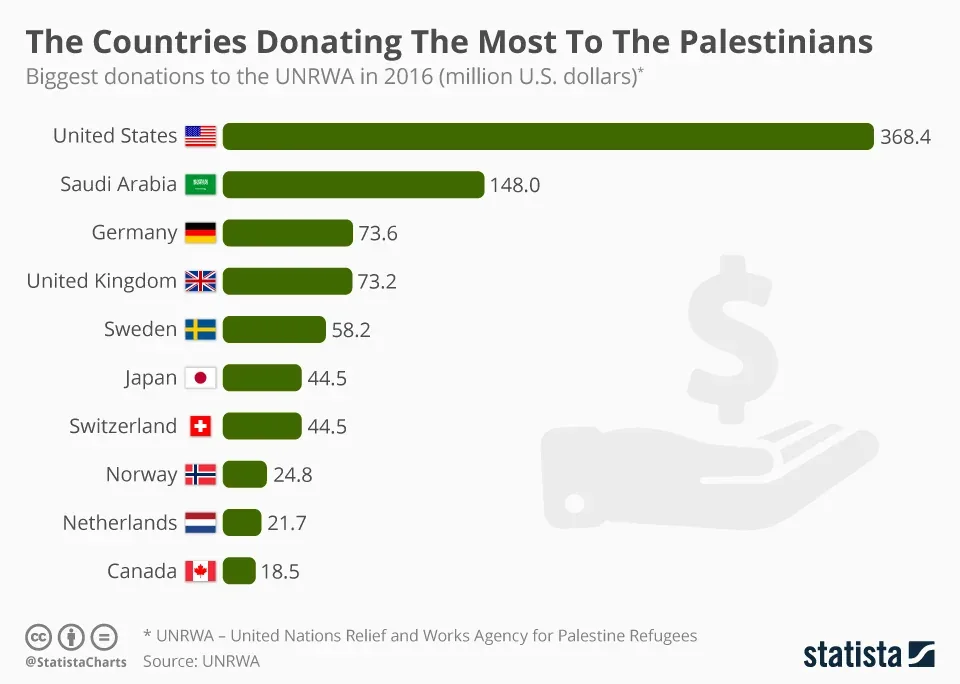
Top Donors: o0dggkq64t2c1.webp
twitter.com/AvivaKlompas/status/1729880444261593570?s=20
twitter.com/AvivaKlompas/status/1745787236119965912
Israel – Hamas 2023 Symposium – Hostage-Taking and the Law of Armed Conflict - Lieber Institute West Point
Israel – Hamas 2023 Symposium – International Law “Made in Israel” v. International Law “Made for Israel” - Lieber Institute West Point
U.S. Senators Oppose Disgraced Former UNRWA Head to Lead the International Committee of the Red Cross
Attachment (file not included in this release)
Attachment (file not included in this release)
UNW-129-%E2%80%94-The-Unholy-Alliance-%E2%80%94-2025-01-09-%E2%80%94-Web-%E2%80%94-Singles.pdf
https://x.com/EFischberger/status/1915631695480377452
UNRWA Education
-
Hijacked by Palestinians, its just their organization
-
Original was going to be called REWA, but wanted UN in front of it to seem legitimate.
-
This quixotic diplomatic failure comes to a head in the cruelest human experiment of post-1945 diplomacy anywhere in the world. The United Nations Relief and Works Agency for Palestine Refugees is the agency charged with caring for persons displaced by the Arab-Israeli war of 1947-49. Its mandate and its operations are completely different from those of the U.N. High Commissioner for Refugees, the agency which manages every other refugee crisis in the world. Unlike UNHCR, which endeavors to solve refugee crises quickly by repatriating refugees where possible, rehabilitating them in host countries where repatriation is not possible, and resettling them in third countries where rehabilitation is not possible, UNRWA endeavors to entrench refugee status. It has its own definition of refugee, which includes people who have not fled across an international border, people who have already been rehabilitated and received new citizenship, and the children of displaced persons and their children and their children. It runs cradle-to-grave welfare services with radically pro-natal policies. This is how 200,000 displaced persons in Gaza—Palestinians in a Palestinian enclave, not refugees in another country—became nearly 2 million refugees in 75 years. Link
UNRWA staff stealing and selling humanitarian aid, Gazans report
International Law (Destiny Notes)
Geneva Conventions
Convention (I) for the Amelioration of the Condition of the Wounded and Sick in Armed Forces in the Field. Geneva, 12 August 1949.
- Article 3 - Conflicts not of an international character
- In the case of armed conflict not of an international character occurring in the territory of one of the High Contracting Parties, each Party to the conflict shall be bound to apply, as a minimum, the following provisions:
- Persons taking no active part in the hostilities, including members of armed forces who have laid down their arms and those placed ’ hors de combat ’ by sickness, wounds, detention, or any other cause, shall in all circumstances be treated humanely, without any adverse distinction founded on race, colour, religion or faith, sex, birth or wealth, or any other similar criteria.
- To this end, the following acts are and shall remain prohibited at any time and in any place whatsoever with respect to the above-mentioned persons:
- violence to life and person, in particular murder of all kinds, mutilation, cruel treatment and torture;
- taking of hostages;
- outrages upon personal dignity, in particular humiliating and degrading treatment;
- the passing of sentences and the carrying out of executions without previous judgment pronounced by a regularly constituted court, affording all the judicial guarantees which are recognized as indispensable by civilized peoples.
- To this end, the following acts are and shall remain prohibited at any time and in any place whatsoever with respect to the above-mentioned persons:
- The wounded and sick shall be collected and cared for.
- An impartial humanitarian body, such as the International Committee of the Red Cross, may offer its services to the Parties to the conflict.
- The Parties to the conflict should further endeavour to bring into force, by means of special agreements, all or part of the other provisions of the present Convention.
- The application of the preceding provisions shall not affect the legal status of the Parties to the conflict.
Convention (III) relative to the Treatment of Prisoners of War. Geneva, 12 August 1949.
- Article 23 - Security of prisoners
- No prisoner of war may at any time be sent to, or detained in areas where he may be exposed to the fire of the combat zone, nor may his presence be used to render certain points or areas immune from military operations.
- Prisoners of war shall have shelters against air bombardment and other hazards of war, to the same extent as the local civilian population. With the exception of those engaged in the protection of their quarters against the aforesaid hazards, they may enter such shelters as soon as possible after the giving of the alarm. Any other protective measure taken in favour of the population shall also apply to them.
- Detaining Powers shall give the Powers concerned, through the intermediary of the Protecting Powers, all useful information regarding the geographical location of prisoner of war camps.
- Whenever military considerations permit, prisoner of war camps shall be indicated in the day-time by the letters PW or PG, placed so as to be clearly visible from the air. The Powers concerned may, however, agree upon any other system of marking. Only prisoner of war camps shall be marked as such.
Convention (IV) relative to the Protection of Civilian Persons in Time of War. Geneva, 12 August 1949.
- Article 28 - Treatment II. Danger zones
- The presence of a protected person may not be used to render certain points or areas immune from military operations.
Protocol Additional to the Geneva Conventions of 12 August 1949, and relating to the Protection of Victims of International Armed Conflicts (Protocol I), 8 June 1977.
- Article 12 - Protection of medical units
- Medical units shall be respected and protected at all times and shall not be the object of attack.
- Paragraph 1 shall apply to civilian medical units, provided that they:
- The Parties to the conflict are invited to notify each other of the location of their fixed medical units. The absence of such notification shall not exempt any of the Parties from the obligation to comply with the provisions of paragraph 1.
- Under no circumstances shall medical units be used in an attempt to shield military objectives from attack. Whenever possible, the Parties to the conflict shall ensure that medical units are so sited that attacks against military objectives do not imperil their safety.
- Article 51 - Protection of the civilian population
- The civilian population and individual civilians shall enjoy general protection against dangers arising from military operations. To give effect to this protection, the following rules, which are additional to other applicable rules of international law, shall be observed in all circumstances.
- The civilian population as such, as well as individual civilians, shall not be the object of attack. Acts or threats of violence the primary purpose of which is to spread terror among the civilian population are prohibited.
- Civilians shall enjoy the protection afforded by this Section, unless and for such time as they take a direct part in hostilities.
- Indiscriminate attacks are prohibited. Indiscriminate attacks are:
- those which are not directed at a specific military objective;
- those which employ a method or means of combat which cannot be directed at a specific military objective; or
- those which employ a method or means of combat the effects of which cannot be limited as required by this Protocol; and consequently, in each such case, are of a nature to strike military objectives and civilians or civilian objects without distinction.
- Among others, the following types of attacks are to be considered as indiscriminate:
- an attack by bombardment by any methods or means which treats as a single military objective a number of clearly separated and distinct military objectives located in a city, town, village or other area containing a similar concentration of civilians or civilian objects; and
- an attack which may be expected to cause incidental loss of civilian life, injury to civilians, damage to civilian objects, or a combination thereof, which would be excessive in relation to the concrete and direct military advantage anticipated.
- Attacks against the civilian population or civilians by way of reprisals are prohibited.
- The presence or movements of the civilian population or individual civilians shall not be used to render certain points or areas immune from military operations, in particular in attempts to shield military objectives from attacks or to shield, favour or impede military operations. The Parties to the conflict shall not direct the movement of the civilian population or individual civilians in order to attempt to shield military objectives from attacks or to shield military operations.
- Any violation of these prohibitions shall not release the Parties to the conflict from their legal obligations with respect to the civilian population and civilians, including the obligation to take the precautionary measures provided for in Article 57 .
- Article 52 - General protection of civilian objects
- Civilian objects shall not be the object of attack or of reprisals. Civilian objects are all objects which are not military objectives as defined in paragraph 2.
- Attacks shall be limited strictly to military objectives. In so far as objects are concerned, military objectives are limited to those objects which by their nature, location, purpose or use make an effective contribution to military action and whose total or partial destruction, capture or neutralization, in the circumstances ruling at the time, offers a definite military advantage.
- In case of doubt whether an object which is normally dedicated to civilian purposes, such as a place of worship, a house or other dwelling or a school, is being used to make an effective contribution to military action, it shall be presumed not to be so used.
- Article 57 - Precautions in attack
- In the conduct of military operations, constant care shall be taken to spare the civilian population, civilians and civilian objects.
- With respect to attacks, the following precautions shall be taken:
- those who plan or decide upon an attack shall:
- do everything feasible to verify that the objectives to be attacked are neither civilians nor civilian objects and are not subject to special protection but are military objectives within the meaning of paragraph 2 of Article 52 and that it is not prohibited by the provisions of this Protocol to attack them;
- take all feasible precautions in the choice of means and methods of attack with a view to avoiding, and in any event to minimizing, incidental loss of civilian life, injury to civilians and damage to civilian objects;
- refrain from deciding to launch any attack which may be expected to cause incidental loss of civilian life, injury to civilians, damage to civilian objects, or a combination thereof, which would be excessive in relation to the concrete and direct military advantage anticipated;
- an attack shall be cancelled or suspended if it becomes apparent that the objective is not a military one or is subject to special protection or that the attack may be expected to cause incidental loss of civilian life, injury to civilians, damage to civilian objects, or a combination thereof, which would be excessive in relation to the concrete and direct military advantage anticipated;
- effective advance warning shall be given of attacks which may affect the civilian population, unless circumstances do not permit.
- those who plan or decide upon an attack shall:
- When a choice is possible between several military objectives for obtaining a similar military advantage, the objective to be selected shall be that the attack on which may be expected to cause the least danger to civilian lives and to civilian objects.
- In the conduct of military operations at sea or in the air, each Party to the conflict shall, in conformity with its rights and duties under the rules of international law applicable in armed conflict, take all reasonable precautions to avoid losses of civilian lives and damage to civilian objects.
- No provision of this Article may be construed as authorizing any attacks against the civilian population, civilians or civilian objects.
- Article 58 - Precautions against the effects of attacks
- The Parties to the conflict shall, to the maximum extent feasible:
- without prejudice to Article 49 of the Fourth Convention, endeavour to remove the civilian population, individual civilians and civilian objects under their control from the vicinity of military objectives;
- avoid locating military objectives within or near densely populated areas;
- take the other necessary precautions to protect the civilian population, individual civilians and civilian objects under their control against the dangers resulting from military operations.
- The Parties to the conflict shall, to the maximum extent feasible:
Protocol Additional to the Geneva Conventions of 12 August 1949, and relating to the Protection of Victims of Non-International Armed Conflicts (Protocol II), 8 June 1977.
- Article 13 - Protection of the civilian population
- The civilian population and individual civilians shall enjoy general protection against the dangers arising from military operations. To give effect to this protection, the following rules shall be observed in all circumstances.
- The civilian population as such, as well as individual civilians, shall not be the object of attack. Acts or threats of violence the primary purpose of which is to spread terror among the civilian population are prohibited.
- Civilians shall enjoy the protection afforded by this Part, unless and for such time as they take a direct part in hostilities.
International Criminal Court
Rome Statue of the International Criminal Court (Statute)
Part 1. Establishment of the Court
Part 2. Jurisdiction, Admissibility, and Applicable Law
Article 8 - War Crimes
- The Court shall have jurisdiction in respect of war crimes in particular when committed as part of a plan or policy or as part of a large-scale commission of such crimes.
- For the purpose of this Statute, “war crimes” means:
- (a) Grave breaches of the Geneva Conventions of 12 August 1949, namely, any of the following acts against persons or property protected under the provisions of the relevant Geneva Convention:
- (b) Other serious violations of the laws and customs applicable in international armed conflict, within the established framework of international law, namely, any of the following acts:
- (xxiii) Utilizing the presence of a civilian or other protected person to render certain points, areas or military forces immune from military operations;
- (c) In the case of an armed conflict not of an international character, serious violations of article 3 common to the four Geneva Conventions of 12 August 1949, namely, any of the following acts committed against persons taking no active part in the hostilities, including members of armed forces who have laid down their arms and those placed hors de combat by sickness, wounds, detention or any other cause:
- (i) Violence to life and person, in particular murder of all kinds, mutilation, cruel treatment and torture;
Part 3. General Principles of Criminal Law
Part 4. Composition and Administration of the Court
Part 5. Investigation and Prosecution
Part 6. The Trial
Part 7. Penalties
Part 8. Appeal and Revision
Part 9. International Cooperation and Judicial Assistance
Part 10. Enforcement
Part 11. Assembly of States Parties
Part 12. Financing
Part 13. Final Clauses
Rules of Procedure and Evidence (Rules)
Elements of Crimes
Article 8 - War Crimes
- Introduction
- The elements for war crimes under article 8, paragraph 2 (c) and (e), are subject to the limitations addressed in article 8, paragraph 2 (d) and (f), which are not elements of crimes.
- The elements for war crimes under article 8, paragraph 2, of the Statute shall be interpreted within the established framework of the international law of armed conflict including, as appropriate, the international law of armed conflict applicable to armed conflict at sea.
- With respect to the last two elements listed for each crime:
- There is no requirement for a legal evaluation by the perpetrator as to the existence of an armed conflict or its character as international or noninternational;
- In that context there is no requirement for awareness by the perpetrator of the facts that established the character of the conflict as international or noninternational;
- There is only a requirement for the awareness of the factual circumstances that established the existence of an armed conflict that is implicit in the terms “took place in the context of and was associated with”.
- Article 8 (2)(b)(xxiii) - War crime of using protected persons as shields
- Elements
- The perpetrator moved or otherwise took advantage of the location of one or more civilians or other persons protected under the international law of armed conflict.
- The perpetrator intended to shield a military objective from attack or shield, favour or impede military operations.
- The conduct took place in the context of and was associated with an international armed conflict.
- The perpetrator was aware of factual circumstances that established the existence of an armed conflict.
- Elements
Regulations of the Court
Regulations of the Office of the Prosecutor
Regulations of the Registry
Code of Professional Conduct for counsel
Code of Conduct for the Office of the Prosecutor
Code of Judicial Ethics
International Humanitarian Law Database
Customary International Humanitarian Law
- Rule 22 - Principle of Precautions against the Effects of Attacks
- Rule 22. The parties to the conflict must take all feasible precautions to protect the civilian population and civilian objects under their control against the effects of attacks.
- Practice
- Volume II, Chapter 6, Section A.
- Summary
- State practice establishes this rule as a norm of customary international law applicable in both international and non-international armed conflicts. This is a basic rule to which more content is given by the specific obligations contained in Rules 23–24. The practice collected in terms of those specific obligations is also relevant to prove the existence of this rule and vice versa.
- International armed conflicts
- The duty of each party to the conflict to take all feasible precautions to protect the civilian population and civilian objects under its control against the effects of attacks is set forth in Article 58(c) of Additional Protocol I, to which no reservations have been made.
- Numerous military manuals restate the duty of parties to the conflict to take all feasible precautions to protect the civilian population and civilian objects under their control against the effects of attacks. This obligation is supported by official statements and reported practice. This practice includes that of States not, or not at the time, party to Additional Protocol I.
- Non-international armed conflicts
- The obligation to take all feasible precautions to protect the civilian population and civilian objects against the effects of attacks was included in the draft of Additional Protocol II but was dropped at the last moment as part of a package aimed at the adoption of a simplified text. As a result, Additional Protocol II does not explicitly require precautions against the effects of attack. Article 13(1) requires that “the civilian population and individual civilians shall enjoy general protection against the dangers arising from military operations”. It would be difficult to comply with this requirement without taking precautions against the effects of attack. The requirement to take precautions against the effects of attacks has, moreover, been included in more recent treaty law applicable in non-international armed conflicts, namely the Second Protocol to the Hague Convention for the Protection of Cultural Property. In addition, this rule is contained in other instruments pertaining also to non-international armed conflicts.
- Military manuals which are applicable in or have been applied in non-international armed conflicts specify the requirement to take precautions against the effects of attacks. It is supported by reported practice.
- In 1965, the 20th International Conference of the Red Cross adopted a resolution calling on governments and other authorities responsible for action in all armed conflicts to spare the civilian population as much as possible. This was reaffirmed by the UN General Assembly in a resolution on respect for human rights in armed conflict adopted in 1968. In addition, in a resolution adopted in 1970 on basic principles for the protection of civilian populations in armed conflicts, the UN General Assembly required that “in the conduct of military operations, every effort should be made to spare civilian populations from the ravages of war, and all necessary precautions should be taken to avoid injury, loss or damage to civilian populations”.
- The jurisprudence of the International Criminal Tribunal for the Former Yugoslavia in the Kupreškić case provides further evidence of the customary nature of the requirement to take precautions against the effects of attacks in both international and non-international armed conflicts. In its judgment, the Tribunal considered that this rule was customary because it specified and fleshed out general pre-existing norms. It can be argued indeed that the principle of distinction (see Rules 1 and 7), which is customary in international and non-international armed conflicts, inherently requires respect for this rule. The Tribunal also relied on the fact that this rule had not been contested by any State. This study found no official contrary practice either.
- This practice should be read together with the extensive practice on the prohibition of the use of human shields (see Rule 97). The deliberate violation of the obligation to take all feasible precautions against the effects of attacks is often related to the use of human shields. In addition, international case-law has confirmed the obligation under international human rights law to take positive steps to protect life (see commentary to Rule 97).
- Examples of precautions against the effects of attacks
- Specific examples of how the general obligation to take precautions against the effects of attacks has been implemented include first and foremost the two specific obligations identified in Rules 23 and 24 below.
- In addition, practice has shown that the construction of shelters, digging of trenches, distribution of information and warnings, withdrawal of the civilian population to safe places, direction of traffic, guarding of civilian property and the mobilization of civil defence organizations are measures that can be taken to spare the civilian population and civilian objects under the control of a party to the conflict.
- Feasibility of precautions against the effects of attack
- The obligation to take precautions against the effects of attacks “to the extent feasible” has been interpreted by many States as meaning that the obligation is limited to those precautions which are practicable or practically possible, taking into account all circumstances ruling at the time, including humanitarian and military considerations. The Rapporteur of the Working Group at the Diplomatic Conference leading to the adoption of the Additional Protocols reported that after the phrase “to the maximum extent feasible” had been introduced to qualify all subparagraphs of Article 58, agreement was quickly reached. According to the Rapporteur, this revision reflected the concern of small and densely populated countries which would find it difficult to separate civilians and civilian objects from military objectives and that even large countries would find such separation difficult or impossible to arrange in many cases. Upon ratification of Additional Protocol I, Austria and Switzerland stated that the obligation would be applied subject to the requirements of the defence of the national territory.
- State practice indicates that an attacker is not prevented from attacking military objectives if the defender fails to take appropriate precautions or deliberately uses civilians to shield military operations. The attacker remains bound in all circumstances, however, to take appropriate precautions in attack (see Rule 15) and must respect the principle of proportionality (see Rule 14) even though the defender violates international humanitarian law.
- Information required for deciding upon precautions against the effects of attack
- Numerous States have indicated that military commanders have to reach decisions concerning the taking of precautions against the effects of attack on the basis of their assessment of the information from all sources which is available to them at the relevant time.
- Practice
- Rule 23. Location of Military Objectives outside Densely Populated Areas
- Rule 23. Each party to the conflict must, to the extent feasible, avoid locating military objectives within or near densely populated areas.
- Practice
- Volume II, Chapter 6, Section B.
- Summary
- State practice establishes this rule as a norm of customary international law applicable in international, and arguably also in non-international, armed conflicts. This rule is an application of the principle of distinction (see Rules 1 and 7). It is also related to the prohibition of human shields (see Rule 97), as everything feasible must be done to separate military objectives from the civilian population, but in no event may civilians be used to shield military objectives.
- International armed conflicts
- The duty of each party to the conflict to avoid locating military objectives within or near densely populated areas is set forth in Article 58(b) of Additional Protocol I, to which no reservations relevant to this rule have been made. It is also contained in the Israel-Lebanon Ceasefire Understanding of 1996.
- A large number of military manuals include this obligation. It is also supported by official statements and reported practice. This practice includes that of States not, or not at the time, party to Additional Protocol I.
- Non-international armed conflicts
- Although Additional Protocol II does not explicitly require precautions against the effects of attacks, Article 13(1) stipulates that “the civilian population and individual civilians shall enjoy general protection against the dangers arising from military operations” and it would be difficult to afford such protection when military objectives are located within or near densely populated areas. The requirement to take this precaution against the effects of attacks has, moreover, been included in more recent treaty law applicable in non-international armed conflicts, namely the Second Protocol to the Hague Convention for the Protection of Cultural Property. In addition, this rule is contained in other instruments pertaining also to non-international armed conflicts.
- Military manuals which are applicable in or have been applied in non-international armed conflicts specify the duty of each party to the conflict to avoid locating military objectives within or near densely populated areas.
- The jurisprudence of the International Criminal Tribunal for the Former Yugoslavia in the Kupreškić case provides further evidence of the customary nature of the duty of each party to the conflict to avoid locating military objectives within or near densely populated areas in both international and non-international armed conflicts. In its judgment, the Tribunal considered that this rule was customary because it specified and fleshed out general pre-existing norms. It can be argued indeed that the principle of distinction (see Rules 1 and 7) and the principle of proportionality (see Rule 14), which are both customary in international and non-international armed conflicts, inherently require respect for this rule. The Tribunal also relied on the fact that this rule had not been contested by any State. This study found no official contrary practice either.
- In 1979, in the context of the conflict in Rhodesia/Zimbabwe, the ICRC appealed to the Patriotic Front to “clearly separate civilian establishments, particularly refugee camps, from military installations”.
- The rules which require that persons deprived of their liberty be held in premises which are removed from the combat zone (see Rule 121) and that in case of displacement all possible measures be taken in order that the civilian population may be received under satisfactory conditions of safety (see Rule 131), which are both applicable in international and non-international armed conflicts, are also relevant in establishing the customary nature of this rule.
- Interpretation
- While some practice refers to the duty to locate military bases and installations outside densely populated areas, practice in general limits this obligation to what is feasible. It is possible, as several reports on State practice point out, that demographic changes cause military bases to be located within or near cities where this was originally not the case. When such objectives involve immovable property, it is less feasible to move them than in the case of movable property. At the Diplomatic Conference leading to the adoption of the Additional Protocols, South Korea stated that this rule “does not constitute a restriction on a State’s military installations on its own territory”. Dual use installations, such as railway stations and airports, may even be located near or inside densely populated areas on purpose.
- Practice
- Rule 97 - Human Shields
- Rule 97. The use of human shields is prohibited.
- Israel–Palestine findings and source-status audit: Human Shields - UN and Human Rights Findings
- Practice
- Volume II, Chapter 32, Section J.
- Summary
- State practice establishes this rule as a norm of customary international law applicable in both international and non-international armed conflicts.
- International and non-international armed conflicts
- In the context of international armed conflicts, this rule is set forth in the Third Geneva Convention (with respect to prisoners of war), the Fourth Geneva Convention (with respect to protected civilians) and Additional Protocol I (with respect to civilians in general). Under the Statute of the International Criminal Court, “utilizing the presence of a civilian or other protected person to render certain points, areas or military forces immune from military operations” constitutes a war crime in international armed conflicts
- The prohibition of using human shields is contained in numerous military manuals, many of which extend the prohibition to all civilians. Using human shields constitutes a criminal offence under the legislation of many States. This practice includes that of States not, or not at the time, party to Additional Protocol I or to the Statute of the International Criminal Court. In 1990 and 1991, there was extensive condemnation by States of the use of prisoners of war and civilians by Iraq as human shields, and the United States declared that such use amounted to a war crime. The use of prisoners of war as human shields during the Second World War was the subject of war crimes trials by the UK Military Court at Lüneberg in the Student case in 1946 and by the US Military Tribunal at Nuremberg in the Von Leeb (The High Command Trial) case in 1948. In the Karadžić and Mladić case in 1995 before the International Criminal Tribunal for the former Yugoslavia, the accused were charged with war crimes for using UN peacekeepers as human shields. In its review of the indictments the Tribunal upheld this charge.
- With respect to non-international armed conflicts, Additional Protocol II does not explicitly mention the use of human shields, but such practice would be prohibited by the requirement that “the civilian population and individual civilians shall enjoy general protection against the dangers arising from military operations”. It is significant, furthermore, that the use of human shields has often been equated with the taking of hostages, which is prohibited by Additional Protocol II, and by customary international law (see Rule 96). In addition, deliberately using civilians to shield military operations is contrary to the principle of distinction and violates the obligation to take feasible precautions to separate civilians and military objectives (see Rules 23–24).
- Several military manuals which apply in non-international armed conflicts prohibit the use of human shields. The legislation of several States criminalizes the use of human shields in non-international armed conflicts. The use of human shields in non-international armed conflicts has been condemned by States and by the United Nations, for example, with respect to the conflicts in Liberia, Rwanda, Sierra Leone, Somalia, Tajikistan and the former Yugoslavia.
- No official contrary practice was found.
- The ICRC has reminded parties to both international and non-international armed conflicts of the prohibition of using human shields.
- International human rights law does not prohibit the use of human shields as such, but this practice would constitute, among other things, a violation of the non-derogable right not to be arbitrarily deprived of the right to life (see commentary to Rule 89). The UN Human Rights Committee and regional human rights bodies have indicated that this right involves not only the right not to be killed, but also the duty of States to take measures to protect life. In Demiray v. Turkey, in which the applicant submitted that her husband had been used as a human shield, the European Court of Human Rights stated that “Article 2 may … imply in certain well-defined circumstances a positive obligation on the authorities to take preventive operational measures to protect an individual for which they are responsible”.
- Definition of human shields
- The prohibition of using human shields in the Geneva Conventions, Additional Protocol I and the Statute of the International Criminal Court are couched in terms of using the presence (or movements) of civilians or other protected persons to render certain points or areas (or military forces) immune from military operations. Most examples given in military manuals, or which have been the object of condemnations, have been cases where persons were actually taken to military objectives in order to shield those objectives from attacks. The military manuals of New Zealand and the United Kingdom give as examples the placing of persons in or next to ammunition trains. There were many condemnations of the threat by Iraq to round up and place prisoners of war and civilians in strategic sites and around military defence points. Other condemnations on the basis of this prohibition related to rounding up civilians and putting them in front of military units in the conflicts in the former Yugoslavia and Liberia.
- In the Review of the Indictments in the Karadžić and Mladić case, the International Criminal Tribunal for the former Yugoslavia qualified physically securing or otherwise holding peacekeeping forces against their will at potential NATO air targets, including ammunition bunkers, a radar site and a communications centre, as using “human shields”.
- It can be concluded that the use of human shields requires an intentional co-location of military objectives and civilians or persons hors de combat with the specific intent of trying to prevent the targeting of those military objectives.
General notes
Addressing the legality of a blockade
- Three Sources of International Law
- Treaties
- Agreements ratified between two or more countries.
- Customary Law
- A group of people across time engage in a practice that is not codified into law, essentially common law?
- They do this because they have a subjective belief that this is compulsory
- General Principles
- The permanent court of international justice in the league of nations was the first international court
- Case laws by international courts and writing by international publicists
- Treaties
- Big International Courts
- lol there’s a lot
- Who even has jurisdiction?
- Considerations
- Applicable Law
- What pieces of international law are applicable to this situation?
- Jurisdiction
- What courts can decide whether a law has been broken or not?
- Applicable Law
- ICJ or the ICC
- ICC litigates between individuals and the ICJ litigates between countries
- The ICC - In Hague
- The ICC recognizes essentially four crimes
- Genocide
- Intentional destruction of a group of people.
- Crimes against humanity
- Widespread or criminal activity by a de facto authority that grossly violate humans, usually by or on behalf of a state.
- Includes things like apartheid
- Widespread or criminal activity by a de facto authority that grossly violate humans, usually by or on behalf of a state.
- War crimes
- Essentially referencing the Geneva Conventions.
- Crimes of aggression
- Aggressive or large-scale act of aggression using state military force, holds accountable leaders of war.
- Genocide
- People or nationals who are signatories to the Rome Statue of the ICC are capable of bringing cases to this court.
- The ICC recognizes essentially four crimes
- The ICJ
- Random Facts
- Exists under the UN, if you become a member of the UN, you automatically a member of this court.
- Litigates issues between nations.
- Jurisdictions
- Three ways to establish jurisdictions
- Special agreement
- Two states go before the court and sign a special agreement for the purpose of the court having jurisdiction.
- Not valid if…
- Coercion exists, corruption exists, bribery, etc…
- Imperative law could be violated, meaning some international norm or law is violated.
- Incompatibility with other agreement
- Not valid if…
- Two states go before the court and sign a special agreement for the purpose of the court having jurisdiction.
- Compromissory clause
- The parties can bring something to the ICJ if there’s a violation to another treaty.
- Optional clause declaration
- Article 38 says states can make unilateral declaration allowing anyone to submit cases to them against the ICJ.
- This is subject to reciprocity, for this clause
- States can carve out exceptions relating to other issues, say the law of the sea
- Article 38 says states can make unilateral declaration allowing anyone to submit cases to them against the ICJ.
- Special agreement
- Three ways to establish jurisdictions
- Random Facts
- Considerations
- ICJ Advisory Opinion https://web.archive.org/web/20200913105418/https://www.icj-cij.org/files/case-related/131/131-20040709-ADV-01-00-EN.pdf
- https://www.theguardian.com/world/2023/aug/24/uk-seeking-block-icj-ruling-israeli-occupation-palestine
uti possidetis juris
https://lieber.westpoint.edu/legal-context-operations-al-aqsa-flood-swords-of-iron/
https://lieber.westpoint.edu/weaponizing-civilians-human-shields-ukraine/
https://www.justsecurity.org/89403/the-siege-of-gaza-and-the-starvation-war-crime/
https://papers.ssrn.com/sol3/papers.cfm?abstract_id=1600258
https://stratcomcoe.org/pdfjs/?file=/publications/download/hamas_human_shields.pdf?zoom=page-fit
https://sci-hub.hkvisa.net/10.1017/s1389135909000130
Annex Cuba Roosevelt???
Operation Cast Lead (2008.12.27)
Israel
Incidents
- Using children as human shields.
- Forcing Palestinian civilians to enter houses ahead of Israeli soldiers during military operations.
Hamas
Incidents
- Accusations of Hamas hiding in al-Shifa basement
- Booby trapping houses with IEDs.
- Mannequins placed at apartment entrances and rigged to explode.
- Militants taking cover in UNRWA buildings.
- Ammunition and weapons stored under mosques and public buildings.
- Soldiers dressed in civilian uniform.
- Police officers trained as militants.
Operation Protective Edge (2014.07.08)
Hamas
Incidents
- https://www.gov.il/en/Departments/General/hamas-use-of-civilians-as-human-shields
- Amnesty International found Hamas urged residents to not leave homes despite Israeli warnings.
- B’tselem found that Hamas fired from civilian areas and into civilian areas.
- Fatah officials said that Hamas placed over 250 Fatah members under house arrest or in jail, putting them under threat of being killed by Israeli strikes and shooting them in the legs or breaking their limbs if they tried to leave. According to Abbas, more than 300 Fatah members were placed under house arrest and 120 were executed for fleeing.
- On 16 July, 22 July, and on 29 July, UNRWA announced that rockets had been found in their schools.
- On 30 July, the IDF said that they had discovered the entrance to a tunnel concealed inside a UNRWA medical clinic in Khan Yunis. The clinic was rigged with explosives, which then exploded and killed three Israeli soldiers. This report was later corrected by the Coordinator of Government Activities in the Territories, the military unit that implements government policies in the Palestinian areas, who later that day stated that despite its UNRWA sign, the site was not registered as belonging to UNRWA.
Articles
Operation Iron Swords (2023.10.07)
Articles
- 2023.10.10 - Israel – Hamas 2023 Symposium – The Legal Context of Operations Al-Aqsa Flood and Swords of Iron - by Michael N. Schmitt
- Notes
- The resort to force is prohibited by Article 2(4) of the UN Charter and customary international law. It is a prohibition limited to interstate uses of force unless the forcible actions are legally attributable to a State (as described in the International Law Commission’s Articles on State Responsibility). In that Hamas is neither a State nor are its attacks likely attributable to a State, it has not violated this prohibition. Neither has Israel, for it is directing its operations against a non-State group.
- Yet, even if Hamas’s action were attributable to a State (Iran or Palestine, for those who consider the latter a State), Israel’s response would nevertheless be lawful by reference to the customary international law right of self-defense enshrined in UN Charter Article 51. Many States (including the United States) and scholars (see Gill) are of the view that at least since the attacks of 9/11, self-defense is permissible against a non-State group even if the group’s “armed attack” was not “on behalf of a State … or [with] its substantial involvement therein” (the International Court of Justice’s Paramilitary Activities standard, para. 195).
- This begs the question whether Hamas’s actions are justified as self-defense, as some supporters claim. They are not. To begin with, it is well accepted that the right of self-defense is limited to States. Even if that were not the case, self-defense is subject to a condition of necessity (Nuclear Weapons Advisory Opinion, para. 41; Armed Activities Judgment, para. 147). Necessity has a temporal component that limits forcible defensive actions to those responding to an armed attack that is either underway or imminent.
- However, this nuanced provision only acknowledges the right of certain peoples to resist and struggle, not necessarily to do so forcibly. The better view is that there is no “right” on the part of a non-State group or individuals to do so except when unlawful violence is being used against them directly and immediately, as in a specific case of acts of ethnic cleansing that are underway. At the time of Hamas’s attack, Israel was not employing unlawful violence directly against any individual in Gaza. Nor were Hamas’ actions crafted to directly defend against any particular unlawful acts of violence.
- While I accept Professor Dinstein’s general premise that the degree of control necessary to establish a state of occupation is not necessarily the exact degree required to maintain it, I find the contention that Israel has not been in occupation of Gaza since it withdrew to be more convincing. To begin with, effective control suggests some degree of power over the daily governance of the area in question. In Gaza, however, Hamas often governs in a manner that is contrary to Israel’s interests and desires. Moreover, when an area is used regularly as a base of significant military operations against a party to the conflict, the latter cannot be said to control the territory effectively.
- Therefore, only if Israel enters the territory and stays for a period not necessitated by immediate combat operations should it be considered as occupying Gaza. Simply put, a State is not in effective control if it must fight its way into the territory concerned at high cost. But if it does stay and exert its authority, Israel will be seen as occupying the area. Although this begs the question of whether occupation can even exist in a non-international armed conflict in the first place, Israeli courts applied occupation law to Gaza before the withdrawal of its forces despite early attempts by the government to avoid its de jure applicability (see Kretzmer, p. 210; Dinstein, p. 27). They, and much of the international community, would likely do so again.
- Conclusions
- I believe that Hamas had no international law right to launch Operation Al-Aqsa Flood, while Israel was entirely within its rights to mount Operation Swords of Iron. The hostilities that have resulted are best classified as a non-international armed conflict. At the time of the attack, Israel was not occupying Gaza but may qualify as an occupying power if it moves into that area and controls it effectively. Each of these conclusions, however, is subject to reasonable disagreement or qualification. Sadly, much of the commentary on the conflict, especially on social media, has been far from reasonable and often inflammatory.
- Notes
-
- 2023.10.11 - The Siege of Gaza and the Starvation War Crime - by Tom Dannenbaum
- Notes
- 1
- Conclusions
- 1
- Notes
- 2023.10.11 - The Siege of Gaza and the Starvation War Crime - by Tom Dannenbaum
- 2023.10.11 - ISRAEL – HAMAS 2023 SYMPOSIUM – HOSTAGE-TAKING AND THE LAW OF ARMED CONFLICT - by John C. Tramazzo, Kevin S. Coble, Michael N. Schmitt
- Notes
- “Hostage-taking during armed conflict is universally condemned. For instance, on Monday, the UN Commission of Inquiry on the Occupied Palestinian Territory observed, “[t]he taking of hostages is a violation of international law and constitutes an international crime. Persons deprived of liberty are protected against murder, torture, and cruel, inhuman or degrading treatment and sexual violence.” Similarly, the UN High Commissioner for Human Rights “call[ed] on Palestinian armed groups to immediately and unconditionally release all civilians who were captured and are still being held.” He emphasized that “[t]he taking of hostages is prohibited by international law.””
- “As a party to the 1949 Geneva Conventions, Israel is bound by Common Article 3. But so too is Hamas, for, as Jelena Pejic has noted in her excellent piece on Common Article 3, “The very language used also makes clear that it binds the non-state party, as it lists obligations incumbent on ‘each party to the conflict’” (p. 9).”
- But in this case, Hamas has threatened to execute a hostage for every Israeli airstrike. Recalling the definition above, this is a “threat to kill … [a] person in order to compel a third party to … abstain from doing any act as an explicit … condition for the … well-being of the hostages.” Additionally, an implicit reason for bringing the hostages into Gaza was almost certainly to frustrate Israeli operations there. And given Hamas’s past practices, it is highly probable that the civilians and even the IDF personnel were captured in preparation for future prisoner exchanges (see, e.g., the Gilad Shalit incident).
- “According to the ICRC, the prohibition on hostage-taking is now “firmly entrenched in customary international law and is considered a war crime.” We agree. In this regard, the Rome Statute of the International Criminal Court (ICC), which codifies key customary war crimes, provides that hostage-taking is a war crime in international and non-international armed conflict (art. 8(2)(a)(viii) and art. 8(2)(c)(iii), respectively).”
- “International criminal tribunals have conducted numerous cases in which defendants were charged with taking hostages. Prominent examples include the ICTY’s Karadžić and Mladić case involving the seizure of nearly 300 UN peacekeepers to shield against NATO air attack, and the 2000 Blaškić and 2001 Kordić and Čerkez cases that resulted in convictions for the taking of civilian hostages.”
- Conclusions
- “Shockingly, hostage-taking was a central feature of Hamas’ opening salvo in its conflict in Israel. Israel and many other nations, including the United States, are now struggling to address this horrific situation. Unfortunately, hostage rescue operations present some of the most challenging tactical scenarios for armed forces, especially in an environment like Gaza. But Hamas has violated the law of armed conflict without the slightest doubt. It is equally clear that those involved are subject to worldwide prosecution as war criminals under international criminal law.”
- Notes
- 2023.10.27 - ISRAEL – HAMAS 2023 SYMPOSIUM – THE IDF, HAMAS, AND THE DUTY TO WARN - by Michael N. Schmitt
- Notes
- “Seven decades later, the requirement was included in Additional Protocol I to the 1949 Geneva Conventions, which binds the instrument’s 174 parties (which do not include Israel or the United States) during international armed conflict. Its Article 57 requires an attacking State to take various “precautions in attack” (“active precautions”) to avoid harming civilians and civilian objects. Among them is the requirement to give “effective advance warning … of attacks which may affect the civilian population, unless circumstances do not permit.” Other precautions cited in the article include verifying the target, applying the rule of proportionality during the attack, and selecting tactics, weapons, and targets to minimize harm to civilians and civilian objects. Although often characterized as an aspect of proportionality (see U.S. Department of Defense (DoD) Law of War Manual, § 5.11), I see active precautions as a stand-alone requirement deriving from the principle of distinction, for it applies even when an attack would otherwise satisfy the proportionality rule.”
- “The IDF understands these realities and has accordingly long provided warnings before attacking targets in Gaza and elsewhere (see, e.g., report on 2008 Gaza operation, paras. 262-265; Sharvit, Baruch, & Neuman, p. 367-72)). These practices have drawn a great deal of attention. For instance, an International Law Association (ILA) Study Group on the Conduct of Hostilities (of which I was a member) observed in 2017 that, “Israel’s 2014 operations in Gaza, and the extensive efforts to provide such warnings, have elevated the discourse on this warnings precaution to unprecedented levels: some worry that the Israeli Defense Forces (IDF) created an unrealistically high bar on when and how to provide warnings; conversely, some condemn the IDF because the warnings did not produce their intended effects; finally, some suggest that the extent of warnings were the result of policy decisions, and not legal obligation.""
- “To conduct the phone warnings, the IDF employs a specialized team of trained personnel who run a “phone bank” with the sole purpose of contacting individuals who might be affected by a strike. The calls are in some cases extremely precise. For instance, the warning may be that a strike will occur at a specified time. Live operators make some phone warnings, while others consist of generic pre-recorded messages. The personnel in the warning cell speak Arabic fluently, have received cultural training on the civilian population in the target area, and whenever feasible, use all-source fused intelligence to focus on specific individuals who might be at risk. For example, understanding Palestinian culture and family structures, the warning cell may try to contact the male head of a family in a particular apartment building, knowing that he will effectively disseminate the warning to other family members. If a minor or a female answers the phone call, the warning cell attempts to speak to the head of the family. When several buildings in a particular area are targeted, the warning cell may also contact a local civilian official or an informal community leader who will be able to spread the warning effectively and insist on obedience.”
- “Beyond these communicative warnings, the IDF uses military actions designed to warn. In the ground environment, these include warning shots (perhaps with tracers to convey the risk better) and tactical “call-outs,” where ground forces yell to occupants in a building, warning them to leave before the IDF troops enter (also a common U.S. practice). A more controversial method is so-called “roof knocking.” As Colonel Merriam and I explained, “The technique involves employing … munitions that impact one corner of the roof and detonates a very small explosion that produces noise and concussion several minutes in advance of the strike. The civilians are hopefully frightened into dispersing. Once it has cleared the target area, the IDF launches the attack.””
- “Warnings must be “effective.” This does not require that they prove successful. Instead, the term effective denotes a warning that will reach the affected civilians and, in the circumstances, can reasonably be expected to have the desired effect of reducing the risk to them. To illustrate, a warning to leave a building that does not give the occupants sufficient time to do so is not an effective warning. But the IDF’s warning to residents of northern Gaza to move south is effective, despite being ignored by some, for it has been conveyed to the residents, and up to a million people reportedly have heeded it. Of course, southern Gaza remains dangerous, for the IDF is striking Hamas and other organized armed groups present there, as it may lawfully do. Yet, as it is less dangerous than the north, the warning is effective as a matter of law.”
- “Despite the presumption that an attacker must warn, it need not do so when not feasible. As the DoD Law of War Manual notes, “Circumstances not permitting the giving of advance warning include where giving a warning would be incompatible with legitimate military requirements” (§ 5.11.5.4). All the warning requirements described above are subject to this caveat, which reflects the balance between military necessity and humanitarian considerations that permeates IHL.”
- “Whether circumstances permit is a fact-dependent determination. Consider an attack on a building. If the military objective is the building itself, as in the case of one that houses civilians but also is used for military purposes (a common practice in Gaza), there may be an opportunity to warn the civilian occupants to evacuate without forfeiting the opportunity to achieve the desired military effect on the building. But if the intended target is someone in the building, providing advanced warning might allow them to escape. No warning may be required in such a case because surprise is essential.”
- “The safety of one’s own forces can also preclude warning. For example, dropping leaflets over Gaza may not have been possible if the organized armed groups operating there fielded effective air defenses. Similarly, once the IDF enters Gaza and is engaged in urban combat, warnings by the ground forces often will be impractical, if only because they might alert Hamas to their positions.”
- “A particular obstacle to warnings in Gaza is Hamas’s practice of human shielding. In the past, there have been many instances where civilians have moved voluntarily to the vicinity of targets following IDF warnings. Even more egregious is the use of involuntary human shields. With Hamas holding 200 hostages, the potential for their movement to locations regarding which the IDF issues a specific warning is high. When a warning is likely to result in human shielding, the situation amounts to one in which a warning is not feasible.”
- “Passive precautions include moving civilians from the vicinity of military objectives and avoiding placing military objectives within or near densely populated areas. Although Article 58 includes no reference to warnings, it does require a defender to “take the other necessary precautions to protect the civilian population, individual civilians and civilian objects under their control against the dangers resulting from military operations.” In my opinion, this requires it to warn of attacks when doing so is feasible. As the DoD Law of War Manual observes, “[v]oluntary removal of civilians may be accomplished through the use of warnings” (§ 5.14.2).”
- “As we are witnessing, civilian casualties in Gaza, even when they amount to lawful collateral damage, benefit Hamas by undercutting support for Israel. Thus, it is no surprise that Hamas has violated its passive precautions obligations by failing to evacuate any civilians from northern Gaza and operating from civilian buildings, including those that are specially protected, like medical facilities. Equally, its failure to warn civilians away from areas where attacks are sure to take place violates IHL, as does urging them to ignore Israeli warnings.”
- Conclusions
- “Without more facts, it is too early to say whether the IDF has complied with the obligation to warn in every case. However, there is no question that the IDF’s warnings practice, in general, is the gold standard. Indeed, as a matter of policy, the IDF typically exceeds what the law requires. It is likewise clear that its warning to evacuate northern Gaza constitutes an “effective warning,” as that concept is understood in IHL.”
- “This is in sharp contrast to Hamas’s failure to provide any warnings to the civilian population of Gaza and its efforts to neutralize the effectiveness of the IDF’s. That Hamas has violated its own warning obligation under IHL is simply indisputable.”
- Notes
- 2023.11.03 - ISRAEL – HAMAS 2023 SYMPOSIUM – WHAT IS AND IS NOT HUMAN SHIELDING? - by Michael N. Schmitt
- Notes
- “Placing fighters or equipment next to, in, or under facilities where there are many civilians when there appears to be no military need to do so or reasonably available alternatives exist, as in the case of a hospital or a school, is a powerful indicator of intent. As the DoD Law of War Manual observes, “An adversary’s intention to violate this rule is likely to be clear because that adversary normally would make it apparent to the opposing party that attacks against the military objective being shielded would risk harming protected persons or objects””
- “Other cases are less clear. For instance, Hamas and other fighters are likely among those civilians fleeing Gaza City. If the fighters are on the evacuation routes solely to retreat from the area into which the IDF is striking, there is no human shielding even though civilians are using the same route. However, if they choose to retreat on that route because of the presence of civilians, they are using human shields. The difficulty would lie in determining their motivation.”
- Although a particular action by Hamas may not qualify as using human shields, the customary requirement to take passive precautions would still apply. As explained in Article 58 of Additional Protocol I, the defender must “avoid locating military objectives within or near densely populated areas” and has to take “other necessary precautions to protect the civilian population, individual civilians and civilian objects under their control against the dangers resulting from military operations.” Thus, operating in the vicinity of civilians and civilian objects, and thereby placing them at significant risk of being harmed incidentally during attacks when doing so is clearly avoidable, violates the requirement. This is a customary law rule applicable in this conflict (see ICTY, Kupreškić, para. 524; ICRC, Customary IHL study, rule 22).
- “However, in my opinion, individuals who intentionally leverage their civilian status to impede the enemy’s operations are directly participating in hostilities and, therefore, lose these protections from attack for such time as they so participate. This is the position of the United States, Israel, and many prominent scholars (DoD Law of War Manual, § 5.12.3.4; here, p. 118-19; Dinstein, p. 209). The distinction between involuntary and voluntary shields makes sense, for the latter act to deprive themselves of their LOAC protections, whereas the former are being victimized. To the extent that voluntary shields can de facto (cause the attacker to hesitate) or de jure (render the attack disproportionate if they do not lose civilian protections) make an attack impossible, it would seem clear that they are “participating” in the hostilities very directly. However, although attacks on direct participants technically are permissible under the law of armed conflict, Israel does not conduct them. Instead, the direct participation status of voluntary shields only affects the application of the proportionality and precautions in attack rules during Israeli operations (see here, p. 118).”
- “In its 2014 Operation Protective Edge into Gaza, the IDF urged the civilian population to evacuate the area of operations and identified evacuation routes, just as it is doing today. Many did not heed the warning. I later had the opportunity to meet with senior IDF legal advisers and discuss the matter in depth. They uniformly rejected the premise that such individuals should be treated as voluntary shields (see here, p. 119).”
- Conclusions
- “Whether this armed conflict is international or non-international in character, using human shields is strictly prohibited. However, the concept of human shielding in the law of armed conflict is narrower than sometimes characterized. In particular, it does not encompass merely acting in the proximity of civilians without intending to use their presence to affect enemy military operations. Nor does it extend to using civilian property to shield unless that property is subject to special protection, as with medical facilities and cultural property.”
- “Nevertheless, Hamas has violated the prohibition by, among other acts, using hostages as shields and preventing civilians from leaving northern Gaza. It has also violated obligations not to use specially protected facilities as shields. And even when its actions do not amount to unlawful shielding, they are subject to the requirement to take feasible passive precautions to safeguard the civilian population. But it must be emphasized that violations of these obligations by Hamas do not release Israel from its obligations to, inter alia, consider involuntary human shields in proportionality calculations and when assessing feasible precautions in attack.”
- Notes
- 2023.12.01 - Israel – Hamas 2023 Symposium – Israel’s Right to Self-Defence against Hamas - by Nicholas Tsagourias
- Notes
- Fourth, self-defence is triggered by a factual occurrence, an armed attack. Whether an armed attack exists does not depend on the status of its author as a State, contrary to the ICJ’s opinion (see Wall Advisory Opinion, para. 139). This is evident from the wording of Article 51 which does not define the author of the armed attack but only the triggering event. Also, an armed attack is not conterminous with a violation of Article 2(4) of the UN Charter. When the ICJ defined an armed attack as a grave use of force (P__aramilitary Activities, para. 191), it provided a description of the nature of an armed attack by using factual qualifications such a scale and effects. This means there is no restriction as to who can commit an armed attack; it can be a State or a non-State actor.
- All this means that Israel has the right to act in self-defence against Hamas because the conditions for triggering the right to self-defence have been fulfilled. There was an armed attack and Hamas was the author of the October 7 armed attack. This is regardless of whether Article 2(4) is implicated or the status of Hamas as non-State actor.
- Conclusions
- The main take-aways from this post are that the right to self-defence is a primary rule of international law which is not dependent on Article 2(4) prohibiting the use of force. It is also a right which is triggered by a factual event, an armed attack, and is exercised against the author of the attack be that a State or a non-State actor. If a State takes self-defence action against non-State actors on the territory of a State which is not implicated in the attack, the incidental breach of that State’s sovereignty is excused by self-defence as a circumstance precluding wrongfulness according to the law of State responsibility provided that the action stays within the boundaries of self-defence. This shows that there is no gap in international law when faced with non-State attacks and the right to self-defence demonstrates its full potential.
- Notes
Israel
Incidents
Hamas
Incidents
- Hostage taking. (second source)
- 150-250 Hostages were captured after the October 7th attacks.
- Co-locating military objectives in densely populated areas.
- Operating from hospitals.
- Preventing citizens from leaving north Gaza.
- It is impossible to observe the events of the last several days in Israel and Palestine with anything other than horror. Multiple reports and video footage indicate that the Hamas assault inside Israel involved shocking massacres, abductions, physical abuse, and sexual violence. These acts implicate multiple war crimes, including the prohibition on killing civilians or persons hors de combat (ICC Statute, articles 8(2)(c)(i), 8(2)(e)(i)), the taking of hostages (8(2)(c)(iii)), rape and other forms of sexual violence (8(2)(e)(vi)), torture (8(2)(c)(i)), and outrages upon personal dignity (8(2)(c)(ii)).
- What is more, given the attacks’ widespread nature and systematicity (only one of which is legally necessary), they almost certainly constitute crimes against humanity. Within that category, murder (7(1)(a)), extermination (mass murder) (7(1)(b)), imprisonment (7(1)(e)), torture (7(1)(f)), and sexual violence (7(1)(g)) are all implicated. These are not close calls; international criminal law was designed to outlaw such atrocities.
miscellaneous
https://www.cambridge.org/core/journals/yearbook-of-international-humanitarian-law/article/abs/application-of-ihl-in-the-goldstone-report-a-critical-commentary/F346B942ADA0671ABAD93EBCB51F0A96
https://sci-hub.hkvisa.net/10.1017/s1389135909000130
https://lieber.westpoint.edu/white-phosphorus-and-international-law/
https://www.weaponslaw.org/weapons/white-phosphorus-munitions
https://www.amnesty.org/en/latest/news/2023/10/lebanon-evidence-of-israels-unlawful-use-of-white-phosphorus-in-southern-lebanon-as-cross-border-hostilities-escalate/#:~:text=The%20usage%20of%20white%20phosphorus,and%20smoke%20it%20causes%20spread.
https://www.jstor.org/stable/2537368
In short, if there was a general policy of expulsion, why, at war’s end, were 100,000-160,000 Arabs, most of them Muslims, left in Israel (which at the time had about 700,000-750,000 Jews)?
https://www.washingtoninstitute.org/policy-analysis/how-hamas-manipulates-gaza-fatality-numbers-examining-male-undercount-and-other
https://www.youtube.com/watch?v=4J9QfKm0xBs
https://www.youtube.com/watch?v=w2qpryWt-i0
https://digital-commons.usnwc.edu/cgi/viewcontent.cgi?article=1409&context=ils
https://lieber.westpoint.edu/legal-context-operations-al-aqsa-flood-swords-of-iron/
https://lieber.westpoint.edu/weaponizing-civilians-human-shields-ukraine/
https://www.justsecurity.org/89403/the-siege-of-gaza-and-the-starvation-war-crime/
https://papers.ssrn.com/sol3/papers.cfm?abstract_id=1600258
https://stratcomcoe.org/pdfjs/?file=/publications/download/hamas_human_shields.pdf?zoom=page-fit
https://sci-hub.hkvisa.net/10.1017/s1389135909000130
1922 Mandate for Palestine
https://tile.loc.gov/storage-services/service/gdc/gdcwdl/wd/l_/11/57/2/wdl_11572/wdl_11572.pdf
https://en.wikisource.org/wiki/PalestineMandate(1922)
Inside the Hamas ‘Terror Tunnels’ Israel has been bombing
https://www.youtube.com/watch?v=W4gDfSNMRx4&t=412s
UN Fact-Finding Mission on the Gaza Conflict (Richard Goldstone)
https://www.youtube.com/watch?v=njdnBVVx6W0
Kafr Qasim massacre
https://en.wikipedia.org/wiki/Kafr_Qasim_massacre
Oslo vs DC track for Oslo Accords 1993
-
Law against negotiating with PLO?
-
Arafat suspended DC talks due to expulsion of 400 fighters to Lebanon.
https://ynet-pic1.yit.co.il/picserver5/wcm_upload_files/2023/06/18/ryrrtanDh/00071706_82_32_F1_56.pdf
Clinton Parameters - https://transparency.aljazeera.net/files/48.PDF
Reservations for Parameters - https://ynet-pic1.yit.co.il/picserver5/wcm_upload_files/2023/06/18/ryrrtanDh/00071706_82_32_F1_56.pdf
https://world101.cfr.org/understanding-international-system/conflict/israeli-palestinian-conflict-timeline Another Timeline
Israeli ICJ Opinion - https://www.icj-cij.org/node/203452
Benny Morris Operation Hiram revision - https://www.jstor.org/stable/2537935
Opinions on the Conflict -
Pro-Zionist
-
Pro-Palestinian
- The War of the Israeli Historians
- IDF bars settler suspect linked to killing of Palestinian from West Bank for 6 months
- Suspect in Burqa killing cites ‘collective punishment’ as legitimate means against enemy
- Israeli settler, far-right activist: ‘Spitting on Christians is a Jewish custom’
- 1999.12.24 - Israel and Syria: Correcting the Record
-
Neutral
- Israel claims it is no longer occupying the Gaza Strip. What does international law say?
Video Evidence of Stuff -
Pro-Zionist
-
Anti-Zionist
-
Big Questions for Israel vs Palestine
- Did Jewish people have a right to settle Palestine? Was there immoral activity when they began moving in from Europe?
- In 1948, was the Nakba unavoidable? Was it always part of the Zionist agenda to expel all Arabs from Israeli controlled lands?
- In the 1967 6-day War, did Israel truly believe the neighboring Arab countries were preparing for war? Was a pre-emptive attack justified?
- Has Israel and Palestine made any meaningful progress towards a 2-state solution (Oslo Accords and Camp David Summit)? Where does the responsibility lie for the lack of solution follow-through?
- What are reasonable peaceful resolutions to the conflict in the future? What would have to happen for any of these things to come to fruition? Does either side even agree on what a peaceful resolution looks like?
- Is Israel proportionate in their response? Is the killing of civilians in Gaza justified? What does a proportionate response look like?
- Is there any justification for settlers in the West Bank? Why does Israel push these so harshly?
- Is the Right of Return for Palestinian refugees a reasonable request?
-
International Law
- Resolution 242
-
South Africa v. Israel
- South Africa v. Israel (Genocide Convention) - Wikipedia
- Attachment (file not included in this release)
- Attachment (file not included in this release)
- Attachment (file not included in this release)
ARTICLES OF WAR - Lieber Institute West Point
Security Council - Question of Palestine
UN agency encourages pro-Gaza civil disobedience in US | Human Events | humanevents.com
Aid
- U.S. taxpayers have sent nearly $8 billion to assist Palestinian refugees living in Gaza, West Bank, Jordan, Syria, Lebanon since 1950, most go through UN.
Quote
Hello