Attachment (file not included in this release)
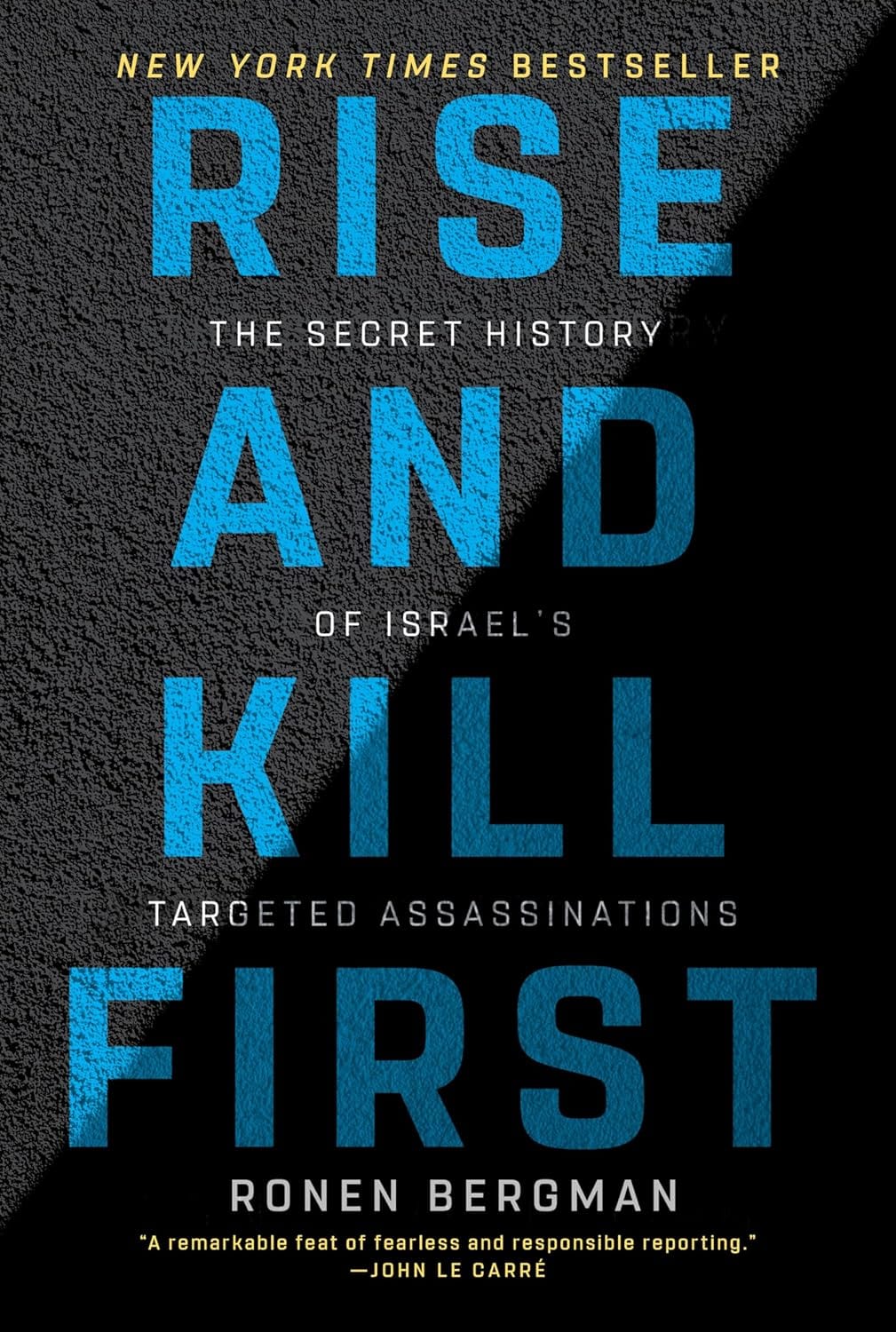
Rise and Kill First - Targeted Assassination (2018)
Below is a chronological working timeline of the major assassinations, attempted assassinations, and targeted-killing episodes discussed in Rise and Kill First. This is not every killing operation Bergman mentions; it is a structured timeline of the most historically significant named cases and representative campaigns. Bergman states that Israel conducted roughly 500 targeted-killing operations before the Second Intifada, about 1,000 more during the Second Intifada, and about 800 afterward up to the book’s writing, so a complete event-by-event table would be much larger.
Bergman also stresses that many operations remain officially unacknowledged; Israeli censorship often frames them as claims made “according to foreign publications.”
Timeline of Major Assassinations and Targeted Killings
| Year / Date | Target | Affiliation / Role | Location | Israeli / Zionist Actor | Tactic Used | Result | Strategic / Historical Significance |
|---|---|---|---|---|---|---|---|
| 1916 | Aref al-Arsan | Bedouin policeman accused of aiding Ottoman forces and torturing Jewish prisoners | Ottoman Palestine | Hashomer | Close-range shooting | Killed | Early precedent for Jewish underground “punitive” killing before the state existed. |
| 1923 | Tewfik Bey | Arab police officer accused of aiding the Jaffa mob attack on Jews | Tel Aviv | Haganah-linked hit squad | Handgun assassination in public street | Killed | One of the first Haganah-linked retaliatory killings; framed as deterrence and honor. |
| 1924 | Jacob de Haan | Anti-Zionist Haredi political activist | Jerusalem | Haganah-linked operatives | Shot outside synagogue | Killed | Important early case of killing a Jewish political opponent; later viewed as a dangerous precedent. |
| 1942 | Tom Wilkin and Geoffrey Morton | British CID officers targeting Jewish undergrounds | Tel Aviv | Lehi | Bomb trap | Failed against intended targets; killed other police officers | Early Lehi attempt at “personal terror” against British security officials. |
| Sept. 29, 1944 | Tom Wilkin | British CID officer, expert in infiltrating Jewish undergrounds | Jerusalem | Lehi | Street ambush; revolver fire | Killed | Bergman uses this as a foundational episode showing how underground enemies became “targets.” |
| Nov. 1944 | Lord Moyne | British minister of state in Cairo | Cairo, Egypt | Lehi | Close-range pistol attack at car | Killed | Politically damaging: Churchill condemned Lehi, and the killing may have harmed British sympathy for Zionism. |
| 1945–46 | Former SS / Gestapo figures | Nazis and Nazi collaborators | Austria / Italy / postwar Europe | Gmul, Haganah-linked revenge unit | Abduction, interrogation, shooting | Multiple killed | Post-Holocaust revenge campaign; framed as “recompense” rather than indiscriminate vengeance. |
| 1947–48 | Arab local leaders under “Zarzir” plan | Arab political / military leadership in Palestine | Mandatory Palestine | Haganah | Planned assassinations | Mixed / selective implementation | Shows shift from defensive militia to pre-state strategic assassination planning. |
| 1956 | Mustafa Hafez | Egyptian intelligence officer organizing fedayeen attacks from Gaza | Gaza / Egyptian-administered territory | Israeli intelligence | Booby-trapped parcel / explosive device | Killed | Early state-era targeted killing aimed at disrupting cross-border fedayeen networks. |
| 1956 | Salah Mustafa | Egyptian military intelligence figure linked to anti-Israel operations | Jordanian / Egyptian-linked arena | Israeli intelligence | Explosive parcel / covert device | Killed | Part of the same campaign against Arab officers directing fedayeen infiltration. |
| 1962 | Heinz Krug | German scientist / arms broker tied to Egypt’s missile program | Munich, West Germany | Mossad-attributed | Abduction / disappearance; presumed killing | Disappeared / presumed killed | Part of the campaign against German scientists helping Egypt develop missiles. |
| 1960s | German scientists in Egypt missile program | Scientists and engineers aiding Nasser | Egypt / Europe | Mossad | Intimidation, threats, mail bombs, pressure campaigns | Mixed results | Reflects Holocaust-shadowed fear of German expertise enabling Arab strategic weapons. |
| 1965 | Herberts Cukurs | Latvian Nazi collaborator accused in Holocaust atrocities | Montevideo, Uruguay | Mossad | Lured to safe house; killed at close range | Killed | Revenge / justice operation against Holocaust perpetrator beyond formal courts. |
| Oct. 1972 | Wael Zwaiter | Palestinian intellectual; alleged Black September link | Rome, Italy | Mossad | Close-range shooting | Killed | Early post-Munich killing in Israel’s campaign against Palestinian militants abroad. |
| Dec. 1972 | Mahmoud Hamshari | PLO representative in France; alleged Black September link | Paris, France | Mossad | Explosive device hidden in telephone | Killed | Demonstrated Mossad’s use of technical assassination methods in Europe. |
| Jan. 1973 | Hussein al-Bashir | Fatah / Black September figure | Nicosia, Cyprus | Mossad | Bomb placed in bed / hotel room | Killed | Part of the post-Munich campaign. |
| Apr. 1973 | Muhammad Yusuf al-Najjar | Senior PLO / Black September figure | Beirut, Lebanon | IDF Sayeret Matkal / Mossad support | Commando raid, close-quarter shooting | Killed | Part of Operation Spring of Youth; high-profile raid into Beirut. |
| Apr. 1973 | Kamal Adwan | Senior Fatah commander | Beirut, Lebanon | Israeli commandos | Apartment raid / shooting | Killed | Same Beirut raid; aimed at senior PLO infrastructure. |
| Apr. 1973 | Kamal Nasser | PLO spokesman / intellectual | Beirut, Lebanon | Israeli commandos | Apartment raid / shooting | Killed | Killing remains controversial because of his political / literary role. |
| Apr. 1973 | Basil al-Kubaisi | PFLP-linked militant / academic | Paris, France | Mossad | Street shooting | Killed | Continued European campaign against Palestinian operatives. |
| June 1973 | Muhammad Boudia | Algerian-born PFLP operative | Paris, France | Mossad-attributed | Car bomb | Killed | Example of Mossad’s use of vehicle explosives against transnational militants. |
| July 1973 | Ahmed Bouchiki | Moroccan waiter misidentified as Ali Hassan Salameh | Lillehammer, Norway | Mossad team | Close-range shooting | Wrong man killed | Major operational failure; exposed Mossad operatives and damaged Israel diplomatically. |
| 1978 | Wadie Haddad | PFLP external operations chief; hijacking planner | Died in East Germany after illness | Mossad-attributed | Poisoning | Killed | One of the book’s most famous covert poison cases; title “Death in the Toothpaste” refers to this type of operation. |
| Jan. 1979 | Ali Hassan Salameh | Black September / Fatah security figure; alleged Munich planner | Beirut, Lebanon | Mossad | Remote car bomb | Killed; civilians also killed | Long hunt after Lillehammer failure; major symbolic post-Munich success but diplomatically complex because of Salameh’s CIA contacts. |
| 1988 | Abu Jihad / Khalil al-Wazir | Fatah deputy leader; PLO military strategist | Tunis, Tunisia | Israeli commandos / Mossad support | Long-range commando raid; close-range shooting | Killed | Tactical success, but did not stop the First Intifada, showing limits of leadership decapitation. |
| 1992 | Abbas al-Musawi | Hezbollah secretary-general | Southern Lebanon | IDF / Israeli Air Force | Helicopter missile strike on convoy | Killed; wife and child also killed | Produced severe blowback: Hezbollah retaliation and rise of Hassan Nasrallah. Bergman presents this as a major case of tactical success with strategic cost. |
| 1995 | Fathi Shaqaqi | Founder / leader of Palestinian Islamic Jihad | Malta | Mossad-attributed | Motorcycle or close-range shooting | Killed | Removed a major PIJ leader; showed Mossad reach in the Mediterranean. |
| Jan. 1996 | Yahya Ayyash, “the Engineer” | Hamas master bomb maker | Gaza | Shin Bet / Israeli intelligence | Booby-trapped cellphone | Killed | Technically successful, but Hamas retaliatory bombings badly damaged the Oslo political climate. |
| Sept. 1997 | Khaled Mashal | Hamas political leader | Amman, Jordan | Mossad | Attempted poisoning | Failed; agents captured; Israel forced to provide antidote | Major diplomatic humiliation; Israel had to release Sheikh Ahmed Yassin. |
| Mar. 1998 | Mohi al-Din Sharif | Hamas bomb maker, “Engineer No. 2” | Ramallah | Shin Bet-attributed | Explosive device / booby-trapped vehicle context | Killed | Removed a successor to Ayyash; Bergman links him to Hamas bomb-building after Ayyash’s death. |
| 1998 | Adel and Imad Awadallah | Hamas military leaders in West Bank | Hebron-area / West Bank | Israeli security forces | Raid / gunfire | Killed | Part of Shin Bet’s campaign against Hamas’s West Bank military infrastructure. |
| Nov. 2000 | Hussein Abayat | Tanzim / Fatah militant commander | Bethlehem area | IDF / Israeli Air Force | Helicopter missile strike | Killed; bystanders also killed | Often treated as one of the first targeted killings of the Second Intifada. |
| Jan. 2002 | Raed Karmi | Tanzim commander | Tulkarm, West Bank | Shin Bet / IDF-attributed | Roadside explosive device | Killed | His killing helped intensify the Second Intifada cycle of retaliation. |
| July 22, 2002 | Salah Shehade | Hamas military commander in Gaza | Gaza City | Shin Bet / Israeli Air Force | F-16 dropped one-ton bomb | Target killed; wife, daughter, assistant, and civilians including children also killed | Bergman treats this as a central moral failure: the target was eliminated, but civilian deaths made the operation catastrophic. |
| Mar. 2003 | Ibrahim al-Makadmeh | Senior Hamas political / military figure | Gaza | Israeli Air Force | Helicopter missile strike | Killed | Example of expanded target categories during the Second Intifada. |
| Mar. 22, 2004 | Sheikh Ahmed Yassin | Hamas founder and spiritual leader | Gaza City | Israeli Air Force / Shin Bet | Helicopter missile strike after mosque prayers | Killed | Highly consequential leadership decapitation; symbolically powerful and internationally controversial. |
| Apr. 17, 2004 | Abdel Aziz al-Rantisi | Hamas leader after Yassin | Gaza City | Israeli Air Force / Shin Bet | Helicopter missile strike on vehicle | Killed | Continued decapitation of Hamas senior leadership within weeks of Yassin’s killing. |
| 2007 | Muhammad Suleiman / “Maurice” | Syrian general; Assad adviser linked to Syrian nuclear and Hezbollah arms channels | Tartus / Syrian coast | Mossad-attributed | Long-range shooting / sniper-style maritime operation | Killed | Connected to Israeli concerns over Syria, Hezbollah, and nuclear proliferation. |
| Feb. 2008 | Imad Mughniyeh | Hezbollah external operations chief | Damascus, Syria | Mossad with U.S. cooperation, per Bergman | Remote-detonated bomb hidden in vehicle component | Killed | One of the most significant assassinations in the book; targeted a major Hezbollah / Iranian-network operator. |
| Jan. 2010 | Mahmoud al-Mabhouh | Hamas arms procurement operative | Dubai, UAE | Mossad-attributed | Hotel-room killing; drugging / suffocation method alleged; forged passports | Killed | Tactical success but strategic embarrassment after Dubai reconstructed the team’s movements through CCTV. |
| 2010 | Masoud Alimohammadi | Iranian nuclear-linked scientist / physicist | Tehran, Iran | Mossad-attributed in Bergman’s narrative / foreign reports | Explosive device near vehicle / motorcycle-bomb style | Killed | Part of campaign to delay Iran’s nuclear program through scientist targeting. |
| 2010 | Majid Shahriari | Iranian nuclear scientist | Tehran, Iran | Mossad-attributed | Magnetic / attached vehicle bomb | Killed | One of several Iranian scientist killings using vehicle-based explosives. |
| 2010 | Fereydoon Abbasi | Iranian nuclear scientist | Tehran, Iran | Mossad-attributed | Magnetic / attached vehicle bomb | Survived | Failed or partial success; shows simultaneous targeting pattern. |
| 2011 | Darioush Rezaeinejad | Iranian scientist / engineer | Tehran, Iran | Mossad-attributed | Shooting by assailants on motorcycle | Killed | Continued pressure on Iranian technical personnel. |
| 2011 | Hassan Tehrani Moghaddam | IRGC missile-program commander | Near Tehran, Iran | Mossad-attributed / sabotage narrative | Explosion at missile base | Killed with others | Major blow to Iran’s missile program; Bergman’s prologue notes an IRGC general in charge of missiles was killed with seventeen men. |
| 2012 | Mostafa Ahmadi Roshan | Iranian nuclear official / scientist | Tehran, Iran | Mossad-attributed | Magnetic bomb attached to car | Killed | Part of Dagan-era / post-Dagan covert campaign against Iranian nuclear infrastructure. |
Tactics by Category
| Tactic Type | Typical Period | Examples | Strategic Logic | Main Risk |
|---|---|---|---|---|
| Close-range handgun assassination | 1920s–1970s | de Haan, Wilkin, Lord Moyne, Zwaiter, al-Kubaisi, Shaqaqi | Simple, deniable, psychologically direct | Capture of operatives; mistaken identity; diplomatic exposure |
| Bomb traps / parcel bombs / hidden explosives | 1940s–1970s | 1942 Lehi attempt, Mustafa Hafez, Salameh, Boudia | Kill target without open battle | Civilian casualties; forensic traceability |
| Poisoning | 1970s–1990s | Wadie Haddad, attempted Mashal killing | Quiet death; plausible deniability | Medical detection; failure; diplomatic crisis if agents caught |
| Commando raids | 1970s–1980s | Operation Spring of Youth, Abu Jihad | Kill senior figures in protected locations | Escalation; civilian deaths; loss of commandos |
| Vehicle bombs / remote detonation | 1970s–2000s | Ali Hassan Salameh, Imad Mughniyeh | Allows surveillance-based timing | Collateral damage; exposure of networks |
| Helicopter missile strikes | 1990s–2000s | Abbas al-Musawi, Yassin, Rantisi, al-Makadmeh | Fast strike against mobile targets | High visibility; civilian casualties; retaliation |
| Fighter-aircraft bombing | 2000s | Salah Shehade | Guaranteed destruction of hardened / hidden target | Disproportionate civilian harm; legal and moral scandal |
| Drone-assisted targeting | 1990s onward | Second Intifada targeting system | Real-time surveillance and rapid strike cycle | Normalizes killing; compresses deliberation time |
| Hotel-room covert killing | 2010 | Mahmoud al-Mabhouh | Quiet killing in foreign territory | CCTV, passport exposure, diplomatic blowback |
| Magnetic / attached vehicle bombs | 2010s | Iranian nuclear scientists | Precision attack during daily routine | Attribution, escalation, civilian proximity |
Pattern Notes
- Early period, 1910s–1940s: Assassination emerges from underground Zionist militias as a weapon of self-defense, revenge, political intimidation, and anti-British struggle.
- State formation, 1950s–1960s: Israel turns underground methods into state intelligence practice, especially against fedayeen organizers, Nazi perpetrators, and Arab strategic-weapons projects.
- Post-Munich era, 1970s: The Mossad internationalizes targeted killing, using European safe houses, surveillance teams, bombs, and close-range assassinations.
- Lebanon / Hezbollah era, 1980s–1990s: Leadership targeting expands, but blowback becomes clearer, especially after Abbas al-Musawi’s killing and Hezbollah’s subsequent growth.
- Second Intifada, 2000s: Targeted killing becomes routinized and bureaucratized through Shin Bet intelligence, drone surveillance, helicopters, fighter aircraft, and real-time command centers.
- Iran era, 2000s–2010s: The assassination system is repurposed for counterproliferation, targeting scientists, missile officials, procurement agents, and strategic network nodes.
The Book’s Big Lesson from the Timeline
Bergman’s recurring conclusion is that Israeli assassination policy often produced impressive tactical success but ambiguous or negative strategic outcomes. Killing a target could disrupt a cell, avenge an attack, or delay a weapons program, but it could also produce retaliation, diplomatic isolation, civilian deaths, or more capable successors. The most important pattern is not simply “Israel kills its enemies”; it is that targeted killing became a default instrument of statecraft, sometimes substituting for broader political strategy.
Executive Summary
Ronen Bergman’s central argument is that targeted killing became one of Israel’s defining instruments of national security, growing out of Zionist underground violence, Holocaust trauma, permanent siege psychology, intelligence innovation, and the belief that killing key individuals can prevent larger wars. The book is not simply a catalog of assassinations; it is a history of how a state built a covert system in which tactical brilliance repeatedly coexisted with moral corrosion, legal ambiguity, civilian casualties, diplomatic fallout, and strategic overconfidence.
Bergman’s thesis is double-edged: Israeli assassination policy has sometimes saved lives, disrupted terrorist networks, delayed hostile weapons programs, and created deterrence. But the same policy has also created a separate security-state morality, normalized extrajudicial violence, produced catastrophic mistakes, and often failed to solve the political conflicts that generated the targets in the first place.
[!quote] Governing Maxim
“rise up and kill him first.” — Page 6
A Note on the Sources
Main Ideas
Bergman opens by explaining the difficulty of writing an unauthorized history of Israeli intelligence. The Israeli intelligence community is protected by military censorship, secrecy laws, institutional loyalty, and intimidation of sources. The author emphasizes that the book is built from roughly one thousand interviews and documents supplied by insiders, many without official authorization.
The methodological problem is that intelligence officials, politicians, and operatives are often self-interested narrators. Bergman therefore presents cross-checking as essential: oral testimony is weighed against documents, rival accounts, and operational records where available.
Key Concepts
- Unauthorized intelligence history: A history written without institutional cooperation and often against institutional resistance.
- Foreign publication fiction: Israeli censorship often requires media to attribute sensitive claims to “foreign publications” rather than official acknowledgment.
- Source manipulation problem: Intelligence veterans may leak or testify to protect reputations, settle scores, or shape history.
Prologue
Main Ideas
The prologue frames the book through Meir Dagan, former Mossad chief, whose career embodies the logic of assassination as an alternative to open war. Dagan believed that clandestine sabotage, targeted killing, and covert disruption could delay or prevent existential threats, especially Iran’s nuclear program. He opposed Netanyahu and Ehud Barak’s contemplated strike on Iran because he believed war should be used only as a last resort.
Bergman then defines the book’s central dilemmas: does assassination work, and can a democracy morally or legally justify premeditated killing outside ordinary judicial process? He argues that Israel has used targeted killing more extensively than any other Western democracy since World War II, developing an intelligence-assassination machine later studied and partly adopted by the United States after 9/11.
[!quote] Operational Logic
“kill the driver” — Page 11
Key Concepts
- Targeted killing: Killing a specific person to prevent future harm, disrupt an organization, or alter strategic outcomes.
- Assassination as war-prevention: Dagan’s argument that killing a few key figures may be more moral than launching a broader war.
- Tactical success vs. strategic failure: A repeated theme: successful operations do not necessarily solve the underlying conflict.
Chapter 1: In Blood and Fire
Main Ideas
Bergman traces Israel’s assassination tradition to pre-state Zionist militias. The chapter opens with Lehi’s 1944 assassination of British CID officer Tom Wilkin, who had infiltrated and disrupted Jewish underground networks. The killing illustrates how enemies were reduced from persons to targets.
The deeper genealogy begins with Bar-Giora and Hashomer, early Jewish self-defense groups formed by practical Zionists who believed Jews must defend themselves rather than rely on foreign rulers or Arab guards. Their motto, “In blood and fire Judea will rise,” expresses the chapter’s central motif: national rebirth through organized force.
The chapter then follows the transition from scattered self-defense to Haganah discipline under Ben-Gurion, who opposed “personal terror” as politically dangerous. But the Holocaust and the encounter with Nazi crimes changed the moral climate. Revenge units such as Gmul hunted Nazis, embedding a precedent for extraterritorial Jewish vengeance.
Key Concepts and Terms
- Practical Zionism: Building the Jewish homeland through settlement, labor, and self-defense rather than waiting for diplomacy.
- Personal terror: Lehi’s term for assassinations of specific enemies.
- Gmul: “Recompense”; a Haganah-linked revenge unit targeting Nazis after World War II.
- Yishuv: The Jewish community in pre-state Palestine.
Chapter 2: A Secret World Is Born
Main Ideas
After the 1947 UN partition vote, violence between Jews and Arabs escalated into civil war. Bergman shows how the emerging Jewish state required intelligence capabilities before it formally existed. Early efforts targeted Arab military organizers such as Hassan Salameh and developed systems for identifying, tracking, and eliminating enemies.
This chapter follows the institutional birth of Israeli intelligence out of the Haganah, Palmach, and wartime improvisation. The new state inherited underground habits: secrecy, compartmentalization, forged documents, covert action, and the idea that political survival justified actions outside ordinary legal norms.
The chapter also introduces the early tension between statehood and underground violence. Once Israel became a state, clandestine methods did not disappear; they were absorbed into state institutions.
Key Concepts and Terms
- Shai: Haganah intelligence service, predecessor to later Israeli intelligence bodies.
- State capture of underground methods: The transformation of militia tactics into official statecraft.
- Preemptive elimination: Killing individuals before they can organize future attacks.
Chapter 3: The Bureau for Arranging Meetings with God
Main Ideas
The chapter covers early-1950s conflict with fedayeen infiltrators operating from Gaza and the West Bank. Israel faced thousands of border infiltrations, some by refugees seeking property and some by militants attacking civilians. Bergman shows how Israeli leaders increasingly treated cross-border violence as a problem to be solved through retaliation and targeted killing.
Ariel Sharon and Unit 101 become central. Sharon’s raids embodied an aggressive doctrine: respond to Arab attacks with disproportionate force to restore deterrence. The chapter also explores targeted operations against Egyptian intelligence figures supporting fedayeen activity.
The title reflects the dark humor of Israeli units that saw killing as bureaucratic work: arranging a meeting between the target and God.
Key Concepts and Terms
- Fedayeen: Palestinian or Arab militants conducting cross-border raids into Israel.
- Unit 101: Ariel Sharon’s commando unit known for reprisal raids.
- Deterrent retaliation: Violence intended not only to punish but to change enemy behavior.
Chapter 4: The Entire Supreme Command, with One Blow
Main Ideas
This chapter centers on the 1956 Suez Crisis and Israeli efforts to target Egyptian military leadership. Israel’s conflict with Nasser’s Egypt created incentives for decapitation thinking: the belief that a war or hostile campaign might be altered by removing key commanders.
Bergman also places Israeli targeted killing in the broader setting of regional warfare, British-French interests in the Suez Canal, and Nasser’s anti-colonial nationalism. Assassination becomes one tool among sabotage, signals intelligence, commando operations, and conventional war.
Key Concepts and Terms
- Decapitation strike: An operation designed to kill an enemy command structure.
- Suez Crisis: 1956 war involving Israel, Britain, France, and Egypt after Nasser nationalized the canal.
- SIGINT: Signals intelligence, central to locating and tracking targets.
Chapter 5: “As If the Sky Were Falling on Our Heads”
Main Ideas
Egypt’s missile program in the early 1960s terrified Israeli leaders, especially because German scientists formerly connected to Nazi Germany were assisting Egypt. The chapter follows Mossad efforts to intimidate, kidnap, threaten, and possibly assassinate scientists working for Nasser.
Isser Harel’s aggressive campaign against the German scientists reveals a recurring pattern: existential fear drives Israeli intelligence toward extreme measures. Yet Bergman also shows institutional conflict. Some Israeli officials thought Harel exaggerated the threat and risked diplomatic damage, especially with West Germany.
The chapter is important because it shows the collision between Holocaust memory, weapons technology, German guilt, and Israeli security doctrine.
Key Concepts and Terms
- Existential threat perception: The belief that hostile weapons programs may imperil Israel’s survival.
- German scientists affair: Mossad campaign against Germans assisting Egypt’s missile program.
- Psychological operations: Threats, letters, intimidation, and covert pressure short of direct killing.
Chapter 6: A Series of Catastrophes
Main Ideas
Under Meir Amit, the Mossad becomes more professionalized, technologically capable, and operationally ambitious. The creation of Caesarea, a special operations division, marks a major institutional development in Israel’s covert-action apparatus.
But the chapter emphasizes failure as much as progress. Operations such as the killing of former Latvian Nazi collaborator Herberts Cukurs show Mossad reach, while other missions reveal poor planning, overconfidence, and organizational growing pains. Bergman portrays the intelligence community as moving from improvisational militancy toward bureaucratic specialization, though not yet toward consistent accountability.
Key Concepts and Terms
- Caesarea: Mossad operations division responsible for covert action abroad.
- Bayonet / Kidon: Elite assassination elements associated with Mossad operations.
- Operational professionalization: The shift from underground-style violence to specialized intelligence tradecraft.
Chapter 7: “Armed Struggle Is the Only Way to Liberate Palestine”
Main Ideas
Bergman turns to the Palestinian national movement, especially Fatah and the PLO. The chapter explains how Palestinian displacement after 1948 created refugee camps and militant organizations committed to armed struggle against Israel. Yasser Arafat and Abu Jihad emerge as central figures in transforming Palestinian politics into an international revolutionary cause.
For Israel, the PLO created a new type of enemy: decentralized, transnational, ideologically motivated, and politically symbolic. Traditional military responses were insufficient; intelligence penetration and targeted killing became increasingly attractive.
Key Concepts and Terms
- Fatah: Palestinian nationalist organization founded by Arafat and others.
- PLO: Palestine Liberation Organization, umbrella body for Palestinian factions.
- Armed struggle doctrine: The idea that Palestine could be liberated only through revolutionary violence.
Chapter 8: Meir Dagan and His Expertise
Main Ideas
This chapter introduces Meir Dagan as a younger officer in Gaza and Sinai, long before he became Mossad chief. Bergman presents Dagan as ruthless, creative, and deeply shaped by counterinsurgency warfare. His methods included disguised units, deception, ambushes, and targeted elimination of militants.
Dagan’s career embodies a key theme: Israeli targeted killing doctrine was not developed only in headquarters. It was refined in contested spaces such as Gaza, where military, intelligence, policing, and psychological warfare blurred together.
Key Concepts and Terms
- Counterinsurgency: Military and intelligence operations against guerrilla networks embedded in civilian environments.
- Mista’arvim-style tactics: Israeli use of operatives disguised as Arabs to infiltrate hostile environments.
- Field innovation: Tactical practices created by commanders under pressure before being formalized institutionally.
Chapter 9: The PLO Goes International
Main Ideas
The PLO and allied factions globalized the conflict through hijackings, embassy attacks, hostage operations, and spectacular violence designed for international attention. The 1972 Munich massacre marks a turning point: Israel concluded that Palestinian militants operating abroad had to be hunted internationally.
Bergman shows the birth of an Israeli global manhunt. The campaign after Munich was not only revenge; it was also deterrence, disruption, and a message that distance would not protect those involved in attacks on Israelis.
Key Concepts and Terms
- Black September: Palestinian organization responsible for the Munich attack.
- Globalized terrorism: Use of international targets to publicize a national cause.
- Retaliatory deterrence: Killing perpetrators and organizers to deter future attacks.
Chapter 10: “I Have No Problem with Anyone That I’ve Killed”
Main Ideas
This chapter examines the operational phase of Israel’s post-Munich campaign, including killings in Europe and the Middle East. Bergman emphasizes the combination of intelligence collection, surveillance, forged identities, explosives, and close-range assassination.
The chapter also examines the psychology of operatives. Some saw themselves as soldiers in a necessary war; others developed emotional distance from killing. The bureaucratization of assassination allowed moral responsibility to be distributed across planners, surveillance teams, technical specialists, political authorizers, and shooters.
Key Concepts and Terms
- Operation Wrath of God / Bayonet operations: Israeli campaign against figures linked to Palestinian attacks.
- Operational compartmentalization: Dividing tasks so few participants see the entire mission.
- Moral distancing: Psychological separation of operative identity from the act of killing.
Chapter 11: “Wrong Identification of a Target Is Not a Failure. It’s a Mistake.”
Main Ideas
The Lillehammer affair is the chapter’s core disaster. Mossad operatives mistakenly killed Ahmed Bouchiki, a Moroccan waiter in Norway, believing he was Ali Hassan Salameh. The operation exposed Israeli agents, damaged Mossad prestige, and revealed the risks of weak identification, confirmation bias, and operational haste.
Bergman uses this chapter to show how assassination systems fail when bureaucratic momentum overwhelms evidentiary caution. The title reflects a chilling distinction: institutions may reinterpret fatal errors as technical mistakes rather than moral failures.
Key Concepts and Terms
- Lillehammer affair: 1973 mistaken killing in Norway.
- Target misidentification: Fatal failure to verify identity before lethal action.
- Confirmation bias: Interpreting ambiguous evidence as confirmation of a desired conclusion.
Chapter 12: Hubris
Main Ideas
The chapter explores Israeli overconfidence after operational successes, especially in the 1970s. It connects clandestine action to broader strategic behavior: raids, hostage rescue planning, and operations against Palestinian factions abroad.
Bergman highlights how elite units and intelligence agencies can become convinced that technical skill solves political problems. “Hubris” names the condition in which tactical mastery produces strategic blindness.
Key Concepts and Terms
- Operational hubris: Overconfidence born from repeated tactical success.
- Special operations culture: A culture that prizes daring, secrecy, improvisation, and elite competence.
- Strategic blindness: Failure to ask whether successful violence advances long-term political goals.
Chapter 13: Death in the Toothpaste
Main Ideas
This chapter focuses on poison and covert methods, including the killing of Wadie Haddad and the continued pursuit of Ali Hassan Salameh. Bergman presents assassination as a field of technical experimentation: bombs, toxins, surveillance devices, forged identities, and remote triggers.
The eventual killing of Salameh in Beirut shows Mossad’s patience and reach. But Bergman also complicates the story: Salameh had contacts with the CIA, and his death affected not only Israeli-Palestinian conflict but also American intelligence channels.
Key Concepts and Terms
- Covert poisoning: Killing through substances designed to obscure cause or delay detection.
- Human intelligence network: Use of agents, informants, and surveillance teams to track targets over time.
- Collateral diplomacy: Intelligence operations may unintentionally affect third-party relationships.
Chapter 14: A Pack of Wild Dogs
Main Ideas
The chapter moves toward Lebanon and the prelude to the 1982 war. Israeli leaders and commanders saw Lebanon as a theater where the PLO could be crushed, but Bergman shows competing agendas among Ariel Sharon, Rafael Eitan, Menachem Begin, Meir Dagan, and other figures.
The phrase “pack of wild dogs” captures a doctrine of relentless pursuit. Yet Lebanon becomes a warning: the more Israel used force to solve the Palestinian problem externally, the more it became entangled in Lebanese sectarian politics and regional escalation.
Key Concepts and Terms
- Lebanon theater: The cross-border arena where PLO, Israeli, Syrian, and Lebanese militia interests collided.
- Punitive pursuit: Continuous offensive pressure intended to exhaust enemy networks.
- Mission expansion: Tactical objectives grow into broader political-military ambitions.
Chapter 15: “Abu Nidal, Abu Shmidal”
Main Ideas
The attempted assassination of Israeli ambassador Shlomo Argov by Abu Nidal’s organization became the trigger for Israel’s 1982 invasion of Lebanon, even though Abu Nidal was hostile to Arafat’s PLO. Bergman shows how leaders used the attack to justify a war already desired by Sharon and others.
The chapter demonstrates how targeted violence can be absorbed into broader strategic manipulation. A single attack becomes a casus belli, while distinctions among Palestinian factions are politically minimized.
Key Concepts and Terms
- Abu Nidal Organization: Palestinian rejectionist faction hostile to both Israel and Arafat.
- Casus belli: Event used to justify war.
- Factional flattening: Treating distinct enemy groups as interchangeable for political purposes.
Chapter 16: Black Flag
Main Ideas
This chapter examines the moral and political catastrophe of the Lebanon War, including the road to Sabra and Shatila. Bergman explores Israeli responsibility, Sharon’s conduct, Begin’s deterioration, and the military-intelligence failures surrounding alliance with the Lebanese Phalange.
“Black flag” refers to actions so morally compromised that they should be recognized as illegitimate. The chapter shifts the book’s focus from assassination as precision violence to the wider consequences of militarized policy.
Key Concepts and Terms
- Sabra and Shatila: Massacre by Lebanese Phalangists in areas under Israeli military control.
- Black flag doctrine: A moral boundary beyond which orders are manifestly illegal or immoral.
- Proxy reliance: Using local allies to achieve goals while creating deniability and risk.
Chapter 17: The Shin Bet Coup
Main Ideas
The chapter centers on the Bus 300 affair and the Shin Bet’s internal crisis. After Palestinian hijackers were captured alive, Shin Bet personnel killed them and then covered it up. The scandal exposed how security agencies can develop separate norms of truth and legality.
Bergman portrays this as an institutional coup not in the sense of seizing the state, but in the sense of a security service attempting to place itself beyond ordinary law, investigation, and accountability.
Key Concepts and Terms
- Bus 300 affair: 1984 Shin Bet killing of captured hijackers and subsequent cover-up.
- Security-state autonomy: Intelligence agencies acting as if national security exempts them from law.
- Internal accountability crisis: The conflict between loyalty to service and loyalty to law.
Chapter 18: Then Came a Spark
Main Ideas
This chapter follows the assassination of Abu Jihad in Tunis. Israel viewed Abu Jihad as a central planner of attacks and a key figure in the PLO’s military apparatus. The operation required long-range intelligence coordination, naval and commando capabilities, and political authorization.
The killing was tactically impressive, but Bergman places it at the edge of the First Intifada, suggesting that removing senior figures did not extinguish Palestinian mobilization. Mass uprising came from social and political conditions that assassination could not eliminate.
Key Concepts and Terms
- Abu Jihad: Senior Fatah/PLO military strategist.
- Long-range raid: Operation projecting force far beyond Israel’s borders.
- Mass uprising: Popular revolt that cannot be reduced to individual leadership targets.
Chapter 19: Intifada
Main Ideas
The First Intifada changed Israel’s security problem. Instead of mainly confronting external guerrilla networks, Israel faced mass Palestinian resistance inside territories it controlled. The Shin Bet had to adapt from hunting external militants to managing uprising, collaborators, interrogations, and local networks.
The chapter also covers Hamas’s emergence, especially Sheikh Ahmed Yassin. Bergman shows how Israel initially misunderstood or underestimated Islamist organization, partly because it was seen as a counterweight to secular Palestinian nationalism.
Key Concepts and Terms
- First Intifada: Palestinian uprising beginning in 1987.
- Hamas: Islamist Palestinian organization emerging from the Muslim Brotherhood milieu.
- Collaborator networks: Local informants used for intelligence inside Palestinian society.
Chapter 20: Nebuchadnezzar
Main Ideas
This chapter turns to Iraq and Saddam Hussein. Bergman discusses Israeli concern over Iraqi strategic weapons and the memory of the Osirak reactor strike. Israeli intelligence tracked scientists, weapons programs, and international suppliers.
The chapter illustrates a recurring Israeli strategic category: hostile states seeking unconventional weapons. Assassination and sabotage are treated as ways to delay capability when conventional war is too costly or diplomatically dangerous.
Key Concepts and Terms
- Nebuchadnezzar: Code-linked reference to Iraq/Babylon and Saddam’s regional ambitions.
- Counterproliferation: Covert or overt action to stop hostile weapons programs.
- Supplier networks: International procurement chains enabling weapons development.
Chapter 21: Green Storm Rising
Main Ideas
The Iranian Revolution and the rise of Hezbollah transformed Israel’s threat environment. Bergman traces the emergence of Shiite militancy, Iranian sponsorship, and the Lebanese battlefield. Hezbollah was not simply another Palestinian faction; it was a disciplined, religiously motivated, Iranian-backed organization embedded in Lebanon.
Imad Mughniyeh becomes central as a symbol of the new enemy: elusive, sophisticated, transnational, and capable of spectacular violence. Israel’s assassination machine now faced adversaries who learned, adapted, and retaliated globally.
Key Concepts and Terms
- Hezbollah: Lebanese Shiite militant and political organization backed by Iran.
- Iranian proxy warfare: Use of allied non-state actors to project power.
- Asymmetric adaptation: Weaker actors learning to counter a stronger intelligence-military power.
Chapter 22: The Age of the Drone
Main Ideas
The chapter marks the transition to aerial surveillance and drone-enabled killing. Israel’s campaign in Lebanon increasingly relied on real-time intelligence, signals collection, helicopters, drones, and command centers. The killing of Hezbollah leader Abbas al-Musawi becomes a key case.
Drone warfare changed the tempo of assassination. Targets could be watched, confirmed, and struck faster. But the same speed increased the temptation to kill and raised the risk of civilian casualties, family deaths, and strategic blowback.
Key Concepts and Terms
- Drone warfare: Use of unmanned systems for surveillance and targeted strikes.
- Sensor-to-shooter cycle: The process by which intelligence rapidly becomes lethal action.
- Leadership targeting: Killing commanders to disrupt organizational capacity.
Chapter 23: Mughniyeh’s Revenge
Main Ideas
After the killing of Abbas al-Musawi, Hezbollah retaliated abroad, including attacks linked to Israeli and Jewish targets in Argentina. Bergman uses this chapter to show the danger of assuming that killing leaders will weaken an enemy without consequences.
The chapter’s logic is retaliatory escalation: assassination may remove one leader while empowering harder-line successors, inviting revenge, or expanding the conflict geographically.
Key Concepts and Terms
- Blowback: Unintended harmful consequences of covert action.
- Retaliatory terrorism: Attacks framed as revenge for previous killings.
- Successor problem: The replacement may be more capable or radical than the target.
Chapter 24: “Just One Switch, Off and On”
Main Ideas
The chapter explores the growth of Hamas’s military capacity, including bomb-making and suicide attacks. Israeli intelligence increasingly focused on figures such as Yahya Ayyash, “the Engineer,” whose technical skill made him unusually dangerous.
The title captures the technical minimalism of bomb-making and remote detonation. It also reflects a larger problem: small devices, individual expertise, and decentralized cells could produce strategic terror.
Key Concepts and Terms
- Yahya Ayyash: Hamas bomb maker known as “the Engineer.”
- Suicide bombing infrastructure: Recruiters, bomb makers, safe houses, handlers, and ideological preparation.
- Technical asymmetry: Low-cost devices producing high political and psychological impact.
Chapter 25: “Bring Us the Head of Ayyash”
Main Ideas
This chapter follows the hunt for Yahya Ayyash and the political-security context of the Oslo period. Israeli leaders faced a dilemma: peace negotiations required cooperation with Arafat, while Hamas attacks undermined public support for peace.
Ayyash’s killing by a booby-trapped phone was a tactical success, but Bergman emphasizes the strategic ambiguity. The assassination removed a key bomb maker, yet Hamas retaliated with devastating suicide bombings that helped destroy the Israeli political climate supporting Oslo.
Key Concepts and Terms
- Oslo process: Israeli-Palestinian peace framework of the 1990s.
- Targeted technical elimination: Removing a person whose specialized skills are hard to replace.
- Political blowback: Tactical success that damages the broader political objective.
Chapter 26: “Sly as a Snake, Naïve as a Little Child”
Main Ideas
The failed Mossad attempt to poison Hamas leader Khaled Mashal in Jordan is one of the book’s major cautionary episodes. Netanyahu approved an operation in a friendly country; when agents were captured, Israel was forced to provide the antidote and release Sheikh Yassin.
Bergman presents the Mashal affair as a failure of judgment, planning, and political risk assessment. The operation strengthened Hamas symbolically, damaged Israel-Jordan relations, and humiliated Mossad.
Key Concepts and Terms
- Khaled Mashal affair: Failed 1997 poisoning attempt in Amman.
- Diplomatic sanctuary problem: Conducting assassinations in countries with which Israel has sensitive relations.
- Operational humiliation: A failed covert action that becomes public and strategically costly.
Chapter 27: A Low Point
Main Ideas
The chapter covers additional late-1990s failures, including the Ansariyeh ambush in Lebanon and Shin Bet struggles against Hamas cells. Israel’s security apparatus experienced a period of demoralization and internal reassessment.
Bergman’s deeper point is that even elite systems decay. Repetition breeds predictability; enemies learn patterns; political leaders demand action; and intelligence can be insufficient despite advanced tools.
Key Concepts and Terms
- Ansariyeh disaster: Failed Israeli commando operation in Lebanon.
- Pattern compromise: Enemy detection of repeated operational methods.
- Institutional low point: A period when confidence, competence, and legitimacy all decline.
Chapter 28: All-Out War
Main Ideas
Ehud Barak’s rise, withdrawal from Lebanon, failed peace efforts, and the outbreak of the Second Intifada frame this chapter. Bergman shows the transition from peace-process optimism to all-out confrontation after Camp David and the violence following Ariel Sharon’s Temple Mount visit.
Israel now confronted mass violence, shootings, lynchings, suicide bombings, and collapsing trust with the Palestinian Authority. Assassination moved from exceptional tool to regular instrument of wartime governance.
Key Concepts and Terms
- Second Intifada: Palestinian uprising beginning in 2000, far more militarized than the first.
- Collapse of Oslo logic: The breakdown of mutual security cooperation and peace expectations.
- Militarization of counterterrorism: Shift from policing and intelligence to sustained lethal campaign.
Chapter 29: “More Suicide Bombers Than Explosive Vests”
Main Ideas
During the Second Intifada, Israel struggled against a large pool of suicide attackers. The Shin Bet initially focused on “ticking bombs,” but the scale of attacks pushed the system toward broader targeting of commanders, recruiters, bomb makers, and organizational infrastructure.
The chapter explains the institutionalization of targeted killing as daily practice. It also shows the ethical problem of expanding target categories: once the immediate attacker is not the only target, the boundary between prevention and punishment becomes blurred.
Key Concepts and Terms
- Ticking bomb: A person directly involved in an imminent attack.
- Expanded target set: Moving from immediate attackers to planners, recruiters, financiers, and ideological leaders.
- Preventive killing: Lethal action justified by future threat rather than completed crime.
Chapter 30: “The Target Has Been Eliminated, but the Operation Failed”
Main Ideas
The killing of Salah Shehade is the chapter’s central case. Israel successfully killed a major Hamas military leader, but the bomb also killed civilians, including children. The operation became a moral, legal, and reputational crisis.
[!quote] Moral Cost
“necessary evil” — Page 12
Bergman uses the case to show the difference between target success and operation success. Eliminating the target is not enough if civilian casualties, legal exposure, and political consequences outweigh the gain.
Key Concepts and Terms
- Salah Shehade strike: 2002 bombing in Gaza that killed the target and civilians.
- Collateral damage: Civilian death or injury caused during attack on a military target.
- Proportionality: Legal and moral assessment of whether expected military advantage justifies civilian harm.
Chapter 31: The Rebellion in Unit 8200
Main Ideas
This chapter examines dissent inside Israel’s signals intelligence system. Some Unit 8200 personnel objected to intelligence practices used in the occupied territories, including information that could enable coercion, blackmail, or targeted killing.
Bergman shows that opposition to assassination policy did not come only from outside critics. It also emerged from within the intelligence community, especially among people who understood how raw data became lethal action.
Key Concepts and Terms
- Unit 8200: Israeli signals intelligence unit.
- Network intelligence officer: Analyst selecting which intelligence leads matter.
- Moral injury inside intelligence: Ethical conflict among personnel whose work enables coercion or killing.
Chapter 32: Picking Anemones
Main Ideas
The chapter covers the escalation of targeted killings during Ariel Sharon’s leadership, including strikes on Hamas figures such as Ibrahim al-Makadmeh and Sheikh Ahmed Yassin. Israel increasingly treated senior ideological and political leaders as legitimate targets when they were linked to militant infrastructure.
The metaphor “picking anemones” suggests routine selection of targets from a field. Bergman’s critique is that assassination became normalized: a bureaucratic workflow rather than an extraordinary measure.
Key Concepts and Terms
- Leadership decapitation campaign: Systematic killing of senior figures in an organization.
- Normalization of targeted killing: When extraordinary lethal power becomes routine governance.
- Ideological target: A political or religious figure treated as operationally responsible for violence.
Chapter 33: The Radical Front
Main Ideas
Bergman shifts to the regional axis of Iran, Syria, Hezbollah, and Palestinian militant groups. Under Meir Dagan, the Mossad refocused on strategic threats beyond the Palestinian arena, especially Iran’s nuclear program and Syrian-Hezbollah-Iranian cooperation.
The chapter frames the “radical front” as a networked adversary: states, proxies, scientists, arms routes, and commanders. Assassination becomes one element of a larger covert campaign including sabotage, cyber operations, supply-chain disruption, and intelligence cooperation with the United States.
Key Concepts and Terms
- Radical Front: Israeli framing of Iran, Syria, Hezbollah, and allied militant networks.
- Network warfare: Targeting nodes in a transnational system rather than a single army.
- Strategic covert campaign: Sustained clandestine effort against weapons, commanders, logistics, and alliances.
Chapter 34: Killing Maurice
Main Ideas
The chapter covers Israeli operations against Syria’s covert nuclear project and Hezbollah commander Imad Mughniyeh. Mossad intelligence on Syrian nuclear activity helped lead to the 2007 strike on the al-Kibar reactor. The later killing of Mughniyeh in Damascus, reportedly with American cooperation, represents one of the most sophisticated assassination operations in the book.
Bergman presents Dagan-era Mossad as tactically formidable: patient, technologically advanced, and willing to operate inside enemy capitals. But the chapter also raises questions about sovereignty, escalation, and the normalization of extrajudicial killing among allied democracies.
Key Concepts and Terms
- Al-Kibar reactor: Syrian nuclear facility destroyed by Israel in 2007.
- Imad Mughniyeh: Hezbollah military commander linked to major attacks.
- Joint covert action: Cooperation between intelligence services in lethal operations.
Chapter 35: Impressive Tactical Success, Disastrous Strategic Failure
Main Ideas
The final chapter focuses on the 2010 Dubai assassination of Mahmoud al-Mabhouh, a Hamas operative involved in weapons procurement. The operation succeeded in killing him, but Dubai authorities reconstructed the mission through CCTV, passports, hotel records, and communications data. The exposure embarrassed Israel and damaged Mossad operations.
The chapter’s title states the book’s final judgment. Israel’s assassination machine can be extraordinarily effective at killing individuals. But tactical brilliance can become strategically self-defeating when it causes diplomatic crises, exposes methods, strengthens enemy narratives, or substitutes killing for policy.
Key Concepts and Terms
- Mahmoud al-Mabhouh assassination: 2010 Dubai killing attributed to Mossad.
- CCTV counterintelligence: Modern surveillance environments make covert movement harder.
- Strategic failure: An operation that achieves the immediate objective while harming broader interests.
Key Concepts Across the Book
- Targeted killing vs. assassination: Bergman treats the legal vocabulary as partly euphemistic. “Targeted killing” sounds regulated and defensive; “assassination” foregrounds premeditated killing.
- The security exception: Israel’s intelligence community often operates under rules different from ordinary democratic legality.
- Deterrence through fear: Killing targets sends a message beyond the individual case: enemies can be reached anywhere.
- Decapitation theory: The belief that removing leaders, commanders, bomb makers, or scientists can disrupt hostile systems.
- Tactical-operational-strategic divide: A mission can succeed tactically, fail operationally, and backfire strategically.
- Holocaust trauma and self-defense doctrine: Bergman repeatedly links Israeli willingness to use lethal preemption to the conviction that Jews must never again depend on others for protection.
- Technological acceleration of killing: Drones, SIGINT, surveillance, cyber tools, and precision munitions shorten the distance between intelligence and lethal force.
- Moral compartmentalization: Assassination systems distribute responsibility across analysts, commanders, lawyers, politicians, and operators.
- Blowback: Killing can produce retaliation, radicalization, diplomatic damage, or more capable successors.
Key Terms
- AMAN: Israeli military intelligence.
- Caesarea: Mossad special operations division.
- Fedayeen: Arab/Palestinian cross-border militants active especially in the 1950s.
- Haganah: Main pre-state Jewish defense organization; precursor to the IDF.
- Hashomer: Early Jewish self-defense organization in Ottoman Palestine.
- Irgun / Etzel: Revisionist Zionist paramilitary organization.
- Lehi / Stern Gang: Radical Zionist underground group that used assassinations against British and other targets.
- Mista’arvim: Israeli undercover personnel operating disguised as Arabs.
- Mossad: Israel’s foreign intelligence service.
- PLO: Palestine Liberation Organization.
- Shin Bet / Shabak: Israel’s internal security service.
- SIGINT: Signals intelligence.
- Targeted killing: State killing of a specific person identified as a security threat.
- Ticking bomb: A person believed to be directly involved in an imminent attack.
- Unit 8200: Israeli signals intelligence unit.
- Yishuv: Jewish community in Palestine before the establishment of Israel.
Critical Analysis
Methodology
Bergman’s methodology is unusually strong for intelligence history because it combines interviews with insiders, leaked or privately supplied documents, operational narratives, and cross-checking between rival accounts. His access to former intelligence chiefs, operatives, politicians, and military personnel gives the book unusual depth.
The weakness is inherent to the genre: much of the material depends on sources with motives. Intelligence veterans may exaggerate successes, minimize failures, shift blame, or justify morally questionable decisions. Bergman is aware of this and often presents competing accounts, but the reader still has to treat some operational details as probabilistic rather than definitive.
Strength of Conclusions
The book’s strongest conclusion is that assassination is often tactically effective but strategically unstable. Bergman supports this across repeated cases: Ayyash, Shehade, Mashal, Mughniyeh, Mabhouh, Abu Jihad, Salameh, and others. The pattern is persuasive because it recurs across decades, enemies, technologies, and political leaders.
His second major conclusion, that Israeli democracy developed a semi-separate legal-moral regime for intelligence operations, is also well supported. The Bus 300 affair, censorship practices, post hoc legal rationalizations, and civilian casualty debates all reinforce this claim.
Biases and Omissions
Bergman writes with deep access to Israeli institutions and a clear understanding of Israeli security fears. This gives the book power, but it also means Palestinian, Lebanese, Iranian, Syrian, and other non-Israeli perspectives often appear primarily through the lens of Israeli threat assessment. The book is not a social history of Palestinian militancy, a legal treatise on international law, or a full moral philosophy of assassination.
The book also tends to focus on high-level decision-makers and spectacular operations. That emphasis can obscure the daily experience of civilians living under the systems that produce the targets: occupation, surveillance, checkpoints, reprisals, rocket fire, bombings, fear, and political radicalization.
Overall Evaluation
As a history of Israeli targeted killing, the book is highly effective. Its main contribution is not merely revealing operations, but showing how assassination became a state habit: a recurring answer to strategic anxiety. Its most important warning is that the capacity to kill precisely can become a substitute for the harder work of political settlement, long-term strategy, and moral accountability.
Questions for Reflection
- When, if ever, can a democracy morally justify killing a person outside a courtroom?
- Does targeted killing prevent larger wars, or does it make political leaders more willing to avoid diplomacy?
- How should states measure success: by targets eliminated, attacks prevented, civilian casualties avoided, or long-term conflict reduction?
- Does the killing of technically skilled individuals, such as bomb makers or nuclear scientists, differ morally from killing political or ideological leaders?
- How does Holocaust memory shape Israeli security doctrine, and where does historical trauma clarify or distort strategic judgment?
- What happens to democratic accountability when intelligence agencies operate under secrecy, censorship, and emergency logic?
- Can a state become tactically excellent at violence while strategically failing to resolve the conflict that produces violence?
Connections
Influential Works and Traditions
- The Babylonian Talmud, Sanhedrin 72:1 — Source of the book’s title and preemptive self-defense maxim.
- Theodor Herzl, The Jewish State — Political Zionist foundation for Jewish sovereignty.
- Revisionist Zionism — Ideological background for Irgun, Lehi, Begin, Shamir, and more militant approaches to force.
- Labor Zionism / Practical Zionism — Background for Ben-Gurion, Haganah, and state-building through settlement and defense.
- Counterinsurgency theory — Relevant to Gaza, Lebanon, the Intifadas, and targeted killing doctrine.
- Just war theory — Especially proportionality, necessity, discrimination, and legitimate authority.
- International humanitarian law — Legal framework for combatants, civilians, and targeted killing.
- Post-9/11 American drone warfare — Bergman argues U.S. targeted killing systems learned significantly from Israeli methods.
Major Thinkers, Leaders, and Operatives Mentioned
- David Ben-Gurion
- Isser Harel
- Meir Amit
- Ariel Sharon
- Menachem Begin
- Yitzhak Shamir
- Yitzhak Rabin
- Ehud Barak
- Benjamin Netanyahu
- Meir Dagan
- Yasser Arafat
- Abu Jihad
- Ali Hassan Salameh
- Yahya Ayyash
- Sheikh Ahmed Yassin
- Khaled Mashal
- Hassan Nasrallah
- Imad Mughniyeh
- Saddam Hussein
- Bashar al-Assad
- Ayatollah Khomeini
Historical Movements and Conflicts
- Zionist settlement in Ottoman and British Palestine
- British Mandate conflict
- 1948 Arab-Israeli War
- Fedayeen cross-border warfare
- Suez Crisis
- Munich massacre and post-Munich reprisals
- Lebanese Civil War
- 1982 Lebanon War
- First Intifada
- Oslo peace process
- Second Intifada
- Iranian Revolution
- Rise of Hezbollah
- Iranian nuclear crisis
- Post-9/11 global targeted killing doctrine
Main Themes and Ideas:
1. Historical Evolution of Israeli Targeted Assassinations:
The book traces the development of Israel’s secret assassination policy from pre-state Jewish militias to the modern Mossad. It shows how assassination evolved from an ad hoc necessity into a formalized and frequently used tool of national policy.
2. Justifications for Assassinations:
Israeli leaders rationalized assassinations under the principle of “he who comes to kill you, rise up and kill him first.” This Talmudic axiom is the moral foundation upon which successive Israeli governments based their targeted killings — framed as pre-emptive self-defense.
3. Institutional Development:
The formation and evolution of Israel’s intelligence and security bodies — the Mossad (foreign operations), Shin Bet (domestic security), and AMAN (military intelligence) — are central to the narrative. Their rivalries, cooperation, and operational evolution form a major part of the book.
4. Political Oversight and Moral Ambiguity:
While the assassinations were often sanctioned by the highest political echelons — including prime ministers such as David Ben-Gurion, Golda Meir, Ariel Sharon, and Ehud Barak — the book explores how decisions were often made in secret, with little oversight. It raises questions about the ethics, legality, and strategic wisdom of such operations.
5. Scope and Scale:
Bergman estimates that Israel has carried out more than 2,700 assassinations and targeted killings since its founding — more than any other Western country. This includes leaders of terrorist groups, nuclear scientists, and even political adversaries.
6. Successes and Failures:
The book presents both the stunning operational successes (e.g., the killing of Hamas founder Sheikh Ahmed Yassin) and humiliating failures (e.g., the botched attempt on Khaled Mashal in Jordan in 1997). It also explores operations with catastrophic unintended consequences, such as the 1973 Lillehammer affair where an innocent Moroccan waiter was killed in a case of mistaken identity.
7. Strategic Consequences:
Bergman argues that while some assassinations achieved short-term tactical goals, they often had longer-term consequences that escalated violence or created martyrdom myths that fueled more terrorism.
Timeline of Assassinations Mentioned in the Book
| Year | Target | Role/Reason | Location | Agency Involved |
|---|---|---|---|---|
| 1942 | Wilhelm Kube | Nazi official | Belarus | Pre-Mossad Jewish resistance |
| 1956 | Egyptian scientists (Operation Damocles) | Working on missile project for Nasser | Europe | Mossad |
| 1962 | Heinz Krug | Nazi scientist aiding Egypt | Munich, Germany | Mossad |
| 1965 | Herberts Cukurs | Latvian Nazi collaborator | Montevideo, Uruguay | Mossad |
| 1972 | Black September operatives (post-Munich massacre) | Retaliation for Munich Olympics killings | Global (Europe, Lebanon, etc.) | Mossad (Operation Wrath of God) |
| 1973 | Ahmed Bouchiki (mistaken identity) | Wrongly believed to be Ali Hassan Salameh | Lillehammer, Norway | Mossad |
| 1979 | Ali Hassan Salameh | PLO leader, Munich mastermind | Beirut, Lebanon | Mossad |
| 1988 | Abu Jihad (Khalil al-Wazir) | Fatah military commander | Tunis, Tunisia | Sayeret Matkal, Mossad |
| 1992 | Abbas al-Musawi | Hezbollah secretary-general | Lebanon | IDF (helicopter strike) |
| 1995 | Fathi Shaqaqi | Islamic Jihad leader | Malta | Mossad |
| 1996 | Yahya Ayyash (“The Engineer”) | Hamas bomb-maker | Gaza | Shin Bet |
| 1997 | Khaled Mashal (failed attempt) | Hamas leader | Amman, Jordan | Mossad |
| 2000s | Multiple Hamas leaders (e.g., Salah Shehade, Abdel Aziz al-Rantisi, Ahmed Yassin) | Hamas political and military leaders | Gaza | IDF, Shin Bet |
| 2008 | Imad Mughniyeh | Hezbollah commander | Damascus, Syria | Mossad & CIA (joint op) |
| 2010 | Mahmoud al-Mabhouh | Hamas weapons smuggler | Dubai, UAE | Mossad |
| 2012 | Iranian nuclear scientists (e.g., Mostafa Ahmadi Roshan) | Nuclear program targets | Tehran | Mossad (alleged) |
Here is a detailed list of tactics used by Mossad and other Israeli intelligence agencies as described in Rise and Kill First:
1. Human Intelligence (HUMINT) and Deep Cover Operations
- Sleeper agents (“Illegals”): Operatives lived under assumed identities for years, sometimes marrying locals or running businesses, to build credibility and gain access to targets.
- Recruiting local assets: Mossad often cultivated sources within Arab governments, terrorist organizations, or Western countries to gather intelligence or assist in operations.
- Use of Jewish communities abroad: Diaspora Jews were sometimes used for logistical support, especially in sympathetic or accessible locations like France, Italy, and Latin America.
2. Surveillance and Target Tracking
- Shadowing and tailing: Intensive surveillance operations were conducted in hostile and neutral countries using teams that worked in coordination to follow targets discreetly.
- Electronic surveillance: Includes phone tapping, signal interception, and cyber surveillance, particularly advanced in later decades.
3. Assassination Techniques
- Explosives:
- Booby-trapped phones, cars, and hotel rooms (e.g., Yahya Ayyash’s cell phone).
- Shaped charges attached to door frames or under seats.
- Silenced firearms:
- Used in street ambushes or indoor assassinations.
- Example: Salameh’s bodyguard was shot at point-blank range using a suppressed pistol.
- Poisoning:
- Attempted on Khaled Mashal in 1997 using a fast-acting nerve agent sprayed into his ear.
- Suspected use in hotel room killings and food tampering.
- Close combat:
- Teams of agents disguised as civilians or tourists subdued and killed targets in hotel rooms or homes (e.g., Abu Jihad in Tunis).
- Helicopter gunship attacks:
- IDF-style targeted killings (e.g., Abbas al-Musawi in Lebanon, 1992).
- Car bombs:
- Used frequently in Lebanon, Gaza, and Europe. Bombs could be remotely detonated or triggered by movement.
4. Deception and Cover Operations
- Fake identities and passports:
- Mossad frequently used forged or stolen passports (e.g., Canadian, New Zealand, Irish) to enter countries and exfiltrate agents.
- Disguises and misdirection:
- Operatives wore wigs, makeup, and different clothing to escape recognition.
- Vehicles were swapped mid-operation to avoid pursuit.
- False flag operations:
- Instances where Mossad created the illusion that another party had conducted the assassination (e.g., planting false evidence or sending misleading communiqués).
5. Cyber and Technological Tools
- Cyber attacks and malware:
- Though less emphasized in earlier periods, later decades saw Israel allegedly deploy malware (e.g., Stuxnet against Iran’s nuclear program, a joint U.S.-Israel operation).
- GPS and digital monitoring:
- Miniaturized tracking devices planted on cars or people to monitor location in real-time.
6. Psychological and Strategic Tactics
- Demoralization of enemy leadership:
- High-profile assassinations sent clear messages to deter future attacks or destabilize groups (e.g., killings of Hamas leaders in rapid succession).
- Strategic leaks to media:
- Sometimes Mossad would leak details to increase fear among opponents or confuse intelligence services.
- Deterrent assassinations:
- Killings carried out not only to eliminate threats but to demonstrate Israel’s reach and resolve.
7. International Cooperation
- CIA/Mossad joint operations:
- Particularly during the post-9/11 era, coordination with U.S. intelligence led to more advanced and globally sanctioned operations (e.g., Imad Mughniyeh in 2008).
- Liaison with local authorities:
- In countries like Jordan or France, Mossad sometimes had unofficial arrangements for temporary access or plausible deniability, although failures (like the Mashal poisoning) could cause diplomatic crises.
“Rise and Kill First: The Secret History of Israel’s Targeted Assassinations” by Ronen Bergman is a detailed account of Israel’s state-sponsored assassination program. Here are the main points:
- The book is based on over a thousand interviews with state officials, political figures, and secret agents, as well as thousands of documents, providing a comprehensive view of the formation and operation of Israel’s clandestine services[1][2].
- The title of the book is inspired by a statement in the Talmud: “If someone comes to kill you, rise up and kill him first”[2].
- The book provides detailed accounts of various operations, including the assassination of Hezbollah and Palestine Liberation Organization (PLO) leaders, and Iranian nuclear scientists[2][3].
- It highlights the moral and ethical implications of targeted assassinations, showing that motives aren’t always righteous and clear-cut; revenge, wrath, and other impulses have ways of sneaking in[1][4].
- The book also discusses the unintended consequences and potential downsides of these operations. For instance, the assassination of the PLO military chief Abu Jihad in 1988 was later regretted by some Israeli officials[3].
- The book reveals that Israel pioneered the lethal use of drones by killing a Hezbollah leader in 1992[3].
- Bergman’s work is not an “authorized” history of Israeli intelligence, as none of the sources were approved by Israel’s defense establishment[6].
- The book also explores the impact of these assassinations on the broader Israeli-Palestinian conflict, shedding light on the asymmetrical nature of the conflict[3].
- The book is considered a tool for learning and studying, appealing to historians, the intelligence community, and civil and military leaders[1].
Citations:
[1]
https://www.airuniversity.af.edu/Aether/Book-Reviews/Article-Display/Article/3130502/rise-and-kill-first-the-secret-history-of-israels-assassinations/
[2]
https://en.wikipedia.org/wiki/Rise_and_Kill_First
[3]
https://www.theguardian.com/books/2018/jul/22/rise-kill-first-secret-history-israel-targeted-assassinations-ronen-bergman-review-mossad
[4]
[5]
https://www.amazon.com/Rise-Kill-First-Targeted-Assassinations/dp/1400069718
[6]
https://www.palestinechronicle.com/rise-and-kill-first-the-secret-history-of-israels-targeted-assassinations-book-review/
[7]
https://www.penguinrandomhouse.com/books/209254/rise-and-kill-first-by-ronen-bergman/
[8]
https://www.jewishbookcouncil.org/book/rise-and-kill-first-the-secret-history-of-israels-targeted-assassinations
[9]
https://shop.thejewishmuseum.org/rise-and-kill-first