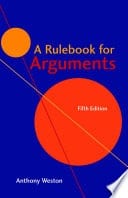
DESCRIPTION
From academic writing to personal and public discourse, the need for good arguments and better ways of arguing is greater than ever before. This timely fifth edition of A Rulebook for Arguments sharpens an already-classic text, adding updated examples and a new chapter on public debates that provides rules for the etiquette and ethics of sound public dialogue as well as clear and sound thinking in general.
My Summary
Main Ideas, Takeaways & Similarities
Questions
I. What is the problem?
A. How is this problem formulated?
B. Why is this problem important?
C. What is the history of this problem?
D. Which prominent personalities have been interested in this problem?
II. What solutions to the problem are there?
A. What are the conclusions reached?
B. By what argument(s) is the conclusion reached?
C. What facts or assumptions serve as premises?
D. When a prominent personality offers a solution, does he also argue for or against other prominent personalities? Does he raise objections to alternative solutions? Does he consider objections to his own solutions?
III. Evaluation
A. What are the advantages and disadvantages of the alternative formulations to the problem?
B. Has the importance or history of the problem ever been misrepresented?
C. Are the solutions logically related to the premises?
D. Are the facts true? Are the assumptions acceptable? Are the objections answerable?
AI Summary
Highlights
Expect to rearrange your argument several times to find the most natural order. (Location 116)
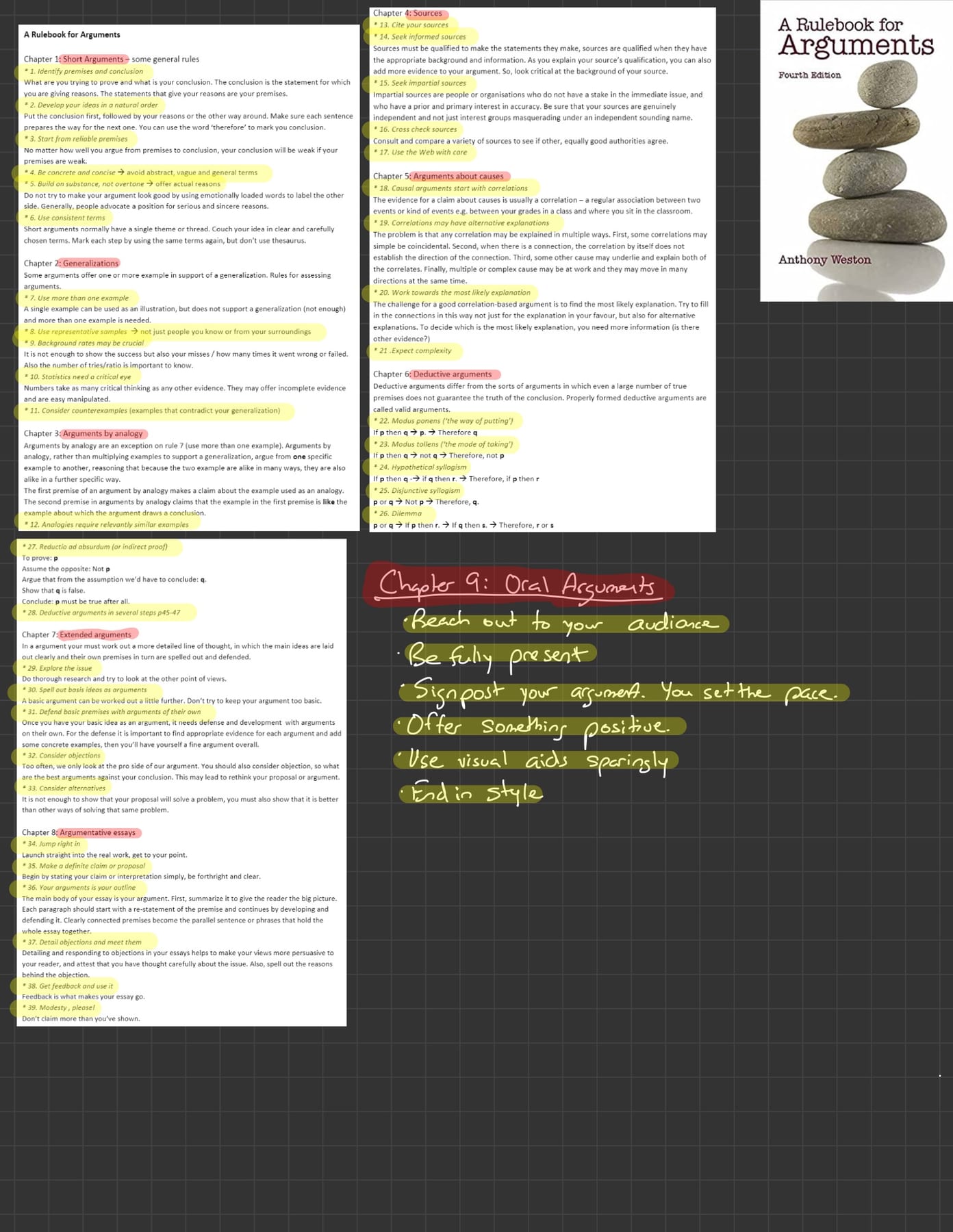
- Basics of a Good Argument:
- Arguments should be clear and concise.
- Use concrete and specific language.
- Start from reliable premises.
- Sources of Evidence:
- Use solid evidence to support your arguments.
- Quote sources accurately and fairly.
- Be mindful of the context of your evidence.
- Argument Structure:
- Organize arguments logically.
- Avoid fallacies and irrelevant information.
- Use deductive or inductive reasoning appropriately.
- Counterarguments:
- Anticipate and address counterarguments.
- Use counterarguments to refine and strengthen your position.
- Language and Rhetoric:
- Use precise and clear language.
- Avoid overly emotive or biased language.
- Rhetorical strategies should enhance, not distract from, the argument.
- Argumentative Essays and Research Papers:
- Structure essays with a clear thesis, supporting evidence, and conclusion.
- Research thoroughly and cite sources responsibly.
- Oral Arguments:
- Adapt arguments to the audience and context.
- Use effective speaking techniques.
- Applying Arguments in Different Contexts:
- Tailor arguments to specific fields like law, science, and public debates.
- Understand the conventions of different argumentative contexts.
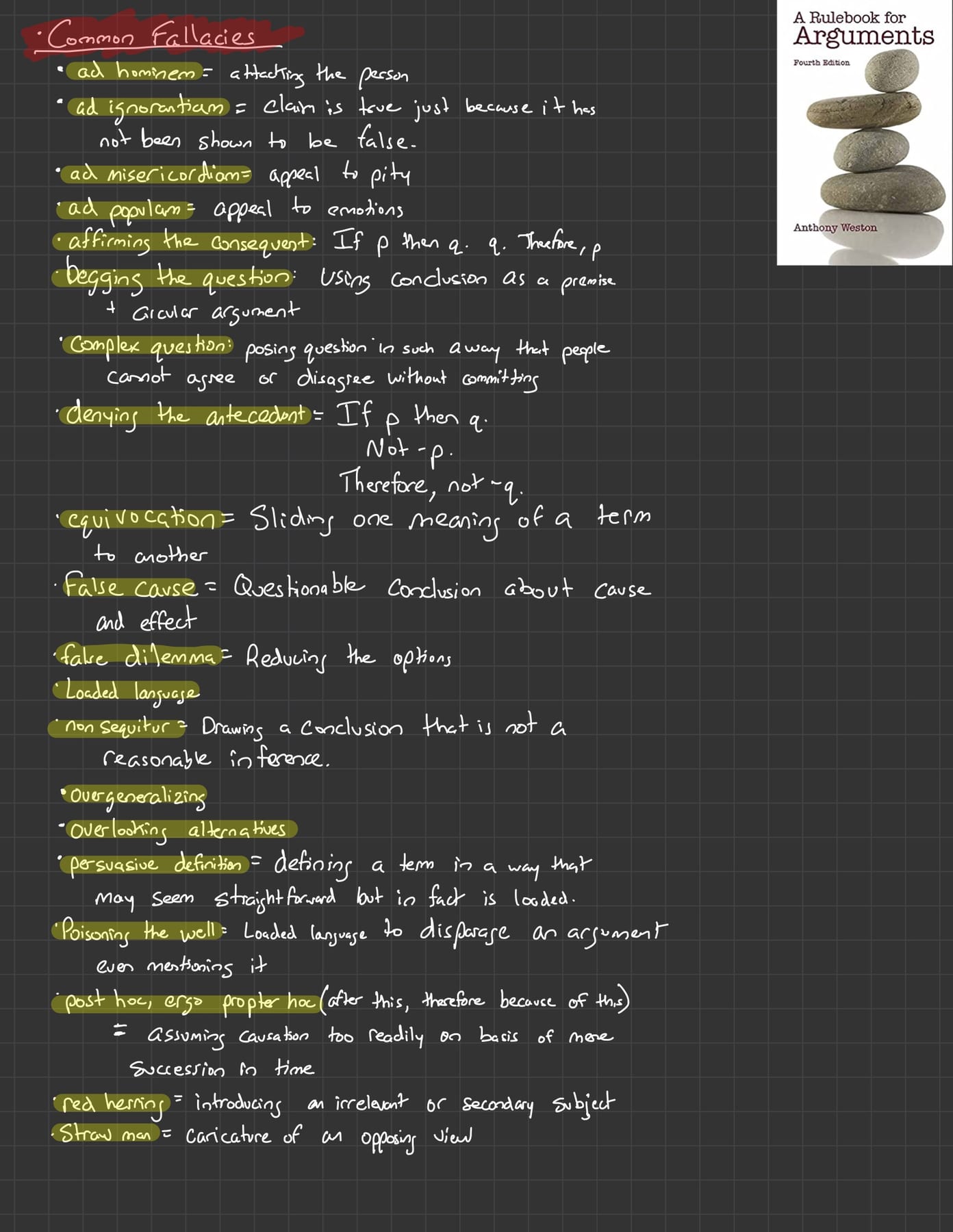
- Fallacies to Avoid:
- Be aware of common logical fallacies like ad hominem, straw man, and slippery slope arguments.
- Strive for logical coherence and consistency.
- Critical Thinking:
- Engage in active, critical thinking.
- Question assumptions and evaluate evidence critically.