DESCRIPTION
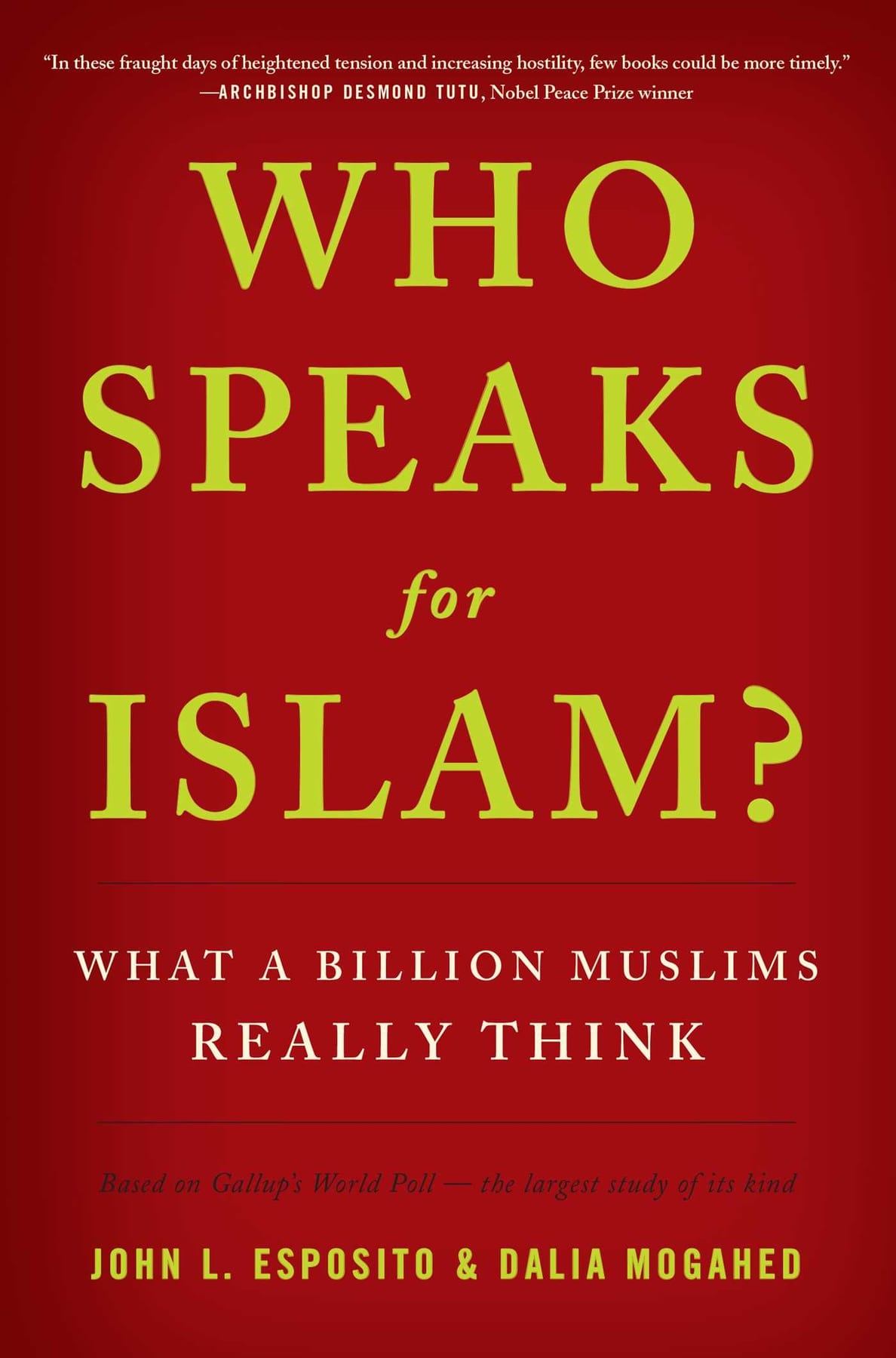
Draws on in-depth research to offer insights into what Muslims actually believe about key global issues such as democracy, radicalism, and women’s rights, in an account that seeks to differentiate extremists from everyday Muslims.
My Summary
How Pinker uses this Gallup evidence
In Chapter 6 of The Better Angels of Our Nature, Pinker uses Esposito and Mogahed to challenge a fixed Islam-versus-West picture. He pairs support for Sharia with strong support for speech, democratic participation, women’s rights, and limits on clerical power; separates distrust of U.S. policy from blanket rejection of Western values; and stresses that support for terrorism was a minority position capable of falling. This note is Pinker’s interpretation of a 2001–2007 survey, not an independent replication or a current poll. → full reconstruction
Main Ideas, Takeaways & Similarities
Questions
I. What is the problem?
A. How is this problem formulated?
B. Why is this problem important?
C. What is the history of this problem?
D. Which prominent personalities have been interested in this problem?
II. What solutions to the problem are there?
A. What are the conclusions reached?
B. By what argument(s) is the conclusion reached?
C. What facts or assumptions serve as premises?
D. When a prominent personality offers a solution, does he also argue for or against other prominent personalities? Does he raise objections to alternative solutions? Does he consider objections to his own solutions?
III. Evaluation
A. What are the advantages and disadvantages of the alternative formulations to the problem?
B. Has the importance or history of the problem ever been misrepresented?
C. Are the solutions logically related to the premises?
D. Are the facts true? Are the assumptions acceptable? Are the objections answerable?
AI Summary
Highlights
Author: Esposito, John L.
URL: https://www.amazon.com/gp/product/1595620176/ref=ppx_yo_dt_b_search_asin_title?ie=UTF8&psc=1
Category: Books
Genre:
- Islam
PATH: PATH
up: - "60.11.1.1 Books"
“Who Speaks for Islam?: What a Billion Muslims Really Think” is a book written by John L. Esposito and Dalia Mogahed, published in 2007. The book presents the findings of a comprehensive Gallup poll conducted in various Muslim-majority countries to gauge the opinions and attitudes of Muslims around the world. Here is a thorough summary of the book in bullet points:
- The book aims to shed light on the diverse perspectives and attitudes held by Muslims worldwide, challenging common stereotypes and misconceptions.
- It discusses the methodology of the Gallup poll, which involved surveys and interviews with over 50,000 Muslims from 35 countries, making it one of the most extensive studies of Muslim public opinion to date.
- The authors emphasize that Muslims are not a monolithic group and that there is significant diversity in their beliefs and practices.
- The book explores various aspects of Muslim life and opinion, including religiosity, political views, gender roles, and social issues.
- It highlights that the majority of Muslims worldwide are moderates who reject violence and extremism, and they are more likely to support democracy and human rights.
- The authors contend that the views of a vocal minority do not represent the broader Muslim population, and it is essential to engage with a more nuanced understanding of Muslim perspectives.
- The book addresses the factors that influence Muslim opinion, including education, socioeconomic status, and exposure to the global media.
- It discusses the impact of the Israeli-Palestinian conflict on Muslim perceptions of the West and the United States.
- The authors analyze the role of religion in politics and how it varies among Muslim-majority countries, with some advocating for a greater role of Islam in government, while others prefer secular governance.
- The book explores gender issues and the views of Muslim women, highlighting that opinions on women’s rights and roles can vary significantly across different countries and regions.
- It emphasizes that the media often amplify the voices of extremists and that the Muslim world’s diversity of views is underrepresented.
- The authors argue for increased dialogue and understanding between the Western world and the Muslim world to bridge the gap of misunderstanding.
- “Who Speaks for Islam?” concludes by offering recommendations for policymakers, the media, and the general public to promote better communication and engagement with Muslim communities worldwide.
Overall, the book provides valuable insights into the diverse opinions and attitudes held by Muslims globally, challenging stereotypes and emphasizing the importance of engaging with the moderate majority to foster mutual understanding and cooperation.