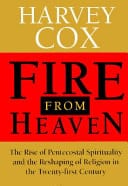
DESCRIPTION
The most experiential branch of Christianity has become the fastest growing form of worship on Earth. Harvard theologian Harvey Cox documents this extraordinary, yet largely unexamined, phenomenon, and tries to understand why this particular expression of spirituality has recently become appealing to so many people.
My Summary
Main Ideas, Takeaways & Similarities
Questions
I. What is the problem?
A. How is this problem formulated?
B. Why is this problem important?
C. What is the history of this problem?
D. Which prominent personalities have been interested in this problem?
II. What solutions to the problem are there?
A. What are the conclusions reached?
B. By what argument(s) is the conclusion reached?
C. What facts or assumptions serve as premises?
D. When a prominent personality offers a solution, does he also argue for or against other prominent personalities? Does he raise objections to alternative solutions? Does he consider objections to his own solutions?
III. Evaluation
A. What are the advantages and disadvantages of the alternative formulations to the problem?
B. Has the importance or history of the problem ever been misrepresented?
C. Are the solutions logically related to the premises?
D. Are the facts true? Are the assumptions acceptable? Are the objections answerable?
AI Summary
“Fire from Heaven: The Rise of Pentecostal Spirituality and the Reshaping of Religion in the 21st Century” by Harvey Cox is a book that explores the growth and influence of Pentecostalism in contemporary religion. Here is a summary in bullet points:
- Title: Fire from Heaven: The Rise of Pentecostal Spirituality and the Reshaping of Religion in the 21st Century
- Author: Harvey Cox
Introduction:
- Examines the global rise and significance of Pentecostalism as a religious movement.
- Considers the impact of Pentecostal spirituality on various religious traditions.
Chapter 1: The Pentecostal Explosion:
- Discusses the historical origins of Pentecostalism in the early 20th century.
- Explores the role of speaking in tongues, faith healing, and charismatic worship in Pentecostal churches.
- Highlights the rapid growth and spread of Pentecostalism worldwide.
Chapter 2: A Pentecostal World:
- Examines the global reach of Pentecostalism, including its prevalence in Latin America, Africa, Asia, and beyond.
- Discusses the cultural adaptability and appeal of Pentecostal spirituality in diverse contexts.
- Highlights the social and political implications of Pentecostal movements in different regions.
Chapter 3: Pentecostal Spirituality:
- Explores the core beliefs and practices of Pentecostal spirituality.
- Discusses the emphasis on personal experience, direct revelation, and the Holy Spirit’s role in believers’ lives.
- Highlights the role of worship, prayer, and community in Pentecostal churches.
Chapter 4: The Reshaping of Religion:
- Discusses the impact of Pentecostalism on mainstream Christianity and other religious traditions.
- Explores the influence of Pentecostal worship styles and charismatic practices on non-Pentecostal churches.
- Considers the blurring of boundaries between denominations and religious syncretism.
Chapter 5: Challenges and Controversies:
- Examines the challenges and controversies within the Pentecostal movement.
- Discusses issues such as prosperity theology, charismatic leadership, and ethical concerns.
- Highlights the tension between conservative and progressive elements within Pentecostalism.
Chapter 6: Pentecostalism in the 21st Century:
- Considers the future of Pentecostalism in the 21st century.
- Discusses the potential for continued growth and adaptation.
- Explores the role of Pentecostalism in addressing social issues and shaping global religion.
Conclusion:
- Summarizes the central themes and impact of Pentecostalism in contemporary religion.
- Emphasizes the dynamic and transformative nature of Pentecostal spirituality.
- Encourages further exploration of the ongoing influence of Pentecostalism in the 21st century.