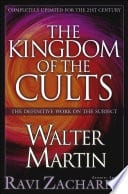
DESCRIPTION
Newly updated, this definitive reference work on major cult systems is the gold standard text on cults with nearly a million copies sold.
My Summary
Main Ideas, Takeaways & Similarities
Questions
I. What is the problem?
A. How is this problem formulated?
B. Why is this problem important?
C. What is the history of this problem?
D. Which prominent personalities have been interested in this problem?
II. What solutions to the problem are there?
A. What are the conclusions reached?
B. By what argument(s) is the conclusion reached?
C. What facts or assumptions serve as premises?
D. When a prominent personality offers a solution, does he also argue for or against other prominent personalities? Does he raise objections to alternative solutions? Does he consider objections to his own solutions?
III. Evaluation
A. What are the advantages and disadvantages of the alternative formulations to the problem?
B. Has the importance or history of the problem ever been misrepresented?
C. Are the solutions logically related to the premises?
D. Are the facts true? Are the assumptions acceptable? Are the objections answerable?
AI Summary
“The Kingdom of the Cults” by Walter Martin is a book that provides an overview and analysis of various religious and pseudo-Christian movements, often referred to as “cults.” Here is a comprehensive summary in bullet points:
- Title: The Kingdom of the Cults
- Author: Walter Martin
Introduction:
- Focuses on the study of various religious groups and movements that deviate from mainstream Christianity.
- Emphasizes the need for Christians to understand and engage with these groups.
Chapter 1: The Challenge of the Cults:
- Introduces the concept of cults and their diverse beliefs.
- Discusses the importance of religious tolerance and respectful dialogue.
- Highlights the need for Christians to be informed and equipped in countering cult teachings.
Chapter 2: The Church of Jesus Christ of Latter-day Saints (Mormonism):
- Provides an overview of the history and beliefs of the Mormon Church.
- Discusses Joseph Smith, the Book of Mormon, and Mormon doctrines.
- Analyzes the distinct teachings that separate Mormonism from orthodox Christianity.
Chapter 3: Christian Science:
- Examines the teachings of Mary Baker Eddy and the Christian Science movement.
- Discusses the concept of spiritual healing and the denial of physical illness.
- Critiques the theological differences between Christian Science and traditional Christian beliefs.
Chapter 4: Jehovah’s Witnesses:
- Explores the history and beliefs of Jehovah’s Witnesses.
- Discusses their distinctive doctrines, including the denial of the Trinity and the divinity of Jesus.
- Analyzes the Watchtower Society’s authoritative role and impact on followers.
Chapter 5: The Worldwide Church of God:
- Examines the beliefs and practices of the Worldwide Church of God, founded by Herbert W. Armstrong.
- Discusses Armstrong’s teachings on the Sabbath, holy days, and British-Israelism.
- Highlights the transformation of the church’s doctrines over time.
Chapter 6: The Unification Church (Moonies):
- Provides an overview of the Unification Church and its founder, Sun Myung Moon.
- Discusses the teachings of Moon, including the concept of “True Parents.”
- Analyzes the recruitment tactics and controversies associated with the movement.
Chapter 7: The Baha’i Faith:
- Explores the history and beliefs of the Baha’i Faith, founded by Baha’u’llah.
- Discusses Baha’i teachings on religious unity, the oneness of humanity, and the Baha’i Covenant.
- Analyzes the differences between Baha’i beliefs and traditional Christian doctrines.
Chapter 8: The Bahai Movement:
- Examines the teachings of the Bahai Movement, which evolved from the Baha’i Faith.
- Discusses the beliefs of Abdul Baha and the Bahai interpretation of Baha’u’llah’s message.
- Highlights the Bahai Movement’s emphasis on racial and religious unity.
Chapter 9: Eastern Mysticism and the New Age Movement:
- Explores Eastern mysticism and its influence on the New Age movement.
- Discusses New Age beliefs in spiritual evolution, reincarnation, and cosmic consciousness.
- Analyzes the syncretism and eclectic nature of New Age spirituality.
Conclusion:
- Summarizes the key teachings and beliefs of the various cults and religious movements discussed in the book.
- Encourages Christians to engage in respectful dialogue and outreach to individuals involved in these groups.
- Emphasizes the importance of maintaining orthodox Christian beliefs while engaging with those from differing faith traditions.