DESCRIPTION
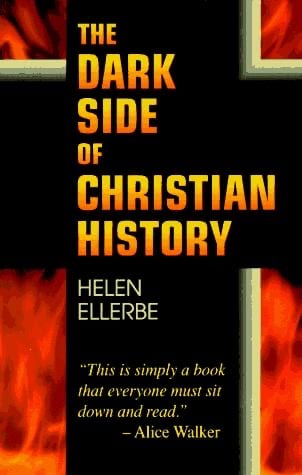
By denying evil we do harm. By denying darkness we obscure the light. Over a period of almost two millennia, the Christian Church has oppressed and brutalized millions of individuals in an attempt to control and contain spirituality. The Dark Side of Christian History reveals in painstaking detail the tragedies, sorrows and injustices inflicted upon humanity by the Church. This expose is a compelling and passionate cry for human dignity and spiritual freedom. Book jacket.
My Summary
Main Ideas, Takeaways & Similarities
Questions
I. What is the problem?
A. How is this problem formulated?
B. Why is this problem important?
C. What is the history of this problem?
D. Which prominent personalities have been interested in this problem?
II. What solutions to the problem are there?
A. What are the conclusions reached?
B. By what argument(s) is the conclusion reached?
C. What facts or assumptions serve as premises?
D. When a prominent personality offers a solution, does he also argue for or against other prominent personalities? Does he raise objections to alternative solutions? Does he consider objections to his own solutions?
III. Evaluation
A. What are the advantages and disadvantages of the alternative formulations to the problem?
B. Has the importance or history of the problem ever been misrepresented?
C. Are the solutions logically related to the premises?
D. Are the facts true? Are the assumptions acceptable? Are the objections answerable?
AI Summary
Highlights
“The Dark Side of Christian History” by Helen Ellerbe is a critical examination of certain aspects of Christian history, highlighting instances of religious intolerance, violence, and oppression. The book aims to shed light on less favorable aspects of Christianity’s historical record. Here is a comprehensive summary in bullet points:
- Title: The Dark Side of Christian History
- Author: Helen Ellerbe
Introduction:
- Introduces the book’s premise of examining controversial and negative aspects of Christian history.
- Argues that it is essential to acknowledge these darker episodes in Christian history to gain a more complete understanding of the religion’s impact.
Chapter 1: The Witch Hunts:
- Explores the witch hunts of the late Middle Ages and the early modern period.
- Highlights the persecution and execution of individuals, mostly women, accused of witchcraft.
- Discusses the religious and social factors that contributed to the witch hunts.
Chapter 2: The Inquisition:
- Examines the role of the Inquisition in Europe.
- Discusses the interrogation, torture, and execution of individuals suspected of heresy.
- Explores the religious motivations behind the Inquisition’s activities.
Chapter 3: The Crusades:
- Discusses the Crusades, a series of holy wars fought between Christians and Muslims.
- Highlights the violence, pillaging, and religious fervor associated with the Crusades.
- Explores the impact of these campaigns on the Eastern Mediterranean and relations between religious groups.
Chapter 4: Anti-Semitism:
- Explores the history of anti-Semitism within Christianity.
- Discusses the persecution and discrimination of Jewish communities throughout history.
- Examines the role of religious teachings and stereotypes in fostering anti-Semitism.
Chapter 5: Religious Intolerance:
- Examines episodes of religious intolerance within Christianity, including the persecution of dissenting Christian sects.
- Discusses the suppression of religious diversity and the imposition of orthodoxy.
- Highlights cases of religious conflict and violence.
Chapter 6: Theological Opposition to Science:
- Explores instances where Christian institutions opposed scientific discoveries and theories.
- Discusses the Galileo affair and the Church’s stance on heliocentrism.
- Highlights conflicts between religious doctrine and scientific inquiry.
Conclusion:
- Summarizes the book’s main arguments and findings.
- Emphasizes the need for a balanced understanding of Christian history that acknowledges both positive and negative aspects.
- Encourages critical reflection on the lessons that can be drawn from the darker episodes in Christian history.
Legacy:
- “The Dark Side of Christian History” offers a critical perspective on certain historical episodes and practices within Christianity.
- The book aims to challenge conventional narratives and promote a more nuanced understanding of the religion’s history.
- It has sparked discussions about the role of religion in perpetuating intolerance and violence throughout history.