DESCRIPTION
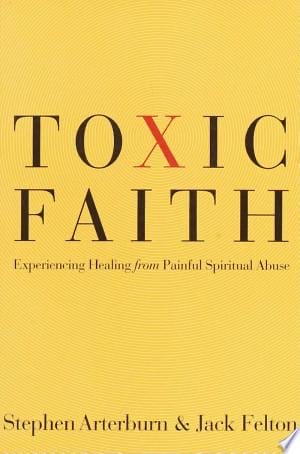
Experiencing Healing from Painful Spiritual Abuse When religion becomes a means to avoid or control life, it becomes toxic. Those who possess a toxic faith have stepped across the line from a balanced perspective of God to an unbalanced faith in a weak, powerless or uncaring God. They seek a God to fix every mess, prevent every hurt, and mend every conflict. Toxic Faith distinguishes between a healthy faith and a misguided religiosity that traps believers in an addictive practice of religion. It shows how unbalanced ministries, misguided churches, and unscrupulous leaders can lead their followers away from God and into a desolate experience of religion that drives many to despair. Toxic Faith shows readers how to find hope for a return to genuine, healthy faith that can add meaning to life. In the words of the author, “I want to help you throw out that toxic faith and bring you back to the real thing.”
My Summary
Main Ideas, Takeaways & Similarities
Questions
I. What is the problem?
A. How is this problem formulated?
B. Why is this problem important?
C. What is the history of this problem?
D. Which prominent personalities have been interested in this problem?
II. What solutions to the problem are there?
A. What are the conclusions reached?
B. By what argument(s) is the conclusion reached?
C. What facts or assumptions serve as premises?
D. When a prominent personality offers a solution, does he also argue for or against other prominent personalities? Does he raise objections to alternative solutions? Does he consider objections to his own solutions?
III. Evaluation
A. What are the advantages and disadvantages of the alternative formulations to the problem?
B. Has the importance or history of the problem ever been misrepresented?
C. Are the solutions logically related to the premises?
D. Are the facts true? Are the assumptions acceptable? Are the objections answerable?
AI Summary
Highlights
“Toxic Faith” by Stephen Arterburn is a book that explores the harmful effects of rigid and unhealthy religious beliefs and offers guidance on overcoming toxic faith patterns. Here is a comprehensive summary in bullet points:
- Title: Toxic Faith
- Author: Stephen Arterburn
Introduction:
- Introduces the concept of “toxic faith” as a harmful and rigid form of religious belief.
- Highlights the impact of toxic faith on individuals’ mental, emotional, and spiritual well-being.
- Expresses the goal of helping readers identify and overcome toxic faith patterns.
Chapter 1: Defining Toxic Faith:
- Defines toxic faith as rigid, legalistic, and damaging religious beliefs.
- Discusses the characteristics of toxic faith, including fear, guilt, and control.
- Encourages readers to assess their own faith beliefs for signs of toxicity.
Chapter 2: The Dynamics of Toxic Faith:
- Explores the psychological and emotional dynamics of toxic faith.
- Discusses the role of fear and shame in perpetuating toxic belief systems.
- Highlights the tendency for toxic faith to promote judgmentalism and exclusion.
Chapter 3: The Legalism Trap:
- Examines the role of legalism in toxic faith.
- Discusses how legalistic beliefs can lead to a works-based salvation mentality.
- Encourages readers to challenge legalistic thinking and embrace grace.
Chapter 4: Spiritual Abuse:
- Addresses the issue of spiritual abuse within toxic faith environments.
- Discusses the manipulation and control tactics employed by abusive leaders.
- Offers guidance on recognizing and addressing spiritual abuse.
Chapter 5: The Shame Factor:
- Explores the impact of shame in toxic faith.
- Discusses how shame-based beliefs can lead to self-condemnation and self-criticism.
- Encourages readers to confront and heal from shame.
Chapter 6: Breaking Free:
- Provides practical advice on breaking free from toxic faith patterns.
- Discusses the importance of seeking support from healthy religious communities or therapists.
- Encourages self-compassion and self-acceptance.
Chapter 7: Embracing a Healthy Faith:
- Explores the characteristics of a healthy and life-giving faith.
- Discusses the importance of love, grace, and acceptance in spiritual belief systems.
- Encourages readers to cultivate a faith that nurtures their well-being.
Chapter 8: Recognizing Toxic Faith in Others:
- Offers guidance on how to recognize signs of toxic faith in others.
- Discusses the challenges of confronting toxic faith in loved ones.
- Encourages compassionate and non-judgmental communication.
Chapter 9: Healing and Recovery:
- Discusses the process of healing and recovery from toxic faith.
- Provides resources for individuals seeking professional help or support groups.
- Emphasizes the potential for personal growth and transformation.
Conclusion:
- Summarizes the key principles and advice presented in the book.
- Encourages readers to assess their faith beliefs for signs of toxicity.
- Highlights the possibility of finding freedom, healing, and a healthier faith perspective.