Filed with 60.11 Religion · Related: 60.9 Philosophy · Political Philosophy (MOC)
The World’s Religious Groups: How Their Sizes Changed from 2010 to 2020 | Pew Research Center
The World’s Religious Groups: How Their Sizes Changed from 2010 to 2020 | Pew Research Center
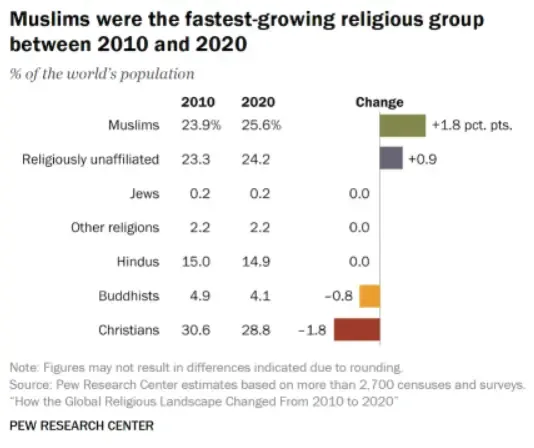
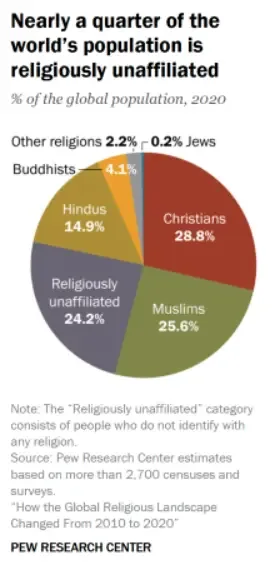
- Yes, the numbers in the clip are basically right. Between 2010 and 2020 the global Christian population rose from ≈2.18 billion to ≈2.30 billion, but Christianity’s share of the world’s people fell 1.8 percentage points—from 30.6 % to 28.8 %. Over the same decade Islam added ≈347 million adherents (the largest absolute gain of any tradition) and its share climbed the same 1.8 points, to 25.6 %. Those figures come directly from Pew’s 9 June 2025 demographic report based on more than 2,700 censuses and large-scale surveys covering 201 countries and 99.98 % of the world’s population. pewresearch.orgpewresearch.org
- Pew does call the swing “dramatic.” Lead demographer Conrad Hackett said the convergence was unusually large for a single decade, underscoring how rapidly the two largest faiths are drawing closer in size. timesofindia.indiatimes.com
- Main drivers identified by Pew:
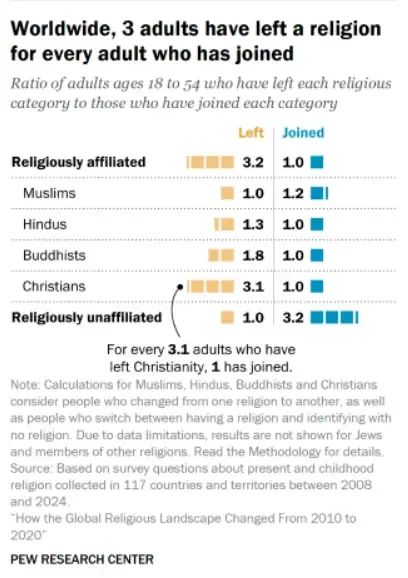
- Christianity: large-scale religious “switching” (disaffiliation), especially in Europe and North America, outweighed Christians’ above-replacement fertility in the global South. pewresearch.org
- Islam: a very young age structure (median ≈24), the world’s highest regional fertility rates, and comparatively low disaffiliation. Conversion played only a minor role. npr.org
- Regional picture adds context.
- Sub-Saharan Africa has overtaken Europe as the largest home of Christians (≈31 % of all Christians now live there), thanks to both high fertility and continuing evangelisation. pewresearch.org
- Europe and, to a lesser extent, the United States are the epicentres of Christian net losses through switching, not through migration or fertility.