Zibaldone 2024–2025 journal
Journal connection: Discipline, mastery, habit tracking, and the tradeoff between present comfort and future aims.
Source boundary: These are captured journal materials; the integration does not independently verify every clipped claim, quotation, or figure.
PDF++ pages: p. 2 (file not included in this release) · p. 3 (file not included in this release) · p. 89 (file not included in this release) · p. 232 (file not included in this release) · p. 235 (file not included in this release) · p. 303 (file not included in this release)
Embedded preview:
Zibaldone 2024-2025.pdf (file not included in this release)
Open the complete Zibaldone page index
DESCRIPTION
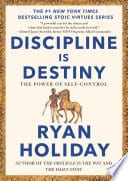
The instant New York Times, Wall Street Journal, and USA Today Bestseller! In his New York Times bestselling book Courage is Calling, author Ryan Holiday made the Stoic case for a bold and brave life. In this much-anticipated second book of his Stoic Virtue series, Holiday celebrates the awesome power of self-discipline and those who have seized it. To master anything, one must first master themselves–one’s emotions, one’s thoughts, one’s actions. Eisenhower famously said that freedom is really the opportunity to practice self-discipline. Cicero called the virtue of temperance the polish of life. Without boundaries and restraint, we risk not only failing to meet our full potential and jeopardizing what we have achieved, but we ensure misery and shame. In a world of temptation and excess, this ancient idea is more urgent than ever. In Discipline is Destiny, Holiday draws on the stories of historical figures we can emulate as pillars of self-discipline, including Lou Gehrig, Queen Elizabeth II, boxer Floyd Patterson, Marcus Aurelius and writer Toni Morrison, as well as the cautionary tales of Napoleon, F. Scott Fitzgerald and Babe Ruth. Through these engaging examples, Holiday teaches readers the power of self-discipline and balance, and cautions against the perils of extravagance and hedonism. At the heart of Stoicism are four simple virtues: courage, temperance, justice, and wisdom. Everything else, the Stoics believed, flows from them. Discipline is Destiny will guide readers down the path to self-mastery, upon which all the other virtues depend. Discipline is predictive. You cannot succeed without it. And if you lose it, you cannot help but bring yourself failure and unhappiness.
Story audit
Source: Discipline Is Destiny_ The Power of Self-Control — Ryan Holiday.pdf (file not included in this release) · Story index: Discipline Is Destiny - Story Index · Primary new theme: Discipline, Habits & Self-Mastery · Hub: 60.12.1 Stoicism
Complete source review
The full 293-page PDF yielded 79 reusable story records: 69 new canonical stories and 10 existing stories enriched without duplication. All stories are filed under one of the 40 Stories theme notes; the four source-order notes preserve the book’s sequence and exact PDF++ navigation.
Evidence boundary
This is a story and provenance audit of Holiday’s book, not an independent fact-check of every historical claim. Classical tradition, memoir, reported anecdotes, compressed biography, and Holiday’s interpretations are labeled in the source archive. The audit excludes Holiday’s personal and family stories, generic examples, isolated quotations, and famous-name references without narrative action.
- 00 - Foundations and Afterword — 3 records
- 01 - The Exterior - The Body — 25 records
- 02 - The Interior - The Temperament — 26 records
- 03 - The Magisterial - The Soul — 25 records
MAIN IDEAS, TAKEAWAYS & SIMILARITIES
-
Virtue is something we do. Courage. Temperance. Justice. Wisdom. Command of oneself physically, mentally, spiritually
-
No one has a harder time than the lazy. No one experiences more pain than the glutton. No success is shorter lived than the reckless or endlessly ambitious. Failing to realize your full potential is a terrible punishment. And we know that while it might seem easy to take it easy and more pleasurable to indulge our pleasure centers, in the long run, it is a far more painful route. Getting comfortable is the enemy.
-
Temperance, like a tempered sword. Simplicity and modesty. Fortitude and self-control in all things—except our determination and toughness.
-
Mornings—You are free. “Is this what I was created for?” he asks of his reluctance. “To huddle under the blankets and stay warm?” remind yourself of what is at stake. Think, as Morrison did, of her grandmother, who had more children and an even harder life. Think of how lucky you are. Be glad to be awake (because it’s better than the alternative, which we’ll all greet one day). Feel the joy of being able to do what you love. Cherish the time. But most of all, use it.
-
Exercise—The strenuous life, he would call it, a life of action, activity, but most of all, of exercise. Treat the body rigorously, as Seneca tells us, so that it may not be disobedient to the mind. The body keeps score. The body is the first step in that journey. We treat it rigorously. We restrain it. We dominate it. We treat it like a temple. So it may not overrun and override the mind. So it may not deprive the mind. No one who is a slave to their urges or to sloth, no one without strength or a good schedule, can create a great life.
-
Slave to Addiction—Who can be free when they have lost, as one addiction specialist put it, “the freedom to abstain”? It’s the need. And it’s this need that is the source of suffering. The cost is not just personal but shared by us all, in symphonies never written, feats never accomplished, in good never done, the potential of an ordinary day never fulfilled.
-
Superfluous—When we desire more than we need, we make ourselves vulnerable. When we overextend ourselves, when we chase, we are not self-sufficient. By being strict with ourselves, we take away others’ power over us. Real wealth, he understood, was autonomy. The less you desire, the richer you are, the freer you are, the more powerful you are.
-
Clean Your Desk—Outer order, inner calm. The space where great work is done is holy. We must respect it.
-
Show Up—showing up. The incredible, underrated power of clocking in every day, putting your ass in the seat, and the luck this seems to inevitably produce. momentum can grow. Consistency is a superpower.
-
Pay Attention to Little Things—We’re fit to tackle the big problems only if we do the little things right first. greatness is in the details
-
Hustle—You may lose battles, Napoleon said, but never lose a minute to sloth.
-
Slow Down..to Go Faster—efficiency over efficacy. deliberate.
-
Practice—“Practice over a long time turns into second nature.” There is no greatness without practice.
-
Just Work—Always and forever, the reward is the work. It is a joy itself. It is torture and also heaven—sweaty, wonderful salvation. Decide who you want to be, the Stoics command us, and then do that work. Will we be recognized for it? Maybe, but that will be extra.
-
Dress for Success—Nobody does their best in their bathrobe … which is why we ought to take a shower and get ready in the morning, even if we’re not going to leave the house. Shine your shoes … until you are the one glowing. how to play the game of appearances without being distracted or consumed by appearance.
-
Seek Discomfort—comfortable being uncomfortable. Success breeds softness. It also breeds fear
-
Manage the Load—Yes, our work is important. Yes, we hustle. Yes, our drive is how we became successful, our love of the game is what got us here. But without the ability to rein this in, we will not last. We don’t just want to be fast and strong now—we want to be fast and strong for a long time. Absolute activity, of whatever kind, Goethe said, ultimately leads to bankruptcy.
-
Sleep—While the ability to sleep quickly and rest well might not seem like a matter of discipline, it very much is. sleep discipline. we need one final push of discipline: picking ourselves up and walking to the bedroom and passing out. The best way to master the morning is to have mastered it the night before. Early to bed. Early to rise.
-
Endurance—Instead of wanting things to be easy, you should be prepared for them to be hard. Because they will be!
-
Self-discipline is not keeping things exactly as they are with an iron grip. It’s not resistance to any and everything. Nor would much discipline be required in a world that always stayed the same. Temperance is also the ability to adjust, to make good of any situation, to find the opportunity to grow and improve in any situation. And to be able to do this with equanimity and poise, even initiative and joy.
-
We know that between every stimulus and its response, every piece of information and our decision, there is space. It is a brief space, to be sure, but one with room enough to insert our philosophy. Will we use it? Use it to think, use it to examine, use it to wait for more information? Or will we give into first impressions, to harmful instincts, and old patterns?
-
Share The Load—It takes discipline not to insist on doing everything yourself. Our willpower is not enough. We shouldn’t have to just gut it out. We need to share. That is, if you’re trying to scale. Trying to build or do something that matters, something bigger than just you.
-
Put Up Boundaries—establish and maintain boundaries. You know, minding your own business. Setting the rules of engagement. Keeping your private life private. Not letting people drag you down into the muck. Not getting entangled in other people’s dysfunctions (or entangling them in yours). Being strong enough to communicate what you like and dislike. Respecting other people’s space and preferences.
-
Do Your Best—This is the wonderful thing about doing your best. It insulates you, ever so slightly, from outcomes as well as ego. It’s not that you don’t care about results. It’s that you have a kind of trump card. Your success doesn’t go to your head because you know you’re capable of more. Your failures don’t destroy you because you are sure there wasn’t anything more you could have done.
-
Tolerant with Others. Strict with Yourself—While we hold ourselves to the highest standards—and hope that our good behavior is contagious—we cannot expect everyone else to be like us. It’s not fair, nor is it possible. Discipline is our destiny. From Antoninus, Marcus Aurelius learned that just trying to escape our own faults is hard enough work to keep us busy for a lifetime. None of us are so perfect that we can afford to spend much time questioning other people’s courage, nitpicking their habits, trying to push them to reach their potential. Not when we have so much further to go ourselves. This is the higher plane: When our self-discipline can be complemented by compassion, by kindness, understanding, love.
-
Carry the Load for Others—It’d be wonderful if power or success exempted us … from everything time-consuming, pedestrian, inconvenient, difficult. In practice, it obligates us to those things even more. It demands more of us. That’s just how it shakes out. The leader shows up first and leaves last. The leader works hardest. The leader puts others before themselves. The leader takes the hit.
-
Power of Giving Power Away—The person who cannot resist is a danger to themselves and to the organization. The person who needs this, who cannot bear to be anything but in charge, they are not great, even if they achieve great things. They are an addict! They do not have power, power has them. These are never the leaders whose organizations achieve sustained success or reach their potential because they are incapable of planning for their succession, they are incapable of empowering others, they are incapable of doing anything that diminishes their own significance. Plato said that the best leaders didn’t want power. In truth, it’s that they didn’t need it. Because they have conquered their appetites and their ego, they are stronger, more independent, less corruptible, calmer, kinder, more focused on what matters. What matters isn’t the title. It isn’t the power. It isn’t the wealth. It isn’t the control. That greatness isn’t what you have. It’s who you choose to become. Or who you choose to remain.
-
Be Best—In the end, it’s not about what we do, it’s about how we do it and, by extension, who we are. Conquering the world is almost easy after we have fully conquered ourselves. Certainly fewer people have done the latter than the former. Self-discipline has never been about punishment or deprivation. It is about becoming the best, the best that you are capable of becoming. It cost him everything. As it does for all of us, when we compromise, when we relax our discipline, when we make “exceptions” and do what is expedient instead of what we know is right.
-
Flexibility is Strength—The past was important, but it was not a prison. We must cultivate the capacity for change, for flexibility and adaptability. Continuously, constantly. Changing the little things day to day, as the Queen did, to preserve and protect the big things. It’s not always fun. It’s not always easy.
-
The Main Thing—first, the discipline to step away and think: What am I doing? What are my priorities? What is the most important contribution I make—to my work, to my family, to the world? Then comes the discipline to ignore just about everything else. The secret to success in almost all fields is large, uninterrupted blocks of focused time. By seizing it, you become powerful. More powerful in fact, than some of the most powerful people in the world who happen to be slaves to their calendars and ambitions and appetites.
-
Focus—Once the plate is cleared, you must be able to put your whole mind into that main thing. It has to get all of you. intense focus on a singular point. The ability to put your mind fully into or onto something, allowing you to understand both it … and yourself in a new way.
-
Patience—patience is about acquiring perspective. “Patience is bitter, but its fruit is sweet.” We will need not just day-to-day patience, but long patience.
-
Perfectionism is a Vice—We’re convinced everyone cares so much about what we’re doing that we get stuck. We tell ourselves it’s self-discipline when in fact, it’s self-consciousness. Transitions are as important as achievements. Perfect is not just the enemy of the good, as they say, but it’s the enemy of everything that might come after. If you get stuck, your potential does too. This is why finishing is itself an achievement, an act of monumental discipline that must happen.
-
Do The Hard Things First—now the rest of the day was a bonus. Just as days are made of mornings, lives are made of days. To procrastinate at any time, day or night, young or old, to push it until later, is a loser’s game. To procrastinate is to be entitled. It is arrogant. It assumes there will be a later. It assumes you’ll have the discipline to get to it later (despite not having the discipline now).
-
Medication—Our rational faculties (as well as our bodies) can torture us, but they are also a gift. We ought not dull their power or mess, unnecessarily, with our chemistry. Anyone or anything that offers you an escape should be viewed with caution and anything that promises euphoria is liable to give you real pain. We endure pain, but we also have to address the root causes of it. The mind and the body must find a way to work together, temperately, moderately, soberly.
-
Battle Against Pleasure—The body wants what it wants now … it can deal with the consequences later. We have to be smart and self-controlled and self-aware enough to intervene before that happens. The Stoics said that this was a perfect metaphor for everything we do. “Remember to conduct yourself in life as if at a banquet,” Epictetus said. “As something being passed around comes to you, reach out your hand and take a moderate helping. Does it pass you by? Don’t stop it. It hasn’t yet come? Don’t burn in desire for it, but wait until it arrives in front of you. Act this way with children, a spouse, toward position, with wealth—one day it will make you worthy of a banquet with the gods.” Don’t just think about what a certain pleasure will give, think about what it will take out of you.
-
Discipline is not a punishment, it’s a way to avoid punishment. We do it because we love ourselves, we value ourselves and what we do. And we find, conveniently enough, that it also heightens our enjoyment of things as well. Indeed, the person content with less, who can enjoy a small pot of cheese as if it were a culinary bounty, is much more easily satisfied and much better able to find good in all situations.
-
Provocation—when we are offended, when we fight, we are complicit. We have chosen to engage. We have traded self-control for self-indulgence. We’ve allowed our cooler head to turn hot—even though we know hot heads rarely make good decisions.
-
Beware This Madness—If you cannot rein in your impulses now, if you can be jerked like a puppet today, how do you think it will go when you reach the level you aspire to? When you have power, when you have people willing to make excuses for you, when you have resources? And, too, when the margin for error is also much smaller? You can get angry … the important thing is not to do anything out of anger. And for [anger] we can plug in so many other emotions we feel passionately in the moment.
-
Hold Your Fire—This isn’t lying to yourself about how someday, hopefully, maybe you’ll do something. No, you’ve decided to act. Now you’ve got the harder hurdle to clear: holding on. Taking the hits while you do so, while you move with deliberateness, to get it right and make it count.
-
Temper Ambition—We don’t need accomplishments to feel good or to be good enough. What do we need? The truth: not much! Some food and water. Work that we can challenge ourselves with. A calm mind in the midst of adversity. Sleep. A solid routine. A cause we are committed to. Something we’re getting better at. Everything else is extra. Or worse, as history has shown countless times, the source of our painful downfall.
-
Money is a (Dangerous) Tool—“Fuck-you money” is a chimera. You never get it. Nobody does. Poor people have poor-people problems and rich people have richpeople problems because people always have problems. You’re always going to be subject to the necessity of self-discipline. Or at least, you’ll never be immune from the consequence of ignoring it.
-
Get Better Every Day—If you think you have room to grow, you do and you will. If you think you’re as good as you can be … you’re right. You won’t get any better. How much progress could you make if you made just a little each day over the course of an entire life? What might this journey look like, where might it lead, if each bit of progress you made presented both the opportunity and the obligation to make a little more progress, and you seized those opportunities, you lived up to those obligations, each and every time?
-
Respect Time—time that is wasted is also wasting us. When we kill time, we are killing ourselves. We have to learn how to use time or else it will use us … up. That is why we do our work promptly. Why we get to the point. Why we stick to the agenda. Why we don’t drone on, don’t tolerate digressions or indulge distractions. It’s why we keep our desk clean —so we don’t waste time looking for stuff. It’s why we get up earlyso we have more time, uninterrupted time, at the freshest part of the day. It’s why we’re deliberate about what we say yes and no to, because we understand that time is a gift—and what we give it to matters.
-
Self-discipline is not just our destiny, it is our obligation. To our potential. To our country. To our cause. To our families. To our fellow human beings. To those who look up to us. To those who come after us.
-
That’s the thing about discipline … like courage, it is contagious.
-
Make Others Better—To reach your destiny will require such a hero. But to truly fulfill it, you will need to become such a hero yourself—to live in such a way that you call others to reach their own. self-disciplined don’t berate. They don’t ask for anything. They just do their job. They don’t shame either … except perhaps subtly by their own actions. In their presence we feel called to step up, to step forward, to reach deeper because they have shown that is possible. we can be a positive force in our community. We can show our children, our neighbors, our colleagues, our employees what good choices look like. We can show what commitment looks like by showing up each day. We can show what it means to resist provocation or temptation. We can show how to endure. We can show how to be patient.
-
Grace Under Pressure—“The nearer a man is to a calm mind,” he wrote of such moments of crisis, “the closer he is to strength.” For the people we love, we are strong enough to get through anything. For the cause or the calling we have committed to, we are strong enough to endure it. We have to be.
-
Be Kind to Yourself—Marcus Aurelius, too, who reminded himself and all of us not to “feel exasperated, or defeated, or despondent because your days aren’t packed with wise and moral actions. But to get back up when you fail, to celebrate behaving like a human—however imperfectly—and fully embrace the pursuit that you’ve embarked on.” Stoicism is not about punishing yourself. It’s a firm school, for sure, but as Seneca wrote, “In fact no philosophical school is kindlier and gentler, nor more loving of humankind and more attentive to our common good to the degree that its very purpose is to be useful, bring assistance, and consider the interests not only of itself … but of all people.” A friend to yourself. You are not the enemy. You’re the person doing the best you can. You’re the person getting better every day. Don’t beat yourself up. Build yourself up. Make yourself better. That’s what friends do.
-
Turn the Other Cheek—Responding, fighting back—this is expected. Rising above these understandable, even self-preserving instincts takes discipline. To be above it entirely is true self-mastery.
-
How to Make an Exit—Charging ahead is always inspiring … but sometimes it takes a bigger man—and another level of discipline—to be able to maintain your dignity when you have to go the other way. retreat wasn’t a shameful thing. It was how you retreated that mattered. Hope is important but it is not a strategy. Denial is not the same thing as determination. Delusion is destruction. Greed will get you in the end. Can you put your ego aside and accept defeat—or irreconcilable differences? Can you walk away when it’s time? Even when it’s so tempting not to? Can you keep it together even as everything is falling apart—when all eyes are watching, waiting, for you to fall apart alongside it?
-
Unchanged by Success—Precisely when we think we’ve earned the right to relax our discipline is exactly when we need it most. The payoff for all our efforts? So much more temptation. So many more distractions. So many more opportunities.
Quotes
“When a man can control his life, his physical needs, his lower self,” Muhammad Ali would later say, “he elevates himself.”
“The more a man is,” the editor Maxwell Perkins had inscribed on his mantel, “the less he wants.”
Those who think that they can live a high spiritual life whose bodies are filled with idleness and luxuries are mistaken. -Tolstoy
“People pay for what they do,” writer James Baldwin wrote, “and still more, for what they have allowed themselves to become. And they pay for it simply: by the lives they lead.”
The Stoics said that this was a perfect metaphor for everything we do. “Remember to conduct yourself in life as if at a banquet,” Epictetus said. “As something being passed around comes to you, reach out your hand and take a moderate helping. Does it pass you by? Don’t stop it. It hasn’t yet come? Don’t burn in desire for it, but wait until it arrives in front of you. Act this way with children, a spouse, toward position, with wealth—one day it will make you worthy of a banquet with the gods.”
Musonius Rufus reminds us, that “by the standard of pleasure, nothing is more pleasant than self-control and … nothing is more painful than lack of self-control.”
John Dryden: Beware the fury of the patient man
W. H. Auden said that “The modern stoic knows that the surest way to discipline passion is to discipline time: decide what you want or ought to do during the day, then always do it exactly the same moment every day, and passion will give you no trouble.”
“The nearer a man is to a calm mind,” he wrote of such moments of crisis, “the closer he is to strength.” -Marcus Aurelius
AI Summary
- Virtues as Active Choices: Emphasizes virtues like courage, temperance, justice, and wisdom, highlighting them as active choices involving self-control and mastering impulses.
- The Pain of Laziness and Gluttony: Discusses the long-term pain and difficulties associated with laziness, gluttony, and reckless ambition.
- Importance of Self-Discipline: Focuses on self-discipline as a critical aspect of life, involving hard work, saying no, good habits, and managing physical, mental, and spiritual needs.
- Balance and Moderation: Stresses the importance of balance and moderation in life, avoiding extremes and excesses.
- Physical and Mental Command: Highlights the need for command over one’s physical and mental state, as well as spiritual aspects, to achieve discipline.
- Discipline as Predictive and Deterministic: Views discipline as both a predictor of success and a determinant of character.
- Eisenhower’s Example: Mentions Eisenhower’s self-conquest as a path to worldly success.
- Hard Work Over Comfort: Advocates for hard work and avoiding the easy path of comfort and pleasure-seeking.
- Temperance and Simplicity: Encourages temperance, self-control, simplicity, and modesty in all aspects of life.
- Morning Discipline: Emphasizes the freedom and opportunity found in morning discipline and early rising.
- Physical Activity and Health: Stresses the importance of physical activity and health in building discipline and willpower.
- Quitting Dependencies: Discusses quitting dependencies to achieve freedom and control over life.
- Avoiding Excess: Warns against desiring more than what’s needed, advocating for self-sufficiency and autonomy.
- Importance of Appearance: Discusses the significance of appearance in reflecting self-discipline.
- Seeking Discomfort: Suggests seeking discomfort to toughen oneself and prepare for future challenges.
- Rest and Load Management: Highlights the importance of rest and managing workload for long-term success.
- Sleep Discipline: Describes sleep as a critical aspect of discipline, impacting overall performance.
- Endurance and Hardship: Encourages being prepared for hardships and enduring challenges.
- Mental and Physical Connection: Connects physical discipline with mental and spiritual well-being.
- Managing Temptations: Discusses managing temptations and impulses to maintain discipline.
- Tempering Ambition: Advises tempering ambition with balance and perspective.
- Managing Money Wisely: Discusses the use of money as a tool, avoiding its dangers and distractions.
- Continuous Improvement: Encourages constant growth and improvement as a life-long pursuit.
- Sharing Responsibilities: Emphasizes the importance of delegation and sharing responsibilities.
- Respecting Time: Stresses the importance of time management and disciplined routine.
- Setting Boundaries: Highlights the need to establish boundaries to maintain focus and discipline.
ADDITIONAL RESOURCES
Discipline Bibliography.pdf (file not included in this release)
Discipline Is Destiny_ The Power of Self-Control — Ryan Holiday (Annotated) .pdf
Highlights
The Four Virtues (Page 9)
Courage.
Temperance.
Justice.
Wisdom. (Page 10)
“touchstones of goodness,” the philosopher-king Marcus Aurelius called them. (Page 10)
cardinal virtues, four near-universal ideals adopted by Christianity and most of Western philosophy, but equally valued in Buddhism, Hinduism, and just about every other philosophy you can imagine. They’re called “cardinal,” C. S. Lewis pointed out, not because they come down from church authorities but because they originate from the Latin cardo, or hinge. (Page 10)
One aim: to help you choose … Courage, bravery, fortitude, honor, sacrifice … Temperance, self-control, moderation, composure, balance … Justice, fairness, service, fellowship, goodness, kindness … Wisdom, knowledge, education, truth, self-reflection, peace … (Page 11)
Virtue is a universal imperative. (Page 11)
The virtues are interrelated and inseparable, yet each is distinct from the others. Doing the right thing almost always takes courage, just as discipline is impossible without the wisdom to know what is worth choosing. What good is courage if not applied to justice? What good is wisdom if it doesn’t make us more modest? (Page 11)
Aristotle described virtue as a kind of craft, something to pursue just as one pursues the mastery of any profession or skill. “We become builders by building and we become harpists by playing the harp,” he wrote. “Similarly, then, we become just by doing just actions, temperate by doing temperate actions, brave by doing brave actions.” (Page 11)
Virtue is something we do. It’s something we choose. (Page 11)
Virtue is something we do. (Page 11)
Introduction (Page 13)
Would you have a great empire? Rule over yourself. (Page 13)
We are warm in the winter, cool in the summer, stuffed full far more often than hungry. (Page 13)
We can say that each of us has a higher and lower self, and that these two selves are in a constant battle with each other. The can versus the should. What we can get away with, and what’s best. The side that can focus, and the side that is easily distracted. The side that strives and reaches, the side that stoops and compromises. The side that seeks balance, the side that loves chaos and excess. (Page 15)
Self-discipline—the virtue of temperance—is even more important, the ability to keep your ass in line. The ability … … to work hard … to say no … to practice good habits and set boundaries … to train and to prepare … to ignore temptations and provocations … to keep your emotions in check … to endure painful difficulties. Self-discipline is giving everything you have … and knowing what to hold back. Is there some contradiction in this? No, only balance. Some things we resist, some things we pursue; in all things, (Page 15)
Self-discipline—the virtue of temperance (Page 15)
Self-discipline is giving everything you have … and knowing what to hold back. (Page 15)
balance. (Page 15)
we proceed with moderation, intentionally, reasonably, without being consumed or carried away. (Page 16)
Temperance is not deprivation but command of oneself physically, mentally, spiritually—demanding the best of oneself, even when no one is looking, even when allowed less. It takes courage to live this way—not just because it’s hard, but because it sets you apart. (Page 16)
command of oneself physically, mentally, spiritually (Page 16)
Discipline, then, is both predictive and deterministic. It makes it more likely you’ll be successful and it ensures, success or failure, that whatever happens, you are great. The converse is also true: a lack of discipline puts you in danger; it also colors who and what you are. (Page 16)
Eisenhower (Page 16)
Eisenhower quite literally conquered the world by conquering himself first. (Page 17)
No one has a harder time than the lazy. No one experiences more pain than the glutton. No success is shorter lived than the reckless or endlessly ambitious. Failing to realize your full potential is a terrible punishment. (Page 18)
charioteer (Page 18)
More than talent, life is about temperament. And temperance. (Page 18)
Part I: The Exterior (THE BODY) (Page 21)
the bod made a f we don’t dominate ourselves physically, who and what does forces. Laziness. Adversity. Entropy. dominate? Outside Atrophy. We do the work, today and always, because it’s what (Page 21)
we’re here for. And we know that while it might seem easy to take it easy and more pleasurable to indulge our pleasure centers, in the long run, it is a far more painful route. (Page 22)
And we know that while it might seem easy to take it easy and more pleasurable to indulge our pleasure centers, in the long run, it is a far more painful route. (Page 22)
Ruling Over the Body … (Page 23)
Lou Gehrig (Page 23)
Cleanthes (Page 25)
Gehrig wrote that the man’s “clean living did not grow out of a smugness and prudery, a desire for personal sanctification. He had a stubborn, pushing ambition. He wanted something. He chose the most sensible and efficient route to getting it.” (Page 27)
He knew that getting comfortable was the enemy, and that success is an endless series of invitations to get comfortable. It’s easy to be disciplined when you have nothing. What about when you have everything? What about when you’re so talented that you can get away with not giving everything? (Page 28)
getting comfortable was the enemy (Page 28)
Gehrig may not have been after personal sanctification, but the truth was that he achieved it anyway. “There was no finer man that walked the Earth,” one of his teammates observed. “He didn’t drink, chew or smoke. And he was in bed by nine thirty or ten each night.” Perfectly reachable habits, and yet it earned him incredible respect. Why? “When a man can control his life, his physical needs, his lower self,” Muhammad Ali would later say, “he elevates himself.” (Page 30)
“When a man can control his life, his physical needs, his lower self,” Muhammad Ali would later say, “he elevates himself.” (Page 30)
The truly dedicated are harder on themselves than any outside person could ever be. Temperance is not a particularly sexy word and hardly the most fun concept, but it can lead to greatness. Temperance, like a tempered sword. Simplicity and modesty. Fortitude and self-control in all things—except our determination and toughness. (Page 34)
Temperance, like a tempered sword. Simplicity and modesty. Fortitude and self-control in all things—except our determination and toughness. (Page 34)
Attack the Dawn (Page 35)
Toni Morrison (Page 35)
You think you’re not a morning person? Nobody is a morning person. (Page 36)
But at least in the morning, we are free. Hemingway would talk about how he’d get up early because there was “no one to disturb you and it is cool or cold and you come to your work and warm as you write.” (Page 36)
But at least in the morning, we are free. (Page 36)
Marcus Aurelius’s Meditations, we hear the most powerful man in the world trying to convince himself to get out of bed at dawn when the lower part of himself wants desperately to stay. “Is this what I was created for?” he asks of his reluctance. “To huddle under the blankets and stay warm? (Page 37)
“Is this what I was created for?” he asks of his reluctance. “To huddle under the blankets and stay warm?” (Page 37)
When you have trouble waking up, when you find it hard, remind yourself of who you come from, remind yourself of the tradition, remind yourself of what is at stake. Think, as Morrison did, of her grandmother, who had more children and an even harder life. Think of Morrison herself, who certainly did not have it easy, and still got up early. (Page 38)
remind yourself of what is at stake. Think, as Morrison did, of her grandmother, who had more children and an even harder life. (Page 38)
Think of how lucky you are. Be glad to be awake (because it’s better than the alternative, which we’ll all greet one day). Feel the joy of being able to do what you love. Cherish the time. But most of all, use it. (Page 38)
The Strenuous Life Is the Best Life (Page 39)
King George (Page 39)
Babe Ruth (Page 40)
Theodore Roosevelt. (Page 40)
The strenuous life, he would call it, a life of action, activity, but most of all, of exercise. (Page 41)
Who do you think felt better when they woke up in the morning? The lazy King George, whose life was all about pleasure? Or the occasionally sore Theodore Roosevelt, who chose the “strenuous life”—playing tennis or talking cold swims in Rock Creek or the Potomac? (Page 41)
We are an apex predator, a freakishly elite product of millions of years of evolution. How will you choose to spend this bounty? By letting your assets atrophy? (Page 41)
If greatness is our aim, if we want to be productive, courageous members of society, we need to take care of our bodies. Not just in the gym, but in the kitchen too. A healthy diet, and not abusing drugs or drink, does much of the heavy lifting. You are a high-end race car. Fuel accordingly. (Page 42)
Swim. Lift weights. Train in jujitsu. Take long walks. You can choose the means, but the method is a must: You must be active. Get your daily win. Treat the body rigorously, as Seneca tells us, so that it may not be disobedient to the mind. Because as you’re building muscle, you’re also building willpower. More important, you’re building this willpower and strength while most people are not. (Page 42)
Treat the body rigorously, as Seneca tells us, so that it may not be disobedient to the mind. (Page 42)
Quit Being a Slave (Page 44)
Dwight Eisenhower (Page 44)
Richard Feynman (Page 45)
physicist Richard Feynman was going about his business when he felt the pull to have a drink. Not an intense craving by any means, but it was a disconcerting desire for alcohol, completely divorced from the pleasure one earns as a reward for hard work. On the spot, Feynman gave up drinking right then and there. Nothing, he felt, should have that kind of power over him. (Page 45)
Never again Is what you swore The time before (Page 45)
At the core of this idea of self-mastery is an instinctive reaction against anything that masters us. Who can be free when they have lost, as one addiction specialist put it, “the freedom to abstain”? (Page 45)
Who can be free when they have lost, as one addiction specialist put it, “the freedom to abstain”? (Page 45)
pull yourself out of the ignorance of your dependency, whatever it happens to be. (Page 45)
habit itself is less important than what we’re really quitting, which is dependency. What the Buddhists call tanha. The thirst. The craving. Maybe with time you can go back to recreational usage—of whatever it is—yet even to do that, you’re first going to have to quit the habituation. It’s not the sex or the likes or the drink. It’s the need. And it’s this need that is the source of suffering. (Page 46)
It’s not the sex or the likes or the drink. It’s the need. And it’s this need that is the source of suffering. (Page 46)
needed to be fed and fed and fed but was never full. (Page 46)
The cost is not just personal but feats never shared by us all, accomplished, in good never done, the potential of an ordinary day never fulfilled. in symphonies never written, (Page 46)
Avoid the Superfluous (Page 48)
Cato the Elder (Page 48)
When we desire more than we need, we make ourselves vulnerable. When we overextend ourselves, when we chase, we are not self-sufficient. (Page 48)
Spartan (Page 48)
Rubin Carter (Page 48)
By being a little hard on ourselves, it makes it harder for others to be hard on us. By being strict with ourselves, we take away others’ power over us. (Page 49)
By being strict with ourselves, we take away others’ power over us. (Page 49)
A person who lives below their means has far more latitude than a person who can’t. (Page 49)
Real wealth, he understood, was autonomy. (Page 49)
Remember: No one is having less fun than an overextended, overcommitted person with debtors at their door … or a high-paying job they can’t afford to lose. No one is less free than the person trapped on the treadmill moving faster and faster and faster but going nowhere. (Page 49)
“The more a man is,” the editor Maxwell Perkins had inscribed on his mantel, “the less he wants.” When you strip away the unnecessary and the excessive, what’s left is you. What’s left is what’s important. (Page 49)
“The more a man is,” the editor Maxwell Perkins had inscribed on his mantel, “the less he wants.” (Page 49)
What it will do is make you less free, more dependent. The less you desire, the richer you are, the freer you are, the more powerful you are. (Page 50)
Clean Up Your Desk (Page 51)
obert Moses (Page 51)
“Since a table has no drawers,” Caro wrote of Moses’s system, “there was no place to hide papers; there was no escape from a nagging problem or a difficult-to-answer letter except to get rid of it in one way or another.” (Page 52)
Gretchen Rubin: Outer order, inner calm. (Page 52)
Outer order, inner calm. (Page 52)
The space where great work is done is holy. We must respect it. (Page 53)
Because a person comfortable with a messy workspace will become comfortable with sloppy work. A person who doesn’t eliminate noise will miss the messages from the muses. A person who puts up with needless friction will eventually be worn down. (Page 53)
Once the systems are in place, once the order is established, then and only then are we able to truly let loose to turn ourselves over to the whims and furies of creativity, to pushing ourselves physically, to audacious invention or investment. (Page 53)
Just Show Up (Page 55)
Thomas Edison (Page 55)
“I’ve got no imagination,” he once said. “I never dream. I’ve created nothing.” (Page 55)
What he’s talking about is showing up. The incredible, underrated power of clocking in every day, putting your ass in the seat, and the luck this seems to inevitably produce. (Page 55)
showing up. The incredible, underrated power of clocking in every day, putting your ass in the seat, and the luck this seems to inevitably produce. (Page 55)
Once something is done, you can build on it. Once you get started, momentum can grow. When you show up, you can get lucky. (Page 56)
momentum can grow. (Page 56)
Consistency is a superpower. Day-to-day willpower is incredibly rare. (Page 56)
Consistency is a superpower. (Page 56)
You don’t have to always be amazing. You do always have to show up. What matters is sticking around for the next at bat. (Page 57)
One thing a day adds up. Each day adds up. But the numbers are only interesting if they accumulate in large quantities. (Page 57)
Sweat the Small Stuff (Page 58)
Coach John Wooden (Page 58)
We’re fit to tackle the big problems only if we do the little things right first. (Page 59)
By focusing on form, by sweating the small stuff, we make ourselves stronger—stronger, in fact, than if we’d just rushed in and thrown ourselves at supposedly harder problems. By ignoring the little things, we make ourselves vulnerable. (Page 59)
greatness is in the details. Details require self-discipline. Even if nobody else notices … or cares. (Page 59)
greatness is in the details. (Page 59)
Hustle, Hustle, Hustle (Page 60)
General George McClellan (Page 60)
In the end, war—as well as life—is about getting up and going. About diving in, even it’s scary or hard or uncertain (Page 61)
Manny Machado (Page 61)
You may lose battles, Napoleon said, but never lose a minute to sloth. (Page 62)
Slow Down … to Go Faster (Page 63)
Octavian (Page 63)
Augustus Caesar (Page 63)
We can’t tarry or delay or develop a case of the slows. Yes, we must run with swiftness. At the same time, our path also requires disciplined pacing. The person who (Page 63)
rushes, the person who puts efficiency over efficacy, who ignores the “small stuff” is, in the end, not very efficient. (Page 64)
efficiency over efficacy, (Page 64)
General George Thomas. (Page 64)
deliberate (Page 64)
“Slowly,” the poet Juan Ramón Jiménez would say, “you do everything correctly.” That’s true with leadership as well as lifting weights, running as well as writing. Hustle isn’t always about hurrying. It is about getting things done, properly. It’s okay to move slowly … provided that you never stop. Do we not understand that in the story of the tortoise and the hare, that it was actually the turtle who hustled? The hare was Manny Machado or George McClellan. Brilliant, fast even in bursts, but not consistently so. (Page 65)
“Doing things badly,” Jiménez would say to critics or editors or even impatient readers, “does not give you the right to demand haste from the person who does them well.” (Page 65)
Practice … Then Practice More (Page 66)
Nakayama Hakudo (Page 66)
Octavian’s teacher Arius Didymus said, “Practice over a long time turns into second nature.” (Page 66)
“Practice over a long time turns into second nature.” (Page 66)
There is no greatness without practice. (Page 67)
Just Work (Page 69)
Joyce Carol Oates (Page 69)
Today, we’re more apt to talk about work than lose ourselves in it. We like to make a big show of it on social media. We spend a lot of money acquiring the right tools or setting up a fancy office. Getting down to it? Every day? That sounds like torture. Sometimes it is torture! (Page 70)
If you do it right, it’s also torture not to do it. The sled dog gets anxious if it doesn’t get to wear its harness. The horse wants to go out and trot. The bee dies if cut off from the hive. When you find what you’re meant to do, you do it. (Page 70)
Martha Graham (Page 71)
Always and forever, the reward is the work. It is a joy itself. It is torture and also heaven—sweaty, wonderful salvation. (Page 71)
Decide who you want to be, the Stoics command us, and then do that work. Will we be recognized for it? Maybe, but that will be extra. (Page 71)
Dress for Success (Page 72)
Angela Merkel (Page 72)
A person who is sloppy and slovenly can hardly be said to be particularly self-disciplined. But on the other hand, those who value the superficial—sharp creases, brand names, or the fanciest new styles—over the substantive are equally off track. (Page 73)
Steve Jobs (Page 73)
General Zachary Taylor (Page 73)
Nobody does their best in their bathrobe … which is why we ought to take a shower and get ready in the morning, even if we’re not going to leave the house. Shine your shoes … until you are the one glowing. (Page 74)
POWs and Holocaust survivors have spoken about how they tried to find ways to keep clean and maintain little parts of their appearance, even amid the filth and horror of their circumstances. No one would accuse them of vanity for doing this; instead we (Page 74)
understand it as a courageous assertion of the dignity their captors desired to steal from them. (Page 75)
how to play the game of appearances without being distracted or consumed by appearance. (Page 75)
We take our appearance seriously … without taking ourselves seriously. As they say in fashion circles, we wear the suit, the suit doesn’t wear us. (Page 75)
Seek Discomfort (Page 76)
Seneca (Page 76)
But most of us spend our lives building up walls between us and anything unpleasant … not understanding how dependent this makes us. The whole point of success, we feel, is to never have to struggle, to have not only what we need but everything we want on demand: hot water. Nice clothes. Food—of the finest ingredients, cooked by the best restaurants … delivered to our door in minutes —at the slightest pang of hunger. (Page 77)
comfortable being uncomfortable. (Page 77)
Success breeds softness. It also breeds fear: We become addicted to our creature comforts. And then we become afraid of losing them. (Page 78)
By seeking out discomfort, we toughen ourselves up. (Page 78)
practice toughness regularly enough that we’re not afraid of it. (Page 78)
“Take the cold bath bravely,” W. E. B. Du Bois wrote to his daughter. “Make yourself do unpleasant things so as to gain the upper hand of your soul.” (Page 78)
We must practice temperance now, in times of plenty, because none of us know what the future holds—only that plenty never lasts. (Page 79)
Manage the Load (Page 80)
Gregg Popovich (Page 80)
load management. (Page 81)
When we are committed, when we are driven, when we want to win, self-discipline most often takes the form of getting up earlier and getting more work done. But sometimes, the harder choice, the greater exercise in restraint, is to rest. It’s to manage the load instead of throw it on your shoulders (or knees) without thinking. (Page 81)
John Steinbeck referred to this as the “indiscipline of overwork,” reminding himself that it was “the falsest of economies.” (Page 81)
James Forrestal (Page 82)
Yes, our work is important. Yes, we hustle. Yes, our drive is how we became successful, our love of the game is what got us here. But without the ability to rein this in, we will not last. We don’t just want to be fast and strong now—we want to be fast and strong for a long time. (Page 83)
Absolute activity, of whatever kind, Goethe said, ultimately leads to bankruptcy. (Page 83)
off-season, too, a feature of athletic life that those of us in other professions should consider adopting. (Page 83)
Manage the load. (Page 84)
Sleep Is an Act of Character (Page 85)
Floyd Patterson (Page 85)
While the ability to sleep quickly and rest well might not seem like a matter of discipline, it very much is. In fact, in the armed forces, they refer now to the idea of sleep discipline. (Page 85)
sleep discipline (Page 85)
something you have to enforce in yourself—in terms of both quantity and quality. (Page 85)
four star admiral James Stavridis (Page 86)
Waking up early to grab those few hours before daylight, before the noise—this is important. But Toni Morrison wouldn’t have been able to do that (nor would there have been much point) if she had stayed up late the night before mindlessly watching television. (Page 86)
we need one final push of discipline: picking ourselves up and walking to the bedroom and passing out. (Page 87)
It will solve so many of your problems. You’re tired, so you don’t want to work out. You’re tired, so you procrastinate. You’re tired, so you need that coffee, so you pop that pill. You’re tired, and you make bad decisions that eat up hours and hours of work that should be spent on the things that matter. (Page 87)
The best way to master the morning is to have mastered it the night before. Just as anyone who has ever sleep-trained an infant learns—sleep begets sleep—so, too, does discipline beget discipline.[*] (Page 87)
The best way to master the morning is to have mastered it the night before. (Page 87)
Early to bed. Early to rise. (Page 87)
Under the blankets is no way to fame, Dante said of the morning … and yet paradoxically, getting under the blankets consistently, reasonably, without delay is the way to fame. Or at least, to solid performance once one has leapt from bed and out the door. (Page 87)
What Can You Endure? (Page 88)
Ernest Shackleton (Page 88)
By endurance we conquer (Page 89)
Instead of wanting things to be easy, you should be prepared for them to be hard. Because they will be! (Page 89)
Because they will be! (Page 89)
commitment. (Page 89)
What we need is a willingness to put our body where the problem is, throwing ourselves completely into solving it, to show that we are not for turning, that we will not be deterred (Page 89)
sacrifices. Pushing through frustrations. Pushing through criticisms and loneliness. Pushing through pain. (Page 89)
nobody wins by throwing in the towel. Nobody wins with weakness. (Page 91)
Beyond the Body … (Page 92)
Those who think that they can live a high spiritual life whose bodies are filled with idleness and luxuries are mistaken. -Tolstoy (Page 92)
“People pay for what they do,” writer James Baldwin wrote, “and still more, for what they have allowed themselves to become. And they pay for it simply: by the lives they lead.” The fact is, the body keeps score. (Page 92)
the body keeps score (Page 92)
The neuroscientist Lisa Feldman Barrett has explained it in terms of a body budget: Our brain regulates our body, but if we are physically bankrupt, the brain cannot possibly do its job. (Page 93)
If you wonder why people make bad decisions, why they are not resilient, why they are distracted, why they are afraid, why they are caught in the thrall of extreme emotions—if you wonder why you do these things—well, it starts with the body. (Page 93)
addiction circles, they use the acronym HALT—Hungry, Angry, Lonely, Tired—as a helpful warning rubric for the signs and triggers for a relapse. (Page 93)
When we speak of temperance and self-discipline, we are referring to a person who has themselves under control. The body is the first step in that journey. (Page 93)
We treat it rigorously. We restrain it. We dominate it. We treat it like a temple. Why? So it may not overrun and override the mind. So it may not deprive the mind. (Page 93)
So it may not overrun and override the mind. So it may not deprive the mind. (Page 93)
No one who is a slave to their urges or to sloth, no one without strength or a good schedule, can create a great life. Certainly they will be too consumed with themselves to be of much good for anyone else. Those who tell themselves they are free to do anything will, inevitably, be chained to something. (Page 93)
No one who is a slave to their urges or to sloth, no one without strength or a good schedule, can create a great life. (Page 93)
Discipline is how we free ourselves. It is the key that unlocks the chains. It is how we save ourselves. We choose the hard way … because in the long run, it’s actually the only way. (Page 93)
Part II: The Inner Domain (THE TEMPERAMENT) (Page 96)
True self-control means moderation not just in what we do, but also how we think, how we feel, how we comport ourselves in a world of chaos and confusion. (Page 96)
Temperament is everything. (Page 96)
Ruling Over Yourself … (Page 98)
Queen Elizabeth II (Page 98)
Discipline isn’t just endurance and strength. It’s also finding the best, most economical way of doing something. It’s the commitment to evolving and improving so that the tasks get more efficient as you go. A true master isn’t just dominating their profession, they’re also doing it with ease … while everyone else is still huffing and puffing. (Page 101)
Discipline is a far rarer commodity at the top than brilliance. Temperament may be less charismatic, but it survives. It stabilizes. (Page 103)
A weak mind must be constantly entertained and stimulated. A strong mind can occupy itself and, more important, be still and vigilant in moments that demand it. (Page 104)
Self-discipline is not keeping things exactly as they are with an iron grip. It’s not resistance to any and everything. Nor would much discipline be required in a world that always stayed the same. Temperance is also the ability to adjust, to make good of any situation, to find the opportunity to grow and improve in any situation. And to be able to do this with equanimity and poise, even initiative and joy. (Page 105)
Plenty of people are “masters” of their universe while lacking the most important power there is … power over their own minds, power over their own actions and choices. (Page 106)
Greatness is not just what one does, but also what one refuses to do. It’s how one bears the constraints of their world or their profession, it’s what we’re able to do within limitations—creatively, consciously, calmly. (Page 108)
Look at Everything Like This (Page 109)
George Washington (Page 109)
We know that between every stimulus and its response, every piece of information and our decision, there is space. It is a brief space, to be sure, but one with room enough to insert our philosophy. Will we use it? Use it to think, use it to examine, use it to wait for more information? Or will we give into first impressions, to harmful instincts, and old patterns? (Page 111)
there is the higher self and the lower self. (Page 111)
Fast is often the lower self. Gut instinct is the lower self (Page 111)
Slow is the higher self. Slow is the rational, philosophical, principled self. (Page 111)
Don’t let fear or anxiety or prejudice decide. Don’t let your temper the take over. Or rather, temperament decide. Let your let (Page 111)
temperament you’re striving to have, that you know your position demands you have, do its work. (Page 112)
The question is: How are you going to look at all this? How in control are you of the light under which you must examine the events of life? Because the answer determines what you’ll be able to do … and, more important, who you will be. (Page 112)
Keep the Main Thing the Main Thing (Page 113)
Booker T. Washington (Page 113)
But what is the main thing for the rest of us? That is the main question. If you don’t know the answer, how can you possibly know what to say yes to and no to? How can you know what to show up to? What to wake up early for? What to practice? What to endure? You can’t. You’re winging it. You’re vulnerable to every shiny, exciting thing that comes your way, every “I’ve got a potential opportunity for you,” every “It’ll only take a minute,” every “Thanks in advance,” every “I know you’re busy but… .” (Page 113)
“Anyone who has not groomed his life in general towards some definite end cannot possibly arrange his individual actions properly,” the writer Michel de Montaigne (Page 114)
If you don’t know where you’re sailing, the Stoics said, no wind is favorable. (Page 114)
first, the discipline to step away and think: What am I doing? What are my priorities? What is the most important contribution I make—to my work, to my family, to the world? Then comes the discipline to ignore just about everything else. (Page 114)
The secret to success in almost all fields is large, uninterrupted blocks of focused time (Page 114)
Everything we say yes to means saying no to something else. (Page 115)
“feature creep” (Page 115)
This weaker part of ourselves that cannot say no to requests for our time, that tries to go along with everyone, perhaps deep down wants that same excuse—if we agree to their thing, then we don’t have to answer for the poor performance of our thing when it’s time for a full accounting. It allows us to say, “Well, if only I weren’t so busy …” (Page 115)
Say no. Own it. Be polite when you can, but own it. (Page 116)
By seizing it, you become powerful. More powerful in fact, than some of the most powerful people in the world who happen to be slaves to their calendars and ambitions and appetites. (Page 116)
General James Mattis (Page 116)
No one can achieve their main thing without the discipline to make it the main thing. (Page 116)
Focus, Focus, Focus (Page 117)
udwig van Beethoven (Page 117)
Once the plate is cleared, you must be able to put your whole mind into that main thing. It has to get all of you. (Page 118)
intense focus on a singular point. The ability to put your mind fully into or onto something, allowing you to understand both it … and yourself in a new way. (Page 118)
We joke about the absentminded professor, as if they’re somehow less together than normal people. It’s actually the exact opposite. They are showing us what full commitment looks like in practice. The rest of us are far too concerned with things that don’t matter to recognize that true mental discipline comes at a cost—and they are the ones willing to pay it. So they might not be able to find their car keys or they put on mismatching socks? In the end, what will they most likely be remembered for? The occasional social faux pas? Or the transformative work that results from their focused commitment? (Page 119)
Jony Ive, the top designer at Apple would explain that “focus is not this thing you aspire to … or something you do on Monday. It’s something you do every minute.” Steve Jobs, he recounted, would always be asking Ive and other Apple employees about what they were focused on and specifically, “How many things have you said no to?” because to focus on one thing requires not focusing on other, less important things. (Page 119)
Epictetus reminds us that when you say, I’ll get serious about this tomorrow or, I’ll focus on it later, “what you’re really saying is, ‘Today (Page 119)
I’ll be shameless, immature, and base; others will have the power to distress me.’ ” (Page 120)
Wait for This Sweet Fruit (Page 121)
Joyce Carol Oates (Page 121)
patience is about acquiring perspective (Page 121)
“Patience is bitter, but its fruit is sweet.” (Page 122)
discipline of patience (Page 122)
patience to polish, refine, and ultimately release. (Page 122)
da Vinci wrote, “Patience serves as protection against wrongs as clothes do against cold. For if you put on more clothes as the cold increases, it will have no power to hurt you. So in like manner you must grow in patience when you meet with great wrongs, and they will then be powerless to vex your mind.” (Page 123)
We will need not just day-to-day patience, but long patience. (Page 123)
if it didn’t demand discomfort and sacrifice and patient endurance, then no discipline would be required, and everyone would do it. Then the fruit wouldn’t just be less sweet—someone would have already eaten it. (Page 123)
Perfectionism Is a Vice (Page 124)
Martha Graham (Page 124)
this virtue is also a terrible vice, not just preventing them from enjoying what they have achieved, but making it increasingly impossible to ship the next thing. (Page 124)
kind of narcissism and obsession. (Page 125)
We’re convinced everyone cares so much about what we’re doing that we get stuck. We it’s selfit’s self-discipline when consciousness. tell ourselves fact, in (Page 125)
We can’t abandon a pursuit because we despair of perfecting it. Not trying because you’re not sure you can win, you’re not sure whether everyone will love it, there’s a word for that too: cowardice. (Page 125)
Transitions are as important as achievements (Page 126)
Perfect is not just the enemy of the good, as they say, but it’s the enemy of everything that might come after. If you get stuck, your potential does too. This is why finishing is itself an achievement, an act of monumental discipline that must happen. (Page 126)
you need to be able to stop yourself, to say, finally, this is done. And if you can’t do that on your own, if you have trouble with the last mile on your projects, or if you know you can fall prey to perfectionism, then do you have the self-discipline to find partners who can cut you off and balance you out? (Page 126)
Do the Hard Thing First (Page 128)
William Stafford’s daily rule: “Do the hard things first.” (Page 128)
now the rest of the day was a bonus. (Page 129)
Just as days are made of mornings, lives are made of days. To procrastinate at any time, day or night, young or old, to push it until later, is a loser’s game. (Page 129)
“I ceaselessly chant the refrain,” Montaigne said, “anything you can do another day can be done now.” (Page 129)
“He who postpones the hour of living right,” Horace wrote, “is like the rustic who waits for the river to run out before he crosses.” (Page 129)
To procrastinate is to be entitled. It is arrogant. It assumes there will be a later. It assumes you’ll have the discipline to get to it later (despite not having the discipline now). (Page 129)
Can You Get Back Up? (Page 131)
Floyd Patterson (Page 131)
“Every fighter should be a little afraid of what could happen to him,” (Page 131)
We’re all going to mess up. We’ll show up to a life-changing opportunity unprepared. We’ll fall off our diet or our sobriety. We’ll lose our temper and embarrass ourselves. We’ll make mistakes. We’ll be beaten. That’s the thing about discipline: It never fails us, but sometimes we fail it. (Page 132)
If your standards are so high that you give up when you fall short of them, then actually you don’t have high standards. What you have are excuses. (Page 133)
The Battle Against Pain (Page 135)
John F. Kennedy (Page 135)
Our rational faculties (as well as our bodies) can torture us, but they are also a gift. We ought not dull their power or mess, unnecessarily, with our chemistry. (Page 137)
Anyone or anything that offers you an escape should be viewed with caution and anything that promises euphoria is liable to give you real pain. (Page 137)
But pain can also be an indicator, a warning light, a reminder to slow down or make a change. (Page 138)
We endure pain, but we also have to address the root causes of it. The mind and the body must find a way to work together, temperately, moderately, soberly. (Page 139)
The Battle Against Pleasure (Page 140)
Epicurus (Page 140)
loosely defining an “Epicurean” as a person who indulges every sensual urge. (Page 140)
We don’t refrain from excess because it’s a sin. We are selfdisciplined because we want to avoid a hellish existence right here while we’re alive—a hell of our own making. (Page 141)
The body wants what it wants now … it can deal with the consequences later. We have to be smart and selfcontrolled and self-aware enough to intervene before that happens. (Page 141)
The Stoics said that this was a perfect metaphor for everything we do. “Remember to conduct yourself in life as if at a banquet,” Epictetus said. “As something being passed around comes to you, reach out your hand and take a moderate helping. Does it pass you by? Don’t stop it. It hasn’t yet come? Don’t burn in desire for it, but wait until it arrives in front of you. Act this way with children, a spouse, toward position, with wealth—one day it will make you worthy of a banquet with the gods.”[ (Page 142)
Don’t just think about what a certain pleasure will give, think about what it will take out of you. (Page 142)
Musonius Rufus reminds us, that “by the standard of pleasure, nothing is more pleasant than self-control and … nothing is more painful than lack of self-control.” (Page 142)
Discipline is not a punishment, it’s a way to avoid punishment. We do it because we love ourselves, we value ourselves and what we do. And we find, conveniently enough, that it also heightens our enjoyment of things as well. Indeed, the person content with less, who can enjoy a small pot of cheese as if it were a culinary bounty, is much more easily satisfied and much better able to find good in all situations. (Page 143)
Seek yourself, not distraction. Be happy, not hedonistic. Let the mind rule, not the body. Conquer pleasure, make yourself superior to pain. (Page 143)
Fight the Provocation (Page 144)
Arthur Ashe (Page 144)
when we are offended, when we fight, we are complicit. We have chosen to engage. We have traded self-control for self-indulgence. We’ve allowed our cooler head to turn hot—even though we know hot heads rarely make good decisions. (Page 146)
They want you to get upset. Because if you’re going to stop and reply to every attack, as Lincoln said, you might as well admit defeat right now. You’ll never get anything done. You’ll certainly never be happy. And they’ll have won. (Page 146)
Someone else’s lack of selfcontrol is not a justification for abandoning our own. Nor is it a good look or a recipe for success and achievement. (Page 146)
Beware This Madness (Page 148)
Sam Cassell (Page 148)
What would possess them to risk it all for some fleeting pleasure? Why would someone as brave and decent as Martin Luther King Jr. cheat on his wife in those squalid hotel rooms? The philosopher Democritus wasn’t wrong when he described sex as a “mild madness.” It makes us crazy. It makes us do shameful things. (Page 149)
If you cannot rein in your impulses now, if you can be jerked like a puppet today, how do you think it will go when you reach the level you aspire to? When you have power, when you have people willing to make excuses for you, when you have resources? And, too, when the margin for error is also much smaller? (Page 150)
You can get angry … the important thing is not to do anything out of anger. And for [anger] we can plug in so many other emotions we feel passionately in the moment. (Page 150)
we must step in and pull the emergency brake before the urge to act on those emotions picks up so much steam that it crashes us into a wall. (Page 151)
Queen Elizabeth (Page 151)
Silence Is Strength (Page 152)
Spartans (Page 152)
one Spartan listened but said nothing. Are you stupid? someone asked. “Well, certainly a stupid person wouldn’t be able to keep quiet,” (Page 152)
Especially today. Not only does the ego want to talk, want to say what it thinks, but now we have technology that exploits ego and explicitly tempts you to share, to speak, to get in pointless arguments, to burst out with hot takes. (Page 153)
t’s a balance. While each of us needs to cultivate the courage to speak up and speak the truth, we also need to develop the selfdiscipline to know when to stay focused and when to shut up (and how to measure what we do say with the utmost economy). (Page 153)
“semantic creep”—exaggerating and misusing important words until they have no meaning—this is the mark of not just a sloppy thinker but a bad temperament. When you talk, it should matter. When you say something, it should mean something. (Page 154)
Let them wish you talked more. Let them wonder what you’re thinking. Let the words you speak carry extra weight precisely because they are rare. (Page 154)
Hold, Hold Your Fire (Page 155)
Churchill (Page 155)
success—as most strategy does—depended on judicious restraint (Page 156)
Our drive prods us. FOMO dogs us. Doubts torture us. Everyone else has already jumped in. What if we miss our moment? To resist this pressure requires real mental discipline. Sometimes we have to raise our hand, not to give the signal to go ahead, but to wait, wait, wait for it. (Page 157)
John Dryden: Beware the fury of the patient man (Page 158)
This isn’t lying to yourself about how someday, hopefully, maybe you’ll do something. No, you’ve decided to act. Now you’ve got the harder hurdle to clear: holding on. Taking the hits while you do so, while you move with deliberateness, to get it right and make it count. (Page 158)
Temper Your Ambition (Page 159)
Napoleon (Page 159)
the most intoxicating and the hardest to control is ambition. Because unlike drinking, society rewards it. (Page 161)
Ambition is good, it just must be tempered. Like all elements of self-discipline, it’s about balance. (Page 162)
We don’t need accomplishments to feel good or to be good enough. What do we need? The truth: not much! Some food and water. Work that we can challenge ourselves with. A calm mind in the midst of adversity. Sleep. A solid routine. A cause we are committed to. Something we’re getting better at. Everything else is extra. Or worse, as history has shown countless times, the source of our painful downfall. (Page 162)
Money Is a (Dangerous) Tool (Page 163)
abe Ruth (Page 163)
Churchill (Page 164)
When your choices turn you into someone who has to worry about money, then you are not rich … no matter how much you make. (Page 165)
It’s important to save, sure; we just want to make sure that this isn’t costing us our most precious resource: time. It may well also cost us relationships with lovely people—our spouse, our children, our friends—who are not quite so strict with themselves. (Page 166)
If money provides freedom or leverage, then great. If it becomes an addiction or a disorder—or worse, a distraction—not so great. Like any powerful tools, money also has its dangers and must be wielded safely and consciously (and is not for the weak-minded). (Page 166)
Money doesn’t buy happiness … but it can buy you out of some frustrations. Nor can it give you freedom, if you are dependent on it to provide you with things you don’t need … or more than any reasonable person actually needs. (Page 166)
“Fuck-you money” is a chimera. You never get it. Nobody does. Poor people have poor-people problems and rich people have richpeople problems because people always have problems. You’re always going to be subject to the necessity of self-discipline. Or at least, you’ll never be immune from the consequence of ignoring it (Page 167)
Get Better Every Day (Page 168)
Socrates (Page 168)
If you think you have room to grow, you do and you will. If you think you’re as good as you can be … you’re right. You won’t get any better. (Page 168)
Always finding something to work on, to make a little progress on. Never being satisfied, always looking to grow. (Page 168)
Revolution? Transformation? That’s what amateurs chase. The pros are after evolution. (Page 169)
Think about it: Most people don’t even show up. Of the people who do, most don’t really push themselves. So to show up and be disciplined about daily improvement? You are the rarest of the rare. (Page 169)
It doesn’t matter what the scoreboard says, or the bank balance or the sales figures or the headlines. You know. You know whether you’re getting better or worse, whether you’re making progress day to day. And if you are? Wonderful. If you know there is room for improvement? Also wonderful. Either way, your marching orders are the same. (Page 170)
How much progress could you make if you made just a little each day over the course of an entire life? What might this journey look like, where might it lead, if each bit of progress you made presented both the opportunity and the obligation to make a little more progress, and you seized those opportunities, you lived up to those obligations, each and every time? (Page 170)
It’s a beautiful irony: You’re never content with your progress and yet, you’re always content … because you’re making progress. (Page 171)
Share the Load (Page 172)
Harry Belafonte (Page 172)
It takes discipline not to insist on doing everything yourself. (Page 173)
while a leader must know how to do anything, they cannot conceivably do everything. (Page 173)
share the load. (Page 173)
Our willpower is not enough. We shouldn’t have to just gut it out. We need to share. That is, if you’re trying to scale. Trying to build or do something that matters, something bigger than just you. (Page 174)
Stop procrastinating. Delegate! (Page 174)
Together, that little bit of time and space each day combine to form an opportunity to meditate on what is important to us and to examine how we’re doing in life. You deserve that. But there’s only one way you’ll get it. It’s by delegating. It’s by asking for help. It’s by making a change. (Page 175)
Respect Time (Page 176)
Phil Jackson (Page 176)
time that is wasted is also wasting us. When we kill time, we are killing ourselves. We have to learn how to use time or else it will use us … up. That is why we do our work promptly. Why we get to the point. Why we stick to the agenda. Why we don’t drone on, don’t tolerate digressions or indulge distractions. It’s why we keep our desk clean —so we don’t waste time looking for stuff. It’s why we get up early— so we have more time, uninterrupted time, at the freshest part of the day. It’s why we’re deliberate about what we say yes and no to, because we understand that time is a gift—and what we give it to matters. (Page 177)
W. H. Auden said that “The modern stoic knows that the surest way to discipline passion is to discipline time: decide what you want or ought to do during the day, then always do it exactly the same moment every day, and passion will give you no trouble.” (Page 177)
Routine is an essential tool in the management of time and the suppression of those negative forces of distraction, procrastination, and laziness. (Page 177)
The person who wakes up whenever, wakes up and does whatever, orders their day however? This is a person who will never have enough time, who will always be behind. (Page 177)
The moments between the moments we let pass us by, the things we did lazily and had to do again, the things we agreed to that we shouldn’t have. We could have done all those things better … except we can’t. There is simply no escaping the fact that those moments are gone forever, that you will never get that time back. (Page 178)
Put Up Boundaries (Page 179)
George Washington (Page 179)
she finds that the right question, or better, just a nonjudgmental ear, allows them to figure it out for themselves (Page 179)
establish and maintain boundaries. You know, minding your own business. Setting the rules of engagement. Keeping your private life private. Not letting people drag you down into the muck. Not getting entangled in other people’s dysfunctions (or entangling them in yours). Being strong enough to communicate what you like and dislike. Respecting other people’s space and preferences. (Page 180)
We live in a time of vulgarity and silliness and immaturity and selfishness. A time of freedom that we have decided is actually license for stupidity, unseriousness, and excess. Look at our heroes: Reality TV stars. Influencers. Professional wrestlers. YouTubers. Demagogues. These are not heroes. These are cautionary tales. The people we to admire are quiet. Dignified. Reserved. Serious. ought Professional. Respectful of themselves and others. (Page 180)
Boundaries are about drawing some lines around yourself— healthy borders between what you’ll share and what you won’t, what you’ll accept and what you won’t, how you treat others and how you expect to be treated, what is your responsibility and what isn’t. (Page 181)
Keeping the main thing the main thing is impossible if you’re not capable of saying no or pushing back when others put too much on your plate. You can’t keep your head about you in stressful situations if you have no idea who you are or what you stand for. You can’t be a strong parent if you’re a mess or if you’re still letting your parents walk all over you. How will you get anything done if the temptations of social media rule your life? How can you get back up after a failure if you are overly concerned with what other people think of you? You won’t do your best work if you’re constantly micromanaging everyone else’s. (Page 181)
There is a term—energy vampires—meant to describe the kind of people who, because of their lack of boundaries, suck others dry with their neediness, their selfishness, their dysfunction, and their drama. Not only must you not be an energy vampire yourself, but (Page 181)
you must be aware that these type of people exist. You must be strong enough to keep them at arm’s distance—even if they’re beautiful, even if they’re talented, even if they’re family or old friends from childhood, even if their helplessness calls to the most empathetic part of yourself. (Page 182)
Understand: Most of the people doing important work are people you’ve never heard of—they want it that way. Most happy people don’t need you to know how happy they are—they aren’t thinking about you at all. Everyone is going through something, but some people choose not to vomit their issues on everyone else. The strongest people are self-contained. They keep themselves in check. They keep their business where it belongs … their business (Page 182)
Set your boundaries. Enforce them—gently but firmly. Treat everyone else’s with as much respect as you’d want for your own. Be the adult in a world of emotional children. (Page 183)
Do Your Best (Page 184)
Jimmy Carter (Page 184)
This is the wonderful thing about doing your best. It insulates you, ever so slightly, from outcomes as well as ego. It’s not that you don’t care about results. It’s that you have a kind of trump card. Your success doesn’t go to your head because you know you’re capable of more. Your failures don’t destroy you because you are sure there wasn’t anything more you could have done. (Page 186)
You always control whether you give your best or not. No one can stop you from that. (Page 186)
What does matter is that you gave everything, because anything less is to cheat the gift. The gift of your potential. The gift of the opportunity. The gift of the craft you’ve been introduced to. The gift of the responsibility entrusted to you. The gift of the instruction and time of others. The gift of life itself. (Page 186)
Beyond the Temperament … (Page 188)
Rarely does a person who competes with his head as well as his body come out second. (Page 188)
because of our talents, because of our resources, because of our responsibilities, we have to be more in command of ourselves. We have to consciously, considerately, constantly check in, check ourselves, check our impulses. (Page 188)
know thyself physically and mentally. And to follow it with a second and equally ancient dictum, nothing in excess. (Page 188)
strength and character to endure setbacks on our journey. We’ll have the determination and the balance to get back up and keep going (Page 188)
Self-discipline is not just our destiny, it is our obligation. To our potential. To our country. To our cause. To our families. To our fellow human beings. To those who look up to us. To those who come after us. (Page 189)
Part III: The Magisterial (THE SOUL) (Page 191)
When we rule ourselves, we have the responsibilities of sovereigns, not of subjects. -Theodore Roosevelt (Page 191)
This is the greatness we seek, this is where the body, the mind, and the spirit come together in life’s most stressful situations, when things don’t go our way, in moments of destiny or great difficulty, where we show what all these sacrifices were for, where we show what we were made of, where we prove that is in fact possible to possess the world and keep our soul. (Page 192)(Page 191)
What is extraordinarily rare is someone who not only combines these two disciplines, and manages to do so in the so-called arena—in public life, as a doer, a contributor to society. (Page 191)
Can you achieve this stillness, this balance, in the chaos of real life? Surrounded by temptation? Whether the crowd cheers or jeers? Regardless of what would be tolerated, what you could get away with, what people even think is possible? (Page 191)
Elevating Yourself … (Page 193)
Antoninus Aurelius (Page 193)
Equanimity (Page 199)
That’s the thing about discipline … like courage, it is contagious. (Page 201)
discipline … like courage, it is contagious. (Page 201)
Because that’s what great leaders do: They do the right thing, even when—especially when—it costs them. (Page 203)
To remain oneself in a world that pushes for conformity takes courage. It takes courage as well as temperance to be restrained in a world of excess, where we attack and mock those who don’t indulge in the pleasures we have rationalized and the passions we have excused in ourselves. (Page 204)
Tolerant with Others. Strict with Yourself. (Page 207)
ato the Younger (Page 207)
it’s called self-discipline for a reason. (Page 207)
While we hold ourselves to the highest standards—and hope that our good behavior is contagious—we cannot expect everyone else to be like us. It’s not fair, nor is it possible. (Page 207)
Ben Franklin, many generations later, would put forth an even better rule: “Search others for their virtues, thyself for thy vices.” (Page 207)
Kobe Bryant (Page 208)
Colin Powell (Page 209)
While good discipline is contagious, we can also be strong enough to accept that we are the only one who must live with such a severe case of it. (Page 209)
Discipline is our destiny. From Antoninus, Marcus Aurelius learned that just trying to escape our own faults is hard enough work to keep us busy for a lifetime. None of us are so perfect that we can afford to spend much time questioning other people’s courage, nitpicking their habits, trying to push them to reach their potential. Not when we have so much further to go ourselves. (Page 209)
Understanding this should not just make us less harsh, but also more understanding. (Page 209)
This is the higher plane: When our self-discipline can be complemented by compassion, by kindness, understanding, love. (Page 210)
Make Others Better (Page 212)
Queen Elizabeth’s father (Page 212)
George (Page 212)
To reach your destiny will require such a hero. But to truly fulfill it, you will need to become such a hero yourself—to live in such a way that you call others to reach their own. (Page 213)
That’s what great leaders do: They make people better. They help them become what they are. (Page 213)
Bhagavad Gita, “The path that a great man follows becomes a guide to the world.” (Page 213)
self-disciplined don’t berate. They don’t ask for anything. They just do their job. They don’t shame either … except perhaps subtly by their own actions. In their presence we feel called to step up, to step forward, to reach deeper because they have shown that is possible. (Page 213)
we can be a positive force in our community. We can show our children, our neighbors, our colleagues, our employees what good choices look like. We can show what commitment looks like by showing up each day. We can show what it means to resist provocation or temptation. We can show how to endure. We can show how to be patient. (Page 214)
Our discipline can be contagious … and if it isn’t, how strong is it, really? (Page 214)
Grace Under Pressure (Page 215)
Hemingway (Page 215)
Marcus Aurelius (Page 216)
“The nearer a man is to a calm mind,” he wrote of such moments of crisis, “the closer he is to strength.” (Page 216)
Musashi’s (Page 216)
There is no leader, no artist, no parent who has made it their whole lives without high-pressure situations, without moments when it felt like things were spinning out of control, without a singular moment, in many cases, where everything rested on what they did next. (Page 216)
Roman knight named Pastor (Page 216)
We need to understand that temperance is more than just being mild or calm in stressful situations. It’s more than just putting up with the occasional criticism or keeping some of your urges in check. Sometimes it’s having the strength to not do the thing you want to do more than anything else in the world. It’s holding back the most natural and understandable and forgivable feelings in the world: taking it personally. Running away. Breaking down. Locking up with fear. Celebrating with joy. Cursing in anger. Exacting retribution. (Page 217)
For the people we love, we are strong enough to get through anything. For the cause or the calling we have committed to, we are strong enough to endure it. We have to be. (Page 218)
We do it because they’re watching—our kids, our followers, our students, the world at large. We not only don’t want to let them down, we want to inspire them, we want to show them what’s possible, we want to show them that we really believe in this stuff. (Page 218)
“It doesn’t matter what you bear,” Seneca would say. “It matters how you bear it.” (Page 218)
Carry the Load for Others (Page 219)
Brigadier General Jim Mattis (Page 219)
the best commanders take the smaller tent. They pass their extra provisions on to their troops. They don’t go easier on themselves, they go harder. Because they know that it’s not just about them anymore. (Page 219)
Success does not free you from self-control, as we have said. It does not free you from hard work or consequences either. Now you will have to help others carry their loads too. And you will do this gladly, because when you accepted the rewards you also accepted the responsibility. (Page 220)
It’d be wonderful if power or success exempted us … from everything time-consuming, pedestrian, inconvenient, difficult. In practice, it obligates us to those things even more. It demands more of us. That’s just how it shakes out. (Page 220)
The leader shows up first and leaves last. The leader works hardest. The leader puts others before themselves. The leader takes the hit. (Page 220)
you’re the one who has to follow the rules to the letter. You’re the one who has to show you really mean it. The more you’ve done, the higher the standard you must hold yourself to. The more you have, the more selfless you must be. (Page 221)
Be Kind to Yourself (Page 222)
Cleanthes (Page 222)
Marcus Aurelius, too, who reminded himself and all of us not to “feel exasperated, or defeated, or despondent because your days aren’t packed with wise and moral actions. But to get back up when you fail, to celebrate behaving like a human—however imperfectly—and fully embrace the pursuit that you’ve embarked on.” (Page 223)
Nobody likes tyranny … why would you be a tyrant to yourself? (Page 223)
Stoicism is not about punishing yourself. It’s a firm school, for sure, but as Seneca wrote, “In fact no philosophical school is kindlier and gentler, nor more loving of humankind and more attentive to our common good to the degree that its very purpose is to be useful, bring assistance, and consider the interests not only of itself … but of all people.” (Page 223)
A friend to yourself. You are not the enemy. You’re the person doing the best you can. You’re the person getting better every day. (Page 223)
You’d never let a friend say they were worthless. You’d never let them give up because it was too late. You’d never let them write themselves off. You’d refuse to let them abuse themselves, to torture themselves. (Page 224)
Don’t beat yourself up. Build yourself up. Make yourself better. That’s what friends do. (Page 224)
The Power of Giving Power Away (Page 225)
eorge Washington (Page 225)
power doesn’t just corrupt, it reveals. It places unimaginable stress on a person and subjects them to unbelievable temptations. It breaks even the strongest. (Page 226)
Dov Charney (Page 226)
The person who cannot resist is a danger to themselves and to the organization. The person who needs this, who cannot bear to be anything but in charge, they are not great, even if they achieve great things. They are an addict! They do not have power, power has them. These are never the leaders whose organizations achieve sustained success or reach their potential because they are incapable of planning for their succession, they are incapable of empowering others, they are incapable of doing anything that diminishes their own significance. (Page 227)
Plato said that the best leaders didn’t want power. In truth, it’s that they didn’t need it. Because they have conquered their appetites and their ego, they are stronger, more independent, less corruptible, calmer, kinder, more focused on what matters. (Page 228)
What matters isn’t the title. It isn’t the power. It isn’t the wealth. It isn’t the control. That greatness isn’t what you have. It’s who you choose to become. Or who you choose to remain. (Page 228)
Turn the Other Cheek (Page 229)
Martin Luther King Jr. (Page 229)
Responding, fighting back—this is expected. Rising above these understandable, even self-preserving instincts takes discipline. To be above it entirely is true self-mastery. (Page 230)
Sandra Day O’Connor (Page 230)
How to Make an Exit (Page 232)
Dunkirk (Page 232)
Battle of Delium (Page 233)
Charging ahead is always inspiring … but sometimes it takes a bigger man—and another level of discipline—to be able to maintain your dignity when you have to go the other way. (Page 233)
Sometimes you have to live to fight another day. The question is not when you will have to do this, but how you will respond to it when that day comes. (Page 233)
retreat wasn’t a shameful thing. It was how you retreated that mattered. (Page 233)
is a vice. The person who can only go forward … who never backs up, who has no escape plan, who is not brave but reckless. They are not selfcontrolled, they are stuck in one gear. You don’t win everything, every time—not in war, in life, or in business. A person who doesn’t know how to disengage, to cut their losses, or to extricate themselves is a vulnerable person. A person who does not know how to lose will still lose … only more painfully so. (Page 234)
Hope is important but it is not a strategy. Denial is not the same thing as determination. Delusion is destruction. Greed will get you in the end. (Page 234)
Rocky Marciano (Page 234)
Dean Acheson, (Page 235)
Can you put your ego aside and accept defeat—or irreconcilable differences? Can you walk away when it’s time? Even when it’s so tempting not to? Can you keep it together even as everything is falling apart—when all eyes are watching, waiting, for you to fall apart alongside it? (Page 235)
Retreats, we must remember, are only temporary. They are buying us time until we can take the offensive and courageously attack again in pursuit of our victory. (Page 235)
Endure the Unendurable (Page 236)
Beethoven (Page 236)
“Sometimes,” as Seneca would write from the perspective of his own crippling illnesses and then exile, “even to live is an act of courage.” And discipline too. (Page 237)
Life is not fair. It is not kind. It demands from us not just a strength of body and mind but also of soul—what the ancients called karteria, or perseverance. Otherwise, we could not bear to soldier on. We could not survive the blows of fate, the ones intended to discourage us, to make us quit on ourselves and abandon our wits, our principles, our philosophy. (Page 237)
the struggling, who are beset by difficulties and pain and doubt, who refuse to give up, who refuse to stop trying. This is more than (Page 237)
courage. They have conquered themselves in body and mind, even if those are precisely the things working so hard against them. We must look to them as heroes. (Page 238)
Sextus Empiricus defined endurance as “a virtue which makes us superior to the things which seem hard to bear.” (Page 238)
Because one day, you will look back from the other side of this struggle … and be glad you did. All of us will. (Page 239)
Be Best (Page 240)
Pompey the Great. (Page 240)
it is not the office that brings distinction to the man, it is the man who brings distinction to the office (Page 240)
In the end, it’s not about what we do, it’s about how we do it and, by extension, who we are. (Page 241)
“perfection of character: to live your last day, every day, without frenzy or sloth or pretense.” (Page 241)
Conquering the world is almost easy after we have fully conquered ourselves. Certainly fewer people have done the latter than the former. (Page 241)
Self-discipline has never been about punishment or deprivation. It is about becoming the best, the best that you are capable of becoming. (Page 242)
By chasing the wrong kind of “best”—fame, fortune, power, winning—Pompey had chained himself to the “worst.” (Page 242)
It cost him everything. As it does for all of us, when we compromise, when we relax our discipline, when we make “exceptions” and do what is expedient instead of what we know is right. (Page 243)
History is replete with great conquerors. There are far fewer generals who were great people. Talented writers, groundbreaking scientists, incredible athletes, bold entrepreneurs—all these types are rare. Rarer still, and all the more impressive, are those who manage to achieve these feats without losing control of themselves, without becoming slaves to their ambition, to their careers, to their urges. (Page 243)
Flexibility Is Strength (Page 244)
Musashi (Page 244)
You know that expression, “When all you have is a hammer, everything looks like a nail”? That is a warning. It’s about rigidity. It’s about seeing yourself a certain way, seeing your job a certain way and the limitations inherent therein. (Page 245)
The past was important, but it was not a prison. (Page 245)
We must cultivate the capacity for change, for flexibility and adaptability. Continuously, constantly. Changing the little things day to day, as the Queen did, to preserve and protect the big things. It’s not always fun. It’s not always easy. (Page 247)
Self-control is not a life sentence. It is a way of living. (Page 247)
Rigidity is fragility. Formlessness is unbreakable. (Page 247)
Unchanged by Success (Page 248)
Angela Merkel (Page 248)
Precisely when we think we’ve earned the right to relax our discipline is exactly when we need it most. The payoff for all our efforts? So much more temptation. So many more distractions. So many more opportunities. (Page 249)
“Lift me up and hurl me, wherever you will,” Marcus Aurelius wrote in Meditations. “My spirit will be gracious to me there— gracious and satisfied.” He meant this not just because he was a good friend to himself, but because the result of his moderation and self-control was resilience. The gift of his strictness, of his selfcontainment, was tranquility—amid both success and adversity. This is something we can all have when we stop caring what other people (Page 249)
say or do, only what we do. When we focus only on heading “straight for the finish line, unswerving.” (Page 250)
Self-Discipline Is Virtue. Virtue Is Self-Discipline. (Page 252)
Goethe (Page 252)
Words don’t matter. Deeds do. (Page 252)
It begins by polishing our own virtue. Not with virtue signaling, but with virtuous living. (Page 254)
Afterword
In one of the best passages in Meditations, Marcus Aurelius, almost certainly in the depths of some personal crisis of faith, reminds himself to “Love the discipline you know, and let it support you.” (Page 258)
To me, nothing has required and strengthened my discipline more than having kids. I try to think about how hard it is to be little— especially in these uncertain times. I try to remember that rushing through things, whether it’s bedtime or the drive to school, means rushing through time we have together, time we’ll never have again. I catch myself when I get frustrated or provoked: The kids are just tired. They’re hungry. They don’t know how to communicate. As we lay in bed together, I say to myself, “This is wonderful. Nothing is better than this.” It struck me in 2021, as I got on a plane for the first time in eighteen months, that I’d had five hundred consecutive nights at home. No wonder I had been so productive … no wonder I was so happy, as difficult as things were. (Page 261)