📓 In your handwritten notebooks
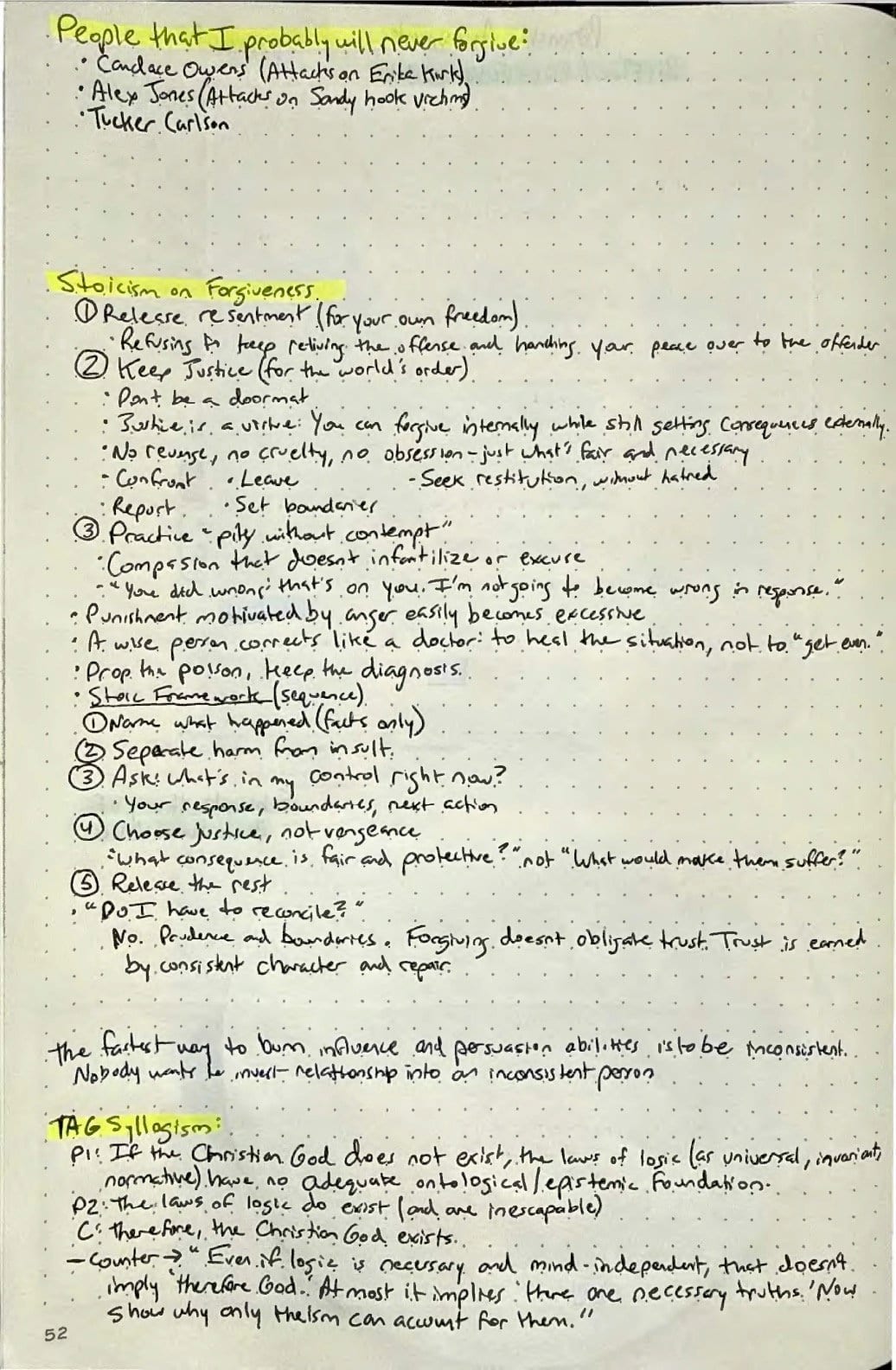
- Feb – March 21 2026, pp. 52 — Stoics on forgiveness → open PDF p58 (file not included in this release)
Index: Personal Journal
Pinker’s Chapter 8 supplement — apologies work when they are costly
Pinker identifies three conditions that can lower revenge: sympathetic concern or kinship, a relationship valuable enough to preserve, and credible evidence that the offender has become less dangerous. The last condition explains why an apology can help but cheap talk can backfire. Acknowledgment, restitution, visible shame, and a voluntary sacrifice make changed intent harder to fake; shared goals can also recategorize enemies as partners, as in the classic Robbers Cave experiment.
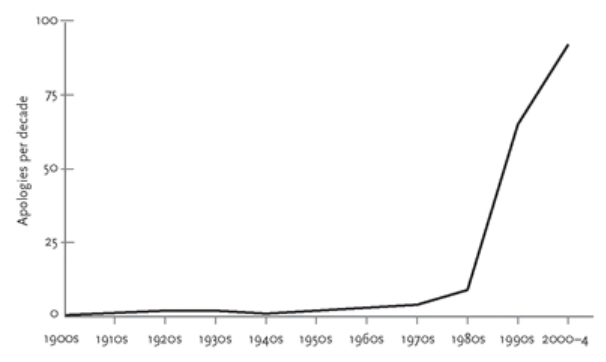
Figure 8-6 — Apologies by political and religious leaders per decade, 1900–2004. The curve records the frequency of public apologies, not their sincerity, public acceptance, or causal effect on peace. Pinker therefore turns to Long and Brecke’s historical comparison. Among 21 international reconciliation events, successful cases were distinguished less by emotion than by a novel, voluntary, risky, vulnerable, and difficult-to-reverse move; Anwar Sadat’s 1977 speech to Israel’s parliament is the prototype. In a much smaller set of 11 civil-war reconciliation events, 7 were followed by no return to violence, compared with 9% of conflicts without such an event. The selected observational samples are suggestive, not randomized evidence, and cannot show that ritual alone caused peace.
The practical distinction is between perfect justice, which can renew competitive victimhood, and incomplete but public justice: truth-telling, acknowledgment, limited accountability, redefined identities, and a visible commitment to a shared future. This is Pinker’s 2011 synthesis, not a demand that victims forgive, waive legal rights, or reconcile under continuing threat. Chapter 8 synthesis · Conditions for forgiveness, PDF pp. 746–749 (file not included in this release) · Figure 8-6 and reconciliation evidence, PDF pp. 750–753 (file not included in this release) · Incomplete justice and commitment rituals, PDF pp. 753–754 (file not included in this release)