

DESCRIPTION
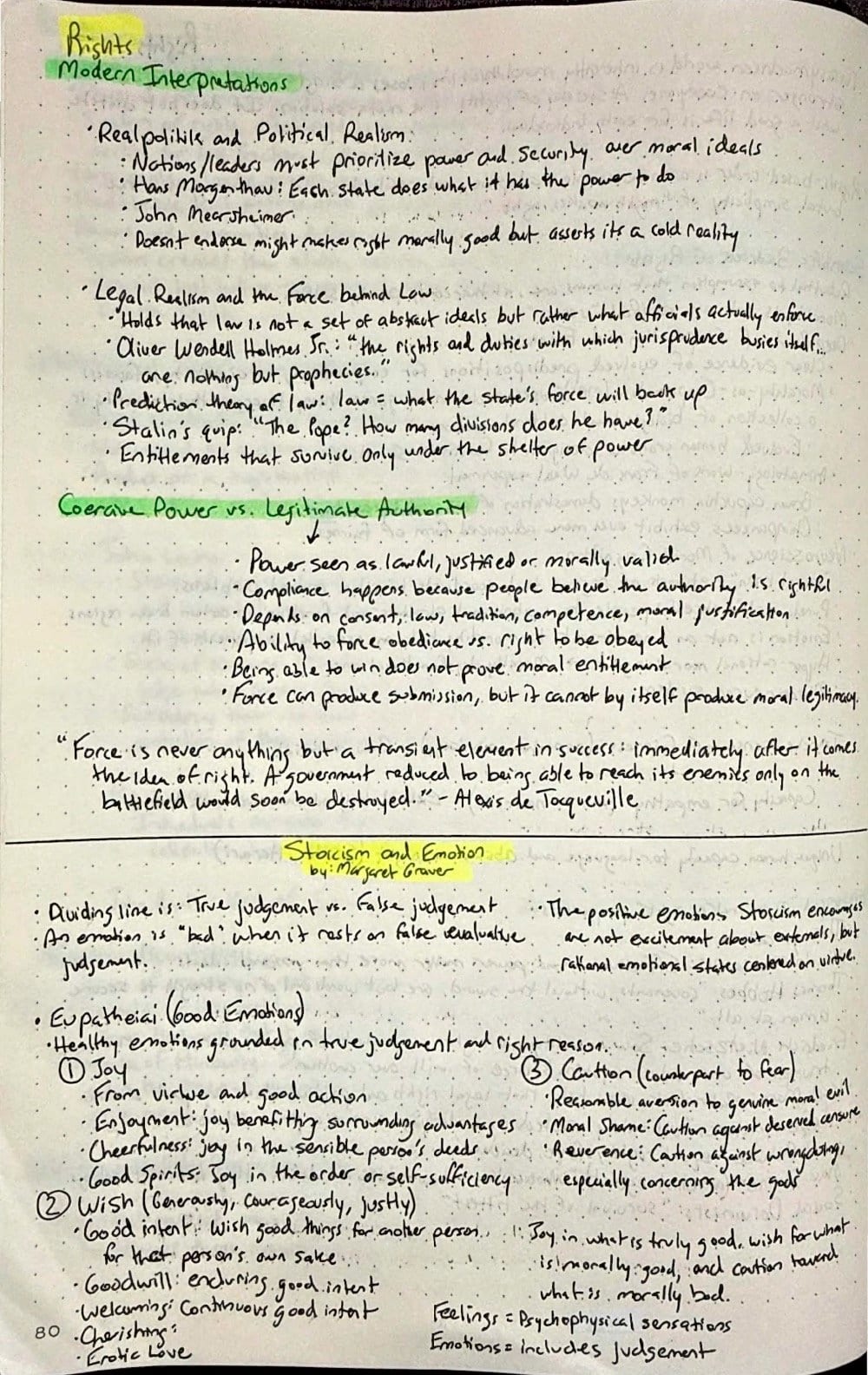
On the surface, stoicism and emotion seem like contradictory terms. Yet the Stoic philosophers of ancient Greece and Rome were deeply interested in the emotions, which they understood as complex judgments about what we regard as valuable in our surroundings. Stoicism and Emotion shows that they did not simply advocate an across-the-board suppression of feeling, as stoicism implies in today’s English, but instead conducted a searching examination of these powerful psychological responses, seeking to understand what attitude toward them expresses the deepest respect for human potential.
What this book settles about the Hume comparison — added 2026-08-22
Graver never mentions Hume, Hutcheson, or the Scottish Enlightenment anywhere in the text or notes; her modern interlocutors are Nussbaum, Sorabji, Inwood, Brennan, Gill, Becker, and the affect scientists. So she cannot source a claim about Hume — but she settles the Stoic side of that comparison decisively, and three chapters do the work:
- Ch. 1 + Ch. 3 kill the “reason governs passion” arrow: one directive faculty, and the felt “carried away” quality is a first impulse overriding a later one from the same centre.
- Ch. 2 (eupatheiai) + Ch. 4 (propatheiai) show Stoic and sentimentalist agree a good life is affectively rich; they disagree only about what makes an affect fitting.
- Ch. 6–7 give a genealogy of character through custom, upbringing, and social approbation that Hume would recognize almost entirely — the break is evaluative (depravatio vs. constitution), not descriptive.
Full line-by-line check → Graver Audit - Correcting the Stoic Side of the Hume Comparison · The divide restated → Can a Feeling Be Wrong - Stoics vs Hume and Hutcheson
AI Summary
THE THESIS — What the Stoics Actually Thought About Emotion
“Stoicism” in modern English means the absence of emotion. Graver’s book exists to show that this is a mistranslation of the ancient position. The Stoic founders “did not set out to suppress or deny our natural feelings; rather, it was their endeavor… to determine what the natural feelings of humans really are.” Their answer, in nine moves:
- An emotion is a judgment, not a feeling. A pathos is an assent — an act of endorsing a proposition about the world. The pounding heart is what happens when you have the emotion; it is not the emotion. Feelings “supervene” (epigignesthai) on judgments: the judgment always produces the feeling, but the same feeling can occur without the judgment. Raw feeling can come apart from the belief responsible for it.
- Every emotion hides a syllogism. To be afraid is to hold, implicitly: (1) things of this type are evil; (2) if an evil is at hand, it is appropriate for me to contract/withdraw; (3) this thing, of that type, is now at hand. Premises 1 and 2 are dispositional (long-standing beliefs); only 3 is occurrent. So the real cause of an emotion is never the event — it is the standing beliefs you brought to the event.
- The quarrel is with premise 1 — the theory of value. Externals (money, health, reputation, the lives of those we love) are indifferents: they can be preferred and pursued, but they never merit uncompromising evaluation, because “genuine value does not come and go with the occasion.” Only integral objects — one’s own character and actions, virtue and vice — are truly good or evil. Emotions as we know them are therefore built on a factual mistake.
- So the target is falsehood, not feeling. “If it should turn out that a particular type of response always implies a false judgment, then that is a response we should seek to eliminate, not because we wish to be unresponsive but because we wish to avoid believing what is false.”
- Emotions are voluntary, and we are accountable for them. Because their causes are our own beliefs, they are eph’ hēmin, “up to us” — even when experienced as being swept away. Being overwhelmed is a mark of immaturity, not of human nature. “We are unfree only because we are at variance with ourselves.”
- Apatheia is not numbness. The sage feels — powerfully. The corrected emotions, the eupatheiai, are the same psychic movements with true content: joy (present goods), wish (prospective goods), caution (prospective evils). They are “corrected versions of human feelings, not diminished versions… like the easy movements of a powerful athlete, forceful but without strain.” Only the fourth cell is empty: the wise have no present evils to grieve.
- Involuntary feeling survives wisdom. Propatheiai — the “pre-emotions,” the pallor, trembling, tears, gooseflesh, the “bite and small contraction” — occur without assent, in anyone, sage included, “through some requirement of the human condition.” They are natural and blameless. This is what keeps the ideal humanly attainable rather than monstrous.
- Character is where responsibility really lives. Single episodes matter less than the entrenched traits they build: sicknesses (hardened misvaluations of an object type), infirmities, proclivities (proneness to an emotion type). Emotions are habit-forming — each repetition “calluses” the mind — but reason can intervene before the trait sets. Antecedent causes (genes, upbringing, culture) shape us; the sustaining cause is our own mind, which is why we remain responsible.
- The endpoint is more human, not less. The wise love, form friendships, fall in love, and rejoice. “Becoming like the sage would be becoming more human, not less; it would be recognizable as human maturation.” And even for us — remorse, moral shame, and aspiration, directed at our own character, may be entirely appropriate.
Graver’s own thesis, then: Stoicism is not an ethics of emotional suppression but a normative theory of affect — an account of what our feelings ought to be about. What it refuses to do is treat emotions as harmless. It demands that they “be examined, corrected, purified — this indeed presents a challenge to many modern ways of thinking. But it is not a challenge we have a right to ignore.”
KEY TERMS
Greek Rendering Meaning pathos / pathē emotion an excessive impulse resting on a false evaluation eupatheia / eupatheiai ”good emotion,” normative affect the corrected counterpart found in the wise propatheia pre-emotion involuntary feeling before assent; blameless phantasia impression how something “seems”; propositional, involuntary sunkatathesis assent accepting an impression as true — the voluntary act hormē impulse assent to “this predicate is appropriate for me now” hēgemonikon directive faculty the single command center, located in the chest pneuma / tonos breath / tension the material of mind; its tensional state apatheia impassivity freedom from the pathē — not from all feeling oikeiōsis orientation / affiliation innate attachment to self and to others katalēpsis grasp / accurate cognition a reliable judgment diathesis / hexis non-scalar / scalar condition virtues admit no degrees; traits do
Introduction — Emotion and Norms for Emotion
The Misreading Being Corrected
- Modern English “stoic” = unfeeling; the ancient project was the opposite of suppression — it was determining what our affective responses ought to be like.
- Pathos means roughly “experience” or “affected-ness”; its extension is fixed by examples, not definitions. Chrysippus’s canonical cases come from Greek literature: Agamemnon’s fear, Hera’s wrath, Aeneas’s gladness, Zeus’s longing, Medea’s murderous resolve, Menelaus’s collapse before Helen’s beauty.
- Crucially, not everything we call an “emotion” is a pathos. Excluded at both ends:
- Below the line: eupatheiai (rational awe, reverence, joy, love, wish) and strictly involuntary responses — blanching, shuddering, tears, laughter, and “many responses to literature, music, and the visual arts.”
- Above the line: over-the-top responses that belong to mental illness, not emotion.
Method and Sources
- Graver reconstructs the Athenian Stoa — Zeno of Citium and especially Chrysippus (mid-to-late 3rd c. BCE) — rather than later adaptations. Chrysippus’s On Emotions was the school’s most influential work; it survives only in fragments.
- Sources are used critically and against their grain:
- Hostile witnesses are often the best: Galen (a Platonist physician) and Plutarch quote Chrysippus verbatim precisely because they want to refute him — but they impose a “sharp dichotomy” frame where the real differences may be gradations.
- Doxographies (Diogenes Laertius; Stobaeus, likely via Arius, 1st c. BCE) are dry but “generally trusted not to alter or embellish.”
- Cicero (Tusculan Disputations 3–4) preserves Chrysippus’s emotion theory most fully; Seneca and Epictetus are read as independent thinkers presenting inherited doctrine.
- Odd corners matter: Philodemus’s Herculaneum papyri, Hierocles found buried in Egyptian sand, Philo of Alexandria surviving in Armenian translation.
- Graver’s stance: interpreter, not advocate. “For me, Stoicism remains a historical subject” — explicitly not the neo-Stoic updating projects of Nussbaum (2001) or Becker (1998, 2004).
Chapter 1 — A Science of the Mind
Two Levels of Description, Both True
- Modern affective science studies emotion physiologically (Panksepp’s electrode-stimulated cat); Stoic psychology emphasizes propositional content and the norms derived from logical analysis of evaluative judgments.
- But Stoicism is materialist too: the mind is a body, and mental events are physical changes in the world. The argument: only bodies can interact with bodies, and mind and body demonstrably interact (a cut finger hurts; anger reddens the face).
- Following Aristotle, one and the same emotion admits two accounts — “the boiling of the blood around the heart” and “a desire for retribution.” Neither displaces the other. Stoic priority goes to the intentional account, but the physical account must always be available.
The Material Basis: Pneuma and Tonos
- The psyche is pneuma — a highly energized mix of fire and air, the vehicle of Zeno’s “designing fire,” which supplies the “seminal principles” organizing everything from crystals to cosmos.
- Fire and air are opposed forces; their balance produces tension (tonos), which varies in intensity “like the varying vibrations in the strings of a musical instrument.”
- One stretch of pneuma does all the work. Graver’s analogy: low-tension “background patterns” ground bodily properties (bone hardness, coloration); high-tension vibrations ground thought and feeling — “like radio waves modulated in amplitude or frequency.”
- Graver deliberately avoids “soul”: the psuchē “is not a zone of miraculous possibility”; it is closer to the nervous system as a whole than to what we call mind.
The Directive Faculty (Hēgemonikon)
- Located in the chest — sensory input arrives, action is initiated. Chrysippus’s images: a spring with distributaries, a tree with branches, a king judging the reports of spies.
- The commitment is to centralization, not to the heart. “Given a more detailed knowledge of the central nervous system, a Stoic theorist should have had no difficulty in transferring to the brain the role that Chrysippus in fact gave to the heart.” What cannot be given up is that psychic activity belongs to one organ — “not vision to the eyes, anger to the spleen, and worry to the gut.”
- Self-perception is structural, not incidental. Hierocles: because psyche and body are mixed “through and through,” the psyche presses on the body and is pressed back — “the animal would continuously perceive itself.” This proprioception is what lets us feel our own psychic movements.
Impression, Assent, Impulse
- Impression (phantasia): an alteration through which something seems to be the case. Propositional in a rational being — “it is night” is informative in a way raw sense data is not. Zeno’s model: a signet ring in wax (significance not reducible to its material); Chrysippus improves it to air receiving many simultaneous voices — three-dimensional, fine-grained, and made of the same stuff as mind.
- Assent (sunkatathesis): what converts mere thought into belief. Described both intentionally (accepting/rejecting as true) and physically (as a level of tension). “The ordinary mind is, as it were, a pushover.”
- Impulse (hormē): assent to an impression that some predicate is appropriate to me right now. Action is individuated by the mental event, not the behavior: Chrysippus defines walking as “the directive faculty itself” — “my dog does not ever walk in the way that I walk when I participate in a protest march.”
The Affective Movements — and the Key Distinction
- Emotions are impulses toward affective predicates: in distress one sees “being contracted” as appropriate and undergoes a sustolē (contraction); in delight, eparsis (elevation).
- The full vocabulary from Galen and Cicero: contractions, outpourings, elevations, lowerings, bitings, shrinkings, plus ekklisis (withdrawing, in fear) and orexis (reaching, in desire). Deliberately many terms, to match many reported feeling-tones.
- The load-bearing term is epigignesthai — “follow upon” / supervene. It expresses one-way entailment: the judgment is sufficient for the feeling but not necessary. Therefore:
- Feelings that are phenomenologically identical need not be the same affective response.
- One can experience what feels exactly like delight, anger, or fear and not have that emotion, because the intentional criteria are unmet.
- This single move is what makes apatheia livable, and it sets up Chapters 2 and 4.
- Graver against Galen: Galen claims Zeno identified emotions with the bodily movements while Chrysippus identified them with the judgments. Graver argues there is no substantive disagreement — both hold that emotion involves both; Chrysippus merely reformulates to make explicit “that it is the nature of the judgment that defines what sort of impulse has occurred.”
Chapter 2 — The Pathetic Syllogism
Why Feeling Itself Cannot Be the Problem
- The Stoics were teleologists: a capacity regularly found in a species exists for a good reason. To condemn feeling as such would be to say nature equipped us with useless apparatus — “People would have something like a foot in the middle of their foreheads.”
- Cicero confirms the positive case: “as soon as a person receives an impression of some thing which he thinks is good, nature itself urges him to reach out after it.” The capacities for reaching, elevation, and withdrawal are natural; only their misapplication yields desire, delight, and fear.
What an Emotion Actually Claims
- An emotion is not simply “X is good.” (You do not start believing money matters at the moment you lose it — that belief was already in place.) Nor could a bare value-ascription satisfy the definition of an impulse, which requires a predicate, an appropriateness term, and a time.
- The occurrent judgment is that an already-valued object is present or in prospect — “not that a present thing is evil but rather that an evil thing is present.”
- Michael Frede’s example: you and I both notice Socrates looks pale. Identical impression; wildly different reactions — because you already believe (a) such pallor signals death, and (b) his death is a grave misfortune for you. The difference lies entirely in dispositional background beliefs.
The Missing Piece — Appropriateness
- Stobaeus’s genus definitions all embed kathēkei (“it is appropriate”). Cicero is explicit: distress requires two beliefs — that the misfortune is serious, and “that it is right, and an appropriate and proper thing, to be upset by what has happened.”
- Kathēkei carries no heavy sense of duty — only “what is called for” under the circumstances.
- The Pathetic Syllogism (Graver’s reconstruction; no single text states it this way):
- Objects of type T are goods (or evils). — dispositional
- If a good (evil) is present, it is appropriate for me to elevate (contract) my psyche. — dispositional
- Object O, being of type T, is now present. — occurrent
∴ It is now appropriate for me to elevate (contract) my psyche.
- Causation is assigned to premises 1 + 2, not to 3. “Agamemnon’s fear is caused by his belief that defeat is a bad thing, combined with a belief that one ought to have certain feelings when a bad thing is impending. The nearness of the camp… is not the real cause.”
- Is premise 2 psychologically real? Graver’s evidence that it is: Demosthenes was attacked for attending a sacrifice six days after his daughter’s death; bereaved people reproach themselves for cheerful feelings and discipline children who laugh at funerals; and our own recoil from the unfeeling sage — Lucan’s cartoon Cato remarrying Portia in “unruffled calm” — makes us reach for the words “unnatural” and “inhuman.”
Two Distinctions That Structure Everything
- Uncompromising vs. restricted evaluation. To value something uncompromisingly is to treat it as inherently beneficial, “the sort of thing anyone would be better off having,” constitutive of happiness. A restricted evaluation says only: good for me, in this amount, right now. Emotions proper always depend on an uncompromising evaluation.
- External vs. integral objects. Externals are outside one’s sphere of control (wealth, health, others’ actions); integrals are one’s own actions, states, and character. Graver prefers “integral” to the traditional “goods of the psyche” for clarity.
- The Stoic axiological claim, stated precisely: in a rational being, external objects never merit uncompromising evaluation, but integral objects always do.
- Argument from constancy: “just as the proper characteristic of heat is heating and not cooling, so that of the good is benefiting and not harming.” Wealth and health sometimes harm — so they are not the good. (Seneca’s grim case: under a dictator conscripting death squads, physical fitness is the disadvantage.)
- Deeper motivation: goodness is rightness of fit within a system. A fully coherent mind resembles the order of the cosmos itself. Aristo’s analogy: the mask may be Agamemnon’s or Thersites’, but we judge only the performance.
- Indifferents are still pursued — energetically — through selection and disselection. “To call such objects ‘indifferents’ is not to say that one has to be indifferent to them.”
Eupatheiai — Normative Affect
- The wise person “will be capable of every feeling it is in human nature to have.” Cicero renders eupatheiai as constantiae, “consistencies.”
- They are phenomenologically the same movements; what differs is that they involve no cognitive dissonance. Cicero: normative affect is “quiet and consistent,” while desire, delight and fear are “too vigorous,” “hollow,” “swooning.” But — Graver insists — not flat. “We should think of them as being like the easy movements of a powerful athlete, forceful but without strain.”
- Seneca on joy: “Believe me, true joy is a serious matter.… Look to your real good and rejoice in what is yours. What is it that is yours? Yourself; the best part of you.” Graver’s caution: this is not self-affirmation of the current self. “Lucilius’s potential for virtue is the best part of him, but it is as yet only potential.”
The Classification — Four Genera, Three Counterparts
| present | in prospect | |
|---|---|---|
| good | DELIGHT → joy (chara) | DESIRE → wish (boulēsis) |
| evil | DISTRESS → — (missing genus) | FEAR → caution (eulabeia) |
- The three genus-eupatheiai are joy, wish, and caution. (Cicero once names confidence instead of caution — see the Appendix; Graver treats this as the fossil of a superseded early classification, not an error to be emended away.)
- Why the fourth cell is empty: “present” means has become real and is recent enough to matter (not a mere tense marker — grief for a death last month still counts). For the wise, an integral evil becoming present would mean a proposition like “I act unjustly” has just become true. The situation simply never arises. Others’ failings are evils “not for oneself but only for the persons responsible” (Epictetus).
Species — Deliberately Untidy
- Species lists are “markedly unsystematic”: three species of delight, ten (or fourteen) of distress; anger swells into a subgenus of desire; gaps abound (fear of defeat but not of death).
- Graver argues the messiness is a philosophical choice, not textual corruption: the species level is an “interface between top-down and bottom-up approaches,” proving the fourfold scheme can absorb the whole ordinary Greek emotion vocabulary. Definitions are borrowed from rhetoric where they fit — the definition of pity matches Aristotle’s Rhetoric verbatim.
- Reshaping is visible: Aristotle’s indignation is dropped, rivalry reclassified as bad, and jealousy introduced — yielding three carefully distinguished responses to others’ good fortune (envy = distress at another’s good regardless of oneself; rivalry = another got what I wanted and didn’t get; jealousy = another got what I wanted and also have).
- A crack in the solipsism: the species-eupatheiai under wish include good intent (eunoia) — “a wish for good things for another for that person’s own sake” — plus goodwill, welcoming, cherishing, and eupathic erōs. “One cannot help but conclude that the rich affective life of the wise is being said to include some concern for other human beings that goes beyond disinterested service.” (Cashed out in Chapter 8.)
Chapter 3 — Vigor and Responsibility
The Problem
- Pathos is the noun of paschein, “to suffer, undergo” — passivity is built into the word.
- Chrysippus fully concedes the phenomenon. In emotion we are “outside of ourselves… blinded”: we hurl a sponge as though it would accomplish something, “bite keys, and beat at doors when they do not open quickly,” take revenge on a stone we stumbled over. “As if we had become different people from those who were previously conversing.”
- And yet Zeno: emotions are voluntarii — volitional, “experienced through a judgment of opinion.” Graver suspects the underlying Greek is prohairetikos: “the most explicit claim they could make about responsibility for emotional experience.”
Why Emotions Are “Up to Us” — Rollability
- Assent is a matter of logical fit with what one already believes — “something ‘falls into place’ or ‘squares with’ what one already knows.” But my beliefs are me. “It makes sense, then, to say that assent is caused by oneself more than anything else.”
- Chrysippus’s cylinder: a push makes it roll; the same push does nothing to a differently shaped object. The push is the proximate cause; the principal cause is the cylinder’s own rollability. Impressions are pushes; character does the rest.
- Physically: strong vs. weak assent = high vs. low pneumatic tension. Aulus Gellius’s near-architectural paraphrase: healthy minds let a misleading impression pass through; minds “not shored up by the supports of education” obstruct it like loose boards to a gale, and collapse — the fault resting with “their own crookedness and voluntary impulse.”
- Because Stobaeus gives the causes genus by genus, we know the content of the belief-causes of emotion better than for any other class of action.
Excessiveness and the Runner
- Zeno: an emotion is a hormē pleonazousa. Graver stresses the participle — “exceeding,” not “excessive”: “it is not a matter of the capacity but of the activity.” What it exceeds is other impulses the same agent might form in accordance with correct reason.
- Chrysippus’s walking/running analogy — the crux of the chapter. When you walk you can stop at will; the legs are “fitted to the impulse.” When you run, the legs are “excessive and contrary to the impulse” — momentum carries you past the point where you told yourself to stop.
- The sense of being carried away is not a feature of the initial impulse. It appears only later, when a second impulse (to stop) fails to take effect. Emotions are initiated exactly like any impulse; what differs is their momentum.
- Therefore mental conflict is not two faculties fighting. It is “motivations of different sorts generated at successive moments by one and the same motivational center” — logical contradiction among successive assents.
- Deep pessimism about self-control. “In contrast to that assumption by which ‘stoical’ in modern English has come to mean ‘self-controlled,’ Chrysippus actually holds that our resources for controlling emotions after they begin are extremely limited.” The emotive faculty is the reasoning faculty in another role: “the ‘head’… actually becomes the ‘heart.’”
- Cicero: “Emotions stand on slippery ground. One push, and they slide right down the slope.”
- Seneca: falling bodies “cannot resist or delay their downward course, for the irrevocable fall has cut off all deliberation, all repentance… Its own weight must carry it to the bottom.”
Medea, Menelaus, Odysseus
- Medea (“I understand what evils I am about to do, / but anger is more powerful than my counsels”) and Menelaus (sword dropped at the sight of Helen’s breast) are both cases of changing one’s mind, fast. “The essential point is not which judgment comes first, but that there is a change from one judgment to another.” Menelaus’s atonia — the slackness that lets the sword fall — literally images the slack psychic tension that fails to hold judgments in logical relation. Weakness within reason, not weakness before something unreasoning.
- Odysseus is the crucial counterexample. Seeing the treacherous maidservants, he strikes his breast, addresses his own heart, and holds his peace. Chrysippus cites this deliberately: overriding is not inevitable. “There will also be cases in which some highly salient nonemotive concern takes priority.”
Against the Platonists
- Galen and Plutarch read Plato as a “distributed” psychology — spatially separate motivation generators negotiating for control (Galen literalizes the Timaeus: judgment in the brain, emotion in the heart, appetite in the liver, with the vena cava as anatomical proof).
- Graver’s verdict: theirs is “a partial and overliteral reading.” Chrysippus can even agree the psyche has “parts” — but parts with propositional content, successive activities of the directive faculty. His approach avoids the “little persons” problem modern readers find in Plato “while preserving Plato’s central insights about the importance of moral reflection and inner harmony.”
The Posidonian Objections (and Chrysippan Replies)
| Objection | Chrysippan reply |
|---|---|
| Unbidden tears; responses to instrumental music | Not emotions — pre-emotions (ch. 4) |
| Animals and infants clearly feel | Real, but pathos-analogues, not pathē: no capacity for rational assent |
| Grief fades though the belief persists | ”Fresh” (prosphaton) means the agent believes the event recently became the case; that assessment shifts. Artemisia, who mourned for life, is the case that fails to shift |
| Prerehearsal blunts distress | Not mere surprise — Cicero, expanding Chrysippus: “the event is fresh in one’s mind”; salience, not novelty |
| No emotion without visualization | ”To be unable to imagine a thing is to be less than half convinced of its existence” — belief is deeply implicated |
- Graver’s assessment: these objections resurface in modern anti-cognitivism (Zajonc, Greenspan, Stocker) and “would be likely to arise in any case.” A determined Chrysippan can always answer by invoking subsidiary beliefs in real practical reasoning. Paul Griffiths’s charge — that cognitivism restricts the explanandum a priori — misses the point: “a description of all psychic events that can be called affective was never Chrysippus’s aim.”
- The demand echoes Robert Solomon: “We must take responsibility for what we do and what we feel.” Graver’s Stoic amendment: we are not adults but “in the process of becoming adults.” Helplessness is “a lingering vestige of childhood.”
Freedom — and a Consequence for the Sage
- Stoic eleutheria is not indeterminism but not being a slave: doing what you want and not having to do what you don’t.
- The wise are free because they do exactly what they wish; ordinary people, dragged by passions, are slaves however free their legal status.
- Graver’s extrapolation (not stated in any surviving source): the eupatheiai are caused by ascriptions of genuine value, so they must be very powerful. “An awareness of having done the right thing should evoke not just a mild satisfaction but real, deep joy. The thought of abusing a child should be met with more than unwillingness: aversion should go off like an air-raid siren that arrests one’s very being.” (Lawrence Becker makes the same point against Posidonius: those who see virtue as supremely valuable should be supremely passionate about it.)
- Yet the wise are never carried away — because overriding requires changing your mind, and the wise are “nonprecipitate in assent”: all relevant considerations are already weighed. “Any eupathic response will be a wholehearted one, with no second thoughts.”
- The payoff for us: “It is in our nature to respond affectively, but it is not in our nature to be overpowered by our own affective responses.”
Chapter 4 — Feelings without Assent
The Storm at Sea
- Aulus Gellius watches a Stoic philosopher aboard a foundering ship: pale, trembling, alarmed — but silent. Afterward the philosopher, unembarrassed, produces Epictetus from his satchel.
- Epictetus’s analysis: impressions “force themselves upon one’s awareness by a kind of power of their own”; assents “are voluntary.” So even the wise mind “necessarily responds and is contracted and grows pale for a little while, not because he opines that something evil is at hand, but by certain rapid and unplanned movements antecedent to the office of intellect and reason.”
- The difference between wise and nonwise: the nonwise “adds belief”; the wise withholds assent and “maintains the state and strength of his opinion which he has always had.”
Two Far-Reaching Implications
- The extension of “emotion” shrinks. Physiological arousal in emotion-typical circumstances is not sufficient. Graver’s test case: “I feel a flash of irritation at my spouse who has eaten the last plum: is this anger? … unless further conditions are met, what I feel is not anger at all. It is not even a trivial case of emotion.”
- The wise retain the full affective capacity for external objects — “it is just that that capacity is no longer exercised.”
Graver’s Historical Argument
- Against Sorabji: this is not a late innovation, and Philo’s Alexandrian propatheia material is too early to be Senecan influence. The independent convergence of Rome (Cicero, Seneca, Epictetus) and Alexandria (Philo, Origen, Didymus) is best explained by a common lost early Stoic source — plausibly Chrysippus.
The Early Evidence
- Aristotle already separated involuntary movements responsive to impressions alone — heart rate, sexual arousal — from both belief-driven pursuit and automatic functions like breathing.
- Chrysippus on involuntary weeping and cessation of weeping — explained at the level of impressions and “impediments,” with no appeal to assent, impulse, or the runner analogy. Graver’s conjecture: an “impediment” is a sharp contradiction between one’s overall assessment and a new impression — tears at a mournful tale though nothing is wrong; a grieving person distracted into laughter by a child.
- Zeno’s aphorism (via Seneca): “In the sage’s mind also there remains a scar even after the wound is healed.” The sage feels “certain suspicions and shadows of the emotions but will lack the emotions themselves.”
- Plutarch’s complaint is itself the evidence: “Refuted by their tears and tremblings and changes of color, they say, instead of grief and fear, ‘bitings’ and ‘troublings.’” Graver: the targets must be Zeno and Chrysippus themselves — so the founders did devise nonprejudicial terms for responses lacking full moral significance.
- Cicero (Tusc. 3): once the “entirely voluntary belief” is removed, real distress is eliminated, “but the mind will still feel a bite and a small contraction from time to time. This last they may indeed call ‘natural,’ provided they do not use the name ‘distress.’”
Seneca’s Expansion
- On Anger 2: anger is complex — impression plus assent plus the linked judgments “I ought not to have been wronged” and “I ought to take revenge.” The prior event is simplex.
- The famous catalogue of “beginnings preliminary to emotion” (principia proludentia adfectibus) — 26 items, deliberately heterogeneous: gooseflesh from cold water; hair rising at bad news; blushing at bad language; vertigo at a cliff edge; anger at Clodius while reading Cicero’s exile; being stirred by trumpets and quick tempi; laughing along with laughers; being depressed by a crowd of mourners; grimacing at a staged shipwreck; fear while reading of Hannibal after Cannae; the war-horse roused by rattling arms; welling tears; sexual arousal; the brave man going pale as he arms; the great general’s heart pounding before the lines meet; the eloquent orator’s scalp tightening.
- Graver’s reading: the list “defeats analysis” if you seek one mechanism — because Seneca isn’t offering one. He is marking out the whole spectrum of what falls short of assent, so the reader can see what all cases share: “all occur without one’s having made any commitment to the truth of the occurrent impression.”
- Against Sorabji again: these cannot be assimilated to the amygdala’s millisecond alarm. Dirty jokes, stage plays, and written history require full conceptualization. “Being stirred up against Sulla for his proscriptions requires, at the least, comprehending a written history and forming a moral assessment… Still it is not an emotion, any more than gooseflesh or vertigo is an emotion.”
- The knife-edge case: a man thinks himself harmed, wants revenge — “but some reason tells against it and he immediately settles down.” Ordinary intuition says he felt anger and suppressed it. Seneca says no: he had the impulsory impression but never endorsed it. “He has come right to the verge… But he has not made that step; he has not gone over the cliff.”
- The one weak spot Graver flags: Seneca’s slide into calling these “impacts on the body.” Strictly, both impression and assent belong to mind; Seneca is restricting “mind” to the region of assent for rhetorical emphasis, and he drifts back and forth.
”A Requirement of the Human Condition”
- These feelings are not merely permitted to the wise — they are necessary, arising “through some requirement of the human condition.”
- Letter 11: the student who blushes will still blush when wise — “natural faults of body or mind are not removed by any amount of wisdom… if wisdom could erase all a person’s faults, then wisdom would have nature itself in charge.”
- Letter 57 (the dust-filled tunnel to Naples): even the perfect person’s “mind will be struck; his color will change. For there are some things… that no amount of virtue can escape: nature gives the virtuous a reminder of their own mortality.”
- Letter 71: “the wise person will tremble and feel pain and grow pale.”
- The function of “natural” here is doctrinal. “One should not imagine the Stoics’ wise person to be some kind of monster whose affective equipment has somehow been radically altered.”
- Seneca stretches the concession far: Consolation to Marcia allows that “a biting and a contraction of even the firmest minds” is necessary, and noisy weeping may run for days. Letter 99 distinguishes the sage’s involuntary tears (forced out by naturalis necessitas, an index of humanitas) from voluntary tears remembering a friend’s kindness — the latter “have some admixture of joy.” Graver: “This is the only text known to me in which a eupathic response gives rise to weeping.”
The Alexandrian Afterlife
- Philo on “Abraham came to bewail Sarah”: Scripture pointedly says he came to mourn, not that he mourned. Impressions merely “bow down the man of constancy… not in such a way as to bring their work to completion.” His counsel to progressors: “somewhat gradually go toward it, and retire before the end is reached.”
- Philo also calls hope “a propatheia of joy,” and — combining two strands of Stoic doctrine — gives “biting and contraction” the status of a fourth eupatheia paired against grief (Cicero stops short of this).
- Origen on “Be angry, and do not sin” (Ps. 4:5): the verb must be indicative, since one cannot be commanded to do something involuntary. And on Gethsemane, everything hangs on the word “began”: Jesus experienced the beginning of grief but “did not grieve with the grief of emotion itself” — refuting those who would deny his divinity, while Hebrews 4:15 secures his humanity.
- Didymus Caecus turns this against Apollinaris: only a rational being can receive an emotive impression at all, so Christ’s pre-emotions prove he had a rational human soul. His analogy: faint handling-marks invisible on a used shirt but obvious on one fresh from the tailor. “What is really required is not that we should cease to have them but that we should withhold assent from them.”
Why This Made Stoicism Credible
- “As long as one uses a single term, ‘emotion,’ for every sort of feeling there is, it is quite easy to assume that what is true of some of our feelings — that they are involuntary and have no particular influence on our actions — is true of them all.” By drawing the line at assent, the Stoics could insist on the ethical seriousness of the responses that remain.
Chapter 5 — Brutishness and Insanity
The Boundary of Moral Agency
- Animals form impressions, have impulses, and infer (the horse trembles at the whip) — but lack “the concept of ‘following,’” the capacity to recognize and evaluate an inference as such. So they can be trained but can never “recognize that its own choices were amiss.” Animal behavior is behavior, not volitional action — and never emotion.
- Some adults fall outside the standard model too. Aristotle’s “brutish” (thēriodeis) agents — the slave who ate another’s liver, the woman with a taste for aborted fetuses — are “outside the bounds of vice.”
Two Incompatible Insanities
- Stoicism uniquely holds two different kinds of concept side by side:
- Paradoxical insanity — “all fools are mad.” A moral/epistemological redescription of the near-universal human condition.
- Melancholic/hallucinatory insanity — a medicalized condition (black bile, phrenitis, drugs, lethargy) placing a person outside responsibility altogether; “in effect, it makes one morally subhuman.”
- They exclude each other. The melancholically insane cannot be “insane” in the paradoxical sense, and vice versa. But they are linked — conceptually, by the ordinary person’s loss of control; and possibly causally.
Orestes and the Phantastikon
- Chrysippus distinguishes phantasia (impression, with something underlying it) from phantastikon — “an empty attraction, a mental experience which comes about without there being anything to produce the impression, as in the case of one who fights with shadows and punches at emptiness.” Its object is a phantasma.
- Orestes begging his mother to call off the snake-haired maidens “speaks as one who is mad and sees nothing but only thinks he sees.” Electra: “you are not seeing any of those things that seem so clear to you.”
- Sextus Empiricus gives a variant: Orestes’ impression is “both true and false” — true insofar as Electra is real, false insofar as she is not a Fury.
- Critically, this must remain rare. Orestes is joined by Theoklymenos, Ajax, Heracles, Alcmaeon — “but there seems no possibility of his being joined by some large majority of humankind. For that would invalidate the point about how impressions normally work.”
Melancholic Loss of Virtue
- Chrysippus concedes (against Cleanthes) that virtue can be lost — through drunkenness and melancholia. Not by moral lapse: “the security is relaxed and lapses into what the ancients call the ‘middle condition.’” Vice does not replace virtue; the entire rational condition goes.
- Graver: this is a minor concession to Academic pressure, not a departure. “Had he been writing in our own day, he might have spoken instead of clinical depression or Alzheimer’s disease, without any major alteration in his philosophical view.”
- The upshot: such a person “needs to be tied up and to have the assistance of friends” — care, not blame. Yet, as Aristotle says of brutishness, “it is also more to be feared in oneself.”
Fluttery Ignorance
- The Epicurean Diogenianus objects that Stoics make everyone as insane as Orestes. Graver: the charge is simply false — “no bona fide Stoic text ever asserts” this, and melancholia is never invoked for humanity in general.
- “All fools are mad” is a paradox — a conversation opener, like “only the wise person is rich,” meant to be cashed out.
- The cashing-out, from Stobaeus: madness is ignorance “in a certain relational state — when rendering the impulses unsettled and fluttery.” Hence the definition: “fluttery ignorance.”
- A ptoia or “flutter” is another word for an emotion. The image is of lightness — being moved “by chance,” by trivial causes. “We can be blown about like feathers in a windstorm.”
- Chrysippus’s own evidence is ordinary usage: people in love or in anger say “let them be, whether it is better or not,” “say nothing to them,” “they have to do it, no matter what, even if it is a mistake.” Such a person “is more like an animal which yields without thinking to its impulsory impressions and which needs to be managed rather than convinced.” He also cites Greek words like doxomanēs (mad about fame) and gunaikomanēs (mad about women) — and one meaning “mad about birds,” for Athenians devoted to their partridges and cockerels.
- Cicero’s bog: “when they say ‘all fools are insane,’ it is like ‘all bogs stink.’ Not always! But disturb the bog, and you will smell it. Even so the irascible person is not always angry — strike him, though, and you will see him go mad.”
- Cicero also distinguishes Latin insania (broad, applies to all nonwise) from furor (complete darkening of mind) — and observes that furor “is the sort of thing that can come upon a wise person, while insania cannot.”
Emotions as Causes of Derangement
- Cicero reports that so-called melancholia is caused not only by black bile “but by some more serious form of anger, fear, or grief.”
- Is this compatible with Stoic psychology? Graver argues yes. Since an emotion literally alters the size, shape, and tension of the mind material, “an especially powerful, protracted, or much repeated emotion might have some lasting effect on the mind material which would alter its tensional level and hence its rational nature” — comparable to drugs or alcohol, produced differently. (Obviously this route cannot apply to the wise, who have no emotions.)
Brutishness (Feritas)
- Seneca on Apollodorus and Phalaris, who kill people from whom they have received no injury: “This is not anger but brutishness. For it does not do harm because it has received an injury; rather, it is willing even to receive an injury so long as it may do harm. It goes after whippings and lacerations not for punishment but for pleasure.”
- Origin: anger — “which, once it has been exercised and satiated so often that it has forgotten about clemency and has cast out every human contract from the mind, passes in the end into cruelty.”
- Not a difference of degree. Anger is by definition motivated by supposed injury; strip that motive and it is no longer anger, “any more than a predatory animal is angry when it leaps upon its prey.” Even the faces differ: “They laugh, then, and rejoice… for they are savage for fun.”
- Worse than an animal, not equal to one: animals act with rudimentary logic in their own interests; the feral human rages “at random,” accepting harm to himself in order to inflict it. Perception itself is deranged — Hannibal seeing a blood-filled trench and crying “O beauteous sight!” is “not altogether different from that of Orestes when he looks at his gentle sister and sees an avenging Fury.”
- Seneca (On Clemency) separates this from the ordinary cruelty of rulers who overpunish: that follows from anger; this “neither follows vengeance… nor is angry at any wrongdoing.” Better rendered “bloodlust” than “cruelty” — crudelitas is cognate with crudus (raw) and cruor (blood).
- The modern comparison: psychopathy / antisocial personality disorder — glib, grandiose, empathy-less, and (as Patricia Greenspan notes) “prone to self-sabotage,” bypassing even obvious self-interest.
- The unresolved question: are such agents vicious or merely incapacitated? Vice requires volitional competence. If it is absent, the brutish agent “may actually be free of vice — not in any enviable way, of course,” like the melancholically insane. Aristotle says so outright; Seneca could consistently agree but pointedly does not draw the inference — “his purpose… is not to excuse the psychopath… but to expose the risks of indulging one’s own tendencies to anger.”
Seneca’s Three Movements — Graver’s Reinterpretation
- On Anger 2.4: “The first movement is nonvolitional, a kind of preparation for emotion, a warning… The second is volitional but not contumacious: ‘It is appropriate for me to take revenge, since I have been injured’… The third movement is already beyond control. It wants to take revenge not if it is appropriate, but no matter what; it has overthrown reason.”
- The standard reading (Sorabji and others) assumes a break at the end of 2.4 and makes the third movement anger — requiring some new intermediate response that is angry-but-not-yet-carried-away.
- Graver’s objection is decisive on internal grounds: the whole treatise argues that “once people get angry at all, there is no turning back” — anger is like falling off a cliff (1.7), like letting a besieging army through the gate (1.8), like a sword stuck in the wound (2.35). A partial anger “would be equivalent to a kind of running that does not involve momentum.” And Seneca never uses the supposed new category again, anywhere.
- Graver’s reading: read 2.4 straight into 2.5. First = pre-emotion. Second = anger. Third = brutishness. “Anger is thus flanked by two things which are not anger. Neither the first nor the third movement is a rational phenomenon, though for different reasons: in the one case, the feeling is not rational because it occurs without assent; in the other, it is not rational because it occurs in one who is no longer a competent rational agent.”
- Supporting evidence: efferantur (“get carried away”) differs by a single letter from efferari, “to become brutish” — a verb Seneca favors. “For one who is familiar with both words, the resonance between them produces a peculiarly chilling effect, like watching one thing turn into another before one’s very eyes.”
- The moral: anger is doubly dangerous — it overleaps reason now, and if repeated it may destroy your rational nature, “eventually rendering one incapable of anger or any other human feeling.” Hence the practical remedies Seneca goes on to give: examining one’s conscience, correcting one’s values, asking friends for help. “For these are the means of preserving one’s humanity.”
Chapter 6 — Traits of Character
The Problem: Hera and Athena
- Iliad 4: Zeus needles both goddesses equally. Athena only murmurs and glares; Hera bursts into a torrent. Equal provocation, different response — so the explanation must lie in character.
- But Stoic ethics is famously binary: virtue and vice are all-or-nothing. “As long as Achilles is not the Stoic sage, he is, technically, a coward; Aristides ‘the Just’ is technically unjust.” On that view, “there is little to be gained by apportioning responsibility on the basis of character.”
- Yet character bears the entire weight of moral responsibility in this system (“the principal reason a cylinder rolls when pushed is that the cylinder is round”). So Stoicism needs — and has — a second vocabulary.
Scalar vs. Non-Scalar Conditions
- Coherence of belief “is, like pregnancy, not a matter of degree.” The stock images: every bent stick is equally not straight; everyone below the surface is equally without air; a puppy is as blind the day before it opens its eyes as at birth.
- But the same stick that is or isn’t straight can also be longer or harder. Hence:
- Diathesis = non-scalar condition, admitting no more or less. The virtues and vices.
- Hexis = scalar condition, which “can be heightened and reduced.” Everything else.
- This inverts Aristotle’s usage, where the distinguishing factor is stability. For the Stoics it is scalarity: the virtues happen to be stable, but “stability is not what makes a condition a diathesis.”
- Stobaeus’s three-way division (conditions non-scalar / conditions scalar / activities):
| Non-scalar (diatheseis) | Scalar (mere hexeis) | Movements (kinēseis) | |
|---|---|---|---|
| Goods of mind | the virtues | habitudes (fondness for music, literature) | courageous actions, etc. |
| Evils of mind | the vices | sicknesses, infirmities, aversions, proclivities | imprudent actions, etc. |
- The scalar conditions are the Stoics’ real theory of personality. “Just as one may observe variations in the sea floor without disregarding the fact that all of it is equally underwater.”
Sicknesses (Nosēmata) and Aversions (Proskopai)
- Definition: “a desirous opinion which has hardened into a condition and become entrenched, according to which people suppose that things which are not choiceworthy are extremely choiceworthy” — fondness for money, wine, women, fame, food, pleasure, birds. Aversions are the inverse: misogyny, misanthropy, hatred of wine, inhospitality.
- These are entrenched versions of premise 1 of the pathetic syllogism — evaluations of object types, made in the uncompromising way.
- Infirmities (arrōstēmata) are “sicknesses that occur together with weakness.” Graver flags this as definitionally redundant: since all false beliefs are held “weakly” in Stoic usage, the sicknesses already satisfy it. “At most, the difference between them will be a matter of emphasis, as that an infirmity is a sickness in someone who is somehow especially tolerant of self-contradiction.”
- Having emotions about money ≠ having the nosēma of money-fondness. The difference is the strength of the belief and the priority it takes in practical reasoning: the greedy man “will be much more upset about his veterinarian’s bill than he is about his dog. Other people may be baffled by his reactions, even though they themselves are capable of similar responses on a smaller scale.”
- Chrysippus’s medical pun. Comparing philosophy to medicine, he uses pathos to mean both “emotion” and “medical condition,” conflating the entrenched belief with the occurrent judgment. Graver treats this as the source of a persistent textual confusion: it is why Diogenes Laertius wrongly reports that “the pathē are judgments… fondness for money is a supposition that money is a fine thing,” why Cicero insists on translating pathos as morbus (disease), and why some later handbooks list nosēmata among the emotions.
Proclivities (Euemptōsiai)
- “A proneness to emotion, as to one of the actions contrary to nature” — irascibility, timorousness, enviousness, tendency to grief, tendency to pity, anxiety; also proneness to theft, adultery, violence.
- The structural contrast with sicknesses: “The one cares deeply about, say, birds and may become mad or sad or glad about them; the other has no special concern with birds, money, men, or anything else but just gets mad, mad, mad about them all.” Hence the names: sicknesses are named from objects (philodoxia from doxa), proclivities from responses (orgilotēs from orgē).
- Chrysippus’s chronic-illness analogy — like recurrent sinusitis or intestinal cramping: the condition exists between bouts, and not everyone who gets a stuffy nose has chronic sinusitis. Posidonius objected that a body free of any particular tendency is still susceptible to illness, unlike the sage’s mind. Graver adjudicates for Chrysippus: Posidonius misread the comparandum — the “healthy bodies” are the minds of ordinary people who are susceptible generally but prone to nothing in particular. “But Chrysippus should have made his point explicit, rather than leaving the analogy to do the work.”
- Graver’s conjecture (no definition survives): a proclivity is an entrenched commitment to premise 2 — the appropriateness belief. The timorous person believes withdrawal is the fitting response across “an unusually wide range of situation types”: “this person thinks it is the right reaction to the rumble of a subway train or the growl of a Pekinese.” This yields a fully cognitivist account of all three trait types, and extends neatly to proclivities toward actions (a premise that “sleeping with other people’s spouses is an especially appropriate thing for me to do”).
Habitudes (Epitēdeumata) — Personality in the Wise
- Fondness for music, literature, horses, hunting with dogs. Definition: “a road that leads toward what is in accordance with virtue through a skill or through part of a skill” (hodos = road and method).
- Why does “fondness for horses” differ morally from “fondness for birds”? Because habitudes contain no mistake about value. The sage knows these pursuits are indifferent to happiness; the nonwise horse-lover thinks a day’s hunting is a genuine good.
- Grounded in katalēpseis (accurate cognitions), not in the “precipitate and unstable opinions” of the nonwise. And since the wise person’s every action is already virtuous, a habitude cannot be steering her away from vice — it must be a principle of selection among virtuous alternatives: “the justification for devoting one’s time to literature rather than public service, or sports rather than music.”
- Habitudes are not knowledge but “worthwhile conditions” — which is precisely what allows them to vary. The virtues interentail; skills do not. “One wise person may be fond of music but not of dogs, while another, equally wise, devotes herself to horses.”
The Contrast That Matters
- Ordinary personalities are structured around emotion-generating traits — entrenched misvaluations of object types, or entrenched dispositions to particular emotion types.
- Wise personalities have individuality too — varied experience, expertise, favorite pursuits — but are not organized around affect: “they can be fond of music and still understand that playing music is not in itself a good thing, and that being thwarted in a wish to practice is not an evil.”
- The dual model preserves both the ideal of rational serenity and the reality of individual difference, even at the highest moral level.
Chapter 7 — The Development of Character
The Question Being Asked
- Chapter 3 asked “why does the cylinder roll?” — answer: it is round. This chapter asks “why is the cylinder round?”
- Two sub-questions: (1) why does humanity at large make the same few evaluative errors? (2) how do those errors become entrenched in particular individuals?
- The pressure comes from Stoic providentialism. Cleanthes’ hymn: “Wretched creatures! Though ever longing to possess good things, / they do not see, nor do they hear, god’s universal law… / but witless, they act for various bad ends, / some in contentious zeal for glory, / others disorderly, bent upon gain, / others for ease and bodily pleasures.” If nature designed us well, these recurring errors demand explanation.
Innate Endowment
- Cicero’s Cato (On Ends 3): infants have no innate knowledge — the mind at birth is “like a blank sheet of paper” — but do have an orientation to their own constitution, plus a native wish to understand and a dislike of being deceived.
- Development: preserve oneself → select what accords with nature → recognize the pattern in one’s preferences → value that pattern for its own sake, harmonizing it with the natural order. “Coming to understand the good and coming to instantiate the good thus happen at the same time.”
- These are the aphormai pros aretēn — “starting points toward virtue,” pointing to prudence, temperance, courage, justice.
- Empiricism with an innate bias. Following Dominic Scott, Graver stresses that the empiricist commitment is compatible with “the mind’s having been constructed in such a way as to favor some decisions over others.” Scott’s analogy: genetic predisposition to asthma or breast cancer — conditions you don’t have at birth but are primed to develop. “There is some irony in this, for in Stoicism the condition one is primed to develop is not an illness but mature psychic health.”
- Human nature is not inherently wicked. Human nature contains nothing that must incline us to vice.
Comparison to Modern Science
Here’s how Cicero’s Stoic account of innate endowment and intellectual development compares with modern scientific understanding (developmental psychology, evolutionary theory, neuroscience, and behavioral science):
1. Humans Born Without Knowledge but With Natural Tendencies
Stoic/Ciceronian view:
Infants are born ignorant but possess inborn orientations—toward self-preservation, health, understanding, and order. These tendencies, if cultivated, naturally point toward the four cardinal virtues (prudence, courage, temperance, justice).Modern science:
- Infants display core cognitive and moral foundations: object permanence, a rudimentary sense of cause and effect, and early signs of moral preference (e.g., a preference for helpful over harmful actors in puppet experiments by Hamlin, Wynn, & Bloom).
- Evolutionary psychology suggests humans are predisposed toward self-preservation and prosocial behavior (reciprocity, fairness) because these traits improved survival in social groups.
- Neurodevelopment research shows infants are equipped with social learning systems (mirror neurons, early imitation) that scaffold later moral and cognitive development.
2. From Self-Preservation to Harmony with Nature and Reason
Stoic/Ciceronian view:
The developmental arc moves from a focus on survival to seeking harmony with nature’s rational order, integrating the self into a broader moral framework.Modern science:
- Developmental psychology (e.g., Piaget, Kohlberg) documents a progression from egocentric, survival-focused reasoning to abstract, principled reasoning, often involving fairness, reciprocity, and societal concern.
- Studies of adolescents show a shift from reward-driven behavior (ventral striatum activity) toward prefrontal cortex-driven regulation, allowing for long-term planning, moral reasoning, and self-control—paralleling Stoic notions of aligning with rational order.
- Moral identity research (Aquino & Reed) finds that as people internalize moral norms, prosocial motives become more self-defining and less contingent on external rewards.
3. Innate Tendencies Toward Virtue (Aphormai pros aretēn)
Stoic/Ciceronian view:
Human nature includes natural starting points (impulses) that, properly developed, lead to prudence, courage, temperance, and justice.Modern science:
- Cross-cultural studies (Schwartz, Peterson, Haidt) find universal moral foundations (care, fairness, loyalty, authority, sanctity) that map loosely onto the Stoic virtues, though expressed differently across cultures.
- Traits like self-control (temperance) and courage (risk-taking for group benefit) are supported by studies in evolutionary biology as adaptive behaviors.
- Neuroscience shows the brain’s prefrontal systems are designed to regulate impulses and emotions in service of long-term goals, echoing Stoic ideals of temperance and prudence.
4. Human Nature Is Not Inherently Wicked
Stoic/Ciceronian view:
Errors and vices arise not from innate corruption but from misjudgment and cultural perversion, despite humanity’s beneficent design.Modern science:
- Behavioral genetics shows humans are born with mixed predispositions—for empathy, cooperation, but also aggression and selfishness.
- Most researchers view moral failings as the product of interactions between biology and environment (e.g., adverse childhood experiences, cultural norms, trauma), not innate depravity.
- Prosocial tendencies often outweigh antisocial ones when environments are stable and supportive (seen in studies on cooperative behavior in hunter-gatherer societies and modern children).
Convergence and Divergence
- Both Stoic thought and modern science see humans as equipped for moral growth, not born evil, with capacities for self-preservation, prosociality, and rationality that can be cultivated or distorted.
- Stoicism frames these capacities teleologically—as seeds pointing toward virtue—while science frames them evolutionarily and developmentally as adaptive mechanisms.
- Both agree cultural and cognitive missteps (rather than intrinsic depravity) produce vice and error.
The Twofold Cause of Moral Error
- Diogenes Laertius: “The rational animal is corrupted sometimes by the persuasiveness of things from without, sometimes through the teaching (katēchēsis) of our associates. For the starting points which nature provides are uncorrupted.”
- Why transmission alone is insufficient — and this is the Stoics’ distinctive move, against Plato (who blames sophists and assemblies) and Epicurus (who says “shun paideia”): “Before there can be transmission, there must be something to transmit.” An appeal to teaching alone invites an infinite regress.
- Galen preserves Chrysippus’s own words: “the cause of perversion is twofold: one comes about through transmission from many people, the other through the very nature of things.” Galen thinks this unexplainable; Graver shows it can be explained.
How Impressions Deceive — Calcidius’s Reconstruction
- Cause 1, “from things themselves”: the misvalued objects regularly co-occur with genuinely appropriate objects, and the immature mind cannot yet separate them.
- Birth is painful (moving from warmth and moisture into chill and dry air); the midwife’s warm bath and swaddling relieve it. What is genuinely pursued is restoration of the natural constitution — but restoration is usually pleasant, so “there arises a kind of natural belief that everything sweet and pleasurable is good.”
- Pain is confused with harm, because pain accompanies injury.
- Power is confused with the proper human role of mastery, on which power merely supervenes (“humans are by nature kingly, and since power always accompanies kingship, they suppose that kingship likewise accompanies power”).
- Glory stands at two removes: honor is derived from virtue, and popular esteem is then confused with honor.
- Graver notes the fit with attested doctrine: Chrysippus held that pleasure is an epigennēma, a by-product supervening on restorative activity — exactly the relation being misread.
- Cause 2, “from transmission”: “a whispering” — mothers and nurses praying aloud for wealth and glory; bogeymen invoked to frighten children; then poetry and drama, “mainstays of education in antiquity”; then painters and sculptors, who “deliberately lead the mind toward sweetness.”
- Note the asymmetry Graver draws out: in the first cause, no one acts wrongly — “there was no implication that the midwife acts improperly in bathing and swaddling the baby.” The error is genuinely spontaneous. In the second, the caregiver is already corrupted.
Cicero’s Hall of Mirrors
- On Laws 1 and Tusc. 3 give a third version. Humans have “the tiniest sparks of understanding,” and “seeds of the virtues are inborn in our characters, and if they were allowed to mature, nature itself would lead us to perfect happiness.”
- Six confusions, each pairing a misvalued object with a legitimate one: pleasure/health, pain/bodily harm, life/wholeness, honor-and-disgrace/moral excellence.
- Graver refines the language of “resemblance.” Ordinary resemblance means two already-conceptualized objects share properties. That isn’t what’s happening: “the relevant concepts are still in the process of formation.” The real challenge is sorting out experiences that regularly co-occur — drawing conceptual boundaries in the right place. Hence “the difficulty of persuading a child to accept some necessary but painful medical treatment.”
- The glory passage, in Cicero’s own imagery: True glory is “a solid thing, clearly modeled and not shadowy at all: it is the unanimous praise of good persons… It is, as it were, the reflection or echo of such excellence.” False glory — popular acclaim — “pretends to imitate the first, and… is rash and ill-considered, frequently praising misdeeds and faults.” It is a shadow of a reflection, and “people are blinded by it, so that they do not know where to find or how to recognize the fine things they desire.”
- The deep epistemic trap: the words of justified and unjustified praise “might be the same, and they might be spoken with the same inflection and ring of sincerity.” Only someone with the sage’s insight could tell them apart. “It is therefore very unsafe to draw any inference from the praise of the fallible multitude to one’s real merits. But this is a risk the young progressor will invariably have to take.”
- Graver hears a deliberate echo of Plato’s cave (Republic 7), where prisoners “compete for honors while striving to identify regularities in the progression of shadows.”
Compared to Modern Science
Modern science—especially research in psychology, neuroscience, and sociology—has several parallels to Cicero’s Stoic view of how cultural forces and cognitive biases distort human development, particularly regarding “glory” (social validation and acclaim). Here’s how current understanding aligns or diverges:
1. Innate “Sparks” of Understanding
Stoic/Ciceronian view:
Humans are born with proto-rational tendencies (orientation toward self-preservation, fairness, harmony) that can develop into virtue unless warped by culture.Modern science:
- Developmental psychology shows infants exhibit early moral sensibilities, such as preferences for fairness and harm-avoidance (seen in studies by Paul Bloom and Karen Wynn).
- Evolutionary psychology suggests humans evolved prosocial tendencies (reciprocity, empathy) to support group living.
- These tendencies are malleable—culture and environment amplify or erode them (e.g., authoritarian parenting or violent social contexts can blunt empathy).
2. Perversion by Cultural Influences
Stoic/Ciceronian view:
Cultural transmission (parents, peers, education, media) can instill false beliefs—confusing what is truly good (virtue) with externals (wealth, acclaim, pleasure).Modern science:
- Social learning theory (Bandura) shows behaviors and values are transmitted through modeling and reinforcement, often emphasizing social approval over intrinsic worth.
- Media and peer dynamics heavily influence adolescents’ goals, often promoting status, wealth, or appearance as primary goods (linked to anxiety, depression, and “extrinsic motivation” traps in self-determination theory).
- Neuroplasticity and critical periods make early cultural messages potent in shaping identity and value systems.
3. Confusion of Related Experiences (Misattribution)
Stoic/Ciceronian view:
People conflate pleasure with health, pain with harm, life with wholeness, and social acclaim with honor—mistaking correlates for intrinsic goods.Modern science:
- Cognitive psychology documents misattribution of arousal (e.g., Dutton & Aron’s suspension bridge study) and reward prediction errors, where dopamine-driven learning can falsely equate transient stimuli (likes, attention) with deeper needs (security, belonging).
- Hedonic adaptation research (Brickman & Campbell) shows pleasure from wealth or acclaim fades quickly, suggesting these are poor substitutes for lasting fulfillment (often tied to relationships, autonomy, purpose).
- Social neuroscience shows the brain’s reward systems (ventral striatum) are activated by both genuine social bonds and superficial signals like online likes, fueling the “false glory” trap.
4. The “Glory Trap” – Popular Acclaim vs. True Virtue
Stoic/Ciceronian view:
Popular acclaim is a “shadow” of true glory, often rewarding misdeeds and distracting people from virtue; only recognition by the wise reflects genuine achievement.Modern science:
- Studies on status-seeking (Anderson et al., 2015) show people often pursue visibility over respect, which predicts anxiety, narcissism, and antisocial behavior.
- Social media research (Twenge, Haidt, et al.) finds that platforms amplify superficial validation (likes, followers), reinforcing comparison and externalized self-worth, leading to depression and identity instability.
- Neuroscience suggests social validation can become addictive: dopamine-driven reinforcement loops keep people chasing acclaim despite diminishing returns, resembling Cicero’s “shadow of a reflection.”
Convergence and Divergence
- Cicero’s analysis, rooted in Stoicism, anticipates modern findings on intrinsic vs. extrinsic motivation and how cultural forces can hijack our social and moral instincts.
- The distinction between true and false glory parallels contemporary insights into authentic self-esteem (based on internal standards) vs. contingent self-esteem (based on approval).
- Where modern science diverges is in its agnosticism toward virtue: while Stoics ground their hierarchy of values in a teleological account of nature and reason, contemporary psychology often measures outcomes pragmatically (well-being, pro-sociality) without a metaphysical claim.
How Traits Become Entrenched
- The general account explains what everyone believes. It cannot explain why this person is greedy. Something further is needed: the mechanism by which a widely shared error becomes “the very armature around which their behavior is structured.”
- The answer: emotions are habit-forming. Cicero (summarizing Chrysippus): when desire for money arises “and when there has been no immediate application of reason — the Socratic medicine, as it were — then the evil works its way into the veins, and settles in the vital organs, and comes to be a sickness and an infirmity.”
- Epictetus is sharper: with therapy, the directive faculty “governs as at the start”; without it, “when it is again stimulated by the corresponding impression it is kindled into desire more quickly than before. And if this keeps happening, it thereafter becomes callused, and the infirmity gives stability to greed.”
- Why the callus metaphor is not circular. A trait is not merely a string of similar responses: “once formed, it alters one’s sensitivity to subsequent contacts, and it is also measurable by other means.” Desire fires “at the first hint of a possible profit; waves of hostility at the mere suggestion of company for tea.” And it should show even in periods of calm — “the greedy person or the misogynist should reveal himself by his conversation or choice of pastimes.”
- Two candidate mechanisms (Graver’s own reconstruction, since the sources give only metaphors):
- Density of associative links — each completed practical syllogism forges new connections, until the misevaluation “comes to be a point of reference for a great many of one’s judgments.”
- A second-order salience belief — Timon the misanthrope “has since come to believe that being around people is bad for me is the one value out of all the values he holds that should most often determine his actions. Competing considerations… seem to him unimportant in comparison with these thoughts whose importance has been reinforced by strong feeling.”
- Reversibility, and the window that closes. “The process of trait formation is not so rapid as to leave no opportunity for reflective self-examination to intervene.” For Timon it may be too late. But the corollary is stern: “however it was that we first fell into error, it is only through subsequent laxity that the error becomes entrenched.”
Antecedent vs. Sustaining Causes — the Answer on Luck
- Plutarch’s charge: if all states of the universe come about by Zeus’s providence, it is unfair to blame anyone for vice.
- The Stoic reply turns on a distinction in their physics (Graver follows Susanne Bobzien):
- Antecedent cause — what brought a state into being. Precedes the effect. Genes, climate, upbringing, education, role models.
- Sustaining (or “complete”) cause — what maintains the state over time. Operates simultaneously with its effect, and is always the pneuma inherent in the object itself. “Without the internal sustaining causes, whatever qualitative state has been brought about by antecedent causes would immediately deteriorate.”
- Applied: Crassus’s past episodes of desire are antecedent causes of his greed; his own psyche, now, is the sustaining cause. All the influences outside his control fall on the antecedent side. The direct cause is always himself.
- The Stoics volunteered the antecedent causes rather than hiding them. Cleanthes noted children resemble parents in “emotions, characters, and dispositions”; Chrysippus attributed this to the ratio of psychic components in the “seed,” and added place of birth — Athenians sharp because of rarefied air, Thebans stout because theirs is dense — with some people “lustful, irascible, cruel, or haughty” from such causes. He is willing to say irascibility can be inborn.
- Why this doesn’t trivialize responsibility: “Of course it is true also of a cockroach, or even a rock, that the pneuma inherent in it is responsible for the traits it exhibits. But the good and bad traits of a human being are traits that belong to rational creatures as such… autonomy and responsibility are inherent in the very notion of rationality.”
Socrates and Zopyrus
- The physiognomist Zopyrus reads “certain hollows around the collarbone” and pronounces Socrates thick-witted and overfond of women. The students laugh; Alcibiades guffaws. Socrates agrees — those faults “were indeed inborn in him, but he had cast them out by reason.”
- Graver’s gloss: Socrates “was produced by the same sorts of antecedent causes as produce every flawed human being. But the morally significant traits differ from the collarbone in that they can also be reshaped by reason.”
- Luck is not eliminated. Socrates’ very readiness to reform must itself have antecedent causes — “perhaps that readiness was also written in his physiognomy.” Merits and demerits belong to Zeus’s cosmic design as much as to us. “But the hard work that produces a Socrates is still his own, caused in a principal sense by his own agency.”
Chapter 8 — City of Friends and Lovers
The Keystone
- Seneca: “It is a single stone that makes an arch — the keystone… Why does the final addition accomplish so much, though small in itself? Because it is not only an addition but a completion.”
- Wisdom is therefore qualitative, not incremental: “the realization of structural possibilities which as yet are only latent in us.” Opinions come into harmony; new properties emerge — “stability of impulse and inner beauty.”
- And the analogy runs both ways. “The unfinished arch is made of the same materials as the finished one and has the same design and purpose.” So the study of the sage is also a study of ourselves: “there may be features of our present experience which take on an entirely new significance when considered as imperfect versions of experiences posited for the wise.”
- Method note: this is “a kind of thought experiment.” The sage is “as rare as the phoenix of Ethiopia”; two of them meeting is theoretically possible and historically unlikely. The claim “does not concern what has happened or might happen but only what ought to happen.”
Oikeiōsis — Innate Orientation to Others
- Alongside self-preservation, humans have an innate orientation toward others — the “starting point toward fair distributing,” the seed of justice.
- Cato’s argument: “It cannot be consistent that nature should intend us to have offspring and not be concerned that those offspring should be tended… just as it is clear that we have a natural aversion to pain, so also is it obvious that nature itself induces us to love those we have engendered.”
- Hierocles’ terminology: orientation to self = “well-intentioned”; to possessions = “acquisitive”; to kindred = “devoted.” And his argument from the ease of attachment: “we form friendships easily. For by sharing a meal or sitting together in the theater…” (the papyrus breaks off — but the inference is obvious).
- Cicero also argues from animal sociality: the pea crab and oyster, the hierarchies of ants, bees, and storks.
- Hierocles’ concentric circles: self, nuclear family, extended family, neighborhood, city, country, all humanity. Moral development is “to somehow pull the circles toward the center… deliberately transferring those in the outer circles to the inner ones.”
But Ordinary Affection Is Still Error
- Zeno, bluntly: only the wise exhibit proper familial affection; the nonwise are enemies to one another, even parents to their children.
- Anxiety for family, longing for their company, grief at their death are all wrong actions — because causally dependent on believing that objects outside one’s agency can be unconditionally good or bad. “Nothing in the theory of natural orientation justifies that belief.”
- But detachment is not the same as coldness — and often serves better. “Health care professionals regularly do their utmost to assist persons toward whom they feel no personal affection.” The hard case Graver presses: a parent “may be called upon to remain at the bedside of an afflicted child, offering calm assistance or encouragement at a time when a full emotional response would mean becoming dysfunctional. This, from a Stoic perspective, is not only the more sensible course of action but also a truer expression of concern for the child’s welfare.”
- Epictetus’s fragile-vase advice must be read in the Discourses, not the elliptical Handbook: the point is that only a calmly rational view lets us discharge our responsibilities. “It is no service to them if in our emotional engagement we are ‘laid low, or shattered, or dependent on the other, or reproachful toward god or humankind.’”
Wise Friendship — Rich, Not Austere
- Friendship proper exists only among the wise — grounded in likeness, koinōnia (sharing/commonality: treating the friend as oneself, goods in common), and homonoia (concord: “knowledge of common goods”).
- And it is affectively loaded. The righteous person “is companionable, tactful, encouraging”; eunoia (good intent), agapēsis (cherishing), aspasmos (welcoming) “belong only to the righteous.” All three are attested species-eupatheiai under the genus wish. “We are to imagine the wise interacting with one another in daily life and, in the context of those interactions, experiencing feelings of warmth and affection.”
- A doctrinal development Graver flags: the earliest claim was that all the wise are automatically friends, sight unseen. Stobaeus’s version replaces this with something more personal — the wise are “of a disposition to experience good intent, friendship, approval, and acceptance,” and become friends in fact only “given proximity and mutual knowledge.”
The Puzzle — and Zeno’s Solution
- The problem: eupatheiai must be directed at integral objects — one’s own character and conduct. So how can a friend be an object of eupathic response?
- The easy answer — friendship is valuable as an occasion to exercise one’s own generosity, “lest so great a virtue lie hidden” — is real (Seneca uses it) but insufficient, since Stoics also say the friend is “choiceworthy for his own sake,” and some held that the wise person “values his friend’s reason equally with his own.”
- Zeno’s answer, taken literally: “What is a friend?” — “Another I.” Graver’s reading: normative friendship actually expands the sphere of what is integral to oneself to include the friend’s qualities and actions.
- Dion and Theon, both wise, form “the Dion-Theon community as it were.” Dion’s courage benefits Dion — and benefits Theon, as a benefit to a larger whole of which he is part. “When the eye sees clearly, the hands benefit as well.”
- Under homonoia, Theon “thinks of himself as a kind of co-agent with Dion” and wishes for Dion to exercise Dion’s virtues “in the same wholehearted way that he wishes to exercise his own.”
- These are political terms, replicating the pattern that holds among all members of the normative polity.
Self-Sufficiency Preserved
- The wise must be able to lose a friend without losing happiness. Seneca’s first argument (Letter 9) is the striking one — and note the depth it concedes:
“there are times when he is content with just part of himself. If infection or battle took off his hand; if an accident cost him an eye, or even both eyes, the remaining parts of himself would be sufficient for him… Still, although he does not feel the want of the missing limbs, he would prefer that they not be missing.”
- Graver: “The relation of the wise person to friends is not a cool or distant relation, as to a piece of baggage that can easily be laid aside; rather, it is as intimate as one’s attachment to one’s own body.” Survival comes by “redefining the boundaries of the self to encompass a smaller but still harmoniously integrated whole.”
- Seneca’s second argument is weaker, and Graver says so. The Phidias analogy — the sculptor who loses a statue simply makes another — “seems to imply that friends are merely the passive recipients of one’s own artistry as friend maker.”
- The corrective comes from Hecato: two wise men, one shipwreck plank, room for one. The wise person will let go and drown if the other’s skills are likelier to serve the state. “His wish is for prospective goods, but since that wish is expressed in self-cancellation, it can only be for goods that will be realized by another.”
Optimistic Love
- Treatises On Erotic Love were written by Zeno, Cleanthes, Chrysippus, Persaeus, and Sphaerus — this was a major early theme, and the prevailing position was “strongly positive.”
- Two erōs: one “in reference to vice” (love-madness, a species of desire — Sappho’s wind on the mountain oaks) and one “in reference to virtue.”
- The definition: “an effort (epibolē) to form a friendship, because of an impression of beauty.” Note what this does: it makes wise love not a form of desire, and it makes its object friendship, not intercourse.
- Deliberately anchored in Greek social reality, not abstracted from it: the beloved is a young person “in bloom”; the setting is the gymnasium and especially the dinner party. Stobaeus: the sage behaves “not only in the manner of a thoughtful and philosophical person but also in the manner of a convivial and erotic one” — with “convivial virtue” defined as knowing “how to conduct the party and how one ought to drink with others.”
- Beauty as legible character. The sage falls in love with those who “through their form give an impression of a good natural endowment for virtue.” This rests on Stoic materialism — since mental states are physical, character is in principle “graspable from his form.” Graver deflates the mysticism: “This does not have to be construed as an arcane capability in physiognomics. It may be more in the spirit of the Stoic discussion to say, as we do also, that some people are unusually perceptive in their judgments of character.”
- Why it is genuinely eupathic, not a mere “selection”: its object (forming a friendship) is recognized as a good, and dependence on unconditional evaluation “is the primary mark of a specifically affective response.” So erōs is a subspecies of wish, alongside good intent, goodwill, welcoming, cherishing.
- Therefore it feels like love. “As a feeling, though, it may be very similar to what ordinary people call love, including feelings of sexual arousal as well as any other sensations lovers feel. Sexual conduct per se is not its object… But a eupathic eagerness for a deep level of intimacy with the right person could undoubtedly lead to sexual behavior on suitable occasions.”
- On Schofield’s educational thesis — that wise love aims at teaching, securing the continuance of the wise community (“love contributes to the security of the polis”): Graver accepts the educative dimension but rejects it as the justification. “Erōs does not require justification; it is a good thing in its own right… The wise fall in love for no other reason than that it is their nature to want to be intimate with those whom they see as beautiful… But it is the intimacy itself that is their object.”
What This Means for Ordinary Affection
- Strong feeling is not itself the error. “Proper human functioning does not mean that we should promote the interests of others only in a dispassionate way, having no lively concern for any object outside our own skin. What is proper to us is not only other-concern but affectively engaged other-concern… the occurrence of strong feelings is not in itself an indication of error.”
- Merged selfhood is a sign of promise, not pathology. “The linking of interests, intents, and indeed of the very sense of selfhood that sometimes occurs among friends or erotic partners is something that occurs also among the wise… It does not have to be assumed that every case of deep engagement with other people’s minds and actions is an indication of dependency and weakness. An affectionate disposition may instead be a disposition of strength.”
- What should be redirected is the object. We fix on physical nearness, temporal well-being, the chance to touch. The wise care about “the qualities and activities of others as agents, and in particular the reasoning powers of those others.” So: “a tender interest in the personal and intellectual development of the other is in accordance with the Stoic model… we are at least not wrong to care about reason in others for those others’ own sake.”
Chapter 9 — The Tears of Alcibiades
The Structural Anomaly
- Alcibiades at nineteen — handsomest, most ambitious, genuinely gifted — follows Socrates’ argument that looks, wealth, and accomplishments have no inherent value, and sees himself in it. “Unable to look at his teacher, Alcibiades slumps forward and rests his forehead on Socrates’ lap. Weeping, he begs for assistance in amending his life.”
- This response fits nowhere in the scheme. Its object is integral — his own deficiencies of character — which makes it look like a eupatheia. But it depends on recognizing one’s own moral inadequacy, which the sage by definition cannot do.
- Posidonius took the easy exit and denied the phenomenon: it would be proper for students of ethics to be so moved, but “in reality we do not ever observe this.” Graver: this maintains the tidy scheme “but with loss of verisimilitude, since Posidonius’s appeal to the phenomena is easily falsified.” And he is isolated — Chrysippus, Cicero, Seneca, Epictetus, and Stoics known to Plutarch all treat these responses as real.
Remorse (Metameleia)
- Stobaeus: “Remorse is distress over acts performed, that they were done in error by oneself. This is an unhappy emotion and productive of conflict. For the extent to which the remorseful person is concerned about what has happened is also the extent to which he is annoyed at himself for having caused it.”
- Defined as a species of distress — so it involves genuine contraction and mental pain.
- Why the wise cannot have it: annoyance at what one has done implies revising a previous decision — believing it was wrong at the time, on the information then available. The sage’s decisions are always correct for their circumstances, and every one of them silently carries the clause “provided there is no impediment.” Hence “the person of perfect understanding does not repent.”
- Metanoia (change of mind) and metameleia (change of heart) are distinguished but, for Stoics, “the one always implies the other.”
The Mirror-Image Grid
- The sage’s grid is missing present evils. The ordinary person’s integral-directed grid is missing present goods.
| present | in prospect | |
|---|---|---|
| good | (sage: JOY) — blank for us | desire for improvement |
| evil | REMORSE | fear of future error |
- “In our case, it is remorse that is the preeminent reactive response toward integral objects.” And by theory it should be constant: “the inferior person… is also much disposed to change his mind and on every occasion filled with remorse.”
- The question this raises: is the judgment “it is now appropriate for me to experience mental pain” necessarily false? If not, Stoics are not obliged to eliminate remorse — and that changes what apatheia means.
Consolation: Cleanthes vs. Chrysippus
- Cleanthean method: attack premise 1 — teach the sufferer “that what happened is not an evil at all.” Poor prospects in practice (few mourners will hear it), and it hits a theoretical wall: Cicero puts the Alcibiades case to Cleanthes directly — “Surely you would not claim that the circumstance which occasioned Alcibiades’ distress was not really a bad thing?”
- Chrysippan method: attack premise 2 — “get rid of the person’s belief that mourning is something he ought to do, something just and appropriate.” Leave the value question alone.
- Chrysippus’s own stated rationale is tactical and humane: “during the critical period of the inflammation (phlegmonē) one should not waste one’s efforts over the belief that preoccupies the person stirred by emotion, lest we ruin the cure which is opportune by lingering at the wrong moment over the refutation of the beliefs which preoccupy the mind.” It also lets a Stoic therapist help Peripatetics and Epicureans on their own premises.
- Achilles rolling on the ground for Patroclus is in “inflammation.” “The sensible philosopher will keep that observation to himself.”
- Cicero endorses this as “the specific and more reliable cure,” usable by every school, since “all of them ought to agree that it is a fault when the mind is moved contrary to right reason.”
Graver’s Sharpest Argument
- The two strategies are not motivationally equivalent. Consoling Achilles, the philosopher attacks premise 2 for reasons of tact while privately believing premise 1 false; the tactic is a provisional expedient. Consoling Alcibiades, premise 1 is true by Stoic lights. So any assault on premise 2 must now be motivated by “the philosopher’s own conviction that premise 2 really is false. For if that premise is true as well, then Alcibiades’ anguish is fully justified, and one ought not to proceed with the consolatory venture at all.”
- So: must a Stoic reject premise 2?
- General version (“if something good or evil is present or in prospect, some psychophysical movement is appropriate”): cannot be rejected. Doing so would abolish the eupatheiai along with the pathē. “If walking is inherently inappropriate, it does not matter whether one walks prudently or imprudently… Eupathic love would be an impossibility. The Stoic sage would indeed live what hostile accounts have sometimes alleged: the life of a stone.”
- The naturalistic principle behind this: a capacity regularly present in a species must have a legitimate exercise. And Graver is careful about what counts — “properly speaking, there is no capacity specific to wrongdoing.” What is loosely called a capacity for murder is a misapplication of the capacity to plan and execute forcible action. But the capacities for the psychophysical movements “are not like the supposed capacity to steal, but more like the capacity to see colors.”
- Distress-specific version (“if an evil is present, it is appropriate to contract”): Cicero asserts flatly that “it can never be a right action to contract the spirits.” Graver disagrees with Cicero.
- The sage never reaches that conclusion — but the reason is that she always rejects premise 3: no evil is ever present to her. “She is not barred from believing, contrafactually, that it would be appropriate to be pained at a genuine evil if one were present.”
- The image: “like burglar alarms in safe neighborhoods, their pain-generating mechanisms never prove their efficacy.”
- And the propatheiai prove the mechanism is there. In a “biting,” the sage entertains the notion that an evil may be present and feels a twinge — so “the normative human being must have something in mind that picks out pain as the appropriate response to present evils.” Since Stoics call that reaction necessary and natural, the link belongs to the normative condition.
- The naturalistic clincher: “The capacity for mental pain is not a specious capacity like stealing; it is a distinct kind of thing the human psyche can do… Doctors seek to relieve pain of body; they do not seek to make a person impervious to pain.”
Progressor-Pain and Moral Shame in Practice
- The religious account of remorse (Hebrew shuv, “return” to god) is absent from the secular tradition — but the therapeutic use of mental pain is everywhere.
- Philodemus (Epicurean, Herculaneum, On Frank Criticism): the teacher must “bite” the pupil’s heart through parrhēsia. Difficult to manage — the pupil reacts with anger as well as shame — “but the technique is highly effective in producing a change of habits.”
- Plutarch (Platonist): “Other kinds of distress are removed by reasoning, but repentance is produced by reason itself, when the psyche experiences biting pain, along with shame, and is chastised by itself.” Socrates rebuking rather than flattering Alcibiades “drew an honest tear from him and turned his heart.”
- Plutarch’s objection to the Stoics is the interesting datum: he catches them “encouraging young people with praise and checking them with criticism,” producing repentance and shame — “and they use these a great deal in setting people straight” — which he thinks contradicts apatheia. Graver: “For reasons we have seen, however, the therapists criticized here were not bound to agree with him on this point.”
- Epictetus’s protreptic style is deliberately abrasive: “The philosophical classroom is a place for medical treatment: one should leave it not with feelings of pleasure but in pain, like a patient who has just had an operation.” Not the man who dresses well and quotes Homer, but Musonius Rufus, “who brought people’s faults before their eyes.” A good speech leaves the hearer “agonized and examining himself, and saying ‘How well the philosopher has taken hold of me! I ought not to act this way any longer.’”
- Moral shame (aidōs): for Epictetus, a natural capacity to blush at what is degrading — prospective, not reactive: “one blushes when merely thinking of a degrading action and so is prevented from doing it.” Like fear in structure, but aimed at objects within one’s own sphere of choice.
- A doctrinal divergence Graver notes: classical theory (Diogenes Laertius) makes aidōs a eupathic species of caution, and so restricted to the wise; ordinary shame (aischunē) is fear of ill repute, an external. Epictetus breaks with this and allows imperfect people the capacity to be mortified at justified censure.
- Seneca’s Serenus (On Tranquility of Mind) is the extended case study — a man cataloguing his own faults to Seneca “as to a doctor”: “My state is not the worst, but it is full of moping and complaint; I am neither sick nor well.” He lives simply but is dazzled by others’ luxury; he means to serve but flees tedium; he cannot rest in leisure; he intends plain speech and gets carried away by his own eloquence. And the real fear beneath: “I fear that I may be deteriorating bit by bit… For we look upon our own failings with favoritism… Have no doubt: self-adulation is more destructive to us than the adulation of others. Who dares tell himself the truth?”
- Graver’s reading: “a kind of horror at one’s own possibilities as a moral agent” — Serenus sees in trivial faults “indications of an unstable character, one which in changed circumstances might well prove capable of some thoroughly reprehensible deed.”
Apatheia Revisited — the Book’s Conclusion
- Apatheia does not mean becoming unfeeling. Jerome’s jibe — that achieving it means becoming “either god or a stone” — is “only half right.” Godlike, yes: knowledge is a harmony resembling the god-infused cosmos. But not stonelike: “there are genuine objects to which the wise may respond affectively. Indeed… not only that such responses may occur in the normative person but even that they must.”
- Apatheia is not the goal — it is a by-product. “For the founding Stoics the endpoint of progress was simply that one should come to understand the world correctly. The disappearance of the pathē comes with that changed intellectual condition.”
- Graver’s warning to modern users of Stoicism: “It seems to me philosophically perverse to think of using Stoic arguments to rid oneself of undesired emotions merely because of the way they feel, without coming to grips with Stoic axiology… it misses the central and indispensable point of the Stoics’ contribution in ethics and psychology: that no rational being wants to believe what is false.”
- And the concession that opens the door: our integral-directed responses may be “generated on the basis of true beliefs,” giving them the status of kathēkonta — the ordinary person’s appropriate actions. “Stoic reasons for believing that the pathē would be eliminated in a perfected mind would not apply to them.”
- This covers a great deal of real emotional life: “times when grief is compounded with remorse, desire with aspiration, fear with moral shame. Many dimensions of our affective lives which common moral intuitions are unwilling to give up might therefore be permitted and even encouraged without departure from Stoic principles.”
- The final distinction. These “Alcibiades responses” do vanish at wisdom — but for an entirely different reason than the ordinary pathē. Not because the evaluation was wrong: “the person of perfect understanding evaluates these integral objects in just the same way as the flawed agent does, though with better justification.” Rather: “there has been a transformation in the circumstances that are being evaluated. New feelings reflect new facts: that what was inadequate, incomplete, and thus, for Stoics, evil has been replaced by goods in possession.”
Appendix — The Status of Confidence (Tharros) in Stoic Classifications
- The puzzle: at Tusc. 4.66 Cicero pairs confidence against fear as the proper response — but everywhere else (including earlier in the same book) the eupatheia opposed to fear is caution (eulabeia).
- Editors since John Davies (1709), including Pohlenz, have simply emended confidere to cavere. Graver refuses the emendation: confidere “is the reading of every single manuscript” and is quoted by the grammarian Nonius Marcellus in the fourth century. Stobaeus twice lists tharros alongside joy, cheerfulness, and rational wish among psychic goods.
- Graver’s proposal: these three passages are remnants of an alternative, earlier Stoic classification in which confidence, not caution, was the genus-eupatheia for prospective evils — plausibly Zenonian, displaced by Chrysippus (whose books “librarians generally chose to acquire”).
- The philosophical prehistory makes the absence conspicuous. Tharros is prominent in Plato (Protagoras, Meno, and Laws 1, where wine is proposed as a confidence-inducing drug for training modesty) and is one of Aristotle’s eleven canonical pathē. “Out of Aristotle’s list of eleven, it would be the only one without a Stoic posthistory.”
- Two reasons for the demotion:
- Structural mismatch. Joy is rational eparsis, wish is rational orexis — each the corrected form of the same movement. But the corrected form of fear should be a rational ekklisis (aversion), and confidence is not a form of aversion at all. “Caution fits the slot very neatly.”
- Wrong objects. Eupatheiai are directed only at what is under one’s own control. “Confidence, though, seems like a good thing only when it is a response to external threats.” Where the prospective object is one’s own possible wrongdoing, the fitting response is aversion, not boldness.
- Epictetus articulates the resolution: “‘Where things do not depend on volition, there you should have confidence; where they do, there you should have caution.’… In this way, we will be cautious and confident at the same time, and even, by god, confident because of our caution.”
- Where does tharros end up? Not a eupatheia (wrong objects), not a pathos (the wise have none) — most likely an instance of selection: a preference among indifferents, choosing what is normally dispreferred (torture, death) because in these circumstances it accords with nature. A katorthōma in the wise, a kathēkon in the ordinary person.
- Graver’s closing note is a wry one: “It is odd, though, to find a word so central to the older emotion vocabulary taking this role. Thinking, as they did, very deeply and elaborately about the nature of emotion and the relation among emotion concepts, the Stoics seem ultimately to have concluded that the opposite of fear is not an emotion at all.”