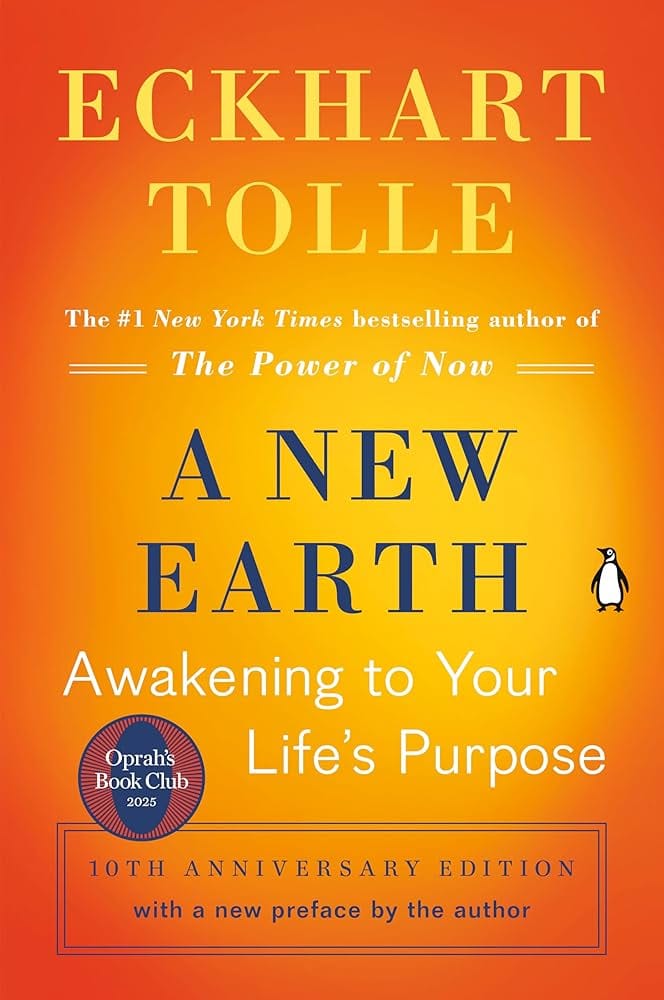

DESCRIPTION
Eckhart Tolle draws on essential spiritual teachings of all ages and traditions to reveal a fresh evolutionary model of spiritual life for the 21st century.
My Summary
Main Ideas, Takeaways & Similarities
Questions
I. What is the problem?
A. How is this problem formulated?
B. Why is this problem important?
C. What is the history of this problem?
D. Which prominent personalities have been interested in this problem?
II. What solutions to the problem are there?
A. What are the conclusions reached?
B. By what argument(s) is the conclusion reached?
C. What facts or assumptions serve as premises?
D. When a prominent personality offers a solution, does he also argue for or against other prominent personalities? Does he raise objections to alternative solutions? Does he consider objections to his own solutions?
III. Evaluation
A. What are the advantages and disadvantages of the alternative formulations to the problem?
B. Has the importance or history of the problem ever been misrepresented?
C. Are the solutions logically related to the premises?
D. Are the facts true? Are the assumptions acceptable? Are the objections answerable?
AI Summary
Highlights
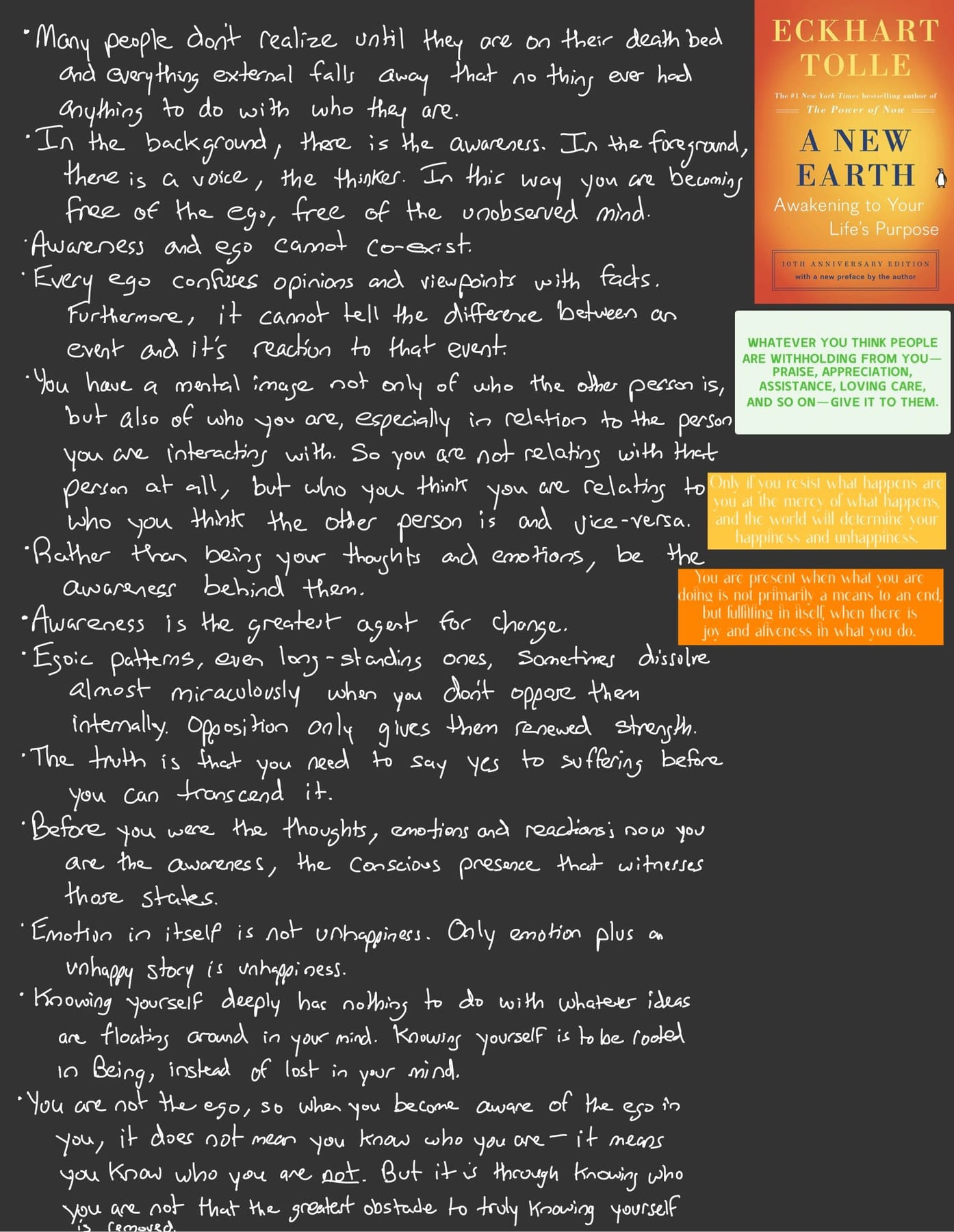
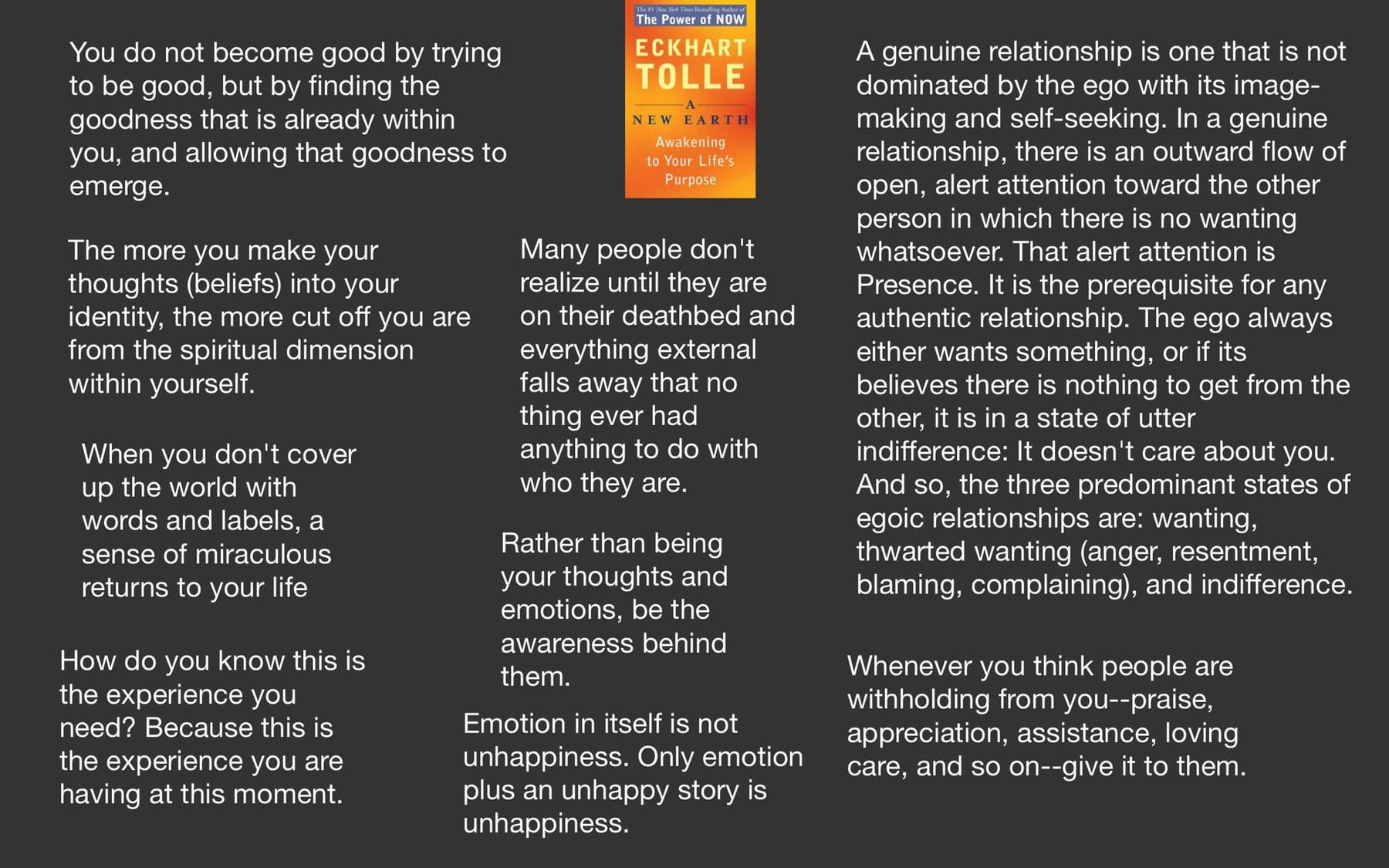
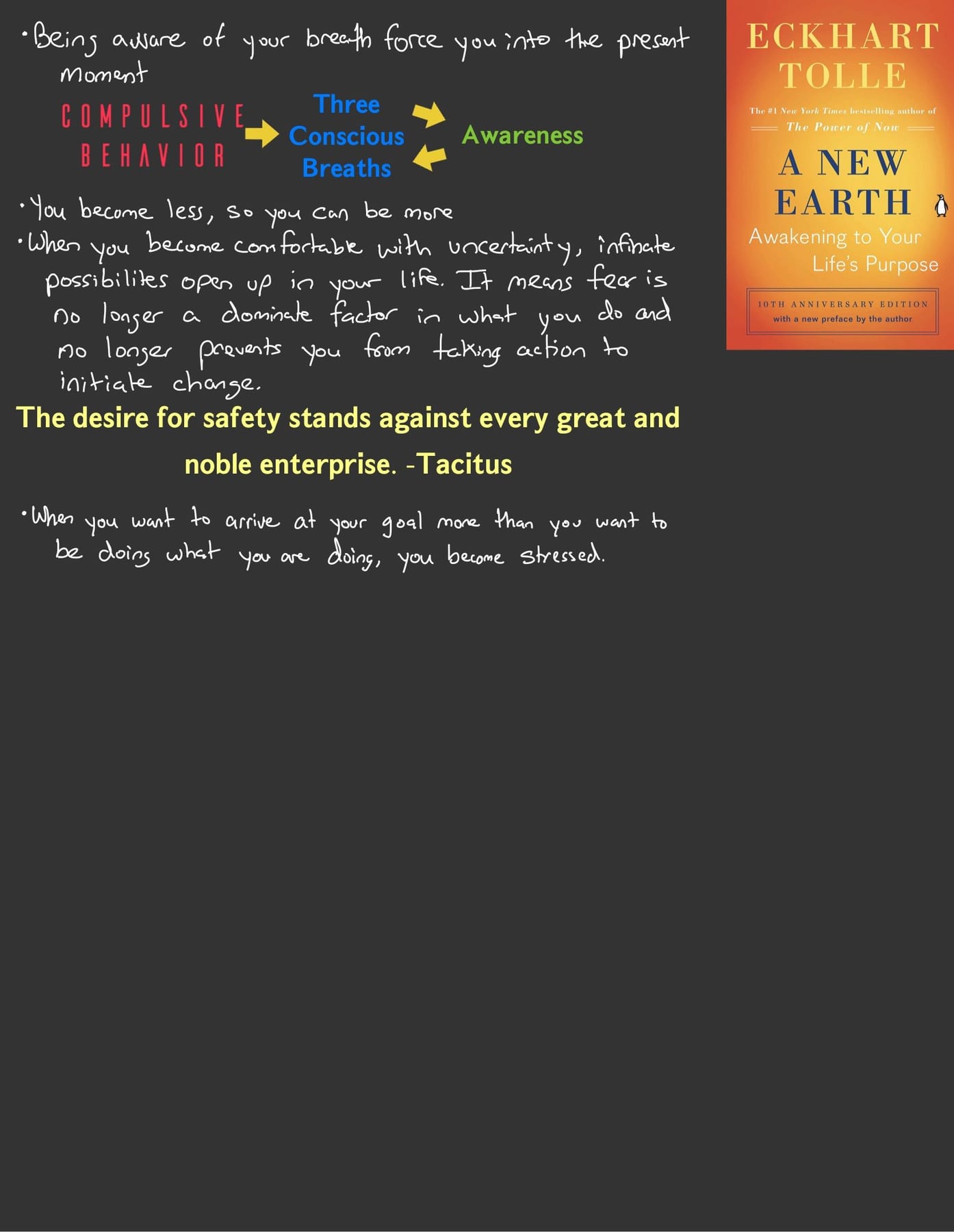
- The State of Humanity:
- Tolle begins by discussing the current state of humanity, which is characterized by egoic thinking, unconsciousness, and a focus on materialism and external success.
- He emphasizes that humanity is at a critical juncture and is on the brink of a significant transformation in consciousness.
- Identification with the Ego:
- Tolle explains that the ego is the primary source of human suffering and conflict. It is the false sense of self that leads to negative emotions, fear, and separation from others.
- He encourages readers to recognize when they are operating from egoic consciousness and to disidentify from it.
- The Power of Presence:
- Central to Tolle’s teachings is the concept of presence or mindfulness. He asserts that the present moment is the only reality and that true peace and happiness can be found by fully embracing it.
- Tolle offers practical exercises and guidance on how to cultivate presence in daily life.
- The Pain-Body:
- Tolle introduces the concept of the pain-body, which is a collection of accumulated emotional pain from past experiences. It can become activated and control a person’s thoughts and behavior.
- He teaches how to disidentify from the pain-body and prevent it from taking over one’s consciousness.
- The Role of the Ego:
- Tolle explains that the ego thrives on identification with thoughts, possessions, and external achievements.
- He encourages readers to question the validity of their egoic thoughts and to transcend the need for external validation.
- The Nature of Suffering:
- The book explores the nature of suffering and how it is caused by resistance to what is. Tolle argues that suffering arises from wanting things to be different from how they are.
- He presents acceptance and surrender as antidotes to suffering.
- The Power of Now:
- Tolle repeatedly emphasizes the importance of living in the present moment, or “the power of now.” He believes that true awakening and enlightenment can only be found in the present.
- He distinguishes between clock time (past and future) and psychological time (constant mental activity) and urges readers to free themselves from the latter.
- Relationships:
- Tolle discusses the role of relationships in personal transformation. He suggests that conscious relationships are those in which individuals do not seek to fulfill their egoic needs but instead support each other’s spiritual growth.
- He offers guidance on how to navigate conflicts in relationships and cultivate love and compassion.
- The New Earth:
- The title of the book refers to the emergence of a new level of human consciousness and a more enlightened way of living.
- Tolle believes that individuals who awaken to their true nature can contribute to the transformation of humanity and the creation of a more peaceful and sustainable world.
- Living a Purposeful Life:
- Tolle encourages readers to discover their life’s purpose, which is not necessarily a specific job or role but rather a state of being.
- He suggests that one’s purpose is to bring presence and consciousness into every moment and interaction.