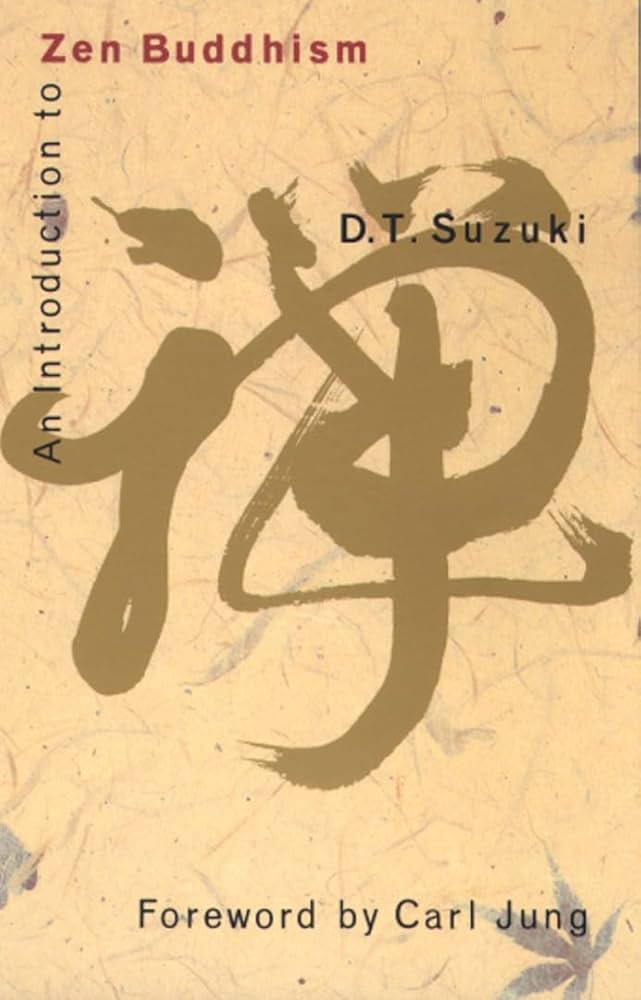

DESCRIPTION
The highly influential book that helped bring Eastern spiritual principles to the Western world. One of the world’s leading authorities on Zen Buddhism, and a Nobel Peace Prize nominee, D. T. Suzuki was the author of more than a hundred works on the subject in both Japanese and English, and was most instrumental in bringing the teachings of Zen Buddhism to the attention of the Western world. Written in a lively, accessible, and straightforward manner, An Introduction to Zen Buddhism is illuminating for the serious student and layperson alike. Suzuki provides a complete vision of Zen, which emphasizes self-understanding and enlightenment through many systems of philosophy, psychology, and ethics. With a foreword by the renowned psychiatrist Dr. Carl Jung, this volume has been acknowledged a classic introduction to the subject. It provides, along with Suzuki’s Essays in Zen Buddhism and Manual of Zen Buddhism, a framework for living a balanced and fulfilled existence through Zen.
My Summary
Main Ideas, Takeaways & Similarities
Questions
I. What is the problem?
A. How is this problem formulated?
B. Why is this problem important?
C. What is the history of this problem?
D. Which prominent personalities have been interested in this problem?
II. What solutions to the problem are there?
A. What are the conclusions reached?
B. By what argument(s) is the conclusion reached?
C. What facts or assumptions serve as premises?
D. When a prominent personality offers a solution, does he also argue for or against other prominent personalities? Does he raise objections to alternative solutions? Does he consider objections to his own solutions?
III. Evaluation
A. What are the advantages and disadvantages of the alternative formulations to the problem?
B. Has the importance or history of the problem ever been misrepresented?
C. Are the solutions logically related to the premises?
D. Are the facts true? Are the assumptions acceptable? Are the objections answerable?
AI Summary
Highlights
“An Introduction to Zen Buddhism” by D.T. Suzuki is a classic book that provides an overview of Zen philosophy and practice. While the book is not co-authored with Carl Jung, it does explore Zen Buddhism’s influence on Western psychology, including Jung’s work. Here is a comprehensive summary of the book in bullet points:
- The book introduces readers to the fundamental principles of Zen Buddhism, a branch of Mahayana Buddhism that emphasizes direct experience and meditation as a means to attain enlightenment.
- D.T. Suzuki, a renowned scholar and practitioner of Zen, explains the historical and philosophical background of Zen, tracing its origins to India and its development in China before spreading to Japan.
- The book explores the concept of “zazen,” or seated meditation, as the central practice of Zen, emphasizing the importance of mindfulness and focused attention on the present moment.
- Suzuki discusses the significance of the Zen master-disciple relationship and the role of the teacher in guiding students toward enlightenment through direct experience and insight.
- He delves into the concept of “satori,” which represents a sudden, profound awakening or realization that transcends intellectual understanding and leads to a direct experience of truth.
- The book addresses the paradoxical and enigmatic nature of Zen teachings, which often employ koans (paradoxical questions or statements) to challenge and transcend conventional thinking.
- Suzuki explores the relationship between Zen Buddhism and Western psychology, noting the influence of Zen on figures like Carl Jung and the parallels between Zen insights and the exploration of the unconscious mind.
- The book highlights the importance of intuition, non-dualism, and the direct experience of reality in Zen practice, emphasizing that enlightenment is not something to be gained but rather a realization of one’s true nature.
- Suzuki explains the role of rituals and forms in Zen practice, emphasizing their function as tools to aid in concentration and mindfulness rather than as ends in themselves.
- The book also touches on the concept of “emptiness” (sunyata) in Zen, which represents the interdependence and interconnectedness of all phenomena and the transcendent nature of reality.
- Suzuki provides insights into the aesthetics and artistic expressions associated with Zen, including calligraphy, tea ceremony (chanoyu), and Zen gardens, highlighting their role in cultivating mindfulness and appreciation of the present moment.
- “An Introduction to Zen Buddhism” encourages readers to explore Zen as a practical path to self-realization and enlightenment, emphasizing the experiential aspect of the practice over intellectual understanding.
- Suzuki’s writing combines scholarly analysis with personal reflections and anecdotes, making the book accessible to both beginners and those familiar with Zen Buddhism.
- The book concludes with an invitation to readers to engage in Zen practice and meditation as a means to discover their true selves and experience the profound awakening that Zen offers.
“An Introduction to Zen Buddhism” by D.T. Suzuki is a seminal work that provides readers with a comprehensive overview of Zen philosophy, practice, and its influence on Western thought, including psychology. It serves as an introduction to the transformative potential of Zen and the path to direct experiential insight.