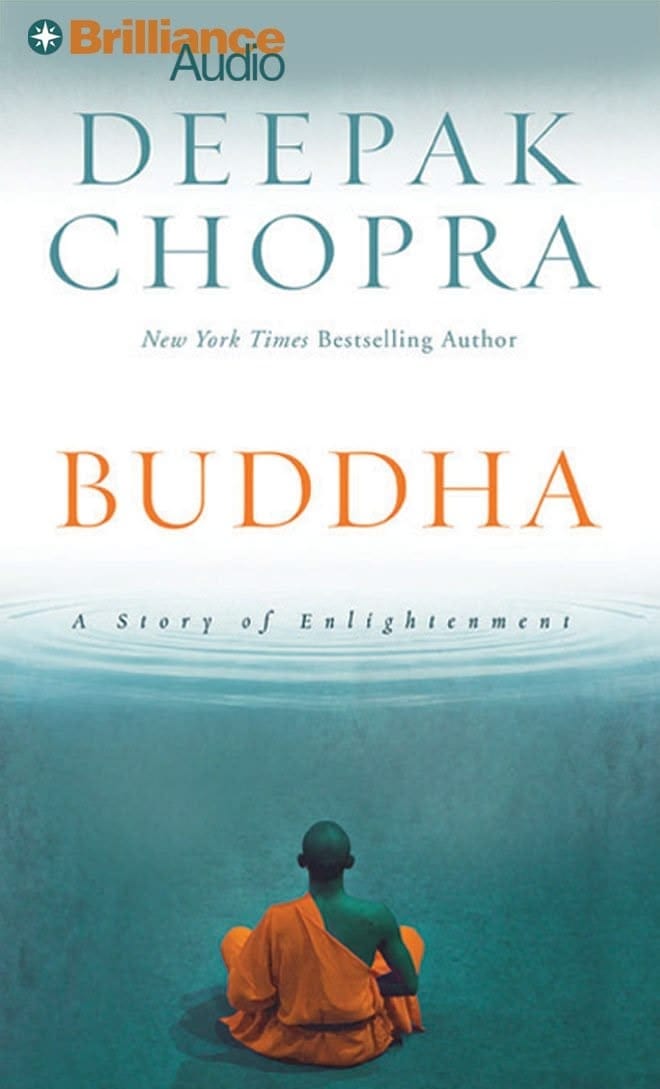

DESCRIPTION
‘Buddha was as mortal as you and I, yet he attained enlightenment and was raised to the rank of an immortal. The miracle is that he got there following a heart as human as yours and mine, and just as vulnerable.’ - from the Author’s Note Bestselling author Deepak Chopra brings the Buddha back to life in this gripping novel of the young prince who abandoned his inheritance to discover his true calling. This iconic journey changed the world forever, and the truths revealed continue to influence every corner of the globe today. A young man in line for the throne is trapped in his father’s kingdom and yearns for the outside world. Betrayed by those closest to him, Siddhartha abandons his palace and princely title. Alone and face-to-face with his demons, he becomes a wandering monk and embarks on a spiritual fast that carries him to the brink of death. Ultimately recognizing his inability to conquer his body and mind by sheer will, Siddhartha transcends his physical pain and achieves enlightenment. Although we recognize Buddha today as an icon of peace and serenity, his life story was a tumultuous and spellbinding affair filled with love and passion, murder and loss, struggle and surrender. From the rocky terrain of the material world to the summit of the spiritual one, Buddha captivates and inspires-ultimately leading us closer to understanding the true nature of life and our selves.
My Summary
Main Ideas, Takeaways & Similarities
Questions
I. What is the problem?
A. How is this problem formulated?
B. Why is this problem important?
C. What is the history of this problem?
D. Which prominent personalities have been interested in this problem?
II. What solutions to the problem are there?
A. What are the conclusions reached?
B. By what argument(s) is the conclusion reached?
C. What facts or assumptions serve as premises?
D. When a prominent personality offers a solution, does he also argue for or against other prominent personalities? Does he raise objections to alternative solutions? Does he consider objections to his own solutions?
III. Evaluation
A. What are the advantages and disadvantages of the alternative formulations to the problem?
B. Has the importance or history of the problem ever been misrepresented?
C. Are the solutions logically related to the premises?
D. Are the facts true? Are the assumptions acceptable? Are the objections answerable?
AI Summary
f Enlightenment” by Deepak Chopra is a fictionalized account of the life of Siddhartha Gautama, who became the Buddha. The book explores the spiritual journey and enlightenment of Siddhartha as he transforms into the Buddha. Here is a comprehensive summary in bullet points:
- Title: Buddha: A Story of Enlightenment
- Author: Deepak Chopra
Introduction:
- Sets the stage for the life and journey of Siddhartha Gautama, who would later become the Buddha.
- Explores the central themes of spiritual awakening and enlightenment.
Chapter 1: The Prince of Kapilavastu:
- Introduces Siddhartha Gautama as the prince of Kapilavastu.
- Depicts his early life of luxury and privilege.
Chapter 2: The Dream of Maya:
- Describes the prophetic dream of Siddhartha’s mother, Queen Maya, before his birth.
- Foreshadows Siddhartha’s destiny as a spiritual leader.
Chapter 3: The Palace of Pleasure:
- Depicts Siddhartha’s sheltered life within the palace walls.
- Highlights his curiosity about the outside world.
Chapter 4: The Meeting in the Forest:
- Portrays Siddhartha’s encounter with an old man, a sick man, and a corpse during his secret excursion.
- Raises questions about the nature of suffering and impermanence.
Chapter 5: The Holy Man:
- Depicts Siddhartha’s decision to leave the palace and seek answers to the questions that trouble him.
- Introduces him to the ascetic life and the search for enlightenment.
Chapter 6: Asceticism and Self-Mortification:
- Explores Siddhartha’s extreme ascetic practices and self-mortification.
- Highlights his determination to overcome suffering through extreme discipline.
Chapter 7: Enlightenment Under the Bodhi Tree:
- Describes Siddhartha’s profound meditation under the Bodhi tree.
- Chronicles his ultimate enlightenment and realization of the Four Noble Truths and the Eightfold Path.
Chapter 8: The Wheel of Dharma:
- Depicts Siddhartha’s decision to share his teachings and path to enlightenment.
- Introduces the concept of the Dharma wheel.
Chapter 9: The Fire Sermon:
- Explores Siddhartha’s ability to transmit his teachings and insights to others.
- Highlights his encounters with various individuals who become his disciples.
Chapter 10: The Taming of Mara:
- Portrays Siddhartha’s encounter with the temptations and distractions presented by Mara, the demon of desire.
- Illustrates his unwavering commitment to the path of enlightenment.
Chapter 11: The First Converts:
- Chronicles the conversion of the first disciples, including Ananda and Upali.
- Shows the gradual spread of the Buddha’s teachings.
Chapter 12: The Serpent King:
- Tells the story of a serpent king who becomes a devoted follower of the Buddha.
- Highlights the transformative power of the Buddha’s teachings.
Chapter 13: The Last Days:
- Depicts the final days of Siddhartha’s life as he prepares to enter parinirvana.
- Addresses his passing and the impact of his teachings on his followers.
Chapter 14: The Second Sermon:
- Discusses the Buddha’s second sermon, focusing on the Anatta doctrine (no-self).
- Explores the concept of the impermanence of the self.
Chapter 15: The Closing of the Circle:
- Concludes the story with a reflection on the impact of the Buddha’s life and teachings.
- Suggests that Siddhartha’s journey from prince to ascetic to enlightened teacher was a necessary evolution.
Legacy:
- “Buddha: A Story of Enlightenment” by Deepak Chopra is a fictionalized narrative that captures the essence of Siddhartha Gautama’s spiritual journey and transformation into the Buddha.
- The book explores the themes of suffering, enlightenment, and the path to liberation through Siddhartha’s experiences.
- While it takes creative liberties with the historical narrative, it serves as an accessible introduction to the life and teachings of the Buddha for those interested in Eastern spirituality and philosophy.