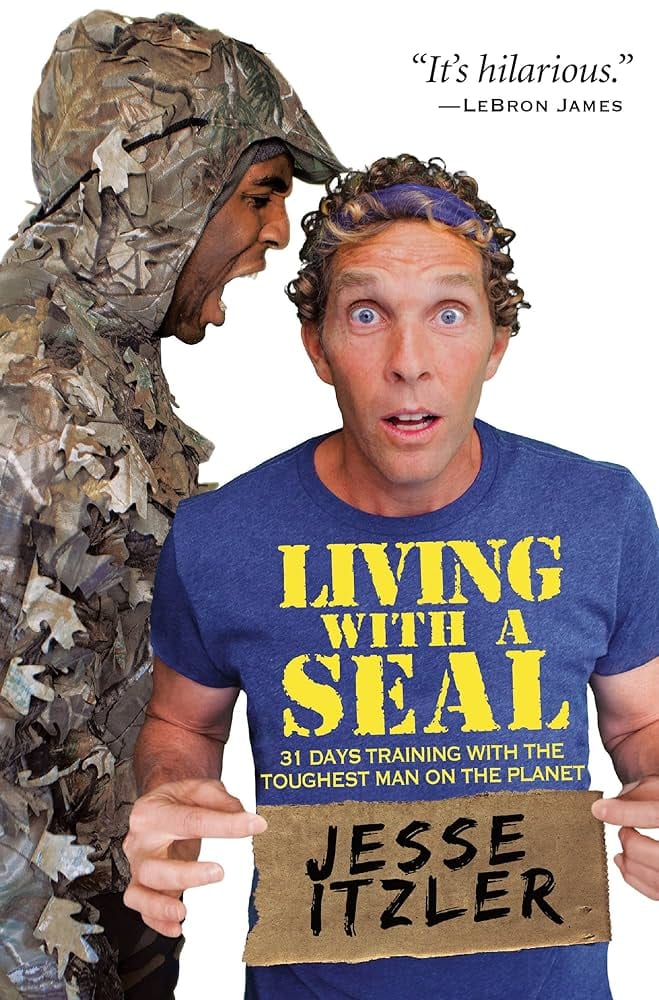
Entrepreneur Jesse Itzler chronicles his month of living and extreme fitness training with a Navy SEAL in the New York Times and #1 LA Times bestseller Living With a Seal, now with two bonus chapters. Entrepreneur Jesse Itzler will try almost anything. His life is about being bold and risky. So when Jesse felt himself drifting on autopilot, he hired a rather unconventional trainer to live with him for a month-an accomplished Navy SEAL widely considered to be “the toughest man on the planet”! Living With a Seal is like a buddy movie if it starred the Fresh Prince of Bel- Air. . .and Rambo. Jesse is about as easy-going as you can get. SEAL is… not. Jesse and SEAL’s escapades soon produce a great friendship, and Jesse gains much more than muscle. At turns hilarious and inspiring, Living With a Seal ultimately shows you the benefits of stepping out of your comfort zone.
My Summary
Main Ideas, Takeaways & Similarities
Questions
I. What is the problem?
A. How is this problem formulated?
B. Why is this problem important?
C. What is the history of this problem?
D. Which prominent personalities have been interested in this problem?
II. What solutions to the problem are there?
A. What are the conclusions reached?
B. By what argument(s) is the conclusion reached?
C. What facts or assumptions serve as premises?
D. When a prominent personality offers a solution, does he also argue for or against other prominent personalities? Does he raise objections to alternative solutions? Does he consider objections to his own solutions?
III. Evaluation
A. What are the advantages and disadvantages of the alternative formulations to the problem?
B. Has the importance or history of the problem ever been misrepresented?
C. Are the solutions logically related to the premises?
D. Are the facts true? Are the assumptions acceptable? Are the objections answerable?
AI Summary
Highlights
Living With a SEAL
Readwise Information
Author:: Jesse Itzler
Title:: Living With a SEAL
Type:: readwise/category/books
Last-Highlighted-Date:: 2016-02-29
Link:: https://readwise.io/bookreview/20353960
Readwise-Source:: readwise/source/kindle
Related-To::
Tags::
Review-for-Repurpose::
Linked Notes from Around My Vault
Backlinks (Bases)
filters: and: - file.ext == "md" - 'file.hasLink("Living With a SEAL by Jesse Itzler Highlights")'views: - type: table name: Linked notes order: - file.name - file.folder - Category - Genre - up - related sort: - property: file.name direction: ASC
Highlights
“When you think you’re done, you’re only at forty percent of what your body is capable of doing. That’s just the limit that we put on ourselves.” (Location 582)
It was the same shit as when I got my record deal, I confused him. Just throwing words at him. It was Harry Truman who said, “If you can’t convince them, confuse them.” It’s a tactic I still use instinctively. It buys time. (Location 879)