
DESCRIPTION
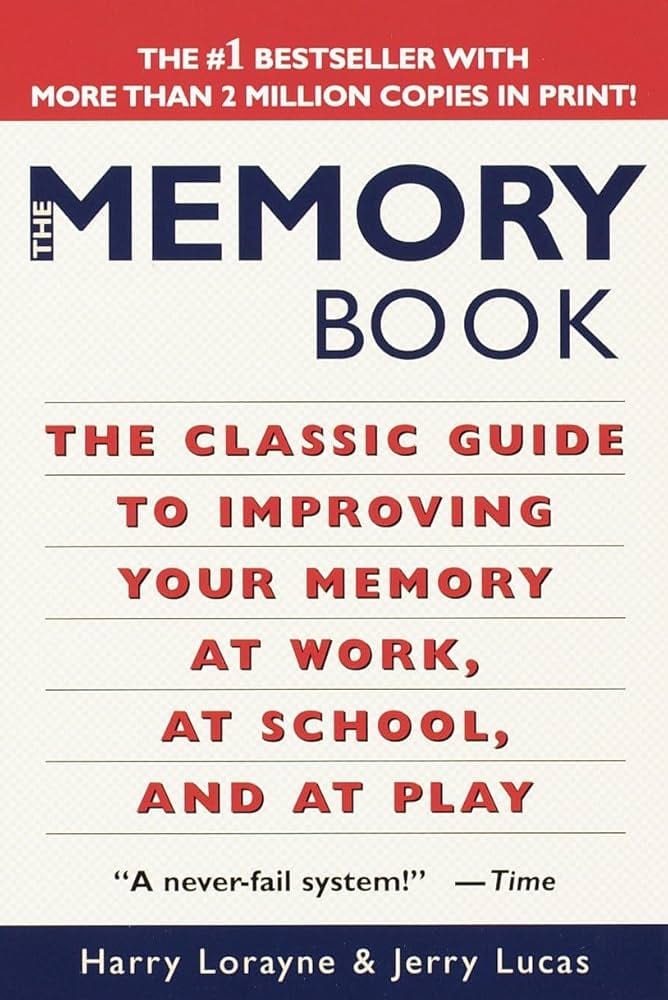
Unleash the hidden power of your mind It’s there in all of us. A mental resource we don’t think much about. Memory. And now there’s a way to master its power… . Through Harry Lorayne and Jerry Lucas’s simple, fail-safe memory system, you can become more effective, more imaginative, and more powerful at work, at school, in sports, and at play. • Read with speed and greater understanding. • File phone numbers, data, figures, and appointments right in your head. • Send those birthday and anniversary cards on time. • Learn foreign words and phrases with ease. • Shine in the classroom and shorten study hours. • Dominate social situations: Remember and use important personal details. Begin today. The change in your life will be unforgettable
My Summary
Main Ideas, Takeaways & Similarities
Questions
I. What is the problem?
A. How is this problem formulated?
B. Why is this problem important?
C. What is the history of this problem?
D. Which prominent personalities have been interested in this problem?
II. What solutions to the problem are there?
A. What are the conclusions reached?
B. By what argument(s) is the conclusion reached?
C. What facts or assumptions serve as premises?
D. When a prominent personality offers a solution, does he also argue for or against other prominent personalities? Does he raise objections to alternative solutions? Does he consider objections to his own solutions?
III. Evaluation
A. What are the advantages and disadvantages of the alternative formulations to the problem?
B. Has the importance or history of the problem ever been misrepresented?
C. Are the solutions logically related to the premises?
D. Are the facts true? Are the assumptions acceptable? Are the objections answerable?
AI Summary
Highlights
Here is a thorough summary of the book “The Memory Book: The Classic Guide to Improving Your Memory at Work, at School, and at Play” in bullet points:
- Title: The Memory Book: The Classic Guide to Improving Your Memory at Work, at School, and at Play
- Authors: Harry Lorayne and Jerry Lucas
Introduction:
- A comprehensive guide to enhancing memory skills for various aspects of life.
- Provides practical techniques and exercises to improve memory and recall.
Chapter 1: Memory Power
- Introduces the concept of memory power and its importance in daily life.
- Highlights the connection between memory and learning.
Chapter 2: Basic Training
- Covers fundamental memory techniques, including visualization and association.
- Explains the “link” and “peg” systems for remembering lists and sequences.
- Provides exercises to practice these techniques.
Chapter 3: Pegging and Linking
- Explores the use of pegs and links to remember information.
- Discusses the importance of creating memorable mental images.
- Offers examples of how to apply these techniques in various contexts.
Chapter 4: The Power of Words
- Introduces mnemonic devices and memory aids related to words and language.
- Explains how acronyms, rhymes, and acrostics can assist in memorization.
- Provides practical exercises for improving word-related memory.
Chapter 5: Memorizing Numbers
- Focuses on techniques for remembering numbers and numerical information.
- Discusses the use of number codes, phonetics, and visual imagery.
- Offers strategies for remembering phone numbers, dates, and mathematical concepts.
Chapter 6: Name, Faces, and Places
- Provides guidance on enhancing memory for people’s names, faces, and locations.
- Discusses the importance of paying attention and making associations.
- Offers specific techniques for improving memory in social and professional settings.
Chapter 7: How to Remember What You Read
- Offers strategies for improving reading comprehension and retention.
- Discusses methods for active reading, highlighting, and note-taking.
- Provides techniques for summarizing and recalling information from books and articles.
Chapter 8: How to Remember What You Hear
- Focuses on improving memory for auditory information and lectures.
- Discusses the importance of listening actively and taking structured notes.
- Provides strategies for recalling spoken information.
Chapter 9: How to Remember What You See
- Explores techniques for remembering visual information and images.
- Discusses the use of visualization and mental mapping.
- Offers exercises for enhancing visual memory.
Chapter 10: How to Remember What You Do
- Discusses the connection between memory and action.
- Provides strategies for remembering tasks, procedures, and daily activities.
- Highlights the role of repetition and practice in memory improvement.
Chapter 11: How to Remember What You Think
- Explores memory techniques for abstract concepts and ideas.
- Discusses the importance of understanding and making connections.
- Offers exercises for retaining and recalling complex information.
Chapter 12: How to Remember What You Plan
- Discusses memory aids and techniques for planning and organization.
- Explains the use of to-do lists, calendars, and reminders.
- Offers strategies for managing and remembering future tasks and goals.
Chapter 13: How to Remember Facts and Figures
- Provides additional techniques for remembering facts and figures.
- Discusses memory devices like the “major system” for numbers.
- Offers advanced exercises for improving memory for specific information.
Chapter 14: How to Remember Long Passages
- Introduces methods for memorizing lengthy texts and speeches.
- Discusses the “journey method” and other mnemonic strategies.
- Provides tips for reciting and recalling long passages.
Chapter 15: Supercharging Your Memory
- Explores advanced memory techniques and strategies.
- Discusses the role of practice, review, and maintaining a healthy lifestyle.
- Offers advice for continuous improvement and long-term memory enhancement.
Conclusion:
- Summarizes key principles and techniques for improving memory.
- Encourages readers to practice and apply the skills learned.
- Emphasizes the transformative impact of a well-trained memory on personal and professional life.