DESCRIPTION
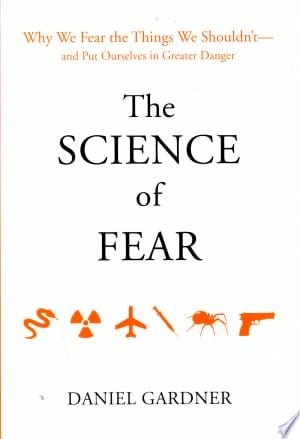
An analysis of the scientific causes of irrational fear offers insight into the brain’s role in causing people to experience and react to fear, in a report that explains how heightened fear in the post-9/11 world is dangerously intersecting with biologically driven responses.
Highlights
Based on the search results, here is an extensive bullet point summary of the key points about the book The Science of Fear by Daniel Gardner:
Overview
- Written by journalist Dan Gardner, published in 2008
- Explores how human psychology processes and perceives risk in irrational ways
- Examines how fear is manipulated in modern culture, media, and politics
Key Points
- Humans struggle to calculate risks properly due to evolutionary hunter-gatherer brains
- We tend to misjudge risks based on cognitive biases and emotions rather than data
- The media exploits fear because it captures attention, even if the risks are exaggerated
- Fear of terrorism is disproportionate to statistical risk due to vivid emotional stories swaying public opinion
- People chose to drive instead of fly after 9/11, increasing road deaths from perceived lesser risk
- Crime rates have dropped but public perception of crime risk has increased due to media coverage
- Herd mentality causes waves of irrational fear to spread rapidly through social contacts
- Chemical and toxicity fears often unsupported by science, but exploited by interest groups
- Optimistic view that with rational thinking and science, humans can overcome fear manipulation
- Explains psychological research by pioneers like Kahneman on decision making under uncertainty
- Discusses factors influencing risk perception like personal control, catastrophic potential, etc.
- Critiques the myth of “Homo Economicus” acting as perfectly rational decision makers
- Compares rational analysis of facts and data versus emotional reactions to vivid stories
The key message is that human psychology can cause irrational risk assessments, which allows fear to be exploited for political, social and economic agendas. But with science and rational thinking, we can work to overcome these “bugs” in our brains.
Citations:
[1]
https://www.amazon.com/Science-Fear-Culture-Manipulates-Brain/dp/0452295467
[2]
https://www.mindtherisk.com/literature/148-the-science-of-fear-by-daniel-gardner
[3]
https://www.bookbrowse.com/bb_briefs/detail/index.cfm/ezine_preview_number/2871/the-science-of-fear
[4]
https://scienceline.org/2008/10/policy-olson-science-of-fear-book-review/
[5]
https://lanredahunsi.com/the-science-of-fear-by-daniel-gardner/
“The Science of Fear: Why We Fear the Things We Shouldn’t—and Put Ourselves in Greater Danger” is a book written by Daniel Gardner, published in 2008. The book explores the psychology of fear and why humans often fear unlikely or irrational threats while underestimating more significant risks. Here is a comprehensive summary of the book in bullet points:
- The book delves into the concept of fear and how it shapes human perception and decision-making.
- Daniel Gardner argues that people often fear the wrong things, focusing on unlikely or sensationalized threats while overlooking more significant and statistically probable dangers.
- He introduces the concept of the “fear instinct,” a survival mechanism that has evolved over time but can lead to irrational fears in the modern world.
- The book discusses the role of the media in amplifying fear, sensationalizing stories, and skewing perceptions of risk.
- Gardner explores the psychology of risk perception and the cognitive biases that lead people to fear rare and dramatic events more than common and mundane ones.
- He provides numerous examples of irrational fears, such as the fear of terrorist attacks, plane crashes, and shark attacks, and contrasts them with more significant but less feared risks, such as car accidents and heart disease.
- The book addresses the impact of availability heuristic, where people judge the likelihood of events based on their ease of recall, leading them to overestimate the risks of events that receive media attention.
- Gardner discusses the “psychometric paradigm” and how experts assess risks systematically, which often differs from public perceptions.
- He reflects on the concept of “outrage management” and the role of emotions and public perception in shaping policy decisions and risk communication.
- The book provides insights into the psychology of group behavior and how social dynamics can amplify fear and create collective hysteria.
- Gardner emphasizes the importance of critical thinking, statistics, and rational decision-making in assessing and managing fear.
- He offers practical advice on how to overcome irrational fears and make more informed choices.
- The book concludes by highlighting the need for a more balanced and evidence-based approach to understanding and addressing fear.
“The Science of Fear” offers a thought-provoking exploration of the psychology of fear and risk perception. Daniel Gardner’s book provides readers with insights into why humans often fear unlikely or sensationalized threats and underestimate more significant risks. It encourages critical thinking, rational decision-making, and a more balanced perspective on fear and risk in the modern world.