DESCRIPTION
#1 New York Times Bestseller • More than 10 million Copies Sold In this generation-defining self-help guide, a superstar blogger cuts through the crap to show us how to stop trying to be “positive” all the time so that we can truly become better, happier people. For decades, we’ve been told that positive thinking is the key to a happy, rich life. “Fk positivity,” Mark Manson says. “Let’s be honest, shit is fked and we have to live with it.” In his wildly popular Internet blog, Manson doesn’t sugarcoat or equivocate. He tells it like it is—a dose of raw, refreshing, honest truth that is sorely lacking today. The Subtle Art of Not Giving a Fk is his antidote to the coddling, let’s-all-feel-good mindset that has infected modern society and spoiled a generation, rewarding them with gold medals just for showing up. Manson makes the argument, backed both by academic research and well-timed poop jokes, that improving our lives hinges not on our ability to turn lemons into lemonade, but on learning to stomach lemons better. Human beings are flawed and limited—“not everybody can be extraordinary, there are winners and losers in society, and some of it is not fair or your fault.” Manson advises us to get to know our limitations and accept them. Once we embrace our fears, faults, and uncertainties, once we stop running and avoiding and start confronting painful truths, we can begin to find the courage, perseverance, honesty, responsibility, curiosity, and forgiveness we seek. There are only so many things we can give a fk about so we need to figure out which ones really matter, Manson makes clear. While money is nice, caring about what you do with your life is better, because true wealth is about experience. A much-needed grab-you-by-the-shoulders-and-look-you-in-the-eye moment of real-talk, filled with entertaining stories and profane, ruthless humor, The Subtle Art of Not Giving a F*ck is a refreshing slap for a generation to help them lead contented, grounded lives.
My Summary
Main Ideas, Takeaways & Similarities
Questions
I. What is the problem?
A. How is this problem formulated?
B. Why is this problem important?
C. What is the history of this problem?
D. Which prominent personalities have been interested in this problem?
II. What solutions to the problem are there?
A. What are the conclusions reached?
B. By what argument(s) is the conclusion reached?
C. What facts or assumptions serve as premises?
D. When a prominent personality offers a solution, does he also argue for or against other prominent personalities? Does he raise objections to alternative solutions? Does he consider objections to his own solutions?
III. Evaluation
A. What are the advantages and disadvantages of the alternative formulations to the problem?
B. Has the importance or history of the problem ever been misrepresented?
C. Are the solutions logically related to the premises?
D. Are the facts true? Are the assumptions acceptable? Are the objections answerable?
AI Summary
Highlights
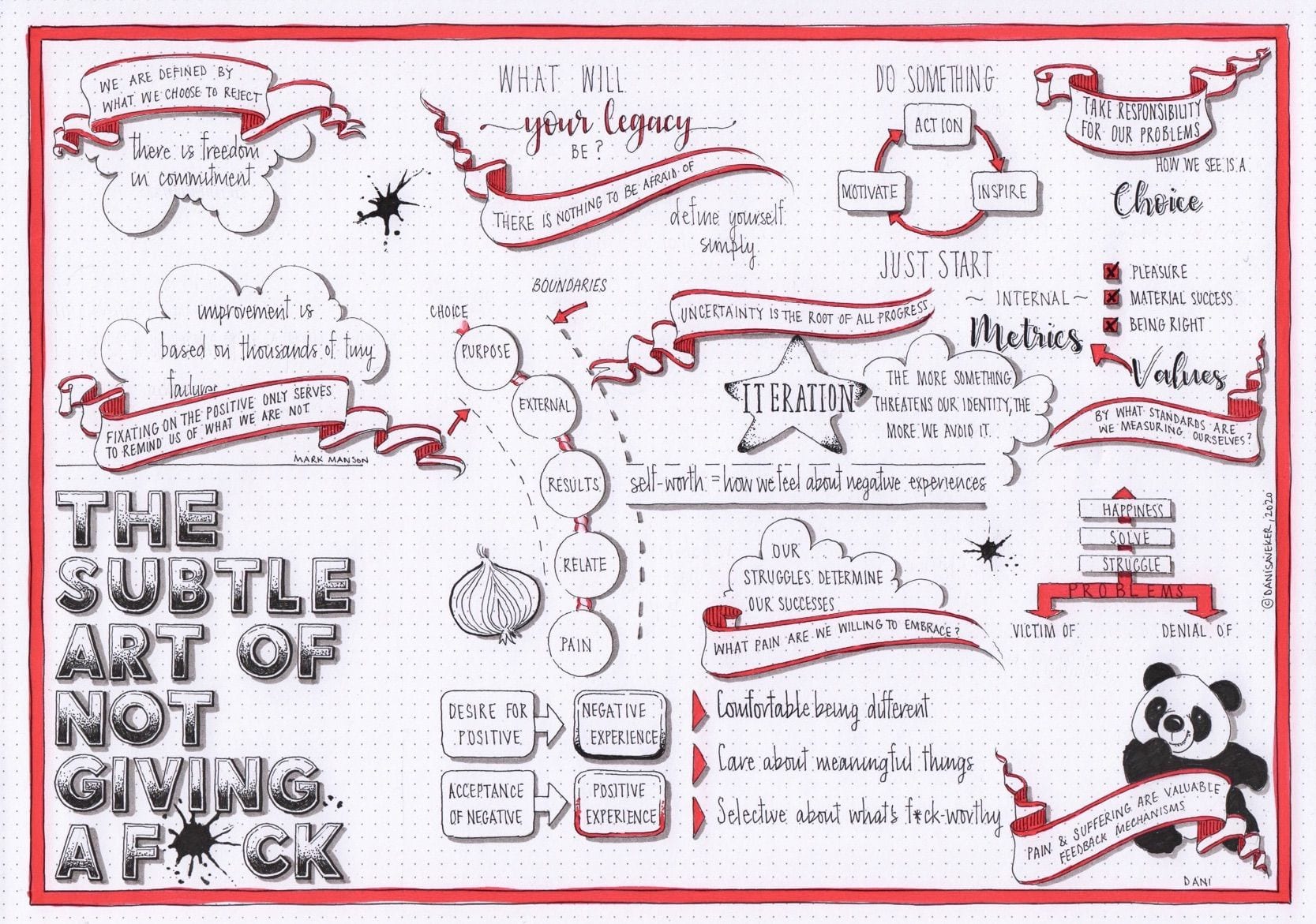
Since struggle is unavoidable, you need to find a struggle that’s right for you. Find out What to Give a Fuck About!
Choose what you really want to care about; and don’t give a fuck about the rest.
- You have a very limited amount of fucks to give.
The greatest years will the be years of suffering.
Don’t give a fuck about adversity; pissing people off to what you feel is right, or things stopping your goals.
Feedback Loop from Hell:
- Fighting negative emotions; causes more negative emotion
- Desire for more positive experiences is itself a negative experience. And paradoxically the acceptance of one’s negative experience is itself a positive experience.
Indifferent people give way too many fucks.
It’s ok for stuff to suck sometimes.
Happiness comes from solving problems.
Negative emotions are a call to action
Positive emotions are a reward for taking action
Values are more important than success when it comes to happiness.
If you don’t love the process; you won’t love doing that thing, even if you like the end result.
You are not special. There is nothing unique or special about your problems.
The value of suffering
- Story: Japanese soldier that fought in the Philippines decades after the war ended.
- Pain is part of the process of success; its growth
- Dont chase after highs
Do Something Principle
- Do something
- Small steps
- The answers will follow
- Doing something turns into motivation
- Action → Inspiration → Motivation
Importance of Saying No
Narrowing of freedom; rejection of alternatives = freedom
Communism → Value of trust; quickly; survival; reliability
Capitalism → So much opportunity therefore valuable to present yourself in certain way; trust lost value; salesmanship; knowing many people superficially became more important
People who are terrified of what others think about them are actually terrified of the shitty things they think about themselves being reflected back at them.
Rejection makes your life better
-
If you reject nothing; your have no identity
-
We are defined about what we choose to object
-
The desire to avoid rejection at all costs, to avoid confrontation and conflict, the desire to accept everything equally and make everything harmonize, is a deep and subtle form of entitlement. Value-less life.
-
Values
Good Values:
Family
Honesty
Integrity
Innovation
Vulnerability
Standing up for oneself
Standing up for others
Self-respect
Curiosity
Charity
Humility
Creativity
Good values attributes:
Be based in reality
Be helpful to society
Have an immediate and controllable effect
Bad Values:
Pleasure
Material success
Not immediate or controllable
Popularity
Fucking all the time
Center of attention
When you choose your problems, you’re empowered.
Take full responsibility for your life.
- Story: William James
- Always control how we interpret and respond
- Responsible for our experience
With great responsibility; comes great power
The more people there are who proclaim themselves victims over tiny infractions, the harder it becomes to see who the real victims actually are.
Do or do not; there is no how.
Stop being opposed about being right or perfect; start living. It’s how you grow.
Unshakable certainty breads insecurity
Story: Buddha
- Life is suffering.
Manson’s Law of Avoidance: The tendency to flee anything that threatens our identity.
- Let go of your identity. Buddhism
- Liberating yourself from an identity can be a wonderful experience
Accept your mistakes and insecurities if you want to see positive change
Question your beliefs
Romantic love can be destructive unless learned to control it
- Story: Romeo and Juliet
- Unhealthy: If each partner uses the relationship to run away from their problems
- Healthy: Wholly invested, rather than using it as a distraction, devoted to each other. Accepting responsibility and the ability to reject each other. Clear boundaries and values. Not taking responsibility for each other problems
Freedom in commitment
Comfortable with your own death
- Book: The Denial of Death
- Immorality projects
- Stop striving for immortality
- Concentrate on the here and now
- You are great already.
- There is nothing to fear; death is always coming. Acceptance of death eliminates fear.