DESCRIPTION
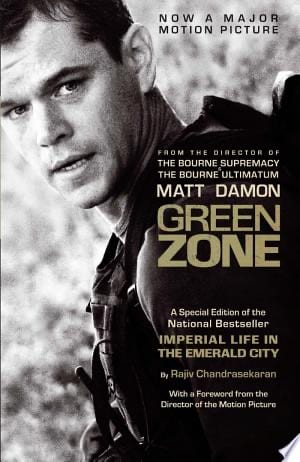
Presents a revealing look at life in Baghdad’s Green Zone, the headquarters for the American occupation in Iraq, criticizing the follies and foibles of L. Paul Bremer in the invasion and reconstruction of Iraq.
My Summary
Main Ideas, Takeaways & Similarities
Questions
I. What is the problem?
A. How is this problem formulated?
B. Why is this problem important?
C. What is the history of this problem?
D. Which prominent personalities have been interested in this problem?
II. What solutions to the problem are there?
A. What are the conclusions reached?
B. By what argument(s) is the conclusion reached?
C. What facts or assumptions serve as premises?
D. When a prominent personality offers a solution, does he also argue for or against other prominent personalities? Does he raise objections to alternative solutions? Does he consider objections to his own solutions?
III. Evaluation
A. What are the advantages and disadvantages of the alternative formulations to the problem?
B. Has the importance or history of the problem ever been misrepresented?
C. Are the solutions logically related to the premises?
D. Are the facts true? Are the assumptions acceptable? Are the objections answerable?
AI Summary
Highlights
“Imperial Life in the Emerald City: Inside Iraq’s Green Zone” is a book written by Rajiv Chandrasekaran, published in 2006. The book offers a critical examination of the early years of the U.S. occupation of Iraq and the management of post-war reconstruction efforts. Here is a comprehensive summary of the book in bullet points:
- The book provides an inside look at the U.S. occupation of Iraq, focusing on the Green Zone, a highly fortified area in Baghdad that served as the headquarters for the Coalition Provisional Authority (CPA).
- Rajiv Chandrasekaran, a journalist, spent extensive time in Iraq and had access to key figures within the CPA and other organizations involved in post-war reconstruction.
- The book portrays the Green Zone as an isolated and insulated enclave, cut off from the realities of post-invasion Iraq, and compares it to a surreal bubble of American privilege.
- Chandrasekaran highlights the disconnect between the idealistic goals of the Bush administration for Iraq and the chaotic, dysfunctional reality on the ground.
- He profiles various individuals working in the Green Zone, including L. Paul Bremer, the head of the CPA, and other U.S. officials, contractors, and Iraqi employees.
- The author critiques the lack of expertise and preparation among many CPA staff, as well as the political appointments of individuals with limited knowledge of Iraq or the Middle East.
- Chandrasekaran describes the mismanagement and poor decision-making in areas such as governance, security, and infrastructure development, leading to the deterioration of post-war Iraq.
- The book discusses the widespread use of private contractors and their influence in the Green Zone, particularly in areas of security and reconstruction.
- It sheds light on the tensions and conflicts between various U.S. agencies, military branches, and civilian entities involved in the occupation.
- Chandrasekaran also addresses the challenges faced by Iraqi citizens and the deteriorating security situation outside the Green Zone, including the rise of insurgent groups and sectarian violence.
- The book presents a critical perspective on the planning and execution of the Iraq War and its aftermath, highlighting the consequences of inadequate post-war planning.
- It underscores the growing disillusionment among many within the CPA and the U.S. military about the direction and effectiveness of the occupation.
- “Imperial Life in the Emerald City” concludes by offering a sobering critique of the U.S. approach to Iraq and the difficulties faced in achieving the intended goals of the occupation.
Overall, the book provides a critical and eye-opening account of the early years of the U.S. occupation of Iraq, revealing the challenges, missteps, and complexities involved in post-war reconstruction efforts and the management of the Green Zone.