DESCRIPTION
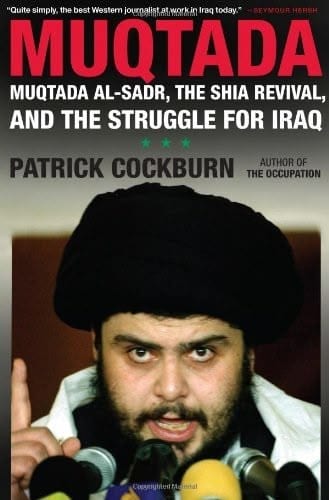
From one of the bravest and most experienced correspondents in the Middle East, this is the first biography of the formidable Shiite resistance leader destined to shape the future of post-occupation Iraq. Unabridged. 8 CDs.
My Summary
Main Ideas, Takeaways & Similarities
Questions
I. What is the problem?
A. How is this problem formulated?
B. Why is this problem important?
C. What is the history of this problem?
D. Which prominent personalities have been interested in this problem?
II. What solutions to the problem are there?
A. What are the conclusions reached?
B. By what argument(s) is the conclusion reached?
C. What facts or assumptions serve as premises?
D. When a prominent personality offers a solution, does he also argue for or against other prominent personalities? Does he raise objections to alternative solutions? Does he consider objections to his own solutions?
III. Evaluation
A. What are the advantages and disadvantages of the alternative formulations to the problem?
B. Has the importance or history of the problem ever been misrepresented?
C. Are the solutions logically related to the premises?
D. Are the facts true? Are the assumptions acceptable? Are the objections answerable?
AI Summary
Highlights---
Author: Cockburn, Patrick
URL: https://www.amazon.com/gp/product/1416551476/ref=ppx_yo_dt_b_search_asin_title?ie=UTF8&psc=1
Category: Books
Genre:
- History
- Military
- Politics
PATH: PATH
up: - "Politics MOC"
“Muqtada: Muqtada al-Sadr, the Shia Revival, and the Struggle for Iraq” is a book written by Patrick Cockburn, published in 2008. The book provides an in-depth look at the life and influence of Muqtada al-Sadr, a prominent Shia cleric and political figure in Iraq during the post-Saddam Hussein era. Here is a comprehensive summary of the book in bullet points:
- The book focuses on Muqtada al-Sadr, a charismatic and influential Shia leader in Iraq who played a significant role in the country’s post-Saddam Hussein political landscape.
- Patrick Cockburn provides a biography of Muqtada al-Sadr, tracing his family’s historical significance within Iraq’s Shia community.
- The book explores Muqtada al-Sadr’s upbringing, religious education, and early life, shedding light on his background and motivations.
- It discusses the historical context of Iraq, including the Saddam Hussein regime’s persecution of Shia Muslims and the Shia community’s desire for political representation and justice.
- Cockburn examines the rise of Muqtada al-Sadr as a prominent religious and political figure following the 2003 U.S.-led invasion of Iraq.
- The book explores the Mahdi Army, a militia associated with Muqtada al-Sadr, and its role in confronting U.S. forces and rival Shia factions.
- It delves into the complex relationships between Muqtada al-Sadr, other Shia leaders, and the U.S. government during the post-invasion period.
- The book discusses the Shia revival in Iraq and the challenges faced by the Shia majority in the country as they sought political power and representation.
- Cockburn examines the influence of Iranian interests and Iranian-backed militias in Iraq, particularly in relation to Muqtada al-Sadr and his movement.
- The book provides insights into the religious and political ideology of Muqtada al-Sadr, including his vision for Iraq’s future and his opposition to foreign occupation.
- It addresses the sectarian tensions and violence that characterized the post-invasion period, including clashes between Shia and Sunni communities.
- Cockburn discusses the challenges faced by Muqtada al-Sadr in navigating the complex political landscape of Iraq and maintaining his influence.
- The book also touches on Muqtada al-Sadr’s involvement in Iraqi elections and his efforts to shape the country’s political direction.
- It highlights the evolution of Muqtada al-Sadr’s views and strategies as he sought to balance his role as a religious leader, politician, and militia commander.
- The book concludes by reflecting on Muqtada al-Sadr’s enduring influence and his place in Iraq’s ongoing political struggles.
“Muqtada” offers a comprehensive and nuanced portrait of Muqtada al-Sadr and his significance in Iraq’s post-invasion period. Patrick Cockburn’s book explores the complex interplay of religion, politics, and violence in Iraq and sheds light on the challenges faced by the Shia community as they sought to shape the country’s future.