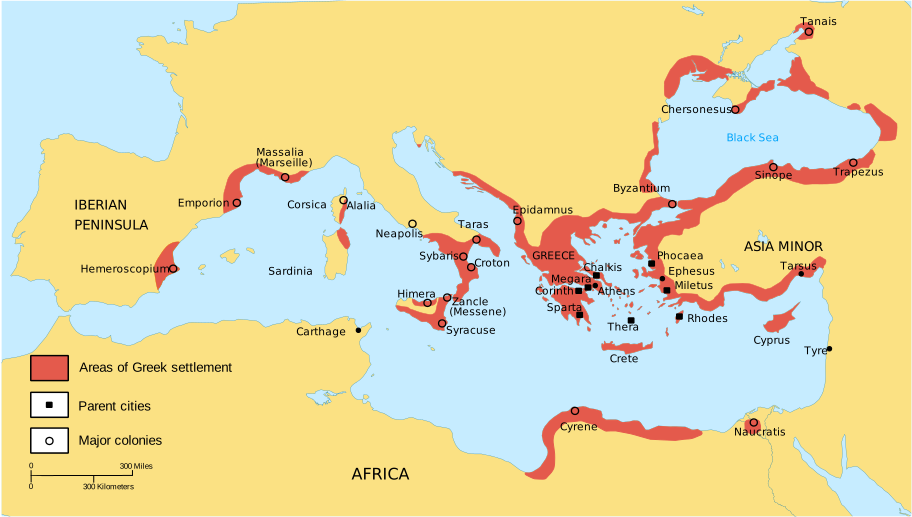
Based on the provided search results, here is an overview of Greek colonization of southern Italy and the coast of Turkey in the 8th century BC:
The Greeks began establishing colonies in southern Italy and Sicily starting in the 8th century BC. Some of the earliest colonies included:
- Pithekoussai (on the island of Ischia) and Cumae, founded by settlers from Euboea in the 8th century BC[1][2]
- Naxos, founded in 734 BC by Chalcis[9]
- Sybaris, founded around 720 BC by Achaeans[1][9]
- Croton, founded around 710 BC by Achaeans[1][9]
- Tarentum, founded in 706 BC by Sparta[1][9]
The region of southern Italy and Sicily colonized by the Greeks became known as Magna Graecia (“Greater Greece”). By the 6th century BC, the Greek colonies stretched all the way to southern France and Spain.[6][9]
The Greeks were motivated to establish these colonies due to overpopulation and land shortages in the Greek mainland, the search for fertile agricultural land, and the desire to facilitate trade.[8][9] The colonies were politically independent from their mother cities but maintained cultural and trade links.[6]
In Anatolia (the Asian part of modern Turkey), Greek colonization of the Aegean coast began in the 8th century BC as well. Important Ionian Greek colonies founded during this time included:
- Miletus[12][13][14]
- Ephesus[12][13][14]
- Smyrna[14]
- Phocaea[13]
These colonies were established to facilitate trade with Lydia and the interior of Anatolia.[14] By the 6th century BC, the Greeks controlled much of the Aegean coast of Anatolia, with the region becoming heavily Hellenized in culture and language.[14]
So in summary, the 8th century BC marked the beginning of an era of widespread Greek colonization, with southern Italy, Sicily, and the Aegean coast of Turkey being two major regions where the Greeks established a strong colonial presence that would shape the culture and history of those lands.
Citations:
[1] https://en.wikipedia.org/wiki/Magna_Graecia
[2] https://www.forbes.com/sites/kristinakillgrove/2015/07/23/dna-study-pinpoints-when-the-ancient-greeks-colonized-sicily-and-italy/?sh=6f63a4df5302
[3] https://www.ancient-origins.net/ancient-places-europe/magna-graecia-0020345
[4] https://www.classics.cam.ac.uk/research/projects/greek-in-italy
[5] https://www.britannica.com/place/Anatolia/Greek-colonies-on-the-Anatolian-coasts-c-1180-547-bce
[6] https://www.metmuseum.org/toah/hd/angk/hd_angk.htm
[7] https://www.worldhistory.org/Magna_Graecia/
[8] https://mappinghistory.uoregon.edu/english/EU/EU05-00.html
[9] https://www.worldhistory.org/Greek_Colonization/
[10] https://academic.oup.com/book/41960/chapter-abstract/355227031?redirectedFrom=fulltext
[11] http://www.juntadeandalucia.es/averroes/centros-tic/41701109/helvia/sitio/upload/II_ARCHAIC_GREEK.pdf
[12] https://europe.factsanddetails.com/article/entry-300.html
[13] https://en.wikipedia.org/wiki/Greek_colonisation
[14] https://en.wikipedia.org/wiki/Greeks_in_Turkey
[15] https://greekreporter.com/2023/12/21/greek-city-turkey/
[16] https://www.britannica.com/place/Magna-Graecia
[17] https://stockton.edu/hellenic-studies/documents/chs-summaries/cargill91.pdf
[18] https://www.allaboutturkey.com/anatolia.html
[19] https://classicalwisdom.com/politics/empires/magna-graecia-greater-greece/