North America
Based on the information provided in the search results, here is a table detailing some of the major wars and conquests between different Native American tribes that occurred before the arrival of Europeans in North America:
| Conflict | Combatants | Timeframe | Description | |
|---|---|---|---|---|
| Iroquois-Huron Wars | Iroquois Confederacy vs Huron | 1400s-1600s | The Iroquois fought and eventually destroyed the Huron confederacy in a series of wars over control of the fur trade[1][6][12] | |
| Aztec Expansion | Aztec Triple Alliance vs various tribes | 1428-1521 | The Aztecs conquered and subjugated many neighboring tribes to build their empire in central Mexico[13] | |
| Mississippian Warfare | Various Mississippian chiefdoms | c. 1000-1500 CE | Fortified towns and skeletal remains provide evidence of endemic warfare between the Mississippian cultures of the American Southeast and Midwest[5][12] | |
| Haudenosaunee-Algonquin Wars | Haudenosaunee (Iroquois) vs Algonquin tribes | Pre-1500s | Oral traditions describe a long period of warfare as the Iroquois pushed Algonquin tribes out of the Ohio Valley[1] | |
| Comanche Expansion | Comanche vs Apache and others | 1700s | As they acquired horses, the Comanche fought to dominate the southern Plains, displacing the Apache and other tribes[12] | |
| Lakota Migration | Lakota vs other Plains tribes | 1700s-1800s | The Lakota migrated westward, using their growing numbers and horse mastery to displace other Plains tribes and expand their territory[12] |
The search results make clear that warfare was endemic among Native American tribes for centuries before European contact, driven by competition for resources, captives, prestige, and territory. However, the limited written records from the pre-Columbian period mean many conflicts are known only from archaeology and oral traditions rather than detailed historical accounts. Warfare seems to have been especially intense where settled agricultural societies bordered on nomadic hunter-gatherers, such as in the American Southeast and on the Great Plains.
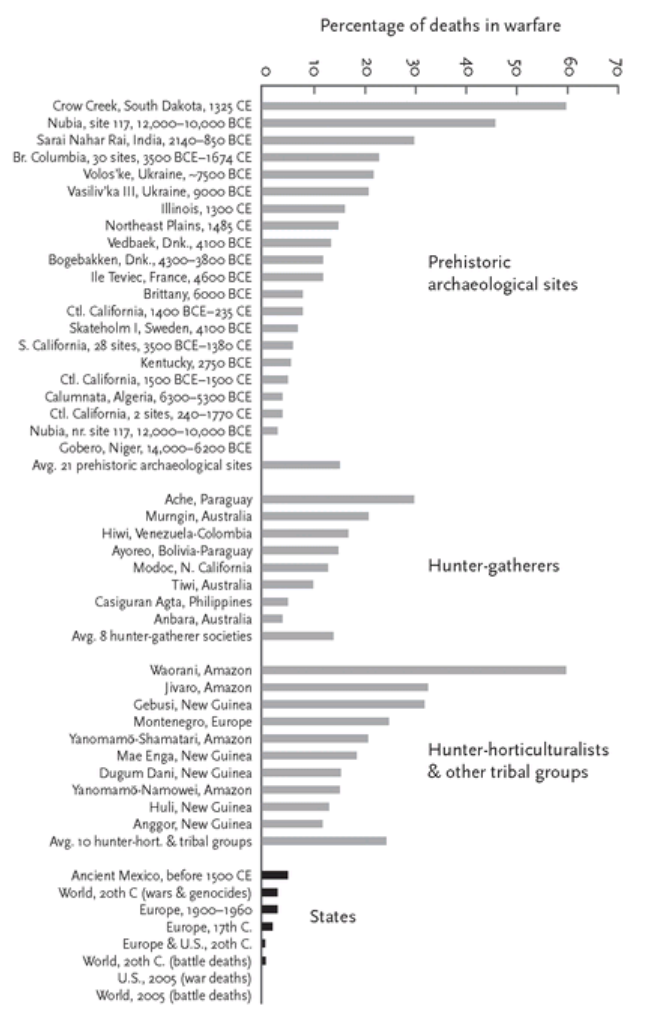
Figure 2-2 — Prestate warfare estimates, with the comparison limits visible
Pinker describes how forensic archaeologists look for embedded projectile points, skull trauma, stone-tool cut marks, parry fractures, fortifications, and weapons made for human combat. He notes an important asymmetry: poisoned arrows, infected wounds, and fatal soft-tissue injuries may leave no skeletal trace, so bone-based counts can miss violent deaths.
His compilation reports an average of about 15% of deaths attributable to warfare across prehistoric archaeological samples, about 14% in eight recent hunter-gatherer societies, and 24.5% in ten hunter-horticultural or tribal societies. He adds a closer pre-Columbian comparison by Richard Steckel and John Wallis: among roughly 900 skeletons from southern Canada through South America, 13.4% of those classified as hunter-gatherers showed violent trauma versus 2.7% of city dwellers from Andean and Mesoamerican civilizations.
Evidence boundary: the figure pools sites, eras, societies, and methods; skeletal trauma is not identical to death from warfare, and preservation, classification, site selection, and small samples can bias results. These data challenge a blanket claim of uniformly peaceful pre-Columbian life, but they do not make Indigenous societies uniform, excuse European conquest, or establish a simple moral hierarchy between peoples. Chapter 2 synthesis · Attachment (file not included in this release) · Attachment (file not included in this release)
Citations:
[1] https://www.reddit.com/r/history/comments/51g3ht/history_of_precolonial_native_american_conflicts/
[2] https://www.oxfordreference.com/display/10.1093/acref/9780195071986.001.0001/acref-9780195071986-e-0618
[3] https://en.wikipedia.org/wiki/List_of_American_Indian_Wars
[4] https://www.reddit.com/r/AskHistorians/comments/26c743/how_and_why_did_precolumbian_native_americans/
[5] https://uapress.arizona.edu/book/north-american-indigenous-warfare-and-ritual-violence
[6] https://en.wikipedia.org/wiki/American_Indian_Wars
[7] https://www.worldhistory.org/Pre-Colonial_North_America/
[8] https://www.nebraskastudies.org/en/1850-1874/native-american-settlers/conflict-among-the-tribes/
[9] https://www.canada.ca/en/department-national-defence/services/military-history/history-heritage/popular-books/aboriginal-people-canadian-military/warfare-pre-columbian-north-america.html
[10] https://en.wikipedia.org/wiki/List_of_conflicts_in_North_America
[11] https://en.wikipedia.org/wiki/War_Before_Civilization
[12] https://www.reddit.com/r/history/comments/mx8l5a/wars_between_american_natives/
[13] https://en.wikipedia.org/wiki/Category:Pre-Columbian_warfare
[14] https://www.learningforjustice.org/sites/default/files/2017-08/teaching-tolerance-the-truth-about-pre-columbian-native-americans.pdf
[15] https://en.wikipedia.org/wiki/History_of_Native_Americans_in_the_United_States
[16] https://en.wikipedia.org/wiki/Pre-Columbian_era
[17] https://en.wikipedia.org/wiki/Native_Americans_in_the_United_States
[18] https://www.whitehousehistory.org/conflict-with-native-american-tribes
[19] https://en.wikipedia.org/wiki/Indigenous_peoples_of_the_Americas
South America
Here is a table detailing some of the major wars and conquests between different tribes and civilizations in South America prior to the arrival of Europeans:
| Timeframe | Conflict | Description |
|---|---|---|
| c. 1438 - 1533 | Inca Expansion | Under emperors like Pachacuti and Huayna Capac, the Inca Empire expanded to conquer and assimilate dozens of neighboring tribes and kingdoms, stretching from modern-day Chile to Ecuador. Key battles allowed the Inca to defeat rivals like the Chimú and Cañari. |
| c. 1470 - 1490 | Muisca Warfare | The Muisca civilization, located in modern-day Colombia, engaged in frequent battles with neighboring tribes like the Panche and Muzo before ultimately being weakened prior to Spanish arrival. |
| c. 1493 - 1527 | Inca-Shuar Conflict | As the Inca expanded northward into modern-day Ecuador and southern Colombia under emperor Huayna Capac, they clashed with the Shuar people. The Shuar successfully repelled the Inca advance at the Battle of the Chinchipe River in 1527. |
| c. 1529 - 1532 | Inca Civil War | Conflict erupted between two brothers, Atahualpa and Huáscar, fighting to succeed their father Huayna Capac as Sapa Inca. Key battles included Chimborazo, Quipaipan and Cajamarca. Atahualpa emerged victorious but the war left the empire divided and weakened. |
| Pre-15th century | Mapuche Conflicts | The Mapuche people, in modern-day Chile and Argentina, engaged in intermittent warfare and resistance against the Inca and other tribes expanding into their territory from the north. Their decentralized but fierce resistance later also stymied the Spanish. |
So in summary, major pre-Columbian civilizations like the Inca and Muisca conquered and absorbed many neighboring tribes as they expanded, but also faced stiff resistance on the fringes of their empires from groups like the Shuar and Mapuche. Internal conflicts like the Inca Civil War left them more vulnerable on the eve of European contact in the early 1500s. Warfare was frequent as these civilizations jockeyed for territorial control.
Citations:
[1] https://peruways.com/echoes-of-conquest-unraveling-the-inca-wars/
[2] https://www.worldhistory.org/Inca_Warfare/
[3] https://en.wikipedia.org/wiki/Spanish_conquest_of_the_Inca_Empire
[4] http://www.discover-peru.org/inca-government/
[5] https://en.wikipedia.org/wiki/Pre-Columbian_era
[6] https://www.pbs.org/wgbh/nova/article/inca-empire/
[7] https://en.wikipedia.org/wiki/Inca_Empire
[8] https://www.britannica.com/place/Latin-America/Ethnic-diversity-and-its-results
[9] https://en.wikipedia.org/wiki/South_American_territorial_disputes
[10] https://incatrailmachupicchu.org/inca-civilisation/
[11] https://www.livescience.com/41346-the-incas-history-of-andean-empire.html
[12] https://library.princeton.edu/thankful-nation/case/7/index.html
[13] https://oxfordre.com/latinamericanhistory/display/10.1093/acrefore/9780199366439.001.0001/acrefore-9780199366439-e-36?d=%2F10.1093%2Facrefore%2F9780199366439.001.0001%2Facrefore-9780199366439-e-36&p=emailAS%2FtGYEfTPlM.
[14] https://www.britannica.com/topic/pre-Columbian-civilizations
[15] https://en.wikipedia.org/wiki/Indigenous_peoples_of_the_Americas
[16] https://www.monah.org/precolumbian-nonlinked
[17] https://en.wikipedia.org/wiki/List_of_conflicts_in_South_America
[18] https://www.nottingham.ac.uk/genderlatam/documents/historical-background-of-the-latin-american-wars-of-independence.pdf
[19] https://www.digitalhistory.uh.edu/era.cfm
Central America
Here is a table detailing some of the major wars and conquests between different Mesoamerican civilizations prior to the arrival of the Spanish:
| Timeframe | Aggressor | Defender | Outcome |
|---|---|---|---|
| 4th-2nd century BCE | Zapotec | Mixtec | Monte Alban established as Zapotec capital after defeating Mixtecs[4] |
| 378 CE | Teotihuacan/Copan alliance | Tikal | Tikal conquered, new dynasty installed under Teotihuacan influence[2] |
| 6th-7th century CE | Teotihuacan | Various Maya city-states | Teotihuacan exerts political control over Maya lowlands[2] |
| 8th century CE | Toltec | Various Mesoamerican states | Toltec establish dominance from their capital Tula[3] |
| 1345-1521 CE | Aztec Triple Alliance | Various city-states in central Mexico | Aztec empire expands through military conquest to dominate Mesoamerica[3][5] |
| 15th century CE | Tarascan state | Aztec | Tarascans resist Aztec expansion, conflict ends in stalemate[5] |
| Late 15th century | Aztec | Tlaxcala, Cholula, Huexotzingo | Aztec engage in ritual “flower wars” with rival city-states for captives[17] |
The table shows that warfare and conquest between major Mesoamerican powers like the Zapotecs, Teotihuacan, Toltecs, and Aztecs shaped the political landscape in the centuries before the Spanish arrived. The Aztec Triple Alliance was the dominant military power in the region when the Spanish invaded in 1519.[2][3][5]
Citations:
[1] https://www.historians.org/teaching-and-learning/teaching-resources-for-historians/teaching-and-learning-in-the-digital-age/the-history-of-the-americas/the-conquest-of-mexico/for-students/what-the-textbooks-have-to-say-about-the-conquest-of-mexico
[2] https://en.wikipedia.org/wiki/Spanish_conquest_of_the_Aztec_Empire
[3] https://en.wikipedia.org/wiki/Mesoamerican_chronology
[4] https://www.britannica.com/place/Central-America/Pre-Columbian-Central-America
[5] https://blogs.uoregon.edu/mesoinstitute/about/curriculum-unit-development/spanish-conquest/
[6] https://www.britannica.com/topic/Mesoamerican-civilization
[7] https://www.britannica.com/topic/pre-Columbian-civilizations/The-Spanish-conquest
[8] https://en.wikipedia.org/wiki/Pre-Columbian_era
[9] https://sites.usc.edu/latinamerica/pre-20th-century-history/
[10] https://en.wikipedia.org/wiki/Caste_War_of_Yucat%C3%A1n
[11] https://www.monah.org/precolumbian-nonlinked
[12] https://www.britannica.com/topic/pre-Columbian-civilizations
[13] https://smarthistory.org/pre-columbian-mesoamerica/
[14] https://en.wikipedia.org/wiki/Aztec_warfare
[15] https://www.worldhistory.org/timeline/Mesoamerica/
[16] https://en.wikipedia.org/wiki/Maya_warfare
[17] https://en.wikipedia.org/wiki/Flower_war
[18] https://www.canada.ca/en/department-national-defence/services/military-history/history-heritage/popular-books/aboriginal-people-canadian-military/warfare-pre-columbian-north-america.html
[19] https://en.wikipedia.org/wiki/Spanish_conquest_of_the_Maya