Attachment (file not included in this release)
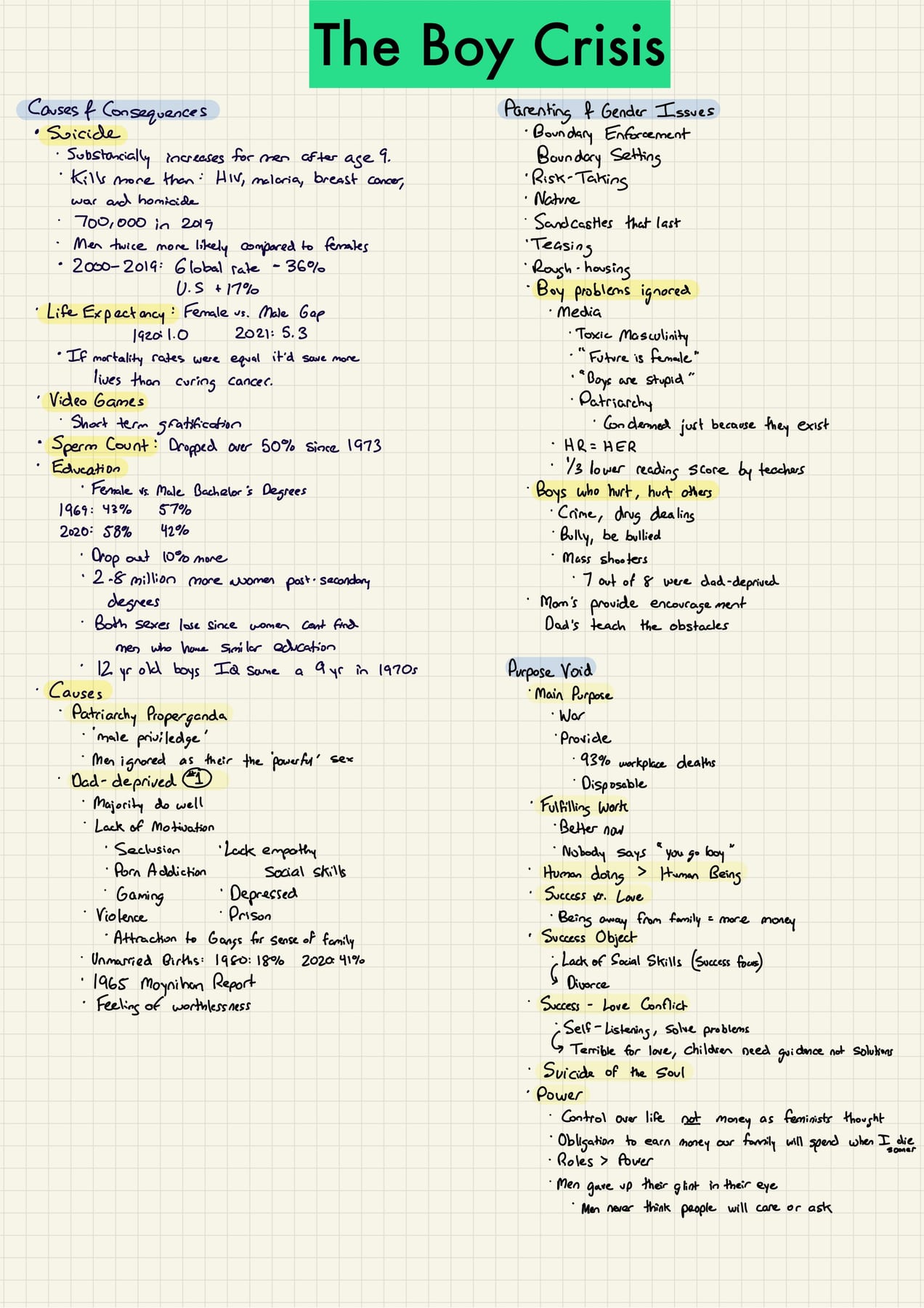
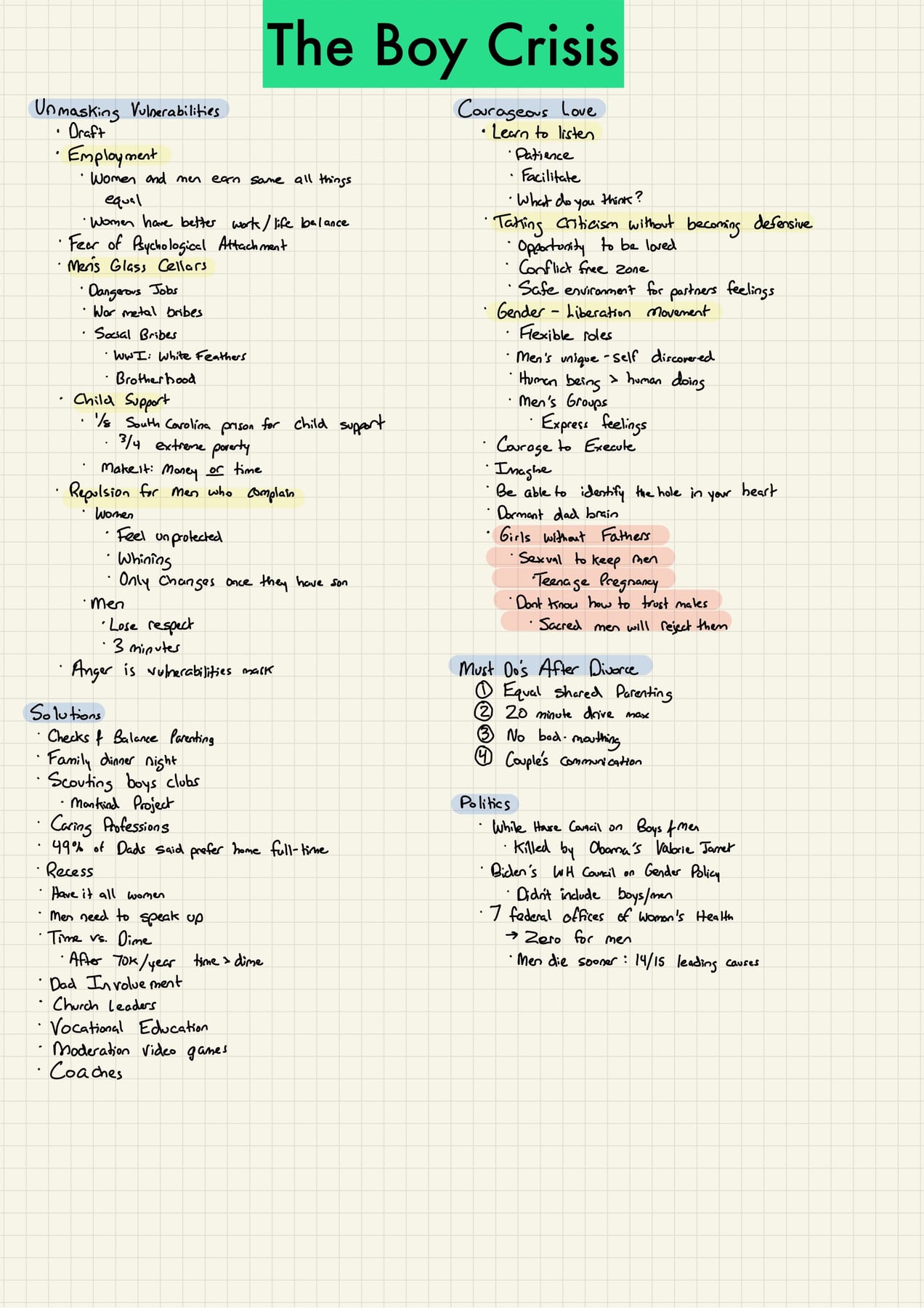
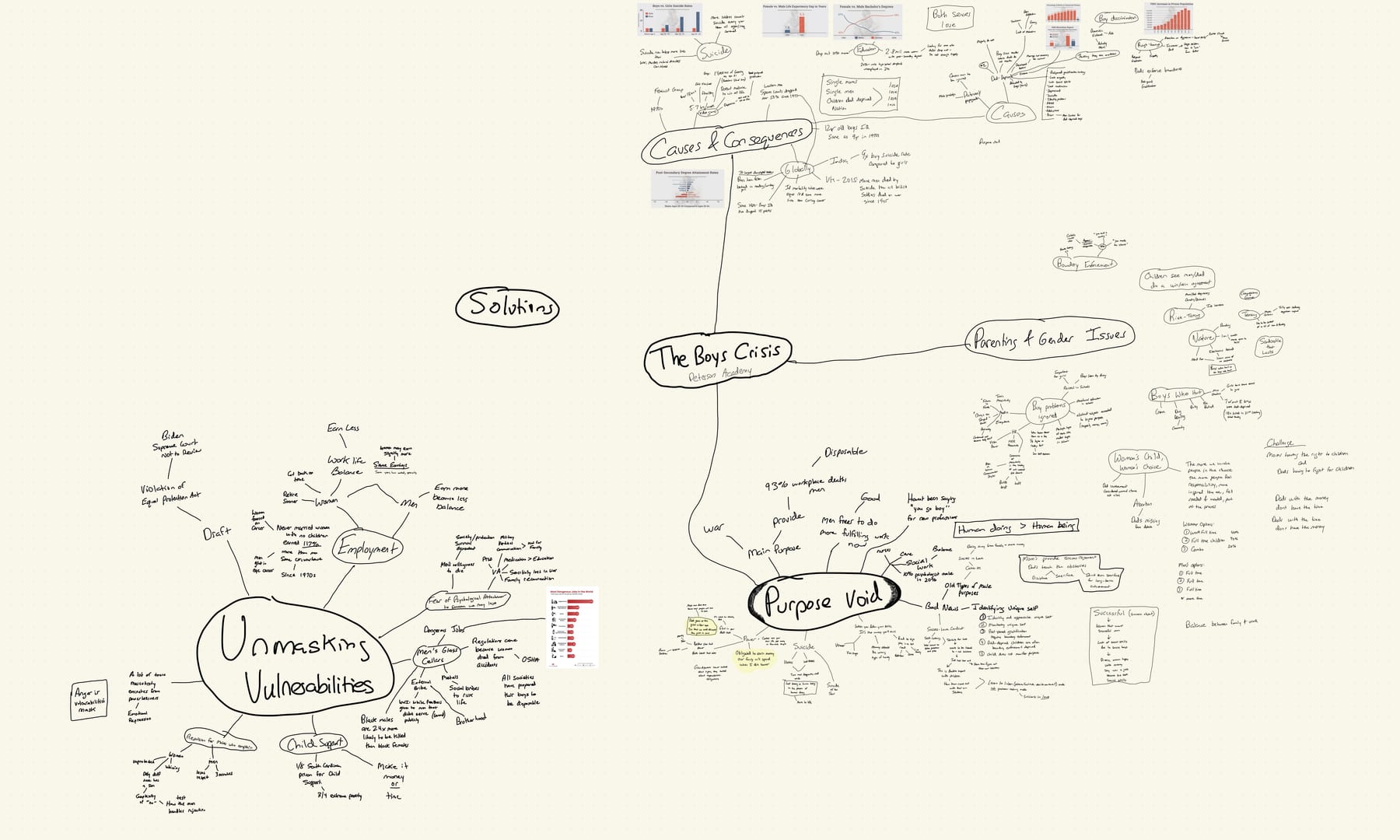
The Boy Crisis, written by Warren Farrell and John Gray, explores the various factors contributing to the struggles faced by boys and young men in today’s society. The authors identify a range of social, emotional, educational, and familial issues that have created a crisis for boys in particular. The book offers insights into the causes of this crisis and recommendations for addressing it. Below are the main ideas and recommendations from the book:
Main Ideas
-
Father Absence: One of the key themes of the book is the impact of father absence on boys. The authors argue that boys raised without strong father figures are more likely to struggle emotionally, academically, and behaviorally. Fatherlessness is linked to increased rates of suicide, violence, and mental health problems among boys.
-
Educational Challenges: Boys are falling behind academically, particularly in reading and writing. Schools are not adequately addressing the unique learning needs of boys, which often include more kinesthetic and hands-on learning. The result is a gender gap in academic achievement that favors girls, leaving many boys disengaged and underperforming.
-
Mental Health Crisis: The authors highlight that boys and young men face a growing mental health crisis. They are more likely to be diagnosed with ADHD, to drop out of school, and to commit suicide. The book explores how societal expectations and the lack of emotional support for boys contribute to this mental health decline.
-
Gender Roles and Masculinity: The shifting societal views on gender roles have left many boys confused about what it means to be a man. The authors suggest that the lack of clear male role models, combined with negative portrayals of masculinity, has left boys feeling disconnected and unsure of their place in the world.
-
Economic and Social Pressures: Many boys feel an increased pressure to succeed in a world that seems to have fewer opportunities for traditional male roles. The book discusses the impact of economic changes, including the decline of manufacturing jobs, which once provided stable careers for men without higher education.
Recommendations
-
Involved Fatherhood: One of the central solutions proposed is the active involvement of fathers in their sons’ lives. Fathers provide boys with important role models and a sense of identity, and their presence is essential for emotional and psychological well-being. The book suggests policies that promote father involvement, including shared parenting after divorce and more flexible work environments for fathers.
-
Education Reform: Schools need to adopt teaching methods that engage boys more effectively. This includes incorporating more physical activity, hands-on learning, and approaches that align with boys’ learning styles. The book also advocates for more male teachers and mentors in schools to provide boys with positive role models.
-
Emotional Intelligence: Boys should be taught emotional literacy from an early age. Encouraging boys to express their emotions and helping them develop emotional intelligence can lead to healthier relationships and better mental health outcomes. The authors emphasize that boys need safe spaces to discuss their feelings without fear of judgment.
-
Support for Single Mothers: Recognizing that many boys grow up in single-mother households, the book recommends stronger support systems for these families. This could include mentorship programs that connect boys with male role models, as well as community initiatives that foster father involvement even in non-traditional family structures.
-
Rebuilding Masculinity: The authors call for a reevaluation of masculinity, one that embraces both strength and emotional vulnerability. They argue for the importance of providing boys with a positive vision of manhood, one that integrates compassion, responsibility, and resilience.
-
Public Policy Changes: The book advocates for changes in public policy that recognize the unique challenges facing boys and men. This includes educational reforms, workplace flexibility for fathers, and mental health initiatives tailored to the needs of boys and men.
In summary, The Boy Crisis sheds light on the multifaceted problems facing boys and young men today and offers a range of solutions centered around family involvement, educational reform, emotional intelligence, and societal support. The book encourages a holistic approach to solving the crisis, with a particular emphasis on the role of fathers and male mentors in shaping the lives of boys.