DESCRIPTION
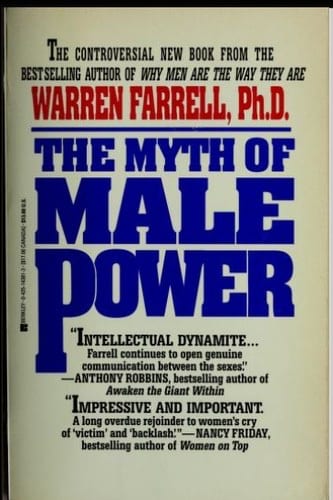
The bestselling author of Why Men Are the Way They Are sheds new light on the state of men in today’s society, arguing that male power is a myth with startling and eye-opening facts. Farrell brilliantly illusrtrates how the male-as-oppressor image has fueled hatred between the sexes: making women feel angry and victimized and men unloved and unappreciated.
My Summary
Main Ideas, Takeaways & Similarities
Questions
I. What is the problem?
A. How is this problem formulated?
B. Why is this problem important?
C. What is the history of this problem?
D. Which prominent personalities have been interested in this problem?
II. What solutions to the problem are there?
A. What are the conclusions reached?
B. By what argument(s) is the conclusion reached?
C. What facts or assumptions serve as premises?
D. When a prominent personality offers a solution, does he also argue for or against other prominent personalities? Does he raise objections to alternative solutions? Does he consider objections to his own solutions?
III. Evaluation
A. What are the advantages and disadvantages of the alternative formulations to the problem?
B. Has the importance or history of the problem ever been misrepresented?
C. Are the solutions logically related to the premises?
D. Are the facts true? Are the assumptions acceptable? Are the objections answerable?
AI Summary
Highlights
“The Myth of Male Power” by Warren Farrell is a controversial book that challenges traditional notions of gender and power dynamics. It argues that men face unique challenges and disadvantages in society, and it questions the prevailing narrative of male privilege. Here is a comprehensive summary of the book in bullet points:
- The book contends that society tends to view men primarily as powerful and privileged, ignoring the ways in which they also face significant disadvantages and challenges.
- Warren Farrell argues that men often experience societal pressure to conform to traditional masculine roles and expectations, which can limit their personal freedom and emotional well-being.
- He explores various areas where men may face disadvantages, including education, workplace fatalities, the criminal justice system, and family court proceedings.
- The book discusses the concept of the “glass cellar,” which refers to the idea that men are disproportionately represented in dangerous and undesirable jobs.
- Farrell addresses the high rates of suicide among men and argues that these statistics reflect the emotional toll of societal expectations and limited outlets for emotional expression.
- He critiques traditional gender roles and expectations, arguing that both men and women should have the freedom to choose their paths in life.
- The book examines the role of feminism in challenging and reshaping traditional gender roles but also suggests that certain aspects of the feminist movement have inadvertently reinforced negative stereotypes about men.
- Farrell discusses the “pay gap” and argues that it is more complex than a simple wage disparity, involving factors such as career choices, work-life balance, and hours worked.
- He explores the concept of “male disposability,” suggesting that society is less empathetic to the suffering and well-being of men in various contexts, including war and workplace accidents.
- The book questions the prevailing narrative of male privilege and argues that both men and women face unique challenges and disadvantages that should be acknowledged.
- Farrell suggests that society should move towards a more balanced understanding of gender issues, where the focus is on promoting empathy and equality for both men and women.
- “The Myth of Male Power” concludes by advocating for a more compassionate and nuanced conversation about gender issues that recognizes the complexities of men’s experiences.
It’s important to note that “The Myth of Male Power” has been both praised and criticized for its controversial stance on gender issues. While some readers appreciate its perspective on men’s challenges, others argue that it downplays the broader societal power imbalances that affect women. The book is part of an ongoing discourse on gender and is best understood within the context of the broader conversation on these topics.