⬅️ Hub: Psychology Books (MOC) · Parent: 60.21 Psychology

DESCRIPTION
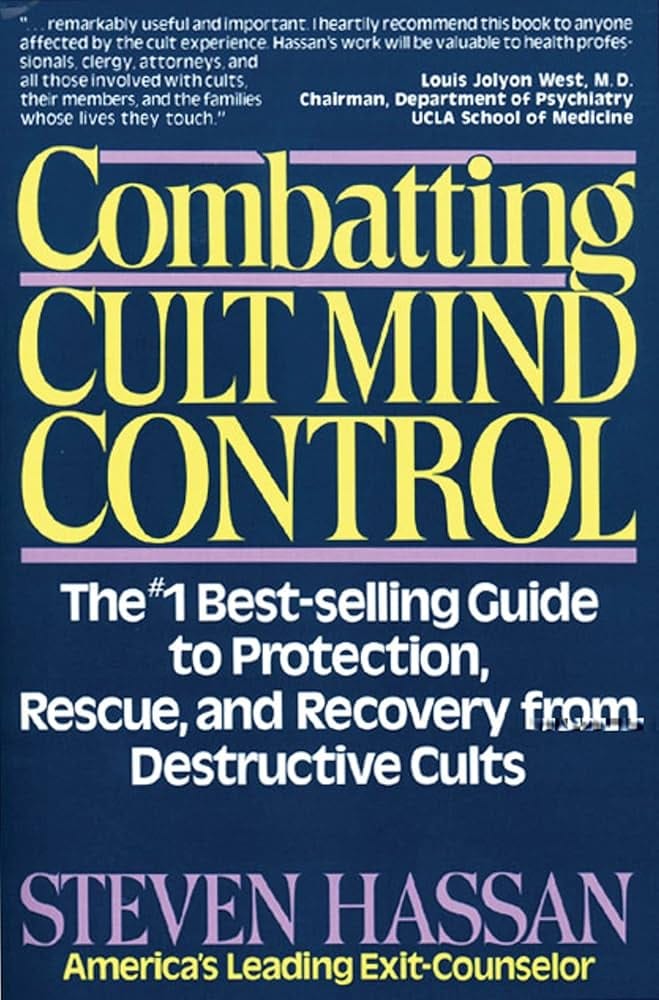
This 2018 30th anniversary edition honors the 40th anniversary of the tragedy in Jonestown, Guyana. On November 18th, 1978, over 900 people including a U.S. congressman Leo Ryan died because of Cult Leader Jim Jones. Over 300 were children forced to drink cyanide-laced Kool-Aid by their parents who believed they were doing God’s will. The techniques of undue influence have evolved dramatically, and continue to do so. Today, a vast array of methods exist to deceive, manipulate, and indoctrinate people into closed systems of obedience and dependency. If you are reading this updated book for the first time, please know that you have found a safe, respectful, compassionate place. This book can help you protect or regain your sanity, freedom, and health. It can also help you protect others from the use of mind control techniques. In this 30th anniversary volume you will find: • New stories of people who fell under the sway of cults and other forms of undue influence but who were able to break free. • New information on the many sophisticated ways that social media are now used for mind control. • Updates on the many types of organizations that use mind control. • Information on the neuroscience behind mind control. • A look at what legislators, courts, mental health professionals, and ordinary citizens can do to resist mind control and make our world a safer place. Sadly, the essential information in this book is still not widely known or understood. People around the world remain largely unprepared for the new realities of mind control. But you are far from helpless. There is a great deal you can do to stay safe, sane, and whole - and to help the people you care about to do the same. And if someone you love is already part of a mind control group, there is much you can do to help them break free and rebuild their life. This book will give you the tools you need. As you read this book, you will learn to develop, use, and trust your critical thinking skills; your intuition; your bodily and emotional awareness; your ability to ask the right questions; and your skill at doing quick, useful research. You will also learn to create a healthy balance of openness and skepticism. As you will see, the entire process begins and ends with discernment.
My Summary
Main Ideas, Takeaways & Similarities
Questions
I. What is the problem?
A. How is this problem formulated?
B. Why is this problem important?
C. What is the history of this problem?
D. Which prominent personalities have been interested in this problem?
II. What solutions to the problem are there?
A. What are the conclusions reached?
B. By what argument(s) is the conclusion reached?
C. What facts or assumptions serve as premises?
D. When a prominent personality offers a solution, does he also argue for or against other prominent personalities? Does he raise objections to alternative solutions? Does he consider objections to his own solutions?
III. Evaluation
A. What are the advantages and disadvantages of the alternative formulations to the problem?
B. Has the importance or history of the problem ever been misrepresented?
C. Are the solutions logically related to the premises?
D. Are the facts true? Are the assumptions acceptable? Are the objections answerable?
AI Summary
“Combatting Cult Mind Control: The #1 Best-selling Guide to Protection, Rescue, and Recovery from Destructive Cults” by Steven Hassan is a book that provides insights into the dynamics of destructive cults and offers guidance for individuals seeking to protect themselves or help loved ones break free from their influence. Here is a comprehensive summary in bullet points:
- Title: Combatting Cult Mind Control: The #1 Best-selling Guide to Protection, Rescue, and Recovery from Destructive Cults
- Author: Steven Hassan
Introduction:
- Introduces the author’s background as a former cult member and exit counselor.
- Explains the purpose of the book: to help individuals understand and combat the mind control tactics employed by destructive cults.
Chapter 1: Thought Control:
- Discusses the techniques and methods used by cults to control and manipulate the thoughts of their members.
- Introduces the concept of “thought reform” or “brainwashing.”
- Highlights the importance of recognizing signs of thought control.
Chapter 2: The Continuum of Influence and Control:
- Presents a continuum that categorizes groups based on their level of influence and control over members.
- Differentiates between healthy groups, high-demand groups, and destructive cults.
- Encourages individuals to assess the level of control exerted by the group they are involved in.
Chapter 3: Deception and Recruitment Techniques:
- Explores the deceptive tactics used by cults to recruit and retain members.
- Discusses love bombing, information control, and other recruitment methods.
- Encourages critical thinking and skepticism when approached by high-demand groups.
Chapter 4: How the Mind Can Be Controlled:
- Examines the psychological processes that make individuals susceptible to mind control.
- Discusses the role of isolation, fear, and dependency in cults.
- Encourages individuals to recognize their vulnerabilities and seek support.
Chapter 5: Breaking Free:
- Offers guidance on how individuals can break free from cults and regain control of their lives.
- Discusses the importance of education, self-awareness, and building a support network.
- Encourages seeking professional help when necessary.
Chapter 6: Rescue and Recovery:
- Explores strategies for helping loved ones who are involved in cults.
- Discusses the challenges of communication and intervention.
- Highlights the importance of maintaining a non-judgmental and empathetic approach.
Chapter 7: Taking Legal Action:
- Discusses legal options for individuals who have been harmed by cults.
- Explains how legal action can be pursued against cult leaders and organizations.
- Provides resources for legal assistance.
Chapter 8: Staying Safe and Aware:
- Offers tips and strategies for staying safe from cult recruitment and manipulation.
- Discusses the importance of critical thinking, skepticism, and ongoing education.
- Encourages individuals to share their experiences and knowledge with others.
Conclusion:
- Summarizes the key principles and advice presented in the book.
- Emphasizes the importance of awareness, education, and support in combatting cult mind control.
- Encourages readers to be vigilant and proactive in protecting themselves and their loved ones from the influence of destructive cults.