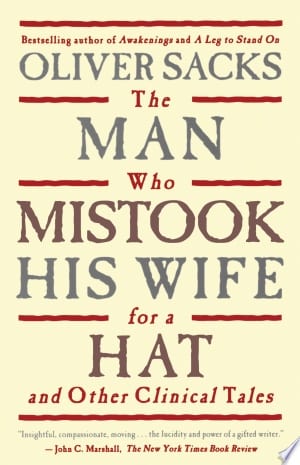
⬅️ Hub: Psychology Books (MOC) · Parent: 60.21 Psychology
DESCRIPTION
Explores neurological disorders and their effects upon the minds and lives of those affected with an entertaining voice.
My Summary
Main Ideas, Takeaways & Similarities
Questions
I. What is the problem?
A. How is this problem formulated?
B. Why is this problem important?
C. What is the history of this problem?
D. Which prominent personalities have been interested in this problem?
II. What solutions to the problem are there?
A. What are the conclusions reached?
B. By what argument(s) is the conclusion reached?
C. What facts or assumptions serve as premises?
D. When a prominent personality offers a solution, does he also argue for or against other prominent personalities? Does he raise objections to alternative solutions? Does he consider objections to his own solutions?
III. Evaluation
A. What are the advantages and disadvantages of the alternative formulations to the problem?
B. Has the importance or history of the problem ever been misrepresented?
C. Are the solutions logically related to the premises?
D. Are the facts true? Are the assumptions acceptable? Are the objections answerable?
AI Summary
Highlights
“The Man Who Mistook His Wife For A Hat: And Other Clinical Tales” by Oliver Sacks is a collection of clinical case studies that explore various neurological disorders and their impact on individuals’ lives. The book delves into the complexities of the human brain and the fascinating ways in which it can malfunction. Here is a comprehensive summary of the book in bullet points:
- The book is a compilation of fascinating clinical stories based on the author’s experiences as a neurologist, providing insights into the lives of patients with rare and unusual neurological conditions.
- Oliver Sacks begins with the case of a man who has visual agnosia, a condition that prevents him from recognizing objects, even familiar ones, leading to the title incident where he mistakes his wife for a hat.
- The book explores various neurological disorders, including amnesia, aphasia, Tourette’s syndrome, and Parkinson’s disease, shedding light on the profound effects these conditions have on patients’ perceptions, behaviors, and abilities.
- It delves into the world of savants, individuals with extraordinary talents or abilities that emerge as a result of their neurological conditions, such as the “autistic twins” who have an exceptional gift for drawing intricate cityscapes from memory.
- Sacks discusses the complexities of memory disorders, including cases of amnesia and the loss of personal and historical memories, highlighting the profound impact of memory on one’s identity.
- The book touches on the intricacies of language and communication disorders, such as aphasia, and explores the challenges faced by individuals who struggle to express themselves or understand language.
- Oliver Sacks examines the unique experiences of patients with Tourette’s syndrome, a condition characterized by involuntary and repetitive movements or vocalizations, and provides insights into their struggles and coping mechanisms.
- The book offers a glimpse into the lives of patients with Parkinson’s disease, showcasing the physical and emotional challenges they face and the transformative effects of medication on their symptoms.
- It discusses the concept of “phantom limbs,” where amputees continue to perceive sensations in their missing limbs, and explores the neurological basis for these phenomena.
- The author emphasizes the importance of empathy, understanding, and compassion in the field of neurology and medicine, highlighting the significance of seeing the person behind the neurological condition.
- “The Man Who Mistook His Wife For A Hat” weaves together scientific insights, personal anecdotes, and philosophical reflections on the nature of the mind and consciousness.
- The book invites readers to consider the profound mysteries of the human brain and the resilience and adaptability of individuals living with neurological conditions.
- It serves as a testament to the richness of human experience and the limitless capacity of the brain to adapt, compensate, and find meaning in the face of neurological challenges.
- Oliver Sacks’ storytelling approach humanizes the individuals behind the clinical cases and encourages readers to contemplate the intricacies of the brain and the complexities of human consciousness.
“The Man Who Mistook His Wife For A Hat” is a captivating exploration of the human mind and the myriad ways in which neurological disorders can shape individuals’ perceptions and experiences. Through a collection of clinical tales, Oliver Sacks invites readers to appreciate the resilience of the human spirit and the profound mysteries of the brain.