⬅️ Hub: Psychology Books (MOC) · Parent: 60.21 Psychology
DESCRIPTION
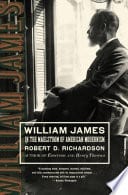
The definitive biography of the fascinating William James, whose life and writing put an indelible stamp on psychology, philosophy, teaching, and religion—on modernism itself. Often cited as the “father of American psychology,” William James was an intellectual luminary who made significant contributions to at least five fields: psychology, philosophy, religious studies, teaching, and literature. A member of one of the most unusual and notable of American families, James struggled to achieve greatness amid the brilliance of his theologian father; his brother, the novelist Henry James; and his sister, Alice James. After studying medicine, he ultimately realized that his true interests lay in philosophy and psychology, a choice that guided his storied career at Harvard, where he taught some of America’s greatest minds. But it is James’s contributions to intellectual study that reveal the true complexity of man. In this biography that seeks to understand James’s life through his work—including Principles of Psychology, The Varieties of Religious Experience, and Pragmatism—Robert D. Richardson has crafted an exceptionally insightful work that explores the mind of a genius, resulting in “a gripping and often inspiring story of intellectual and spiritual adventure” (Publishers Weekly, starred review). “A magnificent biography.” —The Washington Post
My Summary
Main Ideas, Takeaways & Similarities
Questions
I. What is the problem?
A. How is this problem formulated?
B. Why is this problem important?
C. What is the history of this problem?
D. Which prominent personalities have been interested in this problem?
II. What solutions to the problem are there?
A. What are the conclusions reached?
B. By what argument(s) is the conclusion reached?
C. What facts or assumptions serve as premises?
D. When a prominent personality offers a solution, does he also argue for or against other prominent personalities? Does he raise objections to alternative solutions? Does he consider objections to his own solutions?
III. Evaluation
A. What are the advantages and disadvantages of the alternative formulations to the problem?
B. Has the importance or history of the problem ever been misrepresented?
C. Are the solutions logically related to the premises?
D. Are the facts true? Are the assumptions acceptable? Are the objections answerable?
AI Summary
Highlights
“William James: In the Maelstrom of American Modernism” is a biography of the American philosopher and psychologist William James, written by Robert D. Richardson and first published in 2006. The book explores the life and intellectual contributions of William James in the context of American modernism. Here is a comprehensive summary of the book in bullet points:
- “William James: In the Maelstrom of American Modernism” offers a detailed and insightful biography of William James, one of the most influential figures in American philosophy and psychology.
- The book places William James within the broader context of American modernism, a period of intellectual and cultural transformation in the late 19th and early 20th centuries.
- It examines James’s family background, upbringing, and early influences, including his famous father, Henry James Sr., and his brother, the novelist Henry James.
- The biography delves into William James’s education and his pursuit of scientific and philosophical interests, leading to his studies in medicine and psychology.
- It explores James’s contributions to psychology, including his work on consciousness, the stream of thought, and the concept of the “self.”
- The book discusses James’s pivotal role in the development of pragmatism, a philosophical movement that emphasizes the practical consequences of beliefs and actions.
- It covers James’s exploration of religious and spiritual experiences, including his influential book “The Varieties of Religious Experience.”
- The biography highlights James’s involvement in the philosophical debates of his time, including his interactions with other notable thinkers like Charles Peirce and John Dewey.
- It delves into James’s personal struggles with health issues, depression, and a sense of inner conflict.
- The book discusses James’s contributions to philosophy of mind, ethics, and the philosophy of religion.
- It examines James’s impact on American intellectual life and his influence on subsequent generations of philosophers and psychologists.
- The biography provides insights into James’s family life, friendships, and travels.
- It explores James’s engagement with social and political issues, including his stance on issues such as pacifism and free will.
- The book offers a nuanced and multi-faceted portrait of William James, emphasizing his complex personality and his ability to bridge diverse intellectual domains.
- “William James: In the Maelstrom of American Modernism” portrays James as a key figure in American intellectual history, whose work continues to be relevant and influential in contemporary philosophy and psychology.
Robert D. Richardson’s biography of William James provides a comprehensive and engaging account of the life and intellectual contributions of this iconic American thinker. The book places James within the context of American modernism and illuminates his impact on the fields of philosophy, psychology, and religion. It offers readers a deeper understanding of the man and his ideas, emphasizing his enduring significance in the history of American thought.