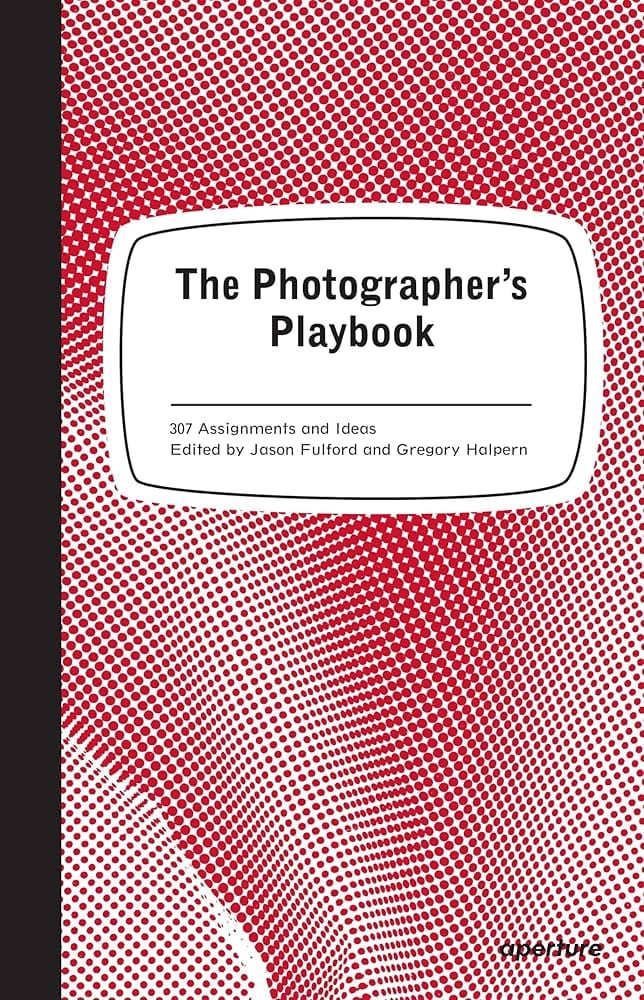

DESCRIPTION
“Features photography assignments, ideas, stories, and anecdotes from many of the world’s most talented photographers and photography professionals”—Cover.
My Summary
Main Ideas, Takeaways & Similarities
Questions
I. What is the problem?
A. How is this problem formulated?
B. Why is this problem important?
C. What is the history of this problem?
D. Which prominent personalities have been interested in this problem?
II. What solutions to the problem are there?
A. What are the conclusions reached?
B. By what argument(s) is the conclusion reached?
C. What facts or assumptions serve as premises?
D. When a prominent personality offers a solution, does he also argue for or against other prominent personalities? Does he raise objections to alternative solutions? Does he consider objections to his own solutions?
III. Evaluation
A. What are the advantages and disadvantages of the alternative formulations to the problem?
B. Has the importance or history of the problem ever been misrepresented?
C. Are the solutions logically related to the premises?
D. Are the facts true? Are the assumptions acceptable? Are the objections answerable?
AI Summary
Highlights
Are the photographs about the object or about the environment around it? What is your relationship to that environment and why does it matter? Are any poetic images or notes evoked by the moon’s romantic associations? Conversely, does a cynical side emerge in reaction to these associations? Are there any political and environmental issues that arise? Does the notion of time or change or morality come up during the exercise? What is the most impactful way to arrange and present the resulting photographers and notations? Is the process more important than an outcome?
Portraits
Look into their eyes carefully and see if you can find your own reflection there. Discover yourself looking at you. Then, ask your subject to look into your camera lens and find their own reflection, and be prepared to make the portrait.
Confining yourself to certain parameters can actually lead to discovery of a universe of subject matter that is hard to find when you (if you are like me) tend to wander endlessly.
Geographic parameter
Psychological
Thematic
Technical
Very strict and precise choices about how you will not work. The stricter the better.
Set a time constraint
Capture a person’s aura in a photographic portrait
One role of art is to reveal untruths in accepted correspondences or, conversely, to reveal truths in unlikely correspondences.
Telling a story with pictures is just like writing with words. Something is seen, or thought of, or imaged.
Retell your family history. Combine family pictures with newly made material. Use the stories that have remained untold as a basis, and fictionalize others. This is art, not science. Try to place the project in a broader context. Edit the images and the stories so that an audience will be intrigued. I think I should make an album myself. I already have the title.
In order to get your point of view across, you must photograph them indirectly.
If we go back to Walker Evans (and we can almost endlessly go back to Walker Evans), he said photography was about structure and coherence, but also symbol and metaphor, and “paradox and play and oxymoron.”
Metaphor, symbolism, paradox, play, oxymoron. Here are the tools, along with text, for the photographer photographing what cannot be seen.
Turn your eyeballs around toward the inside of your head… photograph what you see.
Your assignment is to find a collaborator—for example, a forensic scientists, or someone else working in a field that is foreign to you—and offer your services as a photographer.
I have suggested that they put away their cameras (my dreams is to do this for a whole semester) and write down their thoughts in any form they choose, such as a list of subjects matter, conceptual thoughts, narrative plots, places to photograph, etc.
So think more and shoot less is the best I can give.
Trust your intuition, and if you still can’t see anything, ask questions!
Fail often and fail hard.
Try a genre or subject you dislike, or that scares you.
Seek out points of intersection that exist both as a physical space and as a metaphor.
Whatever ideas you have in advance about the subject you want to photograph are just that—ideas. They are not the work itself, but rather the things that lead you to do work. They give you a reason to show up. Ususually once you start working, other things happen, you see something else, or you might even find something quite different from what you set out to find.
What do you see that others see?
What do others see that you don’t see?
What do you know that nobody knows?
What does nobody know?
Don’t cede control of your ideas and work to others, ever.
Don’t just react. Analyze.
Include all the domains of visual culture.
Take at least one anthropology class.
Good networking skills.
Be true to yourself, to your work, and to those near and dear to you. They’re all that matters, in the end.
What is the fusion between the photographer and his or her world?
Working with a specific audience, as opposed to an ambiguous one, tends to make the artistic process more meaningful.
Visual source binder
Photography is all about light.
Contact prints and proof sheets are essential to improving your vision
Limitation, Routine, and Repetition
Equivalents
Abstraction
Expressionism
Line, Space, Shape, Form
Chiaroscuro
I believe that being in the moment and have something to say are the most important factors in good photography.
There’s a difference between atmosphere and space within a picture. Atmosphere is a kind of charged space. Can you photograph heat in a way that conveys its hotness? Can you photograph water and make the picture feel wet, rather than just look like a picture of water?
Photograph who you are.
Image (image unavailable)
Image (image unavailable)
Image (image unavailable)