Cross → Assyria as the first deportation empire — uses Frahm on Tiglath-pileser III’s ~600,000 deportees and the Arrapha governor’s letter.
DESCRIPTION
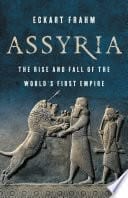
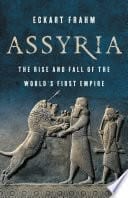
A new history of Assyria, the ancient civilization that set the model for future empires At its height in 660 BCE, the kingdom of Assyria stretched from the Mediterranean Sea to the Persian Gulf. It was the first empire the world had ever seen. Here, historian Eckart Frahm tells the epic story of Assyria and its formative role in global history. Assyria’s wide-ranging conquests have long been known from the Hebrew Bible and later Greek accounts. But nearly two centuries of research now permit a rich picture of the Assyrians and their empire beyond the battlefield: their vast libraries and monumental sculptures, their elaborate trade and information networks, and the crucial role played by royal women. Although Assyria was crushed by rising powers in the late seventh century BCE, its legacy endured from the Babylonian and Persian empires to Rome and beyond. Assyria is a stunning and authoritative account of a civilization essential to understanding the ancient world and our own.
ASSYRIA - the rise and fall of the world’s first empire — Eckart Frahm.pdf (file not included in this release)
Executive Summary
Eckart Frahm tells the story of Assyria as the earliest durable experiment in imperial rule—how a small, merchant-run city on the Tigris became a territorial state, then a world empire, and finally a cultural “afterlife” that later civilizations repeatedly recycled as either a model to imitate or a nightmare to condemn. The book’s core move is to treat Assyria not only as an ancient Near Eastern power but as a case study in the recurring problems of empire: expansionist ideology, administrative reach, managed violence, information systems, multiethnic governance, and the fragility of legitimacy when crises hit. Frahm also emphasizes how much our picture is shaped by source bias—especially the “regicentric” tilt of royal inscriptions—and how Assyria’s image has been distorted through biblical, classical, and modern lenses.
“Modern” Assyria
“Assyria can also seem remarkably modern.” — Page 20
Structure (Author’s Table of Contents)
PART I — THE LONG ROAD TO GLORY (Chs. 1–5)
PART II — EMPIRE (Chs. 6–14)
PART III — AFTERLIFE (Chs. 15–18 + Epilogue)
PART I — THE LONG ROAD TO GLORY
1 — A Small Town on the Tigris
From prehistory to an “Assyrian” identity
- Frahm opens deep in time: northern Iraq as a long-term human habitat, with the Neolithic shift to settled life and agriculture in the wider Fertile Crescent.
- Between 2500–1700 BCE, a more recognizable Assyrian identity emerges: Assyrian language, temples, and the idea that Ashur is the city’s true king.
The “opposite” of later empire: Ashur as merchant city-state
- The Old Assyrian city-state is portrayed as strikingly unlike the later empire: rule largely confined to Ashur; aversion to warfare; governance rooted in civic bodies rather than an all-powerful monarch—yet already showing the later imperial traits of wide horizons and acquisitiveness.
- Politics is plausibly linked to institutions like the City Assembly (ālum), and early rulers (e.g., Ititi) appear in fragmentary ways that underline how partial the record is.
Trade as the engine (tin/textiles → silver), and Kanesh as hub
- “Being a citizen of Ashur seems to have meant you were a merchant”: long-distance trade defines the city’s identity and social structure.
- The Kanesh (Kültepe) trade colony becomes central: extraterritorial privileges, legal autonomy, taxes, and a huge archive of tablets documenting risk-based private enterprise (even bearer checks), caravan logistics, and profits.
Key terms & concepts
- Fertile Crescent: ecological zone enabling early farming settlements.
- Old Assyrian period: trade-flourishing era after ~2000 BCE.
- ālum (City Assembly): civic legislative/judicial body linked to early governance.
- Kanesh/Kültepe: Anatolian emporium anchoring Assyrian merchant networks.
2 — Birth of a Kingdom
From city-state to territorial state
- The chapter’s core transformation: Ashur “morphs into the territorial state of Assyria,” ruled by kings with an expansionist ideology—and “Ashur” becomes not only god/city but a land.
- Frahm frames the Middle Assyrian period (14th–11th c.) as the outcome: Assyria becomes a major West Asian power, with institutions and traditions that persist into the first millennium.
Shamshi-Adad as prelude (and remembered template)
- Shamshi-Adad I and his dynasty matter less as continuous founders than as an ideological and institutional precedent: the idea of a territorial kingdom ruled by a king rather than civic bodies.
- Religious-political legitimation: identifying Ashur with Enlil, “king of the gods,” as a corollary to universal political claims.
- Governance as family administration: sons as viceroys, the Mari letters as evidence of court politics, competence, and royal pressure.
Merchants, stay in your lane
“Since you are merchants, go about your trade as best you can… Why do you interfere?” — Page 54
Key terms & concepts
- Middle Assyrian period: 14th–11th c. era of territorial power and institutional formation.
- Enlil/Ashur identification: religious strategy supporting universal kingship claims.
- Viceroy: delegated royal authority in secondary power centers.
3 — Disruption and Recovery
Growth, then systemic crisis
- Frahm stresses nonlinearity: Assyria’s rise has “fits and starts.” Provinces remain firm despite earlier internal troubles; under Tiglath-pileser I, Assyrian troops reach the Mediterranean—but soon after, Assyria suffers a massive crisis (mid-11th to mid-10th c.) with existence at stake.
- The crisis is linked to earlier shocks in the western Levant; Assyria survives where others collapse.
Aramaean pressure and the lived reality of collapse
- A vivid source describes Aramaean clans plundering, taking fortified cities, driving flight, and ruining harvests—while Assyrian troops are active far away, creating a strategic paradox.
- The period produces royal laments and signals of shrinking capacity; inscriptions and chronicles imply an empire-like reach becomes temporarily impossible.
Crisis from within the heartland
“All the harvest of Assyria was ruined.” — Page 87
Key terms & concepts
- Aramaeans: mobile groups whose raids reshaped Assyria’s security landscape.
- Assyrian “recovery”: a recurring theme—collapse pressures followed by institutional rebound.
4 — The Crown in Crisis
How empires become vulnerable: succession, elites, and legitimacy
- The “crown” problem is less about a single battle than about the political sociology of monarchy: when central authority weakens, internal rivals, magnates, and contested succession can fracture coherence (a theme the book returns to later).
Royal women and the politics of continuity (Sammu-ramat / Semiramis)
- Frahm treats Sammu-ramat as historically real (and later mythologized as Semiramis): her prominence signals both vulnerability and institutional resilience, as dynasties use court coalitions to survive transitions.
Key terms & concepts
- Dynastic crisis: succession instability as a structural imperial risk.
- Semiramis tradition: later “afterlife” distortion rooted in real court power.
5 — The Great Expansion
Expansion becomes systematic: annexation, provinces, and coercion
- Frahm describes how later expansion becomes more administrative: conquest followed by annexation into provinces and regularized extraction (tribute/tax), increasingly tied to centralized monarchy.
- A pivotal figure is Tiglath-pileser III, whose reforms cut back magnate power, rotate offices, elevate homines novi, and suppress elite self-advertising (erasing earlier inscriptions—compared to Roman damnatio memoriae).
Memory sanctions
“An act reminiscent of… damnatio memoriae.” — Page 128
Key terms & concepts
- Magnates: elite officials whose autonomy threatens royal centralization.
- Homines novi: newly elevated men used to weaken entrenched elites.
- Damnatio memoriae: analogy for deliberate public erasure of rivals.
PART II — EMPIRE
6 — On the Edges of Empire
Empire as space, networks, and communication problems
- Frahm defines empire in spatial terms and immediately ties that to information/communication: the larger the territory, the more empire depends on administrative transmission and control over distances.
A spatial definition
“Empire is defined by the space it occupies.” — Page 153
Multilingual rule and Aramaic as an imperial tool
- The chapter highlights how Assyria’s reach required shared administrative languages; Aramaic spreads as a practical lingua franca for imperial governance across diverse regions.
- The “edges” theme also foregrounds peripheries (Arab lands, Urartu, Phoenicia, etc.) as active zones shaping the center’s policy.
Key terms & concepts
- Peripheral integration: bringing borderlands into imperial routines (tribute, governors, garrisons).
- Lingua franca (Aramaic): administrative solution to multiethnic empire.
7 — A Ghost Story
The political theology of a lost king (Sargon II)
- Frahm uses the “ghost” motif to show how religion and legitimacy intertwine: the fate of a king’s body, burial, and posthumous status becomes a state problem, not a private tragedy.
Ritual, fear, and state stability
- The chapter connects textual/ritual traditions (anti-ghost rites, omen interpretation) to moments of imperial anxiety, showing how governance includes managing fear and meaning.
Key terms & concepts
- Political theology: rule stabilized (or destabilized) through divine interpretation.
- Ritual expertise: scholars/exorcists as part of the governing machine.
8 — At the Gates of Jerusalem
Assyrian imperial practice in the Levant
- Frahm centers a royal inscription/letter describing the suppression of Judah: devastation, deportation, and the relocation of populations—typical imperial techniques for breaking resistance and restructuring the political map.
- The text also illustrates how Assyria narrates its actions: the king frames coercion as order-making and portrays local rulers as subjects to be disciplined.
Relocation as control
“I changed the location of their residence and made them take the road to Assyria.” — Page 200
Key terms & concepts
- Deportation/relocation: imperial tool for security, labor, and demographic control.
- Imperial inscription: propaganda + administration, not neutral reporting.
9 — Sennacherib’s Babylonian Problem
Why Babylon is different
- Frahm frames Babylon as a recurring “problem” because it is culturally prestigious, religiously central, and politically volatile—making brute coercion costly and compromise hard.
- “Godnapping” (seizing Marduk’s statue) becomes a long-memory trauma and a political-theological crisis that later rulers must “repair.”
Trauma as memory
“An act of ‘godnapping’ that became engrained in historical memory.” — Page 74
Key terms & concepts
- Godnapping: seizure of a divine statue as both warfare and cosmic violence.
- Cultural rivalry: Assyrian indebtedness to Babylon as a driver of aggression.
10 — Mother Knows Best
Court violence and the logic of succession
- Frahm opens with a brutal palace episode (684 BCE): a reminder that “internal security” can be as dangerous as foreign war, and that empire’s continuity often hinges on court survival.
- The chapter foregrounds the political role of royal women—especially the queen mother Naqia/Zakutu—as actors in succession and stability, not mere background figures.
Palace murder as state event
“They stabbed him to death.” — Page 271
Key terms & concepts
- Queen mother (Naqia/Zakutu): dynastic stabilizer and political broker.
- Succession violence: structural vulnerability of personal monarchy.
11 — 671 BCE
A “snapshot” year: imperial reach at maximum strain
- Frahm uses 671 BCE as a lens on Assyria’s operational complexity: campaigns, logistics, and managing multiple frontiers and political theaters at once.
- The chapter highlights the material reality of military operations (supplies, anxieties, mishaps) rather than purely ideological triumph.
War in the mundane register
“Take 10 pieces of copper, melt them… also fish oil.” — Page 270
Key terms & concepts
- Imperial logistics: provisioning as a constraint on conquest.
- Documentary realism: letters/instructions revealing governance “at ground level.”
12 — Scholar, Sadist, Hunter, King
Ashurbanipal as contradiction: intellectual splendor + cruelty
- Frahm frames Ashurbanipal as both curator of knowledge and practitioner of extreme violence, using him to explore the moral ambiguity of “civilized” empire.
- A key interpretive move is to connect cultural achievement (libraries, scholarship) with coercive dominance (terror, punitive spectacle).
Empire’s double face
“With his sadistic propensities, he is hardly the kind of ruler we should admire.” — Page 328
Key terms & concepts
- Royal scholarship: knowledge as an imperial resource and prestige system.
- Terror as policy: violence staged to deter and communicate.
13 — Everyday Life in the Empire
Correcting the “regicentric” picture
- Frahm explicitly warns that most sources privilege kings and elites: Assyriology can overfocus on rulers because the archives do. He labels this a “regicentric” bias and treats the chapter as a methodological correction.
- He reframes the empire as lived across provinces, cities, and countryside—asking what ordinary people’s work, risks, and routines looked like.
Source bias
“The sources… have a ‘regicentric’ bias.” — Page 313
Urban fear, palace power, and social texture
- A striking incantation about the palace communicates how imperial authority can feel: not only administrative, but terrifying.
The palace as predator
“Behind its doors terror reigns, its resident is a merciless lion.” — Page 307
Key terms & concepts
- Regicentric bias: structural overrepresentation of kings in surviving records.
- Provincial life: empire as taxation, labor, law, and vulnerability beyond capitals.
14 — Imperial Twilight
The fall: suddenness, shock, and explanation
- Frahm emphasizes how abrupt the collapse is: “an event rather than a process,” which makes explanation hard and invites later mythmaking.
- He flags the historiographical drama (including Paul Garelli’s framing of Assyria’s fall as a historical scandal) and treats the end as overdetermined—internal fractures plus external enemies plus cascading failures.
Collapse as “event”
“Assyria’s fall was… an event rather than a process.” — Page 386
Key terms & concepts
- Overdetermined collapse: multiple reinforcing causes rather than one fatal blow.
- Historiographical scandal: the explanatory puzzle of sudden imperial death.
PART III — AFTERLIFE
15 — Assyria’s Legacy on the Ground
Ruins, archaeology, and what survives materially
- Frahm turns from textual afterlives to physical ones: sites, artifacts, and the way modern knowledge of Assyria depends on excavation, preservation, and the politics of heritage.
- The chapter frames “legacy” as contested: what gets remembered depends on what is found, protected, and interpreted.
Key terms & concepts
- Material legacy: ruins/artifacts as an alternative archive to royal texts.
- Heritage politics: preservation/destruction as modern power struggles.
16 — A Model Empire
From “Assyria as warning” to “Assyria as template”
- Frahm argues that Assyria became one of the foundational reference points for later imperial imaginaries—through the Bible and classical historians, but also through the broader idea of translatio imperii (transfer of empire).
- The chapter tracks how later polities (explicitly or implicitly) reuse Assyrian strategies: centralization, provincial administration, mass movement of peoples, and ideological self-presentation.
Key terms & concepts
- Translatio imperii: the notion that imperial authority migrates across history.
- Model empire: Assyria as precedent in administrative imagination.
17 — Distorted Reflections
Assyria as “alterity” in Western memory
- Frahm shows how Assyria and Babylonia become symbolic “others” in later thought—shorthand for tyranny, decadence, cruelty, or alien grandeur—often detached from historical reality.
- Myths like Semiramis (and the invented romance around Ninus/Assyrian origins) illustrate how later cultures generate a fantasy Assyria to serve their own narratives.
Assyria as constructed “other”
“Assyria and Babylonia appeared as models of alterity.” — Page 389
Key terms & concepts
- Alterity: identity-formation by projecting fears/desires onto a foreign “other.”
- Reception distortion: later retellings that overwrite primary evidence.
18 — The Second Destruction
Modern iconoclasm and the politics of annihilation
- Frahm confronts contemporary destruction of Assyrian heritage (notably ISIS), emphasizing that “afterlife” is not only memory but also targeted erasure.
- He highlights the ideological performance of destruction—done “for the camera” and justified as religious duty, but also functioning as domination through cultural terror.
Destruction as message
“We do not care what other people think… This is why we destroy statues.” — Page 433
Key terms & concepts
- Iconoclasm: destruction of images/monuments as ideological warfare.
- Cultural genocide (conceptual frame): attacking identity through heritage destruction.
Epilogue
The ethics of progress and historical “storms”
- Frahm closes by linking Assyria’s story to broader reflections on violence, modernity, and the moral ambiguity of “progress.”
Progress as storm
“This storm is what we call progress.” — Page 428
A parable of return (and limits)
- The Brothers Grimm tale functions as a dark coda: reaching for total mastery can end in return to the old hut—an anti-triumphalist ending that mirrors Assyria’s arc.
Back to the hut
“Just go home, she is sitting in the old hut again.” — Page 427
Critical Analysis
- Methodological strength: Frahm consistently triangulates across genres of evidence (royal inscriptions, administrative letters, scholarly/ritual texts, archaeology, and later receptions) and repeatedly reminds the reader how each source type distorts as well as reveals—especially the “regicentric” problem.
- Conceptual payoff: The book succeeds at treating Assyria as both historically specific and analytically useful: empire as a package of space-management, communication, coercion, and legitimacy-production.
- Notable bias (explicitly acknowledged): The narrative necessarily leans on elite archives; Frahm flags this and devotes a full chapter to everyday life, but the asymmetry remains—ordinary voices are largely indirect.
- Possible omission (by design): Readers wanting a fully systematic comparative empire theory (Rome/Mongols/British, etc.) may find the comparison mostly implicit; Frahm offers suggestive analogies (e.g., “damnatio memoriae”) but keeps the book anchored in Assyriological evidence.
- Afterlife contribution: The strongest original “second act” is the reception history—how Assyria becomes a moralized symbol, then a heritage battlefield—making the book as much about modern cultural politics as about ancient conquest.
Questions for Reflection (mini-essay prompts)
- If “empire is defined by the space it occupies,” what institutional or cultural tools are necessary to hold space—and where do they predictably fail?
- How does source bias (especially “regicentric” evidence) shape what we think empires are? What would “imperial history from below” need, methodologically, to be possible?
- Are deportation and population transfer best understood as “terror,” “administration,” or “economics”—and what changes when you view them as all three at once?
- Why does Babylon pose a distinct kind of imperial legitimacy problem, and what does that reveal about the relationship between cultural prestige and political power?
- In what ways does Assyria’s “afterlife” tell us more about later societies than about Assyria itself? Use Semiramis/alterity as a test case.
- How should modern societies ethically respond to heritage destruction that is staged as propaganda? What does “remembering Assyria” require today?
- Is “progress” compatible with the recurring imperial pattern Frahm describes, or is progress historically entangled with storms of violence?
Connections (works, thinkers, movements cited/foregrounded)
- Walter Benjamin, “Angel of History” / progress as storm (conceptual frame for modernity and ruin).
- Brothers Grimm (parable used to close the book’s ethical arc).
- The Bible and classical historians as key pipelines for Assyria’s Western reception.
- Tukulti-Ninurta Epic and the Marduk Prophecy (literary-religious memory shaping political meaning).
- Roman political memory (via analogy to damnatio memoriae).
- Reception traditions around Semiramis (mythologized royal woman; distortion as cultural mirror).
- Modern jihadist iconoclasm (heritage destruction as ideological theater).