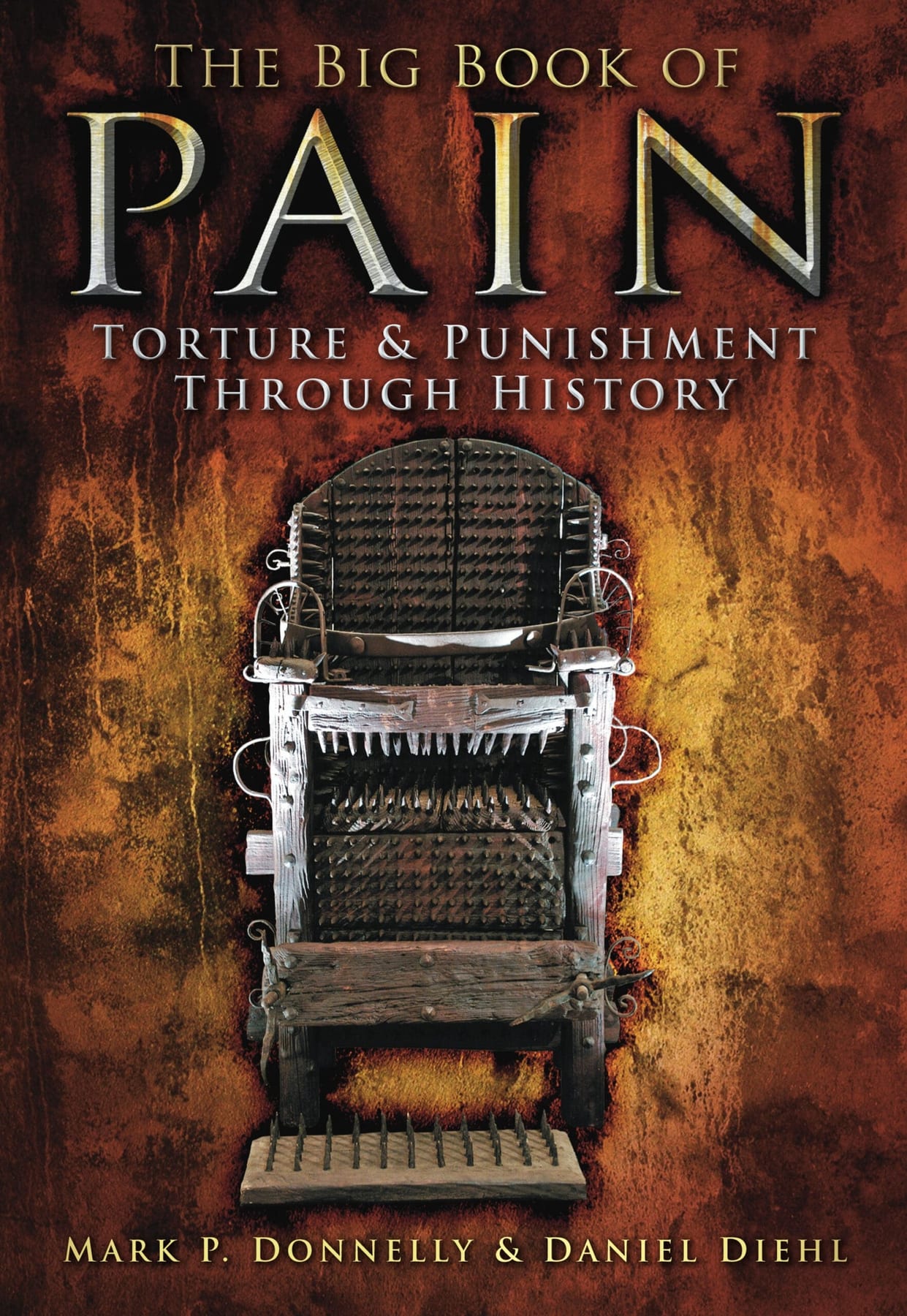
Journal material
The page preserves three distinct kinds of material:
- A handwritten question about coercive interrogation: if pain can make an innocent person say anything, can it ever reliably extract genuinely important hidden information? The page records the question; it does not settle it.
- Roman legal and philosophical context: clipped text distinguishes civil from criminal offenses, describes capital punishments, and presents Seneca as recognizing torture as both unjust and epistemically unreliable.
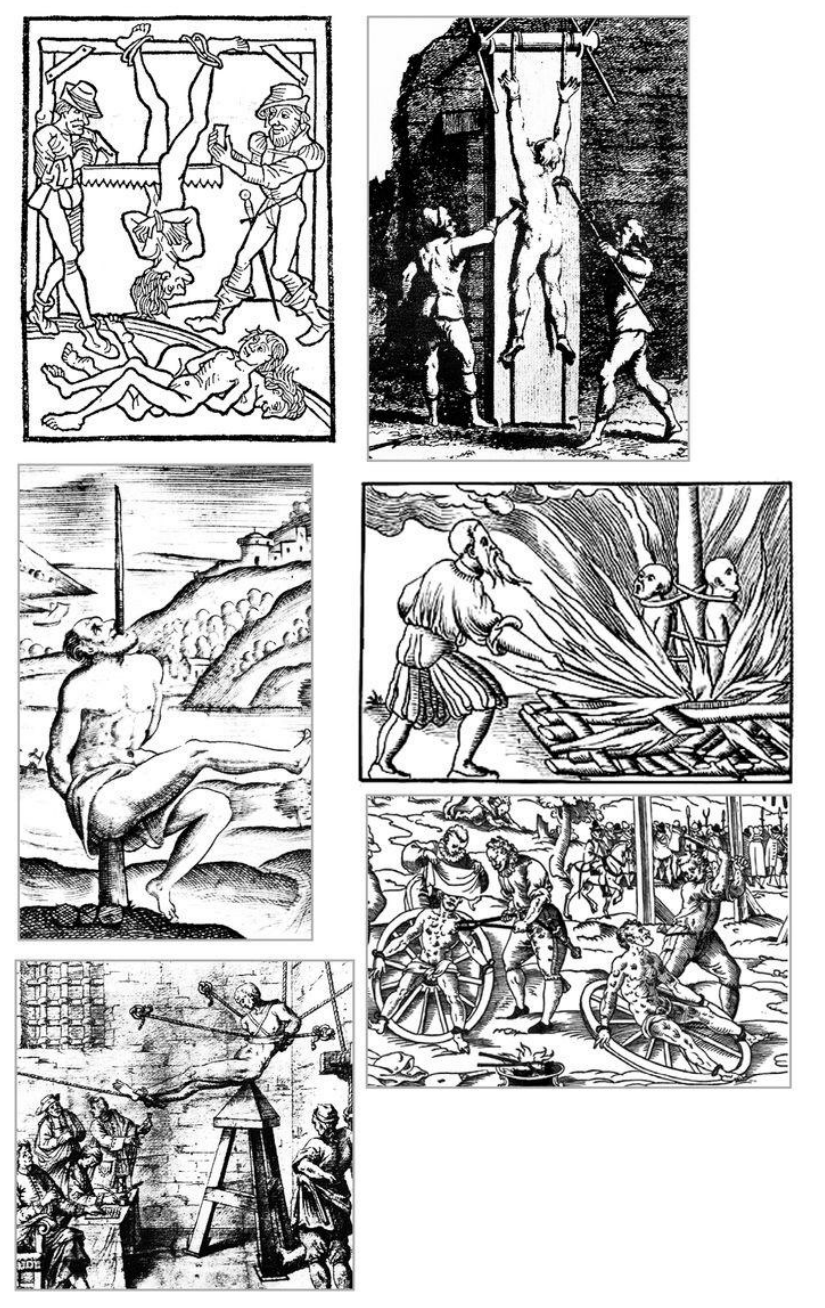
- A visual catalog of punishment: examples include ordeals, boiling, gibbets, pressing, the Judas cradle, breaking on the wheel, masks or branks, chastity devices, and public punishments directed at women.
Interpretive connection
The page fits the broader history of violence and punishment in The Better Angels of Our Nature: institutions may suppress private violence while still authorizing severe public cruelty. It also raises a recurring evidence problem—pain can produce compliance without producing truth.
Pinker’s Chapter 4 supplement — from public torture to evidentiary restraint
Pinker’s useful distinction is not “torture existed then but never now.” It is that medieval and early-modern torture was often public, legally codified, technologically elaborated, and used against nonviolent offenses, whereas modern democratic abuses are generally clandestine and officially denied. He also treats coerced confession as an epistemic failure: a Milanese judge obtained a false confession from his servant by torture, while the Duke of Brunswick had a tortured woman implicate the two Jesuits who trusted inquisitorial confessions. Pain secured compliance, not truth.
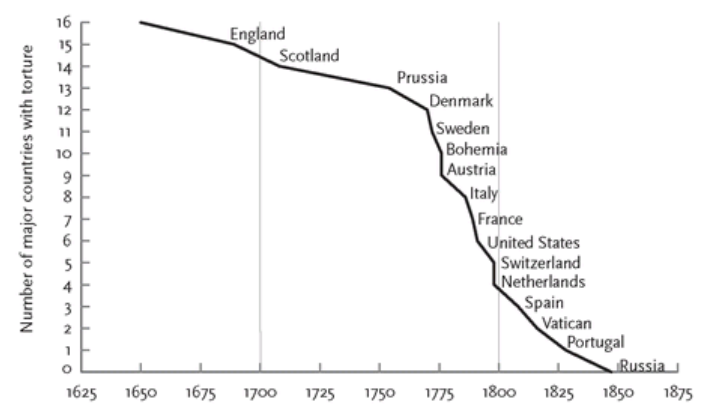
Figures 4-1 and 4-2 — a source-assembled visual catalog of medieval and early-modern torture, followed by Pinker’s timeline of formal abolition of judicial torture. The first figure establishes the range and intended bodily effects of devices, not their population prevalence; the second records legal milestones, not proof that abuse ceased immediately or everywhere. Pinker’s larger claim is that moral revulsion, evidentiary skepticism, publicity, and legal reform converged to move torture from authorized procedure toward prohibited abuse. Chapter 4 synthesis · Attachment (file not included in this release) · Attachment (file not included in this release) · Attachment (file not included in this release) · Attachment (file not included in this release) · Attachment (file not included in this release)
Source boundary
This note describes what the journal page collects. The clipped captions, historical attributions, and object labels have not been independently source-audited here.