
⬅️ Hub: History

DESCRIPTION
The main part of Polybius’s history covers the years 264-146 BCE. It describes the rise of Rome to the destruction of Carthage and the domination of Greece by Rome.—From publisher description.
Polybius- The Histories, I, Books 1-2 (Loeb Classical — by W R Paton In six volumes — Loeb Classical Library No 128, 1, 1922.pdf (file not included in this release)
Thucydides: Direct Mention and Methodological Comparison
- The Contrast in Witnesses: Polybius is noted for following a similar path to Thucydides regarding the difficulty of using witnesses. While Thucydides mentions the difficulty of getting behind differing accounts, Polybius expands on this, criticizing historians who pass over actual speeches or compose purely rhetorical exercises.
- The “Master of History”: Later in the tradition, Polybius is grouped with Thucydides as a “man of affairs” who believed history must be useful (opheleia) rather than merely pleasurable (terpsis)
- Polybius’ Correction: Polybius suggests a more precise distinction than his predecessor, separating the Aitiai (events prompting the war), the Prophasis (the pretext), and the Arche (the first physical action of the war)
- Human-Centered History: Like Thucydides, Polybius explains events entirely in human terms, eschewing divine intervention or myths
AI Summary
To help you navigate Polybius’ complex narrative in the Loeb edition (Books 1 and 2), here is a structural breakdown of the key sections. You can use this as a reference guide to the major themes and transitions as you move through the text.
🏛️ Part 1: Methodology and the “Master Plan”
Polybius spends the opening chapters explaining why his history is different from those that came before. He focuses on the “Inhabited World” (Oikoumene) becoming a single, interconnected body.
- The Aim of Universal History (1.1–1.5 | PDF pp. 11–19):
- The Question: How did Rome conquer almost the entire world in just 53 years?
- The Utility: History is the best “training for political life” and the only way to learn how to bear the changes of fortune.
- The Concept: Before this period, world events were scattered; now, history has become an organic whole where events in Italy, Africa, and Greece are linked.
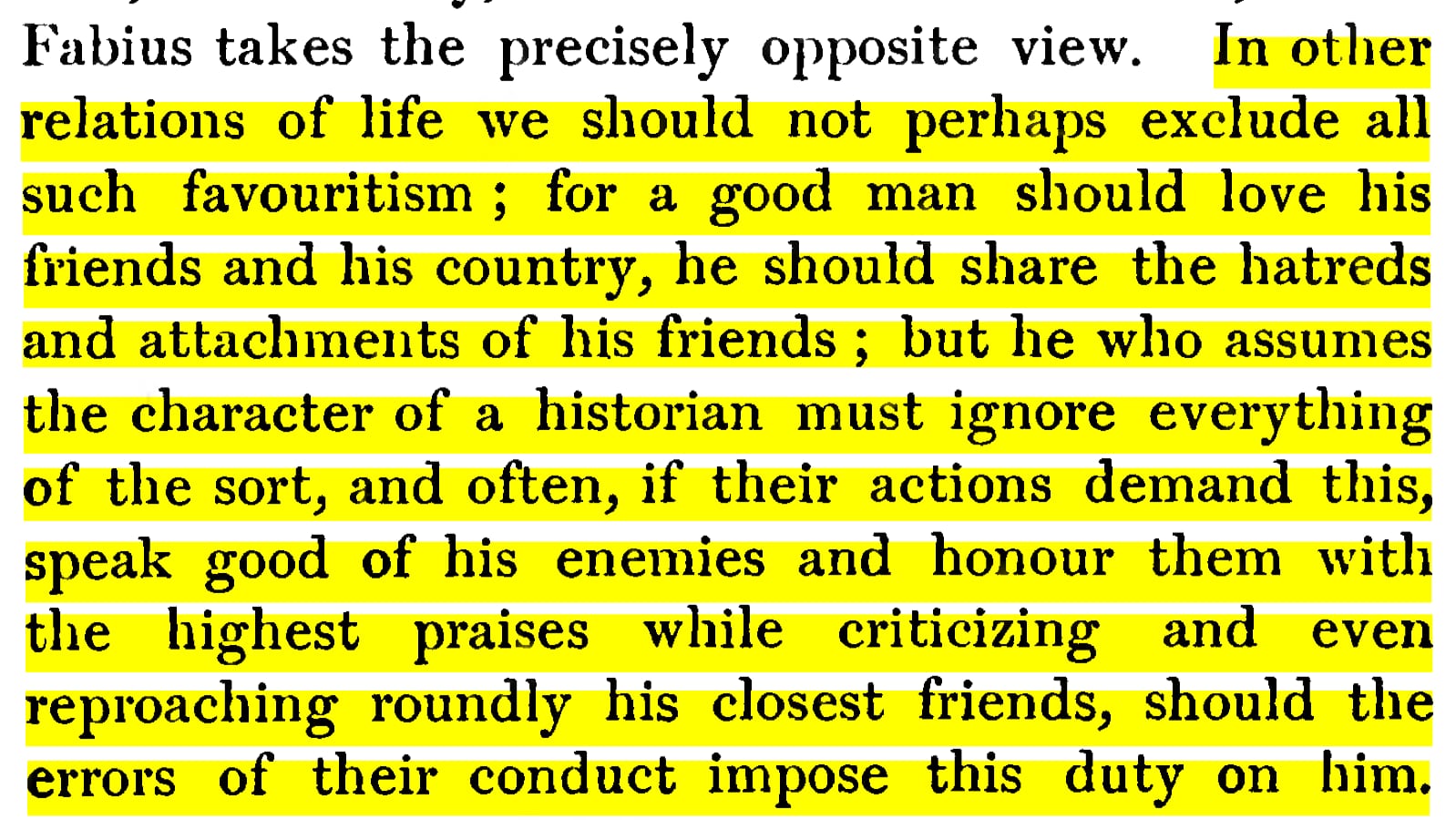
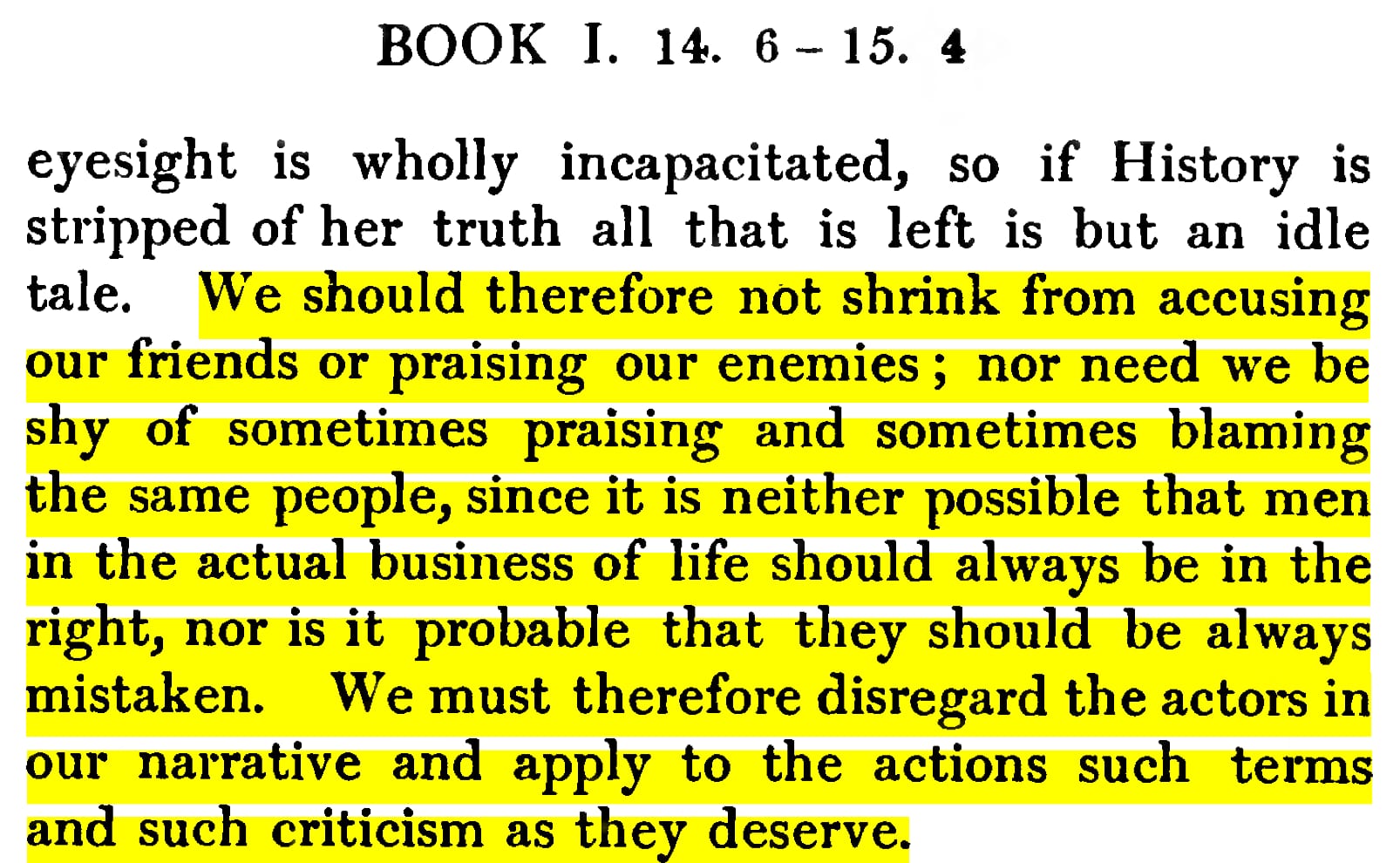
- The Standard of Truth (1.14 | PDF p. 37):
- Polybius famously compares a history without truth to an animal without eyes.
- He argues that while a man should be a “lover of his friends,” a historian must be a “lover of truth” and criticize even his own country or allies when they are wrong.
⚔️ Part 2: The First Punic War (The Struggle for Sicily)
This is the first major conflict where Rome and Carthage tested each other’s strength. Polybius provides the primary surviving record of these events.
- The Turning Point: Rome Becomes a Sea Power (1.20–1.21 | PDF pp. 53–57):
- Rome originally had no experience with warships.
- They built their first fleet by using a grounded Carthaginian ship as a blueprint.
- The Corvus: They invented a “boarding engine” (a bridge with a spike) to turn sea battles into land battles, allowing their superior infantry to dominate on decks.
- The Exhaustion of Resources (1.59–1.64 | PDF pp. 151–163):
- Polybius details the final naval battle at the Aegates Islands (241 BC), where a newly built Roman fleet finally broke Carthage’s spirit.
- The section concludes with the peace treaty and the birth of Hamilcar Barca’s undying hatred for Rome.
🏚️ Part 3: The Mercenary War (The “Truceless” War)
This section is a grim psychological study of what happens when a state collapses internally.
- The Mutiny (1.65–1.71 | PDF pp. 165–179):
- After the war with Rome, Carthage could not pay its foreign mercenaries.
- The dispute spiraled into a total rebellion involving 20,000 soldiers and the local African populations.
- The Rise of Hamilcar Barca (1.73–1.88 | PDF pp. 183–205):
- Polybius shows Hamilcar’s tactical brilliance in using the terrain and the “Saw” (a narrow pass) to trap and annihilate the rebels.
- He uses this war to illustrate the “beast-like” nature human beings adopt when they abandon all social and religious laws.
🛡️ Part 4: The Achaean League and the Balance of Power
In Book 2, Polybius turns to his own homeland, the Peloponnese, to explain how a group of small cities became a major Greek power.
- The Achaean Political Ideal (2.37–2.40 | PDF pp. 333–341):
- Polybius praises the League for its “Equality, Liberty, and True Democracy”.
- He argues that the League was successful because all member cities shared the same laws, weights, measures, and coins.
- The Critique of Phylarchus (2.56–2.58 | PDF pp. 381–387):
- A famous passage where Polybius attacks his rival historian, Phylarchus, for writing “Tragic History”.
- The Lesson: A historian should not try to “thrill” the reader with horror stories (like a playwright) but should simply record what was actually said and done, no matter how mundane.
- The Battle of Sellasia (2.65–2.70 | PDF pp. 401–415):
- This is the climax of Book 2: the coalition of Achaeans and Macedonians defeating the Spartan King Cleomenes.
- It marks the end of the traditional Spartan “Agoge” system and the transition of Greece into a sphere of Macedonian (and later Roman) influence.