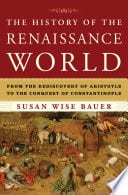
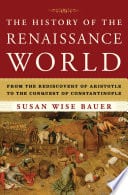
DESCRIPTION
A chronicle of the years between 1100 and 1453 describes the Crusades, the Inquisition, the emergence of the Ottomans, the rise of the Mongols, and the invention of new currencies, weapons, and schools of thought.
Chapter One - Logic and Compromise
Key points
- Bauer opens by arguing that the First Crusade did not create Christian unity so much as expose its limits. After the crusade, rulers increasingly acted as sovereigns first and Christians second.
- In England, Henry I seized power after the death of William II, even though his older brother Robert of Normandy had the stronger hereditary claim.
- Henry strengthened his shaky legitimacy through the Charter of Liberties, which reassured barons and churchmen while also securing their loyalty.
- The chapter explains how feudalism worked in Norman England: land was held from the king in exchange for service, especially military service.
- The great political issue was investiture: who had the right to appoint bishops, the king or the pope.
- Anselm of Canterbury becomes the chapter’s intellectual center. He was formed by the new study of Aristotelian logic and applied reason to theology in unusually bold ways.
- Bauer presents Anselm as a transitional figure: intellectually innovative, but institutionally loyal to papal authority.
- The conflict over investiture ends not with a clean victory but with negotiated compromise: first in England, then in the Holy Roman Empire.
Historical events
- 1100: William II dies in a hunting accident; Henry I is crowned king of England.
- Henry defeats and imprisons Robert of Normandy after the battle near Tinchebray, securing both England and Normandy.
- Ongoing conflict between Henry I and Pope Paschal II over lay investiture.
- 1107: Concordat of London compromises on appointments to English bishoprics.
- 1111: Henry V coerces Paschal II into granting him investiture rights after taking the pope prisoner.
- 1122: Concordat of Worms settles the imperial-papal dispute in a similarly pragmatic way.
Main ideas
- Political power and sacred authority were deeply entangled; neither pope nor king could fully dominate the other.
- The recovery of Aristotle mattered because it expanded the authority of reason within Latin Christianity.
- Bauer’s core claim is that twelfth-century Europe was beginning to move into a new world where law, logic, institutions, and negotiated power mattered as much as inherited religious unity.
Chapter Two - The Crusader Enemy
Key points
- The chapter argues that the Crusaders quickly became a threat not only to Muslims but also to Byzantium, the Christian empire they had originally come to aid.
- Alexius Comnenus had good reason to distrust the Crusaders: he required oaths from them, but they repeatedly broke them.
- Bohemund of Antioch becomes the clearest example of Crusader opportunism. Instead of restoring Antioch to Byzantium, he kept it for himself.
- Bauer emphasizes that the Crusades created new Christian rivalries, not just Christian-Muslim conflict.
- The Italian maritime republics - especially Venice, but also Pisa and Genoa - used crusading openings to build commercial privilege and semi-independent enclaves in the east.
- Under John II Comnenus, Byzantium tried to reassert authority over Venice, Antioch, and Cilicia, but the larger pattern of fragmentation continued.
- The chapter shows that commerce was as powerful a motive as faith. Venice pursued access, tax exemptions, and trade routes as aggressively as princes pursued crowns.
Historical events
- Bohemund seizes Antioch after the First Crusade and refuses to honor his oath to Alexius.
- Bohemund returns west, raises support in Italy, and invades Byzantine territory, but is defeated at Dyrrhachiumin 1108.
- 1109: Tripoli falls under Crusader rule.
- 1124: Venetian support helps the kingdom of Jerusalem capture Tyre.
- 1126: John II renews Venetian privileges after initially trying to curb them.
- 1136-1137: John II exploits conflict in Cilician Armenia, defeats local rulers, and enters Antioch triumphantly.
Main ideas
- The First Crusade shattered any simple notion of Christian solidarity.
- The eastern Mediterranean was becoming a contested zone of overlapping sovereignties: Byzantine, Crusader, Armenian, Venetian, and Muslim.
- Bauer’s broader point is that crusading opened space for private state-building and commercial empire, not just holy war.
Chapter Three - Anarchy
Key points
- This chapter links the politics of England, Anjou, and Jerusalem into a single dynastic story.
- Matilda, daughter of Henry I, seemed poised to become the hinge of a huge imperial order through her marriage to Henry V.
- The succession crisis begins with the White Ship disaster, which kills Henry I’s legitimate son and leaves Matilda as the leading heir.
- Henry I remarries Matilda to Geoffrey of Anjou, creating an alliance that is politically useful but personally strained.
- Geoffrey’s father, Fulk V of Anjou, leaves for the Holy Land and becomes king of Jerusalem through marriage to Melisende.
- When Henry I dies, the English nobles reject Matilda and instead crown Stephen of Blois.
- Matilda eventually invades, and England falls into prolonged civil war - the period later known as the Anarchy.
- Bauer stresses the social cost of dynastic uncertainty: collapsed order, predatory barons, ruined countryside, and widespread suffering.
Historical events
- 1120: White Ship sinks; Henry I’s son William dies.
- 1125: Henry V dies; Matilda returns from Germany.
- 1127: Matilda marries Geoffrey of Anjou.
- 1131: Fulk V and Melisende are crowned king and queen of Jerusalem.
- 1135: Henry I dies after falling ill in Normandy.
- Stephen is crowned king of England.
- 1139: Matilda invades England, beginning the most destructive phase of the civil war.
Main ideas
- Dynastic marriage was one of the most powerful tools in medieval politics, but it also spread instability across regions.
- Gender mattered: resistance to Matilda was partly resistance to female rule and foreign influence.
- Bauer’s main theme is that weak succession rules turned kingdoms into war zones, and local nobles exploited royal weakness for private gain.
Chapter Four - The Lost Homeland
Key points
- The chapter shifts east and follows three stories of political redefinition: the Southern Song, Dai Viet, and Khmer.
- The Jurchen Jin overthrow the Northern Song and force the dynasty south; this is both a military disaster and a cultural trauma.
- Li Qingzhao’s exile personalizes the loss of the north and the fall of Kaifeng.
- Emperor Gaozong rebuilds Song rule in the south, where the Yangtze becomes the key defensive boundary.
- The Song create the world’s first permanent, state-run navy, a major institutional innovation.
- The Shaoxing Treaty ends the first stage of the war but humiliates the Song by making them vassals in language and tribute.
- In Dai Viet, Chinese political forms survive even outside Chinese rule: civil examinations, Chinese writing, and the Mandate of Heaven are all adapted into a Vietnamese framework.
- In Khmer, Suryavarman II builds power through warfare and monumental construction, culminating in Angkor Wat.
Historical events
- 1127: Jin forces take Kaifeng; Song emperor Qinzong is captured.
- Gaozong establishes the Southern Song court at Lin’an.
- 1132: Song state formalizes naval administration.
- 1141: Shaoxing Treaty recognizes Jin superiority and stabilizes the frontier.
- Dai Viet maintains independence while borrowing Chinese political legitimacy.
- 1113-1150: Reign of Suryavarman II in Khmer.
- 1145: Khmer forces sack My Son in Champa.
- Angkor Wat is built as Suryavarman’s monumental temple-tomb.
Main ideas
- Exile did not destroy the Song; it transformed them into a more maritime, southern, and adaptive state.
- Political legitimacy was portable: Dai Viet could claim a version of the Mandate of Heaven for itself.
- Monumental building, like empire-building, could express glory while quietly exhausting the state that produced it.
Chapter Five - Crusade Resurrected
Key points
- Bauer centers this chapter on the rise of Zengi and the gradual recovery of Muslim political coordination.
- She shows that earlier Muslim failure against the Crusaders came from fragmentation, not lack of military energy.
- Zengi’s rule in Aleppo marks a turn toward a more serious and ideologically framed jihad.
- The fall of Edessa shocks Latin Christendom because it is the first Crusader state to collapse.
- The western response becomes the Second Crusade, but the crusading coalition is badly organized and strategically confused.
- Bauer highlights the gap between rhetoric and outcome: Muslim forces become more coordinated while Christian rulers remain divided.
- The chapter also tracks the role of Louis VII, Eleanor of Aquitaine, and tensions with Byzantium during the crusade.
- Nur ad-Din, Zengi’s successor, inherits and extends the project of Muslim consolidation.
Historical events
- 1128: Zengi takes control of Aleppo.
- 1144: Zengi captures Edessa.
- Bernard of Clairvaux preaches the Second Crusade.
- 1147-1149: Crusading armies under western rulers move east.
- 1148: The Crusaders disastrously attack Damascus, alienating potential allies and failing completely.
- 1146: Zengi is assassinated, but Nur ad-Din continues his work.
Main ideas
- The real strategic change in the Levant was Muslim unification, not Christian renewal.
- Crusading enthusiasm in Europe could not compensate for poor leadership, unclear planning, and internal mistrust.
- Bauer’s argument is that the Second Crusade failed because it was reactive, divided, and politically naive.
Chapter Six - Reconquista and Rediscovery
Key points
- This chapter pairs warfare on the Iberian peninsula with intellectual transfer from Arabic to Latin Europe.
- After the death of Alfonso the Battler, Christian Spain becomes politically more fragmented, but the broader Reconquista continues.
- The old Almoravid order collapses and the Almohads rise as a more militant and reformist Islamic movement.
- The Almohads are more doctrinally rigid, especially toward Jews and Christians; their rise helps explain the migration of scholars and communities.
- Bauer notes the instability of frontier politics: religious lines did not prevent tactical alliances, mercenary service, or opportunistic deals.
- The chapter’s second major thread is translation. Places like Toledo become centers where Arabic texts on science, medicine, philosophy, and astronomy enter Latin Europe.
- Gerard of Cremona stands out as a symbol of this intellectual recovery, especially through his search for and translation of the Almagest.
- Thus Iberia becomes both a battleground and a bridge.
Historical events
- 1134: Death of Alfonso the Battler.
- Mid-twelfth century: Christian kingdoms continue to push south.
- 1147: Lisbon is captured for Portugal.
- Almohads replace Almoravids across much of Muslim Iberia and North Africa.
- Jewish families, including that of Maimonides, leave Almohad territory.
- Gerard of Cremona works in Toledo, translating major Arabic and Greek scientific texts.
Main ideas
- Spain was not just a military frontier; it was one of the main entry points through which classical and Islamic learning reached the Latin west.
- Religious conflict and cultural transmission happened simultaneously.
- Bauer presents Iberia as a place where military struggle and intellectual renaissance were tightly linked.
Chapter Seven - Questions of Authority
Key points
- This chapter focuses on Peter Abelard and the rise of scholastic theology.
- Abelard applies dialectical reasoning to Christian doctrine with unusual confidence and intensity.
- Bauer presents him as a thinker shaped by the same recovery of Aristotle that influenced Anselm, but more combative and systematic.
- His work challenges inherited authority by forcing contradictions into the open rather than smoothing them over.
- The method associated with works like Sic et Non turns theology into a problem-solving discipline built around conflicting authorities.
- Abelard’s personal life with Heloise, his mutilation, and his later monastic career show how intellectual ambition, sexuality, and ecclesiastical discipline collided.
- His chief critic, Bernard of Clairvaux, represents a rival vision of truth rooted in faith, devotion, and spiritual authority rather than dialectical analysis.
- Even though Abelard is condemned, his method survives and spreads.
Historical events
- Abelard develops and revises his theological works through the 1130s and after.
- He is condemned at church councils, including earlier and later formal attacks on his writings.
- Bernard helps engineer Abelard’s later condemnation.
- Abelard ends his life under monastic supervision, but scholasticism continues to advance.
Main ideas
- The chapter is about intellectual authority: who gets to define truth, and by what method.
- Abelard’s importance lies less in winning than in changing the terms of theological argument.
- Bauer presents scholasticism as a major institutional and mental shift: theology becomes more organized, analytical, and academic.
Chapter Eight - The New Song
Key points
- Bauer shows how the Southern Song turned defeat into institutional adaptation.
- Gaozong chooses survival and stability over reckless northern reconquest, even though that policy is unpopular.
- The Southern Song becomes more rooted in the south economically, administratively, and culturally.
- The chapter links this political adjustment to a philosophical shift: Zhu Xi helps transform Confucianism into a more comprehensive moral philosophy aimed at inner cultivation as well as public duty.
- On the Jin side, the problem is different: how can a conquering steppe people govern a vast Chinese-style empire without being absorbed by it?
- Prince Hailing is central here. He embraces Song culture, moves the capital southward, and tries to remake the Jin as a more fully imperial Chinese state.
- His attempt to conquer the south fails, in part because the Southern Song navy is too strong.
- Bauer notes important military innovations, including large warships and early gunpowder weapons.
Historical events
- 1141 onward: Song court stabilizes under Gaozong after the Shaoxing settlement.
- Mid-twelfth century: Southern Song political and cultural life consolidates around Lin’an.
- Zhu Xi begins reshaping Confucian thought.
- Prince Hailing relocates the Jin center southward and launches a major southern campaign.
- Song naval forces defeat Jin attempts to cross and dominate the Yangtze.
- Hailing is murdered by his own officers after failure and discontent.
Main ideas
- Exile can produce renewal as well as weakness.
- The Southern Song becomes a different kind of Chinese state: maritime, commercial, philosophically creative, and more defensive than expansionist.
- Bauer’s deeper point is that conquest states often struggle most when they try to become what they conquered.
Chapter Nine - The Heiji Disturbance
Key points
- This chapter traces the breakdown of old court politics in Japan and the rise of military houses.
- Formal emperors remain on the throne, but real power lies with cloistered emperors, the Fujiwara, and armed retainers.
- The politics of succession create cascading factional conflict around Toba, Sutoku, and Go-Shirakawa.
- The Taira and Minamoto clans are drawn into elite court disputes as military instruments.
- The Heiji Disturbance is important because it shows that the court can no longer monopolize force.
- Taira Kiyomori emerges as the chief winner, while the Minamoto are battered.
- Bauer treats this not as a final transfer of power but as a decisive step toward warrior rule.
- Japan’s political center remains courtly in appearance, but coercive power is shifting away from aristocratic families.
Historical events
- 1142: Child emperor Konoe is crowned.
- Power struggles continue between retired emperors and rival court groupings.
- Mid-century factional conflicts culminate in violent disturbances.
- 1159: Heiji Disturbance breaks out.
- Taira Kiyomori defeats his rivals and rises sharply in influence.
Main ideas
- The chapter shows how military families first enter high politics not by replacing the court, but by serving and manipulating it.
- Courtly legitimacy and military force are becoming separate things.
- Bauer’s main theme is the slow militarization of Japanese politics.
Chapter Ten - Death of an Army
Key points
- Bauer turns to Goryeo Korea, where the military is formally necessary but socially despised by the civil elite.
- The king and court treat soldiers with contempt, and the humiliation of the officer class becomes politically explosive.
- A military coup does not produce stable military rule; instead it opens the way to repeated coups, factional killings, and palace manipulation.
- Kings remain on the throne, but increasingly as puppets.
- Over time, even the military regime is displaced by private strongmen and clan-based power.
- The army, which rose to defend its dignity, loses its institutional coherence and becomes a tool of personal domination.
- Bauer emphasizes the irony in the title: the army “wins” politically only by ceasing to function as a true public institution.
Historical events
- 1170: Military officers overthrow King Uijong.
- Figures such as Jeong Jung-bu dominate the state after the coup.
- Court politics become violent and unstable.
- By the late twelfth century, leaders like Choe Chung-heon emerge as private rulers behind the throne.
Main ideas
- Social contempt can destabilize an otherwise unified kingdom.
- A coup against elite arrogance did not create justice; it produced a hollow state.
- Bauer’s point is that when public institutions are privatized, both monarchy and army decay together.
Chapter Eleven - The First Plantagenet
Key points
- This chapter closes the story of the Anarchy and introduces Henry Plantagenet.
- Matilda never secures the English crown for herself, but she does preserve her claim long enough for her son to use it.
- Henry becomes stronger as he matures: he has Angevin support, Norman claims, and growing experience.
- A huge geopolitical shift occurs when Eleanor of Aquitaine divorces Louis VII and marries Henry.
- That marriage gives Henry vast territories in France and transforms him into a ruler whose continental holdings dwarf those of earlier English kings.
- Stephen’s position erodes as war exhaustion deepens and his heir dies.
- The Treaty of Wallingford ends the succession struggle by recognizing Henry as Stephen’s heir.
- Bauer presents Henry’s accession as the end of chaos and the beginning of a far more formidable monarchy.
Historical events
- 1152: Eleanor’s marriage to Louis VII is annulled; she quickly marries Henry.
- 1153: Henry invades England with a stronger claim and greater backing than before.
- Stephen’s son Eustace dies, weakening Stephen’s dynastic position.
- 1154: Treaty of Wallingford is settled; Stephen dies soon after.
- Henry II becomes king of England.
Main ideas
- Dynastic endurance mattered more than one battle or one coronation.
- Eleanor’s remarriage radically reorders western European politics.
- Bauer’s broader point is that the end of civil war produced not just peace, but a new kind of trans-channel state.
Chapter Twelve - Frederick Barbarossa
Key points
- Frederick Barbarossa is presented as one of the greatest imperial rulers of the century: forceful, ambitious, symbolic, and practical.
- He aims to restore imperial authority in both Germany and Italy, but the two projects have very different outcomes.
- In Germany, he works through alliances, princely management, and expansion eastward.
- Bauer notes the importance of German settlement, trade routes, and new urban foundations such as Munich and Lübeck.
- In Italy, Frederick tries to impose tighter imperial control over wealthy northern cities and over the papacy.
- He sacks Milan, backs antipopes, and deploys Roman-imperial imagery, even having Charlemagne canonized through his own papal client.
- Yet the Italian communes prove resilient, and the Lombard League defeats him.
- By the end, Frederick retreats from universal claims in Italy even as he remains powerful in Germany.
Historical events
- 1152: Frederick is chosen king in Germany.
- 1155: Crowned Holy Roman Emperor by Adrian IV.
- 1150s-1160s: Repeated Italian campaigns; Milan is subdued and destroyed.
- 1167: Lombard League forms against him.
- 1176: Frederick is defeated at Legnano.
- 1177: Peace settlement at Venice recognizes the limits of imperial control in Italy.
Main ideas
- Medieval empire depended on negotiation as much as conquest.
- Frederick could dominate symbolically and militarily, but not indefinitely override urban autonomy.
- Bauer’s argument is that the empire remained powerful, but not universal in the old Roman sense.
Chapter Thirteen - The Almohads in Spain
Key points
- The Almohads replace the Almoravids as the dominant Muslim power in Iberia and North Africa.
- Bauer stresses their reforming zeal: they are harsher, more ideologically rigid, and less willing to tolerate ambiguity than their predecessors.
- Christian kingdoms continue advancing, but they remain divided and often opportunistic.
- The frontier is fluid: men fight across religious lines, shift loyalty, and pursue gain as often as creed.
- Figures like Gerald the Fearless illustrate the wild, opportunistic military culture of the frontier.
- The Almohads achieve major political consolidation, but their power in Spain remains incomplete and contested.
- The chapter also keeps the pressure on Jewish communities and learned migration in view, especially under forced-conversion policies.
Historical events
- 1147 onward: Almohads overtake Almoravid authority.
- Mid-century: Christian rulers continue pushing south and taking strongholds.
- 1160s-1170s: Almohad campaigns attempt to reassert control in Iberia.
- 1171: Large Almohad crossing from North Africa strengthens their western position.
Main ideas
- Religious militancy did not automatically produce military dominance.
- Iberian politics remained multipolar, unstable, and tactical.
- Bauer’s main point is that the Almohads were powerful enough to transform the western Islamic world, but not strong enough to settle Spain decisively.
Chapter Fourteen - “Many Nations”
Key points
- This chapter broadens the book’s scope by surveying multiple African political worlds rather than treating Africa as a single story.
- In Kanem, Islam reaches the ruling class while older social forms and mixed populations remain in place.
- Bauer emphasizes that many African kingdoms combined trade wealth, ritual kingship, slavery, and layered identities.
- On the Swahili coast, towns like Kilwa become deeply tied to Indian Ocean commerce and Islamic culture.
- In West Africa, Ghana declines under pressure from trade shifts, political fragmentation, and outside intervention.
- Bauer also highlights inland and southern polities with older non-Islamic traditions, especially Ife and Benin, showing urban sophistication and strong cultural continuity.
- The chapter insists on diversity: Muslim, non-Muslim, coastal, inland, mercantile, agricultural, and pastoral worlds all coexist.
- Oral tradition and limited written evidence shape how this history must be reconstructed.
Historical events
- Kings of Kanem adopt and practice Islam while ruling mixed populations.
- Arab and Persian-linked trade strengthens the Swahili coast.
- Ghana weakens and loses control of old trade routes.
- By the late twelfth century, Sosso power is rising in the old Ghana zone.
- Benin and Ife continue developing urban and royal traditions.
Main ideas
- Africa cannot be reduced to a single civilizational pattern.
- Islam spread unevenly: often first through courts, merchants, and long-distance trade rather than total social conversion.
- Bauer’s main idea is that African political complexity belongs fully inside global medieval history, not at its margins.
Chapter Fifteen - The Last Fatimid Caliph
Key points
- The chapter follows the struggle for Egypt, which becomes the hinge between Crusader weakness and Muslim resurgence.
- Nur ad-Din emerges as the great Sunni ruler working to unify Muslim lands against the Crusaders.
- Fatimid Egypt is internally weak, faction-ridden, and vulnerable to both Crusader and Syrian intervention.
- The kingdom of Jerusalem, under Amalric, repeatedly intervenes in Egypt, but cannot hold it securely.
- Nur ad-Din sends Shirkuh, whose campaigns eventually bring Syrian power into Egypt.
- After Shirkuh’s death, Saladin becomes vizier - a position that initially looks secondary but proves decisive.
- The Fatimid caliph survives briefly as a shell, but real power is gone.
- Bauer’s title signals the end of a dynasty: the final Fatimid caliph marks the collapse of Shiite Fatimid sovereignty in Egypt.
Historical events
- Nur ad-Din expands after successes in Syria.
- Amalric of Jerusalem campaigns in Egypt.
- Byzantine-Crusader cooperation also enters the Egyptian struggle.
- 1169: Shirkuh dies; Saladin succeeds him as vizier.
- 1171: The Fatimid caliph’s name is removed from prayers, ending the dynasty in practical terms.
Main ideas
- Egypt was the strategic key to Levantine power.
- Saladin’s rise begins inside another man’s project.
- Bauer shows how states can die before their rulers do: the Fatimid caliph still exists, but his regime no longer governs.
Chapter Sixteen - Monks and Brahmans
Key points
- Bauer pairs two different forms of religious-state reform: Buddhist kingship in Sri Lanka and anti-Brahman religious activism in southern India.
- In Sri Lanka, Parakramabahu unifies the island and uses political power to reorganize Buddhist monastic life.
- He also invests in massive irrigation and agrarian improvement, tying royal glory to material productivity.
- The chapter shows how kings could use religion to centralize authority rather than merely serve it.
- In southern India, Basava develops a powerful Shaivite movement later associated with Lingayatism.
- Basava’s message attacks caste hierarchy, ritual exclusivity, and Brahman religious monopoly.
- His movement wins popular energy but threatens both established religious elites and royal control.
- Bauer contrasts successful royal religious consolidation in Sri Lanka with destabilizing prophetic reform in the Deccan.
Historical events
- 1153: Parakramabahu unifies Sri Lanka.
- His reign includes major hydraulic works and monastic reform.
- 1157: Bijjala II rises in the Deccan after major victory.
- Basava enters Bijjala’s service and expands his religious movement.
- Around 1167: royal retaliation against Lingayat excess and treasury abuse triggers violent consequences.
- By the late twelfth century, older regional polities are fragmenting.
Main ideas
- Religion could support state-building or undermine it, depending on who controlled its institutions.
- A king who masters monastic order can centralize the realm; a prophet who mobilizes social resentment can destabilize it.
- Bauer’s main comparison is between disciplined reform from above and explosive reform from below.
Chapter Seventeen - Conquest of the Willing
Key points
- This chapter explains how the Sena dynasty replaced the more flexible Pala order in Bengal and Bihar.
- The Palas had long sustained a broad religious environment in which Buddhism remained institutionally important.
- Vijay Sen breaks from that older pattern by asserting stricter Hindu rule and withdrawing support from Buddhist institutions.
- The Senas also tighten caste regulation, reshaping society more rigidly from above.
- Bauer argues that this religious and social hardening creates resentment among subjects who had lived under a more mixed order.
- Meanwhile, to the northwest, the Ghurids rise after the weakening and eventual destruction of the Ghaznavids.
- Under Ghiyas and Muhammad, Ghurid armies move steadily into north India.
- The crucial point is in the title: conquest succeeds not only because invaders are strong, but because many locals are alienated enough to accept them.
Historical events
- 1150: Vijay Sen’s forces, led by Lakshman Sen, strike the Pala capital at Gaur.
- Sena rule expands across Bengal.
- 1175-1187: Ghurid advance dismantles remaining Ghaznavid power in north India.
- 1179: Lakshman Sen becomes king.
- 1199: Ghurid forces reach Bihar and destroy remaining Pala power.
- 1202: Bengal falls open to further Ghurid advance.
Main ideas
- Social rigidity can weaken a kingdom more effectively than military defeat alone.
- The collapse of Buddhist patronage in eastern India is politically consequential, not just religiously significant.
- Bauer’s argument is that Muslim conquest in this region was enabled by internal dissatisfaction as much as external force.
Chapter Eighteen - Death of a Priest
Key points
- The chapter turns back to England and to Henry II’s effort to build stronger royal justice.
- Henry wants clerics who commit serious crimes to be answerable, at least in part, to royal courts.
- He appoints Thomas Becket as archbishop of Canterbury expecting cooperation, but Becket undergoes a dramatic transformation and defends ecclesiastical privilege.
- The Constitutions of Clarendon become the flashpoint for defining the relationship between church and crown.
- Bauer also highlights Henry’s enduring contribution to secular law: the Assize of Clarendon and the strengthening of jury-based inquiry and the king’s peace.
- The conflict with Becket goes beyond personality; it is about jurisdiction, sovereignty, and the meaning of reform.
- Henry and Becket periodically reconcile and separate, but mutual distrust hardens.
- Becket’s murder turns a political problem into a moral catastrophe for the crown.
Historical events
- 1161: Death of Archbishop Theobald.
- Henry elevates Becket to Canterbury.
- 1164: Conflict over the Constitutions of Clarendon intensifies.
- 1166: Assize of Clarendon formalizes wider royal criminal procedures.
- 1170: Henry and Becket attempt reconciliation at Freteval.
- Later in 1170: knights loyal to Henry murder Becket in Canterbury Cathedral.
Main ideas
- State-building often advances through jurisdictional struggle.
- Henry II’s legal reforms outlast the quarrel, but Becket’s death gives the church a martyr and Henry a stain.
- Bauer’s central point is that institutional reform can succeed even when its politics become disastrous.
Chapter Nineteen - Foreign Relations
Key points
- This chapter presents Manuel I Comnenus at the height of Byzantine ambition.
- Manuel tries to restore Byzantine influence across multiple fronts: the Balkans, Antioch, Cilicia, Hungary, and the Crusader states.
- He is energetic, flexible, and theatrical, using diplomacy, marriage, and military pressure all at once.
- In the east, he reasserts imperial prestige over Antioch and influences Armenian politics in Cilicia.
- In the north, he interferes in Hungarian succession struggles and extends Byzantine leverage.
- But Bauer shows that these gains are often personal and fragile, depending heavily on Manuel’s own activity.
- His interventions in the Balkans also create space for Serbia to emerge more distinctly.
- The chapter suggests that imperial overreach can sometimes produce the very independence it seeks to prevent.
Historical events
- 1157: Great Seljuk authority finally collapses further, opening new diplomatic space.
- 1159: Manuel makes a triumphal entry into Antioch as overlord.
- He marries Mary of Antioch, linking Byzantine and Crusader politics.
- 1160s: Manuel intervenes repeatedly in Hungarian affairs.
- Byzantine influence stretches widely, but not always durably.
Main ideas
- Manuel revives imperial style and reach, but not a securely rebuilt empire.
- Diplomacy and spectacle can extend power, yet they do not guarantee institutional control.
- Bauer’s main point is that expansion can strengthen prestige while quietly producing new peripheral autonomy.
Chapter Twenty - The Venetian Problem
Key points
- The chapter tracks the breakdown in relations between Venice and Byzantium.
- Venice had become enormously privileged inside the empire, and its merchants operated almost as a state within a state.
- Conflict with Genoa and other commercial rivals heightened tensions in Constantinople.
- Manuel eventually arrests Venetians across the empire in a coordinated blow, trying to curb their power.
- This move damages trade and ensures long-term Venetian hostility.
- After Manuel’s death, imperial politics deteriorate rapidly under regency struggles.
- Anti-Latin resentment in Constantinople erupts violently under Andronicus, and Latins are massacred.
- Bauer presents this chapter as the lighting of a fuse that will later explode in 1204.
Historical events
- 1171: Manuel orders the empire-wide arrest of Venetians.
- 1180: Manuel dies after a long reign.
- Minority rule under Alexius II and regency politics intensify instability.
- 1182: Anti-Latin violence and massacre in Constantinople.
- 1185: Andronicus falls; Isaac Angelus rises amid further crisis.
Main ideas
- Commercial privilege can become a political threat when it is too visible and too unequal.
- Internal resentment and foreign rivalry reinforce one another.
- Bauer’s core point is that Byzantium’s later disaster was prepared in part by economic conflict and anti-Latin politics long before the sack itself.
Chapter Twenty-One - Resentments
Key points
- This chapter follows Henry II in the years after Becket’s murder, focusing on Ireland, France, and rebellion within his own family.
- Henry intervenes in Ireland after being invited into its politics by Diarmait Mac Murchada.
- English success there is real, but incomplete; overlordship depends on fragile agreements and divided Irish kingship.
- At the same time, Henry’s attempt to manage succession by distributing lands among his sons creates bitterness rather than stability.
- His sons resent being titled but not truly empowered.
- Louis VII remains an antagonist, and after his death Philip II becomes an even more dangerous rival.
- The chapter’s title fits multiple scales: Irish resentment at outsiders, filial resentment against Henry, and French resentment of Angevin power.
- Bauer shows that Henry’s strength abroad and at home carries the seeds of later collapse.
Historical events
- 1171: Henry lands in Ireland and compels submissions.
- 1175: Treaty of Windsor divides authority between Henry and Rory O’Connor.
- 1173-1174: Henry’s sons rebel with outside support.
- 1180: Louis VII dies; Philip II becomes king of France.
- 1182: Philip expels Jews from France and strengthens royal control.
- By 1186, conflict among Henry, his sons, and Philip is intensifying again.
Main ideas
- Empire is hard to keep inside a family.
- Partial conquest often produces unstable dependency rather than settled control.
- Bauer’s point is that resentment is a political force in its own right: it can corrode powerful kingdoms from within.
Chapter Twenty-Two - Saladin
Key points
- Bauer now centers the story on Saladin, who consolidates Egypt, outmaneuvers his rivals, and overtakes the legacy of Nur ad-Din.
- At first Saladin rules Egypt in someone else’s name, but he steadily transforms delegated authority into personal power.
- He uses the language of jihad to legitimize expansion against both Muslim rivals and Crusader states.
- By the late 1170s and early 1180s, he is the dominant Muslim ruler in the region.
- The immediate trigger for all-out war is the recklessness of Raynald of Chatillon, whose attacks break existing arrangements.
- Saladin then destroys the main field army of the kingdom of Jerusalem.
- The retaking of Jerusalem becomes both a military and symbolic climax.
- Bauer frames Saladin as an effective ruler not simply because he is pious or heroic, but because he is patient, political, and relentless.
Historical events
- Mid-1170s: Saladin defeats Muslim rivals and strengthens his control.
- 1181: Death of Nur ad-Din’s heir removes a key obstacle.
- 1187: Raynald attacks a caravan under Saladin’s protection.
- 1187: Battle of Hattin destroys Crusader military strength.
- 1187: Saladin retakes Jerusalem.
Main ideas
- Saladin succeeds where earlier Muslim rulers failed because he combines legitimacy, resources, and territorial unity.
- Crusader power depended on its field army; once that was broken, fortresses and cities followed.
- Bauer’s larger point is that Jerusalem was lost not in one moment, but through years of Muslim consolidation and Crusader fragmentation.
Chapter Twenty-Three - The Gempei War
Key points
- This chapter narrates the destruction of the Taira and the rise of the Minamoto.
- Taira Kiyomori had climbed from military servant of the court to near-total domination of it.
- His concentration of power alienates the cloistered emperor, rival warriors, and much of the political class.
- The resulting Gempei War is both a clan war and a struggle over the future structure of Japanese rule.
- Minamoto Yoritomo emerges as the crucial long-term winner, even though other Minamoto leaders such as Yoshinaka also play major roles.
- The conflict ends with the destruction of the Taira in dramatic, near-total fashion.
- The emperor survives as an institution, but real authority moves toward military government.
- Bauer presents this as the beginning of the shogunate era.
Historical events
- 1179: Kiyomori’s dominance reaches its peak.
- 1180-1185: Gempei War devastates the country.
- Rival Minamoto leaders fight both the Taira and, at times, each other.
- 1185: Naval battle of Dan-no-ura destroys the Taira cause.
- 1192: Yoritomo accepts the title of shogun and establishes rule from Kamakura.
Main ideas
- Military rule in Japan did not abolish the emperor; it subordinated him.
- Clan warfare became the vehicle for constitutional transformation.
- Bauer’s main idea is that the court remained sacred, but not sovereign.
Chapter Twenty-Four - Kings’ Crusade
Key points
- The Third Crusade begins with great expectations but never becomes the united royal campaign it promises to be.
- Henry II of England dies amid rebellion and humiliation after conflict with Richard and Philip II.
- Richard inherits the English throne and commits fully to crusade, but his partnership with Philip is unstable from the start.
- Frederick Barbarossa takes the overland route with major force, but his death robs the crusade of its strongest imperial component.
- Richard proves the most formidable battlefield commander of the crusade.
- He helps secure Acre, defeats Saladin in the field, and restores some coastal strength to the Crusader cause.
- Yet he cannot retake Jerusalem, and political realities eventually force compromise.
- Bauer also emphasizes the personal cost of crusading kingship: Richard is captured, ransomed, and dies not in the Holy Land but in a minor siege in France.
Historical events
- 1188-1189: Henry II quarrels with Richard and Philip; Henry dies in 1189.
- Richard becomes king of England.
- 1189-1190: Crusading armies depart.
- Frederick drowns en route in Anatolia.
- 1191: Acre falls after long siege.
- Philip returns to France; Richard remains in the east.
- Richard and Saladin negotiate a settlement allowing Christian pilgrimage access.
- Richard is captured on the way home and later ransomed.
- 1199: Richard dies from a wound received at Chalus.
Main ideas
- Crusading kings brought money, prestige, and force - but also rivalry and ego.
- The Third Crusade saved the coastal Crusader presence without reversing Saladin’s greatest gains.
- Bauer’s point is that heroic leadership could win battles but not solve the structural problem created by Muslim unification.
Chapter Twenty-Five - The Sack of Constantinople
Key points
- Bauer presents the Fourth Crusade as the moral collapse of the crusading ideal in the twelfth century.
- Innocent III calls for a new crusade aimed at the Holy Land, but the expedition is crippled by logistics and debt from the start.
- The crusaders contract with Venice for transport but cannot pay.
- Enrico Dandolo redirects them first against Zadar, a Christian city, in exchange for Venetian help.
- Then the exiled Byzantine prince Alexius promises money, support, and church submission if the crusaders restore him in Constantinople.
- The crusaders accept, intervene in Byzantine succession, and become trapped inside Byzantine instability.
- When promised payments fail and politics turn violent, they attack the city again and sack Constantinople in 1204.
- The result is not the recovery of Jerusalem but the destruction of one of Christendom’s greatest cities and the creation of a Latin Empire.
Historical events
- 1198: Innocent III begins vigorously preaching a new crusade.
- Crusaders make transport agreement with Venice.
- 1202: Crusaders attack Zadar.
- Alexius’s appeal draws them toward Constantinople.
- 1203: Isaac II and Alexius IV are restored.
- 1204: Political breakdown leads to the second assault and sack of Constantinople.
Main ideas
- Debt, opportunism, and political manipulation redirected crusading energy away from its stated goal.
- Venice’s commercial interests and Byzantine dynastic weakness intersected catastrophically.
- Bauer’s final point for this section is stark: by 1204, crusade had become a tool for Latin self-advancement, even at the expense of fellow Christians.
Overall themes in Part One
Major patterns Bauer is building
- Religious unity keeps breaking against political ambition. Crusaders fight Byzantines, kings fight popes, monks fight rulers, and reform movements split communities instead of unifying them.
- States grow through institutions, not just conquest. The Song navy, Henry II’s law courts, Frederick’s urban foundations, and Parakramabahu’s irrigation works all matter as much as battlefield victories.
- Intellectual recovery and political conflict advance together. Aristotle, Abelard, translations from Arabic, and Zhu Xi all appear in worlds shaped by war and displacement.
- Dynastic instability is one of the great engines of history. England, Japan, Byzantium, and the Crusader states all show how succession crises can reshape entire regions.
- Global medieval history is deeply interconnected. Spain is tied to North Africa and Latin learning, the Levant to Venice and Byzantium, Bengal to Central Asian conquest, and East Africa to Indian Ocean trade.
Chapter Twenty-Six - Westward
Key points
- Bauer shifts the narrative across the Atlantic and treats the Americas as full participants in world history, even when written sources are thin.
- In Central America, Hunac Ceel conquers Chichen Itza and builds a more centralized Maya power centered on Mayapan.
- In South America, Bauer reconstructs political development largely through archaeology: the Nazca, Moche, Chimu, and early Inca.
Historical events
- Around 1200, Hunac Ceel attacks and destroys Chichen Itza, then consolidates power in the northern Yucatán.
- The Nazca and Moche are presented as earlier societies whose decline came through environmental stress, especially drought, flood, and shifting climate patterns.
- Around the same period, the Inca establish themselves at Cuzco, remembered later through the violent founding legend of Manco Capac.
Main ideas
- Empire in the Americas grows through conquest, coercion, and ritual power, not unlike elsewhere in the world.
- Bauer emphasizes how much of pre-Columbian history must be rebuilt from ruins, landscapes, and oral memory rather than chronicles.
Chapter Twenty-Seven - The Mongol School of Warfare
Key points
- The chapter follows Temujin’s rise from precarious clan politics to supremacy over the Mongol tribes.
- Bauer stresses that Mongol strength was not just ferocity, but adaptability: Genghis learned from each enemy and incorporated new techniques quickly.
- The first great lesson came from fighting settled states with cities and walls, especially the Western Xia and the Jin.
Historical events
- Between 1201 and 1204, Temujin defeats rivals such as Jamuqa, destroys the Kerait and Naiman resistance, and becomes master of the Mongol world.
- In 1206, he is acclaimed Genghis Khan.
- In 1209, he invades the Western Xia; by 1215, the Mongols have captured Zhongdu after learning how to conduct siege warfare.
Main ideas
- The Mongols became dangerous not simply because they won, but because they learned.
- Bauer presents the conquest of North China as a brutal military apprenticeship that transformed a steppe confederation into an imperial war machine.
Chapter Twenty-Eight - John Softsword
Key points
- Bauer shows John of England as politically clumsy, strategically weak, and unable to preserve the continental empire built by his father and brother.
- John’s legitimacy is damaged by the claim of Arthur of Brittany, whose disappearance stains John permanently.
- After military failure abroad, John turns inward and squeezes England for revenue, alienating nobles, clergy, and towns.
Historical events
- After Richard I’s death, Philip II of France backs Arthur’s claim against John.
- By 1203, John has lost most English possessions in Western Francia.
- Between 1207 and 1213, John deepens his unpopularity through heavy taxation, seizure of church wealth, and confiscations.
Main ideas
- Political weakness abroad often produces fiscal oppression at home.
- Bauer’s portrait of John is not merely that of a failed warrior, but of a king who turned every setback into wider resentment.
Chapter Twenty-Nine - Sundiata of the Mali
Key points
- The collapse of Ghana opens a struggle among the Malinke clans, especially the Sosso under Sumanguru and the Keita under Sundiata.
- Bauer relies heavily on the Epic of Sundiata, showing how oral tradition preserves political memory even when written chronicles are sparse.
- Islam, clan rivalry, and commerce intersect, especially in the growing trans-Saharan slave trade.
Historical events
- Around 1203, Sumanguru conquers the old Ghana heartland.
- The Keita resistance hardens under Nare Fa Maghan and then Sundiata.
- By around 1240, Sundiata defeats Sumanguru and founds the Mali Empire.
Main ideas
- Mali rises not from a vacuum but from the wreckage of Ghana and the realignment of trade routes and political loyalties.
- Bauer underlines an uncomfortable truth: Mali’s growing wealth is tied in part to the renewed northward slave trade.
Chapter Thirty - The Jokyu War
Key points
- The chapter explains how the early Kamakura shogunate survived its first major internal crises.
- After Yoritomo’s death, real power passes from the shogun to the Hojo regents, especially Tokimasa, Yoshitoki, and Masako.
- The imperial court in Kyoto tries to reverse the new balance, but fails.
Historical events
- In 1203, the shogun Yoriie is pushed aside and effectively imprisoned.
- The Hojo turn the shogunate into a regency system while retaining a nominal shogun.
- In 1221, the Jokyu War ends in decisive shogunate victory over Go-Toba.
Main ideas
- Japan’s political center shifts steadily from Kyoto’s courtly authority to Kamakura’s military government.
- Bauer shows that the emperor remains sacred, but actual coercive power now belongs to the warrior class.
Chapter Thirty-One - The Unwanted Throne
Key points
- After the Fourth Crusade, the new Latin Empire proves fragile from the start.
- The conquerors divide Byzantium among themselves, but Greek resistance re-forms quickly in several successor states.
- The real competition for Byzantine legitimacy comes from Nicaea, Epirus, and Trebizond, with Bulgaria also pressing in.
Historical events
- Baldwin I is crowned Latin emperor after the sack of Constantinople.
- In 1205, Baldwin is defeated and captured by Kaloyan of Bulgaria.
- Over the next two decades, emperors such as Henry briefly stabilize Latin rule, but Nicaea steadily grows in strength.
Main ideas
- Constantinople could be seized more easily than it could be ruled.
- Bauer’s point is that the Fourth Crusade did not solve the “Byzantine question”; it multiplied Byzantine claimants and weakened Latin control from the outset.
Chapter Thirty-Two - The First Delhi Sultanate
Key points
- Bauer traces the transition from Ghurid conquest to a durable Muslim kingdom centered on Delhi.
- The crucial institutional tool is the mamluk system: Turkish slave-soldiers who become administrators and rulers.
- The chapter also shows the limits of dynastic legitimacy when set against entrenched gender assumptions.
Historical events
- After Muhammad Ghuri’s death in 1206, his former slave Qutb-ud-din Aibak and his successors shape the Delhi Sultanate.
- Iltumish consolidates Delhi’s rule and turns it into the leading Muslim power in northern India.
- After his death in 1236, his daughter Raziyya takes the throne but is overthrown and killed after elite resistance.
Main ideas
- The Delhi Sultanate rests on military slavery, not hereditary monarchy alone.
- Bauer treats Raziyya’s fall as evidence that a capable ruler could still be destroyed by aristocratic hostility to female sovereignty.
Chapter Thirty-Three - Heresy
Key points
- This chapter provides the conceptual and political background to the Albigensian Crusade.
- Bauer explains heresy as more than doctrinal error: it is persistent dissent against an established orthodoxy backed by institutional power.
- Southern France, especially Languedoc, becomes the setting for a crusade against fellow Christians, particularly the Cathars.
Historical events
- In 1209, northern knights begin attacking the south under papal sanction.
- The massacre at Beziers becomes the emblem of the crusade’s brutality.
- Simon de Montfort emerges as the chief military beneficiary of the campaign.
Main ideas
- The crusading ideal has widened dramatically: holy war can now be aimed at internal Christian enemies.
- Bauer shows how religious language becomes a tool for conquest, confiscation, and political absorption.
Chapter Thirty-Four - Reconquest and Failure
Key points
- Bauer contrasts Christian success in Iberia with Christian failure in southern France.
- The hero of the chapter is Pedro II of Aragon, who helps assemble a major anti-Almohad coalition in Spain.
- Yet the same ruler overreaches in Languedoc and dies trying to check Simon de Montfort.
Historical events
- In 1212, the Christian coalition defeats the Almohads at Las Navas de Tolosa, a turning point in the Reconquista.
- Pedro then moves north to defend his interests in Languedoc.
- In 1213, he is killed at the Battle of Muret, handing victory to the Crusaders.
Main ideas
- A ruler may triumph in one theater and fail disastrously in another.
- Bauer uses Pedro’s career to show how the politics of Spain and southern France were tightly connected but not strategically identical.
Chapter Thirty-Five - From Bouvines to Magna Carta
Key points
- This chapter ties together papal power, French military success, and English constitutional crisis.
- John temporarily saves himself by reconciling with Innocent III, but remains politically weak.
- His failed attempt to recover France triggers the rebellion that produces Magna Carta.
Historical events
- In 1214, Philip II defeats the anti-French coalition at Bouvines.
- In 1215, English barons force John to seal Magna Carta at Runnymede.
- Civil war follows; Louis of France invades England, and John dies in 1216.
Main ideas
- Bouvines reshapes western politics: it strengthens Capetian France and weakens Plantagenet England.
- Bauer treats Magna Carta not as a modern liberty manifesto in advance, but as a baronial attempt to restrain a hated king.
Chapter Thirty-Six - The Birth of the Inquisition
Key points
- The chapter centers on the Fourth Lateran Council and its attempt to impose stronger doctrinal and institutional order on Western Christendom.
- Bauer links together several developments: the later phase of the Albigensian struggle, recognition of the Franciscans and Dominicans, and new machinery for rooting out heresy.
- The Council of Toulouse becomes a key step toward a more systematic inquisitorial method.
Historical events
- In 1215, the Fourth Lateran Council meets under Innocent III.
- Raymond of Toulouse briefly regains ground after the death of Simon de Montfort.
- By 1229, settlement and enforcement mechanisms in southern France lead toward formalized anti-heresy investigation.
Main ideas
- The Western Church is becoming more centralized, legalistic, and supervisory.
- Bauer presents the Inquisition not as a sudden invention, but as the culmination of earlier fears about dissent, discipline, and authority.
Chapter Thirty-Seven - Moving Westward
Key points
- Having mastered warfare against China, Genghis Khan turns toward the Islamic world beyond the Oxus.
- Bauer stresses that the Mongols initially attempt diplomacy with Khwarazm, but insult and mistrust turn negotiation into annihilating war.
- The campaign westward becomes even more terrifying than the war in North China.
Historical events
- The killing of Mongol envoys at Otrar triggers Genghis Khan’s assault on Khwarazm.
- Major cities such as Bukhara, Samarkand, and other urban centers are destroyed or terrorized into submission.
- Mongol raiding forces push as far as the Rus’ frontier before Genghis’s death and succession arrangements reshape priorities.
Main ideas
- Mongol diplomacy is real, but once violated it becomes a pretext for exemplary destruction.
- Bauer shows the westward march as a transition from regional conquest to continental shockwave.
Chapter Thirty-Eight - South of India
Key points
- The chapter follows the fragmentation of power in Sri Lanka and South India after earlier twelfth-century consolidation.
- The invader Magha helps shatter older political arrangements on the island.
- On the mainland, the old Chola order gives way to the rising Pandyas and other regional powers.
Historical events
- Around 1215, Magha crosses into Sri Lanka and establishes a brutal regime in the north.
- Buddhist and Hindu rulers divide the island politically and religiously.
- By the late thirteenth century, the Pandyas overwhelm the remaining Chola power.
Main ideas
- Southern political history is shaped by migration, dynastic weakness, and regional competition rather than one continuous imperial line.
- Bauer highlights how older prestige states can survive symbolically long after their real power has drained away.
Chapter Thirty-Nine - The Fifth Crusade
Key points
- The Fifth Crusade returns to the longstanding strategy of conquering Egypt first as the key to Jerusalem.
- The expedition is weakened by poor coordination, conflicting leadership, and overconfidence after early success.
- Bauer also shows how crusading rhetoric continues even while practical judgment breaks down.
Historical events
- Beginning in 1217, crusaders gather and eventually seize Damietta in Egypt.
- Opportunities for negotiated settlement are refused.
- In 1221, the army is trapped by Nile flooding and Ayyubid resistance, forced to surrender Damietta, and withdraw.
Main ideas
- Tactical success without strategic discipline leads to catastrophe.
- Bauer presents the crusade as another demonstration that piety and numbers could not compensate for divided command.
Chapter Forty - From the Golden Bull to the Baltic Crusade
Key points
- Bauer juxtaposes constitutional limits in Hungary with expansionist crusading in the Baltic.
- The Golden Bull becomes Hungary’s answer to baronial resistance against royal overreach.
- Meanwhile, the Teutonic Knights redirect crusading energy toward the pagan northeast.
Historical events
- In 1222, Andrew II issues the Golden Bull of Hungary, acknowledging noble rights.
- In the 1220s and early 1230s, the Teutonic Knights entrench themselves in Prussia and the Baltic frontier.
- Crusading institutions become tools of territorial colonization as much as conversion.
Main ideas
- The age of crusade is no longer only Mediterranean.
- Bauer shows how royal weakness and militant expansion can unfold simultaneously in different parts of Christian Europe.
Chapter Forty-One - Lakeshores, Highlands, and Hilltops
Key points
- This chapter widens the African frame again and emphasizes regional variety.
- In Ethiopia, the old order gives way to the Solomonid restoration.
- In central and southern Africa, Bauer follows state formation around Kanem and Mapungubwe/Great Zimbabwe style hilltop power centers.
Historical events
- In the thirteenth century, Yekuno Amlak overthrows the Zagwe and claims descent from Solomon.
- Kanem expands under an assertive Muslim kingship.
- In southern Africa, political wealth tied to trade and cattle shifts toward more elevated and more defensible royal centers.
Main ideas
- Africa’s medieval history is deeply political, commercial, and religiously varied.
- Bauer rejects any flattening view of the continent by treating different ecological zones as producing different forms of kingship.
Chapter Forty-Two - The Sixth Crusade
Key points
- The central figure is Frederick II, who finally goes on crusade while under papal censure.
- Unlike previous expeditions, this crusade succeeds through negotiation rather than battle.
- Frederick’s success wins him little gratitude because his methods and personality alienate nearly everyone.
Historical events
- Frederick delays repeatedly, is excommunicated, and then sails anyway.
- In 1229, he negotiates with al-Kamil and gains Jerusalem, Bethlehem, and Nazareth without major combat.
- He crowns himself in Jerusalem and leaves amid hostility, mockery, and renewed conflict with the papacy.
Main ideas
- Bauer presents this as the most paradoxical crusade: effective in outcome, politically poisonous in execution.
- Frederick wins the holy city but deepens the split between empire and papacy.
Chapter Forty-Three - The Tran Dynasty
Key points
- A new family, the Tran, replaces the Ly in Dai Viet through calculated political maneuvering.
- Bauer shows how dynastic transition in Southeast Asia often took place through marriage, guardianship, and quiet coercion as much as open war.
- The wider region is also changing, with Thai polities breaking away from Khmer dominance and Champapressing in the south.
Historical events
- In 1224-1225, the Ly line gives way to the Tran dynasty.
- Dai Viet consolidates under the new rulers.
- Elsewhere in mainland Southeast Asia, Khmer authority weakens and new regional states emerge.
Main ideas
- Dynasties often fall not in one dramatic collapse, but through controlled transfer by ambitious insiders.
- Bauer underscores Southeast Asia as a zone of fast political reconfiguration rather than static kingdoms.
Chapter Forty-Four - Young Kings
Key points
- Bauer compares youthful monarchies across western Europe and Iberia.
- In France, Louis IX and Blanche of Castile fend off rebellious barons and then defeat English intervention.
- In Spain, the rulers of León-Castile and Aragon press reconquest to its late stages.
Historical events
- In France, Louis IX survives noble revolts and defeats Henry III at Taillebourg and Saintes in 1242.
- In Iberia, Ferdinand III unites León and Castile and advances deep into Muslim territory.
- James I of Aragon expands into the Balearics and Valencia.
Main ideas
- Youth on the throne need not mean weakness if regency and legitimacy hold.
- Bauer presents this generation as one that consolidates monarchies rather than merely inheriting them.
Chapter Forty-Five - The Mongol Horde
Key points
- After Genghis Khan’s death, the Mongols do not slow down; under Ogodei and commanders like Batu and Subotai, they become even more terrifying.
- Bauer stresses both the scale of conquest and the psychological shock it inflicts on Eurasia.
- The Mongols devastate multiple worlds at once: northern China, the Rus’, Poland, and Hungary.
Historical events
- Under Ogodei, the Mongols complete the destruction of the Jin.
- In the late 1230s and early 1240s, Mongol armies smash Kiev, devastate Rus’ principalities, and defeat European armies at Legnica and Mohi.
- The advance west halts only when Ogodei dies and the princes must return for succession politics.
Main ideas
- Europe is not “saved” by military superiority but by Mongol dynastic interruption.
- Bauer treats the Mongol horde as the greatest engine of military shock in the thirteenth century.
Chapter Forty-Six - The Debt of Hatred
Key points
- The chapter follows the long war between Frederick II and the papacy after the Sixth Crusade.
- Bauer emphasizes the irony that Frederick helps enforce anti-heresy policy even while becoming the Church’s great enemy.
- The conflict becomes deeply personal, ideological, and dynastic.
Historical events
- Frederick returns from crusade to renewed war with the pope.
- He is repeatedly excommunicated, denounced, and eventually deposed by papal authority.
- By the time of Innocent IV, the struggle has become a fight to destroy the Hohenstaufen inheritance itself.
Main ideas
- The papacy’s victory over Frederick comes at a heavy price: the fragmentation of the imperial world.
- Bauer frames this as a growing “debt of hatred,” in which both sides help poison the political order they claim to defend.
Chapter Forty-Seven - The Shadow of God
Key points
- The Delhi Sultanate enters a period of instability after Iltumish, beginning with the brief and troubled rule of Raziyya.
- The deeper story, though, is the rise of Balban, another Turkish slave-soldier who transforms kingship into near-absolute monarchy.
- Bauer highlights the language of awe, distance, and sacred sovereignty.
Historical events
- Raziyya rules briefly and is overthrown in 1240.
- Weak and short-lived rulers follow.
- Balban rises first as power behind the throne and then as sultan, ruling into the 1260s.
Main ideas
- Military slavery continues to generate sovereign power in Delhi.
- Bauer shows Balban using ritual, terror, and court discipline to make the sultan appear as the shadow of God on earth.
Chapter Forty-Eight - The Seventh Crusade
Key points
- This crusade is driven by the personal piety of Louis IX, whose illness and recovery he interprets as a divine summons.
- Like the Fifth Crusade, it aims first at Egypt.
- The expedition collapses in battle, disease, and command failure, but it also coincides with a major regime change inside Egypt itself.
Historical events
- In 1249, Louis captures Damietta.
- The advance toward Mansurah turns disastrous; the crusaders are trapped and broken.
- In 1250, Louis is captured and ransomed just as the Ayyubid regime gives way to Mamluk power.
Main ideas
- The Seventh Crusade is another proof that crusading idealism no longer guarantees usable strategy.
- Bauer also uses it to set up the transfer of power from Ayyubids to Mamluks.
Chapter Forty-Nine - The Splintering Khanate
Key points
- After Ogodei, succession struggles worsen and the Mongol Empire begins to fracture along family lines.
- Yet the empire continues conquering even as unity weakens.
- The careers of Guyuk, Mongke, Hulegu, Kublai, and Batu/Berke all point toward eventual division.
Historical events
- Guyuk becomes Great Khan in 1246 but dies soon after.
- Mongke wins a contested election in 1251.
- Under Mongke and then his brothers, the Mongols conquer further west and south, but by 1264 the empire has effectively split into major khanates.
Main ideas
- Expansion and fragmentation happen at the same time.
- Bauer shows that the Mongols were too successful to remain a single political body.
Chapter Fifty - The Mamluks of Egypt
Key points
- The Bahri Mamluks seize control of Egypt after the collapse of Ayyubid rule.
- Bauer underlines the instability of the early regime, including the brief rule of Shajar al-Durr, but also its startling military effectiveness.
- Under leaders such as Qutuz and Baybars, the Mamluks become the shield of the eastern Islamic world.
Historical events
- In 1250, the Bahri regiment takes Cairo and begins ruling through mamluk commanders.
- In 1260, the Mamluks defeat the Mongols at Ayn Jalut, the Mongols’ first major checked advance.
- Under Baybars, Egypt and Syria are consolidated and remaining Crusader enclaves come under intense assault.
Main ideas
- Egypt’s new rulers lack hereditary legitimacy but possess military credibility.
- Bauer treats the Mamluk state as one of the few powers able to stop the Mongols and reverse Crusader survival.
Chapter Fifty-One - Louis the Saint
Key points
- This chapter follows Louis IX after the failure in Egypt and explores the relationship between sanctity, monarchy, and disorder.
- Bauer includes the Pastoureaux, whose popular zeal turns against clergy and Jews rather than creating genuine reform.
- Louis’s kingship is marked by extreme piety, but also by obedience to the Church rather than domination over it.
Historical events
- After his release, Louis remains in the east for several years before returning to France.
- Popular religious unrest erupts in the form of the Pastoureaux.
- Louis increasingly shapes his kingship around penitence, justice, and moral seriousness.
Main ideas
- Not all religious passion is orderly or orthodox.
- Bauer presents Louis as saintly but still politically consequential: his holiness becomes a style of kingship, not merely a private virtue.
Chapter Fifty-Two - The Lion’s Den
Key points
- The papacy continues trying to break the connection between Sicily and the imperial Hohenstaufen line.
- At the same time, Henry III of England overreaches and faces mounting baronial opposition.
- The Hohenstaufen heirs, especially Manfred and Conradin, meet violent ends.
Historical events
- The papacy searches for outside princes to take Sicily away from Frederick II’s descendants.
- In England, baronial crisis intensifies around Henry III’s policies and failures.
- Charles of Anjou defeats Manfred, and Conradin is later captured and executed.
Main ideas
- The pope can destroy dynasties, but not without destabilizing kingdoms around him.
- Bauer frames this chapter as the trapping and killing of the Hohenstaufen inside the “lion’s den” of papal-imperial politics.
Chapter Fifty-Three - The Recapture of Constantinople
Key points
- The Latin Empire has by now withered into a weak remnant.
- The real Byzantine restoration comes from Nicaea, not from any western help.
- Bauer makes Michael VIII Palaiologos the key political beneficiary of Nicaean recovery.
Historical events
- Nicaea grows under rulers such as John III Vatatzes and his successors.
- In 1261, forces loyal to Michael VIII retake Constantinople.
- The Byzantine Empire is formally restored, while the Latin Empire disappears.
Main ideas
- Restoration is possible, but it is not the same as full recovery.
- Bauer shows that Byzantium returns to Constantinople diminished, not renewed to its old strength.
Chapter Fifty-Four - The Last Crusades
Key points
- Crusading continues after mid-century, but with declining effectiveness and shrinking territorial payoff.
- Louis IX launches one last expedition, this time against Tunis, with disastrous results.
- Meanwhile, the remaining Crusader states in the Levant are steadily dismantled.
Historical events
- In 1270, Louis IX dies on crusade at Tunis.
- Antioch falls in 1268.
- In 1291, Acre falls, effectively ending the mainland Crusader presence in the Holy Land.
Main ideas
- The crusading movement does not end with one failure; it fades through attrition, repetition, and irrelevance.
- Bauer marks 1291 as the symbolic end of the crusading age in the eastern Mediterranean.
Chapter Fifty-Five - Kublai Khan
Key points
- After the Mongol civil wars, Kublai Khan rules a smaller but still immense empire centered on China.
- Bauer emphasizes his transition from steppe conqueror to Chinese-style emperor.
- Yet Kublai’s ambitions outrun his success at the empire’s edges.
Historical events
- Kublai completes the conquest of the Song and becomes the first Yuan emperor.
- He reduces Goryeo to dependable submission.
- Campaigns against Champa, the Dai Viet, and especially Japan fail to produce the clean dominance he wants.
Main ideas
- Kublai is both the culmination and transformation of Mongol rule.
- Bauer shows the Yuan court as proof that conquering China could civilize the conqueror even while expanding imperial scale.
Chapter Fifty-Six - The Sicilian Vespers
Key points
- With the Hohenstaufen gone, the lands of the old empire move in different directions.
- Rudolf of Habsburg begins rebuilding royal authority in Germany.
- In the Mediterranean, Angevin domination of Sicily provokes violent backlash.
Historical events
- Charles of Anjou rules Sicily harshly and expansively.
- In 1282, the Sicilian Vespers uprising erupts and throws off Angevin control of the island.
- Aragon intervenes, and Sicily becomes the center of a long dynastic struggle.
Main ideas
- The Holy Roman world can no longer be treated as a single coherent political unit.
- Bauer presents Sicily as the place where papal strategy backfires dramatically.
Chapter Fifty-Seven - The Wars of Edward I
Key points
- Edward I tries to turn English kingship into a more aggressively territorial monarchy.
- He succeeds decisively in Wales, but Scotland proves much harder to master.
- Bauer also ties this to the wider fiscal pressures of war in France and Britain.
Historical events
- Edward conquers Wales and imposes English rule there.
- The Scottish succession crisis draws him north; resistance later hardens around figures such as William Wallace.
- Late-century wars strain monarchies financially, including the rule of Philip IV of France.
Main ideas
- Administrative strength and military professionalism can expand a kingdom, but they also generate resistance.
- Bauer treats Edward as formidable, yet already sowing the conditions for longer Anglo-Scottish conflict.
Chapter Fifty-Eight - The Second Sultanate of Delhi
Key points
- After Balban, the first Delhi Sultanate weakens and the Khilji dynasty takes over.
- The most important ruler is ‘Ala’-ud-Din Khilji, who combines conquest, harsh control, and defensive success against the Mongols.
- Bauer shows Delhi growing more imperial in reach, but also more brittle internally.
Historical events
- After weak succession struggles, Jalal-ud-Din Khilji gains the throne.
- He is murdered by his nephew ‘Ala’-ud-Din, who then seizes power.
- By 1300, ‘Ala’-ud-Din has beaten back Mongol attacks and expanded Delhi’s influence across the north.
Main ideas
- Dynastic replacement in Delhi remains violent and elite-driven.
- Bauer presents the Khiljis as restoring military effectiveness while deepening the court’s atmosphere of fear and coercion.
Chapter Fifty-Nine - The End of the Papal Monarchy
Key points
- Boniface VIII attempts to revive the sweeping papal supremacy of an earlier age.
- Instead, he collides with a stronger, more determined monarchy in Philip IV of France.
- The destruction of the Templars and the shift of the papacy toward Avignon mark the end of one papal era.
Historical events
- Boniface issues strong claims of papal authority, culminating in conflict with Philip.
- The pope is humiliated in the Anagni crisis.
- Under Clement V, the Templars are destroyed and the papacy moves into French orbit.
Main ideas
- The papal monarchy overreaches just as national monarchies are hardening.
- Bauer sees this period as the end of the medieval papacy’s bid to dominate kings as kings.
Chapter Sixty - The Appearance of the Ottomans
Key points
- The weakening of the Sultanate of Rum opens space for new Turkish powers in Asia Minor.
- Among them, the Ottomans begin as one frontier principality but quickly gain momentum.
- Meanwhile, Byzantium undermines itself through mercenary dependence and civil war.
Historical events
- Around 1302, Osman’s power becomes visible on the Byzantine frontier.
- The Catalan Company is hired by Byzantium and then turns destructive.
- Through the 1340s, Byzantine emperors remain locked in recurring internal conflict, unable to suppress Turkish expansion.
Main ideas
- New empires often begin on forgotten frontiers.
- Bauer presents the Ottoman rise as inseparable from Byzantine fragmentation.
Chapter Sixty-One - The Fall of the Khilji
Key points
- Under ‘Ala’-ud-Din, Delhi expands aggressively across northern India and into the Deccan.
- The chapter balances imperial expansion against the instability of palace politics.
- After the sultan’s death, faction, intrigue, and weak succession unravel Khilji power.
Historical events
- ‘Ala’-ud-Din attacks Rajput strongholds and sends campaigns southward.
- Court favorites and military figures rise, especially in the later years of his reign.
- By 1320, the Khilji line has fallen and a new ruling house takes over Delhi.
Main ideas
- Conquest can enlarge a state faster than institutions can stabilize it.
- Bauer’s point is that the Khiljis create a larger sultanate but cannot securely pass it on.
Chapter Sixty-Two - The Triumph of the Bruce
Key points
- The Scottish struggle moves from diffuse resistance under William Wallace to dynastic resistance under Robert Bruce.
- Edward I can punish Scotland repeatedly, but cannot extinguish the claim to independence.
- Under Edward II, English weakness gives Bruce his opening.
Historical events
- Wallace’s victories are followed by defeat and eventual capture.
- Robert Bruce reenters the struggle, claims the Scottish crown, and slowly rebuilds support.
- In 1314, Bruce defeats the English at Bannockburn, securing Scotland’s independence in practice.
Main ideas
- National kingship can emerge out of defeat, guerrilla persistence, and symbolic victory.
- Bauer ends this section by showing English imperial ambition checked by a smaller kingdom with stronger resolve.
Overall themes across Chapters 26-62
Main patterns
- Empire keeps changing form. Mongol khanates, the Mamluk regime, the Delhi Sultanate, the restored Byzantines, and the early Ottomans all show different answers to the question of how power survives conquest.
- Religion becomes more institutional and more political. The Inquisition, anti-heresy campaigns, crusades, papal monarchy, and saint-kingship all show religion functioning not just as belief but as governance.
- Dynastic weakness repeatedly remakes whole regions. England, Japan, Delhi, Byzantium, and the Mongol world all reveal how succession crises become geopolitical turning points.
- The thirteenth century is global in scope. Bauer moves constantly between Europe, Africa, India, Southeast Asia, East Asia, and the Americas to show simultaneous state-building, conquest, fragmentation, and religious change.
Chapter Sixty-Three — The Great Famine
Key points
- Bauer begins by contrasting the long Medieval Warm Period / Medieval Climatic Anomaly with the sudden climatic instability that began around 1310.
- During the warmer centuries before 1310:
- Europe’s growing season had lengthened.
- agriculture expanded into marginal lands.
- populations surged dramatically, especially in England and France.
- Around 1310, weather patterns became erratic:
- colder temperatures,
- violent storms,
- deluges,
- floods,
- crop rot,
- and failed harvests.
- The crisis hit peasants hardest because they lived close to subsistence:
- seed grain was eaten,
- future stores were consumed,
- draft animals were slaughtered,
- and families were forced into impossible survival choices.
- Bauer uses famine literature and folklore, especially “Hansel and Gretel,” to show how deeply famine trauma entered European memory.
- A major theme is that famine was not just a temporary food shortage. It permanently damaged survivors, especially children, leaving them stunted, sickly, and vulnerable to the next great disaster.
Historical events and conditions
- 1314–1315: extremely wet summers in England and northwest Europe; grain failed to ripen and lowlands flooded.
- 1316: another sodden year; livestock disease spread, yields collapsed, and famine deepened.
- Famine mortality was severe in places like Ypres and Tournai.
- A bright comet visible across Europe was interpreted by contemporaries as a sign of disaster.
- 1317–1318: slight relief, then renewed cold; the North Sea froze, and Cologne reportedly had snow in late June.
- Unstable weather continued through 1321.
- Bauer estimates the Great Famine killed around one-tenth of Europe, with some localities losing as much as a quarter of their people.
Main ideas
- Europe’s pre-famine growth had made it more vulnerable, not less: larger populations meant more people depended on consistently good harvests.
- Climate change in Bauer’s account is a direct historical actor, not a background condition.
- The Great Famine serves as the first catastrophe of the fourteenth century and as the physical weakening that helps explain the scale of devastation during the Black Death later on.
Chapter Sixty-Four — The Sultan and the Khan
Key points
- This chapter contrasts two trajectories:
- the rise and consolidation of Mamluk Egypt under al-Nasir Muhammad,
- and the fragmentation of the Il-khanate after the decline of strong Mongol leadership.
- After years of chaos in Egypt following Sultan Khalil’s assassination, al-Nasir Muhammad finally secured the throne in 1310 and turned himself from figurehead into real ruler.
- Al-Nasir’s strength came from:
- careful political timing,
- elimination of rivals,
- administrative reorganization,
- land and tax audits (rawk),
- strategic alliances,
- and investment in infrastructure.
- Bauer emphasizes that Egypt’s prosperity was tied to:
- stable administration,
- control of trade routes,
- and the absence of treasury-draining war.
- In contrast, the Il-khanate depended too heavily on personal authority at the top.
- The regent Chupan kept the Il-khanate orderly, but once Abu Sa’id removed him and failed to govern effectively, the state rapidly came apart.
Historical events
- 1310: al-Nasir Muhammad left Kerak, gathered support in Syria, and reclaimed the Egyptian sultanate.
- He publicly forgave rival Baybars and then had him killed privately.
- 1312: Il-khan Oljeitu invaded Syria but failed; al-Nasir counterattacked and seized eastern cities.
- 1316: Oljeitu died; his son Abu Sa’id inherited under the regency of Chupan.
- 1323: truce between Egypt and the Il-khanate established the Euphrates as the border.
- Al-Nasir allied with the Golden Horde through marriage diplomacy.
- By 1325, Ibn Battuta described Cairo as one of the world’s great cities.
- 1325–1335: Abu Sa’id destroyed Chupan’s power but failed to replace him with effective rule.
- c. 1335: Abu Sa’id died without heir; the Il-khanate collapsed almost overnight into smaller regional dynasties, while Georgia declared independence.
Main ideas
- Bauer shows that post-conquest states could either mature into stable empires or disintegrate when personal rule outran institutions.
- Egypt became the strongest power in the central Islamic world because al-Nasir paired brutality with administration.
- The Il-khanate failed because it could not survive the loss of effective central authority.
Chapter Sixty-Five — Mansa Musa of Mali
Key points
- Bauer presents Mali as a kingdom whose wealth became globally visible in the early fourteenth century.
- The story begins with Abubakari II, who allegedly launched westward Atlantic expeditions in search of the ocean’s limit.
- After Abubakari disappeared, Mansa Musa came to the throne and turned not west but east, toward Mecca.
- Musa’s 1324 hajj is the chapter’s centerpiece:
- it revealed Mali’s wealth to Cairo and the wider Islamic world,
- spread exaggerated legends of African gold,
- and brought Mali into European cartographic imagination.
- Bauer also highlights the double edge of fame:
- Mali gained prestige,
- but also attracted exploitation, mythmaking, and foreign opportunists.
- The later sections show Mali still strong under Sulayman, but with internal factions already forming that would later break the kingdom apart.
Historical events
- 1312: Abubakari II abdicated temporarily, launched a massive Atlantic expedition, and never returned.
- Mansa Musa became king.
- 1324: Mansa Musa undertook the hajj with an enormous caravan via Taghaza and Cairo to Mecca.
- He distributed so much gold in Cairo that its value reportedly fell by as much as 25 percent.
- On the return trip, he had to borrow heavily from Cairo’s moneylenders and repay at ruinous rates.
- Mali then appeared on European maps, especially the Catalan Atlas, which depicted Mansa Musa enthroned in gold.
- After Musa’s death in 1337, his son Maghan ruled briefly; then Mansa Sulayman took power.
- Ibn Battuta visited Mali during Sulayman’s reign and described both its stinginess at court and its security and piety.
- After Sulayman’s death in 1359, civil war broke out and Wolof-speaking territories formed a separate confederation under Ndiadiane N’Diaye.
Main ideas
- Mali’s wealth was real, but foreign legends magnified it into fantasy.
- Musa’s pilgrimage was not merely devotional; it was a world-historical publicity event.
- Bauer also stresses that Islam in West Africa existed alongside older African traditions rather than wholly replacing them.
Chapter Sixty-Six — After the Famine
Key points
- Bauer links post-famine instability to political paranoia, social violence, and dynastic crisis in both France and England.
- In France:
- Philip V repeatedly vowed to go on crusade but could not.
- the Avignon papacy was too weak to mobilize Europe the way earlier popes had.
- the countryside remained unstable after famine.
- This instability fed the rise of the Pastoureaux in 1320:
- a loosely organized shepherd movement that began with crusading zeal,
- turned into plunder,
- and then into anti-Jewish massacres.
- Bauer shows how social misery produced conspiracy thinking:
- after the Pastoureaux came the leper-well-poisoning panic of 1321,
- which turned into a supposed Jewish-Muslim-leper conspiracy.
- In England, the same post-famine anger intensified discontent with Edward II.
- His dependence on favorites, especially Hugh Despenser the Younger, helped destroy his legitimacy.
- The chapter culminates in Isabella and Roger Mortimer’s coup, Edward II’s deposition, and the emergence of a new French dynasty: the Valois.
Historical events
- 1318–1320: Philip V renewed crusade vows but took no action.
- 1320: the Pastoureaux spread across France, looting clergy and massacring Jews.
- Pope John XXII condemned them and ordered Christians to protect Jews.
- 1321: leper-poisoning panic led to persecution of lepers and renewed expulsions of Jews.
- 1322: Philip V died; Charles IV succeeded.
- In England, Despenser rose to dominance after 1318.
- 1325–1326: Queen Isabella, in Paris, allied with exiles and Roger Mortimer.
- 1326: Isabella invaded England; Edward II’s regime collapsed almost immediately.
- 1327: Edward II was deposed in favor of Edward III; Despenser was executed.
- Edward II’s actual death remained mysterious; later the Fieschi letter claimed he escaped.
- 1328: the French chose Philip VI of Valois, ending the direct Capetian line.
- 1330: Edward III overthrew Mortimer’s regency and confined Isabella.
Main ideas
- Post-famine society did not return to normal; it became more fearful, violent, and unstable.
- Bauer shows how environmental catastrophe can intensify political weakness and unleash persecution.
- The chapter also lays the dynastic groundwork for the Hundred Years’ War by explaining how the Valois replaced the direct Capetians.
Chapter Sixty-Seven — The Southern and Northern Courts
Key points
- This chapter traces the collapse of the Kamakura shogunate, the rise of the Ashikaga shogunate, and the split of Japan into rival imperial courts.
- Bauer argues that Japan’s earlier compromise between two imperial lines never solved the problem of succession.
- The Hojo regents at Kamakura became increasingly authoritarian but less effective:
- piracy grew,
- outlaw bands multiplied,
- and provincial disorder worsened.
- Go-Daigo emerges as the key figure:
- determined to escape Kamakura control,
- determined to restore direct imperial rule,
- and willing to defy the entire succession arrangement.
- The chapter’s turning point is the collapse of Hojo authority after Go-Daigo’s exile and return.
- Ashikaga Takauji is presented as a classic opportunist:
- initially loyal to the shogunate,
- then switching sides to help destroy it,
- then turning against Go-Daigo himself.
- The result is not restoration but multiplication of authority:
- two emperors,
- two courts,
- one shogun,
- and no unified center.
Historical events
- 1318: Go-Daigo was enthroned under restrictive succession terms.
- 1326: death of Crown Prince Kuniyoshi reopened succession conflict.
- 1331: Go-Daigo openly challenged Kamakura; he was defeated and exiled to Oki Island.
- A senior-line emperor, Kogon, was installed in Kyoto.
- 1333: Go-Daigo escaped exile and rallied supporters.
- Ashikaga Takauji and Nitta Yoshisada abandoned the Hojo.
- Kyoto and Kamakura both fell; Hojo Takatoki and many supporters committed suicide.
- Go-Daigo returned and began the Kemmu Restoration.
- 1335–1336: Takauji moved to seize military power for himself.
- 1336: imperial forces were defeated at the Minato River.
- Go-Daigo fled south to Yoshino; Takauji controlled Kyoto and installed a rival emperor.
- 1338: Takauji became shogun, beginning the Ashikaga / Muromachi shogunate.
- The Nambokucho period, the era of the Southern and Northern Courts, began.
Main ideas
- Bauer treats the Kamakura collapse as the product of unresolved dynastic compromise plus military overcentralization.
- Go-Daigo failed because the imperial center could not simply wish away military power.
- The chapter marks Japan’s transition from regency rule to a longer era of fractured military-political dualism.
Chapter Sixty-Eight — Rebellions
Key points
- This chapter follows the Delhi Sultanate through overreach, fragmentation, and partial recovery.
- Under Ghiyas-ud-Din Tughluq, Delhi briefly regained authority:
- Warangal was reconquered,
- Bengal was brought back under control,
- and the dynasty seemed secure.
- But under Muhammad bin Tughluq, Bauer presents one of the book’s great examples of self-destruction by over-ambition.
- Muhammad is portrayed as brilliant, energetic, and disastrously impractical.
- His policies repeatedly damaged the very empire he tried to strengthen:
- tax increases,
- forced capital transfer,
- token currency,
- enormous military schemes,
- and relentless coercion.
- The result was a wave of regional breakaways:
- Madura,
- Vijayanagara,
- Warangal,
- Bengal,
- and Bahmani.
- The chapter closes with the reluctant accession of Firoz Shah, who slowed but did not reverse imperial contraction.
Historical events
- Warangal was taken after repeated campaigns; the city was sacked and renamed Sultanpur.
- Ghiyas also reasserted control over Bengal.
- Ghiyas died in a pavilion collapse during a ceremonial display.
- Muhammad bin Tughluq succeeded and launched sweeping reforms and experiments.
- He transferred the capital from Delhi to Devagiri / Daulatabad, causing massive hardship and death.
- His token copper currency collapsed amid counterfeiting.
- Long drought and famine made his regime even more hated.
- By 1333, Ibn Battuta found Delhi nearly deserted.
- 1335: Ahsan Shah founded the Sultanate of Madura.
- 1336: Harihara and Bukka founded Vijayanagara.
- Kapaya Nayaka expelled Delhi’s power from Warangal.
- Malik Haji Ilyas founded the Ilyas Shahi line in Bengal.
- 1347: Hasan Gangu / Ala-ud-Din Bahman founded the Bahmani Sultanate.
- 1351: Muhammad died during campaign.
- Firoz Shah accepted the throne and tried to restore order by compensation, tax repeal, and institutional repair.
Main ideas
- Bauer uses Muhammad bin Tughluq to show how intelligence without restraint can destroy empires.
- Delhi’s fragmentation did not mean civilizational collapse; it generated new regional Hindu and Muslim states.
- The chapter is really about how overcentralization can create the political map that succeeds it.
Chapter Sixty-Nine — Naming the Renaissance
Key points
- This chapter ties together:
- the imperial-papal struggle under Louis of Bavaria,
- growing criticism of papal authority,
- and the intellectual reimagining of the past that gave rise to the concept of “renaissance.”
- Bauer presents the Avignon papacy as increasingly compromised by French interests.
- Louis’s quarrel with John XXII became more than a political dispute; it became a test of who had ultimate authority in Christendom.
- Thinkers such as Marsilius of Padua and Dante Alighieri are central because they separated empire from papacy in theory:
- the emperor’s authority came from the political community, not from the pope,
- and the Church was not meant to dominate temporal government.
- Bauer then turns to doctrinal uncertainty:
- John XXII’s remarks on the Beatific Vision shook confidence in the pope’s doctrinal reliability.
- The chapter ends with Petrarch, whose poetic and historical imagination framed the intervening centuries as a dark age between classical greatness and a coming rebirth.
- Bauer’s title is important: this is not the full Renaissance yet, but the naming of it.
Historical events
- 1322: Louis defeated Frederick of Hapsburg at Mühldorf.
- 1324: John XXII excommunicated Louis over imperial claims in Italy.
- Louis proposed an impractical joint kingship (Mitkönig) with Frederick.
- In Rome, Louis was eventually crowned emperor and sponsored an antipope, Nicholas V.
- John XXII’s teaching on the Beatific Vision in 1331 led to accusations of heresy.
- He retracted shortly before his death in 1334.
- Petrarch was crowned Poet Laureate in Rome in 1341, symbolizing a new narrative of cultural revival.
Main ideas
- The old medieval unity of pope and emperor was intellectually breaking apart.
- Bauer argues that the Renaissance begins not only with art or learning, but with a new consciousness of historical distance from the classical past.
- Petrarch’s achievement was to make “rebirth” a story people could tell about themselves.
Chapter Seventy — The Cities in the Lake
Key points
- Bauer turns to Mesoamerica and traces the rise of the Mexica / Aztecs from displaced migrants to the founders of Tenochtitlán.
- The chapter emphasizes that the Aztecs did not begin as a dominant people; they began as refugees and dependents.
- Their migration story from Aztlan and their settlement in the Valley of Mexico is presented as a mixture of oral memory, sacred narrative, and political self-interpretation.
- The decisive transition comes when necessity is turned into destiny:
- the swamp island becomes sacred because it is identified with Huitzilopochtli’s sign,
- and hardship is reinterpreted as chosenness.
- Bauer also stresses early internal division:
- Tenochtitlán and Tlatelolco emerge as rival twin cities.
- The Aztecs survive by diplomacy and tribute before they dominate by force.
Historical events
- The Mexica settled on the marshy island site that became Tenochtitlán.
- They built a city gradually through fishing, hunting, reedland survival, and trade with neighboring polities.
- A splinter group founded Tlatelolco nearby after disputes over land and status.
- Acamapichtli was chosen as the first ruler of Tenochtitlán in 1375.
- To preserve peace, he accepted tributary dependence on Azcapotzalco under Tezozomoc.
- Tlatelolco received a different ruler, intensifying rivalry between the two settlements.
Main ideas
- Bauer frames Aztec origins as a story of political adaptation, not instant imperial greatness.
- Myth, migration, and city-building are inseparable.
- The chapter also shows how subordinate peoples can build power under the cover of obedience.
Chapter Seventy-One — A Hundred Years of War
Key points
- Bauer explains the opening of the Hundred Years’ War as the product of both dynastic logic and long-standing Anglo-French territorial tension.
- The first stage runs through Scotland, where English intervention and the Balliol claim reopen northern war.
- She then broadens the frame to France:
- Edward III’s claim to the French throne through Isabella,
- the Valois succession,
- and the political use of Salic Law.
- Bauer emphasizes that the “Hundred Years’ War” is a later label:
- contemporaries did not experience it as one continuous conflict,
- but as waves of war, truce, and renewed claim.
- The chapter also highlights the military shift represented by English battlefield tactics, especially archery and defensive positioning.
- Crécy becomes the emblem of this change: French aristocratic warfare smashed by disciplined English field tactics.
- The capture of Calais then gives England a durable foothold in northern France.
Historical events
- After Robert Bruce died, Scotland was contested between David II and Edward Balliol.
- 1332: Balliol won at Dupplin Moor.
- 1333: English-backed victory at Berwick strengthened Balliol and English influence.
- 1337: Edward III formally asserted his claim to the French crown against Philip VI.
- 1338: war truly opened on a larger scale.
- 1340: English naval victory at Sluys.
- 1343: Treaty of Malestroit brought temporary pause.
- 1346: Edward invaded Normandy, sacked Caen, and fought the Battle of Crécy.
- The same year, David II invaded England and was captured near Durham.
- 1347: Calais surrendered to Edward III.
Main ideas
- Bauer presents the war as the result of a succession crisis made explosive by feudal entanglement.
- It is also a story of changing warfare:
- the declining dominance of mounted aristocratic assault,
- and the rise of disciplined infantry-archer tactics.
- The chapter ends at the high point of English success, just before plague transforms the entire political landscape.
Chapter Seventy-Two — The End of the World
Key points
- Bauer presents the Black Death as the culminating catastrophe of the section and one of the great civilizational breaks in world history.
- She traces its movement:
- from somewhere west of China,
- across Inner Asia and trade routes,
- into India, the Islamic world, the Black Sea,
- and then into the Mediterranean and Europe.
- The chapter combines epidemiology, narrative, and psychological history:
- symptoms,
- spread,
- mortality,
- and the collapse of social norms.
- Bauer identifies the disease as bubonic plague, associated with Yersinia pestis, fleas, and rats, while acknowledging scholarly debate.
- She emphasizes how plague struck rulers, clerics, merchants, peasants, soldiers, and children alike.
- Reactions ranged from:
- medical speculation,
- repentance,
- panic,
- anti-Jewish violence,
- and despair.
- The chapter closes by showing that plague did not merely kill millions; it reshaped labor, land use, wages, class relations, and historical consciousness.
Historical events
- 1338–1339: plague evidence appears near Issyk-Kul.
- 1344: Delhi expedition in Ma’bar hit by pestilence.
- 1346: descriptions by Ibn al-Wardi as plague moved west.
- 1347: plague at the siege of Caffa; spread into Mediterranean ports such as Messina.
- 1348: devastating mortality in Florence, Marseille, Paris, Avignon, England, and Ireland.
- 1348–1349: Egypt, especially Cairo, suffered immense losses.
- By 1350 much of western Europe saw mortality slow, though the disease continued eastward into 1353.
Main ideas
- The plague was not an isolated health event but a total social and moral shock.
- Bauer portrays it as the end of one world:
- demographically,
- economically,
- psychologically,
- and spiritually.
- It is the catastrophe that turns long-building stress into irreversible transformation.
Chapter 73 — The Will to War
Key Points
- The chapter opens with a striking symbol of instability: multiple monarchs die of plague in quick succession.
- Joan of Navarre dies.
- Philip VI of France dies.
- Alfonso XI of Castile dies.
- Their deaths do not bring peace. Instead, they intensify dynastic and military crisis.
France: Dynastic Crisis and Weak Kingship
- Charles of Navarre emerges as a serious claimant to the French throne.
- His claim is framed as even stronger than Edward III’s because he descends more directly from the Capetian line.
- He presents himself not just as a claimant, but as a possible “reform king” willing to strengthen the Estates-General.
- This is important because Bauer shows that dynastic conflict is linked to a growing question in France:
- Should the king rule alone?
- Or should representative bodies have more say, especially over taxation and currency?
John II’s Weakness
- John II of France is portrayed as politically weak and erratic.
- He reaches a peace deal with Edward III and then sees it collapse.
- He arrests Charles of Navarre dramatically, but this does not solve the underlying legitimacy crisis.
- His inability to command confidence deepens the instability of the French monarchy.
The Battle of Poitiers (1356)
- The English, under the Black Prince, defeat the French again.
- The defeat is especially humiliating because John II is captured, along with his son.
- This becomes one of the great turning points of the Hundred Years’ War:
- It humiliates France.
- It creates a massive ransom crisis.
- It weakens the crown at the precise moment internal rivals are pressing claims.
The Estates-General and Political Experiment
- With the king in captivity, France briefly drifts toward a more consultative form of government.
- A council of representatives is created, and the Dauphin Charles is regent in name more than in real power.
- But Bauer’s point is that France is not institutionally ready for parliamentary stability.
- War, famine, plague, tax pressure, and factional rivalry make orderly reform nearly impossible.
The Jacquerie (1358)
- One of the chapter’s most important developments is the peasant revolt known as the Jacquerie.
- Bauer connects it to:
- constant war damage,
- arbitrary taxation,
- noble violence,
- labor disruption from plague,
- and elite indifference.
- The revolt is brutal and quickly crushed, but it reveals something central:
- the French political crisis is not only dynastic and military;
- it is also social, with rural society reaching breaking point.
Treaty of Bretigny and the Return of War
- The Treaty of Bretigny gives John II temporary release in exchange for vast concessions and ransom.
- But the peace is fragile.
- French weakness continues after John’s return, and his later death in London while renegotiating terms underscores the humiliation of the monarchy.
- Charles of Navarre makes a final move, but Charles V’s victory at Cocherel ends that serious threat.
Castile and the Broader Anglo-French Conflict
- Bauer broadens the conflict into Iberia.
- The civil war between Pedro of Castile and Enrique of Trastámara becomes another proxy contest between French and English interests.
- The Black Prince supports Pedro; France backs Enrique.
- Enrique’s victory means that the Anglo-French struggle is no longer confined to France itself.
Main Idea of the Chapter
- The chapter argues that war has become self-perpetuating.
- Even plague, poverty, exhaustion, and treaties cannot stop it.
- Dynastic claims, honor, revenge, faction, and strategic rivalry all keep conflict alive.
- The title is apt: this is not merely war by necessity, but war by habit, momentum, and political structure.
Chapter 74 — White Lotus, Red Turban
Key Points
- This chapter explains the collapse of the Yuan dynasty and the rise of the Ming.
- Bauer ties together:
- plague,
- famine,
- ecological disruption,
- labor exploitation,
- religious hope,
- and political incompetence.
Social Misery and Religious Mobilization
- The White Lotus movement grows out of Pure Land Buddhism.
- Bauer shows its transformation:
- from mystical inward piety,
- into a more urgent expectation of worldly deliverance through a coming savior figure.
- This shift matters because it makes religious belief politically explosive.
Toghto and the Yellow River Project
- The immediate spark is the Yuan state’s labor demands.
- Chancellor Toghto launches a massive river and canal repair effort using corvée labor.
- Bauer emphasizes why this is so inflammatory:
- peasants are forced into unpaid labor,
- fields are neglected,
- harvests suffer,
- taxes continue anyway.
- This is classic late-dynastic overreach: the state demands maximum labor from people already near collapse.
Red Turban Rebellions
- Han Shantong’s rebellion is quickly suppressed, but the idea spreads.
- Multiple regional rebellions appear, all drawing energy from anti-Yuan feeling, suffering, and messianic expectation.
- The Yuan are weakened not because one rebellion succeeds immediately, but because their authority has become too thin to contain many simultaneous revolts.
Yuan Political Failure
- Bauer places substantial blame on Toghon Temur’s incompetence.
- Firing Toghto in the middle of crisis symbolizes a detached court unable to grasp reality.
- Once central coordination collapses, military leaders compete, the dynasty loses territorial control, and the rebels begin to consolidate.
Zhu Yuanzhang and the Rise of the Ming
- Zhu Yuanzhang emerges as the strongest rebel leader.
- His victory over Chen Youliang at Lake Poyang is one of the decisive military events of the chapter.
- Bauer highlights tactical creativity, naval warfare, and the gradual reduction of competing rebel centers.
- Zhu’s capture of Dadu and founding of the Ming in 1368 mark not just a dynastic shift but a civilizational reset.
The Hongwu Emperor
- Bauer presents Hongwu as a paradox:
- a peasant rebel who becomes an austere empire-builder,
- a restorer of order who also rules by suspicion and terror.
- He restores:
- law codes,
- Confucian education,
- civil service examinations,
- administrative order.
- But he also purges rivals, crushes aristocratic independence, and creates the Embroidered Uniform Guards.
Main Idea of the Chapter
- The chapter’s central point is that the Ming rise out of disorder by promising order, but that order is enforced through harsh centralization.
- The fall of the Yuan is not only about foreign rule collapsing; it is also about how social catastrophe can turn religious movements into revolutionary ones, and how successful rebels often become stern state-builders once in power.
Chapter 75 — After the Mongols
Key Points
- This chapter shifts to Southeast Asia and explores what happens after Mongol pressure recedes.
- Bauer’s emphasis is that the Mongols do not simply disappear without effect.
- Their invasions leave behind weakened older powers, altered regional balances, and openings for new states.
Decline of the Khmer and Rise of Ayutthaya
- The Khmer center at Angkor is already fading.
- Into this vacuum rises the Thai kingdom centered on Ayutthaya, founded by U Thong/Ramathibodi in 1351.
- The foundation story combines epidemic displacement, dynastic ambition, and geographic strategy.
- Ayutthaya is presented as a new power built from local Thai bases but shaped by broader regional exchange.
State Formation and Succession
- Bauer pays close attention to the instability of early state-building.
- Ayutthaya’s rulers struggle not just against the Khmer but against unresolved succession rules.
- The rivalry between Ramesuan and Borommaracha shows that new states often expand before they stabilize internally.
Cultural Blending
- One of the most important ideas in this chapter is that conquest does not only destroy; it also blends cultures.
- Khmer captives, artisans, officials, and systems are absorbed into Ayutthaya.
- Thai culture develops not in purity, but through incorporation:
- writing,
- irrigation,
- courtly forms,
- expertise.
- Bauer is showing how state formation often includes selective borrowing from defeated civilizations.
Dai Viet vs Champa
- Along the coast, the long war between Dai Viet and Champa intensifies.
- Che Bong Nga of Champa emerges as a formidable raider who repeatedly sacks the Dai Viet capital.
- Bauer contrasts weak kings with strong generals:
- Dai Viet survives less because of its monarchs,
- and more because of the persistence of military leadership under Le Quy Ly.
Chinese Weapons and Military Change
- One of the most striking developments is the use of Chinese handguns in Dai Viet.
- The death of Che Bong Nga by gunfire marks an early example of firearms shaping political outcomes in mainland Southeast Asia.
- Bauer uses this moment to show how imported technology can abruptly alter the regional balance of power.
Usurpation by Le Quy Ly
- After years of defending the country against incompetent rulers, Le Quy Ly usurps the throne.
- This follows a recurring pattern in the book:
- military competence under crisis turns into political legitimacy.
- He then seeks to remake the state in a more Sinicized form.
Main Idea of the Chapter
- The chapter argues that post-imperial vacuums create both new states and new syntheses.
- The decline of older powers like Angkor does not leave emptiness; it produces Ayutthaya, renewed Dai Viet militarization, and deeper Chinese influence in the region.
Chapter 76 — The Turks and the Desperate Emperor
Key Points
- This chapter is one of the clearest illustrations in the book of how civil war can invite external conquest.
- The Byzantine Empire is already reduced and weakened.
- Internal conflict between John V and John VI makes the situation fatal.
Ottoman Entry into Europe
- John VI calls in Ottoman aid to deal with Byzantine rivals.
- This is presented as a disastrous decision with long-term consequences.
- Bauer explicitly frames it as parallel to earlier Byzantine miscalculations with the Crusaders:
- outsiders invited in for short-term advantage become permanent problems.
Gallipoli and the Earthquake of 1354
- The earthquake that devastates Gallipoli becomes the perfect opening for Ottoman settlement.
- Suleyman Pasha quickly occupies the ruined zone.
- Bauer treats this as one of the decisive turning points of late medieval Mediterranean history:
- it gives the Ottomans a durable foothold in Europe,
- and Byzantium is too weak to reverse it.
John VI’s Fall
- John VI becomes politically toxic because:
- he has used the Turks,
- paid them with church wealth,
- and failed to push them out.
- He abdicates, but the damage is already done.
- Bauer’s point is that leadership change cannot undo structural weakness once the strategic loss has occurred.
John V’s Futility
- John V is more willing to fight, but he lacks the means.
- He tries diplomacy with the papacy and even offers conversion to Catholicism for military help.
- The west provides almost nothing substantial.
- This shows the emptiness of old Christendom rhetoric when compared to hard fiscal and military realities.
Ottoman Advance Under Murad
- Murad turns occupation into durable conquest.
- Adrianople becomes Edirne, Ottoman capital in Europe.
- Byzantium moves from weakness to subordination.
- By 1373 John V has become effectively an Ottoman vassal.
Main Idea of the Chapter
- The chapter’s core argument is that Byzantium is not simply conquered from outside; it helps engineer its own subordination through factional desperation.
- Ottoman expansion is aided by Byzantine weakness, Balkan fragmentation, and western indifference.
Chapter 77 — The Disintegration of Delhi
Key Points
- Bauer contrasts good administration with imperial decline.
- Firoz Shah Tughluq governs more gently and competently than his predecessor, but even competence cannot fully reverse disintegration.
Firoz Shah’s Rule
- He restores villages, forgives loans, and stabilizes Delhi internally.
- Bauer presents him as a ruler who understands that legitimacy depends partly on reducing suffering.
- Yet this internal success does not restore the old reach of the Delhi Sultanate.
Bengal and Sufism
- Bengal becomes increasingly independent under Shams-ud-Din.
- Bauer devotes meaningful attention to Sufism here.
- This is not incidental:
- it shows how regional Islamic identity develops differently from imperial court politics.
- Mystical Islam becomes a source of cultural cohesion and legitimacy in Bengal.
South India: Vijayanagara vs Bahmani
- The south is dominated by long conflict between the Hindu kingdom of Vijayanagara and the Muslim Bahmani Sultanate.
- Bauer does not reduce this to simple religious war.
- It is also about territory, frontier control, and rivalry between successor states.
- Still, religious language intensifies violence.
Early Gunpowder and Military Innovation
- The Bahmani side uses gunpowder-based devices and early rockets.
- This is another sign that the late medieval world is changing militarily across multiple regions, not only in Europe or China.
Fragmentation After Firoz Shah
- Once Firoz Shah dies, Delhi rapidly unravels.
- Regional states like Jaunpur, Malwa, and Gujarat become more important than Delhi itself.
- The chapter thus shows that imperial continuity may rest too heavily on one ruler’s personal competence.
Main Idea of the Chapter
- The chapter argues that humane or competent rule can delay imperial collapse, but not necessarily prevent fragmentation when the larger structure has already weakened.
Chapter 78 — The Union of Krewo
Key Points
- This chapter is about dynastic union as strategic statecraft.
- Poland and Lithuania move toward union not from idealism but from political necessity.
Casimir the Great and Polish Consolidation
- Casimir is shown as a builder:
- fortifications,
- law code,
- university,
- broader territorial control.
- The Congress of Krakow fails as a crusading project, but succeeds symbolically in demonstrating Poland’s elevated status.
Succession Problems
- Casimir’s lack of a male heir creates instability.
- Louis of Hungary becomes king of Poland through arrangement rather than organic national succession.
- Bauer shows how medieval monarchy often depends on negotiated inheritance rather than fixed national rules.
Hedwig and Jogaila
- Poland ultimately looks to Lithuania.
- Jogaila’s marriage to Hedwig and acceptance of Christianity become the foundation of the Union of Krewo.
- This is both dynastic and civilizational:
- it links two political communities,
- while also drawing pagan Lithuania more fully into Latin Christendom.
Main Idea of the Chapter
- The chapter’s main idea is that weak succession can produce creative political solutions rather than mere collapse.
- The Polish-Lithuanian union becomes one of the great long-term political developments of eastern Europe.
Chapter 79 — The Rebirth of the Mongol Horde
Key Points
- This chapter introduces Timur as a conqueror who revives Mongol-style expansion without truly rebuilding a stable Mongol imperial order.
- Bauer emphasizes his charisma, ruthlessness, and appetite for domination.
Timur’s Rise
- He is not a legitimate Chinggisid ruler.
- His power comes from military ability, alliance, betrayal, and personal command.
- This fits Bauer’s recurring theme that in times of collapse, legitimacy can be remade by force.
Violence as Policy
- Timur’s campaigns are marked by deliberate terror.
- He destroys irrigation works, sacks cities, builds towers of skulls, and uses massacre as political messaging.
- Bauer presents this not as incidental cruelty but as a governing method.
Golden Horde and Rus’
- His wars against Toktamish devastate the Golden Horde.
- This matters not only for steppe politics but for eastern Europe and Rus’, which had been under Horde dominance.
- Timur weakens the Horde so severely that its long-term control over the region is undermined.
Sack of Delhi
- His invasion of India is another devastating example of opportunistic imperial assault on an already weakened polity.
- The massacre at Delhi underlines the contrast between conquest and governance:
- Timur can annihilate,
- but he does not build durable order there.
Main Idea of the Chapter
- The chapter’s central point is that Timur revives the scale and terror of Mongol conquest, but not its institutional durability.
- He is world-shaking, but not world-ordering.
Chapter 80 — Compromises and Settlements
Key Points
- This chapter examines how states in East Asia respond to the vacuum left by Mongol decline.
- Unlike Timur’s destructive model, these developments are more about settlement, accommodation, and reconstruction.
Goryeo to Joseon
- Goryeo attempts to purge Mongol influence but becomes divided over how to relate to the Ming.
- General Yi Seong-gye becomes the key figure.
- His refusal to prosecute reckless war against Ming China turns into political revolution.
Founding of Joseon
- Yi founds Joseon and establishes a new capital.
- Bauer emphasizes the new kingdom’s pragmatic posture:
- it does not challenge Ming supremacy directly,
- but works within a hierarchy that brings stability.
- This is one of the more successful examples of political regrouping in the book.
Japan
- In Japan, the surrender of regalia by the southern court creates a formal reunification under the northern line.
- But Bauer is careful to show that symbolic unity does not mean actual central control.
- Local warlords remain powerful, so settlement is partial and fragile.
Main Idea of the Chapter
- The chapter shows that not all political regroupings are achieved by conquest.
- Some are created through compromise, dynastic settlement, and calculated submission to stronger neighbors.
Chapter 81 — The House of Visconti and the Papal States
Key Points
- This chapter is about Italian fragmentation and papal weakness.
- The pope’s return to Rome does not restore order; it exposes how much authority has been lost.
Visconti Expansion
- The Visconti family fills the vacuum in northern Italy.
- Bernabò Visconti especially represents the brutal autonomy of regional tyrants.
- Bauer uses him to illustrate how local rulers can overshadow universal institutions like empire and papacy.
Papal Failure
- Urban V cannot master Italy.
- Gregory XI’s anti-Visconti policies backfire.
- Violence, mercenary warfare, and massacre deepen hatred of papal rule.
- The papacy’s political weakness becomes inseparable from its moral discredit.
Great Schism
- The disputed election after Gregory XI leads to rival popes in Rome and Avignon.
- Bauer presents the Schism as both institutional collapse and geopolitical alignment:
- kingdoms now choose popes partly through politics, not just theology.
Main Idea of the Chapter
- The chapter argues that when universal institutions become dependent on faction and force, they stop appearing universal.
- Italy fragments further, and the Church itself divides.
Chapter 82 — Bad Beginnings
Key Points
- This chapter returns to the Hundred Years’ War and late fourteenth-century England and France.
- Bauer shows both kingdoms entering periods of minority rule, taxation crisis, and social instability.
French Recovery
- Under Bertrand du Guesclin and Charles V’s strategy, France steadily recovers territory from the English.
- English military prestige declines after earlier triumphs.
Child Kings and Weak Regencies
- Edward III and the Black Prince die; Richard II inherits England young.
- Charles V dies; Charles VI inherits France young.
- Bauer highlights how child kings often invite aristocratic competition and policy incoherence.
Peasants’ Revolt in England
- Poll taxes and post-plague pressures explode into the Peasants’ Revolt of 1381.
- Wat Tyler and John Ball symbolize popular anger not only at taxation but at entrenched hierarchy.
- Richard II survives politically, but the revolt reveals how fragile English order really is.
Main Idea of the Chapter
- The chapter argues that late medieval states can win wars abroad and still face social explosion at home.
Chapter 83 — Dislocation
Key Points
- This chapter examines political movement around Lake Chad and the western-central Sudanic world.
- Bauer’s central emphasis is on mobility, trade, and the relocation of power rather than fixed borders.
Kanem to Bornu
- The old center of Kanem is abandoned under pressure.
- Power shifts westward into Bornu.
- This is not simply collapse, but relocation and adaptation.
Hausa States
- Bauer introduces the Hausa city-states as a different political pattern:
- walled urban centers,
- commercially connected,
- less like single empires and more like networks of regional powers.
- Oral foundation legends matter because they encode political identity and claims to legitimacy.
Main Idea of the Chapter
- The chapter shows that state formation in this region is structured by trade corridors, migrations, and pressure zones, not by the territorial logic more familiar from Europe.
Chapter 84 — Madness and Usurpation
Key Points
- This chapter juxtaposes instability in Iberia, France, and England.
- Its unifying theme is the fragility of monarchy when mental incapacity or legitimacy crisis disrupts succession.
Portugal
- The Portuguese victory at Aljubarrota secures independence against Castilian pressure.
- Bauer shows that dynastic claims can fail decisively when national and military consolidation align against them.
Charles VI’s Madness
- Charles VI’s mental collapse transforms France.
- From this point forward, royal relatives, princes, and factions increasingly rule around or through a damaged crown.
- Bauer presents royal madness not just as personal tragedy, but as a structural political event.
Richard II and Henry Bolingbroke
- In England, Richard II’s increasingly arbitrary rule alienates elites.
- Bolingbroke’s return and seizure of the throne show how fast kingship can be lost when noble support disappears.
- Usurpation reshapes English politics and sets up future conflict.
Main Idea of the Chapter
- The chapter argues that late medieval monarchy depends heavily on the king’s person.
- Madness, exile, or misrule can destabilize entire kingdoms.
Chapter 85 — The Battle of Nicopolis
Key Points
- This chapter marks the high tide of late medieval crusading hopes against the Ottomans and their failure.
Ottoman Expansion
- Murad and Bayezid push through the Balkans with relentless force.
- Kosovo destroys Serbian resistance.
- Bulgaria is subdued.
- Byzantium is isolated and humiliated.
Bayezid’s Centralization
- Bayezid does not merely accept vassals.
- He begins replacing them with more directly controlled arrangements.
- This is a shift from loose overlordship toward more aggressive imperial integration.
Nicopolis (1396)
- Sigismund attempts to organize a great anti-Ottoman crusade.
- The crusading coalition is divided, rash, and strategically flawed.
- Bayezid defeats it decisively.
- Bauer uses Nicopolis to show the gap between chivalric self-image and disciplined battlefield reality.
Main Idea of the Chapter
- The chapter’s central point is that the Ottoman advance cannot be stopped by nostalgia for crusade.
- The old formula no longer works.
Chapter 86 — The Union and Disunion of Kalmar
Key Points
- This chapter is about a northern dynastic experiment:
- the unification of Denmark, Norway, and Sweden under the Kalmar Union.
Margaret’s Achievement
- Margaret is one of the strongest rulers in the section.
- She uses death, inheritance, and aristocratic discontent skillfully to build a composite monarchy.
- Bauer presents her as politically formidable, more effective than many of the male rulers around her.
Limits of Union
- The union is real but unstable.
- Each kingdom preserves laws and local elites.
- Once strong personal leadership fades, tensions re-emerge.
Main Idea of the Chapter
- The chapter argues that dynastic union can create large political formations quickly, but they remain fragile when local identities and elite interests stay intact.
Chapter 87 — The Hussite Uprising
Key Points
- This chapter connects religious reform, urban unrest, royal weakness, and national grievance.
- It is one of the clearest examples in the book of belief turning into armed political revolution.
Wycliffe and His Legacy
- Bauer traces Jan Hus partly through the influence of John Wycliffe.
- Wycliffe’s criticisms of clerical wealth, indulgences, and church claims circulate beyond England.
- Ideas migrate even when rulers try to crush them.
Hus in Bohemia
- Hus becomes both a religious reformer and a symbol of Bohemian grievance.
- Book burnings, excommunications, and papal confusion all intensify his support rather than eliminate it.
Council of Constance
- Hus comes under safe-conduct, is arrested anyway, and is eventually burned.
- Bauer uses this episode to expose the moral and political bankruptcy of late medieval church authority:
- promises are subordinated to expediency,
- institutional unity is pursued through betrayal and execution.
Aftermath
- The council solves the papal schism institutionally, but Hus’s death radicalizes Bohemia.
- The First Defenestration of Prague turns outrage into revolution.
- The result is not reformed obedience, but war.
Main Idea of the Chapter
- The chapter argues that when reformist belief is fused with national anger and institutional hypocrisy, suppression can produce full-scale uprising rather than submission.
Chapter 88 — The Taking of France
Key Points
- This chapter explains how England is able to make stunning gains in France under Henry V.
- Bauer’s answer is not simply English brilliance.
- It is also French disunion.
England Before Henry V
- Henry IV’s insecure rule, Welsh revolt, and noble conspiracies show that England itself is unstable.
- Henry V inherits a kingdom that is not naturally destined for triumph.
- That makes his later success more striking.
French Civil War
- France is split between Burgundian and Armagnac factions under the shadow of Charles VI’s madness.
- The murder of the Duke of Orleans deepens the fracture.
- Bauer shows that this internal struggle does as much to “take” France as any English army does.
Agincourt
- Henry V’s 1415 campaign culminates in Agincourt.
- The battle again demonstrates the destructive effectiveness of English missile warfare and French tactical failure.
- But Bauer frames Agincourt within the larger political opening created by French dysfunction.
Treaty of Troyes
- Henry V is recognized as regent and heir to Charles VI.
- His marriage to Catherine seals a political triumph that would have been impossible without French factional collapse.
- The title’s phrase “taking of France” is therefore partly ironic:
- France is taken because it is also in the process of unmaking itself.
Main Idea of the Chapter
- The chapter argues that foreign conquest often succeeds when domestic legitimacy collapses first.
Chapter 89 — After Timurlane
Key Points
- This chapter deals with the aftermath of Timur’s world-shaking career.
- It asks what remains after a conqueror whose power was immense but highly personal.
Samarkand and Imperial Display
- Bauer shows Samarkand as both a glittering capital and a symbol of conquest-fed splendor.
- Timur can attract envoys, command awe, and dominate diplomacy.
Lack of Durable Structure
- Yet the empire lacks stable succession and institutional cohesion.
- After Timur’s death, fragmentation follows.
- This reinforces one of Bauer’s larger lessons:
- conquest is easier than durable governance.
Ottoman Recovery
- Timur’s defeat of Bayezid interrupts Ottoman expansion, but does not end the Ottoman project.
- The Ottomans recover through internal struggle and reorganization.
- This is historically crucial because it means Timur delays, but does not permanently reverse, the Ottoman future.
Main Idea of the Chapter
- The chapter argues that Timur can break empires, but cannot found lasting order on the same scale.
- His legacy is brilliance, terror, disruption, and a power vacuum.
Chapter Ninety — The Withdrawal of the Ming
Key points
- The chapter presents the Ming as a dynasty that reaches extraordinary military and political height, but then pulls back from outward expansion because the costs of conquest become too great.
- The Ming first consolidate power by crushing the remnants of the Yuan.
- Karakorum, the old Mongol center, is sacked and burned.
- The Yuan title survives, but its real unity dissolves.
- Out of the fractured western Mongol world, the Oirat coalition emerges as a new threat.
- The Hongwu Emperor is portrayed as deeply committed to expelling and humiliating the memory of Mongol rule.
- He sees a sharp civilizational divide between Chinese and “barbarian.”
- He builds fortresses deep into the steppe to project Ming power northward.
- A major dynastic crisis follows Hongwu’s death.
- His grandson Jianwen is named heir.
- Hongwu’s son Zhu Di rebels, defeats him in civil war, burns Nanjing, and becomes the Yongle Emperor.
- Yongle then purges enemies and even tries to erase Jianwen’s reign from official history.
- Yongle shifts Ming ambition from primarily land warfare to a three-direction imperial project:
- campaigns in the north against Mongols,
- naval expeditions to the west,
- and conquest in the south toward Dai Viet.
- The chapter strongly reframes the famous voyages of Cheng Ho / Zheng He.
- Bauer emphasizes they were not neutral voyages of discovery.
- They were armed state expeditions meant to demand tribute, submission, and obedience.
- Their scale is enormous: giant fleets, cannon, and marines.
- The southern campaign against Dai Viet begins under a moral pretext.
- Yongle claims he is restoring the rightful Tran dynasty.
- But once the Ming win, he annexes the kingdom instead, renaming it Jiaozhi and folding it into Ming China.
- This becomes the Fourth Chinese Domination in Vietnamese memory.
- Ming success produces visible imperial grandeur.
- Massive booty from Dai Viet,
- army expansion,
- repairs to the Great Wall,
- the building up of Beijing and the Forbidden City as the new political center.
- But the chapter’s turning point is overreach.
- Maintaining wars in multiple directions drains the treasury.
- Imperial display continues even while the state is being exhausted.
- Resistance in Dai Viet becomes the decisive southern problem.
- Le Loi and Nguyen Trai rally support through guerrilla war.
- Nguyen Trai’s use of leaf “prophecies” shows how political legitimacy is built through symbolism as well as force.
- The Ming sink men and resources into a jungle war they cannot permanently master.
- Under Xuande, the Ming finally triage.
- The sea expeditions are halted.
- Dai Viet is abandoned.
- Le Loi emerges as founder of the Le dynasty.
- The northern front then worsens.
- The Oirat under Esen Tayisi grow stronger.
- Child rule and divided advisors weaken Ming strategy.
- Fortifications multiply, but they do not restore initiative.
- The climax is the Tumu disaster of 1449.
- Emperor Zhengtong, badly advised by eunuch Wang Zhen, leads an enormous army himself.
- The army is outmaneuvered and trapped.
- Zhengtong is captured.
- The Beijing court simply replaces him with his brother rather than ransom him.
- The chapter ends with a Ming retreat from ambitious world-facing empire to defensive containment.
- No more great voyages.
- No more aggressive external campaigns.
- Resources are redirected into fortification and inward preservation.
Major historical events
- Sack of Karakorum
- Civil war between Jianwen and Zhu Di
- Rise of the Yongle Emperor
- Ming maritime expeditions under Cheng Ho / Zheng He
- Ming annexation of Dai Viet
- Resistance of Le Loi and Nguyen Trai
- Ming withdrawal from Dai Viet
- Rise of Esen Tayisi
- Tumu Crisis / Tumu disaster in 1449
Main ideas
- Great imperial success can generate the very burdens that force retreat.
- The Zheng He voyages are presented as an extension of coercive imperial policy, not as modern-style exploration.
- Expansion in too many directions weakens even a powerful state.
- The chapter is fundamentally about the shift from Ming offensiveness to Ming defensiveness.
Chapter Ninety-One — Failure
Key points
- The chapter’s title is deliberate: it is about the failure to recover the old dream of a unified Christian and imperial world.
- Bauer begins with a broad civilizational point.
- The Catholic Church has survived the papal schism, but only superficially healed.
- The idea of one Christian empire still exists, but in weakened and competing forms.
- Both the German ruler and the Byzantine emperor still claim Roman inheritance, yet neither can restore real unity.
- Sigismund is central to the first half of the chapter.
- He is king of Germany and Hungary, but lacks real mastery over Italy and Bohemia.
- His authority is legal and ceremonial more than actual.
- In Italy, imperial weakness is exposed by the rise of Filippo Maria Visconti.
- Milan reassembles much of its lost power under him.
- He behaves less like an imperial subordinate than like an independent ruler.
- Northern Italy is effectively shaped by local force and mercenary conquest, not by imperial order.
- In Bohemia, Sigismund faces the consequences of the execution of Jan Hus.
- His broken promise of safe-conduct has destroyed trust.
- The Hussite revolt is therefore not just theological dissent but political fury.
- Jan Žižka is crucial.
- He turns peasants into disciplined fighters.
- The Hussites become a militarized popular-religious movement rather than merely a protest group.
- The Four Articles of Prague reveal the movement’s character.
- Free preaching,
- communion in both kinds,
- clerical poverty,
- punishment of violations of divine law.
- These demands are anti-clerical, anti-privilege, and socially charged.
- Sigismund cannot suppress the Hussites.
- They defeat imperial forces repeatedly.
- They even raid into Germany.
- His attention is split between Bohemia, Hungary, and the pursuit of the imperial crown.
- The Council of Basel becomes the setting for attempted repair.
- It addresses the Hussite issue while wider church and imperial questions remain unresolved.
- Sigismund also negotiates with Milan in order to reach Rome and be crowned emperor.
- Sigismund’s imperial coronation in 1433 is an important symbolic moment.
- But Bauer presents it as more ceremony than restoration.
- He receives the title, but not a reborn empire.
- The council offers partial concessions to the Hussites.
- Moderates are willing to accept compromise.
- Radicals refuse.
- The decisive split comes at Lipany in 1434, where radicals are defeated by moderates allied with Catholics.
- The Compactata of Basel are a major conceptual turning point.
- Western Christianity recognizes a distinct group as still somehow within Christianity while differing from Catholic orthodoxy.
- Bauer stresses that this is a fragile, paper-thin unity, not a true reconciliation.
- After Sigismund’s death, even that partial restoration loosens.
- Bohemia resists his successor.
- The council itself splinters.
- An antipope, Felix V, appears, though this schism is much weaker than the earlier one.
- The second half of the chapter shifts to Byzantium.
- Emperor John VIII goes west seeking union with Rome in exchange for help against the Ottomans.
- This repeats an old Byzantine strategy: doctrinal compromise for military survival.
- The Council of Florence reveals how deep the divisions really are.
- Theological debates matter, but so do questions of precedence, ritual, and dignity.
- Even seating arrangements and ceremonial gestures become charged issues.
- The Decrees of Union are finally produced.
- Aid is promised.
- Formal union is proclaimed.
- Yet when the Byzantine delegation returns, the people and lower clergy reject it as betrayal.
- So the chapter ends with two failures:
- the Holy Roman world cannot truly be reunited,
- and the eastern and western churches cannot truly be reunited either.
Major historical events
- Rise of Filippo Maria Visconti in Milan
- Hussite wars under Žižka and Prokop
- Council of Basel
- Sigismund crowned Holy Roman Emperor in 1433
- Battle of Lipany in 1434
- Compactata of Basel in 1436
- Fragmentation of the council and appearance of Felix V
- Council of Florence and the Decrees of Union
Main ideas
- Old universal institutions still speak the language of unity, but no longer command the loyalty needed to make it real.
- Councils, coronations, and decrees can patch surfaces without healing underlying fractures.
- Religious disputes are inseparable from political, military, and regional identities.
- This chapter is about paper unity without lived unity.
Chapter Ninety-Two — Perpetual Slavery
Key points
- This chapter traces how Portuguese Atlantic expansion joins together exploration, commercial ambition, crusading ideology, and slave-taking.
- Bauer begins by linking the chapter to earlier Anglo-French and Iberian conflicts.
- Political rivalries in Iberia do not end with truce.
- They shift outward into competition for Atlantic wealth, islands, and trade routes.
- Castile provides an early model.
- Jean de Béthencourt conquers in the Canary Islands.
- Guanches are enslaved and sold.
- Settler colonization follows.
- This establishes a pattern of conquest-plus-enslavement before the larger Atlantic system fully forms.
- Portugal responds by targeting Ceuta in 1415.
- The attack is framed as an extension of the Reconquista.
- It also functions as a way to direct the ambitions of John I’s many sons.
- Bauer gives the conquest a dynastic and ideological aura.
- Queen Philippa’s deathbed blessing turns the voyage into a near-sacred mission.
- After victory, the mosque is ritually converted into Christian space.
- Yet Ceuta disappoints.
- It is expensive to hold.
- Marinid resistance prevents Portugal from using it as a base for deeper North African conquest.
- This pushes Prince Henry toward maritime expansion.
- He wants to know what lies beyond Cape Bojador.
- The cape is surrounded by inherited myths of impossibility and terror.
- Overcoming those fears becomes part of the chapter’s narrative of exploration.
- The rounding of Cape Bojador by Gil Eannes is pivotal.
- It proves that the old stories were false.
- Once the psychological barrier breaks, exploration accelerates.
- The failed Tangier expedition reveals that Portuguese expansion is still unstable and costly.
- Ferdinand is left hostage.
- He dies in captivity.
- This failure shows that Portuguese success is far from inevitable.
- The chapter then turns sharply toward slave raiding.
- Portuguese expeditions encounter the African coast and seize captives.
- Bauer presents kidnapping and reconnaissance as intertwined from the beginning.
- Ships search not just for routes and profits, but for humans to seize.
- The Lagos slave spectacle of 1444 is one of the most important scenes in the chapter.
- Captives are publicly unloaded and divided.
- Families are separated.
- The scene is both economically practical and politically theatrical.
- Bauer highlights the moral self-justification of the period through Zurara.
- He is moved by the suffering, but rationalizes enslavement as spiritually beneficial because captives are now exposed to Christianity.
- This is the chapter’s clearest example of religious language laundering cruelty.
- By the 1450s, the slave trade is substantial enough for the crown to seek papal endorsement.
- Afonso V asks Rome to frame African ventures as crusade.
- Nicholas V grants that request.
- Dum Diversas authorizes subjugation and reduction to “perpetual slavery.”
- Romanus Pontifex confirms and territorializes Portuguese rights.
- Portugal is granted a monopoly over sailing, trade, evangelization, and seizure in West Africa.
- The chapter ends with a devastating conclusion:
- conquest becomes holy work,
- enslavement becomes salvation,
- sale becomes righteous duty.
Major historical events
- Conquest and colonization of the Canary Islands
- Portuguese capture of Ceuta in 1415
- Voyages beyond Cape Bojador
- Failed Tangier expedition
- Growth of slave raiding on the West African coast
- Lagos slave distribution in 1444
- Papal bulls Dum Diversas and Romanus Pontifex
Main ideas
- Atlantic exploration and African enslavement emerge together, not separately.
- Religious and crusading language is used to justify profit-driven violence.
- Papal authority helps transform a growing practice into a protected imperial system.
- This chapter is about the sacralization of conquest and slavery.
Chapter Ninety-Three — The Loss of France
Key points
- This chapter explains how English domination in France begins to collapse and how the French monarchy, long battered and uncertain, recovers enough legitimacy and force to reverse the war.
- The English position after Henry V is strong on paper but weaker in reality.
- The treaties and dynastic claims do not equal stable possession.
- Much depends on regency, factional loyalty, and whether France believes in the English settlement.
- Charles VII is presented as a complicated king.
- He is not a heroic battlefield monarch.
- He is hesitant, inconsistent, and at times nearly paralyzed by discouragement.
- But he is also more politically resilient than he first appears.
- The crisis centers on Orleans.
- If it falls, the French cause may become untenable.
- Charles is in distress and without a clear path forward.
- Jeanne d’Arc enters at precisely this point.
- Bauer stresses both her youth and her extraordinary effect.
- She provides Charles with a divine confirmation of legitimacy.
- She also electrifies the French side with confidence and purpose.
- Jeanne’s significance is more than military.
- She turns despair into momentum.
- She fuses religion, prophecy, and politics.
- She makes possible the march toward Reims, where Charles can be crowned in the traditional sacred fashion.
- The coronation at Reims matters enormously.
- It restores sacramental and symbolic legitimacy to Charles.
- It weakens the English claim by reviving the specifically French ritual basis of kingship.
- Yet recovery is uneven.
- Charles hesitates after success.
- Jeanne is eventually isolated and captured.
- Her treatment after capture is central to the chapter’s moral logic.
- She is not treated as a normal prisoner of war.
- She is recast as a heretic and witch.
- The trial is politically motivated and procedurally compromised.
- Charles makes no visible effort to ransom her.
- Jeanne’s execution at Rouen is meant to destroy the spiritual aura that had revived France.
- The English and Burgundians need not only her removal but her discrediting.
- But her death does not save their position.
- The larger political balance begins turning against England.
- The decisive diplomatic shift is the Treaty of Arras in 1435, which brings Burgundy back toward the French crown.
- Charles then proves stronger as a state-builder than as a wartime personality.
- He suppresses roving bands like the écorcheurs.
- He creates a permanent, crown-controlled army.
- He sharply reduces the ability of nobles to maintain private military force.
- This is one of the most important long-term developments in the chapter.
- The French monarchy begins to become more centralized and institutional.
- Charles wins not only because England weakens, but because the French crown becomes more state-like.
- The reconquest accelerates.
- Normandy and Gascony are largely retaken.
- English rule contracts to a tiny remnant.
- The last English effort at Bordeaux fails.
- The French use cannon decisively.
- This marks the dying end of the Hundred Years’ War.
- The ending is darkly symmetrical.
- Charles VII is physically failing.
- Henry VI loses his sanity.
- The war closes not with triumphant health, but with dynastic fragility on both sides.
Major historical events
- Crisis at Orleans
- Arrival and rise of Jeanne d’Arc
- Relief of Orleans
- Coronation of Charles VII at Reims
- Capture of Jeanne at Compiègne
- Trial and execution at Rouen
- Treaty of Arras in 1435
- Reoccupation of Paris
- Creation of a permanent royal army
- French reconquests in Normandy and Gascony
- Final English defeat near Bordeaux
- Henry VI’s mental collapse in 1453
Main ideas
- French recovery begins with restored legitimacy and ends with stronger institutions.
- Jeanne d’Arc revives the cause spiritually and psychologically; Charles VII secures it administratively.
- England loses France not only because of battlefield reverses, but because its French settlement never becomes fully legitimate or sustainable.
- This chapter is about the transformation of France from near-collapse into a stronger monarchy.
Chapter Ninety-Four — The Fall
Key points
- This chapter presents the culmination of long Ottoman advance and Christian failure.
- The subtitle makes the direction unmistakable: the Turks triumph, the Crusades die, and Constantinople surrenders.
- Murad II is shown as a ruler who has fully matured into disciplined imperial power.
- He has repeatedly besieged Constantinople.
- He has crushed revolts in Wallachia and Serbia.
- He has taken major strategic positions like Thessalonica and broken key Byzantine defenses such as the Hexamillion Wall.
- Bauer contrasts Ottoman effectiveness with Christian indecision.
- Rome talks about crusade.
- Potential allies are named.
- But the project does not fully cohere.
- In practice, resistance is piecemeal and largely falls to Hungary.
- The chapter continues the book’s broader theme that old medieval formulas no longer work.
- Crusading rhetoric survives.
- Crusading capacity does not.
- The opening also suggests that Christian rulers are distracted by overlapping problems.
- Hungary and the German realms are pulled by multiple fronts.
- The Ottomans benefit from this inability to form a sustained unified response.
- Within the larger flow of Part Five, the fall of Constantinople functions as both a military event and a civilizational marker.
- It closes the long Byzantine struggle described in earlier chapters.
- It confirms that diplomatic half-measures and union schemes have failed.
- It marks the practical death of the old eastern Roman imperial order.
Major historical events
- Ottoman advances under Murad II
- Renewed pressure on Constantinople
- Christian plans for crusade failing to consolidate
- Final Ottoman triumph over the remaining Byzantine order, culminating in the surrender of Constantinople, as framed by the chapter’s title and subtitle.
Main ideas
- Ottoman power has become more organized, disciplined, and durable than the Christian response.
- Crusading ideals persist as language after they have ceased to function as effective political reality.
- Constantinople’s fall is the endpoint of repeated failed attempts to preserve Byzantium through diplomacy, tribute, or church union.
- This chapter is about the end of an old world, not merely the fall of one city.
Overall themes across Chapters 90–94
- Overreach and retrenchment
- The Ming expand enormously, then withdraw into defensive preservation.
- Paper unity vs real unity
- Councils, coronations, and decrees cannot restore deep political or religious cohesion once trust is gone.
- The fusion of religion and power
- Jeanne d’Arc, the Hussites, church union, crusade, and papal slavery bulls all show religion functioning as a force in war, legitimacy, and empire.
- State formation through crisis
- France emerges stronger by building a permanent army.
- Portugal turns exploration into imperial-commercial monopoly.
- The Ottomans outgrow fragmented medieval resistance.
- The end of older medieval universalisms
- One Christian empire, one undivided Church, one surviving Roman order: all continue in theory while failing in practice.