DESCRIPTION
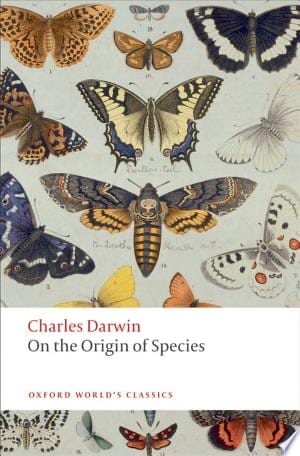
‘can we doubt … that individuals having any advantage, however slight, over others, would have the best chance of surviving and of procreating their kind?’ In the Origin of Species (1859) Darwin challenged many of the most deeply held beliefs of the Western world. His insistence on the immense length of the past and on the abundance of life-forms, present and extinct, dislodged man from his central position in creation and called into question the role of the Creator. He showed that new species are achieved by natural selection, and that absence of plan is an inherent part of the evolutionary process. Darwin’s prodigious reading, experimentation, and observations on his travels fed into his great work, which draws on material from the Galapagos Islands to rural Staffordshire, from English back gardens to colonial encounters. The present edition provides a detailed and accessible discussion of his theories and adds an account of the immediate responses to the book on publication. The resistances as well as the enthusiasms of the first readers cast light on recent controversies, particularly concerning questions of design and descent. ABOUT THE SERIES: For over 100 years Oxford World’s Classics has made available the widest range of literature from around the globe. Each affordable volume reflects Oxford’s commitment to scholarship, providing the most accurate text plus a wealth of other valuable features, including expert introductions by leading authorities, helpful notes to clarify the text, up-to-date bibliographies for further study, and much more.
My Summary
Main Ideas, Takeaways & Similarities
Questions
I. What is the problem?
A. How is this problem formulated?
B. Why is this problem important?
C. What is the history of this problem?
D. Which prominent personalities have been interested in this problem?
II. What solutions to the problem are there?
A. What are the conclusions reached?
B. By what argument(s) is the conclusion reached?
C. What facts or assumptions serve as premises?
D. When a prominent personality offers a solution, does he also argue for or against other prominent personalities? Does he raise objections to alternative solutions? Does he consider objections to his own solutions?
III. Evaluation
A. What are the advantages and disadvantages of the alternative formulations to the problem?
B. Has the importance or history of the problem ever been misrepresented?
C. Are the solutions logically related to the premises?
D. Are the facts true? Are the assumptions acceptable? Are the objections answerable?
AI Summary
Highlights
“The Origin of Species” by Charles Darwin is a groundbreaking work in the field of biology and evolutionary science. In this book, Darwin presents his theory of evolution through natural selection, which has had a profound impact on our understanding of life on Earth. Here is a comprehensive summary in bullet points:
- Title: The Origin of Species
- Author: Charles Darwin
Introduction:
- Introduces the concept of evolution as the process through which species change over time.
- Addresses the diversity of life on Earth and the need for an explanation of its origins.
Chapter 1: Variation Under Domestication:
- Discusses the variability of domesticated plants and animals.
- Argues that artificial selection by humans can lead to significant changes within species.
Chapter 2: Variation Under Nature:
- Explores natural variation in wild populations.
- Observes that individuals within species are not identical and that variation is inheritable.
Chapter 3: Struggle for Existence:
- Introduces the concept of competition for limited resources.
- Discusses the potential for overproduction of offspring and the resulting struggle for survival.
Chapter 4: Natural Selection:
- Proposes the idea of natural selection as the mechanism for evolution.
- Explains that individuals with advantageous traits are more likely to survive and reproduce, passing on those traits to the next generation.
Chapter 5: Laws of Variation:
- Discusses the laws governing variation and inheritance.
- Introduces the idea that variation is random, and selection acts on this variation.
Chapter 6: Difficulties on Theory:
- Acknowledges and addresses potential objections and difficulties with the theory of natural selection.
- Discusses the geologic record, the sudden appearance of species, and the absence of transitional forms.
Chapter 7: Instinct:
- Explores the evolution of instincts in animals.
- Suggests that complex behaviors can arise through the gradual accumulation of small changes over time.
Chapter 8: Hybridism:
- Discusses the phenomenon of hybridization between species.
- Highlights that hybrids often have reduced fitness, reinforcing the idea of the importance of species boundaries.
Chapter 9: On the Imperfection of the Geological Record:
- Addresses gaps in the fossil record.
- Argues that the incompleteness of the geological record should be expected due to the rarity of fossilization.
Chapter 10: On the Geological Succession of Organic Beings:
- Discusses the chronological order of fossils in rock strata.
- Notes that older fossils are generally simpler in structure than more recent ones.
Chapter 11: Geographical Distribution:
- Explores patterns of species distribution around the world.
- Suggests that related species are often found in proximity to each other.
Chapter 12: Geographical Distribution (continued):
- Continues the discussion of geographical distribution, including island biogeography.
- Observes that isolated environments often lead to the development of unique species.
Chapter 13: Mutual Affinities of Organic Beings: Morphology, Embryology, Rudimentary Organs:
- Examines evidence from comparative anatomy, embryology, and vestigial structures.
- Notes that these lines of evidence support the idea of common ancestry.
Chapter 14: Recapitulation and Conclusion:
- Summarizes the key points of the book.
- Reiterates the central role of natural selection in the process of evolution.
- Encourages further research and exploration of the theory.
Legacy:
- “The Origin of Species” revolutionized biology and our understanding of life’s diversity.
- It laid the foundation for modern evolutionary theory and continues to be a cornerstone of biological science.
- Darwin’s work has had far-reaching implications for fields beyond biology, including philosophy, theology, and the social sciences.