Filed with 60.23 History · Related: 60.13 Wars · 60.14 Colonialism
Date
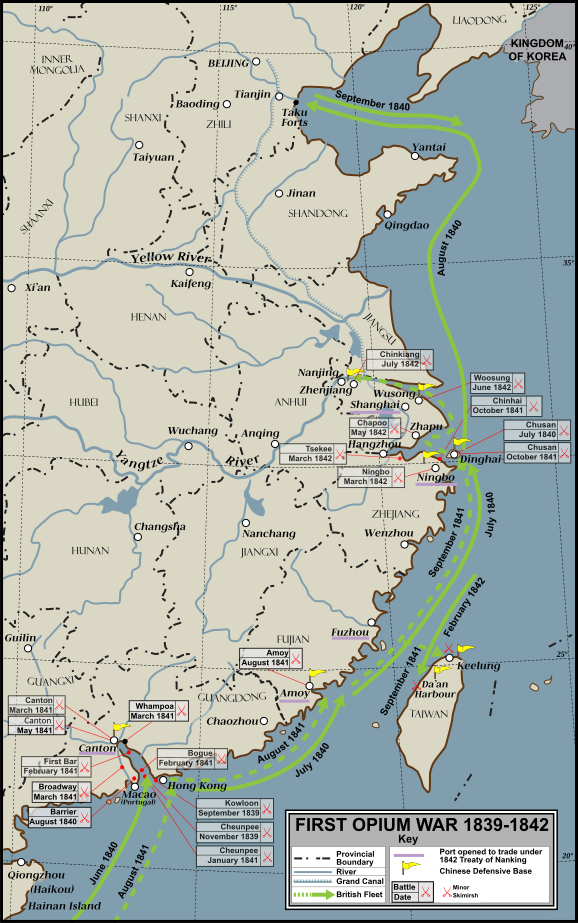
4 September 1839 – 29 August 1842
(2 years, 11 months, 3 weeks and 4 days)
Belligerents
- Britain
- East India Company
- 19,000+ Troops
- 37 ships
- Killed: 69
- China
- 222,000 troops
- Killed: 3100
Location
- China and South China Sea
Causes
- The immediate issue was the Chinese enforcement of their ban on the opium trade by seizing private opium stocks from merchants at Canton and threatening to impose the death penalty for future offenders.
- Opium was Britain’s single most profitable commodity trade of the 19th century.
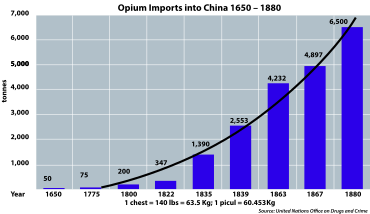
- In the 18th century, the demand for Chinese luxury goods (particularly silk, porcelain, and tea) created a trade imbalance between China and Britain. European silver flowed into China through the Canton System, which confined incoming foreign trade to the southern port city of Guangzhou. To counter this imbalance, the British East India Company began to grow opium in Bengal and allowed private British merchants to sell opium to Chinese smugglers for illegal sale in China. The influx of narcotics reversed the Chinese trade surplus, drained the economy of silver, and increased the numbers of opium addicts inside the country, outcomes that seriously worried Chinese officials.
- There were also long-term factors that pushed the Chinese government into action. Historian Jonathan D. Spence lists these factors that led to war:
the social dislocations that began to appear in the Qing world, the spread of addiction, the growth of a hard-line mentality toward foreigners, foreign refusal to accept Chinese legal norms, changes in international trade structures, and the ending of Western intellectuals’ admiration for China… When the tough prohibitions of 1838 began to take effect, the market diminished and dealers found themselves dangerously oversupplied. A second contributing factor was that the new British post of superintendent of foreign trade in China was held by a deputy of the British crown…If the Chinese crossed the superintendent, they would be insulting the British nation rather than the business corporation…[The superintendent could] call directly on the aid of British armed Forces and the Royal Navy in times of serious trouble.
Events
Outcome
- British Victory
- Hong Kong Island ceded to Britain
- Twentieth-century nationalists considered 1839 the start of a century of humiliation, and many historians consider it the beginning of modern Chinese history.
People
Important Notes
- This reminds me the Fentanyl issue we are having in the United States that is perpetuated by China now. Their doing what the British did to them.
Sources