⬅️ Hub: 60.25 Literature
DESCRIPTION
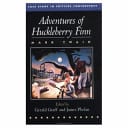
Essays on its background, themes, style, and ending accompany the story of Huck Finn and Jim, an escaped slave, as they travel down the Mississippi
Mark Twain’s The Adventures of Huckleberry Finn is a journey down the Mississippi River that serves as a biting satire on the antebellum South. It’s a mix of high-stakes adventure and profound moral growth.
Chapters 1–3: The Setup
- Chapter 1: We catch up with Huck after The Adventures of Tom Sawyer. He’s being “sivilized” by Widow Douglas and Miss Watson, which he hates.
- Chapter 2: Huck and Tom Sawyer sneak out and play a prank on Jim (Miss Watson’s slave). Tom starts his “gang” of robbers.
- Chapter 3: The gang dissolves because they don’t actually rob anyone. Huck remains skeptical of prayer and Tom’s overactive imagination.
Chapters 4–7: Pap’s Return and the Escape
- Chapter 4: Huck sees a boot print in the snow and realizes his abusive father, Pap, is back. He “sells” his fortune to Judge Thatcher for a dollar to protect it.
- Chapter 5: Pap confronts Huck, mocking his literacy and demanding his money.
- Chapter 6: Pap kidnaps Huck and locks him in a cabin across the river. Huck initially likes the lack of rules but grows tired of Pap’s drunken violence.
- Chapter 7: Huck finds a canoe, fakes his own murder using pig’s blood, and escapes to Jackson’s Island.
Chapters 8–11: Meeting Jim
- Chapter 8: Huck finds Jim on the island. Jim has run away because Miss Watson planned to sell him down to New Orleans.
- Chapter 9: They find a cave for shelter and see a floating house with a dead man inside; Jim protects Huck from seeing the face.
- Chapter 10: Huck plays a prank with a dead rattlesnake, but its mate bites Jim.
- Chapter 11: Huck dresses as a girl and goes to town for news. He learns people are hunting for Jim on the island and rushes back to flee.
Chapters 12–18: Life on the River
- Chapter 12: They build a raft and head downriver. They encounter a wrecked steamboat, the Walter Scott, and a group of real murderers.
- Chapter 13: Huck feels bad for the robbers and tries to get them help (unsuccessfully).
- Chapter 14: Huck and Jim debate King Solomon and the “French language.”
- Chapter 15: In a thick fog, Huck and Jim get separated. Huck finds the raft and tries to trick Jim into thinking it was a dream; Jim’s hurt reaction makes Huck realize Jim’s humanity.
- Chapter 16: They miss the turnoff for the Ohio River (Cairo) in the fog. A steamboat smashes the raft, separating them again.
- Chapter 17: Huck is taken in by the Grangerford family.
- Chapter 18: Huck witnesses a bloody, pointless feud between the Grangerfords and the Shepherdsons. Jim finds Huck, and they escape back to the raft.
Chapters 19–23: The Duke and the Dauphin
- Chapter 19: Two con artists—the “Duke” and the “King”—join the raft.
- Chapter 20: The Duke and King begin a series of scams in local towns.
- Chapter 21: They rehearse Shakespeare; the King performs a “revival” meeting to scam locals. Colonel Sherburn shoots a drunk named Boggs.
- Chapter 22: Sherburn stares down a lynch mob, calling them cowards. The Duke and King perform “The Royal Nonesuch,” a brief, naked scam.
- Chapter 23: The “Royal Nonesuch” is a hit because the audience doesn’t want to admit they were fooled. Huck realizes Jim misses his family deeply.
Chapters 24–30: The Wilks Scam
- Chapter 24: The King poses as Harvey Wilks, a British man whose brother Peter has died, to inherit a fortune.
- Chapter 25: The “Wilks brothers” meet their nieces. Huck grows fond of the girls and hates the scam.
- Chapter 26: Huck decides to help the nieces and hides the gold in Peter Wilks’s coffin.
- Chapter 27: The funeral occurs. Huck is worried the gold will be found, but the coffin is buried.
- Chapter 28: Huck confesses the truth to Mary Jane Wilks and tells her to leave so she doesn’t ruin the plan.
- Chapter 29: The real Wilks brothers arrive. A test involving a tattoo on the dead man leads to the coffin being dug up. Huck escapes in the chaos.
- Chapter 30: Just as Huck and Jim think they are free, the Duke and King catch up to them.
Chapters 31–33: The Moral Crisis
- Chapter 31: The King sells Jim for $40. Huck has a crisis of conscience about “stealing” property but decides, “All right, then, I’ll go to hell,” and resolves to rescue Jim.
- Chapter 32: Huck arrives at the Phelps plantation, where he is mistaken for Tom Sawyer (who is expected for a visit).
- Chapter 33: The real Tom Sawyer arrives, thinks Huck is a ghost, then agrees to help Huck “steal” Jim back. Tom pretends to be his brother, Sid.
Chapters 34–43: The “Evasion” and Conclusion
- Chapter 34: Tom rejects Huck’s simple rescue plan in favor of a complicated, “romantic” one from adventure books.
- Chapters 35–39: Tom makes Jim’s life miserable by forcing him to live with rats/snakes and carve inscriptions on stones, all for the sake of “style.”
- Chapter 40: During the “escape,” a local posse fires on them. Tom is shot in the leg.
- Chapter 41: Huck gets a doctor, but the doctor returns with a captured Jim and a wounded Tom.
- Chapter 42: Tom reveals that Miss Watson died two months ago and set Jim free in her will. Aunt Polly arrives and reveals the boys’ true identities.
- Chapter 43: Jim tells Huck that the dead man in the floating house was Pap. Huck decides to head West to “Indian Territory” to avoid being adopted and civilized again.
Fun Fact: Mark Twain actually stopped writing the book for several years after Chapter 16 because he wasn’t sure how to handle Huck and Jim missing their turn at Cairo.
The tension between the “civilized” world and the “natural” world is the heartbeat of the novel. Huck is caught between these two forces, and his journey down the Mississippi is essentially a struggle to decide which version of morality he wants to live by.
1. Civilization vs. The Natural World
Twain presents “civilization” not as a place of safety or goodness, but as a collection of hypocritical rules.
- The Shore (Civilization): On land, Huck encounters feuds (the Grangerfords), scams (the Duke and King), and lynch mobs. The “sivilized” people are often cruel, prejudiced, and obsessed with appearance over actual virtue.
- The Raft (The Natural World): On the water, Huck and Jim create their own society based on mutual respect and survival. Away from the influence of society, Huck is able to see Jim as a human being rather than as property.
2. Individual Conscience vs. Social Law
This is the central moral conflict. Society tells Huck that helping a runaway slave is a “sin” that will lead him to hell.
- The Climax: In Chapter 31, Huck writes a letter to Miss Watson to turn Jim in, thinking it’s the “right” thing to do. When he remembers Jim’s kindness, he tears up the letter and says, “All right, then, I’ll go to hell.”
- The Satire: Twain is mocking a society that uses religion and law to justify the inhumanity of slavery. Huck’s “bad” decision is actually the only morally “good” act in the book.
3. Freedom vs. Entrapment
Every character is seeking a different kind of freedom:
- Jim is seeking literal freedom from the institution of slavery.
- Huck is seeking freedom from social expectations, his abusive father, and the “stuffy” life of the Widow Douglas.
- The Irony: Even when Jim is legally free at the end of the book, Huck realizes he still isn’t free from “civilization,” which is why he decides to “light out for the Territory.”
| Symbol | Meaning |
|---|---|
| The Mississippi River | A symbol of freedom and the flow of time; it’s both a provider and a dangerous force. |
| The Raft | A space of equality where social status and race don’t matter as much as character. |
| The Shore | A place of chaos, corruption, and the “rules” of a broken society. |
Note on the Ending: Many critics argue that the final chapters (the “Evasion” sequence with Tom Sawyer) undermine the book’s serious themes because Tom treats Jim’s freedom like a game. However, others argue this is Twain’s final satirical jab—showing that even “good” society (represented by Tom) doesn’t take Jim’s humanity seriously.