⬅️ Hub: Literature
DESCRIPTION
Dive into the timeless tales of gods and heroes in this bestselling A-to-Z encyclopedia detailing classic myths and legends—perfect for curious readers and academics alike. Edith Hamilton’s mythology succeeds like no other book in bringing to life for the modern reader the Greek, Roman and Norse myths that are the keystone of Western culture—the stories of gods and heroes that have inspired human creativity from antiquity to the present. We follow the drama of the Trojan War and the wanderings of Odysseus. We hear the tales of Jason and the Golden Fleece, Cupid and Psyche, and mighty King Midas. We discover the origins of the names of the constellations. And we recognize reference points for countless works for art, literature and culture inquiry-from Freud’s Oedipus complex to Wagner’s Ring Cycle of operas to Eugene O’Neill’s Mourning Becomes Electra Both a reference text for scholars of all ages and a book to simply enjoy, Mythology is a classic not to be missed.
Mythology - Edith Hamilton.pdf (file not included in this release)
Review
🛠️ Active Reading Workflow
1. Prime (5 min)
- Thesis Prediction:
- Prior Knowledge:
- Questions to Answer:
2. Process (The “During” Loop)
Mark: T (Thesis), R (Reason), E (Evidence), D (Def), O (Objection).
- [ ] Q→A: Convert headings to questions; notes = answers.
- [ ] Feynman Check: Explain dense sections in 1-2 sentences.
- [ ] Originality: One original analogy/example per concept.
3. Review & Consolidate (Post-Session)
- [ ] Recall Dump: (Close book, list claims/terms).
- [ ] 3-2-1: 3 takeaways · 2 questions · 1 application.
- [ ] High-Yield Flashcards: (Definition, Claim → Reason, Objection).
🏛️ Analytical Deep-Dive (Adler/Paul-Elder)
| Element | Summary / Notes |
|---|---|
| Unity | The book in one sentence. |
| Problem | The central question the author is solving. |
| Propositions | Main claims in my own words. |
| Logic | Premises → Conclusion. |
| Criticism | Is the author uninformed, misinformed, or illogical? |
Counter-Argument (Steelman):
🚀 Application & Quality Gates
- The Experiment: [Define one behavior change].
- Gate 1: I can explain this in 3 mins without notes. [ ]
- Gate 2: I have at least one original counter-argument. [ ]
- Gate 3: Notes are <10% of original text length. [ ]
🖋️ Scratchpad
Unfiltered thoughts, argument trees, or “what if” scenarios.
AI Summary
Below is a “map” of Greek and Roman mythology as Edith Hamilton’s Mythology presents it: the major characters (gods, powers, heroes), the main ancient writers we get them from, and the broad logic that holds the whole myth-world together.
1) Where these myths come from (the main ancient writers)
Hamilton is constantly stitching together a tradition that comes from different genres—epic, hymn, drama, later myth-handbooks, and Roman poetry.
- Homer (Iliad, Odyssey): foundational epic versions of the Trojan cycle and the heroic world; Hamilton frequently treats Homer as the earliest “baseline,” even when later poets elaborate (for example, Homer’s hazier underworld).
- Hesiod (Theogony and related tradition): crucial for divine genealogy and the “family history” of the cosmos; Hamilton quotes/leans on him for divine descriptions and old stories (e.g., Nereus as “trusty” and “gentle”).
- Greek tragedians (especially Aeschylus, Sophocles, Euripides): they turn myth into moral-psychological catastrophe and civic argument. Hamilton explicitly points to Aeschylus’ Oresteia as definitive for the House of Atreus, and notes using Sophocles/Euripides for key Trojan aftermath material.
- Pindar: an early classical voice who sometimes resists “scandalous” versions of myths (Hamilton notes him objecting to a notorious Tantalus story).
- Apollodorus (1st–2nd c. AD mythographer/handbook): valued because he preserves “fullest accounts” of certain episodes Hamilton wants in detail.
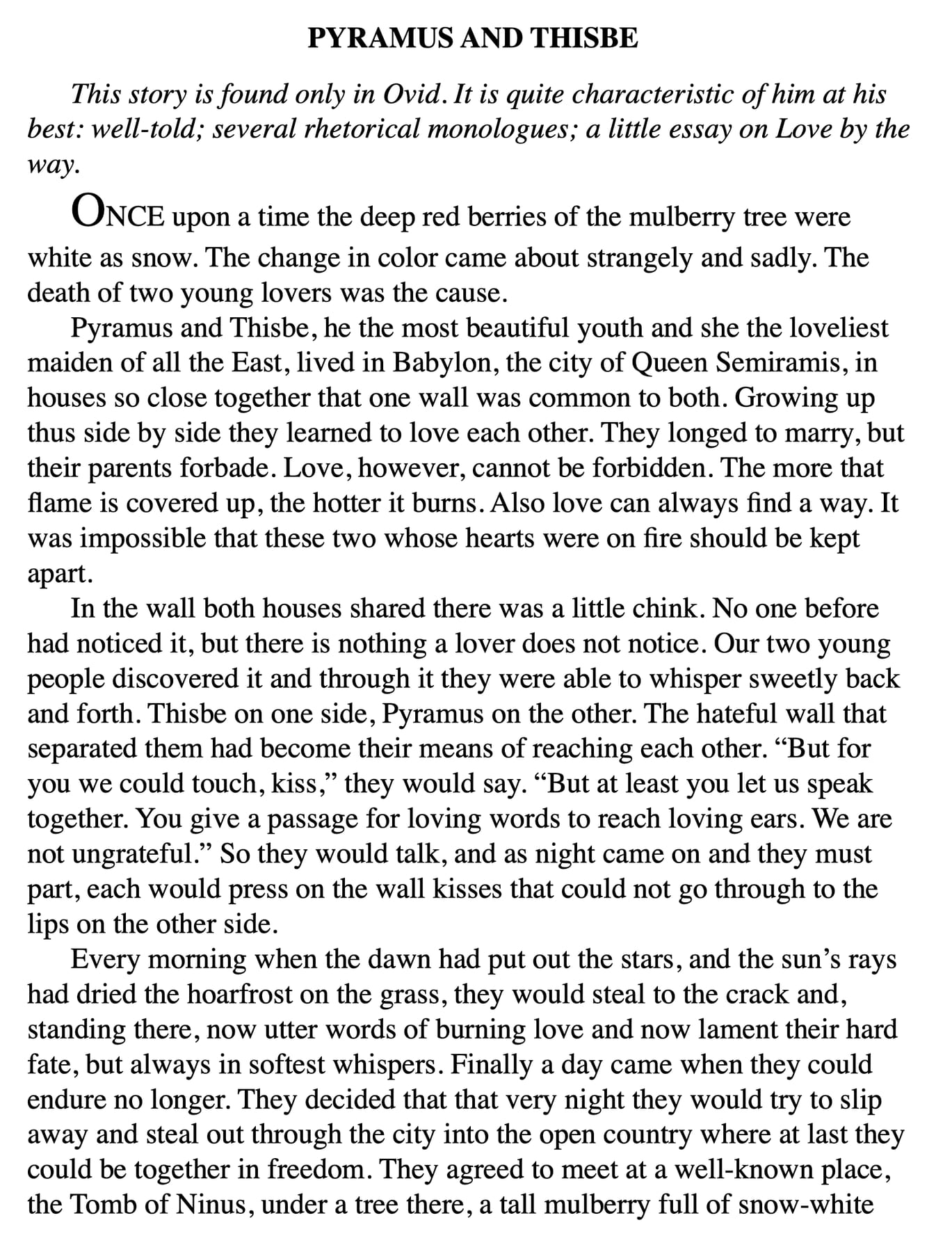
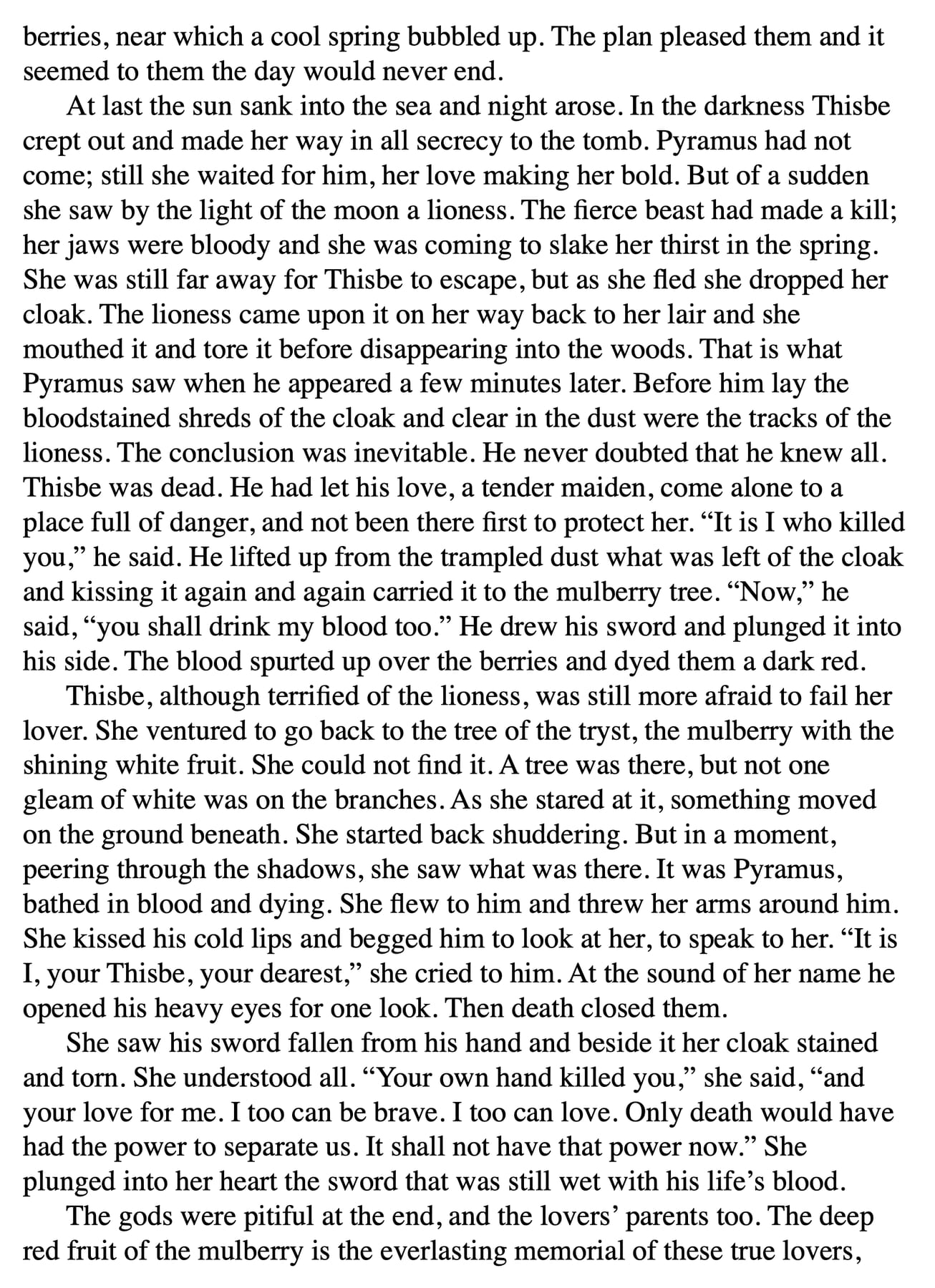
- Ovid (Metamorphoses): Roman-era poet who often preserves (and heightens) metamorphosis tales; Hamilton says she uses him where he’s the only full teller of certain stories.
- Virgil (Aeneid): the great Roman epic that repurposes Greek myth into Roman national origins; Hamilton treats the Aeneid as the chief authority for Aeneas and notes its pro-Empire purpose.
2) The mythic “big picture”: what the world is, and who runs it
A key starting point in Hamilton: Greeks imagine the cosmos older than the gods—the universe produces divine generations, rather than a creator-god making the universe.
The divine generations
- Primordial structure → Titans → Olympians: heaven and earth first; Titans as their children; Olympian gods as the “grandchildren.”
- Cronus/Saturn is the major Titan ruler; Zeus dethrones him after Cronus tries to cheat fate by swallowing his children.
- The Titan war is world-shaking; Zeus wins with allies (including the hundred-handed monsters) and with Prometheus siding with him.
The Twelve Olympians (the main cast)
Hamilton gives a clean “family list” of the Olympians: Zeus, Poseidon, Hades/Pluto, Hestia, Hera, Ares, Athena, Apollo, Aphrodite, Hermes, Artemis, Hephaestus.
Zeus and the limits of divine power
Even the chief god isn’t absolute: Zeus is supreme ruler, but can be deceived/opposed; and Fate is sometimes treated as stronger than Zeus.
3) The “powers” around the Olympians: sea, underworld, fate
Greek myth isn’t only the Twelve. It’s crowded with lesser gods, nymphs, monsters, and abstract powers that can outrank personality-gods.
Waters (a whole sub-pantheon)
The sea-world includes:
- Poseidon/Neptune as lord of the sea, plus older Titanic figures like Ocean and Tethys; and the “Old Man of the Sea” Nereus with the Nereids (including Thetis, mother of Achilles).
The Underworld (and how it changes from Greece to Rome)
Hamilton draws a major contrast:
- In Homer, the underworld is vague and shadowy—more like a dreary dream than a moral court.
- Later poets sharpen it into a place of punishment/reward; Virgil gives the most detailed “geography” (Charon, the rivers, the judges, Elysian Fields, Tartarus).
Fate (Moirae) as a governing concept
Hamilton names the Fates as three: Clotho (spins), Lachesis (assigns destiny), Atropos (cuts the thread).
This matters because myths often hinge on the tension between:
- what a character wants,
- what a god plots,
- and what Fate has already “written.”
4) Greek religion vs Roman religion (and why the gods “change names”)
Hamilton’s core Roman point: Rome absorbs the Olympians, but Rome’s earlier religious imagination is different.
The Roman “translation” of Greek gods
The Olympians are adopted as Roman gods with Roman names (e.g., Zeus→Jupiter, Hera→Juno, Ares→Mars, etc.), largely because Greek literature and art become so influential.
The earlier Roman gods: Numina (powers, not personalities)
Before Greek influence, Romans don’t have vivid anthropomorphic personalities like Olympus. Hamilton describes their earlier gods as Numina—useful “powers/wills,” often not even clearly gendered, tightly connected to daily functions and household life.
Household religion: Lares and Penates
Hamilton emphasizes Lares (ancestor-spirits) and Penates (hearth/storehouse guardians) as central—worshiped in the home, integrated into meals and family identity.
Roman “native” personalities that emerge anyway
Some Numina become more story-like over time:
- Saturn becomes identified with Cronus and gains myths; Saturnalia memorializes a “Golden Age” with temporary social leveling.
- Janus becomes a two-faced god of beginnings/endings; his temple doors symbolize war/peace, and January bears his name.
5) The mythic “story-universes”: gods, heroes, wars, and cursed families
Hamilton organizes the material as more than disconnected tales: it’s a few big narrative worlds that interlock.
A) Myths about the gods (how reality is structured)
These include the Titan succession, divine jurisdictions (sky/sea/underworld), and the deep problem of Fate.
B) Myths where gods touch human life through “earth-gifts” and suffering
Hamilton singles out Demeter and Dionysus as unusually close to human life (grain, wine, the rhythms of agriculture), and connects them to the Eleusinian Mysteries, revered across Greece and Rome.
C) Heroic legend (the “age of heroes”)
This is the myth-world most people recognize: mortal or semi-divine figures whose excellence brings glory and disaster—often driven by divine favoritism, pride, oaths, hospitality, and revenge.
Key clusters Hamilton emphasizes through her source-notes:
- The Trojan cycle (Achilles, Hector, Odysseus, etc.), with Homer as a pillar (and tragedians later telling the human cost).
- Cursed family sagas, especially The House of Atreus, which becomes the spine of tragic drama (Aeschylus’ Oresteia).
D) Roman myth as “national origins” (Aeneas → Rome)
Hamilton treats Aeneas as the bridge: Trojan hero becomes the ancestor-story Rome wants. Virgil’s Aeneid is written in Augustus’ era to exalt empire and supply a founder-hero for Roman destiny.
6) A practical cast list: the characters you need to recognize
If your goal is broad literacy (so any myth reference “clicks”), prioritize knowing these roles:
The ruling gods
- Zeus/Jupiter (sky, sovereignty; powerful but not absolute)
- Poseidon/Neptune (sea; also linked to waters/earth-shaking power)
- Hades/Pluto + Persephone (dead; underworld order)
The “cosmic administrators”
- The Fates (life-thread, destiny)
- Underworld judges (Minos, Rhadamanthus, Aeacus in Virgil’s system)
The Titans and the succession drama
- Cronus/Saturn, Rhea/Ops, Atlas, Prometheus as essential names in the pre-Olympian backstory.
The “Roman layer”
- The Roman equivalents list (Jupiter/Juno/Neptune/Mars/Minerva/etc.) plus the earlier Roman Numina framework and household gods (Lares, Penates).