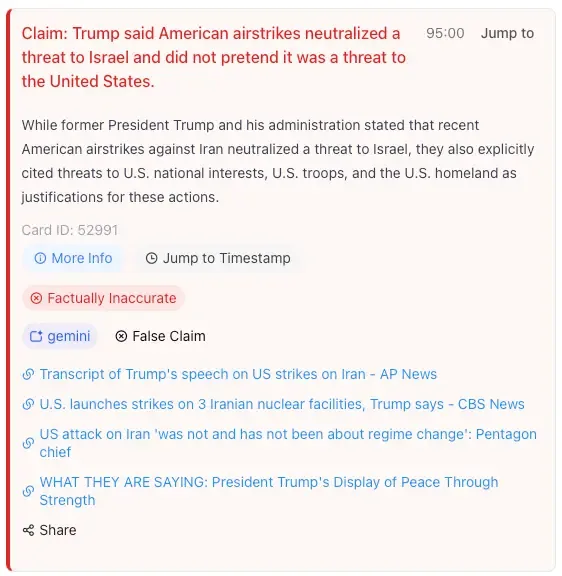
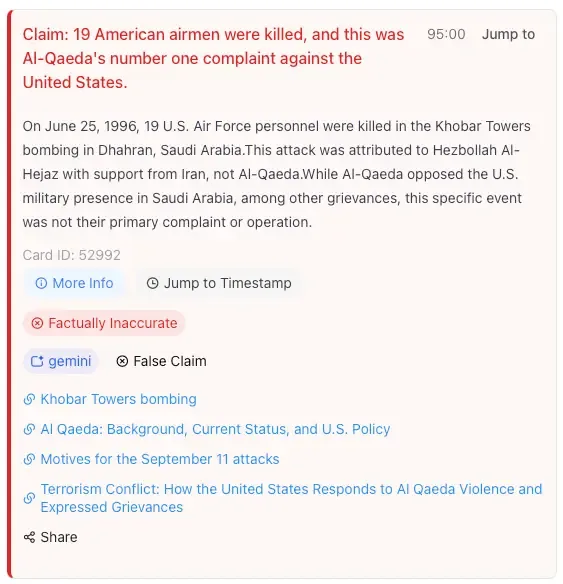
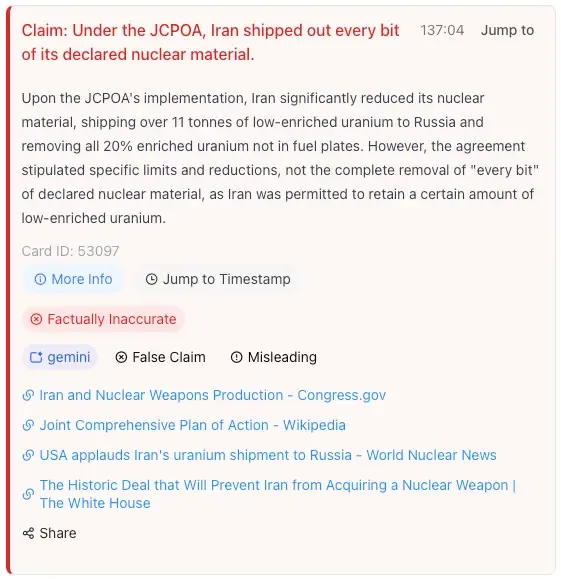
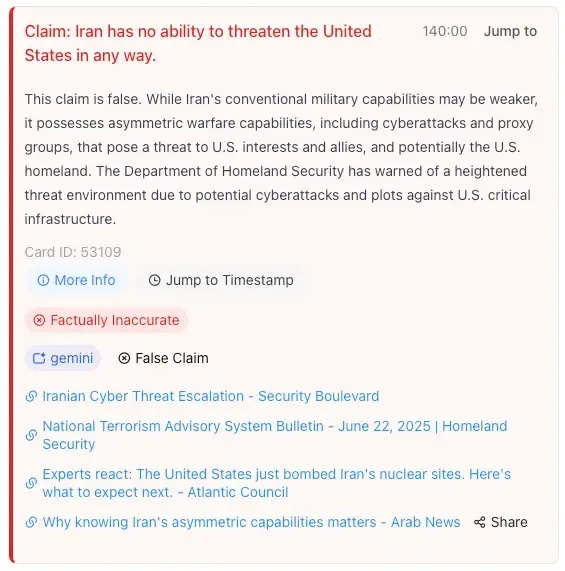
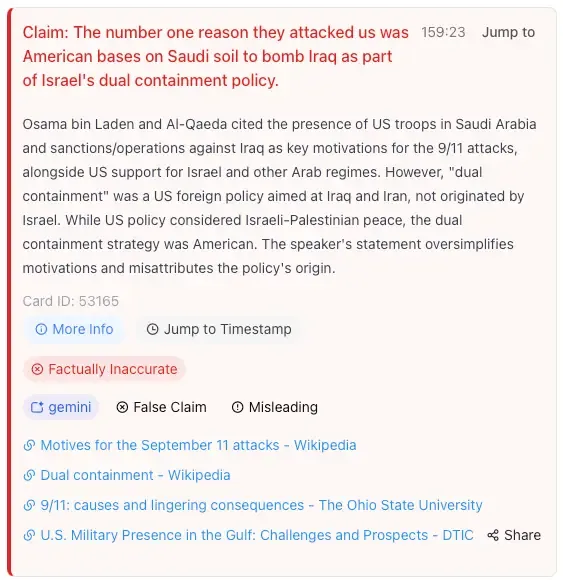
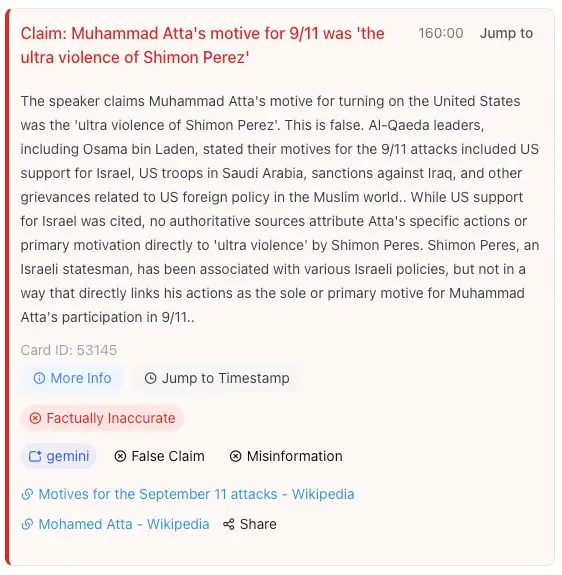
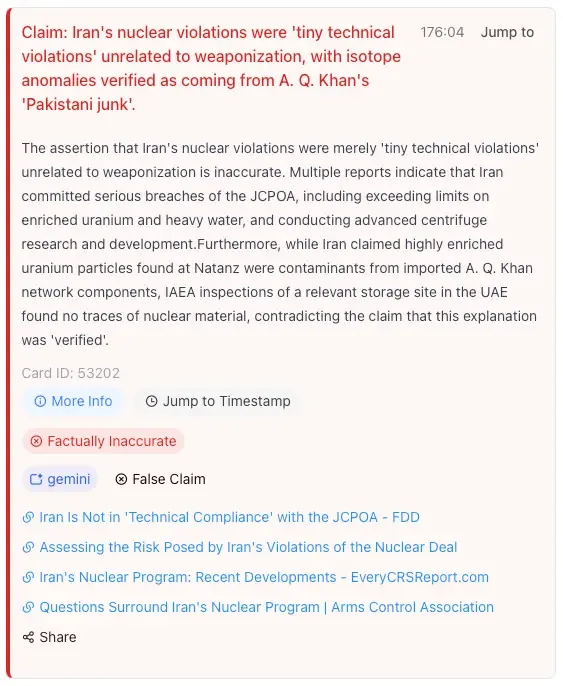
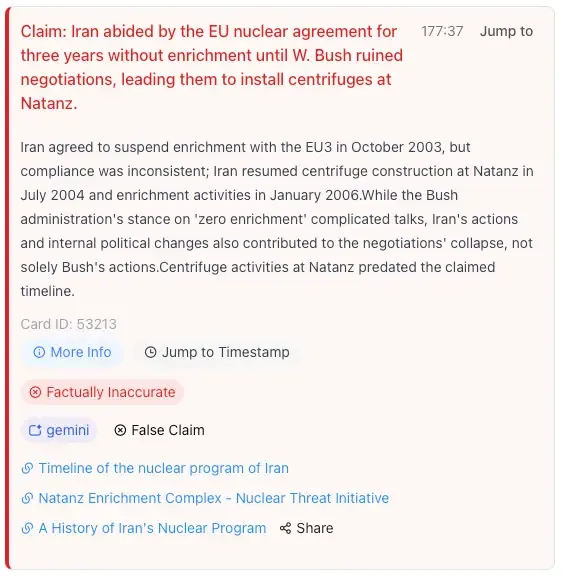
Where this debate belongs
This is filed with 60.3.1 - Foreign Policy because its main dispute concerns Iran, deterrence, and war. 60.13 Wars and Iran hold event-specific context; Woke Right is a cross-reference to one political interpretation, not a classification of both debaters.
Summary
Here’s a summary of the YouTube transcript:
- Debate Overview: Lex Fridman hosts a debate between Scott Horton (anti-war) and Mark Dubowitz (Foundation for Defense of Democracies) on Iran, Israel, nuclear weapons, and US foreign policy. The debate covers historical context, the Iran nuclear program, and potential future scenarios.
- Key Players & Positions:
- Scott Horton: Critiques US foreign policy, advocates non-interventionism, skeptical of claims about Iran’s nuclear weapons program, and emphasizes peaceful solutions.
- Mark Dubowitz: Argues for a strong US military presence to deter threats, believes Iran is a dangerous regime actively pursuing nuclear weapons, and supports a hardline approach.
- Lex Fridman: Hosts the debate, seeks nuanced discussion, and explores different perspectives.
- Iran’s Nuclear Program:
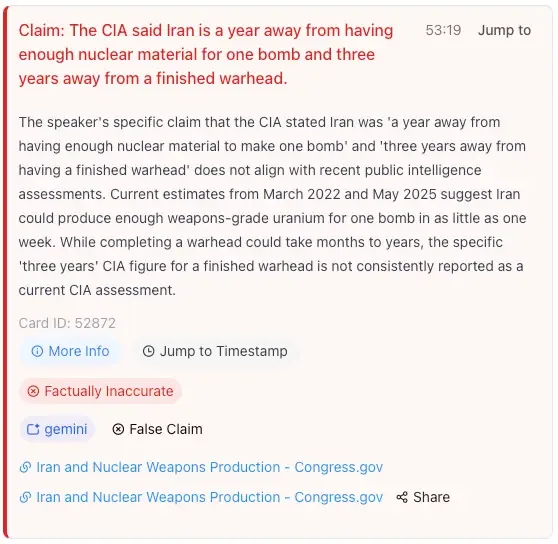
- Dubowitz argues Iran has a history of deception and a clear intention to develop nuclear weapons, highlighting their underground facilities and past nuclear weapons program (Ahmad).
- Horton contends Iran’s nuclear activities are a response to external threats (e.g., Israeli sabotage) and that Iran’s enrichment activities are for latent deterrence and bargaining chips.
- The debate touches on the technical aspects of uranium enrichment and the implications of Iran reaching different enrichment levels.
- JCPOA (Nuclear Deal):
- Dubowitz criticizes the JCPOA for allowing Iran to retain enrichment capabilities and for its sunset clauses, arguing it paves the way for Iran to develop nuclear weapons in the future.
- Horton argues that the US withdrawal from the JCPOA was a mistake and that Trump should have negotiated improvements to the deal.
- Operation Midnight Hammer: The debate discusses the US military action against Iranian nuclear facilities.
- Dubowitz views it as a successful demonstration of American power and deterrence.
- Horton sees it as an escalation that could incentivize Iran to pursue nuclear weapons.
- Nuclear Proliferation:
- Dubowitz believes that if Iran develops nuclear weapons, other countries in the Middle East and Asia will follow suit.
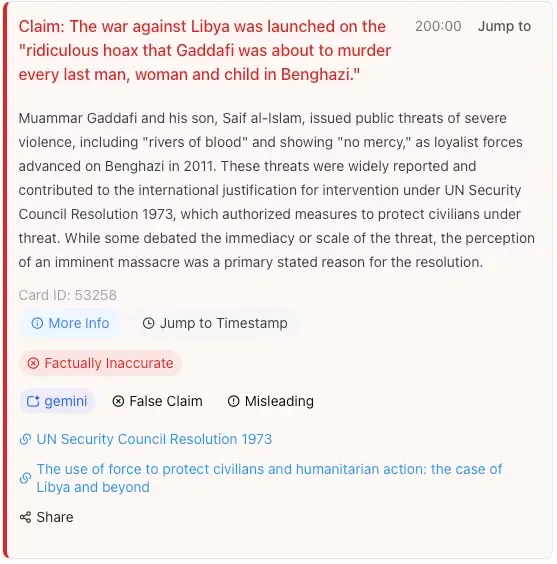
- Horton thinks that it will reinforce the lessons of North Korea, Iraq, and Libya, which is you better get a nuke to keep America out and you better hurry before it’s too late.
- US Foreign Policy & Military Interventionism:
- Horton advocates for non-interventionism, arguing that the US should focus on peace and diplomacy.
- Dubowitz argues for a strong US military presence to deter aggression and maintain a rules-based international order.
- The Role of Israel:
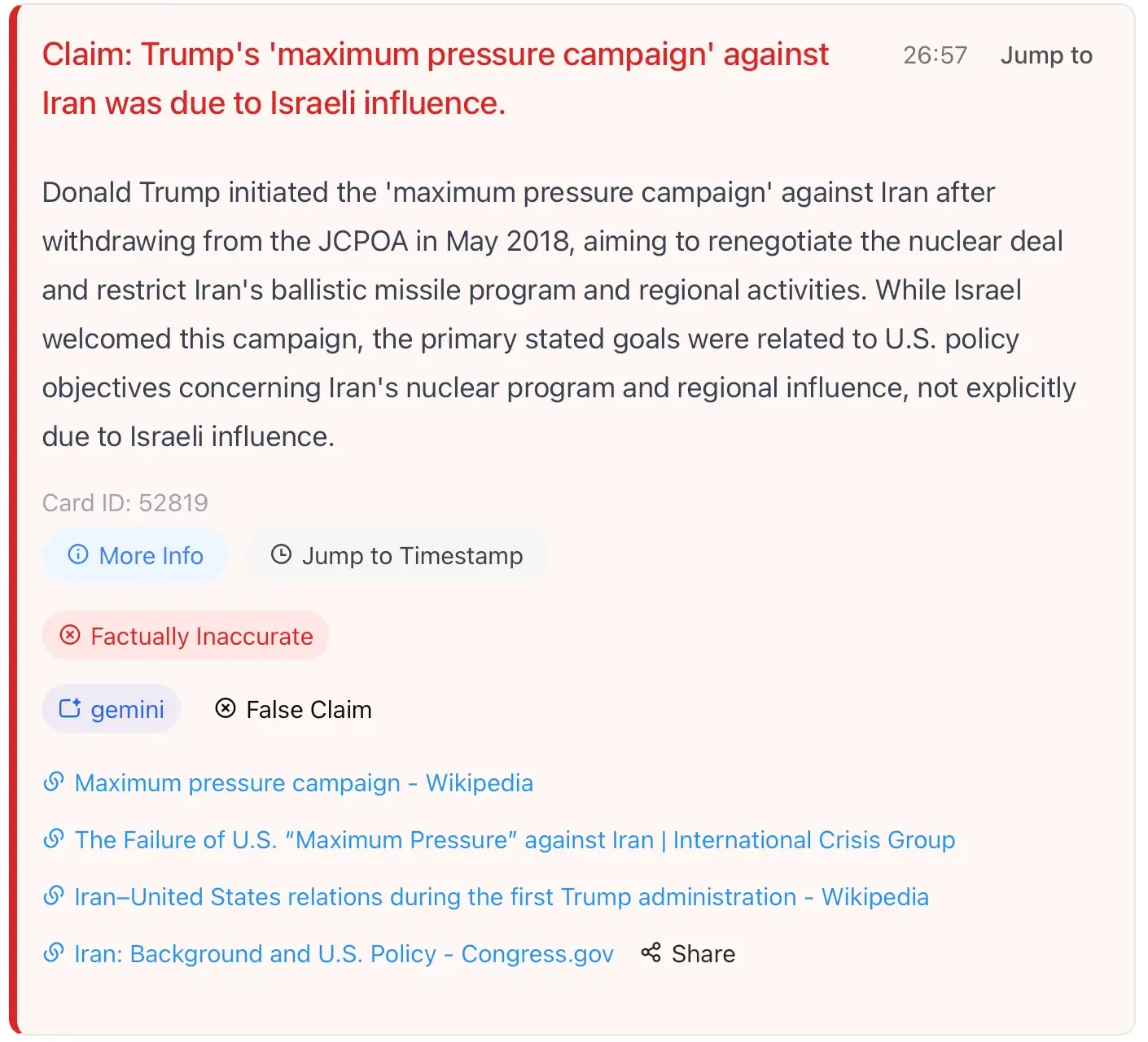
- Horton frequently brings up the influence of Israel on US foreign policy, particularly in the Middle East, and the negative consequences of that influence.
- Dubowitz defends the US-Israel alliance, arguing that Israel is a valuable ally in the fight against terrorism and nuclear proliferation.
- Best and Worst Case Scenarios:
- Dubowitz’s best-case scenario involves Iran agreeing to permanently dismantle its nuclear program.
- Horton’s best-case scenario involves the US returning to the JCPOA.
- Both acknowledge the risk of further escalation and potential for broader conflict.
- Underlying Themes:
- The debate highlights the fundamental disagreement between those who believe in a strong US military presence to deter aggression and those who advocate for non-interventionism and diplomacy.
- The debate also touches on the role of trust, deception, and historical grievances in shaping the relationship between the US, Iran, and Israel.
- World war 3:
- Scott says that the United States should not kill the ayatollah.
- Mark says that people should not be put into a situation like that anymore.
- Foundation for Defense of Democracies (FDD):
- The CEO, Mark, explains that it focuses on national security and foreign policy. They do not believe in the important concept that we have to promote democracy around the world. FDD does not want the Iranian regime to have enrichment or reprocessing for their uranium.
Clips
Attachment (file not included in this release)
Attachment (file not included in this release)
Attachment (file not included in this release)
Content
Debate on Iran war between Scott Horton and Mark Dubowitz. Scott Horton is the author and director of the Libertarian Institute, editorial director of Antiwar.com, host of The Scott Horton Show, and for the past three decades, a staunch critic of U.S. foreign policy and military interventionism. Mark Dubowitz is the chief executive of the Foundation for Defense of Democracies, host of the Iran Breakdown podcast, and a leading expert on Iran and its nuclear program for over 20 years. This debate was recorded on Tuesday, June 24, after the Iran-Israel ceasefire was declared.
Thank you for listening ❤ Check out our sponsors: https://lexfridman.com/sponsors/ep473-sb
See below for timestamps, and to give feedback, submit questions, contact Lex, etc.
Summary (ChatGPT)
A foreign-policy posture that permits the use of force only to repel an actual invasion (or imminent attack) on a state’s own territory is most commonly described by one of these overlapping labels:
| Term | Core idea | Typical nuances / who uses it |
|---|---|---|
| Non-interventionism (strict) | Keep military action strictly within the bounds of self-defense; no wars of choice, regime-change operations, or alliance commitments that drag the country into others’ fights. | U.S. Old Right, many libertarians; often pejoratively branded “isolationism,” though trade and diplomacy are not rejected. |
| Armed neutrality | Maintain capable defenses and readiness to fight if attacked, while refusing standing military alliances or offensive coalitions. | Classic Swiss and Swedish postures; emphasizes legal neutrality in international law. |
| Defensive realism / strategic restraint | Great-power realist view that security is best served by minimizing overseas entanglements and limiting force to defending the homeland. | Academic IR literature (e.g., Stephen Walt, Barry Posen). |
| Just-war self-defense only | In the just-war tradition, jus ad bellum permits war solely to repel aggression; any act beyond that lacks a “just cause.” | Ethical/theological discourse; referenced in UN Charter Article 51 (“inherent right of individual or collective self-defence”). |
| Fortress-America posture (U.S. context) | Invest in hemispheric and homeland defenses, rely on ocean moats, avoid forward deployments. | Term dates to interwar debates and resurfaces in some contemporary restraint arguments. |
All of these reject preventive, pre-emptive, or humanitarian wars; the only morally or legally legitimate casus belli is self-defense against an invading or clearly attacking force.
Summary (Gemini)
Executive Summary
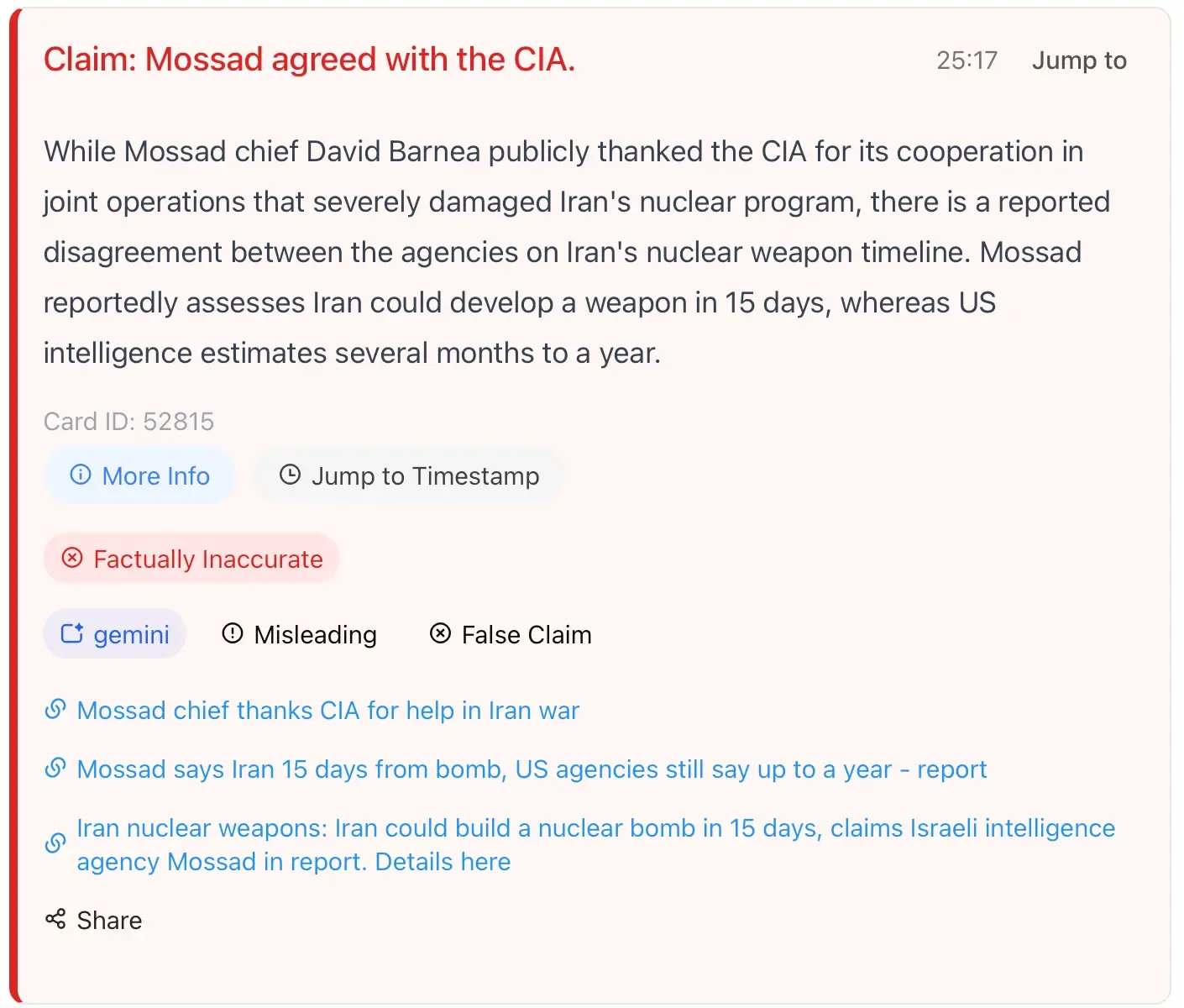
This report provides a comprehensive analysis and factual verification of the debate between Mark Dubowitz, CEO of the Foundation for Defense of Democracies, and Scott Horton, editorial director of Antiwar.com. The discussion, framed by a hypothetical 2025 military conflict between the United States, Israel, and Iran, reveals a fundamental ideological clash between two opposing schools of thought on American foreign policy. Dubowitz represents an interventionist “peace through strength” doctrine, viewing the Islamic Republic of Iran as an inherently aggressive, expansionist power that must be deterred by a credible threat of overwhelming force. Horton champions a libertarian, non-interventionist stance, arguing that Iran’s actions are primarily defensive reactions to a history of American and Israeli aggression, and that U.S. militarism is the primary driver of global conflict.
The analysis identifies several core areas of factual contention that define the debate. These include the authenticity of the “Iran Nuclear Archive” seized by Mossad in 2018; the origins of deadly Explosively Formed Penetrators (EFPs) used against U.S. forces in Iraq; the legitimacy of the 2003 “Grand Bargain” diplomatic offer from Iran; and the true extent of damage from the hypothetical “Operation Midnight Hammer.”
Verification of these points reveals a complex reality often obscured by the absolutist claims of both participants. However, the most significant finding of this report is that the debate is defined not merely by conflicting facts, but by a foundational epistemological chasm. Dubowitz’s arguments are predicated on the reliability of state intelligence agencies (U.S., Israeli) and allied technical experts. Horton’s arguments are built on a deep-seated distrust of these same institutions, relying instead on the work of investigative journalists, whistleblowers, and historical analysis critical of the official narrative. This underlying conflict over the provenance and trustworthiness of information shapes each debater’s entire worldview and explains why they can examine the same evidence and arrive at diametrically opposed conclusions. Ultimately, the report concludes that the single greatest obstacle to a lasting diplomatic resolution remains the U.S. demand for “zero enrichment,” a position Iran views as a non-negotiable infringement on its sovereignty and which non-interventionists see as a “poison pill” designed to make war inevitable.
Context of the Debate: Ideological Poles on a Geopolitical Fault Line
Profile: Mark Dubowitz and the Foundation for Defense of Democracies (FDD)
Mark Dubowitz, as CEO of the Foundation for Defense of Democracies (FDD), articulates a worldview that identifies the Islamic Republic of Iran as an ideologically motivated, implacably hostile actor and the principal source of instability in the Middle East.1 This framework posits that Iran’s nuclear program is unequivocally aimed at developing weapons to gain offensive leverage and intimidate its neighbors. Consequently, the only effective policy is one of “peace through strength,” where the credible threat of overwhelming military force is maintained to deter Iranian aggression and compel the complete, verifiable dismantlement of its nuclear capabilities.1
Key tenets of this position include a deep skepticism of diplomatic agreements that do not mandate zero enrichment and full dismantlement, such as the Joint Comprehensive Plan of Action (JCPOA), which the FDD views as flawed for its temporary restrictions and “sunset” clauses.1 The FDD consistently frames Iran as the world’s leading state sponsor of terrorism, directly responsible for the deaths of hundreds of Americans through its proxy forces and direct actions.1 In the debate, Dubowitz presents as a policy insider, grounding his arguments in official U.S. and allied intelligence assessments, reports from the International Atomic Energy Agency (IAEA) as interpreted through a hawkish lens, and the technical analysis of specialists like physicist David Albright.1
Profile: Scott Horton and the Libertarian Institute
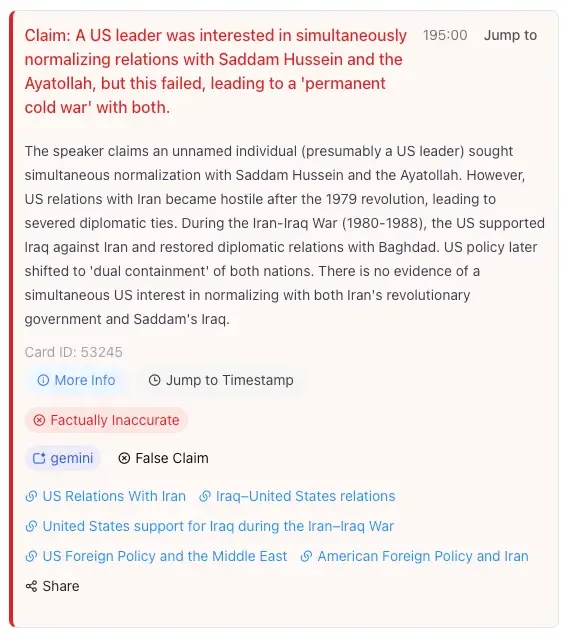
Scott Horton, representing the Libertarian Institute and Antiwar.com, champions a non-interventionist foreign policy rooted in libertarian principles.1 This perspective views the United States as a global empire whose military and political interventions are the primary drivers of international conflict. Within this framework, Iran’s actions are interpreted not as unprovoked aggression but as largely defensive reactions to a long history of U.S. and Israeli hostility, including the 1953 CIA-backed coup, U.S. support for Saddam Hussein during the Iran-Iraq War, decades of crippling economic sanctions, and numerous covert operations.1
The core tenets of Horton’s argument are the non-aggression principle applied to statecraft, a call for military disengagement from foreign conflicts, and a profound skepticism of government pronouncements and intelligence agency assessments.1 He contends that U.S. actions, such as the 2003 invasion of Iraq and unwavering support for Israeli policies, create the very threats and enemies they purport to be fighting. In the debate, Horton’s persona is that of a critical historian and outsider, challenging the official narrative by citing the work of investigative journalists like Gareth Porter and Seymour Hersh, declassified documents, and former government officials who have become critics, such as ex-Mossad officer Victor Ostrovsky.1
The Scenario: The Hypothetical 2025 Iran-Israel War
The debate is anchored in a fictional but detailed near-future scenario in which escalating tensions culminate in a military conflict in mid-2025. This conflict begins with an Israeli aerial campaign, dubbed “Operation Rising Lion,” targeting Iran’s nuclear program and key military leaders. This is followed by direct U.S. military action, “Operation Midnight Hammer,” involving targeted strikes against Iran’s primary nuclear facilities at Fordo, Natanz, and Isfahan.1
The stated justification for this hypothetical war is Iran’s rejection of a U.S. ultimatum to sign a new, more restrictive nuclear deal within 60 days, coupled with Iran’s continued accumulation of uranium enriched to 60% purity—a stockpile sufficient for approximately nine nuclear weapons if further enriched.5 This scenario, while hypothetical, is constructed from real-world capabilities, intelligence assessments, and political tensions, providing a concrete framework for the debaters to litigate their opposing views on causality, deterrence, and the consequences of military intervention.
Deconstruction and Factual Analysis of Core Arguments
The Iranian Nuclear Program: Peaceful, Latent, or Belligerent?
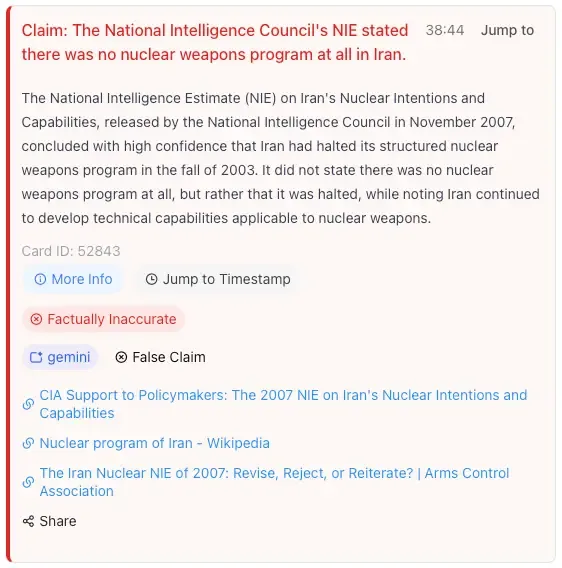
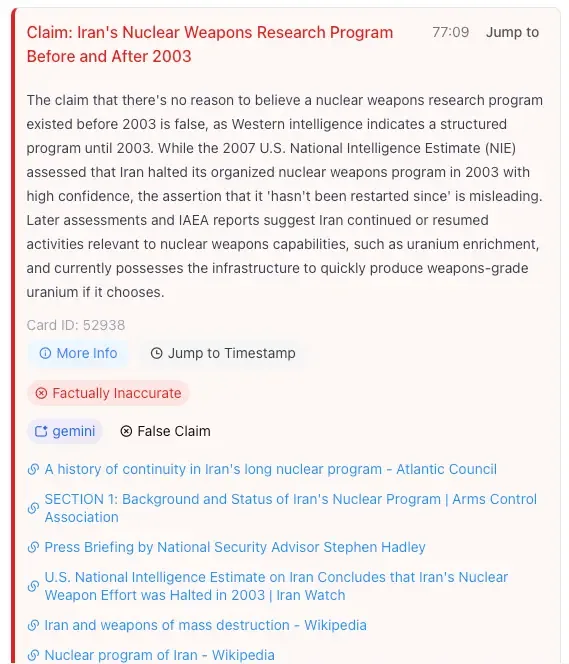
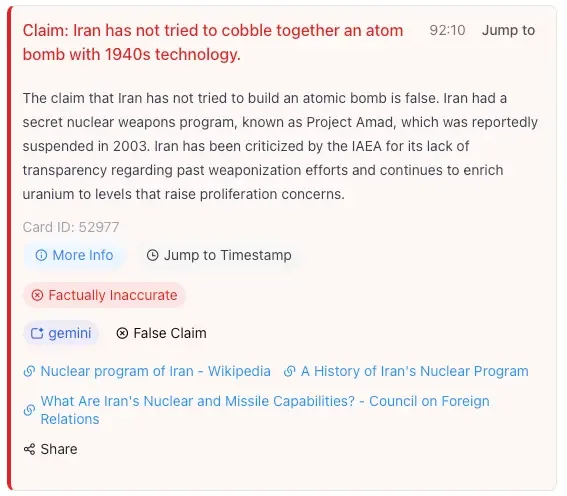
The central disagreement of the debate revolves around the ultimate intent of Iran’s nuclear program. Dubowitz argues it is a long-standing, clandestine effort to build nuclear weapons, citing as evidence concealed facilities, the historical AMAD program, and enrichment levels far exceeding civilian needs.1 Horton counters that the program constitutes a “latent nuclear deterrent”—a strategic posture aimed at mastering the nuclear fuel cycle to achieve a “threshold” capability. This capability, he argues, is meant to deter an attack, not to produce a weapon unless Iran faces an existential threat.1
Fact-Check: The AMAD Program and the 2018 Nuclear Archive
The most significant factual impasse between the debaters concerns the authenticity and interpretation of the Iran Nuclear Archive.
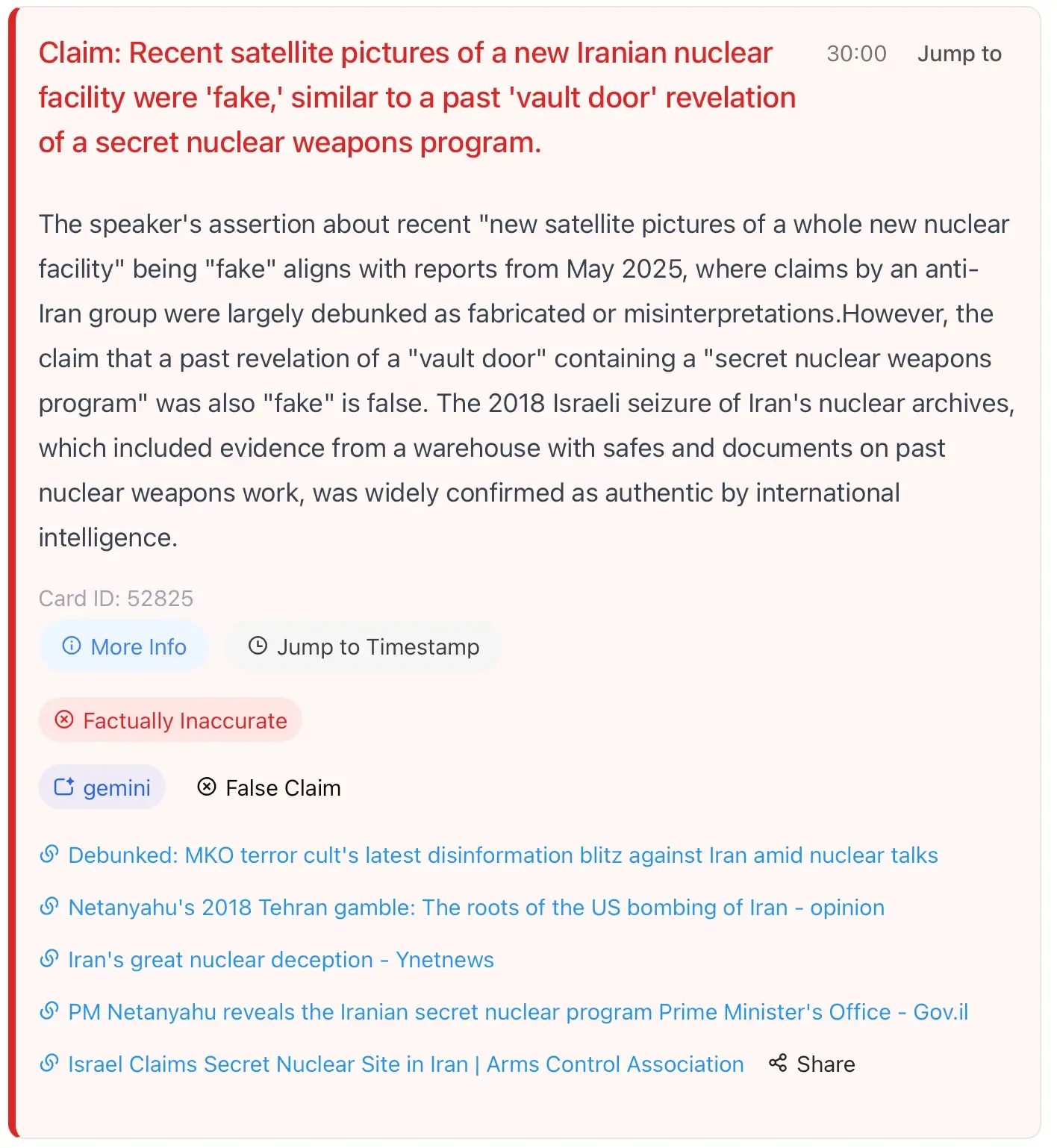
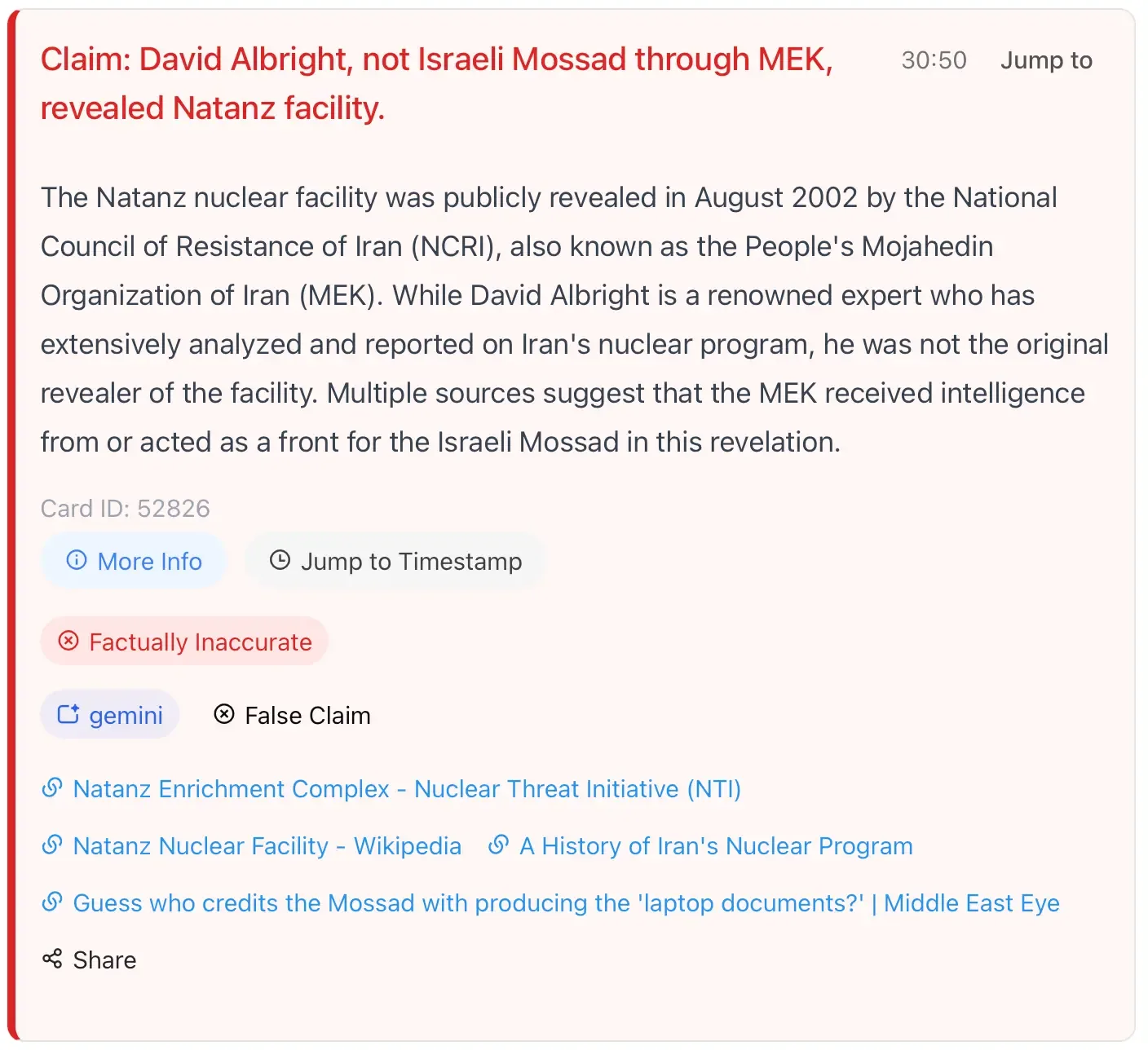
- Dubowitz’s Position (The Archive is Authentic): This argument is supported by a substantial body of public evidence. In a 2018 raid, Israel’s Mossad seized approximately 100,000 documents and files from a warehouse in Tehran.5 This “Nuclear Archive” is said to detail a structured nuclear weapons program from the early 2000s, codenamed the “AMAD Plan,” which aimed to produce five nuclear warheads and integrate them onto missiles.5 Dubowitz heavily relies on the work of physicist David Albright, whose book,
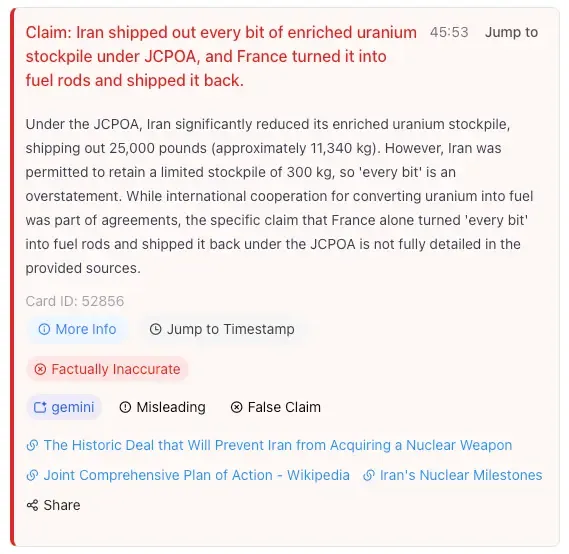
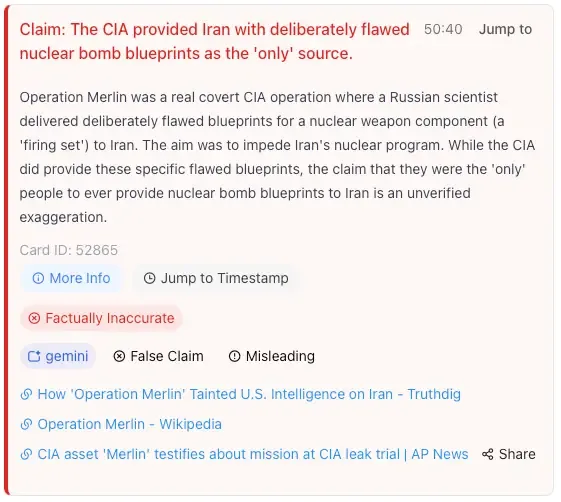
Iran’s Perilous Pursuit of Nuclear Weapons, is based on extensive analysis of the archive and concludes that Iran ran a crash program which was later downsized but not stopped.11 The archive’s authenticity was reportedly affirmed by U.S. and British intelligence officials and independently analyzed by scholars at Harvard’s Belfer Center, who concurred that it revealed a more advanced program than previously known.9 The archive also allegedly contained “deception folders” that catalogued Iran’s plans to mislead the IAEA.15 - Horton’s Position (The Archive is a Fabrication): Horton dismisses the archive as a “ridiculous hoax,” claiming it is merely a recycling of the “fake Israeli forged smoking laptop of 2005”.1 This position is primarily based on the work of investigative journalist Gareth Porter. In his book
Manufactured Crisis, Porter argues that the earlier “laptop documents” were fabricated by Mossad and funneled through the Mujahideen-e-Khalq (MEK), an Iranian dissident group, to create a pretext for war.16 Porter and Horton point to alleged inconsistencies in the intelligence, such as schematics for a missile warhead that Iran was purportedly already phasing out.1 - Verification and Analysis: While Horton’s claim of fabrication is a serious charge supported by a notable critic, the publicly available evidence from multiple state intelligence agencies (U.S., UK, Israel), independent experts (Albright, Belfer Center scholars), and the IAEA—whose investigations into undeclared sites at Turquzabad and Varamin were prompted by information from the archive and reportedly found corroborating traces of uranium—leans heavily toward the archive’s authenticity.8 This dispute reveals the debate’s core epistemological divide. Horton’s argument requires a fundamental distrust of state intelligence apparatuses and a corresponding faith in the work of their outside critics. Dubowitz’s argument requires the opposite. This is not simply a disagreement over a set of facts but a profound conflict over the reliability of the institutions that produce those facts. For any observer, the question becomes not just “What does the evidence say?” but “Whose evidence, produced by which institutions, is credible?”
Fact-Check: Technical Realities of Enrichment and Weaponization
- 60% Enrichment: Dubowitz correctly states that enriching uranium to 60% purity is a critical step toward weaponization. The physics of enrichment is non-linear; the effort required to go from natural uranium (∼0.7%) to 20% enriched uranium constitutes the vast majority (∼90%) of the work. Moving from 20% to 60%, and then from 60% to weapons-grade (≥90%) requires progressively less time and effort.1 The IAEA has confirmed that reaching 60% enrichment accounts for about 99% of the total effort needed to obtain weapons-grade material.21 The agency has also repeatedly documented Iran’s growing stockpile of 60% enriched uranium, noting it is sufficient material for several bombs if enriched further.5 Horton’s counter-argument—that this is a “bargaining chip” to induce negotiations rather than a “race to the bomb”—is a claim about political intent, not technical capability.1
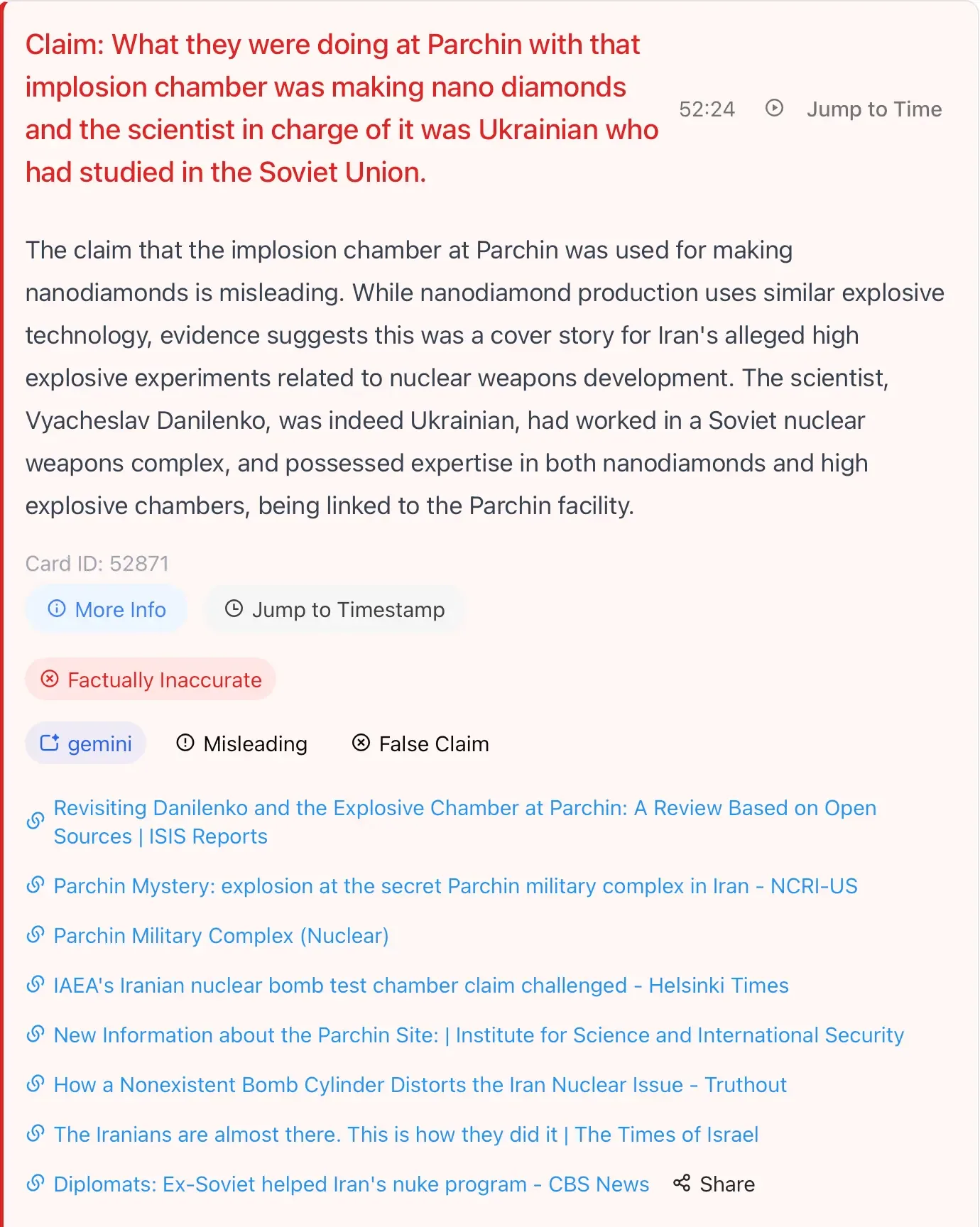
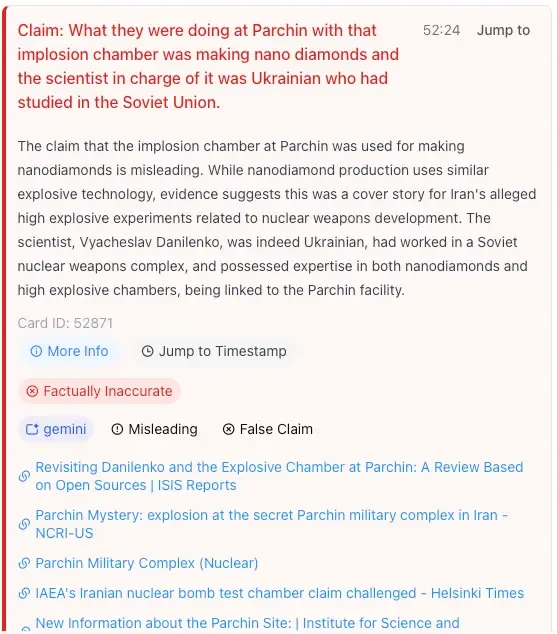
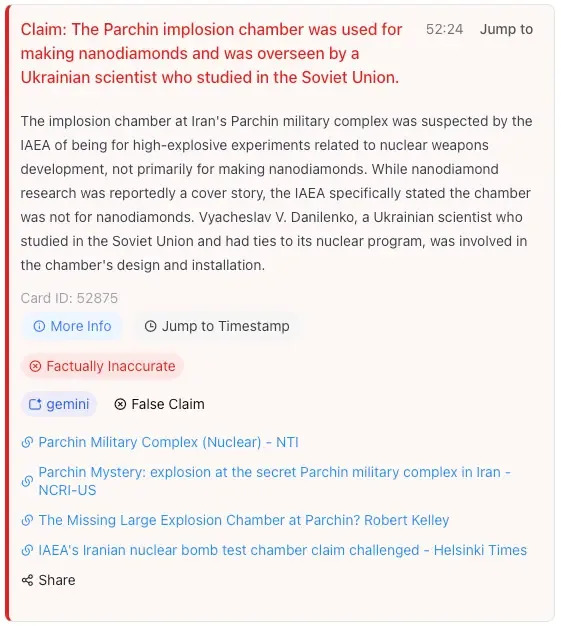
- Weaponization: A deliverable nuclear weapon requires three components: fissile material, a delivery vehicle, and a warhead.1 Dubowitz points to Iran’s large and sophisticated ballistic missile arsenal as a viable delivery system 5 and to the nuclear archive’s alleged blueprints for warhead design.10 Horton challenges this by emphasizing the immense technical difficulty of creating a reliable, miniaturized implosion device that can fit on a missile. He correctly distinguishes between a crude, difficult-to-deliver “gun-type” device (like the Hiroshima bomb) and a complex implosion weapon. He argues that the extensive, observable testing required for an implosion device has not occurred and that previous claims about such tests at the Parchin military site were debunked.1
Fact-Check: The History of Fordo, Natanz, and Parchin
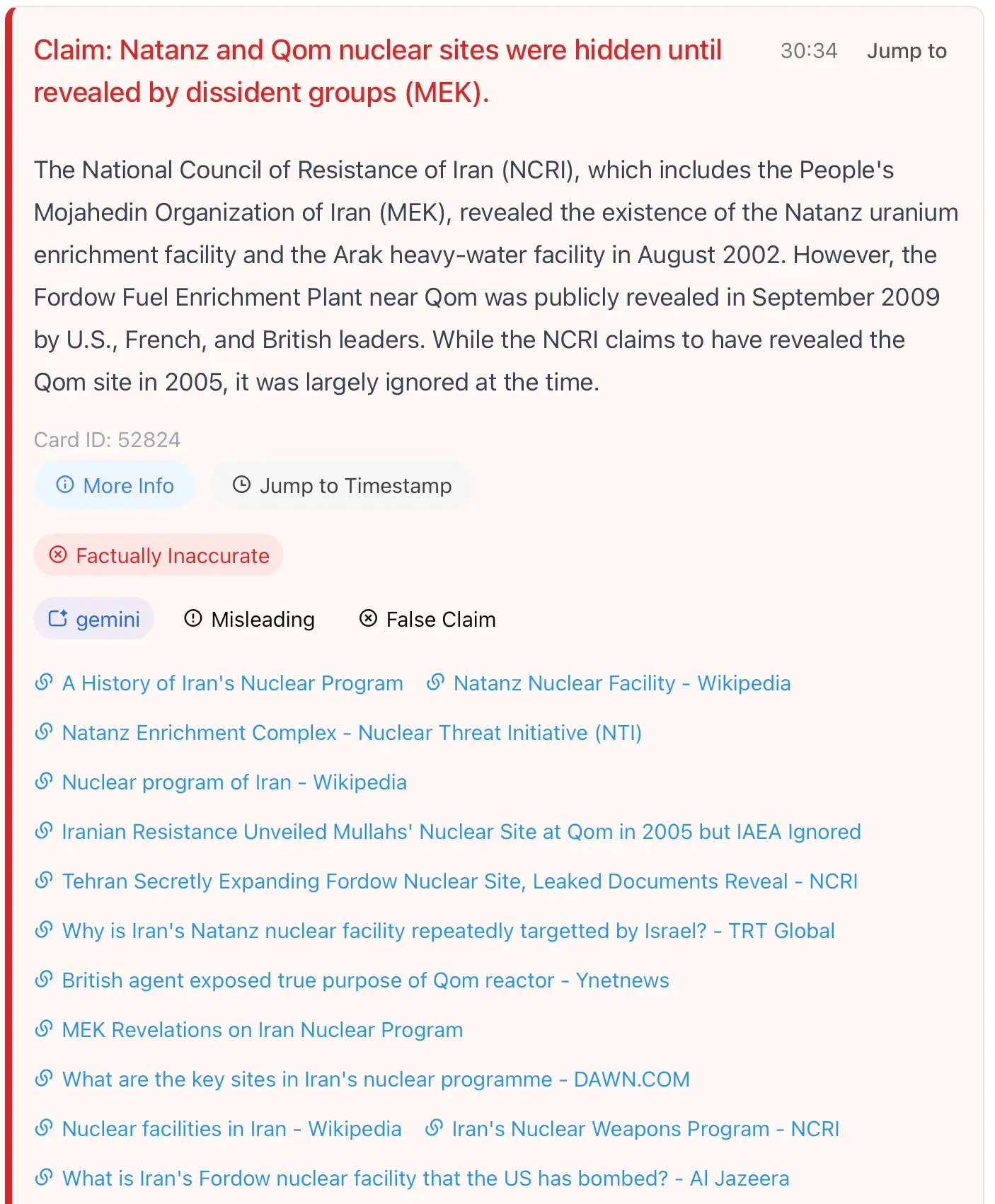
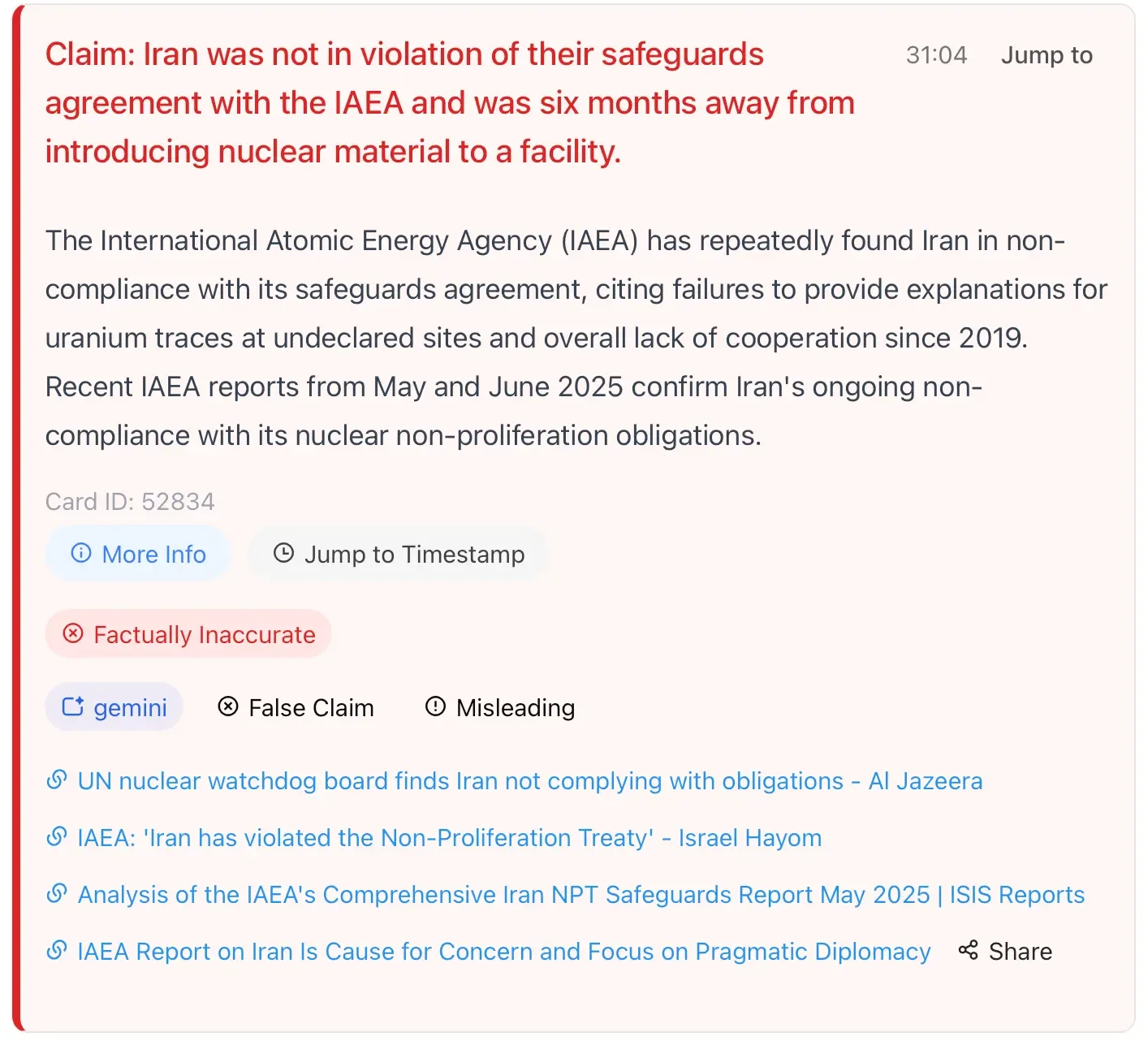
- Fordo & Natanz: Research confirms Dubowitz’s assertion that these key enrichment facilities were initially built in secret. The Natanz facility was first exposed by an Iranian dissident group in 2002.24 The Fordo facility, built deep inside a mountain, was discovered by Western intelligence agencies before Iran officially declared its existence to the IAEA in 2009.25 This history of concealment is a cornerstone of the argument that Iran’s intentions were not purely peaceful. Horton’s claim that Iran was not in technical violation of its safeguards agreement
at the moment of discovery (because nuclear material had not yet been introduced) is a legalistic point that does not alter the fact of the facilities’ covert construction.1 - Parchin: Horton correctly notes that claims of nuclear implosion testing at the Parchin military complex have been widely debunked, citing former IAEA inspector Robert Kelly.1 IAEA visits in 2005 found no nuclear material, though its access was restricted.28 The issue became more complicated when, before a 2015 IAEA visit, Iran conducted extensive “sanitization” activities at the site—including razing buildings and removing topsoil—which the IAEA stated “undermines the Agency’s ability to conduct effective verification”.29 While the IAEA did not find a testing chamber, the nuclear archive later provided Israel with what it claimed were photographs of such a chamber at Parchin before it was dismantled.30 This represents another instance where the archive is used to reinterpret past, ambiguous events.
The Diplomatic Record: Good Faith or Deception?
The debate features conflicting narratives of diplomatic history. Dubowitz portrays Iran as an untrustworthy negotiator that uses talks to buy time and rejected a “good offer” from the Trump administration.1 Horton depicts the U.S. and Israel as serial saboteurs of diplomacy, highlighting the U.S. withdrawal from the JCPOA and the rejection of a major diplomatic overture in 2003.1
Fact-Check: The Joint Comprehensive Plan of Action (JCPOA)
- Terms and Controversy: The 2015 JCPOA imposed strict, verifiable limits on Iran’s nuclear program. It capped enrichment at 3.67%, limited the stockpile of enriched uranium, required Iran to ship out excess material, mandated the redesign of its heavy-water reactor at Arak to prevent weapons-grade plutonium production, and subjected Iran to the most intrusive inspections regime in the world, including provisional application of the IAEA’s Additional Protocol.20 The central controversy, as Dubowitz correctly identifies, was the “sunset” provisions, which allowed these restrictions to expire over 10 to 15 years, potentially leaving Iran with an industrial-scale enrichment capability.1
- A Moment of Consensus: In a rare and significant moment of agreement, both Dubowitz and Horton state that President Trump’s 2018 unilateral withdrawal from the JCPOA was a strategic mistake. Both suggest a better course of action would have been to remain within the agreement’s framework while working with European allies to negotiate a follow-on deal to address the sunset clauses and other concerns.1
Fact-Check: The 2003 “Grand Bargain”
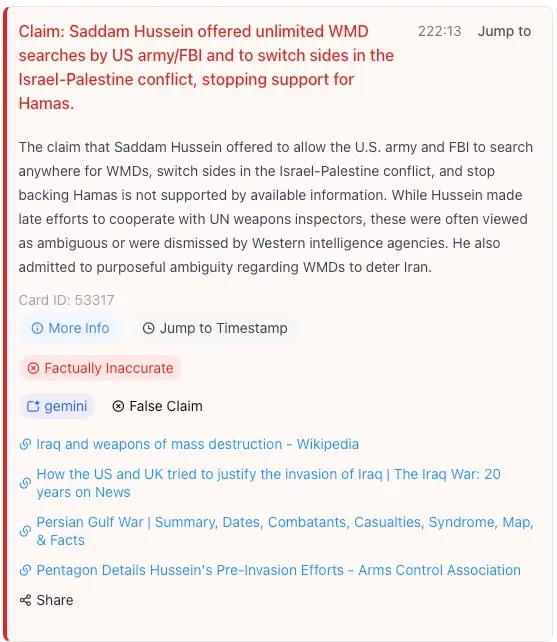
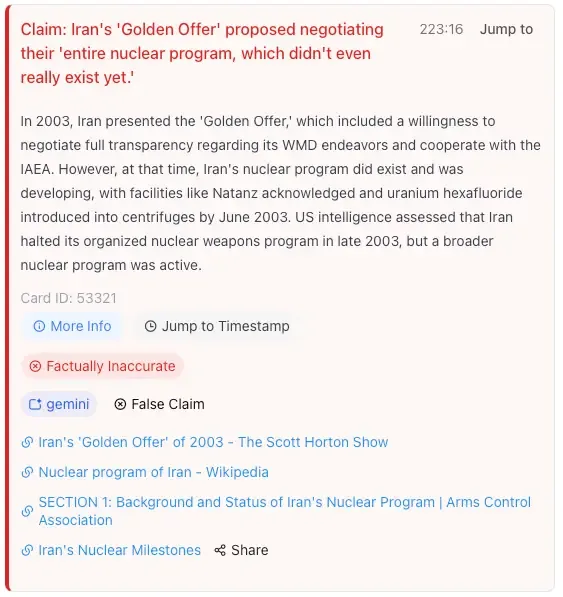
- The Offer and Its Legitimacy: In May 2003, following the U.S. invasion of Iraq, a two-page proposal was reportedly faxed to the U.S. State Department via the Swiss ambassador in Tehran. The document outlined a roadmap for resolving all outstanding U.S.-Iran disputes. Iran offered to address its nuclear program, its support for Hezbollah and Hamas, and its stance on Israel in exchange for the U.S. lifting sanctions and providing security guarantees.32 The legitimacy of this offer is fiercely debated. Horton, citing former officials like Gary Sick and Flynt Leverett, presents it as a serious, fully authorized proposal from the highest levels of the Iranian government that the Bush administration arrogantly ignored at the height of its perceived power.1 The opposing view, articulated by Bush-era officials like Richard Armitage and John Bolton, dismisses the offer as a “fantasy” from an untrustworthy, and possibly unauthorized, intermediary, arguing that it was not a credible diplomatic initiative.33
- The “Poison Pill” Negotiating Tactic: This historical dispute illuminates a core dynamic in the ongoing conflict. Horton argues that the U.S. and Israeli demand for “zero enrichment” is a “poison pill”—a maximalist position they know Iran will never accept, thereby ensuring diplomatic failure and creating a pretext for military action.1 Iran’s insistence on a sovereign right to a domestic fuel cycle is a cornerstone of its national policy, dating back to the U.S.-supported program under the Shah.17 This makes the “zero enrichment” demand a likely non-starter for any Iranian government. Dubowitz’s “best case” scenario of a deal for zero enrichment is, from Horton’s perspective, a recipe for guaranteed conflict.
The Roots of Conflict: Who is the Aggressor?
Dubowitz consistently frames Iran as the primary aggressor, citing a long list of attacks on Americans and its creation of a regional “axis of misery” through proxies like Hamas, Hezbollah, and the Houthis.1 Horton argues the reverse, framing Iran’s actions as reactions to decades of U.S. and Israeli provocations.1
Fact-Check: The 1983 Beirut Barracks Bombing
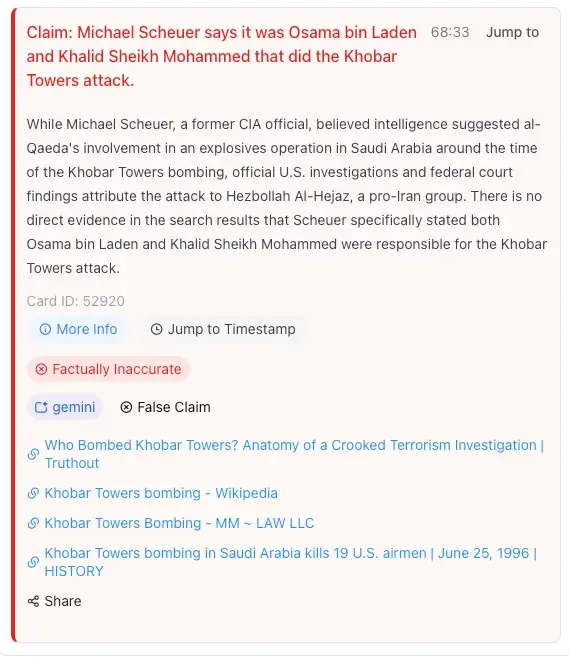
- The Claim and Rebuttal: Horton cites Victor Ostrovsky’s 1990 book By Way of Deception, which claims Mossad had advance intelligence on the bombing that killed 241 U.S. service members but withheld specific details from the United States.1 Dubowitz counters that Ostrovsky is a widely discredited former officer with a personal vendetta.1
- Verification: Ostrovsky was a former Mossad katsa (case officer). The Israeli government’s unprecedented attempt to legally block the book’s publication in the U.S. lent it a degree of notoriety.35 However, the claims within it, particularly regarding the Beirut bombing, remain highly controversial and are generally uncorroborated by mainstream historians and intelligence analysts, placing this dispute firmly in the realm of source credibility.
Fact-Check: The Origin of Explosively Formed Penetrators (EFPs) in Iraq
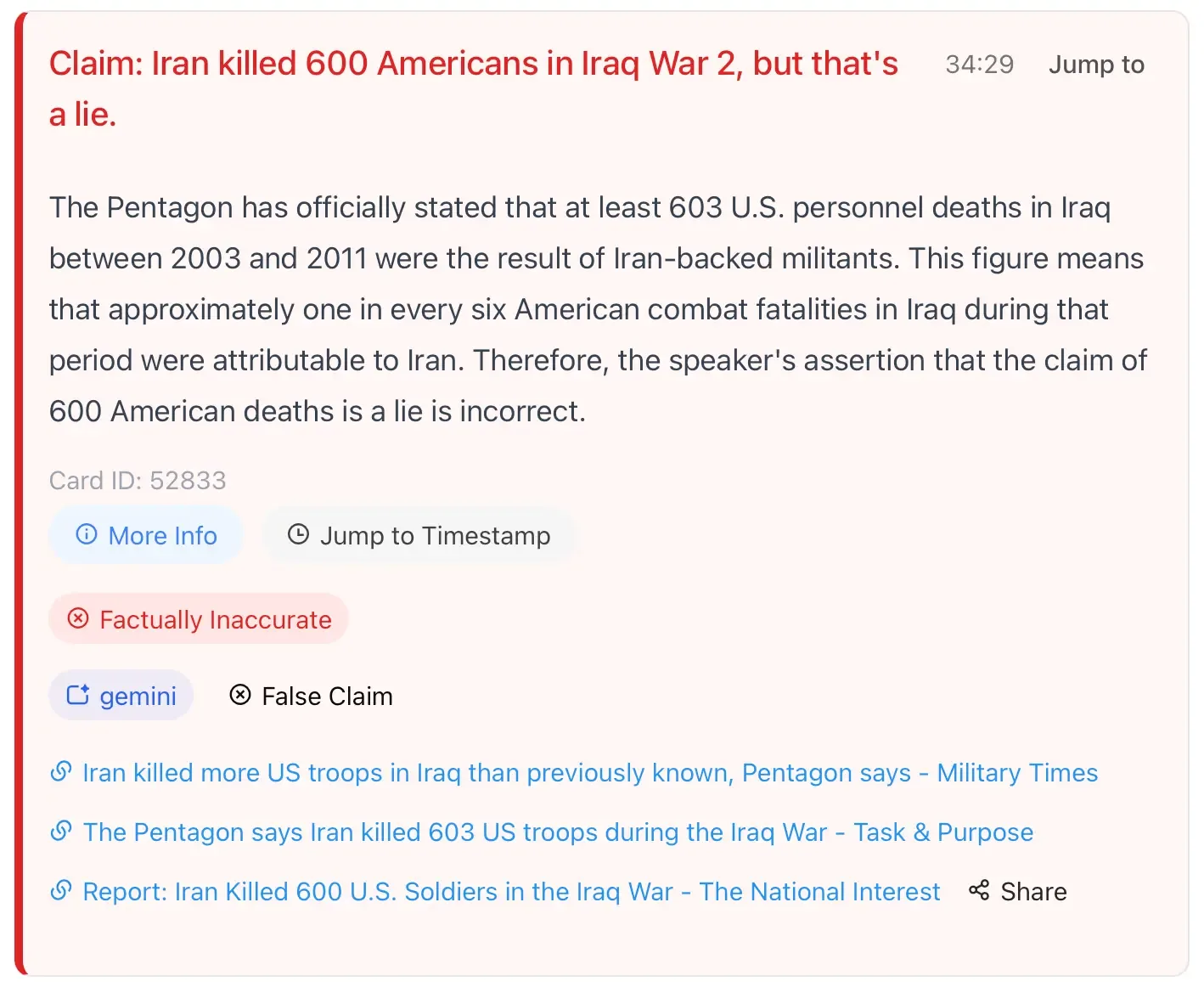
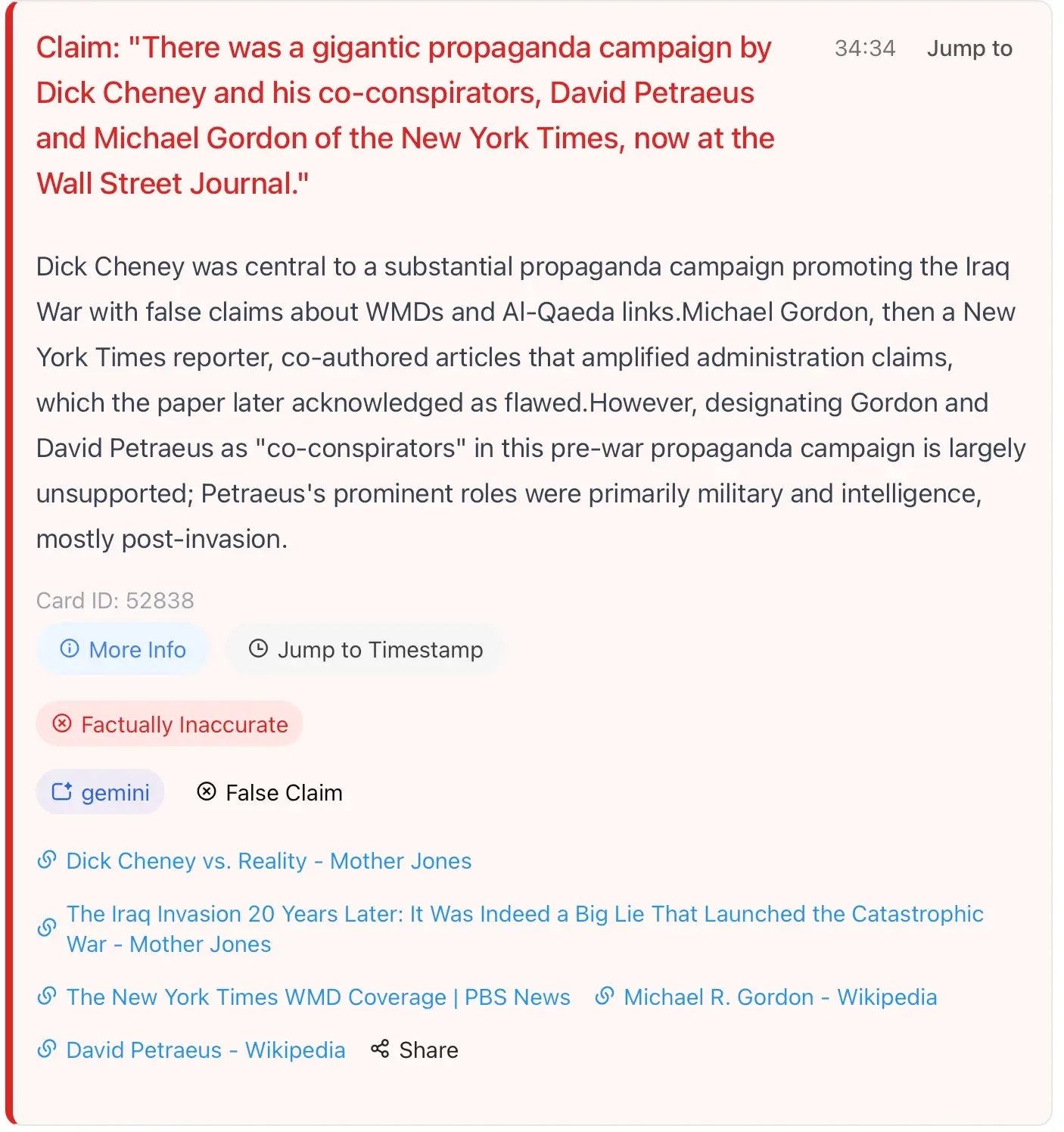
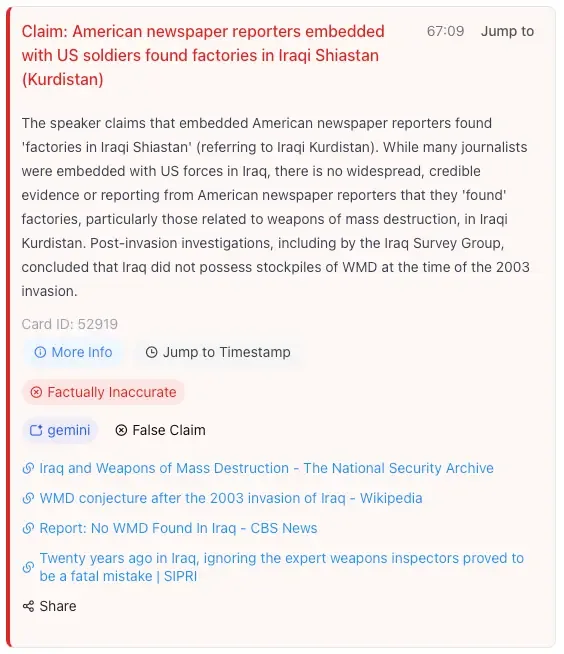
- The Competing Claims: Dubowitz, citing the Pentagon, states that Iran-backed militias killed at least 603 U.S. troops in Iraq, partly by supplying them with advanced IEDs, including EFPs.1 This claim is supported by numerous U.S. government reports and think tank analyses tracing the sophisticated design, training, and key components of these weapons to Iran’s IRGC-Quds Force and its proxy, Lebanese Hezbollah.36 Horton counters that this is a “propaganda campaign,” citing reports from embedded journalists who found EFP “factories” inside Iraq with components sourced from various countries, not just Iran.1 He specifically mentions a planned press conference by General David Petraeus to display “Iranian” EFP components that was reportedly canceled when journalists noted markings from the UAE and Iraq.1
- Verification: The evidence suggests a more complex reality than either debater presents. There is strong evidence that the technology, training, and key components for advanced EFPs were transferred from Iran and its proxies to Iraqi militias. However, there is also credible reporting of EFP manufacturing and assembly workshops being discovered inside Iraq. The reality is likely a hybrid model of technology transfer combined with indigenous production. Therefore, the claim that Iran was the sole source is an oversimplification used for propaganda purposes, but the claim of zero Iranian involvement is equally inaccurate.
Operation Midnight Hammer: An Assessment
The debaters’ assessment of the hypothetical U.S. strike on Iran’s nuclear facilities reveals their core philosophies. Dubowitz views it as a potentially successful act of coercive diplomacy that degrades Iran’s capabilities and strengthens the U.S. negotiating hand.1 Horton sees it as a reckless act of war that will only convince Iran that it truly needs a nuclear bomb for its survival, thus making the world more dangerous.1
Fact-Check: Conflicting Battle Damage Assessments (BDA)
- The “Obliteration” vs. “Limited Setback” Narratives: The scenario reflects a real-world pattern of conflicting reports following military action. The hypothetical President Trump and Israeli officials claim the strikes “obliterated” Iran’s program and set it back by “many years”.1 This is starkly contradicted by a leaked preliminary assessment from the Defense Intelligence Agency (DIA), which reportedly concluded the setback was only a matter of months because Iran had successfully moved some of its enriched uranium and the underground facilities were damaged but not destroyed.41
- The IAEA’s Nuanced View: The IAEA’s public statements provide a more technical and cautious assessment. The agency confirms “extensive damage” at Natanz, Fordo, and Isfahan, including to centrifuges and surface infrastructure. However, it also states that it is impossible to fully assess the extent of underground damage and that there has been no radiological release detected off-site.25
- The Politicization of Intelligence: The stark contrast between the initial, cautious DIA assessment and the triumphant public declarations from the White House and other intelligence leaders (which came after the DIA leak became public) exemplifies the politicization of intelligence. In high-stakes military operations, there is immense pressure for intelligence to support a desired political narrative. Administrations have a powerful incentive to portray their actions as a resounding success to justify the use of force. This highlights the critical importance of treating official public statements with caution and weighing them against more technical, and often leaked, internal assessments.
Synthesis and Forward-Looking Assessment
Matrix of Disputed Facts
The following table summarizes the central factual disagreements in the debate, the evidence cited by each participant, and a brief analytical verification.
| Point of Contention | Mark Dubowitz’s Position & Key Evidence | Scott Horton’s Position & Key Evidence | Analytical Verification & Nuance |
| Iran Nuclear Archive Authenticity | Authentic. Cites Mossad raid, David Albright’s analysis, and validation by U.S./UK intelligence and Belfer Center scholars.5 | Fabricated. A recycling of the debunked “smoking laptop” intelligence. Cites investigative journalist Gareth Porter’s work on Israeli forgery and MEK involvement.1 | The weight of publicly available evidence from multiple government and academic sources supports the archive’s authenticity. Horton’s critique correctly highlights the reliance on intelligence from interested parties (Israel), but the core dispute is over source credibility (state intelligence vs. its critics). |
| Origin of Iraqi EFPs | Supplied by Iran. Cites Pentagon data on 603 U.S. deaths, and reports tracing EFP technology, training, and components to Iran’s IRGC and Hezbollah.3 | Locally manufactured in Iraq. Cites reports from embedded journalists of EFP “factories” in Iraq and a canceled U.S. military press conference due to non-Iranian components.1 | Evidence supports a hybrid reality: Iran and its proxies transferred the technology, training, and key components, which were then used for local assembly and manufacturing in Iraq. Both absolutist claims are oversimplifications. |
| Legitimacy of 2003 “Grand Bargain” | Illegitimate. A “fantasy” proposal from an untrustworthy, possibly unauthorized, Iranian intermediary. Cites skepticism from Bush admin officials like Bolton and Armitage.33 | Legitimate. A serious, fully authorized diplomatic offer from the highest levels of the Iranian government that the U.S. foolishly rejected. Cites former officials like Gary Sick and Flynt Leverett.1 | Historical accounts are divided. The proposal’s existence is confirmed, but its official authorization by Iran’s supreme leader remains contested. The U.S. decision to ignore it was based on a combination of skepticism about its legitimacy and post-Iraq invasion confidence. |
| Damage from “Operation Midnight Hammer" | "Obliteration.” Cites claims from the hypothetical Trump administration and Israel that the program was set back “many years”.1 | Limited setback. Cites a leaked preliminary DIA report assessing the setback at only a few months, with key uranium stockpiles and underground facilities surviving.41 | The conflicting reports mirror real-world scenarios, highlighting the politicization of intelligence. The IAEA provides a more sober assessment of “extensive damage” but with an inability to confirm the full extent, especially underground.47 |
The Proliferation Question: Precedent or Cascade?
The debate raises a critical question for international security: does attacking a nation’s nuclear program deter or encourage proliferation?
- Dubowitz’s Argument (Deterrence): A successful strike that verifiably dismantles Iran’s program sends a powerful non-proliferation message. It demonstrates to other would-be nuclear states (e.g., Saudi Arabia, Turkey, South Korea) that pursuing nuclear weapons invites severe consequences from the United States. This restores the credibility of American red lines and ultimately reduces the likelihood of a proliferation cascade.1
- Horton’s Argument (Incentive): The strike reinforces the perceived “lessons of Iraq and Libya”—that regimes without a nuclear deterrent are vulnerable to U.S.-led attack, while those with one (North Korea) are not. This will incentivize other nations to view a nuclear bomb as the ultimate security guarantee, leading to a dangerous proliferation cascade as they race to acquire a deterrent before they can be targeted.1
The outcome is highly uncertain and depends on how other nations interpret U.S. motives, capabilities, and long-term commitment. A successful, clean, and decisive operation might have a deterring effect. A messy, inconclusive conflict that bogs the U.S. down or clearly fails to stop the target nation could have the opposite effect, signaling that the costs of proliferation are manageable and the benefits (deterrence) are essential.
Pathways and Obstacles to a Permanent Resolution
Both speakers articulate a “best case” scenario that involves a negotiated diplomatic agreement, but their visions for such a deal are mutually exclusive and hinge on a single, critical point of contention.
The central and most formidable obstacle to a lasting resolution is the U.S. demand for “zero enrichment.”
This position, which Dubowitz advocates and which underpins the hypothetical Trump administration’s policy, insists that Iran must completely and permanently dismantle all domestic uranium enrichment capabilities.1 From this perspective, any domestic enrichment, no matter how small or monitored, provides Iran with the latent capability to break out and produce a weapon. It is seen as the only way to permanently close Iran’s pathway to a bomb.
Conversely, as Horton argues, a domestic enrichment capability is a non-negotiable “red line” for Iran.1 It is viewed not only as a sovereign right guaranteed under the Nuclear Non-Proliferation Treaty (NPT) but also as a matter of national pride and the core of its latent deterrent strategy. Forcing Iran to rely entirely on foreign powers for nuclear fuel is seen as an unacceptable vulnerability. This makes the “zero enrichment” demand a “poison pill” in negotiations, a condition designed to be rejected, thereby providing a casus belli.
As long as the U.S. position remains fixed on this maximalist demand, a comprehensive, negotiated settlement is highly improbable. The failure to find a compromise on this specific issue—allowing for a limited, heavily monitored domestic enrichment program (as the JCPOA did) versus demanding its complete elimination—is the central dynamic that perpetuates the cycle of sanctions, covert action, and the risk of open war. Any future diplomatic efforts will succeed or fail based on their ability to bridge this fundamental gap.
Works cited
- Untitled document.pdf
- Iran War Debate: Nuclear Weapons, Trump, Peace, Power & the Middle East - FDD, accessed June 27, 2025, https://www.fdd.org/in_the_news/2025/06/26/iran-war-debate-nuclear-weapons-trump-peace-power-the-middle-east/
- Iranian and Iranian-Backed Attacks Against Americans (1979-Present), accessed June 27, 2025, https://www.fdd.org/analysis/2025/06/19/iranian-and-iranian-backed-attacks-against-americans-1979-present/
- 473 – Iran War Debate: Nuclear Weapons, Trump, Peace, Power & the Middle East - Apple Podcasts, accessed June 27, 2025, https://podcasts.apple.com/xk/podcast/473-iran-war-debate-nuclear-weapons-trump-peace-power/id1434243584?i=1000714725744
- Crapo, Senate GOP Colleagues Introduce Resolution Supporting Operation Midnight Hammer, accessed June 27, 2025, https://www.crapo.senate.gov/media/newsreleases/crapo-senate-gop-colleagues-introduce-resolution-supporting-operation-midnight-hammer
- When Mossad Walked Out Of Tehran With 500 kg Of Nuclear Blueprints - NDTV, accessed June 27, 2025, https://www.ndtv.com/world-news/when-mossad-walked-out-of-tehran-with-500-kg-of-nuclear-blueprints-8706686
- Iran wasn’t working on nuclear weapons: Scott Horton - YouTube, accessed June 27, 2025, https://m.youtube.com/shorts/ZV6-FZJt4Aw
- How the Mossad stole Iran’s nuclear playbook - JNS.org, accessed June 27, 2025, https://www.jns.org/how-the-mossad-stole-irans-nuclear-playbook/
- Mossad infiltration of Iranian nuclear archive - Wikipedia, accessed June 27, 2025, https://en.wikipedia.org/wiki/Mossad_infiltration_of_Iranian_nuclear_archive
- AMAD Project - Wikipedia, accessed June 27, 2025, https://en.wikipedia.org/wiki/AMAD_Project
- Iran’s Perilous Pursuit of Nuclear Weapons - Institute For Science And International Security, accessed June 27, 2025, https://isis-online.org/books/irans-perilous-pursuit-of-nuclear-weapons
- Iran’s Perilous Pursuit of Nuclear Weapons - David Albright, Sarah Burkhard - Google Books, accessed June 27, 2025, https://books.google.com/books/about/Iran_s_Perilous_Pursuit_of_Nuclear_Weapo.html?id=IA13zgEACAAJ
- The Iran Nuclear Archive: Impressions and Implications - Belfer Center, accessed June 27, 2025, https://www.belfercenter.org/publication/iran-nuclear-archive-impressions-and-implications
- Iran Atomic Archive - United States Department of State, accessed June 27, 2025, https://2017-2021.state.gov/iran-atomic-archive/
- The Iranian Nuclear Archive: Implications and Recommendations | ISIS Reports, accessed June 27, 2025, https://isis-online.org/isis-reports/detail/the-iranian-nuclear-archive-implications-and-recommendations/
- Exclusive Report: Evidence of Iran Nuclear Weapons Program May Be Fraudulent | Truthout, accessed June 27, 2025, https://truthout.org/articles/exclusive-report-evidence-of-iran-nuclear-weapons-program-may-be-fraudulent/
- A Candid Discussion With Gareth Porter - Foreign Policy Association, accessed June 27, 2025, https://fpa.org/a-candid-discussion-with-gareth-porter/
- Manufactured Crisis: The Untold Story of the Iran Nuclear Scare - Harper’s Magazine, accessed June 27, 2025, https://harpers.org/2014/05/manufactured-crisis-the-untold-story-of-the-iran-nuclear-scare/
- New IAEA Reports Highlight Why Iran Cannot Be Trusted with a Nuclear Program - AIPAC, accessed June 27, 2025, https://www.aipac.org/resources/new-iaea-reports
- What is Iran’s intent with 60%-enriched uranium? : r/centrist - Reddit, accessed June 27, 2025, https://www.reddit.com/r/centrist/comments/1lhtczl/what_is_irans_intent_with_60enriched_uranium/
- Transcript: Assessing the possibility of Iran going nuclear with David Albright, accessed June 27, 2025, https://www.iiss.org/podcasts/arms-control-poseur/2024/12/assessing-the-possibility-of-iran-going-nuclear-with-david-albright/transcript/
- Iran accelerates production of near weapons-grade uranium, IAEA …, accessed June 27, 2025, https://apnews.com/article/iran-nuclear-iaea-weapons-grade-uranium-trump-0b11a99a7364f9a43e1c83b220114d45
- IAEA Director General Grossi’s Statement to UNSC on Situation in Iran, accessed June 27, 2025, https://www.iaea.org/newscenter/statements/iaea-director-general-grossis-statement-to-unsc-on-situation-in-iran-20-june-2025
- Natanz Nuclear Facility - Wikipedia, accessed June 27, 2025, https://en.wikipedia.org/wiki/Natanz_Nuclear_Facility
- Post-Attack Assessment of the First 12 Days of Israeli and U.S. Strikes on Iranian Nuclear Facilities | ISIS Reports, accessed June 27, 2025, https://isis-online.org/isis-reports/post-attack-assessment-of-the-first-12-days-of-israeli-strikes-on-iranian-nuclear-facilities
- What is Iran’s Fordow nuclear facility that the US has bombed? - Al Jazeera, accessed June 27, 2025, https://www.aljazeera.com/news/2025/6/19/what-is-irans-fordow-nuclear-facility-and-could-us-weapons-destroy-it
- Post-Attack Assessment of the First 12 Days of Israeli and U.S. …, accessed June 27, 2025, https://www.isis-online.org/isis-reports/post-attack-assessment-of-the-first-12-days-of-israeli-strikes-on-iranian-nuclear-facilities
- Parchin Military Complex (Nuclear), accessed June 27, 2025, https://www.nti.org/education-center/facilities/parchin-military-complex/
- IAEA Visit to the Parchin Site, accessed June 27, 2025, https://isis-online.org/uploads/isis-reports/documents/IAEA_Visit_to_the_Parchin_Site_September_22_2015_Final_1.pdf
- Seized archive shows Iran nuke project was larger than thought, had foreign help, accessed June 27, 2025, https://www.timesofisrael.com/seized-archive-shows-iran-nuke-project-was-larger-than-thought-had-foreign-help/
- The grand bargain: What Iran conceded in the nuclear talks - Brookings Institution, accessed June 27, 2025, https://www.brookings.edu/articles/the-grand-bargain-what-iran-conceded-in-the-nuclear-talks/
- Iran’s May 2003 Offer - Arms Control Wonk, accessed June 27, 2025, https://www.armscontrolwonk.com/archive/201083/irans-march-2003-offer/
- Analysis - The “grand Bargain” Fax - A Missed Opportunity … - PBS, accessed June 27, 2025, https://www.pbs.org/wgbh/pages/frontline/showdown/themes/grandbargain.html
- Iran–United States relations - Wikipedia, accessed June 27, 2025, https://en.wikipedia.org/wiki/Iran%E2%80%93United_States_relations
- By Way of Deception - Wikipedia, accessed June 27, 2025, https://en.wikipedia.org/wiki/By_Way_of_Deception
- Iran’s Proxy War against the United States and the Iraqi Government, accessed June 27, 2025, https://www.understandingwar.org/sites/default/files/reports/IraqReport06.pdf
- Defeating Iran’s Roadside Bombs in Yemen | The Washington Institute, accessed June 27, 2025, https://www.washingtoninstitute.org/policy-analysis/defeating-irans-roadside-bombs-yemen
- Iranian EFPs in the Gulf: An Emerging Strategic Risk | The Washington Institute, accessed June 27, 2025, https://www.washingtoninstitute.org/policy-analysis/iranian-efps-gulf-emerging-strategic-risk
- Qasem Soleimani - Wikipedia, accessed June 27, 2025, https://en.wikipedia.org/wiki/Qasem_Soleimani
- Get the Facts Straight on Iran and EFPs - Columbia Journalism Review, accessed June 27, 2025, https://www.cjr.org/behind_the_news/get_the_facts_straight_on_iran.php
- Early US intelligence report suggests Iran’s nuclear program only temporarily set back by strikes | Amu TV, accessed June 27, 2025, https://amu.tv/182561/
- A fragile ceasefire between Iran and Israel gives hope for long-term peace | PBS News, accessed June 27, 2025, https://www.pbs.org/newshour/world/a-fragile-ceasefire-between-iran-and-israel-gives-hope-for-long-term-peace
- Iran’s Nuclear Facilities Have Been Obliterated — and Suggestions Otherwise are Fake News - The White House, accessed June 27, 2025, https://www.whitehouse.gov/articles/2025/06/irans-nuclear-facilities-have-been-obliterated-and-suggestions-otherwise-are-fake-news/
- Intel leaders say new intelligence shows Iran’s nuclear sites could take “years” to rebuild, accessed June 27, 2025, https://www.cbsnews.com/news/cia-irans-nuclear-program-severely-damaged-trump-iran-strikes-fbi-probes-leak/
- US didn’t destroy Iran’s nuclear programme: Here’s what new intel says - Al Jazeera, accessed June 27, 2025, https://www.aljazeera.com/news/2025/6/25/us-didnt-destroy-irans-nuclear-programme-heres-what-new-intel-says
- New U.S. intelligence report suggests Iran’s nuclear program only set back by months after strikes - PBS, accessed June 27, 2025, https://www.pbs.org/newshour/politics/new-u-s-intelligence-report-suggests-irans-nuclear-program-only-set-back-by-months-after-strikes
- Update on Developments in Iran (6) | IAEA, accessed June 27, 2025, https://www.iaea.org/newscenter/pressreleases/update-on-developments-in-iran-6
- Update on Developments in Iran | IAEA, accessed June 27, 2025, https://www.iaea.org/newscenter/pressreleases/update-on-developments-in-iran
- What we know about the damage done to Iran’s nuclear program, accessed June 27, 2025, https://apnews.com/article/iran-nuclear-war-israel-bunker-buster-bombs-5c148aa4829ec72583d052eb1f0a3a7b
- UN nuclear chief estimates damage to Iran’s facilities ‘very significant’ - Al Jazeera, accessed June 27, 2025, https://www.aljazeera.com/news/2025/6/23/un-nuclear-chief-estimates-damage-to-irans-facilities-very-significant
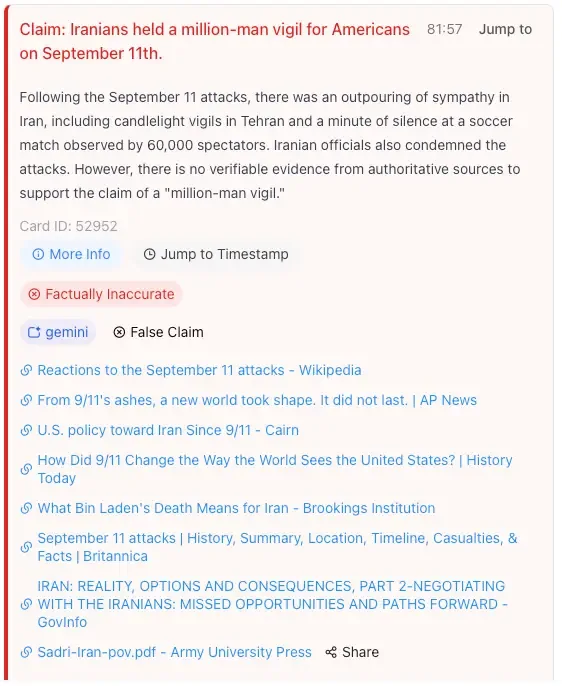
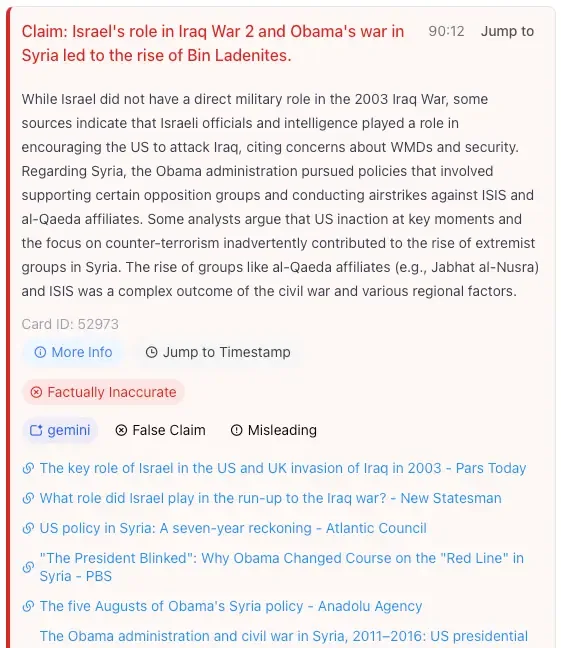
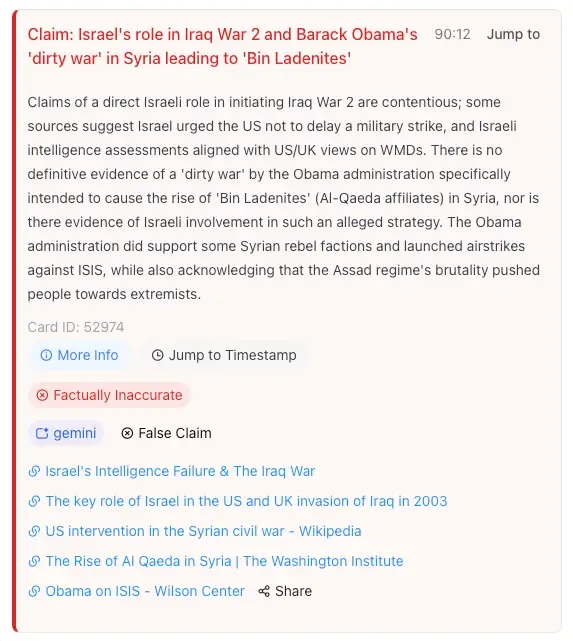
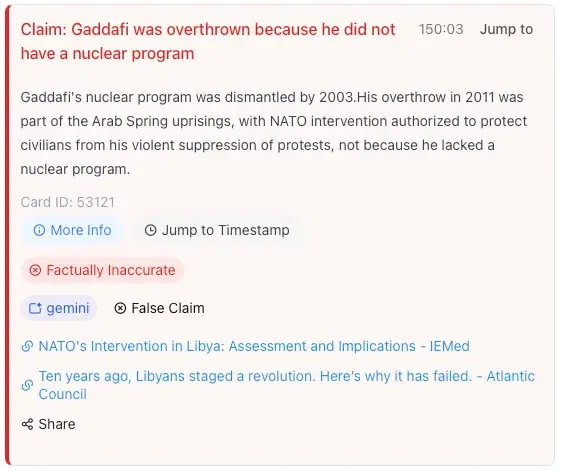
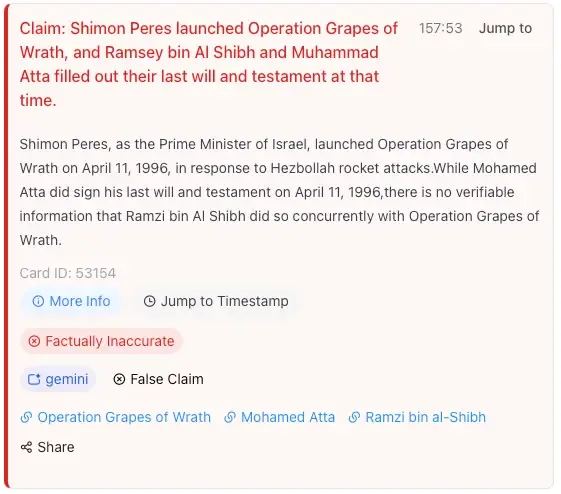
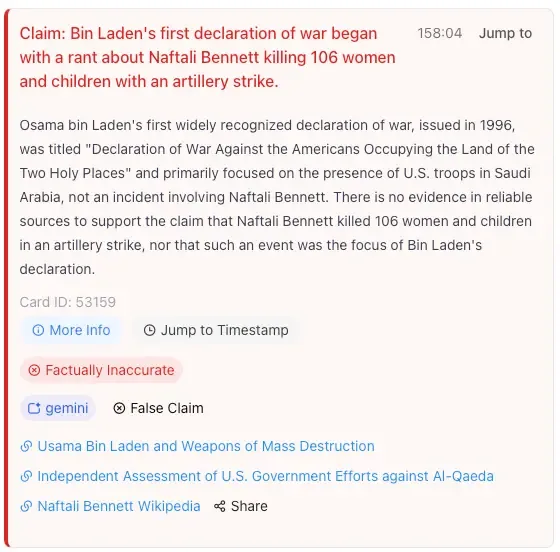
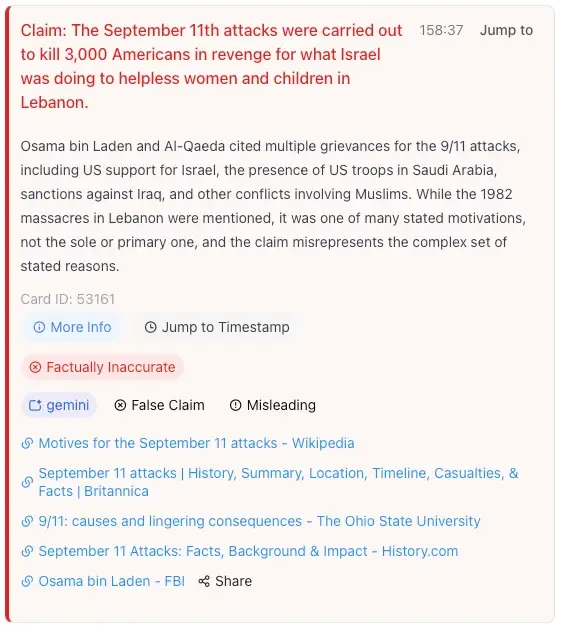
Fact Check