
DESCRIPTION
My Summary
Main Ideas, Takeaways & Similarities
Questions
I. What is the problem?
A. How is this problem formulated?
B. Why is this problem important?
C. What is the history of this problem?
D. Which prominent personalities have been interested in this problem?
II. What solutions to the problem are there?
A. What are the conclusions reached?
B. By what argument(s) is the conclusion reached?
C. What facts or assumptions serve as premises?
D. When a prominent personality offers a solution, does he also argue for or against other prominent personalities? Does he raise objections to alternative solutions? Does he consider objections to his own solutions?
III. Evaluation
A. What are the advantages and disadvantages of the alternative formulations to the problem?
B. Has the importance or history of the problem ever been misrepresented?
C. Are the solutions logically related to the premises?
D. Are the facts true? Are the assumptions acceptable? Are the objections answerable?
AI Summary
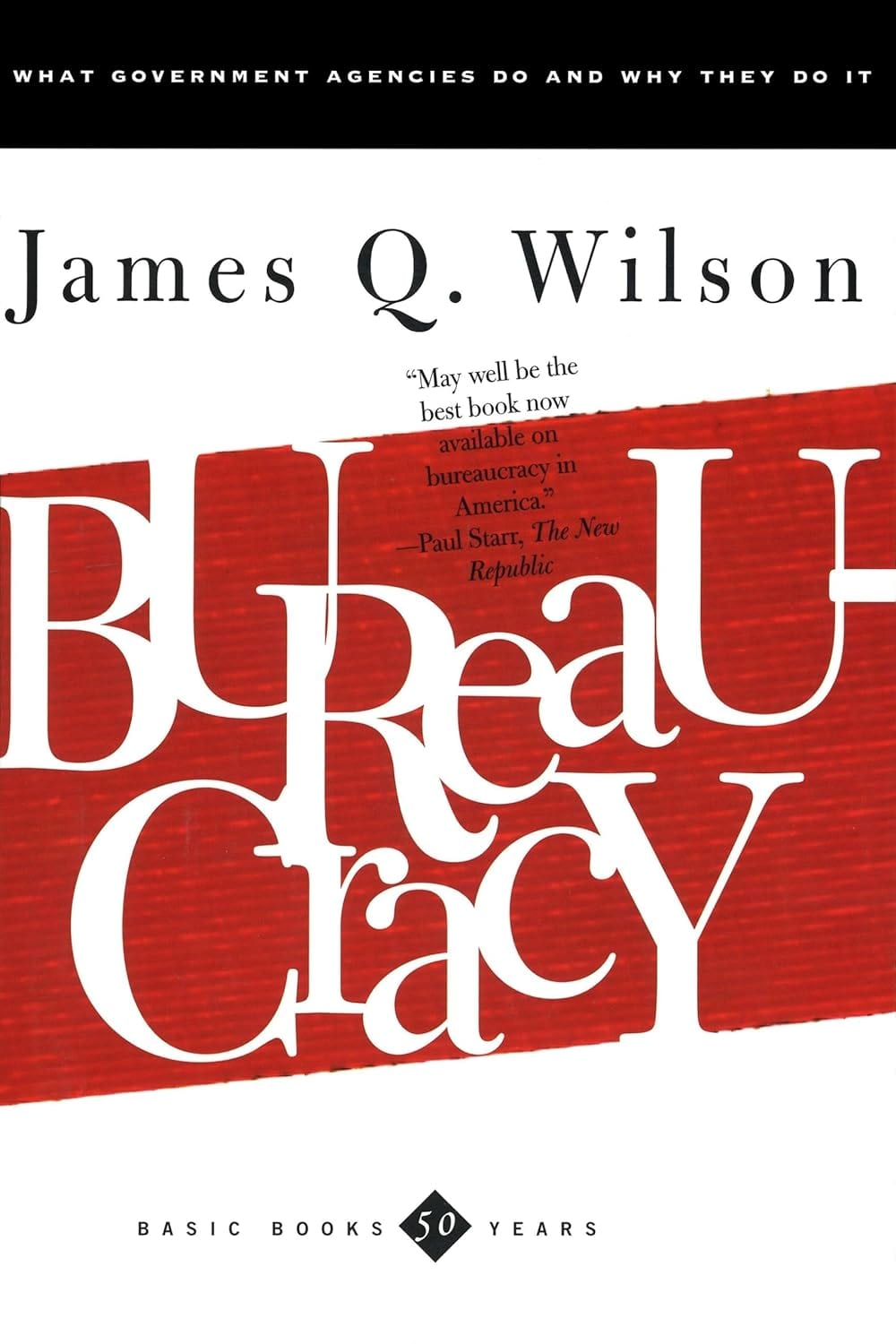
“Bureaucracy: What Government Agencies Do and Why They Do It” by James Q. Wilson is a book that delves into the workings of government agencies and explores their roles and motivations. The book offers insights into the dynamics of bureaucracy and the factors that influence their actions. Here’s a comprehensive summary in bullet points:
- Title: Bureaucracy: What Government Agencies Do and Why They Do It
- Author: James Q. Wilson
Introduction:
- Sets the stage for examining government agencies and their functions.
- Highlights the pervasive role of bureaucracy in modern governance.
Chapter 1: What Bureaucrats Do and Why:
- Introduces the concept of bureaucracy and the various tasks carried out by government agencies.
- Explores the motivations and behaviors of bureaucrats, including the pursuit of their agency’s mission and their own interests.
Chapter 2: Where Bureaucracies Are and How to Get Hold of Them:
- Examines the distribution of government agencies across different levels of government and geographic regions.
- Discusses how individuals and interest groups can access and influence government agencies.
Chapter 3: Bureaucracy as a Mystery:
- Highlights the notion that bureaucracy is often perceived as a mysterious and complex institution.
- Explores the role of complexity in bureaucratic decision-making.
Chapter 4: Street-Level Bureaucrats:
- Focuses on “street-level bureaucrats” who interact directly with the public, such as police officers and social workers.
- Discusses the discretion these individuals have in implementing policies and making decisions.
Chapter 5: The Limited Impact of Reinvention:
- Examines efforts to reform and reinvent government agencies to increase efficiency and effectiveness.
- Highlights the challenges of implementing large-scale reforms.
Chapter 6: Bureaucracies as Policymakers:
- Explores the role of bureaucracies in policymaking.
- Discusses how agencies can shape policy through rulemaking and administrative decisions.
Chapter 7: Bureaucratic Pathologies:
- Addresses the potential dysfunctions and pathologies within bureaucracies, including inefficiency and resistance to change.
- Explores factors that contribute to these pathologies.
Chapter 8: Bureaucracy and Democracy:
- Examines the relationship between bureaucracy and democratic governance.
- Discusses the tensions between administrative expertise and democratic accountability.
Chapter 9: What Is to Be Done?:
- Offers recommendations for improving the performance of government agencies.
- Suggests measures to enhance transparency, accountability, and efficiency.
Conclusion:
- Summarizes the key insights and findings from the book.
- Reflects on the challenges and opportunities presented by bureaucracy in modern government.
Legacy:
- “Bureaucracy” provides a comprehensive overview of government agencies, their functions, and their role in policymaking.
- It offers a nuanced understanding of the motivations and challenges faced by bureaucrats.
- The book continues to be a valuable resource for scholars and policymakers interested in the study of public administration and governance.