
DESCRIPTION
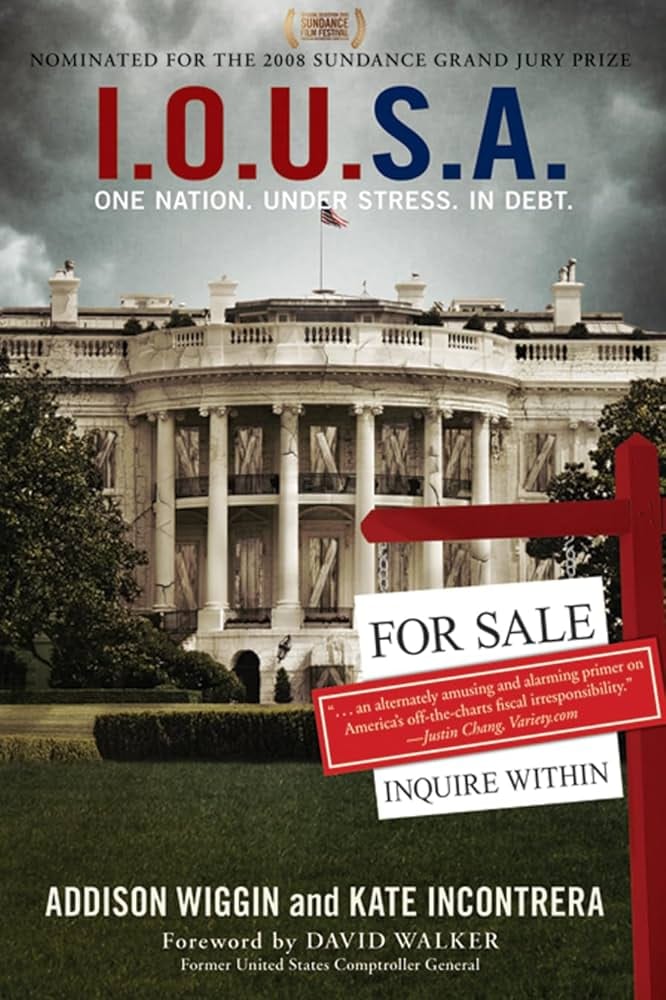
The United States has been spending its way deeper and deeper into the red, and saddling future generations with the mess–but who’s paying attention? To answer that question, this companion book to the critically acclaimed documentary I.O.U.S.A. talks with some of the most revered voices in the nation, including Warren Buffett; former Treasury Secretaries Paul O’Neill and Robert Rubin; and Pete Peterson, CEO of The Blackstone Group. Defiantly non-partisan, the empowering solutions outlined in these pages are a must-read for any American concerned about the current state of affairs.
My Summary
Main Ideas, Takeaways & Similarities
Questions
I. What is the problem?
A. How is this problem formulated?
B. Why is this problem important?
C. What is the history of this problem?
D. Which prominent personalities have been interested in this problem?
II. What solutions to the problem are there?
A. What are the conclusions reached?
B. By what argument(s) is the conclusion reached?
C. What facts or assumptions serve as premises?
D. When a prominent personality offers a solution, does he also argue for or against other prominent personalities? Does he raise objections to alternative solutions? Does he consider objections to his own solutions?
III. Evaluation
A. What are the advantages and disadvantages of the alternative formulations to the problem?
B. Has the importance or history of the problem ever been misrepresented?
C. Are the solutions logically related to the premises?
D. Are the facts true? Are the assumptions acceptable? Are the objections answerable?
AI Summary
Highlights
“I.O.U.S.A.: One Nation. Under Stress. In Debt” is a book written by Addison Wiggin, Kate Incontrera, David Walker, and Bill Bonner, published in 2008. The book examines the rising national debt of the United States and its potential consequences for the country’s financial stability and future. Here is a comprehensive summary of the book in bullet points:
- The book addresses the growing national debt crisis in the United States and its implications for the country’s economic future.
- It discusses the historical context of the national debt and how it has evolved over time, emphasizing the significant increase in debt levels in recent decades.
- The authors explore the factors contributing to the national debt, including government spending, entitlement programs, tax policies, and fiscal irresponsibility.
- “I.O.U.S.A.” provides insights into the consequences of a high and rising national debt, including the risk of a fiscal crisis, inflation, and economic instability.
- The book features interviews with experts and policymakers, including former U.S. Comptroller General David Walker, who offers perspectives on the fiscal challenges facing the nation.
- It highlights the importance of addressing the national debt issue in a bipartisan manner and the need for responsible fiscal policies.
- The authors discuss the role of foreign creditors, particularly China, in financing the U.S. debt and the potential risks associated with high levels of foreign ownership of U.S. government securities.
- The book explores the impact of demographic trends, such as the aging population and rising healthcare costs, on the fiscal challenges facing the United States.
- It addresses the concept of intergenerational equity, emphasizing the moral and ethical considerations of passing on a burdensome debt to future generations.
- “I.O.U.S.A.” examines potential solutions to the national debt crisis, including fiscal discipline, entitlement reform, and tax policy changes.
- The authors advocate for increased transparency and accountability in government budgeting and financial reporting.
- The book also discusses the role of financial education and awareness in addressing the national debt issue and engaging citizens in the debate.
- It concludes by emphasizing the urgency of addressing the national debt crisis and the importance of informed civic engagement in finding solutions.
“I.O.U.S.A.: One Nation. Under Stress. In Debt” provides a comprehensive examination of the rising national debt in the United States and its potential consequences. The authors raise awareness about the fiscal challenges facing the nation and advocate for responsible fiscal policies and informed citizen engagement in addressing the issue.