
DESCRIPTION
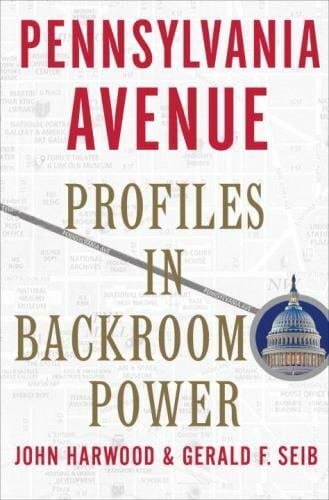
Prizewinning journalists John Harwood and Gerald F. Seib show how today’s Washington power game really works, through stories of people who are making a difference on Pennsylvania Avenue, America’s power street. These new power brokers, some of whom are rarely seen and are largley unknown, have figured out how to make their voices heard, and how to get things done, amid the complexities of today’s gridlocked Washington. With unprecedented access to Washington insiders, and with deep insight into the unspoken rules of the road in the capital, Harwood and Seib explain why progress is so difficult and illuminate what it takes to succeed in the high stakes game of politics. Pennsylvania Avenue, the 1.2-mile stretch between the White House and the Capitol, is where the influential and ambitious congregate. Through stories of party strategists, money men, policy-makers, fixers, socialites, lobbyists, spinners, deal-makers, and more, Harwood and Seib explore the great political transformations that have altered in a fundamental way the relationship between Americans and their government. A new class of politician and radically different ways of conducting business now exist in Washington. Harwood and Seib showcase such master players as Ken Duberstein (the Fixer), a onetime aide to President Ronald Reagan turned superlobbyist, whose contacts and insider knowledge help clients sidestep Avenue jam-ups; Carlyle Group co-founder David Rubenstein (the Businessman), a new breed of power broker who pioneered the age of “big money” in Washington; Rahm Emanuel (the Democratic Strategist), whose aggressive fundraising and crisis-room campaign enabled the Democrats to retake Congress in 2006; Debbie Wasserman Schultz (the Rising Star), a first-term Democratic representative from Florida whose meteoric ascent in the House has earned her influential allies as well as critics; Hilary Rosen (the Advocate), a former entertainment industry lobbyist who skillfully reframed the debate about same-sex marriage; and more. Inspiring and wonderfully written, Pennsylvania Avenue takes us inside America’s center of influence to show how our government really functions, and the insiders who make things happen. “Through a series of sharp vignettes and character sketches, the authors of “Pennsylvania Avenue,” John Harwood and Gerald F. Seib, take the reader behind some of the more imposing facades along the refurbished road, introducing the famous and not-so-famous, and explaining how business gets done in the new Washington. Though they accept the common view that the old rules have changed, their analysis is fresh and stimulating.” —The New York Times From the Hardcover edition.
My Summary
Main Ideas, Takeaways & Similarities
Questions
I. What is the problem?
A. How is this problem formulated?
B. Why is this problem important?
C. What is the history of this problem?
D. Which prominent personalities have been interested in this problem?
II. What solutions to the problem are there?
A. What are the conclusions reached?
B. By what argument(s) is the conclusion reached?
C. What facts or assumptions serve as premises?
D. When a prominent personality offers a solution, does he also argue for or against other prominent personalities? Does he raise objections to alternative solutions? Does he consider objections to his own solutions?
III. Evaluation
A. What are the advantages and disadvantages of the alternative formulations to the problem?
B. Has the importance or history of the problem ever been misrepresented?
C. Are the solutions logically related to the premises?
D. Are the facts true? Are the assumptions acceptable? Are the objections answerable?
AI Summary
Highlights
“Pennsylvania Avenue: Profiles in Backroom Power” is a book by John Harwood that provides an inside look at the people and events that shape American politics. Here’s a summary in bullet points:
- Author: John Harwood, a seasoned political journalist and commentator.
- Overview:
- The book offers a comprehensive examination of the key players and power dynamics in American politics, particularly those who operate behind the scenes on Pennsylvania Avenue, the symbolic heart of American governance.
- Key Themes:
- Political Profiles: Harwood profiles several influential figures who have played pivotal roles in shaping the political landscape, including politicians, strategists, and advisors.
- Backroom Power: The book explores the concept of “backroom power,” highlighting how decisions in American politics are often made through negotiations, deal-making, and relationships forged away from the public eye.
- Historical Context: Harwood places the profiles and events within the context of American political history, illustrating how the actions of key individuals have influenced policy and politics over time.
- Policy and Strategy: “Pennsylvania Avenue” delves into the strategies and tactics employed by political insiders to achieve their goals, from crafting legislation to winning elections.
- Profiles:
- The book includes profiles of various political figures, providing insights into their backgrounds, motivations, and approaches to politics. These profiles may encompass presidents, legislators, advisors, and other influential actors.
- Presidential Politics:
- Harwood examines the role of the presidency in American politics, discussing how presidents navigate the complex web of power and relationships in Washington, D.C.
- Partisan Divide:
- The book explores the partisan divide in American politics, discussing how it impacts decision-making and policy outcomes.
- Influence and Lobbying:
- Harwood delves into the world of lobbying and interest groups, shedding light on the influence they wield and their interactions with politicians.
- Audience:
- “Pennsylvania Avenue” is intended for readers interested in the inner workings of American politics, the role of key figures in shaping policy, and the dynamics of power in Washington, D.C.
- Impact:
- The book offers readers a behind-the-scenes perspective on the political process, providing valuable insights into how policy decisions are made and how political power operates in the United States.
- Legacy:
- John Harwood’s work as a political journalist and commentator has contributed to public understanding of American politics. “Pennsylvania Avenue” adds to his body of work by offering a detailed exploration of the individuals and forces that drive political decision-making in the nation’s capital.