
DESCRIPTION
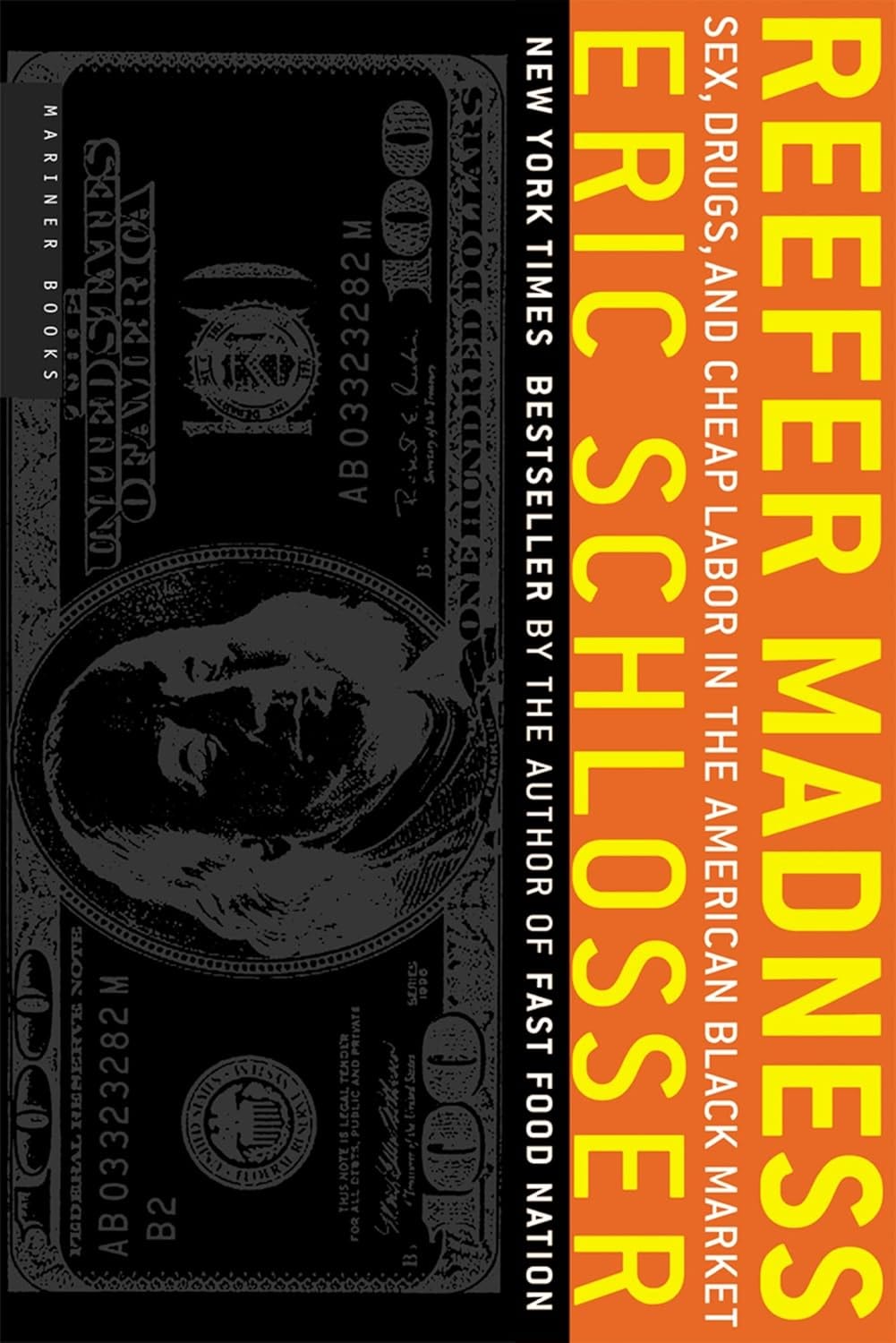
New York Times Bestseller: The shadowy world of “off the books” businesses—from marijuana to migrant workers—brought to life by the author of Fast Food Nation. America’s black market is much larger than we realize, and it affects us all deeply, whether or not we smoke pot, rent a risqué video, or pay our kids’ nannies in cash. In Reefer Madness, the award-winning investigative journalist Eric Schlosser turns his exacting eye to the underbelly of American capitalism and its far-reaching influence on our society. Exposing three American mainstays—pot, porn, and illegal immigrants—Schlosser shows how the black market has burgeoned over the past several decades. He also draws compelling parallels between underground and overground: how tycoons and gangsters rise and fall, how new technology shapes a market, how government intervention can reinvigorate black markets as well as mainstream ones, and how big business learns—and profits—from the underground. “Captivating … Compelling tales of crime and punishment as well as an illuminating glimpse at the inner workings of the underground economy. The book revolves around two figures: Mark Young of Indiana, who was sentenced to life in prison without parole for his relatively minor role in a marijuana deal; and Reuben Sturman, an enigmatic Ohio man who built and controlled a formidable pornography distribution empire before finally being convicted of tax evasion… . Schlosser unravels an American society that has ‘become alienated and at odds with itself.’ Like Fast Food Nation, this is an eye-opening book, offering the same high level of reporting and research.” —Publishers Weekly
My Summary
Main Ideas, Takeaways & Similarities
Questions
I. What is the problem?
A. How is this problem formulated?
B. Why is this problem important?
C. What is the history of this problem?
D. Which prominent personalities have been interested in this problem?
II. What solutions to the problem are there?
A. What are the conclusions reached?
B. By what argument(s) is the conclusion reached?
C. What facts or assumptions serve as premises?
D. When a prominent personality offers a solution, does he also argue for or against other prominent personalities? Does he raise objections to alternative solutions? Does he consider objections to his own solutions?
III. Evaluation
A. What are the advantages and disadvantages of the alternative formulations to the problem?
B. Has the importance or history of the problem ever been misrepresented?
C. Are the solutions logically related to the premises?
D. Are the facts true? Are the assumptions acceptable? Are the objections answerable?
AI Summary
Highlights
“Reefer Madness: Sex, Drugs, and Cheap Labor in the American Black Market” by Eric Schlosser is a non-fiction book that delves into the hidden aspects of the American underground economy, particularly focusing on the illicit drug trade. It explores the social, economic, and political consequences of the black market. Here is a comprehensive summary in bullet points:
- Title: Reefer Madness: Sex, Drugs, and Cheap Labor in the American Black Market
- Author: Eric Schlosser
Introduction:
- Introduces the concept of the American underground economy and its various components, including drugs, sex, and cheap labor.
- Expresses the author’s aim to shed light on the hidden aspects of this underground world.
Chapter 1: Marijuana and the Forbidden Fruit:
- Discusses the history and cultural perception of marijuana in the United States.
- Examines the criminalization of marijuana and its impact on the black market.
- Explores the growth of marijuana cultivation in California.
Chapter 2: In the Strawberry Fields:
- Investigates the exploitation of migrant laborers in California’s strawberry fields.
- Discusses the living conditions, wages, and challenges faced by these agricultural workers.
- Explores the role of the black market in providing a cheap labor source.
Chapter 3: The Southern California Illicit Drug Industry:
- Examines the drug trade in Southern California, particularly focusing on methamphetamine production.
- Discusses the economic incentives and consequences of methamphetamine manufacturing.
- Highlights law enforcement efforts to combat drug production.
Chapter 4: The Case for Legalization:
- Presents arguments for the legalization of marijuana and the potential benefits.
- Discusses the social and economic costs of prohibition.
- Explores alternative approaches to drug policy.
Chapter 5: The Prison-Industrial Complex:
- Investigates the growth of the prison-industrial complex in the United States.
- Discusses the privatization of prisons and its economic incentives.
- Explores the impact of the war on drugs on incarceration rates.
Chapter 6: Sex and the Black Market:
- Explores the underground world of illegal prostitution and human trafficking.
- Discusses the vulnerabilities of sex workers and the challenges they face.
- Highlights law enforcement efforts to combat human trafficking.
Chapter 7: The Drug War and the Constitution:
- Examines the erosion of civil liberties in the name of the war on drugs.
- Discusses issues related to search and seizure, asset forfeiture, and surveillance.
- Explores the tension between drug enforcement and individual rights.
Conclusion:
- Summarizes the key themes and findings of the book.
- Encourages readers to critically examine the consequences of the American underground economy.
- Calls for a reevaluation of drug policy and a more nuanced approach to addressing the issues presented in the book.