⬅️ Hub: Leftism & Woke Ideology
DESCRIPTION
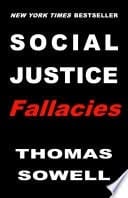
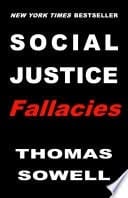
In this instant New York Times bestseller, renowned economist Thomas Sowell demolishes the myths that underpin the social justice movement The quest for social justice is a powerful crusade of our time, with an appeal to many different people, for many different reasons. But those who use the same words do not always present the same meanings. Clarifying those meanings is the first step toward finding out what we agree on and disagree on. From there, it is largely a question of what the facts are. Social Justice Fallacies reveals how many things that are thought to be true simply cannot stand up to documented facts, which are often the opposite of what is widely believed. However attractive the social justice vision, the crucial question is whether the social justice agenda will get us to the fulfillment of that vision. History shows that the social justice agenda has often led in the opposite direction, sometimes with catastrophic consequences. More things are involved besides simply mistakes. All human beings are fallible, and social justice advocates may not necessarily make any more mistakes than others. But crusaders with an utter certainty about their mission are often undeterred by obstacles, evidence or even fatal dangers. That is where much of the Western world is today. The question is whether we will continue on heedlessly, past the point of no return.
Review
🛠️ Active Reading Workflow
1. Prime (5 min)
- Thesis Prediction:
- Prior Knowledge:
- Questions to Answer:
2. Process (The “During” Loop)
Mark: T (Thesis), R (Reason), E (Evidence), D (Def), O (Objection).
- [ ] Q→A: Convert headings to questions; notes = answers.
- [ ] Feynman Check: Explain dense sections in 1-2 sentences.
- [ ] Originality: One original analogy/example per concept.
3. Review & Consolidate (Post-Session)
- [ ] Recall Dump: (Close book, list claims/terms).
- [ ] 3-2-1: 3 takeaways · 2 questions · 1 application.
- [ ] High-Yield Flashcards: (Definition, Claim → Reason, Objection).
🏛️ Analytical Deep-Dive (Adler/Paul-Elder)
| Element | Summary / Notes |
|---|---|
| Unity | The book in one sentence. |
| Problem | The central question the author is solving. |
| Propositions | Main claims in my own words. |
| Logic | Premises → Conclusion. |
| Criticism | Is the author uninformed, misinformed, or illogical? |
Counter-Argument (Steelman):
🚀 Application & Quality Gates
- The Experiment: [Define one behavior change].
- Gate 1: I can explain this in 3 mins without notes. [ ]
- Gate 2: I have at least one original counter-argument. [ ]
- Gate 3: Notes are <10% of original text length. [ ]
🖋️ Scratchpad
Unfiltered thoughts, argument trees, or “what if” scenarios.
AI Summary
Executive Summary
Thomas Sowell argues that modern “social justice” activism is propelled less by careful reasoning than by a set of recurring fallacies—about equality, group disparities, causation, knowledge, and language—that treat unequal outcomes as presumptive proof of wrongdoing and as a mandate for sweeping interventions. His central warning is that when rhetoric replaces empirical tests and when surrogates preempt the decisions of those closest to the facts, policies meant to help can reliably do harm—often to the very groups invoked as beneficiaries.
Facts vs. feelings as a governing principle
“You’re entitled to your own opinion, but you’re not entitled to your own facts.” — p. 9
Key Concepts and Frameworks
- The “social justice vision” (as Sowell defines it)
A worldview in which large disparities are presumed to exceed any innate human differences, and therefore are treated as evidence of exploitation or discrimination, unless proven otherwise. - Outcome equality vs. equal standards
Sowell repeatedly distinguishes equal opportunity as uniform standards from the expectation of equal outcomes, emphasizing that different backgrounds, preferences, climates, institutions, and preparations will produce uneven results even under identical rules. - Empirical testing vs. assertion-by-narrative
Across the book he presses a methodological demand: treat claims about discrimination, exploitation, and policy benefits as testable propositions, not moral certainties insulated from evidence. - Consequential knowledge (Hayekian framework)
Many decisions depend on local, contextual knowledge held by ordinary people facing real constraints; distant decision-makers often lack it—yet still impose rules while bearing little cost when wrong. - “Chess pieces” model of society
A recurring error: treating people as passive objects who will not change behavior in response to incentives, rules, taxes, and constraints—then blaming “unfairness” when results diverge from the plan.
Key Terms
- Reciprocal inequalities: Groups (and individuals) can be above-average in some endeavors and below-average in others; uneven representation is common and not automatically evidence of bias.
- Disparate impact (standard): A legal/administrative approach that infers discrimination from unequal group outcomes; Sowell argues it assumes a baseline of equal representation that does not exist in practice.
- Genetic determinism: Explanations that treat group outcomes as rooted in inherited group traits; Sowell criticizes both older genetic determinism and modern “single-cause” accounts that function similarly by closing off alternatives.
- Consequential knowledge: Practical knowledge of particular circumstances that matters for outcomes (distinct from abstract credentialed knowledge).
- Surrogate decision-makers: Elites, institutions, or regulators who make choices for others, often without bearing consequences when wrong.
- “Inflation tax”: Inflation as an implicit levy that erodes money’s purchasing power and can be regressive when the poor hold proportionally more cash than assets that inflate in value.
- Quantitative easing (QE): The technical term Sowell treats as obscuring the political reality of money creation to finance deficits.
Chapter 1: “EQUAL CHANCES” FALLACIES
Sowell opens by locating “social justice” in a Rousseau-like contrast between natural equality and socially produced inequality, then argues that this framing invites premature moral conclusions from disparities that can arise from many non-moral causes.
Rousseau as the template for the “social justice vision”
“the equality which nature established among men and the inequality which they have instituted among themselves.” — p. 11
Reciprocal Inequalities
- Core claim: uneven representation is normal because different groups (and individuals) develop different comparative advantages across domains; equality in one dimension does not imply equality across all dimensions.
- Sports and entertainment function as accessible examples: groups can be over-represented in one sport and under-represented in another, reducing any simple “one-direction” story of advantage/disadvantage.
- A key implication: treating a single workplace or field’s demographic imbalance as “proof” of discrimination ignores the pipeline of prior specialization (education/training) and other pre-labor-market factors.
Origins of Inequalities
- Sowell’s baseline: the more variables affecting outcomes, the less plausible it is that “equal chances” will produce equal results—especially across large populations with heterogeneous histories and constraints.
- He frames disparities as arising from multiple sources that interact over time (geography, culture, institutional history, family structure, education, migration, etc.), cautioning against single-cause explanations.
Inequalities Among Individuals
- Even within families, outcomes diverge for reasons unrelated to oppression narratives (birth order, cohort timing, resource constraints, and other intra-family differences). Sowell uses such patterns to argue against reading every gap as evidence of bias.
- He stresses that institutions select on developed capabilities, not “innate potential,” which weakens the inference from unequal outcomes to unfair procedures.
Inequalities Among Groups
- Group-level outcomes often reflect differential preparation and specialization rather than exclusion. His recurring motif is that group comparisons frequently compare “apples and oranges” (different distributions of training, preferences, and constraints).
- He highlights cross-national evidence that uneven regional/group development is a widespread human pattern, not a unique American moral scandal.
Environment and Human Capital
- Sowell treats climate/geography and institutional environment as “quiet variables” shaping skill development and opportunity sets (e.g., why some regions generate more hockey talent than others).
- Human capital (skills, education, experience) becomes the bridge between background conditions and later outcomes—often long before any employer enters the story.
Episodic Factors
- He adds that short-run shocks (policy changes, economic cycles, wars, migrations, local institutional shifts) can create spikes and dips that are mistakenly moralized into permanent structural narratives. (This section functions as a warning against snapshot explanations.)
Key terms introduced/emphasized: reciprocal inequalities, human capital, equal standards vs equal outcomes.
Chapter 2: RACIAL FALLACIES
Sowell argues that discussions of race often slide from “disparity exists” to “racism caused it,” while neglecting comparison sets (other groups, other countries, other periods) and alternative causal variables.
Assertions Versus Evidence
- Methodological pivot: discrimination is a possible cause, but it is not the default explanation that crowds out all other candidates.
- He tests the “white supremacy” narrative by pointing to large income variation among nonwhite groups (e.g., Asian-origin subgroups vs. Mexican Americans) and overlap between black and white income distributions—arguing that a single oppression mechanism cannot explain such heterogeneity.
- He warns that rhetoric can fossilize an outdated picture of black life and thereby misdirect the younger generation away from real opportunities and real present-day threats.
- The disparate impact approach is criticized for embedding an unrealistic assumption that equal group representation is the normal baseline, despite global evidence of persistent uneven development.
The scope of explanation must remain open
“It can be, it has been” — p. 33
Genetic Determinism
- Sowell treats genetic determinism historically: early 20th-century “scientific” elites used narrow evidence and treated contemporaneous disparities as timeless biological facts—despite historical reversals in which different peoples/regions lead in different epochs.
- He uses long-run examples (e.g., ancient Greek cultural prominence vs. later British industrial/scientific dominance) to argue that large capability differences can be historically contingent without being genetic.
- He adds within-race variation (overseas Chinese vs. mainland China; poor white counties vs. black medians) to weaken the explanatory power of race as a causal key.
Early Progressivism
- Sowell catalogs a set of Progressive-era authorities and institutions that used testing and “expert” pronouncements to label groups as inferior, including claims about Jews and immigrants that history later undercut.
- He uses environmental change and adoption/orphan evidence to show IQ and outcomes responding to circumstance—thereby pushing explanation toward environment/institutions rather than immutable biology.
Key terms emphasized: disparate impact, genetic determinism, cross-group heterogeneity as a diagnostic test.
Chapter 3: CHESS PIECES FALLACIES
Sowell’s claim is that many social-justice proposals assume people will remain passive under new rules, taxes, and transfers—when in reality people adapt, evade, substitute, migrate, and re-optimize, often collapsing the projected benefits.
Redistribution of Wealth
- He treats “tax the rich to fund free benefits” as a recurring political promise whose feasibility depends on behavioral response—not moral desirability.
- Historical illustration: changes in top tax rates can produce more revenue at lower rates if high earners shift out of tax shelters and back into taxable forms—because the tax base is behavior-dependent.
Chess Pieces and Income Statistics
The core “chess pieces” error
“people are not just inert chess pieces” — p. 72
- Sowell argues that media and academic claims about widening gaps often implicitly assume the “top 10%” and “bottom quintile” are the same people over time, when mobility data show substantial movement across brackets.
Trends Over Time
- He cites turnover evidence (e.g., Treasury/IRS-based work) to argue that “rich” and “poor” categories are not stable populations; policy arguments that ignore this treat bracket labels as if they were fixed persons.
- A methodological point: “built-in assumptions of stagnation” in category-based statistics can masquerade as empirical findings about actual individuals.
The Inflation “Tax”
- When “free benefits” exceed revenues, deficits can be monetized; inflation then erodes purchasing power broadly—functioning like a tax that can be regressive in asset terms.
- He argues that the political advantage is obscuring costs: voters see benefits, but not the roundabout payment through higher prices.
Different Numbers of People
- Quintiles of “households/consumer units” can contain very different numbers of people, so comparing total incomes across quintiles can mechanically exaggerate “inequality between individuals.”
- He gives the provocative implication: even with perfect equal individual incomes, statistics could still display large “quintile disparities” depending on how categories are constructed.
“Stagnating” Income Growth
- He critiques claims of “stagnation” that use selective start/end years and category definitions (e.g., household measures) without controlling for compositional change across decades.
Key terms emphasized: chess pieces fallacy, reification of statistical categories, inflation tax, feasibility vs desirability.
Chapter 4: KNOWLEDGE FALLACIES
This chapter argues that many “helping” interventions fail because they downgrade or ignore consequential knowledgeheld by the people directly facing constraints, while elevating credentialed outsiders whose incentives and information are mismatched to real-world tradeoffs.
Kinds of Knowledge
- Sowell distinguishes abstract, general knowledge from situational knowledge that determines whether a given decision will work in a particular context (time, place, constraints, priorities).
Conflicting Visions of Knowledge
- He frames the conflict as one between a vision that trusts dispersed knowledge and feedback (market/civil society constraints) versus a vision that trusts centralized “expert” correction of outcomes.
Consequential Knowledge
- “Consequential knowledge” is used to argue that those closest to circumstances often understand stakes and tradeoffs better than surrogates.
Employment Issues
- Sowell argues that well-intended rules (e.g., wage floors) can price out low-skill entrants—especially minority youth—while the costs are borne by those excluded, not by the advocates.
Payday Loans
- He analyzes payday lending as a case where annualized-rate rhetoric ignores the borrower’s actual problem: urgent, short-term cash needs with few alternatives.
- He argues that capping rates can eliminate the option entirely, letting advocates feel virtuous while leaving borrowers worse off.
Housing Decisions
- In housing and urban policy, he emphasizes how outsider plans can misread constraints and incentives, producing outcomes opposite those intended (including neighborhood decline dynamics and unintended consequences of “help”).
Children
- He treats education/child policy as a domain where ideology and institutional incentives (including unions and bureaucracies) can override what would actually serve children’s development and long-term opportunity.
Patterns and Consequences
- He links recurring failures to a pattern: moral certainty + elite insulation from consequences + suppression of dissenting evidence = escalating mistakes.
Implications
The knowledge problem in one sentence
“We each have our own island of knowledge in a sea of ignorance.” — p. 109
- Sowell closes with a warning that the greatest danger is not mere ignorance but fallacious certitude, especially when dissenting evidence is suppressed across institutions.
Catastrophe is often an elite achievement
“Stupid people can create problems, but it often takes brilliant people to create a real catastrophe.” — p. 109
Key terms emphasized: consequential knowledge, surrogate decision-makers, preemption, fallacious certitude.
Chapter 5: WORDS, DEEDS AND DANGERS
Sowell argues that many disputes labeled “social justice” are battles over language that smuggles in causation, assigns blame, and legitimizes coercive solutions—while ignoring tradeoffs and feedback. He warns that “generous wishes” can create systemic dangers when fused with intolerance for evidence and debate.
The chapter’s warning frame
”… we must be aware of the dangers which lie in our most generous wishes.” — p. 110
Visions and Vocabularies
- He distinguishes sharing a moral discomfort with inequality (which he attributes even to Friedman and Hayek) from adopting the “social justice” causal story that treats “society” as an agent and disparities as someone’s deliberate act.
- He uses Hayek’s distinction between unfairness in life and “society” as a non-agent to argue against moralizing outcomes as if produced by a single decision-maker.
- He frames “cosmos” (complex reality, including luck and dispersed causation) as an antidote to blame narratives that demand identifiable villains.
Merit
- Sowell treats merit disputes as partly semantic and partly institutional: changing the definition of merit (or the selection rules) changes incentives and performance—often without delivering the promised group outcomes.
Racism
- He argues that “racism” language can expand to cover disparities that may have multiple causes, creating a moral imperative for interventions whose mechanisms are not empirically validated.
- He warns against fixation on past-era enemies while neglecting present institutional constraints that can harm minorities (e.g., education systems, entry-level job barriers).
Affirmative Action
- Sowell criticizes the prevailing narrative that major black progress is primarily a post-1960s welfare/civil-rights-policy product; he points to earlier large declines in black poverty (1940–1960) as evidence that the story requires serious empirical re-testing.
- He then argues that affirmative action should be evaluated not only for harms to displaced non-beneficiaries, but also for harms to supposed beneficiaries (mismatch dynamics and institutional performance effects).
- He also attacks the “exploitation” narrative as politically powerful but testable—and offers historical “tests” in which expelling prosperous minorities (cast as exploiters) worsened local economies, implying that prosperity is not necessarily extracted from others’ poverty.
Critical Analysis
- Strengths
- Comparative method: Sowell consistently pressures readers to broaden the comparison class (across groups, countries, and centuries) as a check on parochial narratives.
- Institutional realism: The “consequential knowledge” and “chess pieces” frameworks force attention to incentives, adaptation, and unintended consequences—core tools for policy evaluation.
- Testability norm: His repeated demand for empirical tests is a genuine methodological through-line, not a chapter-local move.
- Limits / likely points of contestation
- Asymmetry of scrutiny: The book is primarily a critique of “social justice” explanations and interventions; readers sympathetic to structural accounts may argue it under-weights or under-develops the best empirical cases for discrimination as a primary driver in some domains (even while Sowell grants discrimination is possible).
- Selection of exemplars: Many arguments are built from illustrative cases and historical episodes. Critics may question representativeness, or argue that some examples show failures of particular implementations rather than of the broader moral goals.
- Normative baseline: Sowell’s emphasis on dispersed knowledge and skepticism toward centralized correction leans toward a classical-liberal/market-oriented normative stance. Some readers will see this as a principled framework; others will see it as shaping which harms get foregrounded.
Questions for Reflection
- If disparities are compatible with multiple causes, what standards of evidence should be required before labeling a disparity “discrimination” or “exploitation,” and before imposing corrective policy?
- How should institutions balance equal standards with pressure for equal representation, especially when pipelines (education, specialization, geography) differ?
- Where does Sowell’s “consequential knowledge” argument most strongly apply—and where might it fail (e.g., externalities, monopolies, historical legal exclusion)?
- What would a serious empirical test of the claim “the rich get rich by taking from the poor” look like, and what results would falsify it?
- How do statistical categories (quintiles, “top 1%”) shape moral intuitions—and what safeguards can prevent reifying categories into fixed populations?
- When (if ever) is “disparate impact” a defensible proxy for discrimination, given global evidence of uneven group development?
- What institutional norms are necessary to prevent the “fatal danger” Sowell identifies: suppression of dissenting evidence and opinion?
Connections
- Thinkers and works explicitly invoked
- Jean-Jacques Rousseau (natural equality vs instituted inequality)
- Daniel Patrick Moynihan (facts vs opinions)
- F.A. Hayek (society as non-agent; “cosmos”; dispersed knowledge)
- Milton Friedman (inequality acknowledged; political incentives)
- Joseph E. Stiglitz (as a prominent inequality-claim exemplar in public discourse)
- John Stuart Mill (used in discussion of dissent/suppression themes)
- John Dewey, William Godwin, Woodrow Wilson (invoked in education/ideology discussion threads)
- Historical movements and recurring reference-points
- Progressivism and Progressive-era “scientific” racial theorizing
- Marxism/Communism and the rhetoric of “exploitation”
- Civil Rights era narratives about post-1960s progress (treated as an empirical claim to be tested)
- Modern institutional conflicts over speech norms, suppression of dissent, and elite authority
If you want, I can convert this into an Obsidian-ready note with YAML frontmatter (title/author/tags), plus a compact “Key Claims” block at the top for quick recall.