
DESCRIPTION
Attachment (file not included in this release)
AI Summary
Overview
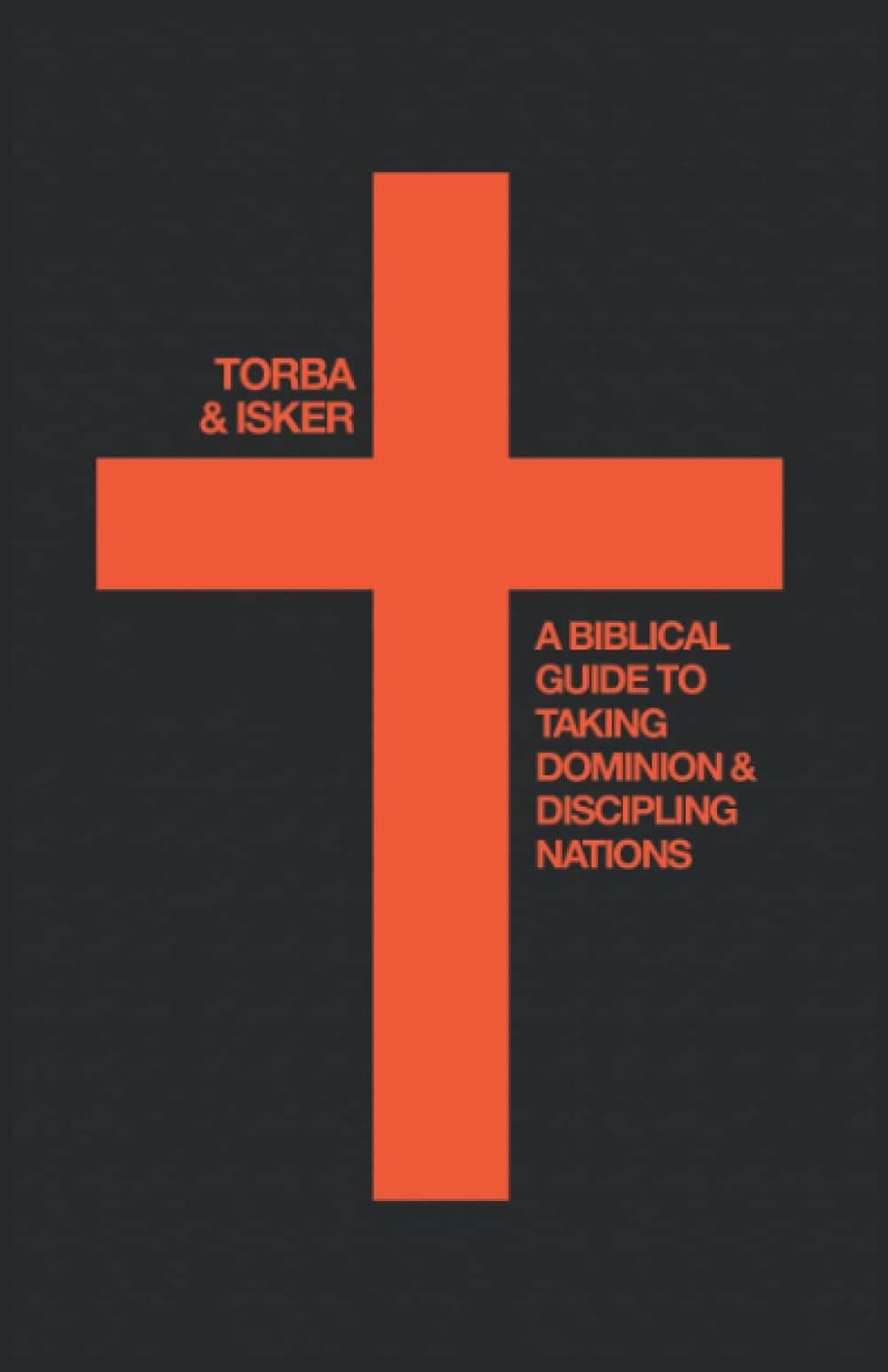
Christian Nationalism: A Biblical Guide for Taking Dominion and Discipling Nations argues that faithful Christianity necessarily entails building explicitly Christian nations, starting with the United States. The authors present “Christian Nationalism” as a spiritual, social, economic, and political project to form a “parallel Christian society” that will eventually replace the secular liberal order they see as collapsing under God’s judgment.
The book combines biblical proof-texts, American colonial history, and culture-war polemic to call Christians to reject what it labels “lukewarm” and “pietistic” Christianity, embrace a theology of dominion and eventual historical victory, and work over multiple generations to reorder families, churches, local governments, media, technology, and the economy around an explicitly Christian worldview.
Structure of the Book
The book is organized as:
- Foreword – “The Declaration of Christian Nationalism”
- Introduction – “What is a Christian?” / “What is Christian Nationalism?”
- Ch. 1 – Dominion
- Ch. 2 – If You Are a Christian, You’re a Christian Nationalist
- Ch. 3 – Weapons for Spiritual War in a Post-Truth World
- Ch. 4 – This Is Not a “Judeo-Christian” Movement
- Ch. 5 – Know Them by Their Fruits
- Ch. 6 – The Christian Crusade to Save Free Speech, Again
- Ch. 7 – The Time for Lukewarm Christianity Is Over
- Ch. 8 – An Eschatology of Victory
- Ch. 9 – If Your Pastor Did Not Celebrate Roe Being Overturned, It Is Time To Find a New Church
- Ch. 10 – Total Victory Is Inevitable
- Epilogue – The Christian Nationalist Founding of America
Each chapter develops one aspect of what they think Christian Nationalism requires in belief, practice, and long-term strategy.
Core Themes and Arguments
1. Definition of Christian and Christian Nationalist
The introduction defines a Christian as a disciple of Jesus who “takes dominion in all areas of life” by obeying the Great Commission to disciple nations, not just individuals. A Christian should love his “fatherland,” be actively engaged in culture and public life, live out clear gender roles (masculine men, feminine women), and be “salt and light” beyond Sunday worship.
Christian Nationalism, in this framework, is simply applying that discipleship mandate at the national level:
- Loving one’s neighbor means prioritizing the good of one’s own people and country over foreign interests (using 1 Tim 5:8 as a key text).
- A Christian Nationalist wants laws and institutions shaped by Christian morality and an explicit acknowledgment of Christ’s authority over the nation.
- They insist this is not racial nationalism: any ethnicity can join, but leadership and direction must be explicitly and confessionally Christian.
They argue that because Jesus has “all authority in heaven and on earth” (Matt 28:18), every nation is already under his rule whether it recognizes it or not; Christian Nationalism is simply “acting like this is true” in law, culture, and institutions.
2. Dominion and the “Parallel Christian Society”
Chapter 1 lays out a dominion theology:
- God is real, the Bible is true, and Jesus is King of kings.
- America was historically a Christian nation that has fallen under the influence of “secular humanists” and “subversive agents of Satan” who now dominate media, tech, finance, and culture.
- Christians must respond not by trying to reclaim a “sinking ship” but by building alternative, parallel institutions—a “parallel Christian society” in media, education, business, and technology that will outlast and replace the secular order once it collapses.
They stress: - Multi-generational planning: Christians should think in terms of “seven generations,” building institutions their descendants will inherit.
- Nuclear family as civilizational core: strong fathers, supportive mothers, and children raised in explicitly Christian culture, often via homeschooling and separation from mainstream media.
- Refusal of “tolerance” for evil: the book explicitly says “tolerance is not a Christian virtue” and calls for hating sin and evil, though they warn this hatred should be directed at sin rather than other people.
Dominion, then, means systematically withdrawing from and replacing secular systems—economy, media, social networks, education—while still exerting enough influence to function as “salt and light” in a decaying society.
3. “If You Are a Christian, You’re a Christian Nationalist”
Chapter 2 argues that Christian Nationalism is not optional for Christians:
- The Great Commission is addressed to nations; therefore, any Christian who accepts Christ’s authority must desire their nation to be discipled and governed by his law.
- To reject “Christian Nationalism” while claiming to be Christian is framed as disobedience, not a legitimate theological option.
- The authors tie this to their reading of American history, claiming the original colonies were explicitly Christian nations—Puritans in New England, Anglicans in Virginia, Catholics in Maryland, etc.—and that the U.S. Constitution’s Establishment Clause was meant to protect state-level Christian establishments, not to enshrine secularism.
They criticize modern American evangelicalism for: - Pietism and privatized faith – “this world is not my home” spirituality and emphasis on a purely “personal relationship with Jesus” are described as historically novel and responsible for ceding culture to “godless leftism.”
- Failure to lead against cultural decay – especially on issues like abortion, LGBT rights, and gender ideology.
The chapter frames the acceptance of the “Christian Nationalist” label as a necessary step in recovering a robust, public, civilizational Christianity.
4. Spiritual War in a “Post-Truth World”
Chapter 3 treats contemporary culture as a post-truth battlefield:
- The book lists traditional positions on sex, gender, family, and life (“men are men, women are women,” “marriage is between a man and a woman,” “we should not kill babies”) as obvious truths that are now branded “hate.”
- This inversion of reality is attributed to Satan “turning creation upside down.”
The “weapons” they advocate are largely spiritual and rhetorical: - Bold proclamation of biblical moral norms, especially on life, sexuality, and family.
- Prayer, worship, fasting, and intensive Bible reading as sources of power.
- Using Christ’s name and Scripture as a kind of spiritual offense; they argue that opposition cannot ultimately withstand blatant Christ-centered truth claims.
They also critique Christians who adopt secular narratives or platforms uncritically, arguing that trying to “fight on the enemy’s turf” (e.g., mainstream social media) underestimates how structurally hostile those institutions are, and reinforces the case for building parallel Christian platforms.
5. Rejection of “Judeo-Christian” and Dispensational Zionism
Chapter 4 is a central and theologically sharp section in which the authors insist that Christian Nationalism is explicitly Christian, not “Judeo-Christian.”
Key claims:
- Christianity and modern rabbinic Judaism are described as “totally distinct, incompatible, and irreconcilable religions.”
- They adopt a strong supersessionist / fulfillment theology:
- The New Covenant in Christ fulfills and supersedes the Mosaic covenant.
- Jesus himself is the “true Israel,” and the church (Jew and Gentile united to him) inherits the promises.
- The destruction of the temple in 70 AD is interpreted as God’s final judgment on the Old Covenant order.
- Modern Judaism is portrayed as a post-biblical religion built around the Talmud and the “traditions of the elders” that Jesus condemned, rather than as a continuation of Old Testament faith.
At the same time, they insist their opposition is theological, not racial: - Ethnic Jews who embrace Christ are “brothers and sisters.”
- They condemn what they call “true antisemitism” as refusing to evangelize Jews on the assumption that they are already “chosen” and do not need Christ.
The term “Judeo-Christian” is rejected as misleading because it suggests an ongoing theological partnership between Judaism and Christianity; they argue that blurring this distinction undermines both evangelism to Jews and the clarity of Christian identity.
6. Movement Boundaries and Leadership: “Know Them by Their Fruits”
Chapter 5 tightens the definition of who can lead or shape the movement:
- Leadership must be exclusively Christian: non-believers may support the movement or benefit from it, but they should not hold “meaningful positions of authority.”
- Criteria are confessional, not ethnic or racial: explicit repentance and faith in Christ, not ancestry, are the baseline for belonging.
- The authors criticize leadership by “pagans, nonbelievers, Talmudic and secular Jews, and fake Christians-in-name-only,” arguing that the nation’s current condition shows the “fruit” of being led by such elites.
They also: - Emphasize masculine leadership and “God-given masculine energy to conquer and lead,” asserting that current Christendom suffers from “weak and emasculated ‘Christian’ men.”
- Reiterate that Christian Nationalism is global and multi-ethnic but must be guided and defined by Christians committed to dominion in family, church, education, media, and politics.
7. Free Speech and the “Digital Noah’s Ark”
Chapter 6 frames free speech as historically rooted in Christianity and as a non-negotiable tool for dissent and reform:
- They trace a line from Luther’s defiance of the medieval church, through Puritans and English dissenters, to the American Founding, arguing that each episode involved Christians saying “no” to corrupt authority and relying on free speech to do so.
- Modern Big Tech and financial de-platforming are treated as contemporary equivalents of tyrannical suppression.
Gab, the platform run by the authors’ company, is presented as a “digital Noah’s Ark”—a refuge from censorship where Christian dissent can be preserved and amplified. Christian Nationalism is framed as another turn in this longer Christian tradition of principled dissent against unbiblical power.
8. Against Lukewarm Christianity and Toward “Victory Eschatology”
Chapters 7–10 shift from diagnosis to eschatology and exhortation:
Lukewarm Christianity (Ch. 7)
- They denounce “lukewarm” Christians who are comfortable, politically quietist, and reluctant to confront sin publicly.
- The call is for “all-in” Christianity: ordering every area of life under Christ’s kingship, accepting suffering and marginalization, and intentionally raising children and grandchildren as “builders for the Kingdom of God.”
Eschatology of Victory (Ch. 8)
- The authors advocate a strongly optimistic eschatology (often associated with postmillennialism):
- Christ is reigning now and will continue to reign in history until his enemies are made his footstool.
- The spread of the gospel and Christian law across nations is expected to advance, not retreat, over time.
- Pessimistic end-times views (rapture-centric, “it all gets worse so we just hang on”) are criticized as excuses for passivity and capitulation.
Roe as a Test of Churches (Ch. 9)
- The overturning of Roe v. Wade is presented as a clear test: churches and pastors who did not openly celebrate it are deemed compromised or cowardly.
- The chapter urges Christians to leave churches whose leadership will not clearly denounce abortion and engage in public battles over life, family, and law.
Total Victory Is Inevitable (Ch. 10)
- The final chapter reiterates that, in their view, Christian victory is not a question of “if” but “when.”
- “Total victory” means:
- Families reordered under biblical patterns.
- Local communities, schools, and economies increasingly under Christian influence.
- A robust network of Christian institutions ready to “fill the vacuum” when the secular liberal order collapses under its own contradictions.
This victory is expected to come through multi-generational faithfulness and institution-building, not instant political takeover.
9. Historical Claim: America as a Christian Nation
The epilogue argues at length that America was founded as a Christian nation:
- The authors emphasize colonial charters and state-level establishments (Anglican in Virginia, Congregationalist in New England, etc.) as clear evidence that the colonies were “Christian nations for Christian people governed by Christians.”
- They criticize what they call “anti-Christian historians” for starting the story in 1791 with the Bill of Rights and ignoring over two centuries of explicitly Christian colonial history.
- “Separation of church and state” is reframed: they accept secularity (functional distinction between church and state) but reject secularism (exclusion of religion from political life and law).
This historical narrative underwrites their claim that Christian Nationalism is not a radical innovation but a recovery and updating of America’s intended identity.
Key Takeaways
- Christian Nationalism is presented as the “default” Christian political stance.
The book asserts that if Christ has all authority and the Great Commission targets nations, then Christians should desire explicitly Christian law and governance; resistance to this is framed as disobedience or theological confusion. - The strategy is dominion via a “parallel Christian society,” not just electoral politics.
While they do not dismiss politics, the emphasis is on building Christian alternatives in media, tech, business, education, and local governance so that when secular systems fail, Christian structures are ready to replace them. - The movement is explicitly Christian, multi-ethnic, but confessionally exclusive in leadership.
Anyone of any ethnicity may join and benefit, but authority is reserved for repentant, confessing Christians; race-based nationalism and “Judeo-Christian” civil religion are both rejected. - The book advances a strong supersessionist theology and rejects “Judeo-Christian” language.
The authors argue that the church (Jew and Gentile united to Christ) is the true Israel, modern Judaism is a separate post-biblical religion, and using “Judeo-Christian” obscures this and weakens both theology and evangelism. - Family, masculinity, and strict moral norms are central.
The nuclear family, clear gender roles, opposition to abortion and LGBT identities, and separation from mainstream entertainment and schooling are treated as non-negotiable pillars of Christian civilization. - They are openly culture-war oriented but frame the conflict as spiritual and long-term.
The book’s rhetoric is combative—“we are in the footstool-making business”—yet it stresses multi-generational patience, spiritual disciplines, and institutional building over revolutionary violence. - Eschatology drives urgency and optimism.
A theology of ultimate historical victory, not just heavenly hope, is what motivates their call for Christians to cease being “lukewarm,” embrace the Christian Nationalist identity, and labor for a future where nations are explicitly ordered under Christ’s law.
Taken together, the book functions as a manifesto: defining Christian Nationalism theologically, defending it historically in the American context, diagnosing secular liberalism as doomed, and offering a strategic blueprint for Christians who want to build and inhabit a self-consciously Christian nation over the long run.