Zibaldone 2024–2025 journal
Journal connection: Slavery, identity, and quantitative historical material.
Source boundary: These are captured journal materials; the integration does not independently verify every clipped claim, quotation, or figure.
PDF++ pages: p. 201 (file not included in this release) · p. 396 (file not included in this release)
Embedded previews:
Zibaldone 2024-2025.pdf (file not included in this release)
Zibaldone 2024-2025.pdf (file not included in this release)
Open the complete Zibaldone page index
Notes
Pinker’s Chapter 4 supplement — abolition was neither automatic nor purely economic
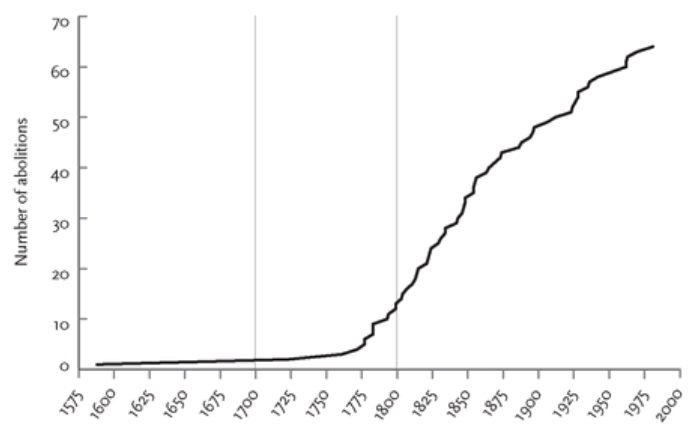
Pinker’s comparative starting point is that slavery was historically widespread across civilizations and races; the exceptional event to explain is the rise of a mass movement against chattel slavery as an institution in the eighteenth century. He rejects a clean economic inevitability story. Adam Smith argued that free labor should outperform coerced labor, yet later scholarship found antebellum Southern slavery economically viable enough that it did not simply price itself out of existence. In the United States it ended through constitutional change after war; Britain combined legislation, moral campaigning, sanctions, and naval enforcement.
The abolitionist mechanism joined universal-rights arguments to victim testimony and organization: Quakers, free Black people, formerly enslaved writers, clergy, politicians, petitions, autobiographies, and fiction made an entrenched institution both intellectually indefensible and emotionally visible. This does not assign abolition to one civilization, denomination, book, or motive; it is Pinker’s 2011 synthesis of interacting ideas, interests, movements, and state power.
Figure 4-6 — cumulative formal abolitions of slavery across countries and colonies. Pinker constructed the series from an online abolition timeline retrieved in 2009, and jurisdictions differ in what counted as abolition; the graph measures legal proclamations, not enforcement, illicit bondage, or equal citizenship afterward. Use it for the clustered timing of formal abolition, not as a precise global emancipation score. Chapter 4 synthesis · Slavery’s historical prevalence and coercive core, PDF pp. 226–227 (file not included in this release) · Economics versus humanitarian mobilization, PDF pp. 227–229 (file not included in this release) · Narratives, organization, and abolition, PDF pp. 229–230 (file not included in this release) · Figure 4-6 and source note, PDF p. 231 (file not included in this release)
- Don’t Be Fooled; Reparations Will NEVER Happen | Thomas Sowell - YouTube
- Universal curse of the human species
- Been happening since the beginning of history
- Prior to 18th Century, there was no movement to abolish slavery
- Adam Smith in 1776, “Only place without slavery is Western Europe” and citizens in Western Europe had many slaves in other countries
- History of Slavery has been distorted: I.E. ‘White people have black people in bondage’
- More slaves in India than the entire Western Hemisphere
- China during era of slavery has been described as one of the largest and most comprehensive markets for the exchange of human beings in the world
- “At some period, however, of their history, almost every people, now civilized, have consisted, in majority, of slaves.” -John Stuart Mill
- Christian monasteries and Buddhist monasteries had slaves
- Even Thomas Moores fictional society Utopia had slaves
- What was peculiar about Western society was not that it had slaves, like other societies around the world. But that it was the first civilization to turn against slavery. And it spent more than a century destroying slavery not only within Western civilization itself but also in other countries around the world over the often bitter and armed resistance of people in other societies. Only the overwhelming military power of Western nations during the Age of Imperialism made this possible. Slavery did not die out on its own accord, it went down fighting until the bitter end in countries around the world. And it has still not died out until this day in parts of the Middle East and Africa.
- Institution of slavery was not built on race
- The world ‘Slave’ is derived from a European people, ‘Slavs’; who were enslaved for centuries before the first African was brought in bondage to the Western Hemisphere
- Same for various other languages, including Arabic
- Most slaves were not racially different from the ones who enslaved them.
- When it became economically and technologically feasible to transport masses of slaves from one continent to another, Europeans as well as Africans were enslaved and transported from their native lands to bondage on another continent.
- The world ‘Slave’ is derived from a European people, ‘Slavs’; who were enslaved for centuries before the first African was brought in bondage to the Western Hemisphere
- Pirates alone transported a million or more Europeans as slaves to Barbary Coast in North Africa, at least twice as many European slaves than there were African slaves transported to the United States.
- White slaves were still being bought and sold in the Islamic world decades after blacks were freed in the United States.
- The idea that slavery in America was the cause of the current issue with single parent households, doesn’t hold true when during slavery and for decades after, blacks had stronger two parent households statistically. Two-third were in two parent households, and even blacks had a lower unemployment.
None of this philosophizing ended the hypocrisy of a society that continued to tolerate slavery, of course. And this didn’t go without comment—Dr. Samuel Johnson famously quipped, “How is it that we hear the loudest yelps for liberty among the drivers of Negroes?” But it is worth noting that when the Declaration of Independence was written, slavery was common practice across the world; as we will discuss later, slavery itself was not outlawed in Britain’s territories until 1833, and not in India until 1843. And as we will also see, the founders were well aware of the conflict between their ideals of equality and the institution of slavery. None of them claimed that blacks were not, in fact, human beings covered by the Declaration of Independence’s high ideals. In fact, as C. Bradley Thompson points out, the argument for the race-based inapplicability of the Declaration’s guarantee of human equality didn’t emerge in the United States until the militant proslavery movement got under way in the 1830s, in .26 direct response to the abolitionist movement. How to Destroy America in Three Easy Steps
Based Man SHATTERS The Idea of Reparations
Robert Woodson appeared on the Dr.
https://youtube.com/shorts/-GRfO9lo9Ys?si=jybngoOvk2N-_BqQ
- 9 out 13 states had abolished slavery before the Constitution was ratified
Modern European History - Peterson Academy > **VII. Slavery and Moral Controversies**
Slaves Brought to U.S.
| Period | Estimated Number of Slaves Brought to the U.S. |
|---|---|
| 1619 - 1700 | 13,000 - 27,000 |
| 1701 - 1760 | 116,000 - 140,000 |
| 1761 - 1790 | 67,000 - 92,000 |
| 1791 - 1808 | 80,000 - 100,000 |
| Total | 296,000 - 359,000 |
How many Whites owned slaves
- In the 1850 census, of the 6,184,477 white folk in the slave States, only 347,525 were listed as owners, found Nevin. In the 1860 Census, which is on the eve of the Civil War, there were 393,975 slave owners in the United States out of a total population of 31,183,582, or 1.26 percent of the population. 8.10.20.pdf
- Looking just at the slave states then, there were 393,975 slave owners in the slave states out of a population of 12,240,293. So this means that 3.22 percent of the population of the 15 slave states were slave owners.
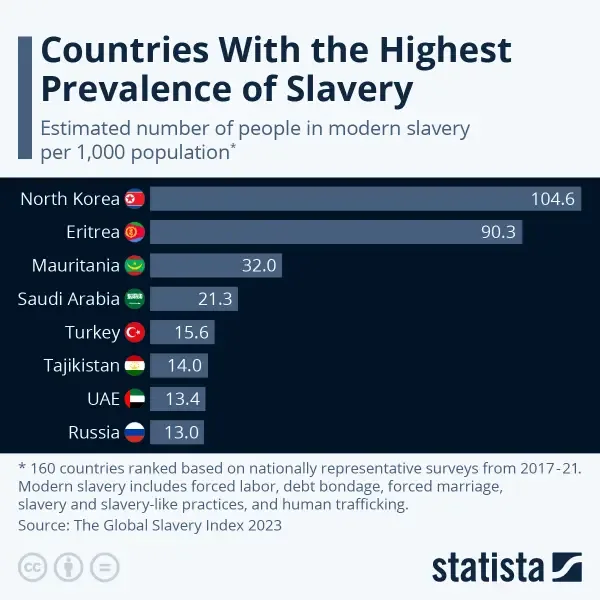
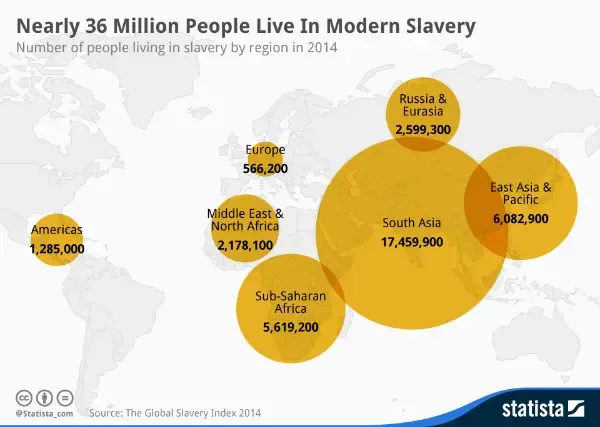
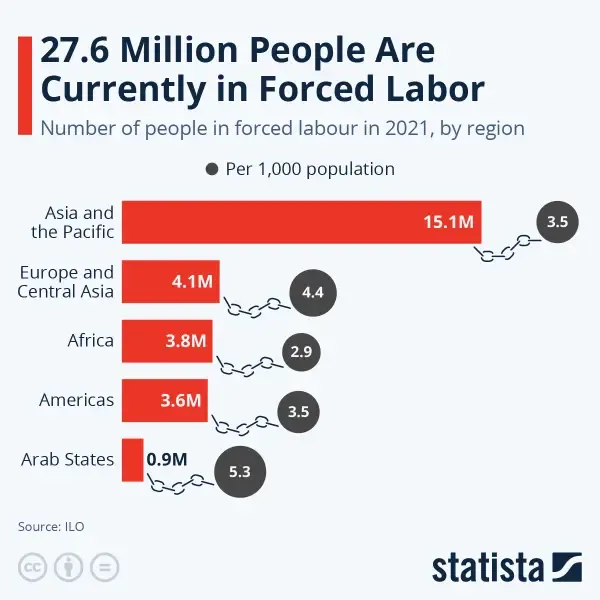
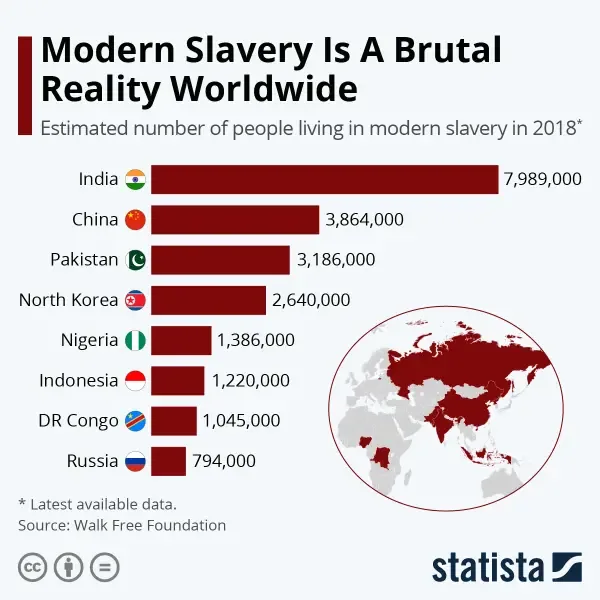
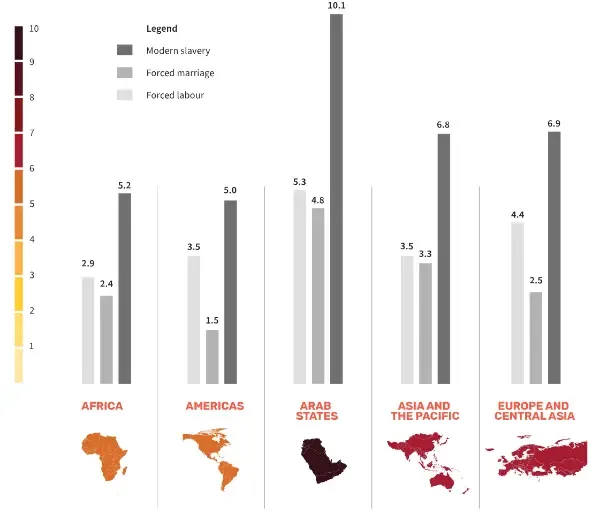
Modern Slavery
Global-Slavery-Index-2023.pdf (file not included in this release)
Open: 2023-Global-Slavery-Index-Data.xlsx (file not included in this release)
References
Global Slavery Index | Walk Free
Charlie Educates Lady Mentally Living in the 1850’s - YouTube