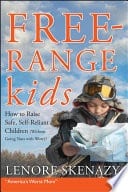
DESCRIPTION
FREE RANGE KIDS has become a national movement, sparked by the incredible response to Lenore Skenazy?s piece about allowing her 9-year-old ride the subway alone in NYC. Parent groups argued about it, bloggers, blogged, spouses became uncivil with each other, and the media jumped all over it. A lot of parents today, Skenazy says, see no difference between letting their kids walk to school and letting them walk through a firing range. Any risk is seen as too much risk. But if you try to prevent every possible danger or difficult in your child?s everyday life, that child never gets a chance to grow up. We parents have to realize that the greatest risk of all just might be trying to raise a child who never encounters choice or independence.
My Summary
Main Ideas, Takeaways & Similarities
Questions
I. What is the problem?
A. How is this problem formulated?
B. Why is this problem important?
C. What is the history of this problem?
D. Which prominent personalities have been interested in this problem?
II. What solutions to the problem are there?
A. What are the conclusions reached?
B. By what argument(s) is the conclusion reached?
C. What facts or assumptions serve as premises?
D. When a prominent personality offers a solution, does he also argue for or against other prominent personalities? Does he raise objections to alternative solutions? Does he consider objections to his own solutions?
III. Evaluation
A. What are the advantages and disadvantages of the alternative formulations to the problem?
B. Has the importance or history of the problem ever been misrepresented?
C. Are the solutions logically related to the premises?
D. Are the facts true? Are the assumptions acceptable? Are the objections answerable?
AI Summary
Highlights
Free-Range Kids_ How Parents and Teachers - Lenore Skenazy.pdf (file not included in this release)
Author: Lenore Skenazy
Category: Books
Genre: Parenting
- This excessive fear is irrational - statistics show there are no more dangers today for children than when today’s parents were kids themselves. Rates of violent crime and crimes against children have actually fallen.
- child’s chances of being kidnapped and killed by a stranger are only about 0.00007%.
- In reality, a child would have to be left unattended for 750,000 years for an abduction to be statistically likely.
- After birth, the overwhelming amount of expert parenting advice continues, with books giving overly specific instructions on how to talk to kids, reward good behavior, respond to artwork, and even potty train.
- Following all this detailed advice is nearly impossible and makes parents feel like failures if their kids aren’t perfect. It undermines parents’ confidence in their own common sense.
- Educational toys and videos for babies are heavily marketed as essential for development, but interacting with the real world is more valuable. Baby videos have not been proven educational and may even be harmful.
- The educational toy obsession makes parents feel pressured to constantly stimulate their children’s minds. But this is unnecessary and even geniuses like George Gershwin didn’t have early music training.
- When courts allow unreasonable lawsuits, it encourages people and organizations to be overly cautious and restrict normal childhood activities
- Parents start to internalize this mindset and become afraid to let their kids do things they did as children, even if the actual risk is very low
- The author argues that we need to push back against this overprotective culture and allow kids to have some normal, age-appropriate risks and freedoms, even if there is a small chance of injury
- Parents, especially moms, face threats of shaming, ridicule and calls to authorities if they go against the norm of constant supervision. This makes it hard to trust their own judgment.
- When tragedies happen to children, there is an impulse to blame the parents as negligent and deserving of scorn rather than sympathy. Blaming feels righteous while obscuring the reality that bad things can happen to good parents too.
- Sociologist Joel Best studied crime reports back to 1958 and found zero cases of kids being killed or seriously hurt by contaminated Halloween treats from strangers. The only actual cases involved family members.
- Throughout most of human history, kids worked alongside adults from a young age out of necessity. Pampering children is a very recent concept.
- In past generations, teens were expected to be much more responsible and independent. Getting married and having children as teenagers was normal. Today’s teens get depressed without enough responsibility.
- The overall message is that kids are very resilient and capable of handling much more than today’s overprotective society thinks. Experiencing challenges and responsibility from a young age is important for their development into successful adults.
- Wealthy countries like Sweden allow young teenagers (13 years old) to explore cities like Stockholm alone after some guided sightseeing on school field trips.
- Germany prioritizes outdoor time for kids, who regularly walk to school, playgrounds, and friends’ houses alone from a young age.
- The car-centric culture in American suburbs restricts children’s freedom and independence compared to other countries.
- Worry has become the hallmark of a “good parent” in modern times. Parents feel they must always be present and available to their children, enabled by cell phones. But this constant connection prevents kids from learning to be independent.
- The safer the First World has become for children, ironically the more parents have come to believe that if anything bad happens to their child it is the parents’ fault. This leads to parents trying to control and perfect every aspect of their child’s life.
- Attempting to control everything and smooth out all obstacles in a child’s path, sometimes called “lawnmower parenting”, actually increases anxiety for both parent and child. It’s an impossible task.
- The idea that the first few years of a child’s life are the most crucial for development and that parents must provide constant stimulation and enrichment during this time is a myth not supported by neuroscience.
- Historically, children were not seen as needing intensive parental involvement and stimulation. The current obsession with parenting as the most important role that defines a person’s identity is a recent phenomenon.
- Parents should relax and accept that they cannot control every aspect of their child’s development. Doing one’s best is enough, and kids are resilient.
- Failure is an important part of life and builds character, but it is taboo when it comes to our own kids. Parents feel guilty for letting their children quit activities they are not good at or don’t enjoy.
- Reframing failure as making a choice about how to live your life, rather than the scary boogeyman, can help kids and parents deal with the pressure to always succeed. Sometimes you can win by losing.
- Play is essential to childhood development, fostering skills like math, communication, negotiation, leadership, scientific outlook, fairness, flexibility, and even physics.
- Certain toys like Elmo are designed for passive consumption rather than active, imaginative play. “Good toys” like boxes, balls, and basic dolls allow for more creativity.
- When playing together, kids learn skills like negotiation, compromise, and communication by working out scenarios and disputes on their own.
- Gym teacher John DeMatteo has students invent their own games, which fosters creativity and keeps them physically active. This contrasts with many adult-supervised sports programs.
- The American Academy of Pediatrics recommends prioritizing free play for child development, as it builds confidence, competence, creativity, tenacity, fairness and decency.
- The author argues that overprotective parenting can instill fear in children that lasts into adulthood, causing resentment and a lack of independence.
- Without enough free time, kids don’t get a chance to explore, expand, and come into their own by goofing around, nursing a talent, or starting their own projects.
- Boredom, while painful, pushes kids to find ways to fill their time on their own, which can lead to the development of new interests and skills.
- Parents should empower their children by teaching them they have the right to say no, to confide in their parents without fear of getting in trouble, and to distinguish between good and bad secrets.
- The author advocates a “Free-Range Kids” approach of building children’s confidence and competence to navigate the world, rather than keeping them fearful and overprotected.
- When kids feel they can handle everyday life, anxiety is kept at bay. But as the sense of self-reliance diminishes, anxiety and depression are on the rise in young people.
- Overinflated compassion leads parents to treat kids as powerless and vulnerable, lacking the resources to handle life’s everyday challenges. This is a recent phenomenon.
- In the Netherlands, a tradition called “droppings” has groups of kids navigate the woods alone at night to return to camp. Though difficult, it builds their confidence and capability.
- Parents must overcome their fears of remote dangers, failure, and nature, and resist the influence of alarmist media and self-declared experts who exaggerate risks.
- It is the job of parents to teach children the skills they need to navigate the world independently, rather than coddling them and doing everything for them.
- Introduction
- The author recounts a story where her friend’s 10-year-old daughter was left at an ice cream shop with her older sister and friends, causing the girl’s mother to become hysterical with worry, despite the girl being safe and surrounded by people she knew.
- Many parents today are bad at assessing risk, seeing danger everywhere and trying to prevent their children from encountering any risks or difficulties.
- Examples are given of parents who won’t let their children go to the mailbox alone, play basketball in their own driveway, or go on school field trips unsupervised.
- Statistics show that violent crime, including crimes against children, has been falling since the early 1990s. Children today are as safe from violent crime as their parents and grandparents were.
- The perception of increased danger is not supported by facts. Abductions are extremely rare.
- Parents tend to assume any risk to a child is a 100% risk to their own child, leading to excessive worry and restrictions on children’s activities and independence.
- Childhood has changed dramatically in the past 50 years, with far fewer children walking/biking to school or playing outside.
- Factors contributing to increased fear include busy working parents, “helpful” products and media stoking fears, and the way our brains fixate on scary thoughts.
- The author, a doctor, chooses to give his children the same freedoms he had growing up, despite the worries and judgments of others. He refuses to let fear immobilize his kids.
- Suggestions are given for gradually giving children more independence and freedom, such as letting them cross the street alone, bike around the block unsupervised, and be dropped off at an ice cream store with a friend.
- Commandment 1: Know When To Worry
- Many parents today are overly fearful and see risks everywhere for their children, even in relatively safe situations like letting kids play at a park or walk to school.
- This excessive fear is irrational - statistics show there are no more dangers today for children than when today’s parents were kids themselves. Rates of violent crime and crimes against children have actually fallen.
- Parents catastrophize and assume any negative incident they hear about could happen to their own child, no matter how remote the odds.
- This overprotective parenting prevents kids from developing independence and experiencing normal childhood activities previous generations enjoyed freely.
- The chapter gives examples of parents overreacting, like a mom furious that her daughter was briefly unsupervised at an ice cream shop with friends.
- It argues this deprivation of freedom and constant supervision could be the biggest risk, preventing kids from gaining confidence, street smarts and coping skills.
- The author encourages giving kids relatively low-risk freedoms appropriate to their age, like walking alone, playing at the park unsupervised, or going with friends to get ice cream for a little while.
- Commandment 2: Turn off the News
- The media, especially cable news and crime dramas like Law & Order, presents a skewed picture of the world by focusing on the most horrific but least common crimes. This makes people much more scared than previous generations.
- In 1971, the TV show All in the Family broke many taboos and became a huge hit, leading broadcasters to start including more sex, violence and controversial topics.
- The launch of CNN in 1981 created the need to fill 24 hours with compelling news content. Missing children cases, while extremely rare, became a ratings-grabbing staple.
- The Adam Walsh case and TV movie in 1983 set the template for wall-to-wall coverage of child abductions, even though a child’s chances of being kidnapped and killed by a stranger are only about 0.00007%.
- Constant exposure to these stories makes child abduction seem much more common than it actually is. In reality, a child would have to be left unattended for 750,000 years for an abduction to be statistically likely.
- Former TV producers admit that news is all about fear and stories are judged by “is it scary enough?” Recalls and other minor risks to children get hyped for ratings.
- While these horror stories get massive attention, the media rarely puts them in statistical context. This leads viewers to vastly overestimate the dangers.
- Social media posts claiming near misses with child abductors at stores are common but not credible. They spread fear without evidence.
- Commandment 3: Avoid Experts
- Parenting advice books, like What to Expect When You’re Expecting, can be helpful but also make parents feel like there’s a “right” and “wrong” way to do everything, causing worry and guilt.
- The dietary advice in these books is often extreme, expecting pregnant women to carefully consider each bite. This makes moms self-conscious and anxious.
- After birth, the overwhelming amount of expert parenting advice continues, with books giving overly specific instructions on how to talk to kids, reward good behavior, respond to artwork, and even potty train.
- Following all this detailed advice is nearly impossible and makes parents feel like failures if their kids aren’t perfect. It undermines parents’ confidence in their own common sense.
- The rise of parenting experts coincided with motherhood/parenthood becoming a more revered role in recent decades, along with the growth of online media.
- To find reliable advice, look for credentials like medical associations rather than just Googling. Asking your own doctor for recommended books is also smart.
- Many people are skeptical of traditional “reliable” sources though, more readily believing warnings about hidden dangers. The internet fuels these fears.
- However, most companies don’t actually sell unsafe products, as it’s not worth the financial risk of recalls and lawsuits. We can choose to trust the alarmist “experts” or be glad we live in a regulated society.
- The best parenting advice still boils down to the old basics. Dr. Spock famously said “Trust yourself,” while today’s experts imply parents are incompetent without their detailed instructions - an anxiety-inducing message.
- Commandment 4: Boycott Baby Knee Pads
- Many baby safety products are unnecessary and prey on parents’ fears. Examples include baby knee pads for crawling, helmets for toddlers learning to walk, and bath mats that indicate if the water is too hot.
- Businesses convince parents that minor dangers to children are major in order to sell billions of dollars worth of safety products. Statistics are often exaggerated, such as a claim that two children per week die from drowning in toilets, when the real number is only four per year.
- Parents are made to feel they cannot trust their own judgment and must rely on products instead, even for basic things like testing bath water temperature.
- Educational toys and videos for babies are heavily marketed as essential for development, but interacting with the real world is more valuable. Baby videos have not been proven educational and may even be harmful.
- The educational toy obsession makes parents feel pressured to constantly stimulate their children’s minds. But this is unnecessary and even geniuses like George Gershwin didn’t have early music training.
- While some safety products like car seats have greatly reduced injuries, many others undermine parents’ common sense. Resisting the drumbeat of “you need this for your child’s safety and development” can lead to a richer family life.
- Commandment 5: Don’t Think Like a Lawyer
- Parents and schools have become overly cautious and worried about potential risks to children, even for simple activities like sitting around a campfire or playing at recess
- This “worst-first” thinking leads to excessive safety measures and restrictions on children’s activities, such as making kids sit far away from campfires, banning games like tag and hula hoops at recess, and requiring parents to pick up kids directly from the school bus stop
- The fear of lawsuits is a major driver of this trend, with schools and organizations trying to protect themselves from litigation by eliminating any potentially risky activities
- Frivolous warning labels on products, like “Remove child before folding” on a stroller, are another symptom of this lawsuit-averse culture
- When courts allow unreasonable lawsuits, it encourages people and organizations to be overly cautious and restrict normal childhood activities
- Parents start to internalize this mindset and become afraid to let their kids do things they did as children, even if the actual risk is very low
- The author argues that we need to push back against this overprotective culture and allow kids to have some normal, age-appropriate risks and freedoms, even if there is a small chance of injury
- One example is fighting back when schools try to remove playground equipment due to a small number of minor injuries over a long period of time
- The author encourages parents to take “Free-Range” steps like letting kids play on old-fashioned playgrounds, going a day without being overprepared, and advocating for common-sense policies that allow kids some independence and risk-taking
- Commandment 6: Ignore the Blamers
- There is a pervasive culture of distrust and judgment among parents, especially mothers, when it comes to allowing kids some independence. Other parents are quick to label a mom as “crazy” or irresponsible for letting her child out of sight even briefly.
- Moms face harsh criticism from other moms for things like letting kids bike to a friend’s house alone, walk to school, or stay home alone for a short time. They get accused of neglect or abuse.
- Laws around child supervision are often vague, creating a chilling effect where parents worry about being investigated for everyday parenting decisions.
- A study found people judge the danger to an unsupervised child based on how much they judge the reason the mom left the child alone. An affair was judged most dangerous compared to an accident.
- This atmosphere privileges stay-at-home parenting and constant supervision, which is unaffordable for many. Fear of worst-case scenarios prevents parents from giving kids independence.
- Parents, especially moms, face threats of shaming, ridicule and calls to authorities if they go against the norm of constant supervision. This makes it hard to trust their own judgment.
- When tragedies happen to children, there is an impulse to blame the parents as negligent and deserving of scorn rather than sympathy. Blaming feels righteous while obscuring the reality that bad things can happen to good parents too.
- Commandment 7: Eat Chocolate
- Many Halloween safety warnings are overblown and ridiculous, like advising parents to only let kids carry props with smooth, flexible tips in case they fall on them.
- The biggest Halloween fear is that neighbors are waiting all year to poison kids with tainted candy on Halloween, even though there are no substantiated cases of this ever happening.
- Sociologist Joel Best studied crime reports back to 1958 and found zero cases of kids being killed or seriously hurt by contaminated Halloween treats from strangers. The only actual cases involved family members.
- Unfounded fears have led to banning homemade treats, x-raying candy, and trunk-or-treat events in parking lots instead of trick-or-treating.
- Sex offender maps also stoke unnecessary fears, as data shows no increased risk to trick-or-treaters.
- Keeping Halloween festivities indoors leads to over-commercialization, ugly decorations, and hovering parents - depriving kids of an independent, community-oriented experience.
- Companies exploit Halloween fears by marketing “safe” products like bath fizzies and probiotics. Advice abounds to avoid almost every aspect of the holiday.
- In reality, trick-or-treating allows kids to be independent, brave, and connect with neighbors on a special night. Unfounded fears shouldn’t ruin this opportunity.
- Commandment 8: Study History
- A parent complained on Amazon about a Sesame Street DVD from 1969-1974 showing kids doing “dangerous” activities like climbing on jungle gyms and playing in vacant lots unsupervised. The DVD had a “For adults only” warning.
- Throughout most of human history, kids worked alongside adults from a young age out of necessity. Pampering children is a very recent concept.
- In colonial America, it was common to send children as young as 6-9 years old to live with other families as servants. Famous figures like Mark Twain, Herman Melville and Ben Franklin had to work and fend for themselves from a young age after their fathers died.
- Two common jobs for kids in recent generations - newspaper delivery and babysitting - have changed. Most newspapers now only hire adult carriers. Parents are more reluctant to hire young babysitters or let their own young teens babysit.
- In past generations, teens were expected to be much more responsible and independent. Getting married and having children as teenagers was normal. Today’s teens get depressed without enough responsibility.
- It’s difficult today for kids under 18 to find jobs or even volunteer opportunities to get real-world experience and responsibility. Parents should give kids household chores from a young age.
- The chapter ends with the story of Rocco Corresca, an Italian immigrant in the early 1900s who had a rough childhood - begging, nearly forced into being a “cripple” beggar by his grandfather, working hard jobs. By 19, he had saved $700 and opened a successful shoeshine business with his friend.
- The overall message is that kids are very resilient and capable of handling much more than today’s overprotective society thinks. Experiencing challenges and responsibility from a young age is important for their development into successful adults.
- Commandment 9: Be Worldly
- In many countries around the world, it is common for young children (even toddlers) to be cared for by older siblings, sometimes just 1-2 years older, while parents work.
- This informal “sibling daycare” allows kids to learn by observing and playing together with minimal adult supervision from a very young age.
- In some cultures, mothers are expected to reject their children and push them into the group of youngsters to become independent early on.
- Children in villages often play all day at a communal area like the “Mother Ground” with little to no adult intervention.
- Wealthy countries like Sweden allow young teenagers (13 years old) to explore cities like Stockholm alone after some guided sightseeing on school field trips.
- In the U.S., a 13-year-old having a nosebleed on a field trip to a local park prompted calls to parents and a neighbor escort, highlighting the difference in independence allowed.
- Germany prioritizes outdoor time for kids, who regularly walk to school, playgrounds, and friends’ houses alone from a young age.
- The car-centric culture in American suburbs restricts children’s freedom and independence compared to other countries.
- In some countries, it’s common for restaurant staff to entertain and watch over children while parents dine undisturbed.
- The fear of child predators is more prevalent in English-speaking countries compared to the trust and freedom given to children elsewhere.
- The chapter aims to challenge cultural assumptions about supervision and safety by contrasting practices across countries.
- Commandment 10: Get Braver
- Parents today feel immense pressure to have total control over their children’s lives in order to keep them safe and successful. However, seeking this level of control is futile and only leads to more anxiety.
- Worry has become the hallmark of a “good parent” in modern times. Parents feel they must always be present and available to their children, enabled by cell phones. But this constant connection prevents kids from learning to be independent.
- The safer the First World has become for children, ironically the more parents have come to believe that if anything bad happens to their child it is the parents’ fault. This leads to parents trying to control and perfect every aspect of their child’s life.
- Attempting to control everything and smooth out all obstacles in a child’s path, sometimes called “lawnmower parenting”, actually increases anxiety for both parent and child. It’s an impossible task.
- The desire to control children’s lives to keep them safe is driven by an irrational belief in parental omnipotence, similar to the thinking behind Obsessive Compulsive Disorder and phobias.
- To overcome the fear of letting kids be independent, parents need to gradually give children more autonomy, with oversight and communication. This desensitizes parents to the anxiety of not having total control.
- Ultimately, parents cannot and should not attempt to control every aspect of their children’s lives. Letting go of that illusion, while still parenting actively and thoughtfully, leads to calmer, more confident kids and parents.
- Commandment 11: Relax
- Many parents worry excessively that their parenting decisions and actions will have a major negative impact on their child’s development, but this is often not the case.
- Children’s personalities and outcomes are heavily influenced by factors beyond parental control, such as genetics, peers, and environment. Even children who face significant adversity can grow up to be successful.
- The idea that the first few years of a child’s life are the most crucial for development and that parents must provide constant stimulation and enrichment during this time is a myth not supported by neuroscience.
- The rise of the internet and parenting forums has fueled judgment and insecurity among parents, who feel pressure to make all the “right” choices.
- Historically, children were not seen as needing intensive parental involvement and stimulation. The current obsession with parenting as the most important role that defines a person’s identity is a recent phenomenon.
- Parents should resist the urge to compare themselves to others or worry that every small decision will make or break their child. There is no one perfect way to raise a child.
- Even in the same family, children can turn out very differently from one another despite being raised by the same parents in the same environment.
- Parents should relax and accept that they cannot control every aspect of their child’s development. Doing one’s best is enough, and kids are resilient.
- Commandment 12: Fail!
- Failure is an important part of life and builds character, but it is taboo when it comes to our own kids. Parents feel guilty for letting their children quit activities they are not good at or don’t enjoy.
- Parents are wired to help their children survive and succeed, but this instinct is triggered too often in modern society by cues that their child might fail and not get into a good college or have a successful future.
- The college admissions process and schools put immense pressure on kids to have impressive resumes filled with extracurricular activities and accomplishments starting from a very young age.
- Some parents, like Welmoed Sisson, take a more hands-off approach and let their kids pursue their own interests without pushing them to pad their college applications. They believe in their children’s ability to succeed on their own terms.
- Psychologist Carol Dweck’s research shows there are two mindsets: a fixed mindset where people believe they are innately intelligent or talented and fear failure, and a growth mindset where people see failure as an opportunity to learn and improve.
- Letting kids fail allows them to learn lessons, become more responsible, and sometimes discover new passions or talents. Examples include kids who failed at one sport but excelled in another, or a high school dropout who started a successful cheerleading program in community college.
- Reframing failure as making a choice about how to live your life, rather than the scary boogeyman, can help kids and parents deal with the pressure to always succeed. Sometimes you can win by losing.
- Commandment 13: Lock Them Out
- Play is essential to childhood development, fostering skills like math, communication, negotiation, leadership, scientific outlook, fairness, flexibility, and even physics.
- However, play is disappearing as fewer than a third of kids today play outside regularly, compared to 70% of their mothers’ generation.
- Factors contributing to the decline of play include standardized testing taking time away from recess, fear of child abductions, electronic devices, and organized activities.
- Certain toys like Elmo are designed for passive consumption rather than active, imaginative play. “Good toys” like boxes, balls, and basic dolls allow for more creativity.
- When playing together, kids learn skills like negotiation, compromise, and communication by working out scenarios and disputes on their own.
- Gym teacher John DeMatteo has students invent their own games, which fosters creativity and keeps them physically active. This contrasts with many adult-supervised sports programs.
- The American Academy of Pediatrics recommends prioritizing free play for child development, as it builds confidence, competence, creativity, tenacity, fairness and decency.
- Parents should give kids freedom to play independently while still keeping an eye on them, as illustrated in the anecdote about the boy rafting on the river while his uncle drove alongside.
- Suggestions include giving non-electronic toys as gifts, having kids teach parents games they invent, and organizing neighborhood “play watch groups” to supervise kids playing outside.
- Commandment 14: Listen to Your Kids
- A sixth-grade teacher, Joanna Drusin, inspired by the story of Izzy’s solo subway ride, assigned her students to do something independent as a “Free-Range Kids Project”.
- The students, despite initial fears, enjoyed their independent adventures like making dinner, running errands, or walking to school alone.
- Through these experiences, the kids discovered they were more capable than they had imagined and felt a sense of accomplishment.
- Some parents were hesitant to let their children participate, but most eventually allowed it.
- The author argues that overprotective parenting can instill fear in children that lasts into adulthood, causing resentment and a lack of independence.
- Adults who believe in and trust children can have a significant positive impact on their lives, like the author’s seventh-grade teacher, Mrs. MacDougall.
- The chapter encourages parents to give their children more freedom and independence, with appropriate safety information and reminders.
- Mentors can play a crucial role in a child’s life by providing opportunities for growth and involving them in adult experiences.
- Commandment 15: Take the Long View
- Many successful people, like Jeff Bezos, were drawn to activities in childhood that they still pursue in some form as adults.
- Kids with a passion are finding direction, developing confidence, and learning how to make things happen. However, in recent generations, much of kids’ free time has been taken over by adult-structured and supervised activities.
- Without enough free time, kids don’t get a chance to explore, expand, and come into their own by goofing around, nursing a talent, or starting their own projects.
- Examples are given of people whose childhood interests and experiences, like performing magic or tinkering, directly influenced their adult careers.
- When children are allowed to pursue their passions, they spend more time on them, which is self-reinforcing and teaches patience and focus.
- Kids need more time to learn on their own. Parents should respect the learning that happens when a child eagerly pursues an interest, even if they are doing poorly in school.
- Boredom, while painful, pushes kids to find ways to fill their time on their own, which can lead to the development of new interests and skills.
- Humans have a long childhood because we need to learn and adapt to complex environments. Adults should allow kids to explore rather than dictating a pre-determined path.
- When kids are stuck doing things that don’t interest them, they can become anxious, depressed, and disengaged. They need the freedom to discover and pursue their own paths.
- The author encourages parents to think about their own childhood interests and how they may have influenced their adult lives, to give kids space to develop their talents and quirky interests without immediately turning them into adult-led activities, and to appreciate the importance of free time for the developing brain.
- Commandment 16: Trust Strangers
- The chapter addresses the common parental fear of child abduction by strangers, which the author argues is extremely rare and overhyped by media.
- Crime against children has been declining significantly since the 1990s, with the rate of youth homicide down about 60% compared to the peak in 1993.
- Despite this, parents are still gripped by fear of “stereotypical kidnapping” scenarios, even though only about 105 children were abducted by strangers in the U.S. in 2011, with about 10 being killed.
- The author argues that the advice “don’t talk to strangers” is misguided and can actually make children less safe by preventing them from seeking help from adults when needed.
- Instead, children should be taught that most adults are good, and while they should never go off with a stranger, they can ask nearby adults for help if bothered or threatened.
- The National Center for Missing and Exploited Children advises teaching children to resist potential abductors by running away, fighting back, yelling, and attracting attention.
- Self-esteem and self-confidence play a key role in keeping children safe, as most missing children cases involve older teens who went off with someone they knew.
- Parents should empower their children by teaching them they have the right to say no, to confide in their parents without fear of getting in trouble, and to distinguish between good and bad secrets.
- The author advocates a “Free-Range Kids” approach of building children’s confidence and competence to navigate the world, rather than keeping them fearful and overprotected.
- Commandment 17: De-Fang Anxiety
- When the author asks audiences to recall childhood incidents where something went wrong, people share stories of minor traumas they handled on their own without telling parents, in order to avoid losing their freedom.
- Today, parents try to prevent kids from experiencing any pain, anxiety or fear by always being present to handle things for them. This removes opportunities for kids to develop resilience.
- As kids contemplate doing things independently, it can provoke panic. The flip side is parents panicking when letting go. This creates a vicious cycle.
- When kids feel they can handle everyday life, anxiety is kept at bay. But as the sense of self-reliance diminishes, anxiety and depression are on the rise in young people.
- Parenting media fuels parental anxiety by portraying many ordinary things as dangerous to kids. Even minor incidents like playdate squabbles are presented as threats parents must prevent.
- Overinflated compassion leads parents to treat kids as powerless and vulnerable, lacking the resources to handle life’s everyday challenges. This is a recent phenomenon.
- In the Netherlands, a tradition called “droppings” has groups of kids navigate the woods alone at night to return to camp. Though difficult, it builds their confidence and capability.
- On a TV show called World’s Worst Mom, the author had overprotective parents allow their sheltered kids to do things independently, like a 10-year-old learning to ride a bike. The kids’ pride and parents’ joy replaced the initial anxiety.
- Psychologists see more kids today with anxiety about doing things, largely because overprotective parents haven’t allowed them to try. Exposure therapy helps treat this anxiety.
- Commandment 18: Embrace (Some) Tech
- Video games are not inherently harmful to kids. In fact, they can promote intelligence and social skills. The real issue is that kids have been deprived of opportunities to play outside with other children, so video games have become a primary way for them to socialize.
- Concerns about new technologies negatively impacting youth have existed for centuries, even about books when the printing press was invented. So worries about video games should be taken with a grain of salt.
- Social media use, especially heavy use by middle school girls, has been linked to increased rates of depression, anxiety and self-harm. Delaying kids getting smartphones until 8th grade may help mitigate these effects.
- Tracking kids’ locations and online activities using parental surveillance apps undermines trust and prevents kids from developing independence. Constant monitoring sends the message that kids are not trusted to navigate the world on their own.
- Childhood memories of overcoming challenges independently, like riding a bike home alone with an injury, build confidence and resilience. These types of formative experiences are hindered by parents always tracking and rescuing their kids.
- Parents should judiciously choose which elements of their kids’ lives to digitally monitor, rather than tracking everything, and be transparent about any surveillance. As kids demonstrate responsibility, parents should reduce tracking to show their trust.
- Calling All Educators
- Michael Hynes, superintendent of the Patchogue-Medford School District, spent a day shadowing students in every grade and realized the negative effects of certain school policies, like short recess times.
- He made changes like doubling recess and lunch time, creating a quiet room for breaks, and bringing in yoga. He also implemented Let Grow’s K-8 initiatives: The Let Grow Play Club and The Let Grow Project.
- The Let Grow Play Club allows for mixed-age, device-free, kid-led free play before or after school, with adults supervising for emergencies only. It helps kids make friends, develop empathy, and learn social skills.
- Mixed-age play is beneficial as older kids serve as role models and learn leadership skills, while younger kids learn to pay attention and be part of a group. However, there are limited opportunities for mixed-age play in modern society.
- The Play Club works in various neighborhoods as it utilizes existing school premises and requires minimal budget. Conflicts among kids are resolved independently, teaching problem-solving skills.
- Play is essential for children’s development, allowing them to learn how to live and deal with others. The hard work involved in play, such as compromising and trust-building, is what makes it enriching.
- The Let Grow Project, formerly known as The Free-Range Kids Project, is a homework assignment where students do something new on their own without their parents. It helps build confidence and independence.
- The project has been adapted by teachers, with some assigning it more frequently or setting time requirements. Even seemingly small tasks can be significant for a child’s growth and independence.
- Conclusion
- The author draws a parallel between the restlessness and dissatisfaction of 1950s housewives (as described in “The Feminine Mystique”) and the restricted lives of modern children, arguing that both groups have been confined and overprotected.
- Childhood has changed dramatically in recent decades, with children now having far less independence and freedom to roam than their parents or grandparents did at the same age.
- This shift has occurred despite the fact that crime rates are lower than in the past, and there is no reality-based reason for children to be treated as more vulnerable or incompetent than previous generations.
- The author argues that children need to be liberated from overprotection and given the opportunity to discover the world, make mistakes, and learn from their experiences.
- Parents must overcome their fears of remote dangers, failure, and nature, and resist the influence of alarmist media and self-declared experts who exaggerate risks.
- It is the job of parents to teach children the skills they need to navigate the world independently, rather than coddling them and doing everything for them.
- Laws should not infringe on parents’ rights to give their children age-appropriate independence, and society should stop distrusting parents who trust their kids.
- The author shares a personal anecdote about her son being reported to the police for traveling alone on a train at age ten, highlighting the need for a shift in societal attitudes.
- The chapter concludes by asserting that children deserve the same freedom and independence that has been granted to free-range chickens, and calls for a return to a more balanced, trusting approach to child-rearing.