📓 In your handwritten notebooks
- March 21 – June 9 2026, pp. 189–190 — History of Civil Rights — Matt Walsh → open PDF p205 (file not included in this release)
- Feb – March 21 2026, pp. 77–80 — Rights → open PDF p86 (file not included in this release)
Index: Personal Journal
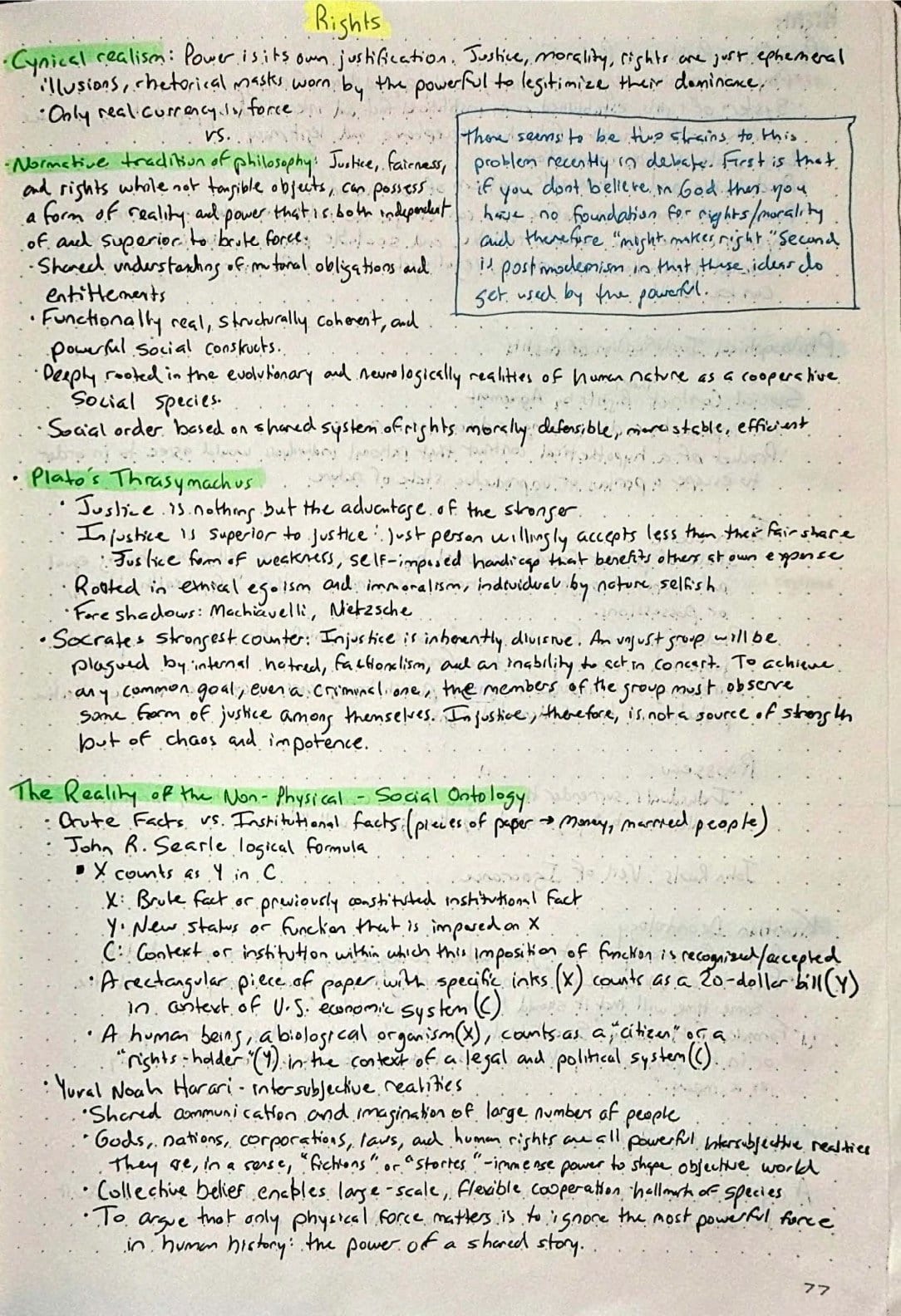
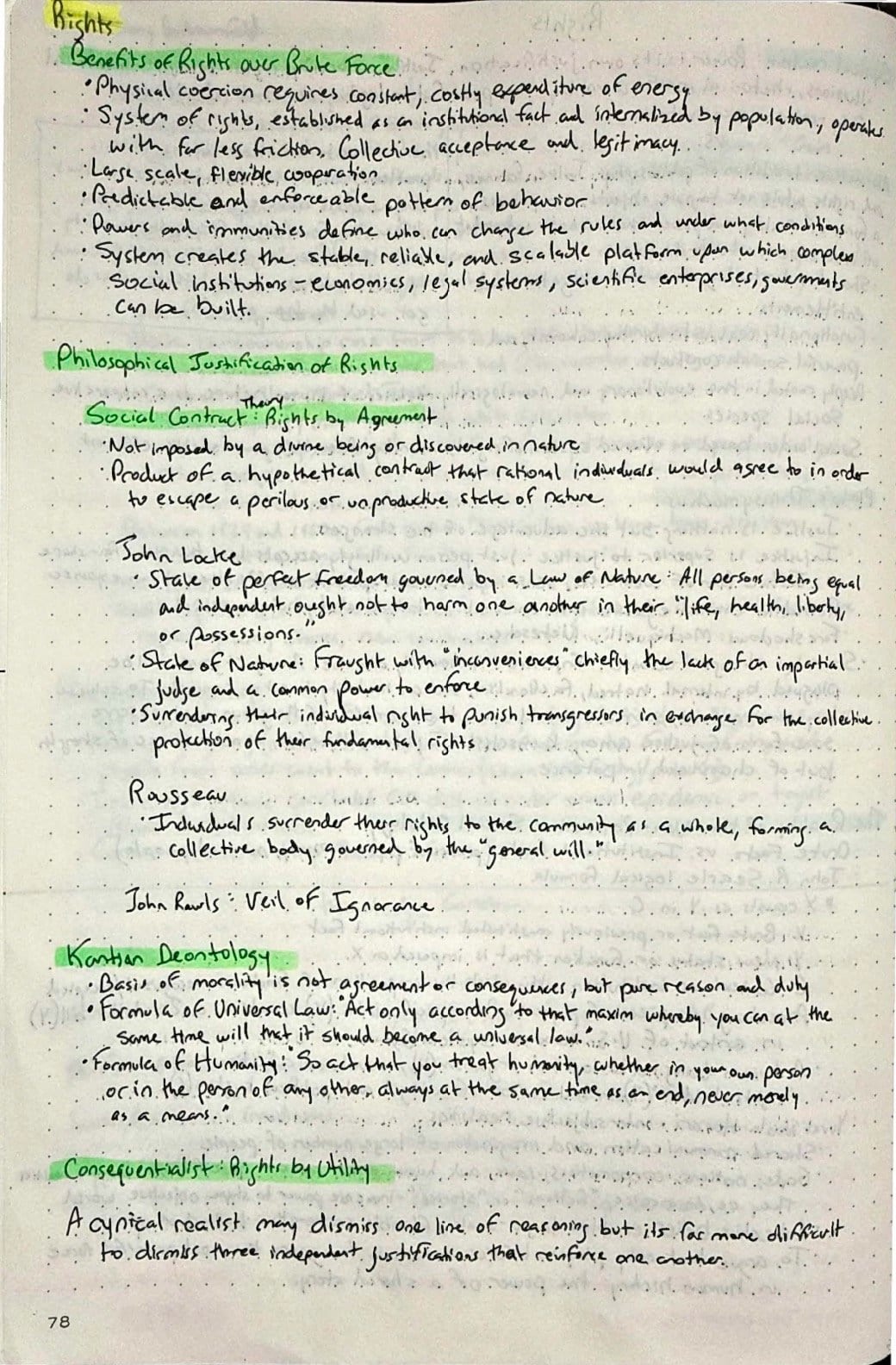
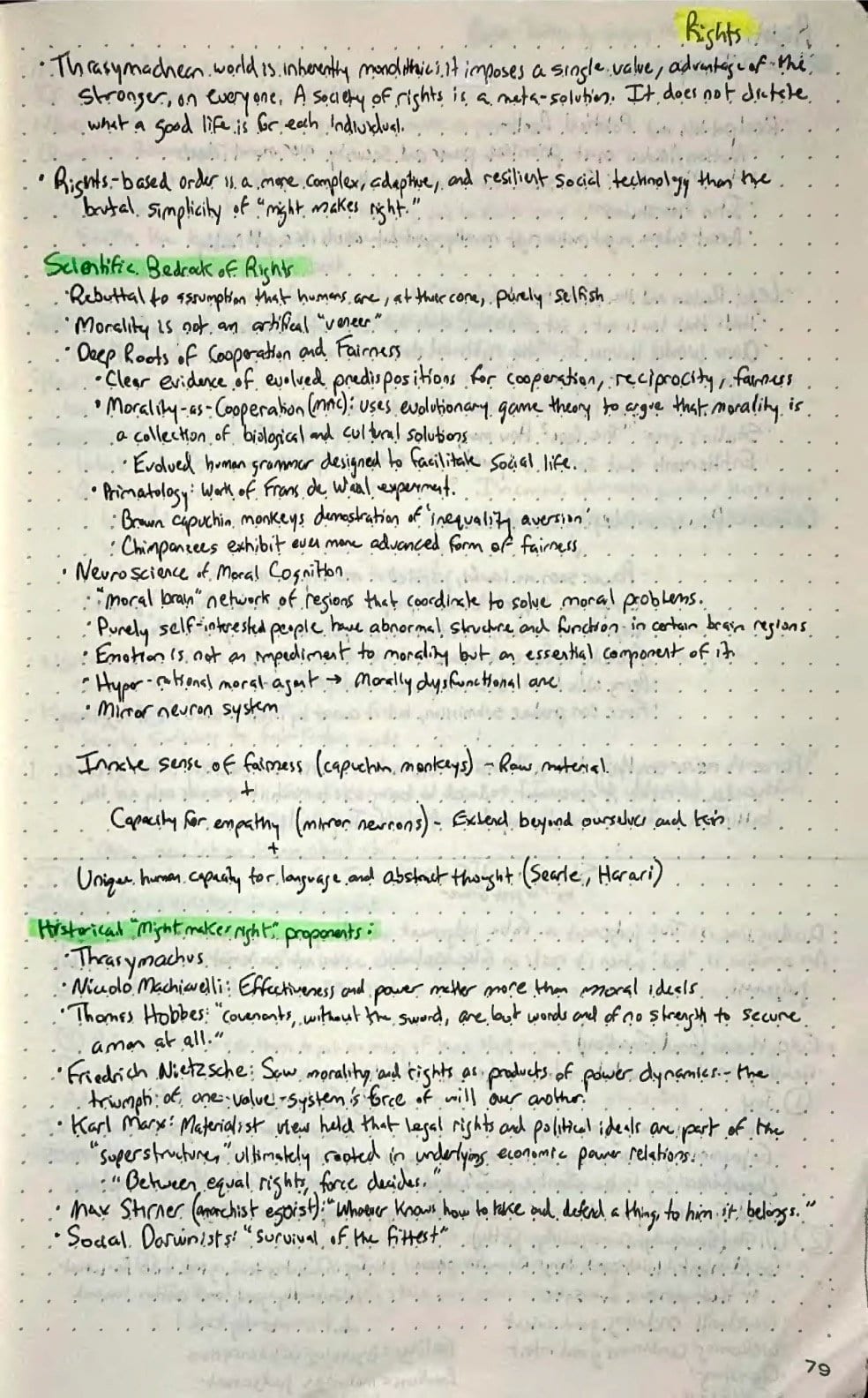
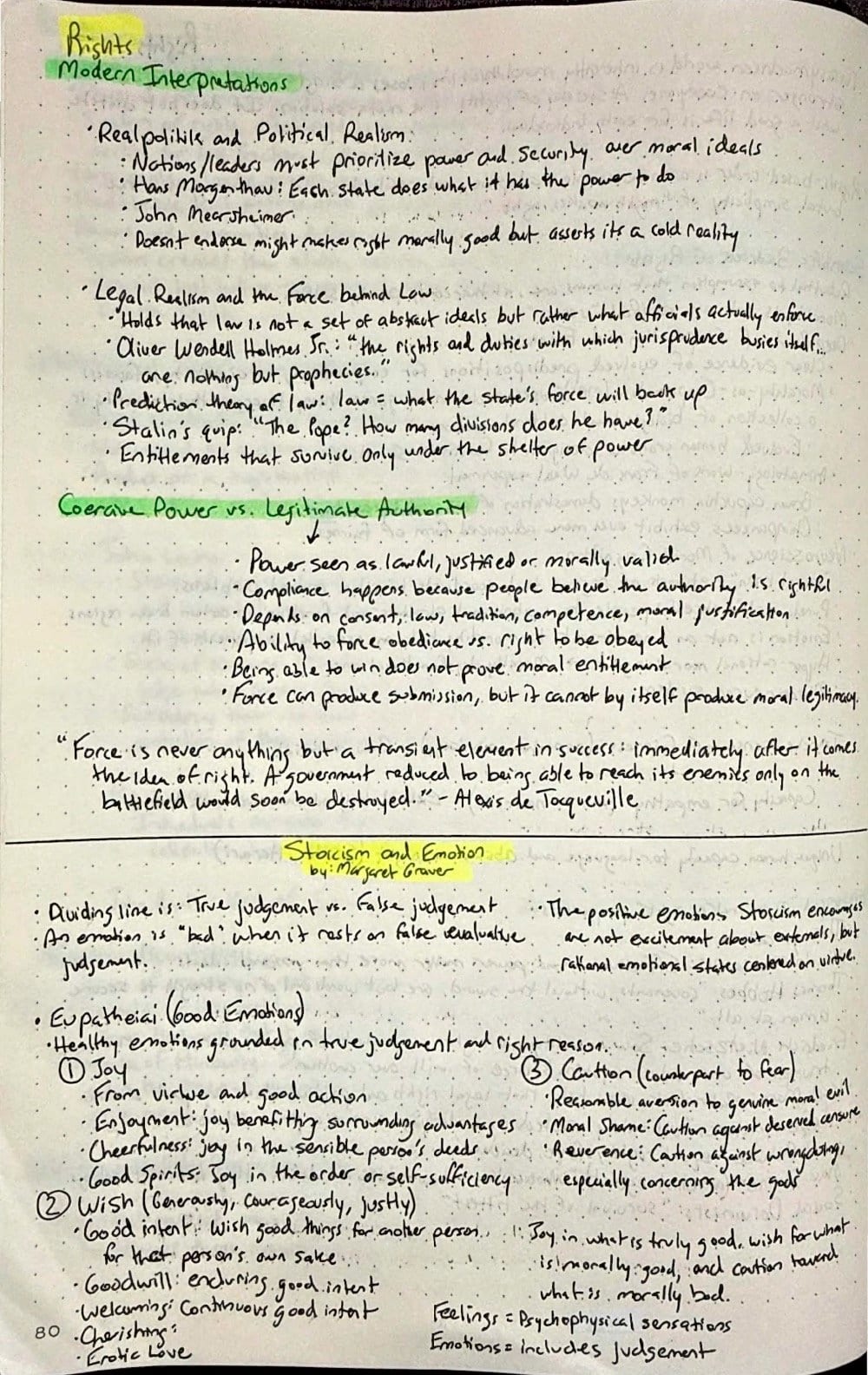
Handwritten journal source
Consolidated source: PDF p. 170 (file not included in this release)
Source boundary: These are handwritten source pages. Use the scan for exact wording; verify quotations and factual claims before reuse.
Embedded preview:
March 21-June 9 2026.pdf (file not included in this release)
Open the journal routing table
Pinker’s Chapter 7 supplement — rights language, contagion, and the limits of the proxy
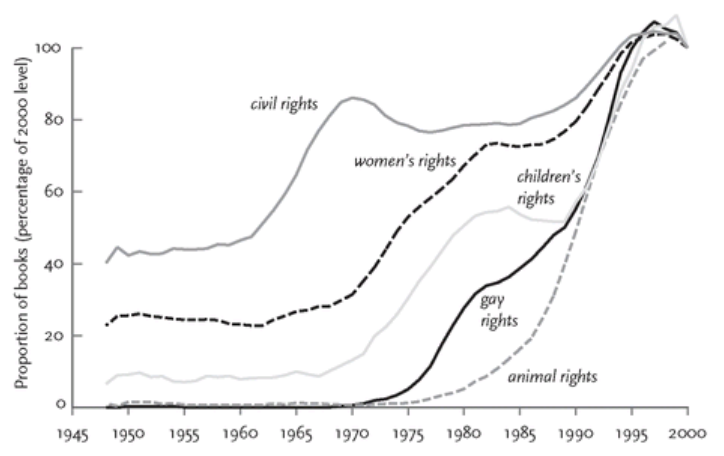
Pinker’s “rights contagion” is a mechanism of moral analogy: once a society accepts that one class of people may not be dominated because of an inherited status, advocates can ask why the same reasoning should not protect people divided by sex, age, sexual orientation, or—more partially—species. The movements do not share identical claims, and analogy alone does not settle where a right begins or what duties it imposes.
Figure 7-1 — Rights-language frequency in English-language books, 1948–2000. The curves show the proportion of books containing five phrases, normalized to each phrase’s own 2000 level. They measure published attention, not legal protection, popular agreement, or actual violence, and the series are not comparable as absolute prevalence across phrases. Pinker proposes that mass education, publishing, travel, electronic media, contact, empathy, and abstract reasoning helped ideas move between movements; he also says prosperity, democracy, and institutional inclusion are entangled with the result, so the graph does not establish a single cause. This is a 2011 synthesis with a 2000 endpoint. Chapter 7 synthesis · Rights contagion and the moral circle, PDF pp. 530–533 (file not included in this release) · Figure 7-1, PDF p. 532 (file not included in this release) · Competing explanations, PDF pp. 658–663 (file not included in this release)
Pinker’s Chapter 9 supplement — rights protect where empathy stops
Pinker argues that the expanding circle is better described as a circle of rights than a circle of equal empathy. Sympathy remains steeply graded by kinship, similarity, attractiveness, proximity, innocence, and vividness; it can even favor an identifiable person over unseen people with equal claims. A durable right instead says that distant, disliked, or emotionally invisible people remain protected even when no one feels their pain.
Reason supplies one route to that generality. If a person offers reasons why others must respect his interests, the interchangeability of “me” and “you” puts pressure on him to accept the same protection for others unless he can justify a relevant difference. This is an argument for consistency and institutionalization, not a complete theory of where rights come from, which beings hold them, or how competing rights should be adjudicated. Chapter 9 synthesis · Empathy and fairness, PDF pp. 812–813 (file not included in this release) · The circle of rights, PDF p. 813 (file not included in this release) · Interchangeability of perspectives, PDF pp. 888–890 (file not included in this release)
Key Figures
| Name | Era | Key Ideas on the Origin of Rights | Other Important Information |
|---|---|---|---|
| John Locke | 17th Century | Rights are natural and inherent, derived from the state of nature. The right to life, liberty, and property is fundamental. | Influenced the American and French Revolutions. |
| Thomas Hobbes | 17th Century | Rights arise from the social contract. In the state of nature, life is “solitary, poor, nasty, brutish, and short.” Rights are granted by agreement for security. | Introduced the concept of the social contract. |
| Jean-Jacques Rousseau | 18th Century | Rights are derived from the social contract, aiming for the “general will” and common good rather than individual interests. | Emphasized freedom, equality, and fraternity. |
| Immanuel Kant | 18th Century | Rights are based on rationality and moral imperatives. Every individual has inherent worth and the capacity for moral reasoning. | Developed the categorical imperative. |
| John Stuart Mill | 19th Century | Rights are utilitarian and serve to maximize happiness for the greatest number. The harm principle limits the rights one can exercise. | Advocated for liberty and freedom of expression. |
| Karl Marx | 19th Century | Rights are constructs of social relations and the economic system. True freedom and rights can only be achieved through the abolition of private property. | Critiqued capitalism and inspired communist movements. |
| Friedrich Nietzsche | 19th Century | Sceptical of universal rights, viewing them as expressions of the will to power of weak societies. Rights are a form of social control. | Questioned traditional moral values and the concept of truth. |
| Hannah Arendt | 20th Century | Rights are political and arise within the context of a community. The right to have rights is fundamental, emphasizing the importance of political participation. | Explored the conditions for human dignity and political action. |
| Philosopher | Views on Natural Law and Human Rights | Key Differences |
|---|---|---|
| Aristotle | Believed in a natural hierarchy and teleological view of nature, where everything has a purpose. Rights and laws should reflect the natural order and aim to achieve the common good. | More focused on communal well-being rather than individual rights. |
| John Locke | Argued that natural rights are inherent and cannot be surrendered to the government. Life, liberty, and property are central. | Emphasized individual rights and the role of government to protect these rights. |
| Thomas Aquinas | Integrated Christian theology with Aristotelian philosophy, arguing that natural law is given by God and discoverable by reason. | Saw natural law as divinely inspired, emphasizing morality and the common good. |
| Jean-Jacques Rousseau | Believed in the inherent goodness of man and that society corrupts. Advocated for the social contract and general will as the basis of legitimate rights and laws. | Focused on the social aspects of natural rights and the importance of collective agreement for legitimacy. |
| Immanuel Kant | Focused on rationality and autonomy, arguing that moral principles are derived from reason, and every individual is entitled to rights by virtue of being rational. | Emphasized the universality of moral law and autonomy over the teleological views of Aristotle. |
| Others | The perspectives on natural law and human rights vary widely among other philosophers. For instance, Hobbes argued for a social contract born out of necessity, while Hegel focused on the evolution of freedom through the dialectic process. | These differences often revolve around the nature of rights, the role of the state, and the source of morality. |
John Locke On Rights
John Locke, a 17th-century English philosopher, is a central figure in the development of political philosophy and the concept of natural rights. His ideas on this topic are primarily found in his works “Two Treatises of Government” (1689). Locke argued that rights derive from nature in the sense that they are inherent and not granted by any government or institution. Here’s a breakdown of what Locke meant by stating that rights derive from nature:
- State of Nature: Locke posited a theoretical state of nature as a pre-political condition, in which individuals live without a common authority or government. In this state, all people are equal and enjoy complete liberty to conduct their lives as they see fit, as long as they do not harm others in their life, health, liberty, or possessions.
- Natural Law: According to Locke, even in the state of nature, individuals are governed by natural law. This law, discernible by reason, dictates that everyone should respect the rights of others to life, liberty, and property. Natural law is universal and applies to all human beings equally because it arises from their nature as rational beings.
- Life, Liberty, and Property: Locke identified these three rights as fundamental natural rights. Every individual inherently possesses the right to life (security and safety), liberty (freedom from arbitrary restraint), and property (the right to acquire and hold possessions). These rights do not originate from governments or societies but are inherent to every person by virtue of their humanity.
- Social Contract: Locke believed that individuals consent to form a government through a social contract to protect their natural rights more effectively. The legitimacy of government, therefore, derives from its ability to safeguard the life, liberty, and property of its citizens. If a government fails to protect these rights or violates them, the people have the right to revolt and establish a new government.
Locke’s concept of natural rights was revolutionary for its time and had a profound influence on the development of political thought, particularly in the Enlightenment period. His ideas about rights deriving from nature laid the groundwork for modern democracy, individual liberty, and the notion of constitutional government. They also significantly influenced the American Declaration of Independence and the United States Constitution, reflecting his impact on the political ideologies that shaped emerging democratic societies.
The notion that rights are inherent is rooted in several philosophical, moral, and ethical theories that argue these rights are intrinsic to human nature and existence, rather than bestowed by governments, institutions, or other external sources. Here are some key reasons and perspectives that support the idea of inherent rights:
- Natural Law Theory: This theory posits that rights are inherent because they derive from natural law, which is understood to be a moral order inherent in the natural world. Philosophers like John Locke argued that natural law, discernible by human reason, grants individuals rights to life, liberty, and property. These rights are inherent because they are necessary for the survival and flourishing of individuals, stemming from human nature itself.
- Moral Universality: The concept of inherent rights is often linked to the idea that certain moral principles are universal and apply to all human beings, regardless of culture, race, nationality, or religion. This universality suggests that rights such as freedom from torture, the right to express oneself, and the right to live are so fundamental to the human condition that they are inherent to all individuals.
- Human Dignity: Many argue that rights are inherent as a reflection of the intrinsic value and dignity of each human being. The idea is that every person, by virtue of being human, possesses an inherent worth that necessitates respect and protection. This dignity confers certain rights that are necessary for individuals to live in a manner befitting their inherent value.
- Ethical Intuitionism: Some philosophers believe that the inherent nature of certain rights is self-evident or known through intuition. According to this view, certain truths about rights and morality are directly perceived and require no external justification. The inherent value of life, freedom, and fairness are seen as intuitive moral truths.
- Social Contract Theory: While primarily a theory about the justification and legitimacy of governmental authority, social contract theory also implies that rights are inherent insofar as individuals possess them in the “state of nature,” before the formation of government. The government’s role, then, is not to grant these rights but to secure and protect them.
- Religious Perspectives: Some religious traditions argue that rights are inherent because they are endowed by a divine creator. In these views, human beings are created with certain inalienable rights that must be respected and protected by human laws and governments.
The belief in inherent rights serves as the foundation for many legal and political systems around the world, inspiring the formulation of documents like the Universal Declaration of Human Rights. This declaration asserts that all human beings are born free and equal in dignity and rights, encapsulating the idea that rights are not granted by society but are inherent to every individual.
Natural Rights
The concept that people are born with natural rights is rooted in philosophical theories about human nature, morality, and the structure of society, particularly as articulated by Enlightenment thinkers like John Locke. Here are several foundational reasons supporting the idea that people are born with natural rights:
Inherent Human Dignity
One of the core reasons behind the belief that people are born with natural rights is the inherent dignity of every human being. This dignity is understood as an intrinsic value that does not need to be granted or recognized by others to exist. It suggests that because every individual possesses this inherent worth, they are naturally entitled to certain rights that respect and protect this value, such as the right to life, liberty, and the pursuit of happiness.
Moral and Rational Nature of Humans
The theory also posits that humans, by virtue of their rational and moral nature, are capable of understanding and adhering to natural laws. These laws are thought to be universal principles that govern moral behavior, discernible through reason. Because individuals can reason, they can comprehend these natural laws and recognize their own rights and the rights of others. This capacity for moral judgment implies that individuals have inherent rights that must be respected by others and by institutions.
Social Contract Theory
Enlightenment thinkers, particularly Locke, proposed the idea of the social contract as a way to explain the formation of societies and governments. According to this theory, individuals inherently possess natural rights, and they agree to form a government to protect these rights more effectively. The government’s legitimacy comes from its ability to safeguard these pre-existing rights, which are not granted by the government but are recognized and protected by it. This theory underscores the idea that rights are inherent to individuals and not a gift from authorities.
State of Nature
The concept of the state of nature is a philosophical tool used to consider human existence without government or social structures. In this state, individuals are free and equal, indicating that the rights to freedom and equality are natural and not dependent on social or political institutions. The rights individuals have in the state of nature are carried into society as natural rights that the government must protect.
Protection of Individual Autonomy
Natural rights are seen as essential for protecting individual autonomy against coercion and oppression. They provide a moral basis for limiting the power of governments and others, ensuring that every individual has the space to pursue their own good in their own way, as long as they do not infringe on the rights of others. This protection of autonomy is rooted in the belief that individuals are inherently entitled to make choices about their own lives.
In summary, the belief that people are born with natural rights arises from views about inherent human dignity, the rational and moral nature of humans, the principles of the social contract, the philosophical construct of the state of nature, and the importance of protecting individual autonomy. These rights are considered pre-political, existing independently of and prior to any social or political institutions.
DID NOT BELIEVE IN NATURAL RIGHTS
The theory of natural rights, as prominently advocated by philosophers like John Locke, has not been universally accepted. Several philosophers have critiqued, challenged, or presented alternative views to the concept of natural rights, arguing from different philosophical foundations. Here are a few notable examples:
Thomas Hobbes
- Perspective: While Hobbes is often cited alongside natural rights theorists for his influence on social contract theory, his view of natural rights differs significantly from Locke’s. In his work “Leviathan,” Hobbes argued that in the state of nature, individuals have the right to do anything to preserve their own lives, leading to a “war of all against all” (Bellum omnium contra omnes). For Hobbes, the natural state is one of perpetual conflict without genuine rights, and peace and society’s benefits are achieved only by ceding all rights to an absolute sovereign.
- Disagreement: Hobbes disagreed with the optimistic view of the state of nature and natural rights held by Locke and others, viewing human rights as not inherent but rather as protections granted by society and the state.
Jeremy Bentham
- Perspective: Bentham, a founder of modern utilitarianism, famously criticized natural rights as “nonsense upon stilts.” He argued that rights are created by society through laws and not inherent in nature. For Bentham, the basis of laws and rights should be the greatest happiness principle, meaning that actions and policies are justified if they promote the greatest happiness for the greatest number.
- Disagreement: Bentham’s utilitarian framework led him to reject the idea of pre-existing natural rights, instead advocating for rights based on their utility and contribution to overall happiness.
Karl Marx
- Perspective: Marx critiqued the bourgeois concept of natural rights as being historically and socially contingent rather than universal or inherent. He saw rights as expressions of specific class interests, particularly those of the bourgeoisie in capitalist societies. Marx argued that the rights of man as presented in the Enlightenment and by liberal philosophers were abstract and divorced from the social and economic conditions that determine an individual’s life.
- Disagreement: Marx disagreed with the abstract, ahistorical nature of natural rights and believed that rights and freedoms are deeply intertwined with the material conditions and social relations of production.
Edmund Burke
- Perspective: Burke, a proponent of conservatism, critiqued the abstract principles of natural rights advocated during the French Revolution. He emphasized tradition, social cohesion, and the gradual evolution of social institutions over abstract rights. Burke argued that society’s complexities cannot be understood through simple rationalist principles and that change should respect historical traditions and institutions.
- Disagreement: Burke’s skepticism of radical change and abstract principles led him to challenge the notion of universal natural rights, favoring instead rights grounded in historical and social contexts.
These philosophers represent a range of critiques against the theory of natural rights, from questioning the very existence of such rights to critiquing their universality, historical and social contingency, and practical implications. Their perspectives underscore the diverse philosophical debates surrounding the nature, origin, and implications of human rights.
BELIEF IN NATURAL RIGHTS
The theory of natural rights has been a foundational element in the development of modern political and moral philosophy, with several key figures advocating for the existence and importance of natural rights. These philosophers argue that certain rights are inherent to human beings and not contingent upon the laws, customs, or beliefs of any particular culture or government. Here’s an overview of some prominent philosophers who agreed with the theory of natural rights:
John Locke
- Contribution: Locke is perhaps the most influential proponent of natural rights, arguing that individuals inherently possess rights to life, liberty, and property. These rights are derived from natural law, which can be discerned by reason and is pre-existing and independent of any governmental or social laws.
- Works: “Two Treatises of Government”
Thomas Aquinas
- Contribution: Aquinas integrated Christian theology with Aristotelian philosophy, arguing that natural law, given by God, is rational and directs humans toward the common good. While his focus was more on natural law than natural rights per se, his work laid the groundwork for the later development of rights theories by suggesting that certain moral principles are universal and inherent to human nature.
- Works: “Summa Theologica”
Hugo Grotius
- Contribution: Often considered the father of international law, Grotius argued that natural laws are immutable and independent of any belief in God. For Grotius, natural rights, including the right to self-preservation, derive from these laws and are thus universal.
- Works: “On the Law of War and Peace”
Jean-Jacques Rousseau
- Contribution: Rousseau agreed with the concept of natural rights in the sense that individuals in the “state of nature” possess innate freedom and equality. However, he believed that the establishment of society and property resulted in the loss of these natural rights and introduced inequality and dependence.
- Works: “The Social Contract”
Immanuel Kant
- Contribution: Kant’s philosophy focused on the inherent dignity of rational beings and the universal moral law. He argued that individuals have innate rights by virtue of their capacity for autonomy and rationality. Kant emphasized the importance of respecting the autonomy of individuals, which aligns with the principles of natural rights.
- Works: “Groundwork of the Metaphysics of Morals”
Samuel von Pufendorf
- Contribution: Pufendorf expanded on the ideas of natural law and rights, arguing that humans have certain duties and rights by nature, including the preservation of life and the fulfillment of contracts. He saw natural rights as fundamental to civil society and legal systems.
- Works: “On the Law of Nature and Nations”
These philosophers, among others, contributed significantly to the development and understanding of natural rights. Their works argue that natural rights are inherent to human beings, derived from natural law or the essential dignity of human nature, and necessary for the protection of individual freedom and the pursuit of the common good.
The Genesis of Rights: Philosophical and Religious Perspectives on Moral Foundations
The concept of rights, fundamental to modern legal, political, and ethical discourse, is the subject of profound and enduring debate regarding its origins and justifications. This report explores the multifaceted understanding of rights, tracing their conceptual roots through two primary lenses: divine endowment and natural inherence. It will navigate the historical development of these ideas within major philosophical and religious traditions, critically examine the arguments and counter-arguments for each, and delve into the nature of secular morality and the objective or subjective status of moral principles.
Section 1: Conceptualizing Rights: Definitions and Distinctions
To embark on an inquiry into the origins of rights, it is first necessary to establish a clear understanding of what “rights” signify and the various classifications they encompass. The very definition and categorization of rights often prefigure the types of arguments made for their foundation.
- 1.1. The Philosophical Concept of a “Right” Rights are broadly understood as legal, social, or ethical principles of freedom or entitlement. They function as fundamental normative rules stipulating what is allowed of people or what is owed to people, according to a particular legal system, social convention, or ethical theory This definition immediately signals a complexity: the grounding of a right defined purely within a legal framework (e.g., a statutory right to vote) will naturally trace its origin to legislative or customary human actions, whereas an ethically defined right (e.g., a right to dignity) might seek its foundation in reason, divine decree, or inherent human nature. This inherent definitional diversity is a precursor to the varied theories concerning their ultimate source. The Stanford Encyclopedia of Philosophy notes that “rights structure the form of governments, the content of laws, and the shape of morality as it is currently perceived” This observation points to a reciprocal and foundational role of rights. While this report seeks the origins of rights, it is clear that rights, once conceptualized and accepted, themselves become foundational for the architecture of society, law, and moral systems. This suggests a dynamic interplay rather than a simple, linear provenance. If rights shape governance and law, then understanding their origin is intrinsically linked to understanding the basis of legitimate political authority and legal systems. Furthermore, if rights mold morality, their genesis is key to comprehending the foundations of moral systems themselves. The Internet Encyclopedia of Philosophy underscores the ethical dimension, defining human rights specifically as “certain moral guarantees” G.W.F. Hegel, in his Elements of the Philosophy of Right, initiated his discussion with the concept of the free will, contending that such will can only actualize itself within a complex societal framework encompassing property rights, contractual obligations, moral commitments, family life, the economy, and the legal and governmental systems This Hegelian perspective suggests that rights are not merely abstract entitlements but are deeply interwoven with the very possibility of human self-realization and meaningful agency within a structured social existence.
- 1.2. Classifications of Rights:
The term “right” is not monolithic; various classifications help to delineate its different meanings and implications. These distinctions are crucial for a nuanced discussion of their origins.
- 1.2.1. Natural Rights vs. Legal Rights A primary distinction is drawn between natural rights and legal rights. Natural rights are conceived as “not artificial, not man-made,” deriving either from inherent human nature or from the edicts of a god They are characterized as universal, applying to all people irrespective of societal context, and inalienable, meaning they cannot be legitimately taken away or repealed by human laws, though their enjoyment might be forfeited through an individual’s actions, such as violating the rights of others These are often referred to as moral rights or inalienable rights The historical lineage of this idea is extensive, tracing back to the Stoics of late Antiquity, through Catholic legal thought of the early Middle Ages, and developing further through the Protestant Reformation and the Age of Enlightenment to the present day Indeed, the modern concept of human rights is largely seen as deriving from these earlier theories of natural rights In contrast, legal rights are entitlements bestowed upon individuals by a society’s specific customs, laws, statutes, or legislative actions An example is the right to vote, which is typically contingent upon citizenship and defined by the legal framework of a particular state. Legal rights are, therefore, culturally and politically relative, their meaning and force dependent on a specific societal context Citizenship itself is often considered the basis for having legal rights, sometimes defined as “the right to have rights” This notion that the very ability to possess certain (legal) rights can be contingent and politically constructed stands in stark contrast to the inherent and universal nature claimed for natural rights, raising immediate questions about the status and protection of non-citizens or stateless individuals, for whom natural rights theories often claim to provide a fundamental safeguard. This distinction immediately establishes a core tension: are “rights” fundamentally discovered as pre-existing moral realities (natural/divine) or are they created through human social and political processes (legal/social)? This dichotomy will resonate throughout the subsequent exploration of their origins.
- 1.2.2. Moral Rights The term “moral rights” is frequently used in close connection with, and sometimes interchangeably with, natural rights They are generally understood as rights that exist and are justified based on ethical principles, independent of legal enactment The Internet Encyclopedia of Philosophy, for instance, refers to human rights as “certain moral guarantees” These rights might be considered God-given, part of actual shared human moralities, or, significantly, as “justified moral norms” The concept of moral rights can act as a bridging term. It can be employed by divine origin theorists, who argue that rights are moral because they are ordained by God, and by natural rights theorists, who assert rights are moral because they derive from human nature or reason. This shared terminology, however, can sometimes obscure fundamental differences in their ultimate grounding. The idea of moral rights as “justified moral norms” 3 is particularly noteworthy as it points towards a non-foundationalist perspective, perhaps constructivist or coherentist. This suggests that the justification for such rights might emerge from processes of reason, public discourse (as explored by thinkers like Habermas), or reflective equilibrium (as in Rawlsian thought), rather than a direct appeal to a divine commander or a fixed, ahistorical human nature. This hints at the complex alternatives to strict divine command or classical natural law that will be explored in later sections concerning secular morality and the objectivity of morals.
- 1.2.3. Hohfeldian Analysis: Claim-Rights, Liberties/Privileges, Powers, Immunities
To further refine the understanding of “a right,” the work of American jurist Wesley Newcomb Hohfeld is indispensable. Hohfeld’s analysis, detailed in his “Fundamental Legal Conceptions,” sought to dissect the often-ambiguous term “right” into its “atomic particles” 9, identifying four distinct jural relations that are frequently conflated These are:
- Claim-Right: This signifies an entitlement of a person (X) against another person (Y) with respect to some action or forbearance (ϕ), meaning Y is under a correlative duty to X to ϕ or refrain from ϕ-ing For example, a creditor’s right to repayment from a debtor is a claim-right, imposing a duty on the debtor.
- Liberty/Privilege: This denotes a freedom for a person (A) to do something, meaning A has no duty not to do that thing Unlike a claim-right, a liberty does not entail a correlative duty on others to enable or assist in the action, only a lack of a right in others to prevent it (their “no-right”). For example, the liberty to express one’s opinion (in one sense) means one is not legally forbidden from speaking.
- Power: This refers to the ability of a person (A) to alter their own or another’s Hohfeldian incidents (i.e., their legal or moral relations) Examples include the power to make a contract, transfer property, or create a will. The correlative to a power is a liability in another party to have their legal relations altered.
- Immunity: This is a freedom a person (B) has from another person (A) altering B’s Hohfeldian incidents The correlative to an immunity is a disability in A, meaning A lacks the power to affect B’s legal position in that specific regard. An example is immunity from arbitrary arrest.
- 1.2.4. Positive vs. Negative Rights
Another crucial distinction is between positive and negative rights
- Positive Rights are permissions to do things or, more commonly, entitlements to be provided with a specific service or good by others, typically the state Examples include the right to education, healthcare, or welfare. These rights generally require action from other parties
- Negative Rights are permissions not to do things or, more commonly, entitlements to be left alone and free from interference by others Examples include the right to life (construed as a right not to be killed), freedom from assault, and freedom of speech (construed as freedom from censorship). These rights generally require inaction from other parties
Section 2: The Divine Foundation of Rights
A prominent and historically influential perspective posits that rights originate from a divine source. This view asserts that God, as the ultimate creator and lawgiver, endows human beings with certain rights, or establishes a moral order from which such rights are derived.
- 2.1. Divine Command Theory: Morality and Rights as Ordained by God Divine Command Theory (DCT) is an ethical framework asserting that moral values, duties, and consequently rights, are grounded in the commands or will of a divine being According to this theory, an action is morally right if God commands it, and morally wrong if God forbids it Rights, often understood as correlative to duties imposed by God, find their ultimate justification in divine ordinance. This perspective is prevalent in major theistic religions, including Christianity, Judaism, and Islam For instance, the American Founders frequently expressed the belief that fundamental human rights are endowed by the Creator Similarly, Islamic tradition unequivocally roots human rights in the conviction that God alone is the Law Giver and the ultimate Source of all human rights; these divinely conferred rights are considered inviolable and cannot be legitimately curtailed or surrendered by any human authority In Jewish legal and theological thought, human rights and liberty are often seen as stemming from the biblical account of humanity being created in God’s image A core implication of DCT is that in the absence of God’s commands, there would be no objective basis for moral rights. This places the existence and nature of God, as well as the means of discerning His commands, at the very center of the ethical and juridical edifice of rights. This directly addresses the inquiry into rights “coming from God” and establishes a clear contrast with secular theories and natural law approaches that do not depend on divine revelation or command. The strength of this divine foundation is intrinsically linked to the cogency of arguments for God’s existence and the philosophical coherence of DCT itself. Furthermore, the concept of the inalienability of divinely conferred rights, as emphasized particularly in the Islamic tradition 19, presents a potent claim against any human authority—be it governments or rulers—that might attempt to abrogate or diminish them. This provides a powerful theological basis for resistance against tyranny and the assertion of fundamental freedoms, a principle that has historically been invoked to challenge oppressive regimes.
- 2.2. Historical Perspectives in Religious Traditions:
- 2.2.1. Judeo-Christian Conceptions Within Judeo-Christian traditions, the concept of divinely sourced rights and moral obligations has a long and complex history. The Bible, particularly the Hebrew Bible (Old Testament), outlines a range of commandments and moral laws, such as the Ten Commandments, which are understood as divine injunctions establishing appropriate and inappropriate behavior, thereby forming an early basis for moral duties and, implicitly, correlative rights The idea that humans are “endowed by their Creator with certain unalienable Rights,” most famously articulated in the United States Declaration of Independence by Thomas Jefferson, reflects a synthesis of Enlightenment thought (particularly Lockean natural rights theory) and a deistic or Christian understanding of a divine creator as the ultimate source of these rights, including “Life, Liberty and the pursuit of Happiness” This marked a significant development, shifting emphasis from divinely ordained communal laws and duties to divinely endowed individual rights. Historically, Christian churches often viewed natural rights—those rights discernible through reason and inherent in human nature—as having a divine origin, reflecting God’s design for humanityThe medieval philosopher St. Thomas Aquinas played a pivotal role in integrating Aristotelian philosophy and Stoic natural law concepts with Christian theology. Aquinas posited that natural law is humanity’s rational participation in God’s eternal law, which governs the entire created order. While natural law is knowable through human reason, it is also supplemented and perfected by divine law, revealed through scripture The eternal law itself represents the timeless principles of the moral and physical world as conceived in the divine mind In Jewish thought, rights are often understood to emanate from the theological principle that humanity was created in the image of God (tzelemElohim) This endows human beings with inherent dignity and value. Jewish law (Halakha) often formulates these rights through the articulation of obligations or prohibitions. For example, the commandment “You shall not murder” (Exodus 20:13) implicitly establishes a correlative right to life for others This formulation through negative obligations aligns with many conceptions of negative rights and raises interesting questions about the direct theological basis for positive rights within this tradition, although concepts of justice (tzedakah) and communal responsibility also feature prominently.
- 2.2.2. Islamic Conceptions Islamic jurisprudence and theology assert with particular force that human rights are divinely ordained. The foundational belief is that “God, and God alone, is the Law Giver and the Source of all human rights” These rights, being of divine origin, are considered sacred, universal, and immutable; no human ruler, government, or assembly possesses the authority to curtail, violate, or abrogate them, nor can individuals themselves surrender these God-given entitlements The Holy Quran and the Sunnah (the teachings and practices of Prophet Muhammad) are regarded as providing the comprehensive legal and moral framework within which human institutions and relationships, including rights and duties, are to be established and regulated Key principles emphasized within this framework include equality, justice, and freedom from oppression, including slavery The absolute divine origin of rights in Islam provides a non-negotiable foundation, theoretically insulating rights from political manipulation. However, this also necessitates a robust and ongoing hermeneutical effort to interpret divine law (Shari’ah) and apply its principles in diverse and changing historical and social contexts. This interpretive challenge is evident in Islamic reform movements Scholars like Mohsen Kadivar, for example, have argued for a “reformist Islam” that seeks to reconcile traditional Islamic jurisprudence with modern human rights standards. This often involves distinguishing between temporal or historically contingent rulings and the permanent, universal ethical principles within Islamic teachings, applying criteria such as reasonableness, justice, and morality to reinterpret or abrogate problematic verses or Hadith in relation to contemporary human rights Furthermore, Islamic intellectual history features significant internal debates regarding the roles of reason (′aql) and revelation (wahy) in understanding God’s will and moral principles. The classical debate between the Ash’ari school of theology and the Mu’tazila school is particularly relevantAsh’arism generally emphasizes the absolute omnipotence and inscrutable will of God, asserting that good and evil are determined solely by divine command (theological voluntarism). According to this view, human reason alone cannot independently ascertain moral truths; morality is entirely subordinate to God’s revealed commands, and God is under no obligation to conform to human conceptions of justice or rationality Conversely, the Mu’tazila school placed greater emphasis on human reason, arguing that reason could independently discern certain moral truths and that God’s actions are necessarily just and rational This internal Islamic debate mirrors, in certain respects, the broader philosophical tension encapsulated in the Euthyphro dilemma, demonstrating that fundamental questions about the relationship between divine will, reason, and morality are not exclusive to Western philosophical traditions.
- 2.2.3. Other Religious Traditions (e.g., Hindu Dharma, Buddhist Precepts, Confucian Ethics – focusing on duties and their relation to implicit rights) Beyond the Abrahamic faiths, other major religious and ethical traditions offer distinct perspectives on moral order, duties, and the well-being of individuals, which can be understood as implicitly or functionally related to the concept of rights. In Hinduism, the concept of Dharma is central. Dharma is a multifaceted term denoting an individual’s moral responsibilities, duties, virtues, and the “right way of living” in accordance with their stage of life (ashrama) and social position (varna) It also refers to the cosmic and social order (Ṛta) that sustains the universe. While Hindu ethics is often characterized as duty-centric, the faithful performance of Dharma by all members of society inherently creates a framework of mutual expectations and protections. If everyone fulfills their Dharma, the well-being and entitlements of others are implicitly safeguarded. For example, the Dharma of a king includes protecting his subjects, which implies a right of subjects to security. Contemporary movements like Hindus for Human Rights (HfHR) advocate for interpreting Hindu scriptures and traditions in ways that explicitly promote justice, equality, and human rights, sometimes challenging interpretations that have historically perpetuated injustice, such as aspects of the caste system Hindu reform movements throughout history have also sought to address social injustices like untouchability and gender inequality by re-evaluating dharmic principles Buddhism offers an ethical framework grounded in the aim of reducing suffering and attaining enlightenment (Nirvana). This is guided by principles such as the Five Precepts (abstaining from killing, stealing, sexual misconduct, false speech, and intoxicants) and the Noble Eightfold PathThese are presented as practical guidelines for ethical conduct, voluntarily undertaken, rather than as divine commandments. While not framed in the language of “rights,” these precepts clearly imply a profound respect for the life, property, dignity, and clarity of mind of others. The first precept, not to kill or harm sentient beings, directly supports a fundamental right to life and security. The movement of “Engaged Buddhism,” prominent in modern times, explicitly applies these core ethical teachings to contemporary social, political, and environmental issues, often aligning with and advocating for human rights and social justice Confucianism bases its ethical system on a complex web of reciprocal obligations defined by the “five relationships”: sovereign-subject, parent-child, husband-wife, elder brother-younger brother, and friend-friend The emphasis is on fulfilling one’s duties within these hierarchical yet interdependent relationships to achieve social harmony. While the language of individual rights claiming is not central, the proper fulfillment of duties by those in superior positions (e.g., the benevolence of a ruler, the care of a parent) entails correlative benefits and protections for those in subordinate positions. Significantly, Confucian thought, particularly through Mencius, recognized the people’s right to revolt against an oppressive ruler who failed to fulfill his duty to ensure their welfare, indicating that the “Mandate of Heaven” was contingent on just governance The duty-centric nature of these traditions does not preclude a concern for individual well-being or protection. Instead, entitlements and safeguards for individuals are often embedded within a framework of reciprocal responsibilities, social harmony, and the pursuit of a virtuous life. This offers a contrasting perspective to purely individualistic conceptions of rights, suggesting that the language of rights is but one way to articulate the fundamental protections and entitlements necessary for human flourishing. The dynamic of reform within these traditions also shows an ongoing engagement with modern human rights concepts, leading to reinterpretations of ancient teachings to address contemporary ethical challenges.
- 2.3. Arguments for Divine Origin:
Proponents of a divine foundation for rights advance several key arguments to support their position, emphasizing the unique stability, objectivity, and authority that a divine source can provide.
- 2.3.1. God as the Ultimate Lawgiver and Source of Moral Order A primary argument is that God, as the supreme being and creator, is the ultimate lawgiver and the source of all moral order This perspective asserts that rights derive their legitimacy and binding force from their divine authorship. By grounding rights in a transcendent, eternal, and unchanging divine will or nature, they are elevated above mere human conventions, societal whims, or the dictates of political power. This divine grounding is seen to provide an objective foundation for rights, making them universal and immutable. The American Founders, for example, appealed to this idea when they declared that individuals are “endowed by their Creator with certain unalienable Rights” 18, suggesting these rights are intrinsic to the human condition as established by God. The argument aims to solve the problem of moral objectivity: if rights originate from God, they are not merely subjective human opinions or culturally relative constructs but are rooted in an ultimate, objective reality. This often implicitly links the is of God’s nature (e.g., perfect goodness, justice) with the ought of moral rights, making the character of God the ultimate standard and guarantor of these entitlements.
- 2.3.2. The Role of Revelation and Sacred Texts Complementary to the argument from God as lawgiver is the role of divine revelation and sacred texts as the means by which these divinely ordained rights and moral laws are communicated to humanity Scriptures such as the Bible, the Quran, and other holy writings are considered by believers to contain God’s revealed will, offering concrete guidance, specific injunctions, and moral narratives that form the basis of ethical conduct and the understanding of rights. These texts are seen not merely as historical documents but as living sources of divine wisdom that articulate the duties God requires and the rights God bestows. They provide a tangible, albeit interpretable, reference point for discerning the content and scope of these divinely sourced moral principles. However, reliance on sacred texts introduces the significant challenge of hermeneutics, or interpretation. The meaning of ancient texts is rarely univocal, and different interpretive methods, theological schools, and cultural contexts can lead to vastly different understandings of divinely ordained rights. This can result in significant moral disagreements and even conflict within and between religious traditions, as historical examples concerning issues like slavery or the status of women demonstrate Thus, even if rights are believed to be divinely revealed in texts, the human process of understanding, interpreting, and applying those rights remains complex and fallible. Furthermore, the phenomenon of progressive revelation or evolving understandings of sacred texts, often seen in religious reform movements 27, suggests a dynamic interplay. Human moral understanding, potentially influenced by secular ethical advancements or changing social conditions, can lead to new interpretations of divine principles, complicating a simple model of static, once-for-all divine commands.
- 2.4. Critiques and Counter-Arguments:
The theory that rights derive from a divine foundation, while offering a basis for objectivity and authority, faces several significant philosophical and practical critiques.
- 2.4.1. The Euthyphro Dilemma: Is it Good because God Commands It, or Does God Command It because It Is Good?
This classic dilemma, first posed by Plato in his dialogue Euthyphro, presents a formidable challenge to Divine Command Theory It asks whether an action or principle is morally good simply because God commands it, or whether God commands it because it is independently good.
- If an action is good because God commands it (the first horn), then morality appears to be arbitrary. God could, in principle, command acts that humans intuitively perceive as cruel or unjust (e.g., torture, gratuitous killing), and these acts would, by definition, become morally good This “arbitrariness problem” suggests that morality lacks an independent rational foundation and is subject to divine whim.
- If, however, God commands an action because it is good (the second horn), then goodness exists as a standard independent of God’s will This would imply that God is not the ultimate source or creator of morality, but rather a recognizer and enforcer of a pre-existing moral order. Such a view could be seen as undermining God’s sovereignty over morality.
- 2.4.2. The Problem of Arbitrariness and Divine Will Closely related to the first horn of the Euthyphro dilemma, the problem of arbitrariness persists if morality is seen as solely a product of divine volition If moral principles lack a stable, reasoned foundation independent of God’s immediate decree, they could theoretically change based on divine preference, undermining their perceived universality and constancy. This directly impacts the reliability and trustworthiness of a divinely grounded moral system. If moral laws can shift arbitrarily, it becomes difficult to establish a consistent ethical framework or to have confidence in the enduring validity of moral principles, including rights. For rights to be truly foundational and inalienable, they require a degree of stability that arbitrary divine will would seem to preclude. Some theological traditions, such as Ash’arism within Sunni Islam, explicitly embrace a form of theological voluntarism that emphasizes God’s absolute and unconstrained will In this view, good is whatever God commands and evil is whatever God forbids, and God is under no obligation to conform to human conceptions of rationality or justice. God can, for instance, revoke previously issued commands or, theoretically, consign a pious believer to hell without any apparent immoral act on God’s part, because God’s actions define morality Such traditions must then grapple with the implication that human reason and moral intuition may be entirely unreliable or irrelevant in discerning good and evil. This makes humanity wholly dependent on divine revelation, which itself is subject to interpretation and may not be universally accessible or uniformly understood.
- 2.4.3. The Problem of Conflicting Religious Doctrines and Moral Guidance A significant practical and philosophical challenge to the divine origin of rights arises from the multiplicity of religions and the conflicting moral guidance they offer Different religions, and indeed different denominations or schools of thought within the same religion, often propose divergent or contradictory moral commands, ethical principles, and conceptions of rights For example, religious views on issues such as war, capital punishment, divorce, the status of women, or dietary laws can vary widely, with each tradition often claiming divine authority for its stance. This plurality makes it exceedingly difficult, if not impossible, to ascertain which specific set of divine commands, if any, represents the “true” or universally binding moral code If multiple, mutually exclusive claims to divinely sourced morality exist, the appeal to “divine origin” does not resolve moral disputes but can, in fact, exacerbate them by imbuing them with absolute, non-negotiable authority. This undermines the claim that a specific religion offers a clear and universal divine foundation for rights applicable to all humanity. The very existence of such profound disagreement among those who claim divine inspiration suggests that human access to, or interpretation of, these divine rights is, at best, fragmented and contested. This practical uncertainty can lead to religiously motivated conflict over moral and legal issues, rather than providing a common ground for universal rights. In response to this challenge, international efforts like the UN Universal Declaration of Human Rights have attempted to articulate “transcultural” and “trans-religious” ethical concepts 44, implicitly acknowledging the limitations of relying exclusively on any single religious tradition to ground rights in a pluralistic global context. This points towards the necessity of seeking foundations for universal rights in shared human values, reason, or common interests that can command broader assent.
- 2.4.4. The Problem of Evil and Divine Goodness
The existence of profound evil, suffering, and injustice in the world poses a serious challenge to the notion of an omnipotent (all-powerful), omnibenevolent (all-good), and omniscient (all-knowing) God, who would presumably be the ultimate source of goodness and rights This is often formulated as the logical problem of evil: if such a God exists, then evil should not. Since evil clearly does exist, it calls into question either God’s existence or the attributes traditionally ascribed to God
This problem not only challenges God’s existence or nature but also casts doubt on the content and coherence of a divinely willed morality. If God, as the source of all rights, permits or is unable to prevent extensive and gratuitous suffering (e.g., natural disasters, diseases, horrific acts of cruelty), it raises questions about the kind of moral order God wills and whether fundamental rights, such as a right to be free from such suffering, are truly central to that divine order.
Theological responses to this challenge are known as theodicies, which attempt to justify God’s ways in the face of evil. Prominent examples include:
- The Augustinian theodicy, which posits that evil is not a substance created by God, but rather a privation or absence of good (privatioboni), resulting from the misuse of free will by created beings (angels and humans) who turned away from God, the ultimate good Natural evil, in this view, is often seen as a consequence of this original disruption of cosmic harmony.
- The Irenaean (or soul-making) theodicy, which argues that God created humans morally imperfect in a world containing challenges and hardships to allow them to develop virtues and grow into a mature moral and spiritual likeness to God through their free responses to evil and suffering Evil, in this framework, serves a developmental purpose.
- Alvin Plantinga’s Free Will Defense, which argues that it is logically possible that God could not create a world containing morally significant free creatures who always choose the good. Thus, the existence of moral evil is a consequence of God granting creatures genuine freedom, which is itself a great good Plantinga extends this to suggest that natural evil might also be attributed to the free will of non-human spiritual beings (e.g., fallen angels).
- 2.4.5. The Problem of Divine Hiddenness and Access to Moral Knowledge If God is the ultimate source of moral rights and desires human beings to live according to these moral principles, a related challenge arises: why is God’s existence, and thereby the divine source of moral guidance, not overwhelmingly obvious to all sincere seekers? This is known as the problem of divine hiddenness Many individuals, despite earnest inquiry or a desire for faith, find themselves unable to believe in God or to discern clear divine moral commands. This hiddenness poses an epistemological challenge for Divine Command Theory. If knowledge of rights depends on knowledge of God’s commands, and God’s existence or specific commands are not clear or accessible to everyone, then the universal knowability and binding force of these divinely sourced rights are called into question for a significant portion of humanity. This could suggest that if such rights are indeed universal, they must also be knowable through means other than direct divine revelation, such as human reason or natural law, or that their divine origin is not the sole or necessary basis for their validity or apprehension. Theological responses to the problem of divine hiddenness often propose that God’s apparent hiddenness serves a greater divine purpose Some argue that a less overt divine presence is necessary to preserve human free will, preventing belief or obedience from being coercedOthers suggest that an “epistemic distance” from God is conducive to moral and spiritual development (soul-making), requiring individuals to actively seek and strive for moral understanding and a relationship with the divine It has also been argued that faith, by its nature, may require a degree of uncertainty, or that God desires a relationship based on love and trust rather than irrefutable proof. These responses imply a complexity in the divine plan where the immediate and unambiguous divine articulation of all moral truths, including rights, might not be the primary divine objective, perhaps because the process of moral discovery and free commitment is itself valued.
- 2.4.6. Historical Critiques of the Divine Right of Kings A specific historical application of divinely sourced authority—the theory of the divine right of kings—serves as a cautionary example of how interpretations of divine will can be used to justify oppression rather than uphold rights This theory, prominent in Europe especially during the 16th and 17th centuries, asserted that monarchs derived their authority directly from God and were therefore accountable only to God, not to their subjects or any earthly power Consequently, rebellion against the king was considered a sin against God This doctrine was frequently employed to legitimize absolute monarchy and to suppress dissent or demands for political rights from the populace Critiques of the divine right of kings were numerous and came from various quarters. The theory was assailed as being unhistorical, irrational, and unscientific, lacking empirical evidence and contradicting emerging understandings of political legitimacy It was argued that such a theory inevitably led to arbitrary and despotic rule, as the monarch was shielded from accountability to the people The rise of scientific outlook, alongside Enlightenment ideas about popular sovereignty, natural rights, and the social contract, contributed significantly to the decline and discrediting of this doctrine The divine right of kings represents a particular interpretation of how divine authority translates into political right—one that centralizes rights and authority in the ruler rather than distributing them among individuals. Its historical failure and the arguments used to dismantle it (often appealing to reason, emerging concepts of individual natural rights, and the idea of government by consent) highlight a crucial point: the mere assertion of “divine origin” for authority or rights is not self-sufficient. The interpretation and application of such claims are critical. The transition from a belief in the divine right of kings to the belief in God-given individual rights (as articulated, for example, by the American Founders) marks a major transformation in political theology, demonstrating that “divine origin” can be invoked to support vastly different, and indeed opposing, political and moral frameworks. This historical episode underscores the interplay between theological reasoning, philosophical critique, and evolving political consciousness in shaping conceptions of rights and legitimate governance.
- 2.4.1. The Euthyphro Dilemma: Is it Good because God Commands It, or Does God Command It because It Is Good?
This classic dilemma, first posed by Plato in his dialogue Euthyphro, presents a formidable challenge to Divine Command Theory It asks whether an action or principle is morally good simply because God commands it, or whether God commands it because it is independently good.
Section 3: Natural Rights: Rights Inherent in Human Nature and Reason
Contrasting with theories of divine origin, natural rights theories propose that rights are intrinsic to human beings by virtue of their nature or their capacity for reason, existing independently of governmental decree or divine command.
- 3.1. The Concept of Natural Law and Natural Rights The concept of natural rights is deeply intertwined with, and often seen as emerging from, the older tradition of natural law Natural law, as a moral theory, posits that there are universal moral principles of right and wrong which are inherent in the nature of the world or in human nature itself, and are ascertainable by human reason, often apart from specific divine revelation These principles are considered to be objective and universally binding. Natural rights, then, are those fundamental entitlements or freedoms that individuals possess as a consequence of this natural law. They are not granted by governments or societies but are inherent to individuals simply because they are human These rights are typically characterized as universal (applying to all human beings everywhere) and inalienable (incapable of being legitimately taken away, surrendered, or transferred, though their enjoyment may be forfeited by wrongdoing) The source of these rights is attributed to “nature” itself, the inherent constitution of human beings, or the dictates of human reason. While some natural law traditions, like that of Aquinas, see natural law as a participation in God’s eternal law (thus linking it to a divine creator who designed human nature and reason) 25, other strands, particularly emerging during the Enlightenment, sought to ground natural law and rights in reason and human sociability alone, sometimes arguing for their validity even in the hypothetical absence of God (e.g., Grotius 72). This appeal to “nature” or “human reason” as the source of rights attempts to provide a universal foundation accessible to all rational beings, irrespective of their particular religious beliefs or cultural backgrounds, thereby offering a potential basis for cross-cultural moral agreement and a standard against which positive laws can be judged. This internal diversity within natural law traditions—some theistically grounded, others more secular—affects how natural rights are ultimately conceptualized and justified.
- 3.2. Historical Development:
The idea that certain rights are inherent and discoverable through nature or reason has a long and influential history, evolving through various philosophical epochs.
- 3.2.1. Ancient Roots (Stoics) The intellectual ancestry of natural rights can be traced back at least to the Stoic philosophers of ancient Greece and Rome (circa 3rd century BCE onwards) The Stoics believed in a universal, rational principle (the Logos) that pervades and governs the cosmos. They taught that living in accordance with this universal reason, which is also inherent in human nature, is the path to virtue and happiness. This emphasis on a universal natural order governed by reason provided an early philosophical framework for conceiving of moral principles that transcend local customs, laws, and conventions. While the Stoics did not articulate a theory of “rights” in the modern individualistic sense, their concept of natural law, emphasizing universal moral duties and the inherent rationality and social nature of human beings, laid crucial groundwork for later developments. The idea that there are discoverable, universal moral truths accessible through reason is a direct antecedent to subsequent natural law and natural rights theories.
- 3.2.2. Medieval Scholasticism (Aquinas, School of Salamanca, Suarez) Medieval scholastic philosophy played a crucial role in systematizing and developing natural law theory, often integrating it with theological frameworks. St. Thomas Aquinas (c. 1225–1274) is a towering figure in this tradition. In his Summa Theologica, Aquinas synthesized Aristotelian philosophy, Stoic natural law, and Christian theology. He defined natural law as humanity’s rational participation in the eternal law, which is God’s providential plan for the universe According to Aquinas, the fundamental precepts of natural law are discoverable by human reason and direct humans towards their proper end or good, which is ultimately union with God, but proximately includes goods like self-preservation, procreation, education of offspring, seeking knowledge of God, and living in society. These principles of right and wrong, ascertainable by reason, provide an objective moral standard. This synthesis was powerful because it appealed to both faith (as natural law is part of God’s design) and reason (as its precepts are knowable through human intellect), laying a strong foundation for later theories that often sought to balance divine origin with rational discoverability. The School of Salamanca, flourishing in 16th-century Spain, made significant contributions by applying natural law principles to pressing contemporary issues, thereby developing early concepts of natural rights. Thinkers like Francisco de Vitoria (c. 1483–1546), Diego de Covarrubias(1512–1577), and Luis de Molina (1535–1600) addressed the rights of indigenous peoples in the newly “discovered” Americas, the ethics of warfare (just war theory), and principles of economics based on natural law Vitoria, for instance, argued for the inherent rights of indigenous populations, challenging the claims of Spanish imperial authority. The Salamanca scholars discussed rights to life, liberty, and property, and the idea that individuals have a right to benefit from their property, with individual owners often taking better care of goods than if held in common This practical application of abstract natural law principles to novel moral and political challenges demonstrated the dynamism of the tradition and its capacity to generate new “rights” claims, foreshadowing modern human rights advocacy. Francisco Suárez (1548–1617), another influential Spanish scholastic, further elaborated on natural law in his treatise De Legibus ac Deo Legislatore (On Laws and God the Legislator) He defined law as “a common, just and stable precept, sufficiently promulgated” and intrinsically linked it to the rational and free nature of human beings. Suárez explored how political authority must conform to natural law and how society requires a regulative principle consistent with human nature. His work emphasized that law orients free and rational creatures towards good and away from evil, in conformity with their nature
- 3.2.3. Enlightenment Thinkers (Grotius, Hobbes, Locke, Rousseau, Jefferson, Kant) The Enlightenment period witnessed a flourishing of natural rights theories, with thinkers increasingly emphasizing individual rights as foundational to political legitimacy. This era saw a gradual shift from natural law (as a system of duties) to natural rights (as individual entitlements), making the individual the primary locus of moral and political value, a hallmark of Western liberalism. Hugo Grotius (1583–1645), often considered a bridge figure, argued in De Jure Belli ac Pacis (On the Law of War and Peace) that natural law is based on human nature, particularly our rationality and inclination towards social life (appetitus societatis) He famously contended that natural law would retain a degree of validity “even if we should concede that which cannot be conceded without the utmost wickedness, that there is no God, or that the affairs of men are of no concern to Him”This assertion marked a significant step towards a more secularized understanding of natural law, grounding it in human reason and sociability independently of immediate divine command, though Grotius himself was a devout Christian. Samuel Pufendorf (1632-1694) also developed natural law based on human nature and sociality, though he insisted on a divine lawgiver for natural law to have the force of law Thomas Hobbes (1588–1679), in Leviathan, described a “right of nature” (jus naturale) as the liberty each individual has to use their own power for self-preservation in the anarchic “state of nature” This right, in Hobbes’s view, amounts to a right to all things, leading to a “war of all against all.” To escape this perilous condition, reason dictates certain “laws of nature” (leges naturales), which are precepts for seeking peace and self-preservation. The first law of nature is to seek peace, and the second involves individuals being willing to lay down their right to all things, provided others do too, thus forming a social contract to establish an absolute sovereign to enforce peace John Locke (1632–1704), in his Two Treatises of Government, presented a more optimistic state of nature, governed by natural law which teaches that all individuals are equal and independent and possess inherent natural rights, primarily to “life, liberty, and estate (property)” For Locke, the state of nature has a law of nature to govern it, which obliges every one: and reason, which is that law, teaches all mankind, who will but consult it, that being all equal and independent, no one ought toharm another in his life, health, liberty, or possessions. Governments are formed by a social contract with the consent of the governed, precisely to protect these pre-existing natural rights. If the government infringes upon these rights, the people have the right to resist and overthrow it Jean-Jacques Rousseau (1712–1778), in The Social Contract, also utilized the state of nature and social contract concepts but with a different emphasis He argued that individuals surrender their individual rights not to a monarch, but to the community as a whole, forming the “general will.” By obeying laws derived from the general will, citizens remain free because they are, in essence, obeying themselves as part of the sovereign collective. This process aims to achieve civil freedom and moral freedom Thomas Jefferson (1743–1826), as the primary author of the American Declaration of Independence, famously encapsulated Lockean ideas, asserting as “self-evident” truths that “all men are created equal, that they are endowed by their Creator with certain unalienable Rights, that among these are Life, Liberty and the pursuit of Happiness” This document powerfully linked natural rights to the justification for revolution and the establishment of a government based on consent. Immanuel Kant (1724–1804) sought to provide a purely rational foundation for morality and rights, independent of empirical human nature or divine revelation His categorical imperative—to act only according to that maxim whereby you can at the same time will that it should become a universal law—provides a formal principle for determining moral duties. These duties, in turn, establish correlative rights. Kant’s emphasis on human autonomy and dignity as ends in themselves has profoundly influenced modern human rights theories. The hypothetical “state of nature” employed by Hobbes, Locke, and Rousseau, though varying in its depiction, served as a crucial analytical device. By imagining human existence prior to or without government, these thinkers sought to deduce the fundamental rights individuals must possess for their survival, freedom, and flourishing. These identified rights then became the very entitlements that legitimate government is instituted to protect through the social contract, thereby defining the proper scope and limits of political power.
- 3.3. Core Arguments for Natural Rights:
Proponents of natural rights have advanced several interconnected arguments to justify their existence and content.
- 3.3.1. Human Reason and Discernment of Moral Principles A central tenet of many natural law and natural rights theories is that these moral principles and rights are ascertainable or discoverable through human reason It is argued that human beings, endowed with rational capacities, can reflect upon their own nature, the conditions for human flourishing, and the requirements for social order, thereby discerning fundamental moral truths, including inherent rights. This epistemological claim posits a form of moral cognitivism – the view that moral truths can be known. This contrasts sharply with non-cognitivist or purely emotivist theories of morality, which deny that moral judgments express truth claims. However, the specific content of what reason supposedly discerns as natural rights has varied among philosophers (e.g., disagreements over whether natural law prohibits slavery 69, or differing lists of primary rights 6). This lack of universal consensus on the precise dictates of “reason” or “nature” has been a persistent critique, suggesting that cultural, historical, or individual biases might inevitably influence what is identified as “natural” or “rational.”
- 3.3.2. Self-Ownership, Labor, and Property (Locke) John Locke’s argument for a natural right to property is one of the most influential and debated within the natural rights tradition Locke began with the premise of self-ownership: every individual has a property in their own person, and therefore in their own labor When an individual “mixes” their labor with something previously held in common from nature (e.g., tilling land, picking an apple), that object becomes their private property because they have joined to it something that is uniquely their own—their labor This derivation attempts to ground a fundamental economic right in a pre-political, natural state, profoundly influencing classical liberal and libertarian thought, as well as capitalist ideology. Locke included crucial provisos to this right of appropriation. The most famous is that one must leave “enough, and as good, left in common for others” Another is the spoilage limitation: one should only appropriate what one can use before it spoils, as “Nothing was made by God for Man to spoil or destroy” While intuitively appealing to some, the “mixing labor” argument faces philosophical challenges, such as how an action (labor) can literally be “mixed” with a substance to create ownership, and the precise quantity or quality of labor required These provisos also become difficult to apply in conditions of scarcity, raising questions about the justice of initial acquisition in a world of limited resources.
- 3.3.3. State of Nature and Social Contract (Hobbes, Locke, Rousseau) As previously mentioned, Enlightenment thinkers like Hobbes, Locke, and Rousseau extensively used the concept of a hypothetical “state of nature”—a condition without government—to deduce the existence of natural rights and to justify the formation of political society through a “social contract” In this state, individuals possess natural rights, but these rights are often insecure due to the absence of a common authority to enforce them and adjudicate disputes To remedy this insecurity, rational individuals are motivated to enter into a social contract, consenting to surrender certain freedoms or powers to a government in exchange for the protection of their remaining fundamental rights, particularly life, liberty, and property This framework makes government instrumental to the protection of pre-existing rights, rather than the source of those rights, thereby providing a powerful argument for limited government and the right of revolution if the government fails in its primary duty. However, the differing conceptions of the state of nature among these philosophers (e.g., Hobbes’s “war of all against all” versus Locke’s more inconvenient but less brutal state) led to divergent views on the extent of rights individuals must surrender and the legitimate scope of governmental power. Hobbes, for instance, argued for an almost absolute sovereign to maintain order 80, while Locke advocated for a government with more strictly limited powers, accountable to the people Rousseau’s concept of the “general will” offered yet another model for reconciling individual rights with collective authority These variations demonstrate that even within social contract theory, the precise relationship between natural rights and governmental authority remains a subject of ongoing debate.
- 3.3.4. Inalienability and Universality Two defining characteristics of natural rights are their purported inalienability and universality Inalienability means that these rights cannot be legitimately taken away by any external power, nor can they be voluntarily surrendered or transferred by the individual, although their enjoyment might be forfeited through egregious wrongdoing (such as violating the rights of others) The American Declaration of Independence famously refers to “unalienable Rights” This concept poses a strong moral barrier against oppression and tyranny, suggesting that certain rights are so fundamental to human personhood that no contract (e.g., a contract of slavery) or governmental decree can justly extinguish them. Universality asserts that natural rights apply to all human beings, at all times, and in all places, simply by virtue of their shared humanity, irrespective of their citizenship, culture, religion, race, or any other contingent characteristic This claim extends moral protection beyond the confines of specific communities or nations, laying the philosophical groundwork for the later development of international human rights law. However, the assertion of universality has been a significant point of contention, particularly challenged by cultural relativists and postcolonial critics who question whether such claims might mask Western cultural assumptions or fail to adequately respect diverse cultural values and practices. These critiques will be explored in more detail later in this report.
- 3.4. Critiques and Counter-Arguments:
Despite their profound influence, natural rights theories have faced numerous criticisms regarding their epistemological foundations, practical implications, and historical applications.
- 3.4.1. Ambiguity and Disagreement on Specific Natural Rights A persistent critique is the lack of consensus among natural rights theorists regarding the precise content and scope of these rights While proponents may agree on the existence of natural rights discernible through reason or inherent in nature, their lists of specific rights often vary. For example, Locke emphasized rights to life, liberty, and property 10, whereas Jefferson, in the Declaration of Independence, listed life, liberty, and the pursuit of happiness Philosophers throughout history have proposed different catalogues of natural rights, and disagreements have arisen over fundamental issues, such as whether natural law prohibits slavery This lack of agreement on the specific content of natural rights weakens the theory’s claim to provide clear, unambiguous, and universally self-evident moral guidance. If “reason” or “nature” is the source, critics ask why it leads to such divergent conclusions. This suggests that the process of identifying natural rights is not purely objective and may be influenced by the interpreter’s own cultural, historical, or personal values and priorities. This ambiguity can also be exploited, allowing the language of natural rights to be invoked to justify conflicting political ideologies or agendas, potentially leading to irresolvable disputes if there is no agreed-upon method for adjudicating these competing “natural” claims.
- 3.4.2. Justification of Inequality and Historical Abuses (e.g., Slavery) A severe moral critique of natural law and natural rights theories is that they have, at various points in history, been invoked to justify profound inequalities and egregious human rights abuses, most notably slavery Some philosophers and theologians argued that certain groups of people were “naturally” suited for enslavement, or that slavery was consistent with natural or divine law The glaring contradiction between the American Declaration of Independence’s assertion that “all men are created equal” and possess unalienable rights, and the contemporaneous institution of chattel slavery in the United States, starkly illustrates this problem Critics contend that slavery is fundamentally unethical and morally reprehensible, and thus cannot be justified by any coherent understanding of natural law or rights The historical use of these theories to legitimize oppression demonstrates that abstract principles are not self-interpreting and can be co-opted and perverted by dominant power structures to serve their interests. What is deemed “natural” or “rational” is often heavily influenced by prevailing social biases and existing power relations. This highlights the critical importance of the interpretive context and the ethical commitments of those applying such theories. However, it is also important to note that abolitionist movements frequently appealed to the very same principles of natural rights and human equality to argue against slavery 69, demonstrating that natural rights theory contains internal resources for self-critique and progressive moral development. The eventual widespread condemnation of slavery, often framed in terms of universal human rights, suggests an evolution in the understanding of what “human nature” and “reason” demand regarding fundamental entitlements.
- 3.4.3. Legal Positivist Critiques (Bentham, Hart, Kelsen) Legal positivism offers a fundamental challenge to natural rights theory by asserting that the only valid rights are legal rights, those created and enforced by human-made (positive) law. Jeremy Bentham (1748–1832), a key figure in utilitarianism and legal positivism, famously dismissed natural rights as “simple nonsense” and natural and imprescriptible rights as “nonsense upon stilts” For Bentham, rights are the product of law; without law, there are no rights. Talk of pre-legal or natural rights was, in his view, metaphysical and confused, often serving as a rhetorical cloak for political preferences. H.L.A. Hart (1907–1992), a leading 20th-century legal positivist, argued for the “separability of law and morals.” This thesis holds that there is no necessary conceptual connection between law as it is (positive law) and law as it ought to be (morality) A law can be legally valid even if it is morally unjust. While Hart did acknowledge a “minimum content of natural law”—certain practical necessities (like rules protecting persons, property, and promises) that any viable legal system must incorporate to ensure human survival and cooperation—his overarching positivist framework challenges the idea that natural rights exist as pre-legal moral facts that determine the validity of laws This “minimum content” might suggest a limited convergence point, acknowledging that law must address fundamental human realities to function, some of which align with basic natural rights claims. Hans Kelsen (1881–1973), in his Pure Theory of Law, also strongly rejected natural law doctrines, viewing them as unscientific, ideological, and based on metaphysical illusions Kelsen sought to create a “pure” science of law, divorced from moral or sociological considerations. For Kelsen, the validity of a legal norm derives not from its moral content but from its place within a hierarchical system of norms, ultimately traceable to a foundational, presupposed “basic norm” (Grundnorm) These positivist critiques compel natural rights theorists to provide clearer accounts of the ontological status of natural rights (i.e., what kind of entities are they if not legal enactments?) and their epistemological basis (i.e., how are they known with certainty if not through identifiable legal sources?). The challenge is to explain what it means for a right to exist “naturally” and how reliable knowledge of such rights can be obtained if they are not codified in positive law.
- 3.4.4. Marxist Critique of “Bourgeois Rights” Karl Marx (1818–1883) and subsequent Marxist thinkers offered a powerful critique of the concept of rights as it emerged from Enlightenment thought and bourgeois revolutions, particularly the French Declaration of the Rights of Man and of the Citizen Marx argued that these so-called “rights of man” were not truly universal human rights but were, in fact, the rights of the “egoistic man,” the isolated, atomized individual of bourgeois (capitalist) society, separated from other individuals and from the community In his essay “On the Jewish Question,” Marx contended that rights such as liberty, property, equality (before the law), and security, as proclaimed by bourgeois revolutions, primarily served to protect the interests of the capitalist class and legitimize the structures of capitalist society The regard for other men, independently of society—the right of selfishness. Liberty was framed as the right to do anything which harms no one else, but this was the liberty of an isolated monad. These rights, Marx argued, masked underlying class exploitation, economic inequality, and social alienation inherent in the capitalist mode of production For Marx, “political emancipation” (the granting of formal, legal rights) was insufficient; true “human emancipation” required a radical transformation of the socio-economic base of society, transcending the separation of the individual from the community and overcoming the alienation produced by capitalism He viewed bourgeois rights as ideological constructs that obscure the real relations of power and domination, rather than as genuinely universal human entitlements. Some interpretations suggest Marx believed there is no objectively true moral system, only interest-serving ideologies that utilize moral language This critique forces an examination of who benefits from the assertion of specific natural or human rights and highlights the potential for rights language, even when framed as universal, to serve particular economic and class interests, thereby questioning its purported neutrality and true universality. It also anticipates later calls for more substantive social and economic rights, arguing that formal individual liberties are insufficient without addressing deeper forms of social and economic oppression.
- 3.4.5. Communitarian Critique of Individualism Communitarian philosophers, such as Alasdair MacIntyre, Michael Sandel, Charles Taylor, and Michael Walzer, have mounted a significant critique against the strong individualism often associated with liberal theories of natural rights They argue that many liberal rights theories, particularly those stemming from the Enlightenment, present an “atomistic” or “unencumbered” view of the self—an individual conceived as existing prior to and independent of society, capable of choosing their ends and values in abstraction from any social or historical context In contrast, communitarians emphasize the “embedded self” or “situated self,” whose identity, values, and moral understanding are profoundly shaped by the communities, traditions, and social roles they inhabit They contend that individuals are not self-sufficient monads but are constituted by their relationships and communal ties. Therefore, a purely individualistic rights framework may neglect the importance of communal goods, shared values, social cohesion, and the duties that arise from membership in a community, potentially leading to social fragmentation, anomie, and an impoverished moral life. Alasdair MacIntyre, in his influential work After Virtue, offers a particularly trenchant critique He argues that modern moral discourse, including the language of rights, is in a state of profound disorder. This is because, MacIntyre claims, the Enlightenment project of providing a secular, rational justification for morality failed after abandoning the classical (Aristotelian and medieval) teleological framework, in which morality was understood in relation to a shared conception of the human telos (end, purpose, or good). Without this shared understanding of human flourishing, moral claims, including assertions of rights, become ungrounded and incommensurable expressions of preference or feeling—a state he terms “emotivism” MacIntyre famously declared that belief in “rights” is like belief in “witches and in unicorns”; they are fictions created to fill a moral vacuum He suggests that rights-talk often devolves into strident, unresolvable assertions because there is no shared rational basis for adjudicating competing claims. For MacIntyre, morals and virtues can only be comprehended through their relation to the community and the traditions from which they emerge. This communitarian critique poses a deep challenge to the possibility of justifying universal natural rights through abstract reason alone in a pluralistic, post-Enlightenment world, suggesting that for rights discourse to be meaningful and coherent, it requires some shared substantive conception of human purpose or the common good.
Section 4: The Relationship Between Natural Rights and Human Rights
The contemporary discourse of human rights is widely acknowledged to have deep historical and philosophical connections to the earlier tradition of natural rights. Understanding this relationship involves tracing the evolution of these concepts, identifying key differences and continuities, and examining how contemporary theories engage with this legacy.
- 4.1. Evolution from Natural Rights to Modern Human Rights The idea of human rights, as understood in modern international law and political theory, is largely derived from the philosophical tradition of natural rights Thinkers of the Enlightenment, most notably John Locke, argued that individuals possess certain rights—such as rights to life, liberty, and property—simply by virtue of being human, and that these rights exist even in a hypothetical “state of nature” prior to the formation of government These natural rights were seen as inherent, inalienable, and discoverable by reason. The 20th century witnessed a significant formalization and internationalization of these ideas, culminating in the United Nations Universal Declaration of Human Rights (UDHR) in 1948.6 The UDHR is a landmark document that enshrines a broad conception of rights, many of which echo classical natural rights, into international (though initially non-binding) law. Its preamble and articles affirm that human rights are inherent, inalienable, and universal, stating that “All human beings are born free and equal in dignity and rights” This evolution from philosophical theories of natural rights to internationally recognized human rights was profoundly influenced by the cataclysmic events of the World Wars, which created a global impetus to establish common standards for the protection of individuals against state overreach, atrocities, and oppression The transition from natural rights (often grounded philosophically or theologically within specific cultural or national traditions) to international human rights represented an ambitious attempt to create a globally legitimate framework for individual protection. This necessitated a language and a set of justifications that could, at least ostensibly, transcend particular national, religious, or ideological origins, aiming for principles that could be endorsed by diverse nations and cultures. This shift also implies that while the inspiration for many human rights may lie in natural rights philosophy, their practical efficacy and enforcement increasingly depend on their codification in positive legal instruments and the political will of states and international bodies. This creates an interesting dynamic: are these entitlements “human rights” primarily because of their supposed natural, inherent moral status, or because they have achieved recognition and (varying degrees of) enforceability within the international legal and political system?
- 4.2. Key Differences and Continuities (e.g., scope, positive/negative rights)
While modern human rights draw heavily from the natural rights tradition, there are both significant continuities and notable differences between the two concepts.
Continuities:
- Inherence and Dignity: Both traditions generally assert that rights are inherent in human beings simply by virtue of their humanity and are closely linked to the concept of human dignity The UDHR, for example, states that “recognition of the inherent dignity and of the equal and inalienable rights of all members of the human family is the foundation of freedom, justice and peace in the world.”
- Universality: Both natural rights and human rights are typically conceived as universal, applying to all individuals regardless of nationality, race, sex, religion, or other status
- Inalienability: The idea that these rights cannot be legitimately taken away or surrendered is central to both frameworks
- Scope (Positive vs. Negative Rights): A key distinction lies in the scope of rights recognized. Classical natural rights theories, particularly in the Lockean tradition, tended to focus on negative rights—that is, rights to non-interference, such as the rights to life (not to be killed), liberty (freedom from arbitrary constraint), and property (security of possessions) Modern human rights, as exemplified by the UDHR and subsequent covenants, encompass not only these civil and political (largely negative) rights but also a broad range of positive rights—social, economic, and cultural rights that may require active provision of goods, services, or opportunities by the state or other actors Examples include the right to social security, the right to work, the right to an adequate standard of living (including food, clothing, and housing), and the right to education This expansion reflects 20th-century concerns about social justice and a recognition that formal freedoms can be meaningless without the material conditions necessary for a dignified human existence. However, the philosophical grounding and practical implementation of these positive rights are often more contentious and demanding than those of negative rights.
- Grounding and Justification: While natural rights were often grounded in natural law (which itself could be theistic or secular), divine endowment, or pure reason, the modern human rights movement has, to some extent, sought a more pluralistically acceptable foundation. Some view human rights as a successor to natural rights that is not necessarily dependent on specific natural law doctrines, natural theology, or particular religious traditions like Christianity The drafters of the UDHR, for instance, were conscious of the need for a document that could gain broad international consensus among states with diverse philosophical, religious, and ideological backgrounds. This led to a degree of strategic ambiguity regarding the ultimate philosophical foundations of the rights proclaimed, focusing more on achieving agreement on the rights themselves This attempt to detach human rights from specific “thick” metaphysical or theological underpinnings aims for wider appeal but can also lead to debates about whether human rights possess a truly robust, objective grounding or are merely the product of a contingent (though widespread) international consensus. This, in turn, fuels the ongoing search for compelling philosophical justifications for human rights.
- 4.3. Contemporary Natural Rights/Law Theorists and their impact on Human Rights discourse The natural law and natural rights traditions continue to evolve through the work of contemporary philosophers who engage with classical ideas and apply them to modern issues, thereby influencing human rights discourse. John Finnis (b. 1940) is a prominent contemporary natural law theorist whose work, particularly Natural Law and Natural Rights, seeks to provide a modern restatement of the tradition, drawing from Aquinas but aiming for a justification of basic human goods that does not necessarily rely on prior theological commitments Finnis identifies several “basic forms of human good” which he argues are self-evident and underived: life (and health), knowledge, play, aesthetic experience, sociability (friendship), practical reasonableness (the ability to bring intelligence to bear effectively on problems of choosing one’s actions and lifestyle and shaping one’s character), and religion (concern with an order of things that transcends the individual) These basic goods, he contends, provide the foundation for moral principles and, by extension, for human rights, which are specifications of what is required to protect and promote these goods for all individuals and communities. Critiques of Finnis’s theory often focus on the asserted self-evidence of his list of basic goods, the methodology for deriving specific moral norms and rights from these goods, and his interpretations of Aquinas Robert Nozick (1938–2002), in his influential work Anarchy, State, and Utopia, developed a powerful libertarian political theory grounded in a strong conception of individual natural rights, drawing heavily from John Locke Nozick posits that individuals have rights (particularly rights to life, liberty, and property, rooted in self-ownership) that are so strong and far-reaching that they raise the question of what, if anything, the state and its officials may do. His “entitlement theory of justice” holds that a distribution of holdings is just if it arises from legitimate initial acquisition (justice in acquisition), legitimate transfer (justice in transfer), and rectification of past injustices in acquisition or transferThis leads him to argue for a minimal “night-watchman” state, limited to protecting these rights against force, theft, and fraud, and enforcing contracts. Nozick’s theory is a significant contemporary articulation of a rights-based libertarianism, but it has faced critiques concerning its strong individualistic assumptions, the practical difficulties of applying its principles (especially rectification), and its implications for social and economic inequality Hadley Arkes (b. 1940) is another contemporary proponent of a revived natural law jurisprudence. He argues that law must have a moral foundation and should actively promote good and discourage bad, with moral standards existing beyond constitutional texts Arkes applies these principles to contemporary legal and social issues, for instance, by critiquing aspects of the modern administrative state (such as mandated employer benefits) as undue abridgments of personal freedom, and by advocating for a “substantive defense of marriage” as exclusively between a man and a woman His work represents a particular strand of conservative natural law thinking. A novel and expanding area is the Rights of Nature movement, which seeks to extend the concept of rights beyond human beings to natural entities such as rivers, forests, mountains, and ecosystemsThis movement often involves granting legal personhood to these natural entities, allowing them to have standing in court (typically through human guardians) and to possess enforceable rights, such as the right to exist, flourish, regenerate, and be restored from harm. The philosophical underpinnings of this movement are diverse, drawing from deep ecology (which posits intrinsic value in all natural things), indigenous worldviews (which often emphasize a spiritual and relational connection with nature), and critiques of anthropocentric legal systems. This represents a radical expansion of the concept of rights-holders, challenging traditional anthropocentric assumptions within both classical natural rights and mainstream human rights frameworks, and could be seen as a new frontier for rights theory. These contemporary engagements demonstrate that natural law and natural rights theories are not static doctrines but continue to be debated, refined, and applied to new challenges, significantly shaping ongoing discussions about the foundations and scope of human rights.
- 4.4. Philosophical Debates on the Function of Rights: Will Theory vs. Interest Theory
Beyond questions of origin and content, a significant meta-ethical debate concerns the fundamental function or purpose of rights: what do rights do for those who hold them? Two dominant theories offer contrasting answers: the Will (or Choice) Theory and the Interest (or Benefit) Theory
The Will Theory, prominently associated with H.L.A. Hart, posits that the primary function of a right is to grant the right-holder a sphere of control or choice over the duty of another person In this view, to have a right is to be a “small-scale sovereign” 120, possessing the normative power to demand the performance of a correlative duty or to waive that duty. The emphasis is on the right-holder’s autonomyand their capacity to manage their normative relationships with others. For example, if A has a contractual right that B performs a service, A can typically choose to insist on performance, release B from the duty, or seek remedies for non-performance.
- Critiques of Will Theory: A major criticism is its difficulty in accounting for rights held by individuals who lack the capacity for autonomous choice or control, such as infants, young children, comatose individuals, or those with severe cognitive impairments If rights are defined by the ability to exercise control, then such individuals might not qualify as right-holders, which seems counterintuitive for many fundamental human rights. Additionally, the Will Theory struggles to explain inalienable rights—rights that cannot be waived or transferred by the holder (e.g., the right not to be enslaved)—since the power to waive is central to its conception of a right
- Critiques of Interest Theory: Critics argue that the Interest Theory can be overly broad, potentially leading to a proliferation of “rights” for any significant interest, thereby devaluing the concept It has also been criticized for not adequately capturing the specific normative relationship of control that seems characteristic of many rights, particularly those involving liberty and property. Some also argue that it can be difficult to determine which interests are sufficiently important to ground rights, and that focusing solely on interests might lead to a “selfish” conception of rights, neglecting the relational aspects of duties
Section 5: Secular Morality and the Foundation of Rights
The question of whether rights and morality require a divine or religious foundation is central to this inquiry. Secular approaches propose that moral principles, including rights, can be grounded in human reason, experience, social convention, or other non-religious sources.
- 5.1. The Possibility of Secular Morality: Can Non-Religious People Have Morals? The assertion that morality is inextricably linked to religious belief has been challenged by numerous philosophers and empirical observations. Many argue that individuals can, and do, lead moral lives without adherence to religious doctrines Pat Flynn, a theist, acknowledges that “people could not be moral without belief in God…is just silly-sauce,” noting that many atheists and agnostics are good people The debate often distinguishes between moral epistemology (how we come to know about morality) and moral ontology (what morality is or what makes it objective) One might learn moral principles through religious upbringing, but this doesn’t necessarily mean religion is the sole or ultimate ontological foundation for those principles. Secular morality posits that ethical behavior can be based on human empathy, reason, social ties, education, and the observable consequences of actions Albert Einstein is quoted as stating, “A man’s ethical behavior should be based effectually on sympathy, education, and social ties and needs; no religious basis is necessary” Indeed, some argue that secular societies may experience less societal dysfunction than highly religious ones, suggesting that religious belief is not a prerequisite for social health Historical examples, such as ancient Chinese society with its Confucian ethics, demonstrate long-standing moral systems that are not primarily based on theistic religion The capacity for moral behavior, including empathy, altruism, and fairness, is also observed in other social species, suggesting deep evolutionary roots for morality that predate human religious belief Arguments against the necessity of religion for morality often point to the Euthyphro dilemma: if actions are good simply because God commands them, then morality is arbitrary; if God commands them because they are good, then goodness exists independently of God’s command, accessible potentially through reason or other means Therefore, secular individuals can possess and act upon a coherent moral framework derived from non-religious sources.
- 5.2. Arguments For and Against Secular Morality Being Inferior/Superior to Religious Morality The debate over whether secular morality is inferior or superior to religious morality involves considerations of motivation, the basis for moral values, and practical outcomes. Arguments for Religious Morality’s Superiority (and Secular Morality’s Inferiority): George Mavrodes argues that secular ethics is superficial because it lacks a metaphysical basis for values and obligations, and cannot adequately answer why one should be consistently moral or sacrifice personal welfare, especially in a “Russellian world” (a godless world with no afterlife) In such a world, moral acts leading to personal loss would seem irrational without a higher judgment or spiritual benefit. Religion, he contends, provides a deeper meaning and hope that makes moral sacrifice worthwhile It is also argued that religion provides a clear set of moral principles and a supportive community that can guide behavior Arguments for Secular Morality’s Adequacy/Superiority (and Critiques of Religious Morality’s Foundation): Conversely, it is argued that morality based on fear of divine punishment or hope of eternal reward is less mature or effective than morality grounded in reasoned conviction and empathy Secular ethics aims for universal principles applicable across diverse beliefs, derived from human reason, empirical evidence, and philosophical argument, rather than divine will or specific scriptures Critics of religious morality point to historical instances where religious doctrines have been used to justify oppression or violence, and the problem of conflicting moral guidance among different religions undermines the claim of a single, clear divine moral source Furthermore, the idea that religious belief is necessary for moral behavior is challenged by studies suggesting that secular societies can have low rates of societal dysfunction and that non-religious individuals often exhibit strong prosocial behaviors Secular moral frameworks are seen as more adaptable to new knowledge and changing societal conditions than some traditional religious moralities
- 5.3. Secular Ethical Theories as Foundations for Rights:
Several secular ethical theories offer frameworks for understanding and justifying moral rights without recourse to divine authority.
- 5.3.1. Utilitarianism (Bentham, Mill)
Utilitarianism, developed by Jeremy Bentham and John Stuart Mill, is a consequentialist theory asserting that an action is morally right if it tends to promote the greatest happiness for the greatest number of people Moral duties, and by extension rights, are justified by their utility in maximizing overall well-being Mill, in On Liberty, argued for individual liberties (such as freedom of thought, speech, and association) on utilitarian grounds, contending that these freedoms are essential for individual development and societal progress Rights, in this view, are not absolute or natural in the traditional sense but are social constructs justified by their contribution to general welfare.
- Critiques: Utilitarianism faces several objections. The demandingness objection argues it is too demanding, requiring individuals to always maximize overall well-being, leaving no room for personal projects or supererogation The separateness of persons objection (Rawls) claims utilitarianism can justify sacrificing individuals for the greater good, failing to respect their distinctness It also struggles with special obligations to family and friendsFurthermore, it can lead to counterintuitive conclusions in dilemmas where maximizing happiness might involve unjust actions (e.g., punishing an innocent person to prevent a riot) Nietzsche critiqued utilitarianism as a secular offspring of Christian “slave morality,” promoting mediocrity and the reduction of suffering over higher values
- 5.3.2. Deontology (Kant)
Deontological ethics, most prominently articulated by Immanuel Kant, posits that morality is based on duty and adherence to universal moral rules or principles, irrespective of consequences Kant’s categorical imperative provides a method for determining these duties: act only according to that maxim whereby you can at the same time will that it should become a universal law; and treat humanity, whether in your own person or in the person of any other, never merely as a means to an end, but always at the same time as an end Rights are intrinsically linked to duties; if individuals have a right to be treated as ends in themselves, others have a corresponding duty to do so. This provides a strong rational foundation for universal human rights based on human dignity and autonomy. Duties can be classified as perfect (strictly binding, often negative, e.g., not to lie) and imperfect (allowing latitude in fulfillment, often positive, e.g., to be benevolent)
- Critiques: Kantian ethics is criticized for its rigidity; for example, the absolute prohibition against lying, even to save a life, seems counterintuitive to many It can also be difficult to resolve conflicts between competing duties. Critics also question whether all duties can be derived from a purely formal principle without considering concrete content and consequences
- 5.3.3. Virtue Ethics (Aristotle, MacIntyre, Hursthouse, Nussbaum)
Virtue ethics shifts the focus from actions or consequences to the moral character of the agent Inspired by Aristotle, it emphasizes the cultivation of virtues (e.g., courage, justice, temperance, wisdom) as essential for eudaimonia (human flourishing or living well). An action is right if it is what a virtuous person would characteristically do in the circumstances. Rights, in this framework, might be understood as those conditions necessary for individuals to develop and exercise their virtues and to flourish.
Contemporary virtue ethicists like Alasdair MacIntyre critique modern moral discourse, including rights-talk, as fragmented due to the loss of a teleological understanding of human life Rosalind Hursthouse develops neo-Aristotelian virtue ethics, while Martha Nussbaum’s capabilities approach identifies central human capabilities (e.g., life, bodily health, practical reason, affiliation) as essential for a dignified life, providing a basis for universal social justice and human rights that is sensitive to cultural diversity
- Critiques: Virtue ethics is sometimes criticized for being too vague in providing action guidance (“act as a virtuous person would act” may not be helpful without knowing what a virtuous person is or would do), for potential self-centeredness (focus on one’s own flourishing), and for the problem of moral luck (cultivation of virtue can depend on external factors) From secular perspectives, defining universal virtues or a single conception of human flourishing can be challenging in a pluralistic society
- 5.3.4. Secular Humanism
Secular humanism is a philosophy that emphasizes human reason, ethics, and justice without recourse to religious beliefs or supernaturalism It posits that humans are capable of being ethical and moral independently of God, focusing on human well-being, happiness, and functional lives Moral codes are often derived from utilitarianism, ethical naturalism, or evolutionary ethics A core tenet is the thorough examination of all ideologies, religious or political, rather than acceptance on faith Rights are typically seen as instrumental to human flourishing and social progress.
- Critiques: From religious perspectives, secular humanism is criticized for ethical relativism, naturalism leading to a lack of ultimate moral authority, and an unfounded belief in human self-sufficiency without divine guidance From within secular thought, debates exist regarding its specific ethical foundations (e.g., reliance on utilitarianism or naturalism) and its practical adequacy Some humanists also critique the term “secular humanism” itself as potentially limiting or misrepresenting the breadth of humanist thought
- 5.3.5. Evolutionary Ethics
Evolutionary ethics attempts to ground morality in the process of natural selection, suggesting that moral sense and prosocial behaviors (like cooperation, altruism) are adaptations that increased the fitness of early humans and their ancestors Frans de Waal’s research on primate behavior suggests deep evolutionary roots for empathy, reciprocity, and fairness, which he sees as building blocks of human morality, challenging the “veneer theory” that morality is a thin cultural overlay on a nasty nature Rights, from this perspective, might be understood as social norms that evolved to regulate cooperation and reduce conflict, thereby enhancing group survival and individual well-being within the group.
- Critiques: A major challenge is the is-ought problem (or naturalistic fallacy): one cannot straightforwardly derive what ought to be from what is in nature Even if certain behaviors evolved, that doesn’t automatically make them morally right. Evolutionary explanations can also be used to justify problematic behaviors if not carefully handled. Defining “goodness” solely in evolutionary terms (e.g., survival, gene propagation) may not align with many considered moral judgments.
- 5.3.6. Discourse Ethics (Habermas)
Jürgen Habermas developed discourse ethics as a theory of moral justification based on communication and argumentation It posits that moral norms (and thus rights) are valid if they can be agreed upon by all affected parties in an ideal speech situation characterized by freedom from coercion, equality of participation, and a commitment to rational argumentation The emphasis is on the procedure of deliberation as the source of moral validity, rather than pre-existing divine commands or natural laws. This approach attempts to find a middle ground between Kantian abstract universalism and relativistic contextualism Rights are those conditions and entitlements necessary for fair and rational discourse and for the protection of individuals as autonomous participants in such discourse.
- Critiques: Critics question the feasibility of achieving an “ideal speech situation” in real-world political contexts. Others argue that discourse ethics might be too formal, lacking substantive guidance, or that it may presuppose certain liberal democratic values that are not universally shared. The question of how to motivate adherence to discursively validated norms also arises.
- 5.3.7. Contemporary Rights Theorists (e.g., Rawls, Dworkin, Raz, Griffin, Beitz, Buchanan, Nussbaum – many draw on secular foundations or aim for justifications acceptable in pluralistic societies)
Many contemporary rights theorists develop sophisticated accounts of rights that, while sometimes compatible with theism, primarily rely on secular philosophical foundations.
- John Rawls (1921-2002), though not strictly a rights theorist in the same vein as Locke, developed a theory of “justice as fairness” where principles of justice, including basic rights and liberties, are chosen by rational individuals behind a “veil of ignorance” in an “original position” This Kantian constructivist approach grounds rights in a hypothetical social contract based on rational choice under conditions of fairness.
- Joseph Raz (b. 1939) grounds rights in individual interests that are sufficiently important to hold others to be under a duty, emphasizing the role of rights in promoting individual well-being and autonomy within a framework of perfectionist liberalism
- James Griffin (1933-2019) in On Human Rights offers a “personhood” account, grounding human rights in the values of autonomy (normative agency) and liberty necessary for a human being to function as a normative agent, along with considerations of minimum provision. He also addresses the problem of indeterminacy in human rights by emphasizing practicalities
- Charles Beitz (b. 1949) proposes a “practical conception” of human rights, arguing they are not pre-political natural rights but norms that regulate and justify practices within the existing global political order, particularly concerning international intervention and assistance
- Allen Buchanan (b. 1948) in Justice, Legitimacy, and Self-Determination develops a justice-based theory of human rights as moral foundations for international law, connecting them to global justice, state legitimacy, and self-determination
- Martha Nussbaum’s capabilities approach (already mentioned under Virtue Ethics) provides a list of central human capabilities essential for a dignified life, offering a framework for universal human rights and social justice that aims to accommodate cultural diversity
- Detailed Explanation & Analysis: This subsection will briefly touch upon how these diverse contemporary theories, often secular in their primary justification, contribute to understanding the grounding and scope of rights in modern thought. They show a move towards justifications based on rational agency, well-being, practical international norms, or fundamental human capabilities.
- 5.3.1. Utilitarianism (Bentham, Mill)
Utilitarianism, developed by Jeremy Bentham and John Stuart Mill, is a consequentialist theory asserting that an action is morally right if it tends to promote the greatest happiness for the greatest number of people Moral duties, and by extension rights, are justified by their utility in maximizing overall well-being Mill, in On Liberty, argued for individual liberties (such as freedom of thought, speech, and association) on utilitarian grounds, contending that these freedoms are essential for individual development and societal progress Rights, in this view, are not absolute or natural in the traditional sense but are social constructs justified by their contribution to general welfare.
Section 6: The Nature of Morality: Objective or Subjective?
The question of whether rights have a divine or natural origin is closely related to the metaethical question of whether moral principles, including rights, are objective or subjective.
- 6.1. Moral Realism / Objectivism
Moral realism (or moral objectivism) is the view that there are objective moral facts or truths that exist independently of human beliefs, opinions, attitudes, or cultural conventions Moral judgments are true if they correspond to these moral facts.
- Arguments for: Proponents argue that moral realism best explains the phenomenology of moral experience (we often feel we are responding to objective wrongs), the possibility of moral error and progress, and the meaningfulness of moral disagreement. Certain moral truths (e.g., “torture of innocents for fun is wrong”) seem undeniably and universally true.
- Key Philosophers: Plato (with his theory of Forms, including the Form of the Good), Immanuel Kant (whose categorical imperative aims at universal, objective moral laws), and contemporary philosophers like Russ Shafer-Landau (a moral non-naturalist who argues for stance-independent moral facts) have endorsed versions of moral objectivism Divine Command Theory, by grounding morality in God’s commands or nature, is also a form of moral objectivism Natural law theories typically presuppose moral objectivism
- Detailed Explanation & Analysis: This will explain the core claim of moral realism and the types of arguments used to support it, linking it to theories of rights that claim an objective foundation (divine or natural).
- 6.2. Moral Relativism
Moral relativism is the view that the truth or justification of moral judgments is not absolute but relative to some group of persons, such as a culture or historical period
- Forms:
- Descriptive Moral Relativism: An empirical thesis that there are deep and widespread moral disagreements across cultures
- Metaethical Moral Relativism: The philosophical thesis that the truth or falsity of moral judgments is relative to a particular standpoint (e.g., cultural norms), and no standpoint is uniquely privileged
- Normative Moral Relativism: The prescriptive view that we ought to tolerate the moral beliefs and practices of other cultures, and not judge them by our own standards
- Arguments for: Often based on the observation of cultural diversity (argument from cultural diversity) and the perceived untenability of moral objectivism (difficulty in establishing universally binding moral principles) Some argue it promotes tolerance
- Critiques: Critics argue relativists exaggerate cultural diversity, that it implies obvious moral wrongs (like slavery or genocide) could be “right for them,” that it undermines moral criticism (including self-criticism of one’s own culture), and that the appeal to tolerance as a universal value is inconsistent with relativism itself
- Key Philosophers: Historically, figures like Protagoras and Montaigne showed relativistic tendencies Contemporary defenders include Gilbert Harman and David B. Wong (who argues for a “pluralistic relativism,” suggesting multiple true moralities bounded by human nature and the need for cooperation) Bernard Williams also explored a “relativism of distance”
- Detailed Explanation & Analysis: This will differentiate the forms of relativism and explore its arguments and significant criticisms, particularly its implications for universal rights.
- Forms:
- 6.3. Moral Subjectivism
Moral subjectivism is the view that moral judgments are expressions of individual feelings, attitudes, or preferences, rather than claims about objective facts “X is wrong” means “I disapprove of X.”
- Distinction from Relativism: While related, subjectivism is distinct from relativism. Relativism typically indexes truth to a group or culture, while subjectivism indexes it to the individual speaker. One can be a subjectivist without being a relativist if moral facts depend on the attitudes of a particular individual (e.g., “God commands X” makes X good for everyone, a form of subjectivism that is not relativistic if there’s only one God whose commands apply universally) Conversely, one could be an objectivist relativist if the truth-making conditions that vary between contexts are themselves mind-independent
- Detailed Explanation & Analysis: Clarify subjectivism and its nuanced relationship with relativism.
- 6.4. Moral Anti-Realism: Non-Cognitivism and Error Theory
Moral anti-realism denies that moral properties exist objectively
- Non-Cognitivism (e.g., Emotivism, Prescriptivism): Holds that moral judgments are not truth-apt (cannot be true or false) because they do not express beliefs but rather emotions, attitudes, or commands (e.g., “Stealing is wrong” means “Boo to stealing!” or “Don’t steal!”) Simon Blackburn’s quasi-realism is a sophisticated form of non-cognitivism (expressivism) that attempts to explain and justify the realist-seeming features of moral discourse (talk of moral truth, facts, knowledge) while maintaining an underlying anti-realist stance
- Moral Error Theory (e.g., J.L. Mackie): A cognitivist view that moral judgments are truth-apt (they express beliefs and aim at truth) but are systematically false because objective moral values or properties do not exist in the world Mackie’s arguments include the argument from relativity(widespread moral disagreement suggests no objective truth) and the argument from queerness(objective moral properties would be metaphysically and epistemologically strange, unlike anything else in the universe, requiring a special faculty to detect them)
- Detailed Explanation & Analysis: Explain these influential anti-realist positions and their radical implications for the status of moral rights. If moral judgments are all false (error theory) or not even truth claims (non-cognitivism), then claims about objective moral rights seem untenable.
Section 7: Religion as a Foundation for Moral Rights: A Critical Assessment
This section will synthesize the preceding discussions to critically evaluate the strengths and weaknesses of religion as a foundation for moral rights.
- 7.1. Arguments for Religion Providing a Unique or Superior Moral Foundation
- Provides objectivity and universality based on God’s nature/will
- Offers strong motivation for moral behavior (divine reward/punishment, love of God)
- Sacred texts and traditions offer concrete moral guidance and a sense of meaning that grounds moral life
- Religious communities can foster moral development and social cohesion
- Detailed Explanation & Analysis: Summarize the key arguments for why a religious foundation is considered robust by its proponents.
- 7.2. Challenges to Religious Foundations for Moral Rights (Revisiting Critiques)
- Recap of Euthyphro dilemma, arbitrariness, problem of evil, conflicting doctrines, divine hiddenness
- The issue of interpretation of sacred texts and traditions: how to resolve conflicting interpretations within and between faiths.
- The challenge of grounding universal rights in a particular religious revelation not accepted by all.
- Detailed Explanation & Analysis: Briefly reiterate the main philosophical and practical problems associated with grounding rights solely in divine command or religious doctrine.
- 7.3. Historical Examples of Religious Justifications for Rights Violations and Injustices
While religions have inspired movements for justice, religious doctrines and authorities have also been used to justify significant rights violations.
- Slavery: Scriptural interpretations (e.g., “Curse of Ham,” passages in Leviticus, Exodus, Pauline epistles regarding servants/masters) were used in America and elsewhere to defend the institution of slavery
- Divine Right of Kings and Oppression: As discussed, this doctrine justified absolute, often oppressive, monarchical rule by claiming divine sanction
- Religious Wars and Persecutions (e.g., Spanish Inquisition, European Witch Trials):
- Spanish Inquisition: Used religious justification (combating heresy, ensuring Catholic orthodoxy) to persecute, torture, and execute thousands, often targeting conversos (Jews and Muslims converted to Christianity), Protestants, and those accused of witchcraft or blasphemy. It served as a tool for social and political control, cloaked in religious imagery
- European Witch Trials: Fueled by demonological beliefs and religious interpretations (e.g., Malleus Maleficarum, King James I’s Daemonologie), these trials led to the persecution and execution of tens of thousands, predominantly women, accused of malevolent witchcraft and consorting with the devil
- Subjugation of Women: Certain interpretations of religious texts and traditions have been used historically to justify the subordination of women, limiting their rights, roles, and autonomy in society and within religious institutions
- Colonialism and Racial Discrimination: Religious ideas have sometimes been intertwined with colonial enterprises and the justification of racial hierarchies, with dominant groups appealing to religious or cultural superiority Makau Mutua’s critique of the human rights movement highlights a “savages-victims-saviors” metaphor where Western/Christianized saviors rescue victims from “savage” non-Western cultures, often masking power dynamics
- Detailed Explanation & Analysis: This subsection will provide brief but impactful examples of how religious beliefs have been historically employed to rationalize and perpetuate injustice, underscoring the critical need for careful interpretation and the potential dangers of uncritical appeals to divine authority. The analysis should show how these historical events challenge the notion that religion inherently provides a sound foundation for moral rights.
- 7.4. The Role of Religious Reform Movements in Advancing Human Rights
Conversely, religious traditions have also been powerful sources of inspiration for moral reform and the advancement of human rights.
- Abolitionism: Many abolitionist movements in the 18th and 19th centuries were deeply influenced by Christian beliefs, particularly among Quakers and evangelical Protestants, who drew on biblical teachings about human dignity and equality [46 (Frederick Douglass), 195].
- Temperance Movement: Driven by Christian groups who viewed alcohol consumption as a source of social ills and moral decay
- Women’s Suffrage and Rights: Many leaders in the women’s suffrage movement drew inspiration from biblical concepts of equality, and Christian organizations provided platforms for activism
- Social Gospel Movement: Applied Christian ethics to social problems like poverty, labor conditions, and urban reform in the late 19th and early 20th centuries
- Civil Rights Movement (USA): Deeply rooted in African American Christian churches, which served as organizing centers and provided a spiritual foundation. Leaders like Martin Luther King Jr. powerfully employed Christian rhetoric and principles Jewish individuals and organizations also played a significant role, motivated by their faith’s teachings on justice and equality
- Liberation Theology (Latin America): Emerged in the mid-20th century, interpreting Christian theology through the lens of the poor and oppressed, advocating for social justice and liberation from political and economic oppression, often drawing on the Exodus narrative
- Islamic Reform Movements: As mentioned, contemporary Muslim thinkers are re-examining Islamic teachings to argue for their compatibility with universal human rights, focusing on principles of justice, freedom of belief, and gender equality within an Islamic framework
- Hindu Reform Movements: Figures like Raja Ram Mohan Roy, Swami Vivekananda, and Mahatma Gandhi sought to address social injustices such as untouchability and sati, drawing on Hindu principles to advocate for reform
- Engaged Buddhism: Applies Buddhist principles of compassion, non-violence, and interconnectedness to address social, political, economic, and environmental issues, including human rights advocacy
- Detailed Explanation & Analysis: This will showcase the positive role religion has played in inspiring and sustaining movements for social justice and human rights, demonstrating that religious traditions possess resources for profound moral critique and progressive change. This provides a crucial counterbalance to the preceding subsection.
Section 8: Conclusion: The Pluralistic and Evolving Landscape of Rights
- Synthesis of the divine and natural law perspectives, acknowledging the strengths and weaknesses of each.
- The ongoing tension between grounding rights in transcendent authority versus immanent human reason or social construction.
- The critical role of secular ethical theories in providing alternative or complementary frameworks for rights.
- Reflection on the objectivity/subjectivity debate and its implications for the universality and binding force of rights.
- The complex and often contradictory role of religion in both upholding and violating rights, emphasizing the importance of interpretation and critical engagement.
- Concluding thought: The quest for a definitive origin of rights may be less fruitful than the ongoing philosophical and societal effort to define, justify, and effectively implement rights that promote human dignity and flourishing in a pluralistic world. The evolution of rights discourse suggests a dynamic interplay of religious, philosophical, and socio-historical factors.
Table Suggestion from Outline (if deemed valuable):
A comparative table for Section 5.3 (Secular Ethical Theories) could be useful:
| Ethical Theory | Primary Moral Focus | Grounding of Duties/Rights | Key Proponents (Examples) | Key Critiques (Brief) |
| Utilitarianism | Consequences (Overall Good/Happiness) | Justified by utility/contribution to greatest happiness | Bentham, Mill | Demandingness, separateness of persons, potential for injustice |
| Deontology | Duty, Moral Rules | Categorical Imperative, respect for persons as ends | Kant | Rigidity, conflict of duties, neglect of consequences |
| Virtue Ethics | Character, Flourishing | Conditions for/expressions of virtue and eudaimonia | Aristotle, MacIntyre, Nussbaum | Vagueness in action-guidance, potential self-centeredness, moral luck |
| Secular Humanism | Human Well-being, Reason | Instrumental to human flourishing, rational principles | Kurtz (modern) | Ethical relativism (from religious critics), defining “human flourishing” |
| Evolutionary Ethics | Adaptation, Survival | Evolved social norms for cooperation/group survival | Darwin (roots), de Waal | Is-ought problem, potential to justify problematic behaviors |
| Discourse Ethics | Rational Consensus | Agreement in ideal speech situation, conditions for discourse | Habermas | Feasibility of ideal speech, formalism, motivation for adherence |
This table provides a concise overview and comparison, which could be valuable for the reader. I will incorporate this into Section 5.3.
I will now proceed to write the full report based on this detailed outline and the associated research snippets, ensuring all insights are woven into the narrative.# The Genesis of Rights: Philosophical and Religious Perspectives on Moral Foundations
The concept of rights, fundamental to modern legal, political, and ethical discourse, is the subject of profound and enduring debate regarding its origins and justifications. This report explores the multifaceted understanding of rights, tracing their conceptual roots through two primary lenses: divine endowment and natural inherence. It will navigate the historical development of these ideas within major philosophical and religious traditions, critically examine the arguments and counter-arguments for each, and delve into the nature of secular morality and the objective or subjective status of moral principles.
Section 1: Conceptualizing Rights: Definitions and Distinctions
To embark on an inquiry into the origins of rights, it is first necessary to establish a clear understanding of what “rights” signify and the various classifications they encompass. The very definition and categorization of rights often prefigure the types of arguments made for their foundation.
- 1.1. The Philosophical Concept of a “Right” Rights are broadly understood as legal, social, or ethical principles of freedom or entitlement. They function as fundamental normative rules stipulating what is allowed of people or what is owed to people, according to a particular legal system, social convention, or ethical theory This definition immediately signals a complexity: the grounding of a right defined purely within a legal framework (e.g., a statutory right to vote) will naturally trace its origin to legislative or customary human actions, whereas an ethically defined right (e.g., a right to dignity) might seek its foundation in reason, divine decree, or inherent human nature. This inherent definitional diversity is a precursor to the varied theories concerning their ultimate source. The Stanford Encyclopedia of Philosophy notes that “rights structure the form of governments, the content of laws, and the shape of morality as it is currently perceived” This observation points to a reciprocal and foundational role of rights. While this report seeks the origins of rights, it is clear that rights, once conceptualized and accepted, themselves become foundational for the architecture of society, law, and moral systems. This suggests a dynamic interplay rather than a simple, linear provenance. If rights shape governance and law, then understanding their origin is intrinsically linked to understanding the basis of legitimate political authority and legal systems. Furthermore, if rights mold morality, their genesis is key to comprehending the foundations of moral systems themselves. The Internet Encyclopedia of Philosophy underscores the ethical dimension, defining human rights specifically as “certain moral guarantees” G.W.F. Hegel, in his Elements of the Philosophy of Right, initiated his discussion with the concept of the free will, contending that such will can only actualize itself within a complex societal framework encompassing property rights, contractual obligations, moral commitments, family life, the economy, and the legal and governmental systems This Hegelian perspective suggests that rights are not merely abstract entitlements but are deeply interwoven with the very possibility of human self-realization and meaningful agency within a structured social existence.
- 1.2. Classifications of Rights:
The term “right” is not monolithic; various classifications help to delineate its different meanings and implications. These distinctions are crucial for a nuanced discussion of their origins.
- 1.2.1. Natural Rights vs. Legal Rights A primary distinction is drawn between natural rights and legal rights. Natural rights are conceived as “not artificial, not man-made,” deriving either from inherent human nature or from the edicts of a god They are characterized as universal, applying to all people irrespective of societal context, and inalienable, meaning they cannot be legitimately taken away or repealed by human laws, though their enjoyment might be forfeited through an individual’s actions, such as by violating the rights of others These are often referred to as moral rights or inalienable rights The historical lineage of this idea is extensive, tracing back to the Stoics of late Antiquity, through Catholic legal thought of the early Middle Ages, and developing further through the Protestant Reformation and the Age of Enlightenment to the present day Indeed, the modern concept of human rights is largely seen as deriving from these earlier theories of natural rights In contrast, legal rights are entitlements bestowed upon individuals by a society’s specific customs, laws, statutes, or legislative actions An example is the right to vote, which is typically contingent upon citizenship and defined by the legal framework of a particular state. Legal rights are, therefore, culturally and politically relative, their meaning and force dependent on a specific societal context Citizenship itself is often considered the basis for having legal rights, sometimes defined as “the right to have rights” This notion that the very ability to possess certain (legal) rights can be contingent and politically constructed stands in stark contrast to the inherent and universal nature claimed for natural rights, raising immediate questions about the status and protection of non-citizens or stateless individuals, for whom natural rights theories often claim to provide a fundamental safeguard. This distinction immediately establishes a core tension: are “rights” fundamentally discovered as pre-existing moral realities (natural/divine) or are they created through human social and political processes (legal/social)? This dichotomy will resonate throughout the subsequent exploration of their origins.
- 1.2.2. Moral Rights The term “moral rights” is frequently used in close connection with, and sometimes interchangeably with, natural rights They are generally understood as rights that exist and are justified based on ethical principles, independent of legal enactment The Internet Encyclopedia of Philosophy, for instance, refers to human rights as “certain moral guarantees” These rights might be considered God-given, part of actual shared human moralities, or, significantly, as “justified moral norms” The concept of moral rights can act as a bridging term. It can be employed by divine origin theorists, who argue that rights are moral because they are ordained by God, and by natural rights theorists, who assert rights are moral because they derive from human nature or reason. This shared terminology, however, can sometimes obscure fundamental differences in their ultimate grounding. The idea of moral rights as “justified moral norms” 3 is particularly noteworthy as it points towards a non-foundationalist perspective, perhaps constructivist or coherentist. This suggests that the justification for such rights might emerge from processes of reason, public discourse (as explored by thinkers like Habermas), or reflective equilibrium (as in Rawlsian thought), rather than a direct appeal to a divine commander or a fixed, ahistorical human nature. This hints at the complex alternatives to strict divine command or classical natural law that will be explored in later sections concerning secular morality and the objectivity of morals.
- 1.2.3. Hohfeldian Analysis: Claim-Rights, Liberties/Privileges, Powers, Immunities
To further refine the understanding of “a right,” the work of American jurist Wesley Newcomb Hohfeld is indispensable. Hohfeld’s analysis, detailed in his “Fundamental Legal Conceptions,” sought to dissect the often-ambiguous term “right” into its “atomic particles” 9, identifying four distinct jural relations that are frequently conflated These are:
- Claim-Right: This signifies an entitlement of a person (X) against another person (Y) with respect to some action or forbearance (ϕ), meaning Y is under a correlative duty to X to ϕ or refrain from ϕ-ing For example, a creditor’s right to repayment from a debtor is a claim-right, imposing a duty on the debtor.
- Liberty/Privilege: This denotes a freedom for a person (A) to do something, meaning A has no duty not to do that thing Unlike a claim-right, a liberty does not entail a correlative duty on others to enable or assist in the action, only a lack of a right in others to prevent it (their “no-right”). For example, the liberty to express one’s opinion (in one sense) means one is not legally forbidden from speaking.
- Power: This refers to the ability of a person (A) to alter their own or another’s Hohfeldian incidents (i.e., their legal or moral relations) Examples include the power to make a contract, transfer property, or create a will. The correlative to a power is a liability in another party to have their legal relations altered.
- Immunity: This is a freedom a person (B) has from another person (A) altering B’s Hohfeldian incidents The correlative to an immunity is a disability in A, meaning A lacks the power to affect B’s legal position in that specific regard. An example is immunity from arbitrary arrest.
- 1.2.4. Positive vs. Negative Rights
Another crucial distinction is between positive and negative rights
- Positive Rights are permissions to do things or, more commonly, entitlements to be provided with a specific service or good by others, typically the state Examples include the right to education, healthcare, or welfare. These rights generally require action from other parties
- Negative Rights are permissions not to do things or, more commonly, entitlements to be left alone and free from interference by others Examples include the right to life (construed as a right not to be killed), freedom from assault, and freedom of speech (construed as freedom from censorship). These rights generally require inaction from other parties
Focused argument map: rights to provision
See Socioeconomic Human Rights - Food, Healthcare, Housing and the Claimability Objection for the dispute over whether food, healthcare, housing, and subsistence are universal human claim-rights. It separates need from right, identifies O’Neill’s and Collins’s claimability challenge, and presents Henry Shue’s answer that basic rights generate duties to avoid deprivation, protect against it, and aid the deprived.
Works cited
-
en.wikipedia.org, accessed May 18, 2025, https://en.wikipedia.org/wiki/Rights#:~:text=Rights%20are%20legal%2C%20social%2C%20or,social%20convention%2C%20or%20ethical%20theory.
-
Rights - Wikipedia, accessed May 18, 2025, https://en.wikipedia.org/wiki/Rights
-
environmentandhumanrightscourse.info, accessed May 18, 2025, https://environmentandhumanrightscourse.info/onlinetextsite/Human%20Rights%20(Stanford%20Encyc%20of%20Phil).pdf
-
Human Rights | Internet Encyclopedia of Philosophy, accessed May 18, 2025, https://iep.utm.edu/hum-rts/
-
Elements of the Philosophy of Right - Wikipedia, accessed May 18, 2025, https://en.wikipedia.org/wiki/Elements_of_the_Philosophy_of_Right
-
Natural rights and legal rights - Wikipedia, accessed May 18, 2025, https://en.wikipedia.org/wiki/Natural_rights_and_legal_rights
-
en.wikipedia.org, accessed May 18, 2025, https://en.wikipedia.org/wiki/Natural_rights_and_legal_rights#:~:text=The%20idea%20that%20certain%20rights,Age%20of%20Enlightenment%20to%20today.
-
Human Rights Explained: Human Rights Philosophies, accessed May 18, 2025, https://humanrights.gov.au/our-work/education/human-rights-explained-human-rights-philosophies
-
Fundamental Legal Conceptions by WESLEY NEWCOMB HOHFELD, edited by Walter Wheeler Cook, New Haven, Yale University Press, 1964, - HeinOnline, accessed May 18, 2025, https://heinonline.org/hol-cgi-bin/get_pdf.cgi?handle=hein.journals/notnghmlj17§ion=12
-
Natural Rights | Issue 10 | Philosophy Now, accessed May 18, 2025, https://philosophynow.org/issues/10/Natural_Rights
-
Legal Rights (Stanford Encyclopedia of Philosophy), accessed May 18, 2025, https://plato.stanford.edu/entries/legal-rights/
-
Rights (Stanford Encyclopedia of Philosophy), accessed May 18, 2025, https://plato.stanford.edu/entries/rights/
-
Rights-Based Ethical Theories | Ethics Class Notes | Fiveable …, accessed May 18, 2025, https://library.fiveable.me/ethics/unit-3/rights-based-ethical-theories/study-guide/92GtnPLOnzYfcCUf
-
Divine Command Theory and moral obligation | OUPblog, accessed May 18, 2025, https://blog.oup.com/2016/02/divine-command-theory/
-
Divine Command Theory - (Intro to Humanities) - Vocab, Definition …, accessed May 18, 2025, https://library.fiveable.me/key-terms/introduction-humanities/divine-command-theory
-
Natural Law vs. Divine Command Theory – Convincing Proof, accessed May 18, 2025, https://convincingproof.org/natural-law-vs-divine-command-theory/
-
Divine Command Theory | Internet Encyclopedia of Philosophy, accessed May 18, 2025, https://iep.utm.edu/divine-command-theory/
-
A Biblical and Historical Perspective on the Concept of Rights …, accessed May 18, 2025, https://www.preparetheway.us/a-biblical-and-historical-perspective-on-the-concept-of-rights/
-
hrlibrary.umn.edu, accessed May 18, 2025, http://hrlibrary.umn.edu/instree/islamic_declaration_HR.html#:~:text=Human%20rights%20in%20Islam%20are,nor%20can%20they%20be%20surrendered.
-
Universal Islamic Declaration of Human Rights, adopted by the, accessed May 18, 2025, http://hrlibrary.umn.edu/instree/islamic_declaration_HR.html
-
www.jewishvirtuallibrary.org, accessed May 18, 2025, https://www.jewishvirtuallibrary.org/rights-human#:~:text=The%20Source%20of%20the%20Rights,into%20the%20laws%20of%20nations.
-
Human Rights - Jewish Virtual Library, accessed May 18, 2025, https://www.jewishvirtuallibrary.org/rights-human
-
Natural Rights Theory Declaration of Independence, accessed May 18, 2025, https://billofrightsinstitute.org/essays/background-essay-the-declaration-of-independence-natural-rights-and-slavery
-
Are human rights of religious origin? - Sur - International Journal on …, accessed May 18, 2025, https://sur.conectas.org/en/are-human-rights-of-religious-origin/
-
What Can We Learn from a Catholic Thinker? Aquinas and Natural …, accessed May 18, 2025, https://www.str.org/w/what-can-we-learn-from-a-catholic-thinker-aquinas-and-natural-law
-
Aquinas on the effectiveness of natural law | Rev. Isaias D’Oleo | A …, accessed May 18, 2025, https://isaiasdoleo.com/blog/2021/01/25/aquinas-on-the-effectiveness-of-natural-law/
-
Human Rights and Reformist Islam - Edinburgh University Press, accessed May 18, 2025, https://edinburghuniversitypress.com/book-human-rights-and-reformist-islam.html
-
(PDF) The “Reform of Islam” Movement - ResearchGate, accessed May 18, 2025, https://www.researchgate.net/publication/386275030_The_Reform_of_Islam_Movement
-
Why is theological voluntarism unpopular in moral philosophy? : r …, accessed May 18, 2025, https://www.reddit.com/r/askphilosophy/comments/1hv755x/why_is_theological_voluntarism_unpopular_in_moral/
-
Reason And Revelation In Establishing Islamic Law (Case Study: Receiving Zakat For Educational Costs), accessed May 18, 2025, https://www.e-journal.citakonsultindo.or.id/index.php/IJEVSS/article/download/418/337
-
The Power of Reason: A Theological Dispute Between Māturīdī, Mu‛tazilah, and Ash‛arī, accessed May 18, 2025, https://www.mehbooba.com/the-power-of-reason-a-theological-dispute-between-maturidi-mutazilah-and-ashari/
-
Dharma - Wikipedia, accessed May 18, 2025, https://en.wikipedia.org/wiki/Dharma
-
Dharma - The nature of human life in Hinduism - GCSE Religious …, accessed May 18, 2025, https://www.bbc.co.uk/bitesize/guides/zmgny4j/revision/5
-
What is Hinduism? A Deep Dive into Its Philosophy, Practices, and Diversity, accessed May 18, 2025, https://www.hindusforhumanrights.org/hinduismbasics
-
library.fiveable.me, accessed May 18, 2025, https://library.fiveable.me/key-terms/introduction-hinduism/hindu-reform-movements#:~:text=Hindu%20reform%20movements%20emerged%20largely,promoting%20education%20and%20spiritual%20awareness.
-
Five Precepts | Lion’s Roar, accessed May 18, 2025, https://www.lionsroar.com/buddhism/five-precepts/
-
Buddhist Ethics - Seven Pillars Institute, accessed May 18, 2025, https://www.sevenpillarsinstitute-org.sevenpillarsconsulting.com/glossary/buddhist-ethics/
-
Engaged Buddhism at Sixty-Five: Nuancing The Consensus - Dickinson Blogs, accessed May 18, 2025, https://blogs.dickinson.edu/buddhistethics/files/2023/03/Queen-JBE-Donna-Brown-response-2.pdf
-
Engaged Buddhism, its history, practice and social benefits - ResearchGate, accessed May 18, 2025, https://www.researchgate.net/publication/386529064_Engaged_Buddhism_its_history_practice_and_social_benefits
-
Introduction to Confucian Thought - Asia for Educators | Columbia …, accessed May 18, 2025, https://afe.easia.columbia.edu/special/china_1000bce_confucius_intro.htm
-
A Confucian approach to human rights | The UNESCO Courier, accessed May 18, 2025, https://courier.unesco.org/en/articles/confucian-approach-human-rights
-
Role of Religion in Shaping Ethical and Moral Values Among the Youths in Athens, Greece - Stratford Journals, accessed May 18, 2025, https://www.stratfordjournal.org/journals/index.php/Journal-of-Sociology-Psychology/article/download/1467/1904/4660
-
Good argument for religion as foundation for morality : r/Asmongold - Reddit, accessed May 18, 2025, https://www.reddit.com/r/Asmongold/comments/1j7xyrg/good_argument_for_religion_as_foundation_for/
-
Morality and religion - Wikipedia, accessed May 18, 2025, https://en.wikipedia.org/wiki/Morality_and_religion
-
Slavery and the Bible: Using One to Either Justify or Condemn the Other - ResearchGate, accessed May 18, 2025, https://www.researchgate.net/publication/313508307_Slavery_and_the_Bible_Using_One_to_Either_Justify_or_Condemn_the_Other
-
How Christian Slaveholders Used the Bible to Justify Slavery | TIME, accessed May 18, 2025, https://time.com/5171819/christianity-slavery-book-excerpt/
-
Secular morality - Wikipedia, accessed May 18, 2025, https://en.wikipedia.org/wiki/Secular_morality
-
Ockham (Occam), William of - Internet Encyclopedia of Philosophy, accessed May 18, 2025, https://iep.utm.edu/ockham/
-
Euthyphro dilemma - Wikipedia, accessed May 18, 2025, https://en.wikipedia.org/wiki/Euthyphro_dilemma
-
Good argument for religion as foundation for morality : r/Asmongold, accessed May 18, 2025, https://www.reddit.com/r/Asmongold/comments/1j7xyrg/good_argument_for_religion_as_foundation_for_morality/
-
The Euthyphro dilemma & Divine Command Theory, accessed May 18, 2025, https://alevelphilosophyandreligion.com/euthyphro-dilemma-divine-command-theory/
-
Religious-Studies-Bridging-Document-Part-2.docx, accessed May 18, 2025, https://www.bluecoatsixthform.org/wp-content/uploads/2020/06/Religious-Studies-Bridging-Document-Part-2.docx
-
Religion and Morality - PMC, accessed May 18, 2025, https://pmc.ncbi.nlm.nih.gov/articles/PMC4345965/
-
Religious responses to the problem of evil - Wikipedia, accessed May 18, 2025, https://en.wikipedia.org/wiki/Religious_responses_to_the_problem_of_evil
-
Both the logical and evidential problem of evil are internal critiques of Christianity. Therefore, whether the atheist believes morality is subjective or objective is completely irrelevant to the argument at hand. : r/CosmicSkeptic - Reddit, accessed May 18, 2025, https://www.reddit.com/r/CosmicSkeptic/comments/1hf0036/both_the_logical_and_evidential_problem_of_evil/
-
Both the logical and evidential problem of evil are internal critiques …, accessed May 18, 2025, https://www.reddit.com/r/CosmicSkeptic/comments/1hf0036/both_the_logical_and_evidential_problem_of_evil_are_internal_critiques_of_christianity_therefore_whether_the_atheist_believes_morality_is_subjective_or_objective_is_completely_irrelevant_to_the_argument_at_hand/
-
10 Theodicies in Christian Thought - PhilArchive, accessed May 18, 2025, https://philarchive.org/archive/MAYTIY
-
Evidential Problem of Evil, The | Internet Encyclopedia of Philosophy, accessed May 18, 2025, https://iep.utm.edu/evil-evi/
-
Handout - The Problem of Evil & Theodicies of Augustine and Irenaeus - Philosophical Investigations - peped, accessed May 18, 2025, https://peped.org/philosophicalinvestigations/handout-problem-evil/
-
Alvin Plantinga on the Problem of Evil - Ratio Christi, accessed May 18, 2025, https://ratiochristi.org/alvin-plantinga-on-the-problem-of-evil/
-
Alvin Plantinga’s free-will defense - Wikipedia, accessed May 18, 2025, https://en.wikipedia.org/wiki/Alvin_Plantinga%27s_free-will_defense
-
C. S. Lewis on the Problem of Divine Hiddenness - Anglican Theological Review, accessed May 18, 2025, http://www.anglicantheologicalreview.org/wp-content/uploads/2020/02/dumsday_97.1.pdf
-
Divine Hiddenness Argument against God’s Existence | Internet …, accessed May 18, 2025, https://iep.utm.edu/divine-hiddenness-argument-against-gods-existence/
-
www.iilsindia.com, accessed May 18, 2025, https://www.iilsindia.com/study-material/58517_1601218813.pdf
-
portal.abuad.edu.ng, accessed May 18, 2025, https://portal.abuad.edu.ng/Assignments/1597481686Pol_science.pdf
-
What’s the difference between the divine right of kings and natural …, accessed May 18, 2025, https://www.quora.com/Whats-the-difference-between-the-divine-right-of-kings-and-natural-rights
-
RELIGION AS AN INSTRUMENT OF OPPRESSION: A THEMATIC ANALYSIS OF ‘ALLAH IS NOT OBLIGED,’ ‘THE POOR CHRIST OF BOMBA’ AND, accessed May 18, 2025, https://dspace.unza.zm/bitstreams/1ee47228-cbe7-48fd-9d32-6ba5957d2f3f/download
-
What is the divine right of kings? | GotQuestions.org, accessed May 18, 2025, https://www.gotquestions.org/divine-right-of-kings.html
-
Natural Rights | The First Amendment Encyclopedia, accessed May 18, 2025, https://firstamendment.mtsu.edu/article/natural-rights/
-
www.ijlmh.com, accessed May 18, 2025, https://www.ijlmh.com/wp-content/uploads/The-Critical-Analysis-of-Natural-Rights-Theory.pdf
-
Moral Objectivity - Objectivism | Philosophy | University of …, accessed May 18, 2025, https://www.southampton.ac.uk/philosophy/undergraduate/decision-trees/moralobjectivity/1.page
-
Grotius and Pufendorf (Chapter 3) - The Cambridge Companion to Natural Law Ethics, accessed May 18, 2025, https://www.cambridge.org/core/books/cambridge-companion-to-natural-law-ethics/grotius-and-pufendorf/AC324AD7E35C64BF77561E506411AF12
-
Grotius and Pufendorf - UvA-DARE (Digital Academic Repository) - Universiteit van Amsterdam, accessed May 18, 2025, https://pure.uva.nl/ws/files/49649753/grotius_and_pufendorf.pdf
-
School of Salamanca - Wikipedia, accessed May 18, 2025, https://en.wikipedia.org/wiki/School_of_Salamanca
-
School of Salamanca and Natural Law - Catholic Knowledge - Heritage History, accessed May 18, 2025, https://catholic.heritage-history.com/index.php?s=study-info&f=catholic_culture&h=law&type=salamanca
-
Suárez, Francisco - Theory of Law - Conimbricenses.org, accessed May 18, 2025, https://www.conimbricenses.org/encyclopedia/suarez-francisco-theory-law/
-
Suárez, Francisco | Internet Encyclopedia of Philosophy, accessed May 18, 2025, https://iep.utm.edu/suarez/
-
firstamendment.mtsu.edu, accessed May 18, 2025, https://firstamendment.mtsu.edu/article/natural-rights/#:~:text=against%20the%20state.-,Thomas%20Hobbes%20(1588%E2%80%931679)%20and%20John%20Locke%20(1632,that%20individuals%20would%20have%20in
-
Hobbes’s Moral and Political Philosophy (Stanford Encyclopedia of …, accessed May 18, 2025, https://plato.stanford.edu/entries/hobbes-moral/
-
Social contract - Wikipedia, accessed May 18, 2025, https://en.wikipedia.org/wiki/Social_contract
-
What were the natural rights that John Locke argued? - Quora, accessed May 18, 2025, https://www.quora.com/What-were-the-natural-rights-that-John-Locke-argued
-
(PDF) Locke (and Hobbes) on “Property” in the State of Nature - ResearchGate, accessed May 18, 2025, https://www.researchgate.net/publication/271047334_Locke_and_Hobbes_on_Property_in_the_State_of_Nature
-
philarchive.org, accessed May 18, 2025, https://philarchive.org/archive/LAZLSO
-
Lockean proviso - Wikipedia, accessed May 18, 2025, https://en.wikipedia.org/wiki/Lockean_proviso
-
Labor theory of property - Wikipedia, accessed May 18, 2025, https://en.wikipedia.org/wiki/Labor_theory_of_property
-
Nozick, Robert | Internet Encyclopedia of Philosophy, accessed May 18, 2025, https://iep.utm.edu/nozick/
-
www.miracostahigh.org, accessed May 18, 2025, https://www.miracostahigh.org/ourpages/users/ageczi/documents/history/unit2/Rousseau.pdf
-
General Will (Volonté Générale) - ECPS, accessed May 18, 2025, https://www.populismstudies.org/Vocabulary/general-will-volonte-generale/
-
Metaethics, Constructivism in | Internet Encyclopedia of Philosophy, accessed May 18, 2025, https://iep.utm.edu/constructivism-in-metaethics/
-
Constructivism in ethics - Routledge Encyclopedia of Philosophy, accessed May 18, 2025, https://www.rep.routledge.com/articles/thematic/constructivism-in-ethics/v-1
-
Moral Objectivism: Definition & Principles | Vaia, accessed May 18, 2025, https://www.vaia.com/en-us/explanations/religious-studies/moral-and-ethical-teachings/moral-objectivism/
-
www.ajhssr.com, accessed May 18, 2025, https://www.ajhssr.com/wp-content/uploads/2025/05/C259052130.pdf
-
The Critical Analysis of Natural Rights Theory, accessed May 18, 2025, https://ijlmh.com/the-critical-analysis-of-natural-rights-theory/
-
POSITIVISM AND THE INSEPARABILITY OF LAW AND MORALS - NYU Law Review, accessed May 18, 2025, https://nyulawreview.org/wp-content/uploads/2018/08/NYULawReview-83-4-Green.pdf
-
Legal Positivism | Internet Encyclopedia of Philosophy, accessed May 18, 2025, https://iep.utm.edu/legalpos/
-
Hans Kelsen and the Natural Law Tradition - Österreichische Akademie der Wissenschaften, accessed May 18, 2025, https://www.oeaw.ac.at/fileadmin/Institute/IKT/PDF/Publikationen/Fillafer_Kelson_Natural_Law.pdf
-
A CRITICAL ANALYSIS OF KELSEN’S PURE THEORY OF LAW WITH SPECIAL EMPHASIS ON ITS DISREGARD TO JUSTICE BY, accessed May 18, 2025, https://www.ijlra.com/paper-details.php?isuur=3077
-
Karl Marx and the Critique of Bourgeois Philosophy - ResearchGate, accessed May 18, 2025, https://www.researchgate.net/publication/373497689_Karl_Marx_and_the_Critique_of_Bourgeois_Philosophy
-
Moral Relativism | Internet Encyclopedia of Philosophy, accessed May 18, 2025, https://iep.utm.edu/moral-re/
-
Jean L. Cohen | Marx and Lefort: “On the Jewish Question” and “Politics and Human Rights”, accessed May 18, 2025, https://the1313.law.columbia.edu/2024/11/09/jean-l-cohen-marx-and-lefort-on-the-jewish-question-and-politics-and-human-rights/
-
On the Jewish Question - Wikipedia, accessed May 18, 2025, https://en.wikipedia.org/wiki/On_the_Jewish_Question
-
Communitarian critique of liberal individualism | Political Philosophy Class Notes - Fiveable, accessed May 18, 2025, https://library.fiveable.me/political-philosophy/unit-12/communitarian-critique-liberal-individualism/study-guide/ytYSbsNfJmQDJkqq
-
The Communitarian Critique of Liberalism - Institute for Advanced Study, accessed May 18, 2025, https://www.ias.edu/sites/default/files/sss/pdfs/Walzer/CommunitarianCritiqueLiberalism.pdf
-
Alasdair MacIntyre, “Virtue Ethics, accessed May 18, 2025, https://grattoncourses.wordpress.com/wp-content/uploads/2012/08/alasdair-macintyre-22virtue-ethics22.pdf
-
5.4 Virtue Ethics and Ethics of Care – Introduction to Philosophy - Pima Open Digital Press, accessed May 18, 2025, https://pimaopen.pressbooks.pub/introphilosophy/chapter/5-4-normative-theories-virtue-ethics/
-
After Virtue - Wikipedia, accessed May 18, 2025, https://en.wikipedia.org/wiki/After_Virtue
-
After Virtue by Alasdair MacIntyre - Goodreads, accessed May 18, 2025, https://www.goodreads.com/book/show/332138.After_Virtue
-
Review: Alasdair MacIntyre’s “After Virtue” : words and dirt, accessed May 18, 2025, https://www.words-and-dirt.com/words/review-alasdair-macintyres-after-virtue/
-
Review of After Virtue (3rd edition) by Alasdair … - Timothy Y. Chow, accessed May 18, 2025, https://timothychow.net/reviews/macintyre.html
-
Human rights - Natural Law, Transformation, Rights | Britannica, accessed May 18, 2025, https://www.britannica.com/topic/human-rights/Natural-law-transformed-into-natural-rights
-
Conceptual Foundations of the Universal Declaration of Human Rights: Human Rights, Human Dignity and Personhood - AustLII, accessed May 18, 2025, https://www6.austlii.edu.au/au/journals/AUJlLegPhil/2012/11.pdf
-
Full article: Six core values in natural law as a common concern for …, accessed May 18, 2025, https://www.tandfonline.com/doi/full/10.1080/23311886.2023.2225828
-
Natural Law Theories (Stanford Encyclopedia of Philosophy), accessed May 18, 2025, https://plato.stanford.edu/entries/natural-law-theories/
-
www.austlii.edu.au, accessed May 18, 2025, https://www.austlii.edu.au/au/journals/UWALawRw/1983/11.pdf
-
Natural Law Theory, “New” and Old | The American Journal of …, accessed May 18, 2025, https://academic.oup.com/ajj/article/68/1/33/7022038
-
Journal of Civil & Legal Sciences - Robert Nozick’s Entitlement …, accessed May 18, 2025, https://www.omicsonline.org/open-access/robert-nozick8217s-entitlement-theory-of-justice-libertarian-rights-and-the-minimal-state-a-critical-evaluation-2169-0170-1000234-97787.html
-
Critiquing Hadley Arkes’s Not-So-Mere Natural Law Theory - Public …, accessed May 18, 2025, https://www.thepublicdiscourse.com/2025/02/97049/
-
Laboratories of the Future: Tribes and Rights of Nature — California …, accessed May 18, 2025, https://www.californialawreview.org/print/laboratories-of-the-future-tribes-and-rights-of-nature
-
David Frydrych, The Theories of Rights Debate - PhilPapers, accessed May 18, 2025, https://philpapers.org/rec/FRYTTO-2
-
Will Theory Interest Theory Coursework PDF | PDF | Rights | Theory, accessed May 18, 2025, https://www.scribd.com/document/533360686/Will-Theory-Interest-Theory-Coursework-PDF-Doc
-
Is morality pointless without religion? To what extent do moral …, accessed May 18, 2025, https://www.quora.com/Is-morality-pointless-without-religion-To-what-extent-do-moral-positions-have-religious-significance
-
Can You Be Moral Without God? - Word on Fire, accessed May 18, 2025, https://www.wordonfire.org/articles/can-you-be-moral-without-god/
-
Secular Ethics: Definition & Theories | StudySmarter, accessed May 18, 2025, https://www.studysmarter.co.uk/explanations/religious-studies/philosophy-and-ethics/secular-ethics/
-
Secular Morality as Inferior, accessed May 18, 2025, https://www.qcc.cuny.edu/socialSciences/ppecorino/PHIL_of_RELIGION_TEXT/CHAPTER_9_MORALITY_VALUES/Secular_Morality_Inferior.htm
-
The Cost of Happiness: The Implications of Utilitarianism on Economics - Scholars Crossing, accessed May 18, 2025, https://digitalcommons.liberty.edu/cgi/viewcontent.cgi?article=1239&context=jspp
-
John Stuart Mill: Ethics - Internet Encyclopedia of Philosophy, accessed May 18, 2025, https://iep.utm.edu/mill-eth/
-
(PDF) Three General Theories of Ethics and the Integrative Role of …, accessed May 18, 2025, https://www.researchgate.net/publication/330683871_Three_General_Theories_of_Ethics_and_the_Integrative_Role_of_Integrity_Theory
-
On Liberty - Wikipedia, accessed May 18, 2025, https://en.wikipedia.org/wiki/On_Liberty
-
On Liberty Chapter 1, Introduction Summary & Analysis | SparkNotes, accessed May 18, 2025, https://www.sparknotes.com/philosophy/onliberty/section1/
-
The Demandingness Objection | Utilitarianism.net, accessed May 18, 2025, https://utilitarianism.net/objections-to-utilitarianism/demandingness/
-
Objections to Utilitarianism and Responses | Utilitarianism.net, accessed May 18, 2025, https://utilitarianism.net/objections-to-utilitarianism/
-
www.bertramgawronski.com, accessed May 18, 2025, https://www.bertramgawronski.com/documents/CG2013JPSP.pdf
-
The Ultimate Argument Against Deontology And For Utilitarianism …, accessed May 18, 2025, https://forum.effectivealtruism.org/posts/ZQ77uGtKX8mR4vtxo/the-ultimate-argument-against-deontology-and-for
-
Nietzsche’s Critique of Utilitarianism - PhilPapers, accessed May 18, 2025, https://philpapers.org/archive/ANONCO
-
Deontological ethics | Definition, Meaning, Examples, & Facts - Britannica, accessed May 18, 2025, https://www.britannica.com/topic/deontological-ethics
-
Virtue Ethics, Deontology, and Consequentialism - Eagle Scholar, accessed May 18, 2025, https://scholar.umw.edu/context/student_research/article/1278/viewcontent/Virtue_EthicsDeontologyand_Consequentialism.pdf
-
Moral duty - (Ethics) - Vocab, Definition, Explanations | Fiveable …, accessed May 18, 2025, https://library.fiveable.me/key-terms/ethics/moral-duty
-
dspace.stir.ac.uk, accessed May 18, 2025, https://dspace.stir.ac.uk/retrieve/971efb70-11a9-4cb8-8de2-74a1f9a25cf7/Imperfect%20technical%20%282%29.pdf
-
sevenpillarsinstitute.org, accessed May 18, 2025, https://sevenpillarsinstitute.org/ethics-101/kantian-duty-based-deontological-ethics/#:~:text=Criticisms,completely%20ignore%20the%20outcome%20altogether.
-
Virtue Ethics | Internet Encyclopedia of Philosophy, accessed May 18, 2025, https://iep.utm.edu/virtue/
-
Virtue ethics - Wikipedia, accessed May 18, 2025, https://en.wikipedia.org/wiki/Virtue_ethics
-
Virtue Ethics - Stanford Encyclopedia of Philosophy, accessed May 18, 2025, https://plato.stanford.edu/entries/ethics-virtue/
-
The Capability Approach (Stanford Encyclopedia of Philosophy), accessed May 18, 2025, https://plato.stanford.edu/entries/capability-approach/
-
Global Ethics: Capabilities Approach | Internet Encyclopedia of …, accessed May 18, 2025, https://iep.utm.edu/ge-capab/
-
Ethics and the Challenge of Secularism: Russian and Western Perspectives - The Council for Research in Values and Philosophy, accessed May 18, 2025, https://www.crvp.org/publications/Series-VIII/4-Proceedings.pdf
-
Critique of Secular Humanism - Spiritual Transformation, accessed May 18, 2025, https://www.livestransforming.com/the-critique-of-secular-humanism/
-
Secular humanism - Wikipedia, accessed May 18, 2025, https://en.wikipedia.org/wiki/Secular_humanism
-
Secular humanism and ethics - Philosophy Stack Exchange, accessed May 18, 2025, https://philosophy.stackexchange.com/questions/97553/secular-humanism-and-ethics
-
“Good without God” : Happiness and pleasure among the humanists | HAU: Journal of Ethnographic Theory: Vol 5, No 3, accessed May 18, 2025, https://www.journals.uchicago.edu/doi/full/10.14318/hau5.3.005
-
Evolutionary Ethics | Internet Encyclopedia of Philosophy, accessed May 18, 2025, https://iep.utm.edu/evol-eth/
-
Evolutionary Ethics – Introduction to Philosophy - Rebus Press, accessed May 18, 2025, https://press.rebus.community/intro-to-phil-ethics/chapter/evolutionary-ethics/
-
Primates and Philosophers: How Morality Evolved (Princeton Science Library) - Amazon.com, accessed May 18, 2025, https://www.amazon.com/Primates-Philosophers-Morality-Evolved-Princeton/dp/0691169160
-
Primates and Philosophers: How Morality Evolved by Frans de Waal | Goodreads, accessed May 18, 2025, https://www.goodreads.com/book/show/6474597
-
Jürgen Habermas - Stanford Encyclopedia of Philosophy, accessed May 18, 2025, https://plato.stanford.edu/entries/habermas/
-
Justification and Application - Remarks on Discourse Ethics, accessed May 18, 2025, https://teddykw2.files.wordpress.com/2012/07/jc3bcrgen-habermas-justification-and-application-remarks-on-discourse-ethics.pdf
-
The Morality of Freedom: Raz, Joseph: 9780198248071: Amazon …, accessed May 18, 2025, https://www.amazon.com/Morality-Freedom-Joseph-Raz/dp/0198248075
-
2024.sci-hub.se, accessed May 18, 2025, https://2024.sci-hub.se/6664/e78dac4d4ea3a04d5ecf59af36ef4f27/dworkin1988.pdf
-
(PDF) Griffin on Human Rights - ResearchGate, accessed May 18, 2025, https://www.researchgate.net/publication/228321671_Griffin_on_Human_Rights
-
www.alexandria.unisg.ch, accessed May 18, 2025, https://www.alexandria.unisg.ch/bitstreams/ca2e8a7b-5106-445b-a1cc-20dfe57fda0c/download
-
Book Review (reviewing Charles R. Beitz, The Idea of Human Rights), accessed May 18, 2025, https://chicagounbound.uchicago.edu/cgi/viewcontent.cgi?article=8190&context=journal_articles
-
The Idea of Human Rights: Beitz, Charles R.: 9780199604371 …, accessed May 18, 2025, https://www.amazon.com/Idea-Human-Rights-Charles-Beitz/dp/0199604371
-
Justice, Legitimacy, and Self-Determination: Moral Foundations for …, accessed May 18, 2025, https://www.amazon.com/Justice-Legitimacy-Self-Determination-Foundations-International/dp/0198295359
-
Justice, Legitimacy, and Self-Determination - Allen Buchanan …, accessed May 18, 2025, https://global.oup.com/academic/product/justice-legitimacy-and-self-determination-9780199297986
-
Moral Realism | Internet Encyclopedia of Philosophy, accessed May 18, 2025, https://iep.utm.edu/moralrea/
-
Moral Non-Naturalism (Stanford Encyclopedia of Philosophy), accessed May 18, 2025, https://plato.stanford.edu/entries/moral-non-naturalism/
-
What is Non-Naturalism?, accessed May 18, 2025, https://journals.publishing.umich.edu/ergo/article/2253/galley/1321/download/
-
Moral Anti-Realism > Moral subjectivism versus moral relativism …, accessed May 18, 2025, https://plato.stanford.edu/ARCHIVES/WIN2009/entries/moral-anti-realism/moral-subjectivism-versus-relativism.html
-
Moral Relativism - Stanford Encyclopedia of Philosophy, accessed May 18, 2025, https://plato.stanford.edu/archIves/win2013/entries/moral-relativism/
-
Moral relativism | EBSCO Research Starters, accessed May 18, 2025, https://www.ebsco.com/research-starters/religion-and-philosophy/moral-relativism
-
Moral Relativism (Stanford Encyclopedia of Philosophy/Winter 2011 …, accessed May 18, 2025, https://plato.stanford.edu/archIves/win2011/entries/moral-relativism/
-
David B. Wong, “Moral Relativism and Pluralism” (Cambridge UP, 2023), accessed May 18, 2025, https://newbooksnetwork.com/moral-relativism-and-pluralism
-
Bernard Williams, moral relativism and the culture wars : r/philosophy, accessed May 18, 2025, https://www.reddit.com/r/philosophy/comments/17ckomb/bernard_williams_moral_relativism_and_the_culture_wars/
-
Moral Anti-Realism (Stanford Encyclopedia of Philosophy), accessed May 18, 2025, https://plato.stanford.edu/entries/moral-anti-realism/
-
Simon Blackburn, Antirealist expressivism and quasi-realism - PhilPapers, accessed May 18, 2025, https://philpapers.org/rec/BLAAEA-5
-
Moral Anti-Realism > Projectivism and Quasi-realism (Stanford …, accessed May 18, 2025, https://plato.stanford.edu/archIves/sum2020/entries/moral-anti-realism/projectivism-quasi-realism.html
-
Moral Anti-Realism > Mackie’s Arguments for the Moral Error Theory …, accessed May 18, 2025, https://plato.stanford.edu/archIves/sum2020/entries/moral-anti-realism/moral-error-theory.html
-
What are some criticisms of the idea that religion promotes morality …, accessed May 18, 2025, https://www.quora.com/What-are-some-criticisms-of-the-idea-that-religion-promotes-morality-and-ethics
-
The long-run effects of religious persecution: Evidence from the Spanish Inquisition | PNAS, accessed May 18, 2025, https://www.pnas.org/doi/10.1073/pnas.2022881118
-
RELIGIOUS REPRESENTATIONS OF POLITICAL POWER: THE AUTO DE FE OF THE SPANISH INQUISITION - TCNJ Journal of Student Scholarship, accessed May 18, 2025, https://joss.tcnj.edu/wp-content/uploads/sites/176/2012/04/2011-DeStafano.pdf
-
European Witch Trials - HIS 241: Find Sources - Research Guides, accessed May 18, 2025, https://libguides.sunysccc.edu/witchtrials
-
Magic and Witchcraft in Early Modern Europe - Digital Collections for the Classroom, accessed May 18, 2025, https://dcc.newberry.org/?p=14415
-
Women, the Church and Equality: The Religious Paradox - Digital Commons at Buffalo State, accessed May 18, 2025, https://digitalcommons.buffalostate.edu/cgi/viewcontent.cgi?article=1039&context=history_theses
-
Women’s subjugation: origins - California State University, Long Beach, accessed May 18, 2025, https://home.csulb.edu/~rodrigue/aag87.html
-
Critical Race Theory: An Annotated Bibliography - Alabama Law Scholarly Commons, accessed May 18, 2025, https://scholarship.law.ua.edu/cgi/viewcontent.cgi?article=1227&context=fac_working_papers
-
Critical Race Theory as International Human Rights Law - The Reading Room, accessed May 18, 2025, https://readingroom.law.gsu.edu/cgi/viewcontent.cgi?article=1407&context=faculty_pub
-
Better Without an Articulated Foundation: The Eurocentrism of the International Human Rights Regime and the Universal Declaratio, accessed May 18, 2025, https://about.illinoisstate.edu/critique/files/2023/01/Orr_final.pdf
-
Primer-Critical-Perspectives-on-Race-Human-Rights.pdf, accessed May 18, 2025, https://promiseinstitute.law.ucla.edu/wp-content/uploads/2023/08/Primer-Critical-Perspectives-on-Race-Human-Rights.pdf
-
“Critical Race Theory and International Law: The View of an Insider-Out” by Makau Mutua, accessed May 18, 2025, https://digitalcommons.law.buffalo.edu/journal_articles/568/
-
The Metaphor of Human Rights, accessed May 18, 2025, http://web.uncg.edu/dcl/courses/humanright/mutua_human_rights_as_metaphor.pdf
-
Ideals and Injustices | General Education, accessed May 18, 2025, https://gened.as.virginia.edu/ideals-and-injustices
-
A Lesson on Critical Race Theory - American Bar Association, accessed May 18, 2025, http://www.americanbar.org/groups/crsj/resources/human-rights/archive/lesson-critical-race-theory/
-
(PDF) Humanism with a Difference: Universality and Cultural …, accessed May 18, 2025, https://www.researchgate.net/publication/340247553_Humanism_with_a_Difference_Universality_and_Cultural_Difference_in_Postcolonial_Theory
-
From Discourse to Struggle: A New Direction in Critical Race Theory, accessed May 18, 2025, https://repository.law.umich.edu/context/mjrl/article/1120/viewcontent
-
Notes on Insurgent Universality In Ambedkar’s Social and Political …, accessed May 18, 2025, https://academicworks.cuny.edu/cgi/viewcontent.cgi?article=6323&context=gc_etds
-
Christianity and social reform movements | Intro to Christianity Class …, accessed May 18, 2025, https://library.fiveable.me/introduction-christianity/unit-11/christianity-social-reform-movements/study-guide/RH2ySAVfkMDSGQ4a
-
The Era of Reform | TeachingHistory.org, accessed May 18, 2025, https://teachinghistory.org/history-content/ask-a-historian/24100
-
The RAC and the Civil Rights Movement | Religious Action Center of Reform Judaism, accessed May 18, 2025, https://rac.org/about-rac/history-of-the-rac/rac-and-civil-rights
-
A Brief History of Jews and the Civil Rights Movement of the 1960s - Religious Action Center, accessed May 18, 2025, https://rac.org/issues/civil-rights-voting-rights/brief-history-jews-and-civil-rights-movement-1960s
-
Liberation Theology in Latin America - Oxford Research Encyclopedias, accessed May 18, 2025, https://oxfordre.com/latinamericanhistory/display/10.1093/acrefore/9780199366439.001.0001/acrefore-9780199366439-e-955?d=%2F10.1093%2Facrefore%2F9780199366439.001.0001%2Facrefore-9780199366439-e-955&p=emailAgHIraEJ90OWE
Latin American Liberation Theology, accessed May 18, 2025, https://www.saet.ac.uk/Christianity/LatinAmericanLiberationTheology.pdf**
The Nature of Rights: Inherent Truth or Power Construct?
Rights are commonly understood as entitlements or freedoms that individuals have in society. But do rights “truly” exist as inherent features of human life, or are they socially constructed claims that only gain reality through enforcement by those in power? This report explores that question from multiple angles. It examines classic and modern philosophical perspectives, the legal creation and enforcement of rights, the historical evolution of rights concepts, and how political power dynamics shape the real-world effectiveness of rights. It also compares natural vs. legal rights and provides case studies where declared rights either went unenforced or became real through power and enforcement. Throughout, the distinction between rights as moral ideals and rights as legal or practical realities will be highlighted.
Philosophical Perspectives on Rights
Natural Rights: Inherent and Inalienable? (Locke, Hobbes, Rousseau)
Natural rights theory holds that certain rights are inherent to human beings by nature (or by divine endowment) and exist independently of any government. Philosophers like John Locke argued that humans have natural, inalienable rights – famously including “life, liberty, and property” – which are fundamental and universal. These rights are considered inalienable because they “cannot be repealed by human laws”; a government does not grant natural rights but must recognize and protect them. The U.S. Declaration of Independence (1776) echoed this view, declaring it a self-evident truth that humans “are endowed by their Creator with certain unalienable Rights”. Locke and others believed governments are formed via social contract precisely to safeguard these pre-existing natural rights.
Other social contract theorists had variations on this theme. Thomas Hobbes, for example, spoke of natural rights in the state of nature but had a more pessimistic view of their utility without authority. In Hobbes’s state of nature, each person has a natural “right to every thing, even to one another’s body”, resulting in a “war of all against all” in which life is “solitary, poor, nasty, brutish, and short”. Hobbes concluded that to escape this chaos, individuals collectively surrender many of their natural rights to an absolute sovereign, who in turn provides security and order. Crucially, Hobbes argued that without an enforcing sovereign power, notions of justice or rights have no practical meaning: “before the names of Just and Unjust can have place, there must be some coercive Power to compel men”, otherwise each person’s unlimited freedom makes any right insecure. Jean-Jacques Rousseau, for his part, was critical of the need to posit natural rights as a basis for society. In The Social Contract, Rousseau suggested that rights and laws need not be grounded in inalienable natural claims at all; instead, they could be founded on an agreement (the social contract) among free people. He argued that a community could establish a legitimate constitution and laws without invoking any absolute natural rights, by deriving rights from the general will or collective agreement. In short, Locke saw rights as pre-political and needing protection, Hobbes saw them as pre-political but dangerous without power to enforce order, and Rousseau saw them as products of our collective political ordering rather than immutable gifts of nature.
Legal Positivism: Rights as Social Constructs (Bentham, Austin)
In stark contrast to natural rights theory, legal positivism holds that rights are not inherent or universal, but rather artifacts of human laws and institutions. Thinkers like Jeremy Bentham and John Austin argued that rights have no existence outside of law – essentially, no law, no rights. Bentham famously dismissed the idea of natural rights as “nonsense upon stilts”, criticizing the French Revolution’s Declaration of the Rights of Man as meaningless without legal backing. He considered the notion of inalienable natural rights “simple nonsense,” contending that only legal rights (those created by government action or longstanding custom) are real. Bentham and the conservative statesman Edmund Burke both insisted that rights come from concrete traditions or sovereign commands, not from abstract nature. Since governments create laws, and laws define rights, rights can only be as secure as the sovereign power enforcing them. Bentham’s utilitarian philosophy further implied that talk of absolute individual rights could obstruct the goal of the greatest happiness for society.
John Austin, another legal positivist, developed the “command theory” of law: laws are commands issued by a sovereign and backed by threats of sanction. In Austin’s view, “the matter of jurisprudence is positive law… law set by political superiors to political inferiors.” Rights, in this framework, are essentially the benefits or permissions granted by these commands. Austin regarded duties (imposed by sovereign commands) as primary, and rights as correlative benefits enjoyed when others have duties toward you. This means a person’s “right” really exists only when the law (the sovereign’s command) imposes a duty on others or on officials to uphold that person’s claim. Crucially, both Bentham and Austin emphasized the role of power and enforcement in creating law: a law (and any right it contains) is effective only if backed by a sovereign power with the capacity to enforce it. In summary, legal positivists assert that rights are socially constructed – products of human decisions – and they “cannot exist outside the process of government” or apart from a legal system with real power. From this perspective, to speak of “universal rights” without an enforcing authority is to speak of ideas or aspirations, not tangible realities.
Modern Views: Rawls, Dworkin, and Postmodern Critiques
More recent philosophers have continued to debate the nature and grounding of rights. Liberal theorists like John Rawls and Ronald Dworkin reaffirm the importance of rights in a moral and political framework, while critical and postmodern thinkers question their universality or highlight their political functions.
John Rawls, in A Theory of Justice (1971), treats certain rights (which he calls basic liberties) as essential components of justice. Rawls’ first principle of justice is “each person is to have an equal right to the most extensive scheme of equal basic liberties compatible with a similar scheme for all.”. In other words, in a well-ordered society, individuals possess basic rights (like freedom of speech, conscience, personal property, and due process) that are inviolable and must be distributed equally. These are moral rights in Rawls’ view, derived from a hypothetical social contract chosen under fair conditions. While Rawls grounds these liberties in an ethical theory (the “original position” and “veil of ignorance”), he also expects a just government to constitutionalize and enforce them. Thus, Rawls bridges the gap: rights are not merely granted by the powerful; they are moral imperatives that just institutions ought to recognize and protect as a matter of justice.
Ronald Dworkin also championed a robust view of individual rights. He famously argued that rights should be treated as “trumps” against collective goals. By this he meant that if a person has a true right to something (say free speech), that right should not be sacrificed just because doing so would benefit society or the majority. “To subject rights to balancing against the public good is to deny them altogether,” Dworkin asserted. For example, even if censoring a dissident might temporarily calm social unrest (a collective good), it would violate the dissident’s right and thus should be off-limits. Dworkin’s view implies that rights have a real normative force – almost as if they exist above ordinary law – because a legitimate legal system must take rights “seriously” and not merely weigh them as one policy concern among others. However, critics point out that even if rights are conceived as trumps, their effect still depends on courts or authorities willing to honor that trump card. Dworkin’s approach is a liberal ideal: it presupposes a system where rights are acknowledged and courts enforce them as paramount. Without a rule-of-law framework, saying “rights are trumps” might ring hollow. Nonetheless, thinkers like Rawls and Dworkin firmly believe rights are more than imaginary – they are grounded in reason, dignity, or justice, not just in whim or force, and thus ought to be respected whether or not the powerful find it convenient.
From a different angle, postmodern and critical theorists cast doubt on the objectivity and neutrality of rights. They argue that rights are often discursive constructs, tied to particular historical and cultural contexts and frequently serving the interests of the powerful. For instance, early critical theorist Karl Marx critiqued the liberal “rights of man” as articulated in the 18th century. In his 1843 essay “On the Jewish Question,” Marx observed that the so-called universal rights (such as liberty, property, security) were in practice the rights of the “egoistic individual… withdrawn into himself, into his private interests, and separated from the community.”. He noted that “none of the so-called rights of man goes beyond [the individual] as a member of bourgeois society, withdrawn into his private interests,” rather than addressing human society collectively. In Marx’s view, rights like property and free religion were designed to liberate the individual from feudal bonds only to subjugate him to the laws of bourgeois market society. They were “formal” rights that masked underlying material inequalities. This Marxian critique implies that what society calls universal human rights may in fact reflect the needs and values of the rising bourgeois class (e.g. sanctifying private property) rather than any eternal truth. Later Marxist and critical scholars similarly argued that rights talk can depoliticize issues or reinforce existing power structures. For example, critical legal theorists in the 20th century contended that the language of rights can be indeterminate and is often deployed selectively – powerful groups might grant certain rights to placate opposition, or deny that a new claim (like a right to housing) is really a “right” at all, depending on their interests.
Postmodern critiques extend this skepticism. Postmodern philosophers question grand universal narratives, and human rights can be seen as one such narrative – a purportedly universal moral language that in reality emerged from specific Western, Enlightenment contexts. They ask: Whose values and power does the human rights discourse represent? Some postmodern-influenced scholars argue that the global human rights regime serves a form of cultural hegemony, where what counts as “human rights” aligns with liberal individualist values (often Western in origin) and may marginalize other cultural perspectives. Moreover, they suggest that declaring something a “human right” doesn’t magically make it real – it requires social and political uptake. For example, the anthropologist Talal Asad and others have noted that human rights as a concept gained traction only with the modern nation-state and global institutions, implying it’s a product of modern power structures. Even Michel Foucault, who was not opposed to human rights per se, analyzed how discourses (including legal or moral discourses) are entwined with power relations. A postmodern approach might say that rights are “true” only within a given discourse – they don’t exist in the way a physical object exists, but if society collectively believes in and enforces a right, then it has reality in that context. If that consensus or power backing fades, the “right” can disappear. This perspective leads to a certain relativism or contingency about rights: rather than eternal verities, rights are historically contingent claims that can be reinterpreted or undermined in different regimes of power.
Moral vs. Legal Rights: A Crucial Distinction
Underpinning these debates is the distinction between moral rights and legal rights. A moral right (or natural right) is an entitlement one is believed to have as a matter of ethics or principle, which may exist even if no law recognises it. For example, one might argue that every human being has a moral right to freedom from cruel treatment, whether or not a particular government acknowledges or enforces it. By contrast, a legal right is a right explicitly encoded in the laws of a society – for instance, the right to vote at age 18 as guaranteed by law in many countries, or the rights set out in a constitution or statute.
Philosophers have long debated the connection between the two. Natural law and natural rights theorists contend that legal rights should reflect moral rights, and that unjust laws (which violate basic human rights) lack true legitimacy. Legal positivists argue the opposite direction: we determine what someone’s rights are by consulting the law, not moral philosophy – “no rights without law”. In practice, many political systems implicitly blend these ideas. Modern liberal democracies typically recognize certain moral rights as fundamental legal rights (for instance, the moral idea of free expression is enshrined as a legal right in a bill of rights). However, they may not recognize others (some argue there is a moral human right to adequate healthcare, but not all countries grant this as a justiciable legal right).
One key question is whether a right that is not legally protected “exists” in any meaningful way. Moral rights “existence” is often a matter of belief or consensus – you might say a person in an oppressive regime has a right to free speech in principle (morally), even if exercising that right will land them in jail. But the stark reality is that without legal codification and enforcement, moral rights can be violated with impunity. Thus many jurists hold that a right without a remedy is effectively no right at all. This was famously articulated by U.S. Chief Justice John Marshall in Marbury v. Madison (1803): “The very essence of civil liberty certainly consists in the right of every individual to claim the protection of the laws whenever he receives an injury.” A law that recognizes a right but provides no remedy for its violation is an empty promise. In Marshall’s words, “if the laws furnish no remedy for the violation of a vested legal right,” then the government fails to deserve its name as a government of laws. This underscores that from a practical standpoint, legal rights (with enforcement) are what give teeth to moral claims.
In summary, philosophers continue to disagree on whether rights have an objective moral existence or are purely human creations. Natural rights proponents see them as real and inherent – perhaps grounded in human nature or divine will – whereas positivists and some critical theorists view rights as contingent social constructs, meaningless without societal recognition and coercive enforcement. Most would agree, however, that even if rights do morally “exist” in some sense, human institutions and power are required to realize them in practice. As one scholar quipped, “[Natural] rights are ‘nonsense’ until translated into enforceable [legal] rights”. The next sections turn to how legal systems define and enforce rights, and how the concept of rights has unfolded through history and politics.
Legal Analysis: The Creation, Recognition, and Enforcement of Rights
Legal rights are those rights which are acknowledged and backed by formal legal systems. This section discusses how such rights are defined in law, the mechanisms (or lack thereof) to enforce them, and whether an unenforced right can be said to “exist.” It draws on examples from constitutional law and international law.
Rights in Law: How They Are Created and Recognized
In any country’s legal system, rights are created or recognized through constitutions, legislation, and court decisions. A constitution often serves as the supreme source of fundamental rights. For example, the United States Constitution (through the Bill of Rights and later amendments) grants citizens rights like free speech, religious freedom, due process of law, equal protection, etc. These rights are not just moral assertions; they are legal claims that individuals can bring to court if they believe the government violated them. Similarly, many countries’ constitutions enumerate rights, and some even incorporate international human rights directly. Statutory law can also create rights: e.g. a civil rights act might give individuals a legal right not to be discriminated against in employment or housing. Courts further shape the landscape by interpreting the breadth of rights and sometimes recognizing new ones (for instance, courts may interpret a constitutional right to “liberty” as including a right to privacy).
The nature of legal rights is such that they come with corresponding duties or obligations on others. If you have a right to free speech, the government (and sometimes others) have a duty not to censor you unjustly. These relationships were famously analyzed by jurist Wesley Hohfeld as claim-rights (which correlate with duties), liberties, powers, and immunities – but put simply, a right in law is meaningful only in the context of a legal structure that defines who must do or not do something to honor that right. For instance, my property right means others have a duty not to trespass; my right to a fair trial means the state has a duty to provide due process.
Importantly, legal rights can be positive or negative. A negative right is a right to non-interference (e.g. the right not to be assaulted, or not to have one’s speech censored) whereas a positive right is a right to some good or service (e.g. the right to education or healthcare, meaning someone – usually the state – must provide these). While it might seem that negative rights cost nothing (just leave me alone) and positive rights are harder to fulfill, in practice even negative rights require a legal system to enforce them. As some scholars note, “when it comes to the enforcement of rights, [the difference between negative and positive] disappears”, since providing police and courts to prevent violations of negative rights can be as resource-intensive as providing welfare to fulfill positive rights. In any case, all legal rights, whether freedom from censorship or entitlement to education, depend on legal mechanisms for their effect.
Enforcement: Courts, Remedies, and the Reality of Rights
A right declared in law means little if there is no mechanism to enforce it. Enforcement refers to the ability to compel compliance or punish violations. In well-functioning legal systems, this is typically the role of courts and the broader rule-of-law apparatus (police, regulators, etc.). For example, if a law says I have a right to be paid minimum wage, I can go to court or a labor tribunal if my employer pays less, and the state will enforce that right by ordering back-pay or fines. If a constitution says I have freedom of assembly, I can challenge a city’s protest ban in court and expect an injunction if the ban indeed violates my constitutional right. Thus, enforcement is what converts a right from paper to practice.
The old legal maxim “Ubi jus, ibi remedium” captures this: “where there is a right, there is a remedy.” Chief Justice Marshall in Marbury v. Madison asserted that “a right without a remedy is not a right at all.”. If the system offers no remedy when a right is breached, the “right” is effectively void. Consider a bill of rights that proclaims freedom from torture, but if agents of the state torture someone and no court can hear the case or punish the perpetrators, can we truly say the person had a right not to be tortured? Legally speaking, the answer is no; it is a right in name only – sometimes called a “dead letter” provision. For rights to be real in a legal sense, some institution must be empowered to enforce them, whether through penalties, invalidation of offending laws, or other remedies.
This is why independent judiciaries and the rule of law are often seen as guardians of rights. For instance, many liberal democracies allow judicial review, where courts can strike down legislation that violates constitutional rights. Internationally, there are courts and treaty bodies (like the European Court of Human Rights, or UN treaty committees) that review compliance with human rights treaties. However, enforcement at the international level is generally weaker and often depends on states’ voluntary cooperation (more on this below). The key point is that the existence of a legal right is intertwined with the existence of an enforcement mechanism. The stronger and more accessible the enforcement, the more “real” the right is in practice. Conversely, rights that are recognized only on paper, without avenues for enforcement, might be considered merely aspirational or rhetorical.
Constitutional vs. ordinary legal rights: Constitutional rights are usually entrenched and harder to change, and they often have direct enforceability against government actions. Ordinary statutes can create rights too (e.g. consumer rights, welfare rights), though these can typically be altered or removed by the legislature more easily. In either case, enforcement might involve going to court or calling on an agency. Notably, some rights are by design non-justiciable – a legislature might declare a lofty principle like “the people have a right to a clean environment” but not create any specific legal cause of action or remedy for individuals. Such provisions straddle the line between political declaration and genuine legal right.
International Law and “Rights without Enforcement”
On the global stage, the question of enforcement is even more salient. Documents like the Universal Declaration of Human Rights (UDHR) of 1948 proclaim a long list of fundamental human rights – civil, political, social, economic, and cultural. The UDHR has been hugely influential as a statement of common ideals, and it derives from the same lineage as natural rights (it was conceived as outlining inherent human entitlements). However, the UDHR itself is not a binding law. It’s a United Nations General Assembly resolution, not a treaty. Thus, it does not by itself create legal obligations for states. A person cannot go to an international court and directly invoke the UDHR to demand a remedy (unless those rights are also part of some treaty or domestic law). In this sense, the UDHR represents acknowledged moral rights on a global level, but their enforcement depends on national laws or separate agreements.
After the UDHR, many binding treaties were created – like the International Covenant on Civil and Political Rights, and the International Covenant on Economic, Social and Cultural Rights (both 1966) – which do give legal force to some of the UDHR rights for ratifying countries. Even so, enforcement of international human rights norms is often weak. There is no world government or global police to consistently enforce these rights. Instead, enforcement relies on mechanisms like periodic reporting, diplomatic pressure, and sometimes sanctions or interventions, which are inconsistent. For example, a country might sign a human rights treaty but then violate it in practice; the recourse may be limited to condemnation by other states or, in rare cases, sanctions or international prosecutions. Rights without robust enforcement abound in international law. One might argue that people under repressive regimes “have” international human rights – but until there is a change in power or external pressure, those rights are only nominal. As an illustration, the constitutions of some authoritarian states guarantee many rights (free speech, religion, etc.), yet those regimes routinely suppress those freedoms with impunity. A stark case was the 1936 Soviet Constitution under Joseph Stalin, which on paper granted extensive civil liberties and even economic and social rights; in reality, at the very time those rights were proclaimed, Stalin’s government was conducting purges and repressing dissent. Historians note that “the civil rights, personal freedoms, and democratic forms promised in the Stalin constitution were trampled almost immediately and remained dead letters” during Stalin’s reign. This exemplifies a rights without enforcement scenario – a constitutionally declared set of rights that the government itself had no intention of honoring. (More examples will be discussed in the case studies section.)
Thus, legal analysis teaches us a pragmatic lesson: rights “exist” to the extent that there are institutions and will to enforce them. A well-crafted law, a vigilant judiciary, and a culture of rule of law can make rights powerful. Without these, rights-talk may simply be, as Bentham put it, nonsense on stilts. This is not to say that unenforceable rights are worthless – they can inspire activism, set goals, or shame violators – but their ontological status is different from that of enforceable rights.
In conclusion, from a legal standpoint rights are fundamentally tied to law and power. We create rights by making them law; we maintain their reality by enforcing them through courts and sanctions. Rights that lack enforcement might still exist as norms or ideals, but they do not function as true rights in the legal sense (since the holder cannot actually secure what is promised). This naturally leads to the question of how rights have been established or lost throughout history, and how power and political will determine which rights flourish or wither, which we turn to next.
Historical Evolution of Rights Concepts and Enforcement
Rights have a history – they were not always articulated the way they are today, and their practical reality has waxed and waned with social and political changes. This section traces how the concept of rights evolved from ancient times through the Enlightenment to the modern era, with attention to how the ability to enforce rights (typically by those in power or by the people seizing power) influenced their “existence” in practice.
Ancient and Pre-Modern Foundations
The idea that people have some inherent rights can be traced to ancient philosophies, though ancient societies often framed them more as duties or justice principles than as individual entitlements. In ancient Mesopotamia, law codes (like the Code of Hammurabi, ~1754 BCE) enumerated rules and corresponding penalties, which imply some protections (for example, the code set out obligations on how nobles must treat commoners or slaves in certain transactions, indirectly giving those lower-status persons some claims under law). However, these were not “rights” in the later sense, but rather imposed order and reciprocal duties. In Stoic philosophy (late Greek and Roman times), the concept of logos and natural law emerged – the idea that a universal reason governs the world and that just laws should align with this natural order. The Roman jurist Cicero spoke of a true law, “right reason,” in accordance with nature, and that this law was universal and eternal. Such notions laid groundwork for later natural rights: if there is a universal natural law, then perhaps individuals by nature have certain claims under that law (e.g. a right to justice).
During the Middle Ages, ideas of natural law were preserved and christianized by thinkers like Thomas Aquinas. Aquinas held that natural law (grounded in divine law) gives rise to certain fundamental principles of morality, which secular laws should reflect. Medieval charters occasionally granted privileges that resemble rights – for example, the Magna Carta (1215) forced the English king to acknowledge barons’ rights and some legal procedures (like not imprisoning a free man except by lawful judgment of peers). While Magna Carta was a limited document (addressing feudal elites), it is often cited as a precursor to rights because it established the principle that even the ruler is not above certain legal constraints. Enforcement, notably, came from the barons who had the power to rebel if the king reneged – an early instance of rights being secured by power-sharing.
In many pre-modern societies, however, the dominant concept was not individual rights but duties and hierarchies. People were expected to fulfill roles (peasant, lord, cleric, etc.), and justice was often about everyone knowing their place and obligations. The idea of universal equal rights would have been foreign in a stratified feudal order or in other rigid caste systems. It took social upheavals to change that.
Enlightenment and the Rise of Universal Rights
The concept of rights as we understand it – universal and equal entitlements – truly blossomed during the Enlightenment (17th–18th centuries). Philosophers like Hobbes, Locke, and Rousseau (discussed earlier) developed social contract theories that put individuals (rather than the divine right of kings or tradition) at the center of political legitimacy. Locke’s assertion of natural rights to life, liberty, and property was particularly influential on political revolutionaries. These ideas directly informed the American Revolution and the French Revolution.
In 1776, the American Declaration of Independence declared it self-evident that “all men are created equal” and have “unalienable Rights” – a radical statement in a world that still had slavery and aristocracy. That document justified rebellion against the British Crown on the grounds that the king was violating the colonists’ inherent rights. The subsequent U.S. Bill of Rights (1791) legally enshrined many individual liberties. Here, the connection between power and rights was clear: it took a successful war and the establishment of a new government to make those rights a reality. The British did not simply concede the colonists’ “rights” – the colonists had to wrest them by force and then institute a system to enforce them through law.
Similarly, the French Revolution’s Declaration of the Rights of Man and of the Citizen (1789) proclaimed universal principles: freedom, equal rights for citizens, the presumption of innocence, freedom of speech and religion, etc. This was a landmark in asserting rights as inherent to “man” (human beings) and not granted by the state. Yet, the ensuing Reign of Terror (1793–94) in France saw many of those declared rights violated in the name of revolutionary security. The French case shows how rights on paper can be overtaken by political exigencies; the revolutionary government suspended and ignored rights (like due process or free expression) when it perceived existential threats. Eventually, a more stable order was restored and some rights protections resurfaced, but the pattern was repeated in cycles throughout French 19th-century history (monarchies and empires rising, then republics reasserting rights).
The 19th century saw a gradual expansion of rights in some domains: abolition of slavery (a huge extension of the right to liberty to those formerly enslaved), the rise of the idea of women’s rights (though women’s suffrage wasn’t achieved in most places until the early 20th century), and early labor rights in response to the Industrial Revolution’s harsh conditions. Many of these advances came through social struggles and shifts in power: e.g. the U.S. Civil War and the abolition of slavery via the 13th Amendment (1865) followed by constitutional amendments for equal protection and voting rights for former slaves – rights that, on paper, were granted, but in practice were resisted for a century in the American South until the Civil Rights Movement forced federal enforcement. In industrializing Europe, workers organized unions and movements that pressured elites to recognize rights to safer working conditions, reasonable hours, or the right to unionize. These were not handed down benevolently; they were claimed through collective power (strikes, political mobilization).
By the late 19th and early 20th centuries, international movements for rights also began, albeit limited. For example, the Geneva Conventions (starting 1864) established rights of wounded soldiers and prisoners of war – an early form of internationally recognized rights, though dependent on states honoring them even in war.
The 20th Century: Human Rights and Enforcement Mechanisms
After the devastating World Wars, the idea of universal human rights took on new urgency. The formation of the United Nations and the adoption of the Universal Declaration of Human Rights in 1948 were driven by a desire to prevent atrocities (like genocide and torture) and to promote freedom and well-being for all. The mid-20th century saw the proliferation of national constitutions with bill of rights (especially as colonies became independent states – nearly all new states adopted written constitutions enumerating rights). It also saw legally binding international treaties, such as the two major 1966 UN human rights covenants and many others (against racial discrimination, discrimination against women, against torture, for children’s rights, etc.).
However, this explosion of rights on paper was not always matched by reality on the ground. The Cold War period offered many examples of rights being declared in principle but flouted in practice by both sides: authoritarian regimes (whether right-wing dictatorships or communist states) often had constitutions or laws guaranteeing many rights, but their enforcement was selective or nonexistent. For instance, the Soviet Union’s 1977 Constitution guaranteed citizens freedom of speech, press, assembly, and religion, and even the right to criticize the government – yet in practice, Soviet citizens who exercised those “rights” faced KGB repression. Those promises were largely propaganda for legitimacy; actual power dynamics – one-party rule and secret police – meant there were no enforcement mechanisms for such rights against the state itself.
One notable development in the latter 20th century was the creation of supranational courts with authority over states in the realm of human rights. The European Court of Human Rights (ECHR) (set up in 1959 under the European Convention on Human Rights) is a landmark – individuals can bring claims against their governments for rights violations, and the court’s judgments are binding (in theory) on those governments. This has led to real changes (e.g. laws changed or damages paid) in many European countries, showing that with the will of states to submit to a higher legal authority, enforcement of rights beyond the nation-state is possible. Other regions have similar, though generally less effective, courts (Inter-American Court of Human Rights, African Court on Human and Peoples’ Rights). The International Criminal Court (established 2002) can prosecute gross human rights violations (genocide, crimes against humanity) when national courts fail. These institutions represent humanity’s attempt to give teeth to rights at the global level. Still, their reach is limited – major powers have sometimes ignored or avoided these mechanisms (for example, countries like the United States, Russia, and China are not subject to the ICC or have been reluctant to be constrained by international courts).
Enforcement capacity has always been the linchpin. Historically, rights tended to flourish in societies where power was constrained and distributed – like in democracies with checks and balances – and wither in systems where power was concentrated and unchecked. For instance, in the early modern era, the Netherlands and England developed strong proto-liberal rights traditions (e.g. due process, freedom of conscience) partly because of political arrangements (merchant class influence, parliament, etc.) that imposed limits on rulers. Meanwhile, absolute monarchies at the time had fewer qualms about overriding individual freedoms when it suited them. Over time, the spread of democratic governance is strongly correlated with greater respect for rights, precisely because the citizens hold power to enforce their claims through elections and legal processes.
To highlight the enforcement theme: Consider the rights of minorities throughout history. Often, a minority’s rights were ignored until that group gained some leverage or external support. Religious minorities, for example, got more rights (like the freedom to worship) in places and times where they could bargain for them or when tolerant philosophies prevailed. The 1960s Civil Rights Movement in the U.S. showcased that African Americans in the South, though legally entitled to equal protection and voting by the 14th and 15th Amendments (1870s), were denied those rights by local authorities for decades. Only with sustained protests, civil disobedience, and crucially the intervention of federal power (National Guard enforcing school integration, Congress passing the Civil Rights Act and Voting Rights Act, etc.) were those rights finally enforced. As civil rights leader Frederick Douglass said a century earlier, “Power concedes nothing without a demand. It never did and it never will.” – a pithy summary that marginalized groups only saw their rights respected when they forced those in power to act, either morally or through political pressure.
In sum, the historical journey of rights shows a pattern: Rights ideals expand (often through intellectual and moral evolution), but rights in practice follow the distribution of power. Whenever a new right was recognized, it typically took political struggle to achieve it and continuous effort to enforce it. When rights were declared without sufficient backing (as in many 20th-century dictatorial constitutions), they remained hollow. The evolution from the “rights of Englishmen” (limited group rights) to universal human rights entailed revolution, reform, and sometimes international consensus – and in each phase, enforcement mechanisms had to catch up with ideals. Today’s challenge remains that many rights recognized in international forums or national laws are not fully implemented, often due to lack of political will or capacity. This leads us to examine more directly how political power and will interact with rights.
Political Theory and Power: Rights, Will, and Interests
From a political perspective, rights are often seen not as static truths but as contingent upon power relations and political will. Different schools of political thought provide insight into how rights are maintained or suppressed depending on who holds power and how they choose to use it. Here we discuss the realist perspective, which is skeptical about moral claims in the face of power, and critical theories that suggest rights can be tools or reflections of the interests of the powerful.
Realist Views: “Might Makes Right”?
Political realism is a school of thought, particularly in international relations but also in domestic power politics, which holds that power and self-interest dominate politics. Realists tend to view moral rhetoric, including rights talk, as secondary or epiphenomenal – essentially, states or actors will honor rights only when it aligns with their interests or when forced to by greater power. The classic expression comes from the Melian Dialogue in Thucydides’ account of the Peloponnesian War. The Athenians, dismissing the Melians’ appeals to justice, state bluntly: “the strong do what they can and the weak suffer what they must.”. This ancient quote is often cited as the founding statement of political realism. It encapsulates the idea that in an anarchic world (or any unequal power dynamic), those with power impose their will, and any notion of “rights” the weak might appeal to will carry weight only if backed by some power or leverage. In other words, rights exist in practice only when you have the power (military, economic, moral influence, etc.) to assert them.
Applied to international affairs, realists argue that nations speak of human rights or international law when convenient, but will violate or ignore them when vital interests are at stake and they can get away with it. For instance, a country might champion human rights abroad to embarrass a rival but overlook allies’ abuses or its own. During the Cold War, both the U.S. and the Soviet Union accused each other of violating human rights while engaging in abuses or supporting dictators themselves when it served strategic goals. Realists aren’t necessarily endorsing hypocrisy; they are pointing out that power politics often trumps principles.
Domestically, a similar view can be taken: elites or majorities may grant rights in constitutions, but if a right threatens their hold on power, they may find ways to curtail it (through emergency laws, police action, etc.). The ultimate realist position is that rights will be respected only when there’s a balance of power or interest that compels it. For example, free speech might flourish in a society because no single faction can dominate (so they all agree to protect speech in general), whereas in a one-party authoritarian state, the rulers have the power to quash dissent and so rights to speech are not honored.
Realism is often summed up cynically as “might makes right,” implying that rights are not inherent or self-enforcing – they exist because the powerful either enforce them or allow them. When an oppressive regime falls, suddenly previously trampled rights can spring to life, not because of a moral epiphany but because the power equation changed (e.g. East Germans gained freedom of travel and speech after the fall of the Berlin Wall because the regime that prevented those rights collapsed). Realists would note that it was the people going to the streets and the loss of Soviet backing (power shifts) that led to that outcome, not the ringing words of the Helsinki human rights agreement (though that played a supporting role by giving dissidents a language to invoke). In short, rights are only as real as the enforcement that backs them, and enforcement is a function of power.
Critical and Marxist Perspectives: Rights as Tools or Ideology
Critical theories, including Marxist, feminist, and postcolonial perspectives, often assert that rights are not neutral or purely benevolent – they may serve as instruments of the status quo or of domination in subtle ways. We already discussed Marx’s view that bourgeois rights can mask exploitation. Following that line, 20th-century Marxists saw the liberal emphasis on individual rights (to contract, to property, etc.) as legitimizing a system where workers might have formal equality but substantive inequality (e.g. you have the “right” to work or starve, the right to enter into a labor contract, but in reality poverty or unemployment constrain your freedom – the right mainly serves the capitalist who then claims paying low wages is just exercising his right within a contract).
Some critical legal scholars in the 1970s (in the Critical Legal Studies movement) argued that rights discourse can actually reinforce power imbalances. For instance, they pointed out how invoking rights often requires using the court system, which is more easily navigated by the wealthy and powerful. Also, framing issues in terms of individual rights can sometimes obscure collective or systemic solutions. As the scholar Wendy Brown put it (critiquing identity politics and rights), the state can grant rights to disadvantaged groups (like anti-discrimination rights) that are important, but this “juridical recognition” can simultaneously depoliticize deeper structural inequalities and put the onus on individuals to litigate for fairness. In her essay “Rights and Identity in Late Modernity,” Brown suggests that while rights can mitigate harms, they can also entrench the idea of individuals as separate bearers of rights rather than members of a community with shared power, thereby inadvertently sustaining the structures that produced the initial disadvantage.
Feminist critiques have similarly noted that rights language, historically crafted by men, sometimes failed to protect women or even treated women as property (early rights of man didn’t include women’s political participation). Only through feminist movements were women’s equal rights recognized. Even then, some feminists argue that certain rights (like the right to contract freely) once empowered men to exploit women (like through unequal marriage laws or employment discrimination). They highlight that rights need to be rethought in contexts of gender power relations (e.g. the “right to privacy” was initially used to keep the state out of domestic abuse situations by treating the home as private – a case where a right unintentionally shielded a power imbalance).
Postcolonial theorists critique the ostensibly universal human rights framework as sometimes serving Western political agendas. For example, powerful nations might use human rights as a justification to intervene in weaker nations (sometimes selectively). The claim isn’t that human rights are bad, but that in practice the enforcement of international rights often mirrors the interests of those with global power. A contemporary example could be the international response to humanitarian crises: why do some crises prompt intervention while others are ignored? Often it aligns with geopolitical interests. This leads some to argue that the rhetoric of rights can be a tool – a way to dress up interventions or policies in moral language.
Conversely, critical theorists also note that rights struggles can be tools for the powerless to challenge power. Rights can be “claimed” in ways that expand them. For instance, the LGBTQ+ movement claimed the right to marry as equal citizens, reframing existing rights of marriage and equality. Initially, those in power resisted, but over time, through legal battles and shifting public opinion (power of popular support), that right was recognized in many countries. Here, “rights talk” served as a rallying point for changing power dynamics – showing that rights discourse isn’t only an opiate, it can also be a weapon for justice when combined with effective activism.
A particularly sharp critical view came from philosopher Alasdair MacIntyre, who once likened belief in inherent rights to belief in “witches and unicorns” – basically calling natural rights a myth. Though provocative, this stance underscores a skeptical position: rights have no independent existence; they are like cultural fictions we choose to uphold or not. If those in power (or the majority in society) cease to believe in a right or find it inconvenient, the right can vanish as surely as a dispelled superstition.
The flip side of “rights as power tools” is that sometimes rights can restrain even the powerful, if the powerful are committed to a rule-based order. For instance, an absolute monarch might ignore rights entirely; but a modern state, even a superpower, often feels compelled to justify its actions in rights terms (because of internal constitutions or international opinion). This shows how rights, once established, can create expectations that even the powerful must navigate. Powerful states might violate rights, but they rarely say “we don’t believe in rights”; more often they will deny that a violation occurred or argue it was justified by another right (e.g. national security). This hypocritical homage (“vice paying tribute to virtue”) arguably confirms that rights have become a global currency of legitimacy, even if enforcement is inconsistent. Thus, power and rights constantly interact: power can subvert rights, but rights norms can also channel and check power under some conditions.
In summary, political theories teach us that rights are not self-executing moral atoms; they operate within power structures. Realists remind us that without power, rights are empty; critical theorists remind us that what we call rights often reflects the interests of those who formulated them, and can be used to perpetuate certain power dynamics. Yet, rights can also be instruments of emancipation if claimed and enforced through shifts in power. They can empower individuals against the state (when the state accepts legal limits), or empower the less privileged against the privileged (when legal reforms or movements succeed).
Ultimately, whether one leans idealist or realist, it’s clear that rights flourish in an environment where power is accountable – either through law, democratic governance, or international oversight – and rights suffer when power is unchecked or absolutist. The next section will directly compare the philosophical notion of natural vs. legal rights to address how each conceives of rights as “real” or conventional, and then we will look at concrete examples illustrating rights declared versus rights enforced.
Natural vs. Legal Rights: Which Are “Real”?
It’s important to clarify how natural rights (or moral rights) differ from legal rights, and to what extent each can be considered “real” or “merely conventional.” This comparison ties together threads from earlier discussions.
Natural rights, as defined earlier, are rights that are believed to exist by virtue of human nature, independent of man-made law. They are often described as universal, fundamental, and inalienable. For example, proponents say all humans everywhere have a right to life and liberty, even if a particular government does not recognize or protects these rights. Natural rights are considered “real” in a moral or metaphysical sense. Philosophers like Locke thought of them as endowed by the Creator or as part of the natural order. Even more secular thinkers might argue that natural rights are intrinsic to rational agency or human dignity. For instance, one might claim humans, by virtue of their capacity for autonomy and suffering, have a natural right not to be subjected to cruelty. These rights are “true” in that their validity doesn’t depend on someone’s say-so; rather, unjust laws can violate them but cannot negate their moral force. A slave, under this view, still has a right to freedom – the fact that the slave’s master and the law deny it doesn’t mean the right isn’t real; it means the right is being violated.
Critics, however, say that outside of a social context, talking about rights is empty. Bentham’s scornful remark that natural rights are “nonsense” encapsulates the idea that without a structured society and law, rights have no operative existence. If you were the only person on Earth, would it make sense to say you have “rights”? Perhaps you have interests or needs, but rights typically imply some claim against others. Bentham and legal positivists thus see legal rights – those recognized and enforced by governments – as the only real rights. Legal rights are conventional: they arise from human agreements, legislation, or precedent. They can differ from country to country and era to era (for example, the legal right to same-sex marriage exists in some countries and not others; it clearly is a product of social decision). Legal rights can also be taken away by the same process (a legislature could repeal a right to strike, for instance, making it no longer a right in that jurisdiction).
So, are natural rights “real”? If one believes in a moral order (whether divine or secular) that transcends human whim, one might say yes – they are really real in a normative sense. They may not be tangible like a rock, but they are truths about how we ought to treat each other. If one is more skeptical, one might say natural rights are human constructs too, just not backed by force. They might be culturally dependent ideals that gained popularity (for example, the very concept of individual rights is less emphasized in some cultures that focus more on collective duties; does that mean natural rights are less real there, or that those societies simply don’t recognize something that is nonetheless true?).
The compromise in much modern thinking is to say that natural rights are aspirational or justificatory: we act as if they are real to justify building legal rights systems. The preambles of many constitutions reference natural rights or human dignity as the foundation for the state’s commitment to certain rights. In practice, however, those natural rights achieve reality through their translation into legal rights and institutions. For instance, the right to “life, liberty and the pursuit of happiness” mentioned in the U.S. Declaration of Independence was a natural right claim; it became legally real through the structure of the U.S. government protecting life and liberty via laws and courts.
One might ask: if a natural right is violated constantly and no one recognizes it, in what sense does it exist? For example, if one believes every person has a natural right to freedom of thought, but an entire society brainwashes its citizens from birth so they can’t think independently, is that right just an abstract idea? Some would say yes, it’s just a counterfactual moral claim – it only matters if someday someone asserts it. Others would say the right still exists; the society is just deeply unjust.
Legal rights, by contrast, clearly exist in the sense that they are written in laws and acted upon by courts. They are observable in their operation: one can point to a courtroom where a judge orders a government to release a detained person because of a constitutional right to habeas corpus – there the legal right “exists” as a real social fact. But legal rights are obviously human creations. They depend on communal acceptance and power structures. A coup or revolution can wipe out a set of legal rights overnight (as when a dictatorship takes over and suspends the constitution).
The phrase “merely conventional” might be applied pejoratively to legal rights by those who favor natural rights – meaning, if rights are just whatever society says, one society could sanction slavery and call it a right of slave-owners, while another abolishes it; without a higher standard, one might worry there’s no moral compass. That’s where natural rights theory claims a more stable footing: slavery is wrong whether or not the law recognizes the slave’s rights – the law is what’s in error if it fails to do so. Legal positivists reply: calling it “wrong” has no effect until people actually change the law; rights are, for better or worse, what we decide.
In contemporary discourse, human rights try to straddle this line. They are spoken of in almost natural-rights terms (universal, inherent) but at the same time efforts are made to codify them into law (treaties, constitutions) because it’s recognized that without legal status they may be ineffectual. Some theorists have even dropped the term “natural rights” in favor of just “human rights” to emphasize the current consensus without the theological or natural-law baggage. Human rights today are often seen as entitlements one has simply by being human, and globally there’s an expectation (if not always a reality) that governments should uphold them. Those rejecting the distinction might say modern human rights are basically the new form of natural rights theory, but grounded in international agreements rather than nature or God. They are still not “enforced” uniformly – they rely on states to accept and implement them, showing again that the existence of a right is twofold: moral existence (in principle) and factual existence (in practice via enforcement).
In conclusion, natural rights can be considered “real” in a philosophical or theological sense, but without social recognition they have no operative effect. Legal rights are “real” in a practical, sociological sense, but they are contingent and can be unjust. The ideal scenario for a rights advocate is when a moral right and a legal right coincide – then you have a just law that is actually enforced. We consider someone truly has a right when both conditions are met. Short of that, rights might exist in one dimension and not the other.
Perhaps an apt metaphor: natural rights are like the blueprint or idea of a building, while legal rights are the building constructed and standing. A blueprint can inspire and guide construction, but until built, it offers no shelter. Conversely, a building (legal right) might be erected even without a clear blueprint (societies sometimes codify rights for pragmatic reasons before articulating a full philosophical justification). To know if rights “truly exist,” we must ask: is the idea there, and is the structure there to support it?
Let’s now turn to some case studies and examples that illustrate these concepts – instances in history or current events where rights were declared but not enforced, versus cases where effective enforcement made rights real.
Case Studies and Examples
To bring this analysis to life, consider the following examples of rights in action (or inaction). These cases highlight situations where rights were nominally recognized but not enforced, and others where power and enforcement translated rights from principle into practice:
- The French Revolution (1789) – The Declaration of the Rights of Man and of the Citizen proclaimed broad natural rights (liberty, property, security, and resistance to oppression). However, during the subsequent Reign of Terror, many of these rights were suspended or violated by the revolutionary government. The declared rights to fair trials and free speech became dead letters as thousands were executed for dissent without due process. This shows how even formally recognized rights can vanish when political will or stability falters. It wasn’t until after the Terror that some rights were reinstated. The lofty declaration needed a stable rule-of-law environment to have meaning, which was initially lacking.
- Reconstruction and Jim Crow in the United States – After the Civil War, the 13th, 14th, and 15th Amendments to the U.S. Constitution (1865–1870) officially gave formerly enslaved people freedom, citizenship, equal protection of the laws, and voting rights – a huge expansion of legal rights on paper. Yet, for roughly a century in the American South, these rights were systematically undermined by Jim Crow laws, segregation, violence, and disenfranchisement. African Americans technically had the legal right to vote and equal protection, but local authorities and societal powers largely refused to enforce those rights. Only in the 1950s–1960s, with the Civil Rights Movement, did the federal government intervene (through legislation like the Civil Rights Act of 1964 and Voting Rights Act of 1965, and court rulings like Brown v. Board of Education) to truly enforce those constitutional rights. This saga underscores that rights can exist in law yet not “exist” in reality for a population until there is sufficient political power and will to enforce them. It also illustrates the interplay of power: it took massive grassroots activism and a shift in federal priorities (partly influenced by Cold War concerns and moral pressure) to turn the legal promises into lived reality.
- The Stalin Constitution (1936) – The USSR’s 1936 Constitution under Joseph Stalin included an extensive list of rights, including freedom of speech, freedom of religion, and even social rights like health care and housing. Propagandists hailed it as the “most democratic in the world.” In reality, at the very moment it was adopted, Stalin’s Great Purge was gearing up. Citizens who tried to exercise freedom of speech or religion would be arrested and sent to Gulags. An historian noted that the civil rights and democratic forms promised by the 1936 Constitution “were trampled almost immediately and remained dead letters” under Stalin’s rule. Enforcement mechanisms were absent – the courts and police were tools of the Party, not independent guarantors of rights. This case starkly shows a situation where rights exist only nominally. They were socially constructed on paper to create an image, but the power structure rendered them nonexistent in practice. Only after Stalin’s death (and indeed, much later with the Soviet Union’s collapse) did some of those rights, like speech and religion, become partially realizable in the region.
- Authoritarian Regimes and Illusory Rights – Similar to the Soviet case, many authoritarian regimes have constitutions or laws that claim to guarantee rights like free elections, speech, etc. For example, the Democratic People’s Republic of Korea (North Korea) in its constitution asserts that citizens enjoy freedoms of speech, press, assembly, and religious belief. In practice, North Korea is one of the most repressive states, with no tolerance for dissent or independent religious activity. The constitutional rights serve propaganda purposes and give the regime talking points, but there are no independent courts or institutions to enforce them against the state. North Korean defectors and human rights reports uniformly show that any attempt by a citizen to invoke those rights against the government would be met with severe punishment. This pattern – rights on paper, none in reality – is common in dictatorships. It reinforces that without structural enforcement, rights do not truly exist for the people, however “perfect” the legal text might appear.
- The Universal Declaration of Human Rights (1948) – As discussed, the UDHR is not legally binding, but it is a powerful statement of natural/human rights principles. Many newly independent countries after WWII put its ideals into their constitutions. Yet, the UDHR’s noble proclamations (e.g. everyone has the right to education, to participate in government, to a standard of living adequate for health) often lacked direct enforcement. The decades after its adoption saw genocide (in Cambodia, Rwanda, etc.), political repression, and widespread poverty continue in many parts of the world – clear violations of the UDHR. However, the UDHR did inspire human rights movements and treaties. When those treaties gained enforcement mechanisms (like human rights courts or UN monitoring), some progress was made. The UDHR’s right to education, for instance, became legally enforceable in many countries’ domestic laws or under UNESCO programs, contributing to rising literacy globally. So the UDHR is a case of declared rights that gradually influenced reality, but unevenly. It highlights the long process of turning aspirational rights into enforceable rights. As one source notes, the UDHR is *“an important statement of natural rights” but is “not legally binding on any member state unless its provisions are adopted into that state’s laws.”.
- Apartheid South Africa – For decades, South Africa’s black majority had virtually no political or civil rights under the apartheid regime, while the white minority enjoyed constitutional rights (for example, only whites could vote or assemble freely). This was a case of rights reserved for the powerful group. International human rights law and global opinion said the black South Africans ought to have equal rights, but enforcement of those rights didn’t happen until the internal balance of power shifted (through resistance by black South Africans and international sanctions against the regime). With the end of apartheid (early 1990s), a new constitution gave all citizens equal rights, and crucially, included strong enforcement via a constitutional court. Here we see that rights can be suppressed by political structures and only come to life when those structures change. Nelson Mandela and others essentially had to win power (through both negotiation and the pressure of potential conflict) to ensure rights for all. It emphasizes again Douglass’s dictum that power had to concede to demand – rights were not freely given by the apartheid regime; they were wrested away by a combination of internal and external power shifts.
- Modern Technology and Rights – A contemporary example is the evolving right to privacy in the digital age. Constitutions written decades ago didn’t foresee mass surveillance or data harvesting, so enforcement of privacy rights has lagged technological reality. People arguably have a moral right to personal privacy, but tech companies and governments often infringe it. Only recently have some regions (like the EU with its General Data Protection Regulation) created legal rights for individuals to control their data. This demonstrates how rights develop: society comes to recognize a threat to freedom, activists articulate it as a right (e.g. “informational self-determination”), and then laws slowly catch up. Until the laws caught up, the “right” was mostly theoretical – one could complain about privacy intrusions, but without legal recourse, it was hard to assert. Now with regulations, an EU citizen can enforce their data privacy right against a company, illustrating a moral right transitioning into an effective legal right via new enforcement tools.
Each of these cases reinforces the central theme: rights must be effectively enforced to move from paper to reality, and enforcement is tied to power structures and political will. Where rights were merely declared (French Revolution’s early phase, Stalin’s constitution, North Korea’s laws, UDHR initially), they had little effect until backed by force of law or arms. Where rights were enforced (U.S. civil rights post-1960s, post-apartheid constitution, ECHR judgments in Europe), it was because the balance of political power or legal institutional strength allowed it.
Conclusion
The question of whether rights “truly exist” or are merely social constructs enforced by the powerful is a profound one with no simple answer – it involves both philosophical beliefs and practical realities:
- Philosophically, natural rights theorists assert that rights are real in a moral sense – there are truths about human entitlements (to life, liberty, etc.) that exist irrespective of government recognition. Legal positivists and skeptics respond that rights only exist when humans agree to them and put them in force; otherwise, they’re aspirational myths or principles at best. Modern thinkers often bridge this by acknowledging universal human rights as guiding norms while working to enshrine them in positive law, effectively saying rights should exist and do exist morally, but to be meaningful they must be socially implemented.
- Legally, rights are absolutely social constructs – we write them into laws and constitutions. But they are constructs with tremendous normative weight, often derived from centuries of moral and political development. The existence of courts and enforcement is what turns these constructs into lived experience. A right without a remedy, as we saw, is like a kingdom on a map with no actual territory. Thus, legally and practically, rights exist when those in power (or the system as a whole) choose to enforce them. In stable democracies with independent judiciaries, rights can feel very “real” because even the government is bound by them. In unstable or autocratic systems, rights feel illusory because power can override them at will.
- Historically, the concept of rights has evolved and expanded, but always in tandem with struggles in power. Rights came to exist (in practice) when people either empowered a government to protect those rights or constrained a government from violating them. Enlightenment ideals, revolutions, and movements set the stage, but enforcement made the difference (for example, the rights of man in 1789 vs. the actual practice under Napoleon or the Restoration; or abolition of slavery in law vs. real freedom realized through federal enforcement during Reconstruction and again in the 1960s).
- Politically, rights are both a potential check on power and sometimes a tool of power. Realists caution that rights talk will not stop a tyrant; only counter-power will. Critical theorists warn that what is considered a “right” often aligns with the interests of dominant groups, or that rights frameworks can be manipulated to maintain control (e.g. giving just enough rights to placate opposition, or using rights as a justification for interventions). At the same time, once established, rights norms can empower the less powerful by giving them a claim of justice that even the powerful feel compelled to acknowledge (if only for legitimacy). We see this dynamic in how global opinion and internal dissent leverage the language of rights to pressure regimes.
In the end, one might say rights “truly exist” to the extent that we collectively will them to exist. They are not physical objects but nor are they pure fantasies; they are social facts created by moral conviction and political action. A right starts as an idea – a moral claim – and becomes a reality when people with authority (or the people as a whole) institutionalize that claim and back it with enforcement. If those institutions fail or that will falters, the right can dissipate. Thus, rights are inherently both normative and power-dependent.
To ensure rights remain real, societies must remain vigilant in upholding the rule of law, providing remedies for violations, and adapting to new challenges. Each generation in a sense reconstructs the reality of rights by either defending the existing ones or expanding them. As history shows, rights can never be taken for granted as self-enforcing absolutes; they live or die by the commitment of those in power and the demands of those subject to power. In summary, rights are as real as our willingness and capacity to enforce them – a delicate fusion of idealism and pragmatism that defines the human journey toward justice.
Sources:
- Locke, John. Two Treatises of Government (1689) – for natural rights to life, liberty, property.
- Hobbes, Thomas. Leviathan (1651) – on natural right in state of nature and the necessity of sovereign power.
- Rousseau, Jean-Jacques. The Social Contract (1762) – on rights deriving from social agreement.
- Bentham, Jeremy. Anarchical Fallacies (1796) – critique of natural rights as “nonsense upon stilts”.
- Marshall, Chief Justice John. Marbury v. Madison, 5 U.S. 137 (1803) – _“a right without a remedy is not a right”_principle.
- Wikipedia: “Natural rights and legal rights” – definitions of natural vs. legal rights and Bentham’s view.
- Wikipedia: “1936 Constitution of the Soviet Union” – on Stalin’s constitution rights being trampled.
- Thucydides. History of the Peloponnesian War, Melian Dialogue – “the strong do what they can…” realism quote.
- Marx, Karl. On the Jewish Question (1843) – critique of liberal rights as rights of egoistic man.
- Dworkin, Ronald. Taking Rights Seriously (1977) – rights as trumps over utility.
- Rawls, John. A Theory of Justice (1971) – first principle of equal basic liberties.
- Stanford Encyclopedia of Philosophy: “Rights” and “Legal Rights” – theoretical discussions on the function of rights and enforcement.
- Universal Declaration of Human Rights (1948) – as a statement of natural rights, not binding in itself.
- Frederick Douglass (1857). Speech: “If There Is No Struggle, There Is No Progress.” – “Power concedes nothing without a demand…”.
Handwritten Notebook Pages
Source
Open Rights notebook pages — start at notebook p. 17 (file not included in this release).