⬅️ Hub: Philosophy Books & Courses
DESCRIPTION
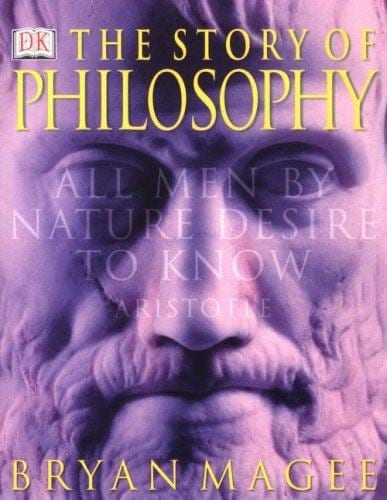
Comprehensive, highly visual and filled with insightful observations, The Story of Philosophyopens up the world of philosophical ideas in a way that is easily understood by everyone. Bryan Magee embarks on an entertaining and enlightening journey and addresses such influential questions as “What is Philosophy?”, “What is Being?” and “Can the existence of God be proved?”.
Attachment (file not included in this release)
Checklist
Legend (marking)
- T = Thesis/claim
- R = Reason
- E = Evidence/example
- D = Definition
- O = Objection
- Margin cues: → why it matters · ↔ link/connection
1) Before Reading (Prime & Aim) — 5–10 min
- Survey TOC, headings, figures; sketch a quick outline.
- Write 3–5 questions I want this chapter/book to answer.
- Predict the thesis in 2–3 sentences (my words).
- Activate prior knowledge: what do I already think/know about this?
2) During Reading (Make Thinking Visible)
- Mark sparingly (≤10%): label T/R/E/D/O only.
- Add margin gists (5–10 words) and arrows (→ why; ↔ connection).
- Convert headings/paragraphs into questions; take notes as answers (Q→A).
- After each dense section: write one Feynman paragraph (explain to a novice).
- For each new concept: create one original example or analogy (not the author’s).
- Flag contradictions/tensions to revisit later.
3) Section Close-Out (every 10–20 pages or major section)
- Close the book and list bullets from memory (2–3 min).
- Write a 2–3 sentence mini-summary (my words).
- Note 1 open question and where I’ll look for an answer.
4) Session Close-Out (Immediately After Reading) — 5–8 min
- Closed-book recall dump: terms, claims, arguments, examples.
- Draw a one-page map (claim → reasons → evidence).
- 3–2–1 Reflection: 3 takeaways · 2 questions · 1 application to try this week.
- Prune highlights to essentials (keep ≤10%); add page refs to literature notes.
5) Next-Day Reinforcement — 3–5 min
- Recreate the one-page map from memory; compare and fill gaps.
- Generate ≤5 high-yield flashcards:
- definitions (cloze deletions)
- claim → best reason
- objection → author’s reply
- Write one counterargument to the chapter’s thesis (steelman), plus best reply.
6) End-of-Week Synthesis — 10–15 min
- Thesis in one sentence (my words).
- Top 3 strongest arguments and the best counters (both sides).
- 2–3 quotes with page numbers and why each matters.
- Short note: “How this changes my view/behavior.”
- Decide keep/modify/drop my planned application.
7) Application Loop (make it change behavior)
- Choose one experiment from the chapter to try.
- Define when/where + success metric + check-in date.
- Capture 30-second field notes after trying it (what happened?).
9) Quality Gates (to ensure it was active, not passive)
- I can explain the book in 2–3 minutes without the book.
- My notes contain my examples and my questions.
- I wrote at least one counterargument and reply.
- Highlights pruned to essentials; flashcards ≤5 and testable.
Scratchpad (optional prompts)
- Argument tree draft: Claim → R1/E…; R2/E…; strongest O → reply.
- Transfer: Where else could this idea apply this month?
- Source check: What data or cases would change my mind?
Process
Summary
The Rules of Analytical Reading (Summary)
Stage I: Finding What a Book Is About
- Classify the book.
- State its unity.
- Outline major parts.
- Define the author’s problems.
Stage II: Interpreting the Book- Identify key terms.
- Extract main propositions.
- Find or construct arguments.
- Determine which problems are solved.
Stage III: Criticizing the Book
- General Etiquette:
9. Understand before judging.
10. Disagree reasonably, not contentiously.
11. Distinguish knowledge from opinion; give reasons.- Special Criteria:
12. Show the author is uninformed.
13. Show the author is misinformed.
14. Show the author is illogical.
15. Show the author’s analysis is incomplete.
1. What It’s About (Rules 1–4)
- Unity (1 sentence):
- Major parts outline:
- Key problems/questions:
2. Interpretation (Rules 5–8)
- Important terms:
- Main propositions (in my words):
- Arguments (premises → conclusion):
- Problems solved / left open:
3. Criticism (Rules 9–15)
- Do I fully understand before judging? ☐
- Whole book judgment (fair/unfair):
- Distinguish knowledge vs. opinion:
- Grounds for disagreement:
- Uninformed?
- Misinformed?
- Illogical?
- Incomplete?
- My judgment (agree / disagree / suspend):
- What of it? (implications / applications):
4. Cross-References (Syntopical Prep)
- Other authors on this issue:
- Agreements/disagreements:
5. Summary & Verdict
- Précis (100–150 words):
- Best passages:
- Keep / reread / discard?
Main Ideas, Takeaways & Similarities & Questions
Questions
I. What is the problem?
A. How is this problem formulated?
B. Why is this problem important?
C. What is the history of this problem?
D. Which prominent personalities have been interested in this problem?
II. What solutions to the problem are there?
A. What are the conclusions reached?
B. By what argument(s) is the conclusion reached?
C. What facts or assumptions serve as premises?
D. When a prominent personality offers a solution, does he also argue for or against other prominent personalities? Does he raise objections to alternative solutions? Does he consider objections to his own solutions?
III. Evaluation
A. What are the advantages and disadvantages of the alternative formulations to the problem?
B. Has the importance or history of the problem ever been misrepresented?
C. Are the solutions logically related to the premises?
D. Are the facts true? Are the assumptions acceptable? Are the objections answerable?