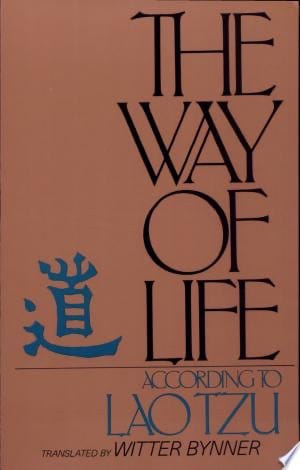
DESCRIPTION
“The eighty-one sayings in this volume shine like gems-cut clear and beautiful in every facet … . This translation will stand as the perfect rendering of a classic work.”—John Haynes Holmes Lao Tzu was one of the greatest mystics of all time. Legend tells us that he was immaculately conceived by a shooting star. Confucius, who met him only once, likened him to a dragon, the one creature in all creation whose ways he would never understand. Some hold that Lao Tzu was not one man but many men, and the work attributed to him, the Tao Teh Ching, the product of many minds over many centuries. But whether or not the Tao Teh Ching, here presented as The Way of Life, is the author’s own matters little. From its original in sixth-century B.C. China it has come down to us as one of the most powerful testaments ever written to man’s fitness in the universe. The basis of Taoism, one of the world’s great religions, the Tao Teh Ching has been translated more frequently than any other work besides the Bible. Articulating the way of poise, serenity, and complete assurance, it teaches us how to work with the invisible forces of nature, the psyche, and the soul for a more successful life. Not passive contemplation, but creative quietism is the Way of Lao Tzu, and it has never been more relevant than it is today.
My Summary
Main Ideas, Takeaways & Similarities
Questions
I. What is the problem?
A. How is this problem formulated?
B. Why is this problem important?
C. What is the history of this problem?
D. Which prominent personalities have been interested in this problem?
II. What solutions to the problem are there?
A. What are the conclusions reached?
B. By what argument(s) is the conclusion reached?
C. What facts or assumptions serve as premises?
D. When a prominent personality offers a solution, does he also argue for or against other prominent personalities? Does he raise objections to alternative solutions? Does he consider objections to his own solutions?
III. Evaluation
A. What are the advantages and disadvantages of the alternative formulations to the problem?
B. Has the importance or history of the problem ever been misrepresented?
C. Are the solutions logically related to the premises?
D. Are the facts true? Are the assumptions acceptable? Are the objections answerable?
AI Summary
Highlights
“The Way of Life, According to Laotzu,” translated and published by Witter Bynner in 1944, is a version of the Tao Te Ching, a foundational text in Chinese philosophy attributed to Lao Tzu. Here are key highlights from the book:
- It begins with background information on Lao Tzu, discussing the debate over his historical existence and his contributions to Taoism.
- Bynner aimed to create a translation that maintains the original spirit of the Tao Te Ching, using rhyme and natural language.
- The text is divided into passages, each a few lines long, making it easy to reference.
- Topics covered in the book include leadership, wisdom, self-respect, self-reliance, inspiration, courage, death, beauty, life, patience, and attachment【50†source】.
This summary is based on the available information from one source, as other detailed summaries or analyses of the book were not readily accessible.
Here are 20 important quotes by Lao Tzu:
- “Do the difficult things while they are easy and do the great things while they are small. A journey of a thousand miles must begin with a single step.”
- “Life is a series of natural and spontaneous changes. Don’t resist them – that only creates sorrow. Let reality be reality. Let things flow naturally forward in whatever way they like.”
- “The snow goose need not bathe to make itself white. Neither need you do anything but be yourself.”
- “Music in the soul can be heard by the universe.”
- “I have just three things to teach: simplicity, patience, compassion. These three are your greatest treasures.”
- “Nothing is softer or more flexible than water, yet nothing can resist it.”
- “The key to growth is the introduction of higher dimensions of consciousness into our awareness.”
- “If you do not change direction, you may end up where you are heading.”
- “He who knows that enough is enough will always have enough.”
- “Mastering others is strength. Mastering yourself is true power.”
- “Be content with what you have; rejoice in the way things are. When you realize there is nothing lacking, the whole world belongs to you.”
- “A good traveler has no fixed plans, and is not intent on arriving.”
- “When the best leader’s work is done the people say, ‘We did it ourselves.’”
- “In dwelling, live close to the ground. In thinking, keep to the simple. In conflict, be fair and generous. In governing, don’t try to control. In work, do what you enjoy. In family life, be completely present.”
- “Knowing others is wisdom, knowing yourself is Enlightenment.”
- “Those who know do not say. Those who say do not know.”
- “Nature does not hurry, yet everything is accomplished.”
- “People in their handlings of affairs often fail when they are about to succeed. If one remains as careful at the end as he was at the beginning, there will be no failure.”
- “Great acts are made up of small deeds.”
- “A man with outward courage dares to die; a man with inner courage dares to live”【72†source】.