⬅️ Hub: Cuba
DESCRIPTION
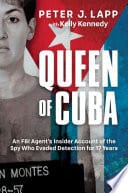
As a spy prepared to give away America’s biggest secrets after the 9/11 attacks, an FBI agent raced to catch her. U.S. government officials knew they had a spy. But it never occurred to them it was a woman—and certainly not a superstar Defense Intelligence Agency employee known as “the Queen of Cuba.” Ana Montes had spent seventeen years spying for the Cubans. She had been raised in a patriotic Puerto Rican household: Her father, a psychiatrist, was a former colonel in the U.S. Army. Her sister worked as a translator for the FBI and helped break up a ring of Cuban spies in Miami. Her brother was also a loyal FBI agent. Montes impressed her bosses, but in secret, spent her breaks memorizing top secret documents before sending them to the Cuban government. She received no payment, even as one of her missives could have brought her the death penalty. She also listened to anxiety-relief tapes, took medication, and saw a psychiatrist. She dreamed of a normal life where she could work a job she enjoyed. She dreamed of getting married, and even had a man in mind: a defense analyst on the Cuba account for Southern Command. He had no idea that, three times a week, Montes pulled a short-wave radio from her closet and received encrypted messages from Cuba. After the 9/11 attacks, Cuba wanted Montes to continue her work. They couldn’t know the FBI was already on to her. Retired FBI agent Peter J. Lapp explains the clues—including never-released information—that led their team to catch one of the United States’ most dangerous spies.
Queen of Cuba: An FBI Agent’s Insider Account of the Spy Who Evaded Detection for 17 Years is a 2023 true-crime memoir written by Peter J. Lapp, the FBI agent who co-led the investigation into Ana Belén Montes. Montes is considered one of the most damaging spies in American history.
The book is unique because it blends a high-stakes counterintelligence procedural with Lapp’s own personal journey as an agent.
The Subject: Ana Belén Montes
Ana Montes was a superstar analyst for the Defense Intelligence Agency (DIA). Her expertise on Cuban military and political affairs was so profound that colleagues nicknamed her the “Queen of Cuba.” * The Double Life: From the moment she joined the DIA in 1985 until her arrest in 2001, she was a committed spy for the Cuban Intelligence Service (DI).
- Tradecraft: Montes was a “low-tech” but highly disciplined spy. She never took documents home; instead, she memorized top-secret files at her desk and typed them into a laptop at home later. She communicated with her handlers via short-wave radio and encrypted pagers.
- Ideological Motive: Unlike many famous spies who sold secrets for money (like Robert Hanssen or Aldrich Ames), Montes received no payment. She spied because she believed U.S. foreign policy toward Latin America was “cruel and unfair.”
The Investigation: “The Mole Hunt”
Lapp details the painstaking process of identifying a mole when there is almost no physical evidence.
- The Clues: The investigation began with a tip about an unidentified person with access to certain intelligence who was behaving suspiciously. Lapp describes the use of FISA warrants to surreptitiously search her apartment.
- The Family Irony: In a detail that sounds like fiction, Montes’s own sister and brother were also in the FBI. Her sister actually helped break up the “Wasp Network” (a different ring of Cuban spies) while Ana was actively spying for Havana.
- The 9/11 Deadline: The FBI originally wanted to keep Montes under surveillance longer to identify her handlers. However, after the 9/11 attacks, officials feared she would pass U.S. war plans for Afghanistan to Cuba (who might then pass them to the Taliban). The decision was made to arrest her immediately on September 21, 2001.
Key Themes and Insights
- Institutional Blindness: Lapp explores how Montes’s “star power” and arrogance protected her. Because she was so talented and dedicated, her colleagues often ignored or “explained away” her suspicious behavior and pro-Cuba bias.
- The Human Element: The book provides a rare look at the psychological toll of spying. Montes suffered from extreme anxiety and used “anxiety-relief” tapes, yet she remained cold and calculated during her interrogation.
- The Damage: Lapp confirms that Montes’s leaks likely led to the death of at least one U.S. Special Forces soldier and compromised numerous intelligence-gathering tools that cost the U.S. billions of dollars.
Note: Montes was released from prison in January 2023 after serving over 21 years of her 25-year sentence. She currently lives in Puerto Rico and remains unrepentant about her actions.
Would you like me to compare Montes’s tradecraft to other famous Cold War spies like Aldrich Ames or Robert Hanssen?
The capture of the Queen of Cuba This video features the author, Peter Lapp, discussing the specific clues and the high-stakes atmosphere that led to the arrest of Ana Montes just days after 9/11.